Pneumatic Tools Market Size & Forecasts 2026-2035, By Segments (Tool Type, End-user, Distribution Channel, Application, Product Type), Growth Opportunities, Innovation Landscape, Regulatory Shifts, Strategic Regional Insights (U.S., Japan, China, South Korea, UK, Germany, France), and Competitive Dynamics (Ingersoll Rand, Atlas Copco, Bosch, Stanley Black & Decker, Makita)
Market Size and Growth Outlook
Pneumatic Tools Market size is projected to expand significantly, moving from USD 86.88 billion in 2025 to USD 194.63 billion by 2035, with a CAGR of 8.4% during the 2026-2035 forecast period. The expected revenue for 2026 is USD 93.29 billion.
Get more details on this report
Request Free Sample ReportPneumatic Tools Market Intelligence Snapshot
Regional Market Dynamics
Segment Momentum
Market Expansion Drivers
Leading Market Participants
Global Market Forecast Snapshot
Market Outlook
Regional and Segment Outlook
Market Growth Drivers and Industry Trends
The expansion of automotive and industrial sectors is a pivotal growth driver for the pneumatic tools market. Increasing vehicle production and industrial automation spur demand for reliable, high-performance tools integral to assembly lines and maintenance. For instance, Toyota’s recent facility upgrades emphasize pneumatic tools for improving assembly efficiency, as detailed in their corporate sustainability report. This surge presents strategic opportunities for established manufacturers to deepen B2B relationships and for innovators to develop industry-specific solutions tailored to evolving industrial processes. As the automotive sector embraces electrification and automation, pneumatic tools that offer compatibility with new production technologies will be indispensable, reinforcing sustained market momentum driven by industrial modernization trends.
Advanced Pneumatic Tool Designs & Efficiency
Innovation in pneumatic tool design, focusing on enhanced efficiency and ergonomics, profoundly shapes the pneumatic tools market. Leading players like Ingersoll Rand promote air tool models with reduced energy consumption and optimized air usage, aligning with growing regulatory emphasis on workplace safety and environmental compliance from agencies such as OSHA. This trend addresses labor shortages by minimizing operator fatigue and improving precision, broadening adoption in both mature and emerging markets. The continuous introduction of smarter, lighter, and more durable tools creates avenues for startups to differentiate through niche innovations while encouraging incumbents to integrate IoT features, thus facilitating operational intelligence and predictive maintenance across industries.
Expansion in Asia Pacific Manufacturing
The rapid industrialization and surge in manufacturing activities across Asia Pacific drive robust growth in the pneumatic tools market. Governments like India’s Ministry of Heavy Industries are investing heavily in machinery modernization, boosting demand for pneumatic tools as essential components of factory mechanization and infrastructure development. Suppliers benefit from expanding local manufacturing ecosystems and evolving supply chains that reduce costs and enhance availability. For global players, this landscape offers an opening to establish regional production and distribution hubs, while new entrants can capitalize on demand for cost-effective, regionally tailored products. The region’s ongoing infrastructural initiatives set a foundation for long-term market vitality anchored in macroeconomic and policy support.
Industry Restraints:
Energy Efficiency Regulations and Compliance Costs
Increasingly stringent energy efficiency standards imposed by regulatory bodies such as the U.S. Environmental Protection Agency (EPA) and the European Union’s Energy Labelling Framework present significant compliance challenges for pneumatic tool manufacturers. These regulations necessitate redesigning products to reduce power consumption and emissions, often leading to higher R&D expenditures and increased manufacturing costs. For instance, Atlas Copco’s recent compliance-driven shifts in compressor technology underscore the operational inefficiencies and added costs associated with meeting evolving standards. This dynamic constrains smaller manufacturers lacking robust compliance infrastructure, limiting market entry and intensifying competitive pressure on incumbents to innovate. Moving forward, regulatory compliance will remain a critical operational hurdle, compelling market participants to prioritize sustainable engineering and potentially reshaping product portfolios toward more energy-efficient pneumatic solutions.
Raw Material Price Volatility and Supply Chain Disruptions
The pneumatic tools market faces significant headwinds from raw material cost fluctuations—particularly steel and aluminum—as well as supply chain interruptions exacerbated by geopolitical tensions and global logistics constraints. For example, recent price surges reported by the International Steel Trade Organization have escalated production costs, squeezing profit margins for companies like Ingersoll Rand. Moreover, supply delays strain inventory management and slow time-to-market, affecting both legacy players and startups striving to maintain competitive delivery schedules. This volatility underscores the strategic imperative to diversify supplier bases and adopt flexible manufacturing approaches. Given ongoing geopolitical uncertainties and inflationary pressure, these supply challenges will persist as a key restraint, shaping procurement strategies and operational resilience across the pneumatic tools industry.
| Growth Driver | Impact on CAGR | Regulatory Influence | Geographic Relevance | Adoption Rate | Impact Timeline |
|---|---|---|---|---|---|
| Growth of Automotive & Industrial Sectors | 3.00% | Short term (≤ 2 yrs) | North America, Europe | Medium | Fast |
| Advanced Pneumatic Tool Designs & Efficiency | 2.50% | Medium term (2–5 yrs) | North America, Europe; Spillover: Asia Pacific | Medium | Moderate |
| Expansion in Asia Pacific Manufacturing | 1.90% | Long term (5+ yrs) | Asia Pacific, Latin America | Low | Moderate |
Unlock insights tailored to your business with our bespoke market research solutions.
Click to get your customized report now.
Regional Demand Dynamics
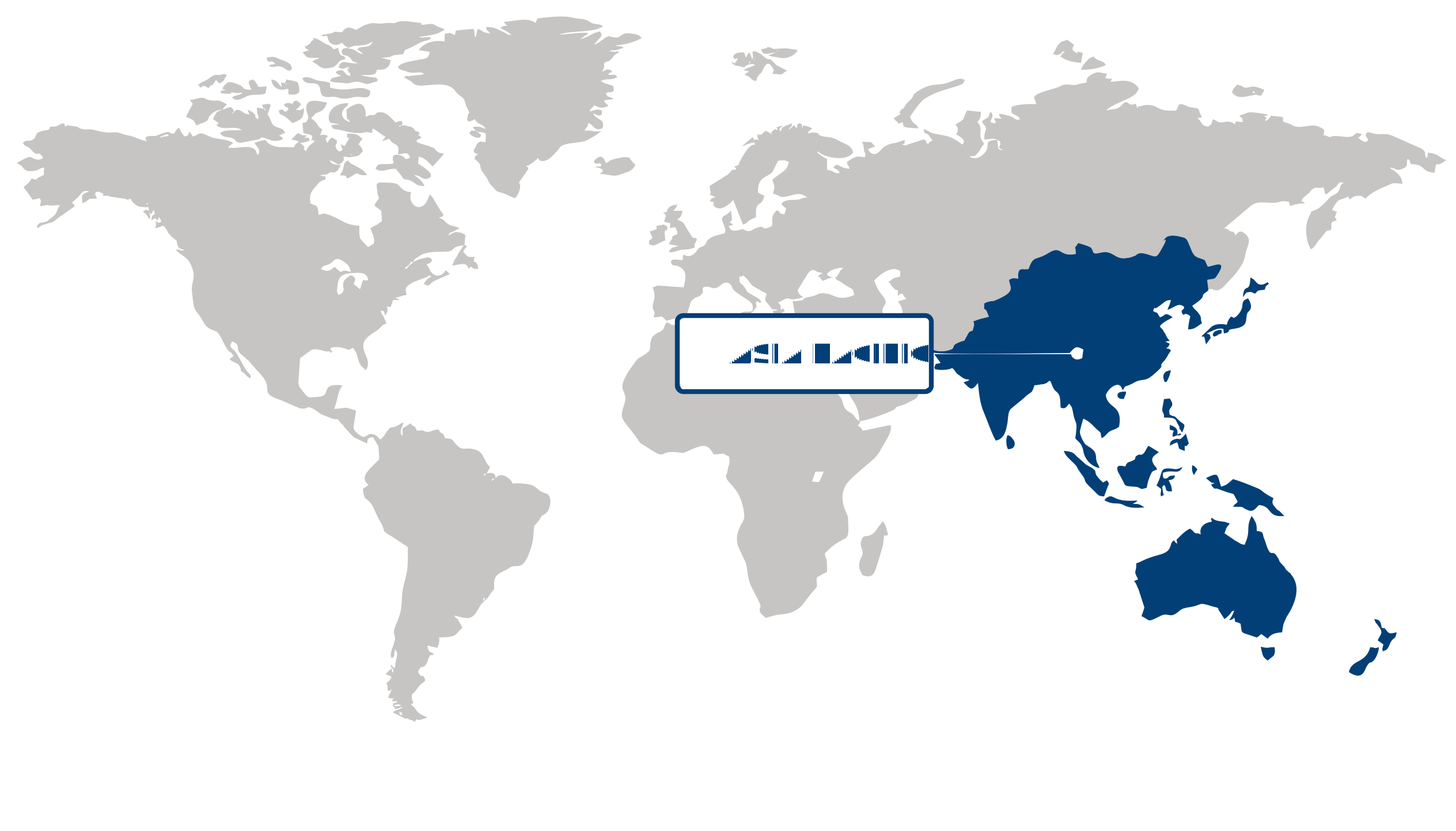
Asia Pacific dominated the pneumatic tools market in 2025, capturing 48% of the global share and emerging as the fastest-growing region with a CAGR of 10.08%. The region’s leadership stems from rapid industrialization paired with robust expansion in the automotive and manufacturing sectors, particularly in countries embracing large-scale infrastructure and production capabilities. For instance, the International Trade Administration highlights China’s substantial investments in manufacturing modernization, driving demand for pneumatic tools that enhance operational efficiency. Additionally, increasing urbanization and technological adoption among manufacturers across the region foster growth. The evolving landscape characterized by enhanced supply chain networks and strategic government initiatives supports ongoing market momentum. Given these dynamics, Asia Pacific offers significant opportunities for investors aiming to leverage rising industrial activity and escalating demand for advanced pneumatic solutions.
Japan anchors the Asia Pacific pneumatic tools market as a pivotal innovation hub, benefiting from its precision manufacturing culture and stringent quality standards. The nation’s focus on automation and Industry 4.0 initiatives accentuates demand for high-performance pneumatic tools optimized for efficiency and sustainability. Toyota’s recent expansion of smart factory operations exemplifies this trend, as the company incorporates pneumatic systems to streamline automotive assembly lines. Japan’s regulatory emphasis on workplace safety and environmental sustainability further propels adoption of energy-efficient tools. Strategically, Japan’s advanced technological landscape complements broader regional growth, reinforcing Asia Pacific’s market leadership by setting benchmarks in operational excellence.
China acts as the growth engine for the Asia Pacific pneumatic tools market, driven by aggressive industrialization and government-backed manufacturing upgrades. The Made in China 2025 policy accelerates demand for cutting-edge pneumatic technologies to support automotive and heavy equipment production. Companies such as SANY Group integrate pneumatic tools extensively, reflecting broader sectoral growth. Moreover, China’s expanding middle-class consumer base increases automotive production and after-market service requirements, directly boosting pneumatic tool consumption. The Chinese government’s focus on sustainability and emission reduction introduces stricter standards, encouraging the switch to advanced pneumatic systems that reduce energy consumption. China’s scale and innovation in manufacturing substantiate Asia Pacific’s sustained dominance and create robust commercial prospects.
North America Market Analysis:
North America maintained a commanding market presence in the pneumatic tools market, driven by its well-established industrial infrastructure and steady investment in manufacturing automation. The region’s sizable automotive, aerospace, and construction sectors stimulate consistent demand for high-performance pneumatic tools tailored to enhance operational efficiency and safety. Regulatory frameworks from agencies like the Occupational Safety and Health Administration (OSHA) increasingly emphasize worker protection, encouraging the adoption of ergonomic and energy-efficient pneumatic solutions, as seen in programs supported by the U.S. Department of Labor. Advances in digital integration and IoT-enabled pneumatic tools also reinforce North America’s competitiveness, as manufacturers seek seamless maintenance and performance tracking. These factors collectively position North America to sustain its leadership, offering investors robust long-term prospects amid evolving industrial trends and technological advancements.
The U.S. serves as a pivotal market within North America’s pneumatic tools market, capitalizing on diverse manufacturing capabilities and strong consumer spending patterns. The country’s strategic emphasis on upgrading infrastructure and modernizing production lines fuels demand for innovative pneumatic tools that prioritize durability and precision. Government initiatives like the Advanced Manufacturing National Program Office (AMNPO) promote technology adoption that enhances productivity in sectors such as aerospace and defense, further stimulating market growth. Major manufacturers, including Ingersoll Rand and Snap-on, remain at the forefront by launching digital pneumatic tools with predictive maintenance capabilities, underscoring the U.S.’s role as an innovation hub. This leadership reinforces North America’s broader market potential by ensuring a dynamic ecosystem for pneumatic tool manufacturing and application.
Europe Market Trends:
Europe maintained a notable presence in the pneumatic tools market, driven by balanced industrial output and progressive sustainability initiatives. The region benefits from stringent regulatory frameworks established by the European Union, which encourage manufacturers to adopt energy-efficient and low-emission equipment, fostering demand for advanced pneumatic solutions. A robust manufacturing base in sectors such as automotive and aerospace supports steady consumption, while digital integration and automation are reshaping operational approaches. Recent announcements by Bosch, headquartered in Germany, highlight innovations in smart pneumatic tools enhancing productivity and environmental compliance. Additionally, Europe’s well-established logistics infrastructure facilitates smooth supply chain operations amid evolving trade policies. These dynamics suggest that Europe will continue to offer significant opportunities as market players align with regulatory priorities and technological advancements.
Germany serves as the industrial powerhouse within Europe’s pneumatic tools market, underpinned by high adoption rates in automotive and mechanical engineering sectors. The German government’s focus on Industry 4.0 and energy-efficient manufacturing has accelerated demand for precision pneumatic tools, reflected in collaborative projects between Siemens and Riwal, which emphasize digital tool management solutions. Furthermore, Germany’s large skilled workforce supports advanced manufacturing capabilities, encouraging continuous innovation. This reinforces Germany’s pivotal role in driving regional market growth, positioning it as a benchmark for quality and technological integration.
France plays a critical role in Europe’s pneumatic tools market by leveraging its diverse industrial landscape and expanding focus on environmental regulations. French manufacturers are increasingly adopting pneumatic tools designed to meet rigorous emission standards, as demonstrated by Air Liquide’s recent initiatives to incorporate sustainable pneumatic systems in healthcare and chemical production. The country’s moderate growth is further stimulated by governmental incentives promoting industrial modernization and energy savings. France’s evolving regulatory environment and innovation-driven culture make it a crucial contributor to Europe’s overall market momentum, enhancing regional competitiveness and expanding adoption of next-generation pneumatic technologies.
| Parameter | North America | Asia Pacific | Europe | Latin America | MEA |
|---|---|---|---|---|---|
| Innovation Hub i Scale Nascent Developing Advanced | |||||
| Cost-Sensitive Region i Scale Low Medium High | |||||
| Regulatory Environment i Scale Restrictive Neutral Supportive | |||||
| Demand Drivers i Scale Weak Moderate Strong | |||||
| Development Stage i Scale Emerging Developing Developed | |||||
| Adoption Rate i Scale Low Medium High | |||||
| New Entrants / Startups i Scale Sparse Moderate Dense | |||||
| Macro Indicators i Scale Weak Stable Strong |
Segment Leadership and Growth Trends
Pneumatic Tools Market Share (%), by Tool Type, 2026
Go beyond the chart, access full insights & data tables
Request Free Sample ReportThe handheld segment held largest share in the pneumatic tools market in 2025, propelled by its growing adoption within expanding construction and manufacturing industries due to their lightweight design and operational efficiency. This preference aligns with workforce trends favoring ergonomic and portable equipment that enhances productivity on job sites. Industry leaders like Ingersoll Rand emphasize their commitment to developing advanced handheld pneumatic tools to meet evolving user demands. The segment offers strategic advantages by enabling rapid tool deployment and flexible use across diverse tasks, benefiting both established manufacturers and innovative entrants. Given ongoing construction growth and manufacturing automation, handheld pneumatic tools are poised to sustain their relevance through continuous innovation in design and functionality.
Analysis by End-user
The industrial segment dominated the pneumatic tools market in 2025, driven by strong demand for pneumatic solutions that underpin manufacturing processes and automation initiatives. This leadership reflects industries’ focus on productivity enhancement supported by reliable, high-performance tools compatible with advanced manufacturing systems highlighted in recent Bosch industry releases. The segment's dominance also correlates with supply chain advancements ensuring timely availability in industrial hubs and compliance with strict occupational safety standards enforced by regulatory authorities like OSHA. Opportunities abound for firms catering to diversified industrial verticals, fostering tailored solutions. The industrial segment is expected to maintain prominence as industry 4.0 adoption and automation trends deepen, necessitating specialized pneumatic tools for efficient operations.
Analysis by Distribution Channel
The offline segment represented largest share in the pneumatic tools market in 2025, benefiting from well-established distribution networks that offer vital logistics, after-sales support, and direct customer engagement. This entrenched presence supports complex procurement requirements in sectors such as construction and manufacturing, where end-users rely on hands-on consultation, an aspect emphasized in Snap-on corporate communications. Offline channels also accommodate regional preferences and regulatory frameworks affecting tool certification and import. Such networks create strategic openings for established players to strengthen customer loyalty and for new entrants to build grassroots visibility. Continued reliance on offline distribution for value-added services indicates this segment’s sustained importance amid gradual digital transformation in industrial supply chains.
| Segment | Sub-Segment | Largest Segment | Fastest Growing |
|---|---|---|---|
| Tool Type | Handheld, Stationary | ||
| End-user | Industrial, Commercial, Residential | ||
| Distribution Channel | Online, Offline | ||
| Application | Automotive, Construction, Manufacturing, Aerospace, Oil & Gas | ||
| Product Type | Impact Wrenches, Ratchet Wrenches, Hammers, Sanders, Grinders, Screwdrivers, Drills, Others |
Competitive Landscape and Market Positioning
The competitive landscape is marked by a continuous push to enhance product efficiency, durability, and user ergonomics, driven by innovation investments and selective collaboration. Several leaders have introduced cutting-edge pneumatic tools that integrate digital technologies for improved performance monitoring and predictive maintenance. Strategic partnerships and acquisitions have expanded geographic reach and product diversification, intensifying competition. Innovation cycles emphasize lightweight materials and energy-efficient systems, responding to evolving industrial requirements. Companies also capitalize on aftermarket services and enhanced customer support as differentiators. This evolving dynamic creates a market environment that rewards agility, technological advancement, and robust supply chain management, compelling players to frequently recalibrate their competitive positioning.
Strategic / Actionable Recommendations for Regional Players
North American players should explore strategic partnerships that enhance digital integration capabilities, leveraging growing demand for smart pneumatic tools. Focusing on high-growth sectors like automotive and aerospace by customizing offerings could strengthen their competitive edge. Strengthening supply chain resilience and investing in sustainable product innovations will prove beneficial amid rising environmental standards.
Asia Pacific firms could deepen collaborations with technology providers to embed IoT and AI features into their tools, capitalizing on expanding industrial automation trends. Targeting emerging markets with cost-effective yet reliable pneumatic tools will address rising infrastructure development, while expanding R&D investments supports product differentiation against multinational incumbents.
European companies can benefit by emphasizing advanced material science and eco-friendly pneumatic tool designs in response to stringent regulations. Alliances with green technology startups could accelerate innovation. Furthermore, focusing on premium segments and aftermarket services will help consolidate leadership and navigate intensifying competition within mature markets.
| Company | Market Share | Company Revenue | Revenue CAGR (%) | Product Portfolio | Geographic Presence | Innovation / R&D Focus | Strategic Developments |
|---|---|---|---|---|---|---|---|
| No companies available. | |||||||
Industry Development/News
| Company Name | Date | Key Development |
|---|
Customize Your Report
Explore examples of how this report can be tailored to different research needs, including custom segments, additional topics or chapters, and related reports. Click a section of the wheel or its numbered marker to explore the available options.
Pneumatic Tools Market — Custom Segments
| Segment | Sub-Segment |
|---|---|
| No segment data available. | |
Pneumatic Tools Market — Custom TOC
| Custom Chapter | Custom Details | ||
|---|---|---|---|
| No custom TOC data available. | |||
Need a different cut of the data?
Request Custom ResearchHow much is the pneumatic tools industry expected to grow by 2035?
In which region is the pneumatic tools market share the greatest?
Which region shows the most rapid acceleration in the pneumatic tools sector?
Where is the handheld segment seeing the strongest adoption within the pneumatic tools industry?
When did industrial sub-segment emerge as the largest sub-segment in the end-user segment of pneumatic tools sector?
Why is the offline segment leading in the pneumatic tools industry?
Why does automotive sub-segment dominate the application segment of pneumatic tools sector?
How much is the impact wrenches segment expected to grow in the pneumatic tools industry beyond 2025?
Which companies are driving growth in the pneumatic tools landscape?
Our Clients
"The team at Fundamental Business Insights & Consulting demonstrated a commitment to excellence, not only in the quality of the report but also in their client-centric approach."
FANUC
"The level of detail in the market segmentation provided were particularly noteworthy. The detailed country-level insights were also very helpful."
B&R Industrial Automation GmbH
"The consultant took the time to understand our specific business objectives, ensuring that the reports were tailored to address our unique challenges and opportunities."
KUKA SE & Co. KGaA
Our Research Team & Methodology
Every Fundamental Business Insights report is built by a dedicated vertical research team, validated through a structured primary-and-secondary methodology, and reviewed for accuracy before it reaches you.
Research Team Overview
Prepared by the Industrial Automation & Equipment Research Team
Delivery
Published
Demand
Available
Support
Trust & Compliance
Research Domains
10 coverage areasResearch Intelligence
| Source | Reference |
|---|---|
| International Society of Automation (ISA) | www.isa.org |
| International Organization for Standardization (ISO) | www.iso.org |
| National Institute of Standards and Technology (NIST) | www.nist.gov |
| IEEE | www.ieee.org |
| VDMA (German Mechanical Engineering Industry Association) | www.vdma.org |
| Association for Advancing Automation (A3) | www.automate.org |
| International Federation of Robotics (IFR) | ifr.org |
| ASME (American Society of Mechanical Engineers) | www.asme.org |
| ASHRAE | www.ashrae.org |
| American Society of Heating, Refrigerating and Air-Conditioning Engineers (ASHRAE) | www.ashrae.org |
| Material Handling Industry (MHI) | www.mhi.org |
| OSHA (Occupational Safety and Health Administration) | www.osha.gov |
| National Fire Protection Association (NFPA) | www.nfpa.org |
| ASTM International | www.astm.org |
| International Electrotechnical Commission (IEC) | www.iec.ch |
| Open Process Automation Forum (The Open Group) | www.opengroup.org/open-process-automation-forum |
| AGMA (American Gear Manufacturers Association) | www.agma.org |
| Association of Equipment Manufacturers (AEM) | www.aem.org |
| Food and Agriculture Organization (FAO) | www.fao.org |
| International Labour Organization (ILO) | www.ilo.org |
Research Workflow & Quality Assurance
Data Collection
Verified information gathered through primary and secondary research.
Data Triangulation
Cross-validation using multiple independent data sources.
Forecast Modelling
Market estimates developed using historical trends and analytical models.
Analyst Validation
Findings reviewed by domain experts for accuracy and consistency.
Editorial & Quality Review
Final editorial, quality, and compliance checks before publication.
Final Publication
Released after successful completion of the internal review process.
Report Coverage
📊 Market Assessment
- Market Size & Forecast
- Market Segmentation
- Regional Analysis
- Growth Drivers & Challenges
- Market Dynamics
🏢 Competitive Intelligence
- Competitive Landscape
- Company Profiles
- Competitive Benchmarking
- Mergers & Acquisitions
- Market Share Analysis or Key Company Strategies
🔍 Strategic Analysis
- Value Chain Analysis
- Porter's Five Forces
- PESTLE Analysis
- Pricing Trends
- Supply-Demand Analysis
🚀 Future Outlook
- Technology Landscape
- Regulatory Landscape
- Investment & Funding Landscape
- Emerging Opportunities
- Future Market Outlook
Have a question about this report or need a custom scope?
Request Customization