Plasma Protein Therapeutics Market Size & Growth Forecast 2027–2036, By Segments (Product, Application), Regional Demand Trends (North America, Asia Pacific, Europe), Key Country Insights (U.S., Japan, South Korea, Germany, France, Italy), and Competitive Landscape
Market Size and Growth Outlook
Plasma Protein Therapeutics Market size was around USD 35.1 billion in 2026 and is slated to grow at a 5.8% CAGR from 2027 to 2036, surpassing USD 61.68 billion by 2036. The industry revenue for 2027 is estimated at USD 36.81 billion.
Get more details on this report
Request Free Sample ReportPlasma Protein Therapeutics Market Intelligence Snapshot
Regional Market Dynamics
- Asia Pacific accounted for 37.84% of the market in 2026, supported by a large patient base, expanding treatment access, improving healthcare infrastructure, and consistent hospital use of plasma-derived therapies.
- Europe is projected to grow at a 7.01% CAGR, driven by structured treatment pathways, strong adoption of plasma-derived therapies, mature reimbursement systems, and continued demand for immunoglobulin-based treatments.
Segment Momentum
- Immunoglobulin held a 52.82% share in 2026 due to its essential role in long-term immune replacement and immune modulation, supporting consistent demand across established treatment pathways.
- Hemophilia is the fastest-growing application as improving diagnosis and treatment access increase demand for plasma-derived therapies used in reliable bleeding management and factor replacement.
Market Expansion Drivers
- Growing prevalence of age-related and chronic diseases driving demand for plasma-based therapies.
- Increasing approvals and clinical research in immunoglobulin and albumin therapies expanding treatment scope.
- Advancements in subcutaneous immunoglobulin delivery improving patient accessibility and treatment adherence.
Leading Market Participants
- Top players in the plasma protein therapeutics market include CSL Behring LLC (Australia), Grifols S.A. (Spain), Octapharma AG (Switzerland), Takeda Pharmaceutical Company Limited (Japan), Baxter International Inc. (United States), Kedrion S.p.A. (Italy), Bio Products Laboratory Ltd. (United Kingdom), Biotest AG (Germany), LFB Group (France), Sanofi S.A. (France).
Global Market Forecast Snapshot
Market Outlook
- 2026 Market Size: USD 35.1 billion
- 2027 Estimated Market Size: USD 36.81 billion.
- Projected Market Size: USD 61.68 billion by 2036
- Growth Forecast: 5.8% CAGR (2027-2036)
Regional and Segment Outlook
- Leading Regional Market: Asia Pacific
- High-Growth Regional Hub: Europe
- Core Revenue Segment: Immunoglobulin (Product) | Primary Immunodeficiency Disorder (PIDD) (Application)
- Emerging Opportunity Segment: Albumin (Product) | Hemophilia (Application)
Market Growth Drivers and Industry Trends
Growing prevalence of age-related and chronic diseases driving demand for plasma-based therapies
The growing burden of age-related and chronic conditions will drive the plasma protein therapeutics market growth as more patients require therapies based on plasma-derived proteins. Increasing treatment needs create sustained demand for products such as immunoglobulin and albumin therapies, particularly where ongoing disease management requires established plasma-based treatment approaches.
Increasing approvals and clinical research in immunoglobulin and albumin therapies expanding treatment scope
Continued clinical research and additional approvals will propel the plasma protein therapeutics market growth by broadening the recognized treatment applications for immunoglobulin and albumin therapies. As therapeutic evidence develops and treatment options expand, healthcare providers can consider plasma-based products across a wider range of patient needs and clinical settings.
Advancements in subcutaneous immunoglobulin delivery improving patient accessibility and treatment adherence
Improved subcutaneous delivery approaches will support plasma protein therapeutics market growth by making immunoglobulin treatment more accessible and potentially easier to incorporate into patient care routines. Greater convenience in administration can reduce practical barriers associated with treatment delivery, supporting continued use among patients requiring ongoing immunoglobulin therapy.
| Growth Driver | Impact on CAGR | Regulatory Influence | Geographic Relevance | Adoption Rate | Impact Timeline |
|---|---|---|---|---|---|
| Increasing demand for plasma protein therapeutics | 2.10% | Short term (≤ 2 yrs) | North America, Europe | Medium | Fast |
| Expansion of biopharmaceutical production and distribution | 2.00% | Medium term (2–5 yrs) | Europe, Asia Pacific | Medium | Moderate |
| Technological advancements in plasma fractionation and purification | 2.10% | Long term (5+ yrs) | North America, Asia Pacific | Medium | Moderate |
| Growing prevalence of age-related and chronic diseases driving demand for plasma-based therapies | 2.00% | High | North America, Europe | High | Near Term |
| Increasing approvals and clinical research in immunoglobulin and albumin therapies expanding treatment scope | 1.80% | High | North America, Asia Pacific | High | Mid Term |
| Advancements in subcutaneous immunoglobulin delivery improving patient accessibility and treatment adherence | 1.60% | High | North America, Europe | Medium | Mid Term |
Unlock insights tailored to your business with our bespoke market research solutions.
Click to get your customized report now.
Regional Demand Dynamics
Asia Pacific (Largest Region)
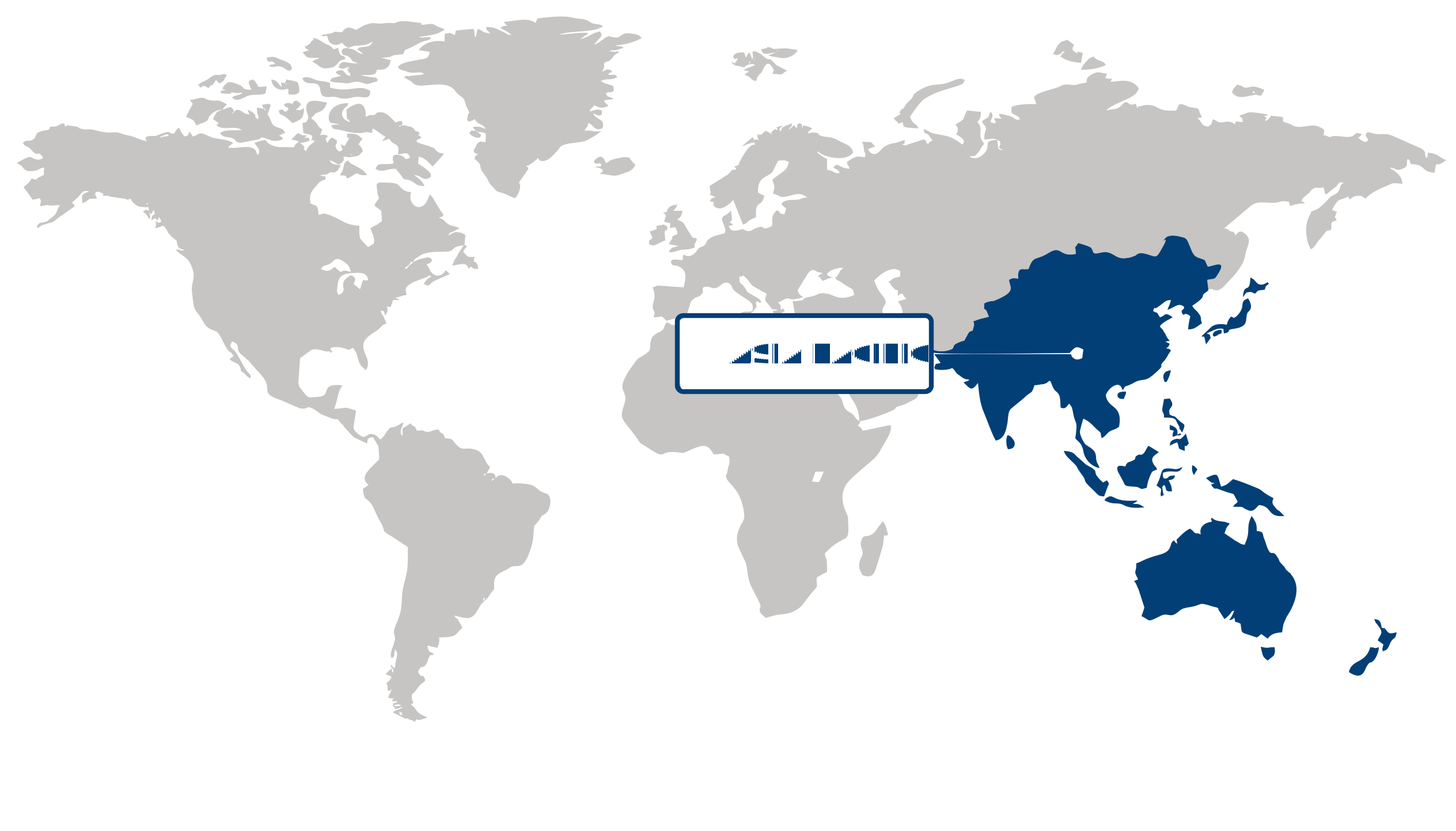
Holding the largest share of the plasma protein therapeutics market in 2026, Asia Pacific accounted for 37.84% of the market. Regional demand is supported by expanding healthcare infrastructure, improving access to specialized therapies, and increasing recognition of plasma-derived treatments for complex and chronic conditions. Growing investments in healthcare capacity and pharmaceutical manufacturing are strengthening treatment availability, while broader diagnosis of disorders requiring plasma protein therapies is creating additional demand. Improvements in healthcare delivery and increasing emphasis on advanced therapeutic options are also supporting the region’s market position.
Europe (Fastest-Growing Region)
Europe represents the fastest-growing regional market, driven by a well-established healthcare system and sustained demand for specialized biological therapies. The region benefits from strong clinical capabilities, established treatment pathways, and continued attention to improving access to therapies for immune deficiencies and other conditions requiring plasma-derived products. Advancements in treatment practices, healthcare infrastructure, and therapeutic development are creating a favorable environment for continued adoption of plasma protein therapeutics.
| Parameter | North America | Asia Pacific | Europe | Latin America | MEA |
|---|---|---|---|---|---|
| Innovation Hub i Scale Nascent Developing Advanced | |||||
| Cost-Sensitive Region i Scale Low Medium High | |||||
| Regulatory Environment i Scale Restrictive Neutral Supportive | |||||
| Demand Drivers i Scale Weak Moderate Strong | |||||
| Development Stage i Scale Emerging Developing Developed | |||||
| Adoption Rate i Scale Low Medium High | |||||
| New Entrants / Startups i Scale Sparse Moderate Dense | |||||
| Macro Indicators i Scale Weak Stable Strong |
Key Country Insights
Germany 🇩🇪
Fractionation ExcellenceGermany focuses on advanced plasma fractionation capabilities and stringent manufacturing standards for plasma protein therapeutics. Companies in Germany invest in production efficiency, quality assurance, and long-term plasma sourcing to support consistent therapeutic availability.
France 🇫🇷
Therapeutic Access StrategyFrance prioritizes plasma protein therapeutics that improve treatment accessibility for chronic and rare conditions. Healthcare stakeholders in France support efficient plasma collection, optimized distribution, and evidence-based adoption across specialized treatment centers.
Italy 🇮🇹
Plasma Collection ExpansionItaly is reinforcing plasma protein therapeutics by improving domestic plasma collection and strengthening processing capacity. Clinical institutions in Italy focus on maintaining reliable therapeutic availability while supporting high standards for plasma-derived medicinal products.
Japan 🇯🇵
Rare Disease SupportJapan continues strengthening plasma protein therapeutics for immune deficiencies and rare diseases through specialized healthcare delivery. Manufacturers in Japan emphasize product safety, traceability, and dependable domestic supply to meet evolving clinical requirements.
South Korea 🇰🇷
Biopharma Manufacturing FocusSouth Korea is expanding plasma protein therapeutics through investments in biopharmaceutical manufacturing and advanced processing capabilities. Healthcare organizations in South Korea seek high-quality plasma-derived therapies supported by modern production infrastructure and regulatory compliance.
United States 🇺🇸
Advanced Biologics PipelineThe U.S. plasma protein therapeutics market emphasizes expanding plasma collection networks and developing therapies for immunological and rare disorders. Healthcare providers in the U.S. prioritize reliable supply chains and innovative plasma-derived products to address growing clinical demand.
Segment Leadership and Growth Trends
Plasma Protein Therapeutics Market Share (%), by Product, 2026
Go beyond the chart, access full insights & data tables
Request Free Sample ReportProduct Segment Analysis: Immunoglobulin (Largest Segment) vs Albumin (Fastest-Growing Segment)
Immunoglobulin led the plasma protein therapeutics market with a 52.82% share in 2026, supported by its essential role in treating immune-related conditions and providing antibody-based therapeutic support. Demand is reinforced by the clinical importance of immunoglobulin therapies across a range of immune disorders and the continuing need for effective plasma-derived treatments. Greater emphasis on managing chronic and complex immune conditions is sustaining the segment's strong position within plasma protein therapeutics.
Albumin is projected to experience the fastest growth as its therapeutic relevance extends across applications requiring plasma volume management and supportive treatment. Its established clinical utility and broad applicability make albumin an important component of hospital-based therapeutic protocols. Continued demand for plasma-derived products in complex patient care, combined with growing awareness of the clinical benefits of albumin therapy, is supporting its expansion.
Application Segment Analysis: Primary Immunodeficiency Disorder (PIDD) (Largest Segment) vs Hemophilia (Fastest-Growing Segment)
Primary immunodeficiency disorder (PIDD) accounted for 28.62% of the plasma protein therapeutics market in 2026, reflecting the important role of plasma-derived therapies in supporting patients with inadequate immune function. Immunoglobulin-based treatment is particularly relevant to PIDD management, helping address recurring infections and support immune protection. Greater recognition of immune disorders and the need for long-term therapeutic management are contributing to sustained demand within this application area.
Hemophilia is expected to register the fastest growth as demand for effective therapies addressing bleeding disorders continues to strengthen. Plasma protein therapeutics can play an important role in supporting treatment strategies for patients requiring replacement of deficient blood-clotting components. Continued advances in patient management, increasing focus on effective bleeding control, and the need for reliable therapeutic options are creating favorable conditions for growth in the hemophilia application segment.
| Segment | Sub-Segment | Largest Segment | Fastest Growing |
|---|---|---|---|
| Product | Albumin, Immunoglobulin, Plasma-derived Factor VIII, Others | Immunoglobulin | Albumin |
| Application | Hemophilia, Primary Immunodeficiency Disorder (PIDD), Idiopathic Thrombocytopenic Purpura (ITP), Others | Primary Immunodeficiency Disorder (PIDD) | Hemophilia |
Competitive Landscape and Market Positioning
Major players in the plasma protein therapeutics market:
1. CSL Behring LLC (Australia)
2. Grifols S.A. (Spain)
3. Octapharma AG (Switzerland)
4. Takeda Pharmaceutical Company Limited (Japan)
5. Baxter International Inc. (United States)
6. Kedrion S.p.A. (Italy)
7. Bio Products Laboratory Ltd. (United Kingdom)
8. Biotest AG (Germany)
9. LFB Group (France)
10. Sanofi S.A. (France)
Advancements in biologics and rare disease therapies are accelerating innovation in the plasma protein therapeutics market. In the plasma protein therapeutics market, improved fractionation methods and targeted therapies are expanding treatment possibilities for complex conditions.
| Company | Market Share | Company Revenue | Revenue CAGR (%) | Product Portfolio | Geographic Presence | Innovation / R&D Focus | Strategic Developments |
|---|---|---|---|---|---|---|---|
| CSL Behring LLC (Australia) | |||||||
| Grifols S.A. (Spain) | |||||||
| Octapharma AG (Switzerland) | |||||||
| Takeda Pharmaceutical Company Limited (Japan) | |||||||
| Baxter International Inc. (United States) | |||||||
| Kedrion S.p.A. (Italy) | |||||||
| Bio Products Laboratory Ltd. (United Kingdom) | |||||||
| Biotest AG (Germany) | |||||||
| LFB Group (France) | |||||||
| Sanofi S.A. (France). |
Industry Development/News
| Company Name | Date | Key Development |
|---|---|---|
| Prime Medicine | May-25 | Prime Medicine advanced a preclinical Alpha-1 Antitrypsin Deficiency program using Prime Editing technology, targeting an IND/CTA filing in 2026. The development strengthens its gene-editing pipeline in plasma protein disorder therapeutics, reflecting continued innovation in next-generation biologics for rare disease treatment. |
| KRRO | Apr-25 | KRRO-110 received orphan-drug designation for Alpha-1 Antitrypsin Deficiency treatment, supporting accelerated development and regulatory incentives. The designation enhances KRRO’s position in rare plasma protein disorder therapeutics and improves its pathway toward clinical advancement and potential commercialization. |
| CSL | Feb-25 | CSL divested its Wuhan plasma assets to Chengdu Rongsheng for USD 185 million, reflecting strategic portfolio optimization within its plasma operations. The transaction supports resource reallocation across CSL’s broader plasma-derived therapies business and streamlines its global manufacturing and asset footprint. |
Customize Your Report
Explore examples of how this report can be tailored to different research needs, including custom segments, additional topics or chapters, and related reports. Click a section of the wheel or its numbered marker to explore the available options.
Plasma Protein Therapeutics Market — Custom Segments
| Segment | Sub-Segment |
|---|---|
| Route of Administration | Intravenous, Subcutaneous, Intramuscular |
| Healthcare Payer | Public Payers, Private Payers, Out-of-Pocket |
| Patient Age Group | Pediatric, Adult, Geriatric |
Plasma Protein Therapeutics Market — Custom TOC
| Custom Chapter | Custom Details |
|---|---|
| Plasma Supply Security Assessment |
|
| Rare Disease Treatment Access Analysis |
|
| Emerging Therapy Pipeline Impact Study |
|
Need a different cut of the data?
Request Custom ResearchHow much is the plasma protein therapeutics market worth?
What is the expected industry size of plasma protein therapeutics by 2036?
How is the growing prevalence of chronic and age-related diseases influencing long-term demand for plasma protein therapies?
What is driving the expansion of subcutaneous immunoglobulin delivery in improving treatment accessibility?
Why does Immunoglobulin lead the plasma protein therapeutics market?
Which application is expanding the fastest in the plasma protein therapeutics market?
Why does Asia Pacific lead the plasma protein therapeutics market?
What is driving the rapid growth of the plasma protein therapeutics market in Europe?
What are the key competitors in the plasma protein therapeutics landscape?
Our Clients
"The team took the time to understand our specific business needs and delivered a report that was well aligned with our objectives. Their expertise and understanding of the industry were clearly reflected in the quality and relevance of the insights provided."
Siemens Healthcare
"Our experience in acquiring the research report has been excellent. The depth of analysis, and actionable insights provided have been extremely valuable in supporting our ongoing R&D efforts."
GC Biopharma
"The report offered a comprehensive view of the market trends. The in-depth segmentation and analysis of emerging opportunities gave us a better understanding of the market."
Medtronic
Our Research Team & Methodology
Every Fundamental Business Insights report is built by a dedicated vertical research team, validated through a structured primary-and-secondary methodology, and reviewed for accuracy before it reaches you.
Research Team Overview
Prepared by the Healthcare & Medical Devices Research Team
Delivery
Published
Demand
Available
Support
Trust & Compliance
Research Domains
10 coverage areasResearch Intelligence
| Source | Reference |
|---|---|
| World Health Organization (WHO) | www.who.int |
| U.S. Food & Drug Administration (FDA) | www.fda.gov |
| European Medicines Agency (EMA) | www.ema.europa.eu |
| Centers for Disease Control and Prevention (CDC) | www.cdc.gov |
| National Institutes of Health (NIH) | www.nih.gov |
| National Center for Biotechnology Information (NCBI) | www.ncbi.nlm.nih.gov |
| PubMed | pubmed.ncbi.nlm.nih.gov |
| ClinicalTrials.gov | clinicaltrials.gov |
| International Organization for Standardization (ISO) | www.iso.org |
| ASTM International | www.astm.org |
| Advanced Medical Technology Association (AdvaMed) | www.advamed.org |
| Medical Device Innovation Consortium (MDIC) | mdic.org |
| Biotechnology Innovation Organization (BIO) | www.bio.org |
| International Federation of Pharmaceutical Manufacturers & Associations (IFPMA) | www.ifpma.org |
| U.S. Pharmacopeia (USP) | www.usp.org |
| European Directorate for the Quality of Medicines & HealthCare (EDQM) | www.edqm.eu |
| World Organisation for Animal Health (WOAH) | www.woah.org |
| American Hospital Association (AHA) | www.aha.org |
| OECD Health | www.oecd.org/health |
| World Bank Data | data.worldbank.org |
Research Workflow & Quality Assurance
Data Collection
Verified information gathered through primary and secondary research.
Data Triangulation
Cross-validation using multiple independent data sources.
Forecast Modelling
Market estimates developed using historical trends and analytical models.
Analyst Validation
Findings reviewed by domain experts for accuracy and consistency.
Editorial & Quality Review
Final editorial, quality, and compliance checks before publication.
Final Publication
Released after successful completion of the internal review process.
Report Coverage
📊 Market Assessment
- Market Size & Forecast
- Market Segmentation
- Regional Analysis
- Growth Drivers & Challenges
- Market Dynamics
🏢 Competitive Intelligence
- Competitive Landscape
- Company Profiles
- Competitive Benchmarking
- Mergers & Acquisitions
- Market Share Analysis or Key Company Strategies
🔍 Strategic Analysis
- Value Chain Analysis
- Porter's Five Forces
- PESTLE Analysis
- Pricing Trends
- Supply-Demand Analysis
🚀 Future Outlook
- Technology Landscape
- Regulatory Landscape
- Investment & Funding Landscape
- Emerging Opportunities
- Future Market Outlook
Have a question about this report or need a custom scope?
Request Customization