Plant Phenotyping Market Size & Forecasts 2026-2035, By Segments (Product, Application), Growth Opportunities, Innovation Landscape, Regulatory Shifts, Strategic Regional Insights (U.S., Japan, China, South Korea, UK, Germany, France), and Competitive Dynamics (Phenospex, LemnaTec, TraitGenetics, CropDesign, IC solutio)
Market Size and Growth Outlook
Plant Phenotyping Market size is likely to expand from USD 305.4 billion in 2025 to USD 836.41 billion by 2035, posting a CAGR above 10.6% across 2026-2035. The industry’s revenue potential for 2026 is USD 334.26 billion.
Get more details on this report
Request Free Sample ReportPlant Phenotyping Market Intelligence Snapshot
Regional Market Dynamics
Segment Momentum
Market Expansion Drivers
Leading Market Participants
Global Market Forecast Snapshot
Market Outlook
Regional and Segment Outlook
Market Growth Drivers and Industry Trends
The increasing adoption of advanced phenotyping methods is pivotal to the plant phenotyping market’s evolution, driven by the need to enhance crop yield and resilience amid climate challenges. Organizations like the International Maize and Wheat Improvement Center (CIMMYT) emphasize the role of sophisticated phenotyping in accelerating breeding programs to meet global food security goals. This trend responds to rising demand for crops optimized for environmental stress tolerance and nutrition, prompting both established agricultural biotech firms and new startups to innovate scalable, cost-effective solutions. As governments and research institutes prioritize sustainability and productivity, companies offering integrated phenotyping platforms gain competitive advantage. Looking forward, the sustained focus on phenotype-driven crop improvement will cement phenotyping’s role as a core technology within global agricultural innovation systems.
Integration with AI and Imaging Technologies
The integration of artificial intelligence (AI) and advanced imaging technologies is transforming the plant phenotyping market by enabling high-throughput, precise data collection and analysis. Leading players such as Phenospex and LemnaTec showcase how AI-driven image processing enhances trait detection accuracy, significantly reducing time and labor costs traditionally associated with phenotyping. This intersection of AI and phenomics addresses the increasing complexity of plant traits and environmental interactions, appealing to both multinational agritech corporations and data-driven startups aiming to deliver actionable insights. As digital agriculture accelerates globally, investments in AI-powered phenotyping tools open avenues for service differentiation and scalability, positioning adopters at the forefront of the next-generation crop innovation landscape.
Expansion of Precision Agriculture in Emerging Regions
The expansion of precision agriculture practices across emerging markets is a critical growth driver in the plant phenotyping market, supported by improved digital infrastructure and government initiatives. Countries in Latin America, Asia, and Africa, encouraged by agencies like the Food and Agriculture Organization (FAO), are increasingly adopting phenotyping technologies to boost efficiency and sustainability in local farming systems. This geographic diversification creates strategic opportunities for phenotyping technology providers to tailor solutions addressing regional climatic and socio-economic conditions. Both incumbents and new ventures can capitalize on partnerships with local agribusinesses and research bodies to scale adoption. Continued emphasis on agricultural modernization in these regions positions the plant phenotyping market to sustain momentum through localized innovation and expanded accessibility.
Industry Restraints:
Regulatory Complexity and Data Privacy Concerns
Navigating the intricate regulatory landscape poses a significant barrier to the expansion of the plant phenotyping market. Stringent data privacy laws, such as the European Union’s GDPR, complicate the collection and management of large phenotypic datasets, while varied national regulations on genetically modified organisms (GMOs) limit cross-border collaborations and product deployments. For instance, Bayer’s recent compliance challenges highlight the operational delays and increased costs associated with adhering to diverse regional policies. This regulatory complexity elevates entry barriers for startups lacking legal expertise and forces established players to allocate substantial resources to compliance rather than innovation. Moving forward, unless harmonized international standards emerge, these regulatory hurdles will continue to slow market adoption and constrain global scalability in plant phenotyping.
High Capital Intensity and Technology Integration Challenges
The substantial upfront investment required for advanced phenotyping platforms restricts broader market penetration, particularly among small and mid-sized agritech firms. Incorporating cutting-edge imaging systems, AI analytics, and automation technologies demands not only financial commitment but also specialized technical skill sets. For example, PhenoSense recently disclosed delays in commercial rollout due to integration difficulties between novel sensor arrays and existing data infrastructure. This capital and expertise intensity disproportionately favors large agribusiness players who can absorb such costs, creating competitive imbalances and limiting innovation diffusion. Over the near term, these economic and operational constraints will maintain a steep entry threshold, compelling market participants to pursue strategic partnerships or incremental technology adoption strategies to remain viable.
| Growth Driver | Impact on CAGR | Regulatory Influence | Geographic Relevance | Adoption Rate | Impact Timeline |
|---|---|---|---|---|---|
| Adoption of advanced phenotyping for crop improvement | 3.50% | Short term (≤ 2 yrs) | North America, Europe | Medium | Fast |
| Integration with AI and imaging technologies | 3.60% | Medium term (2–5 yrs) | North America, Asia Pacific | Medium | Moderate |
| Expansion of precision agriculture in emerging regions | 3.50% | Long term (5+ yrs) | Asia Pacific, Latin America | Low | Moderate |
Unlock insights tailored to your business with our bespoke market research solutions.
Click to get your customized report now.
Regional Demand Dynamics
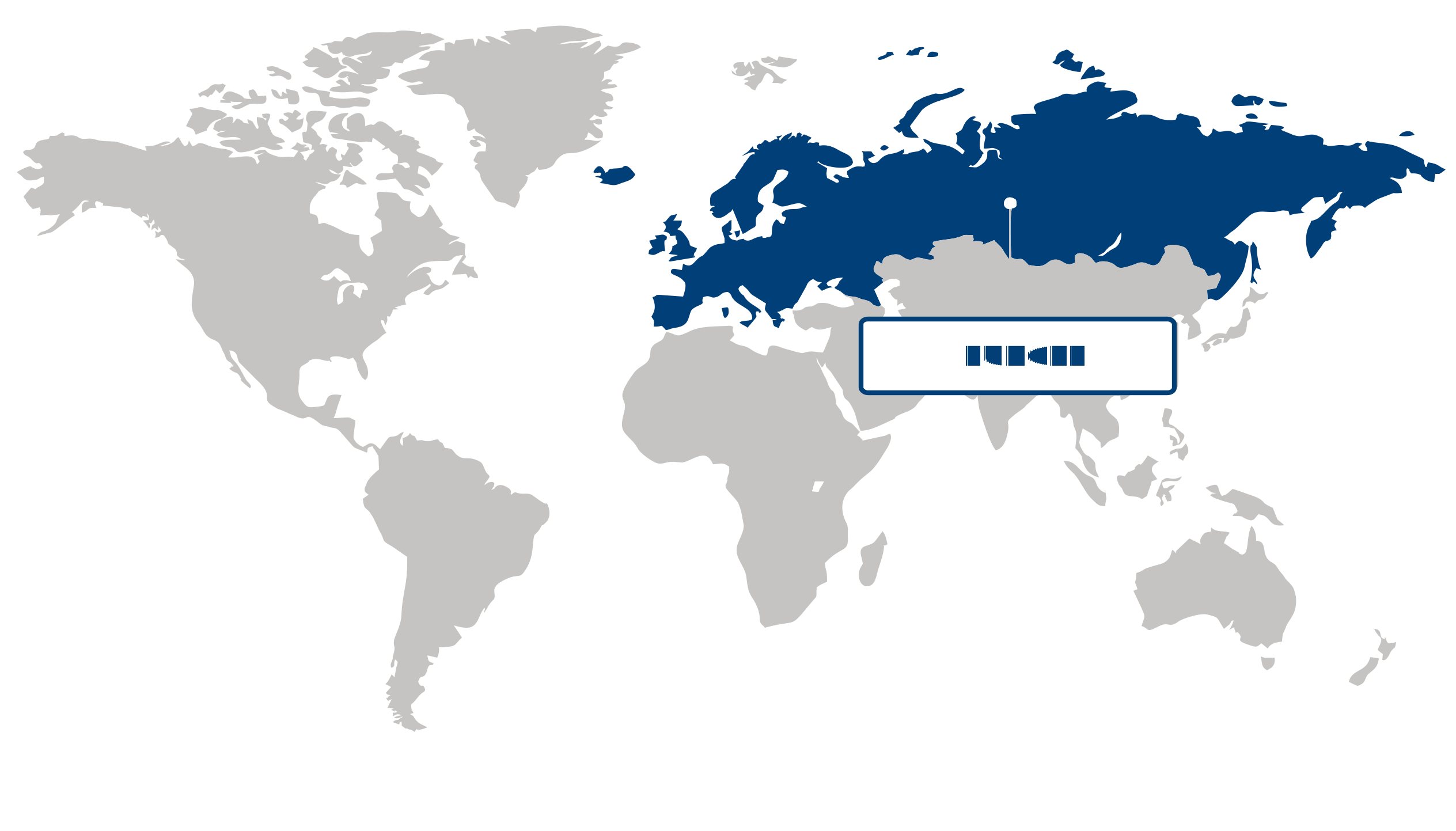
Europe captured more than 36% of the global plant phenotyping market in 2025, solidifying its position as the largest regional player. This leadership is underpinned by robust agricultural research funding and advanced crop science initiatives, particularly supported by the European Commission’s Horizon Europe program. The region benefits from a collaborative ecosystem involving research institutions like the Leibniz Institute of Plant Genetics and Crop Plant Research (IPK) and private sector innovation from companies such as BASF. Enhanced focus on sustainable agriculture through precise phenotype data accelerates adoption of these technologies, meeting stringent EU regulatory standards and shifting farmer preferences toward high-yield, resource-efficient crops. Europe’s infrastructure and commitment to digital transformation in agriculture position it for continued growth and technological sophistication in plant phenotyping.
Germany anchors the European plant phenotyping market with its deep integration of research and commercial applications. The country’s leading role is reinforced by strong government-backed initiatives like the German Plant Phenotyping Network, fostering collaboration between universities such as the University of Hohenheim and agritech firms including Fraunhofer. This synergy supports scalable phenotyping platforms used in crop breeding to address climate resilience and yield optimization, responding to market demand and regulatory frameworks. Germany’s innovation ecosystem enhances regional prospects by driving cutting-edge solutions that set benchmarks for phenotyping technology adoption across Europe.
France plays a pivotal role in Europe's plant phenotyping market through its strategic emphasis on precision agriculture and sustainability. National research bodies like INRAE (French National Institute for Agricultural Research) lead comprehensive phenotyping programs tailored to diverse crop varieties, supported by investments from public-private partnerships such as the French Plant Phenotyping Infrastructure (PhénoFrance). These efforts align with France’s agricultural reforms aimed at environmental stewardship and food security, translating into increased demand for sophisticated phenotyping tools among growers and breeders. France’s focus on integrating phenotyping data with genomic research further strengthens regional competitiveness and drives innovation in Europe’s plant phenotyping market.
Asia Pacific Market Analysis:
Asia Pacific emerged as the fastest-growing region in the plant phenotyping market, registering rapid growth with a robust CAGR of 12.9%. This impressive expansion is principally driven by the escalating need for crop yield optimization and climate-resilient agriculture across diverse agro-climatic zones. Countries in this region are increasingly adopting advanced phenotyping technologies to enhance genetic traits for stress tolerance, vital in addressing erratic weather patterns and diminishing arable land. Initiatives such as the International Rice Research Institute’s (IRRI) deployment of high-throughput phenotyping platforms underscore the region’s strategic emphasis on sustainable agricultural productivity. Moreover, government support in countries like India and Australia, through subsidies and research grants, is catalyzing innovation and market penetration, making Asia Pacific a critical hub for developing resilient crop varieties. With ongoing investments in digital agriculture and automation technologies, the region is poised to maintain its market leadership and attract further investor interest in plant breeding advancements.
Japan plays a pivotal role in Asia Pacific’s plant phenotyping market by leveraging its advanced research infrastructure and strong governmental backing for smart agriculture. The country’s focus on integrating phenomics with precision farming is exemplified by the Japan Science and Technology Agency’s funding of projects that accelerate the breeding of climate-resilient crops. Japanese agricultural companies are also increasingly incorporating AI-driven phenotyping systems, responding to consumer demand for sustainable food production and efficient resource use. This integration of cutting-edge technology within a robust regulatory framework positions Japan as a forerunner in translating phenotypic data into commercial crop improvements, reinforcing Asia Pacific’s leadership in the market.
China’s contribution to the region’s plant phenotyping market growth is underscored by its expansive agricultural sector and aggressive pursuit of food security through technological innovation. The Chinese Ministry of Agriculture and Rural Affairs has prioritized phenotyping research in national programs aimed at enhancing crop yields amid climate challenges. Investment in state-of-the-art phenotyping facilities, such as the National Crop Phenotyping Center, aligns with rising demand from both public and private sectors for high-throughput phenotyping technologies. These advancements support China’s strategic goal to increase agricultural sustainability and productivity, making it a key driver of Asia Pacific’s rapid market growth and a critical node in the global supply chain for plant phenotyping solutions.
North America Market Trends:
North America held a commanding share in the plant phenotyping market, driven by its robust agricultural biotechnology sector and advanced research infrastructure. The region benefits from substantial investment in digital agritech innovations, alongside supportive policies from entities like the U.S. Department of Agriculture that encourage precision agriculture to enhance crop yield and sustainability. Leading academic and private research collaborations, coupled with the rapid adoption of automated phenotyping platforms, underscore the region’s strategic emphasis on improving plant breeding efficiency. Additionally, evolving demands for sustainable farming practices, driven by consumer and regulatory pressure, have intensified the adoption of high-throughput phenotyping solutions. With global supply chains centered here and a skilled workforce in agri-science, North America remains pivotal for innovation and commercialization in the plant phenotyping market, positioning it for sustained growth and technological leadership.
The U.S. serves as the powerhouse within North America’s plant phenotyping market, propelled by widespread adoption of cutting-edge phenotyping tools across government and private sectors to address food security and climate resilience. Research investments from organizations like the National Science Foundation and collaborations with technology leaders such as Corteva Agriscience have accelerated advanced phenotyping technologies that integrate machine learning and imaging systems. Moreover, stringent agricultural policies and strong intellectual property frameworks foster innovation and commercialization. The convergence of precision agriculture and data-driven decision-making in the U.S. exemplifies how regulatory support and market demand coalesce, reinforcing the country’s critical role in driving regional advancements and expanding market opportunities in plant phenotyping.
| Parameter | North America | Asia Pacific | Europe | Latin America | MEA |
|---|---|---|---|---|---|
| Innovation Hub i Scale Nascent Developing Advanced | |||||
| Cost-Sensitive Region i Scale Low Medium High | |||||
| Regulatory Environment i Scale Restrictive Neutral Supportive | |||||
| Demand Drivers i Scale Weak Moderate Strong | |||||
| Development Stage i Scale Emerging Developing Developed | |||||
| Adoption Rate i Scale Low Medium High | |||||
| New Entrants / Startups i Scale Sparse Moderate Dense | |||||
| Macro Indicators i Scale Weak Stable Strong |
Segment Leadership and Growth Trends
Plant Phenotyping Market Share (%), by Product, 2026
Go beyond the chart, access full insights & data tables
Request Free Sample ReportThe equipment segment held the largest share in the plant phenotyping market in 2025, driven primarily by the rising deployment of phenotyping equipment that enables high-throughput plant trait analysis. This leadership reflects broad industry demand for automated and precise phenotyping solutions, addressing the need for scalability and accuracy in plant evaluation. Companies such as LemnaTec and Phenospex have demonstrated advancements in imaging and sensor technologies, supported by increasing investment in smart agriculture and digital farming initiatives. These innovations align with sustainability priorities by optimizing resource use and accelerating breeding cycles. The equipment segment offers strategic opportunities for established firms to enhance product portfolios and for emerging players to innovate niche technologies. Given ongoing technological improvements and expanding adoption across research institutes and agribusinesses, this segment is poised to maintain its relevance amidst evolving agricultural challenges and regulatory emphasis on food security.
Analysis by Application
The plant research segment represented the largest share in the plant phenotyping market in 2025, fueled by expanding initiatives aimed at developing stress-resilient and high-yield crop varieties. This dominance stems from intensified global efforts by research organizations such as the International Maize and Wheat Improvement Center (CIMMYT) and the CGIAR to address climate change impacts on agriculture. Growing demand from public and private research institutions for precise phenotyping to accelerate genetic gain reflects a cultural shift toward data-driven breeding and sustainable crop development. The segment's leadership benefits from integrating multidisciplinary collaborations and leveraging open-access phenotyping platforms. For industry players, it unlocks pathways to partnerships and funding in cutting-edge crop science. Given persistent environmental pressures and policy focus on agricultural innovation, the plant research segment remains a strategic pillar in the plant phenotyping market’s near-term outlook.
| Segment | Sub-Segment | Largest Segment | Fastest Growing |
|---|---|---|---|
| Product | Equipment, Software, Sensors | ||
| Application | Plant Research, Breeding, Product Development, Quality Assessments |
Competitive Landscape and Market Positioning
The competitive environment is characterized by a continuous infusion of technological advancements and strategic cooperation among the leading entities. These companies actively expand their capabilities by integrating cutting-edge sensor technologies, AI-driven analytics, and automated phenotyping systems, thereby enhancing scalability and data accuracy. Strategic alignments and collaborations facilitate access to new markets and accelerate innovation cycles. By deploying novel solutions that address both field and controlled environment phenotyping, these firms differentiate themselves, fostering resilience against emerging competitive pressures and aligning their offerings with evolving agronomic demands.
Strategic / Actionable Recommendations for Regional Players
North American companies should deepen synergies with technology innovators, particularly in AI and machine learning, to elevate phenotyping precision and broaden application scope. Fostering collaborations with agricultural research institutions can accelerate solution development and adoption.
Asian players would benefit from focusing on high-growth cropping segments by tailoring phenotyping tools to diverse climatic conditions and smaller-scale farming practices. Investment in portable, cost-effective platforms could capture underserved markets while complementing existing technologies.
European entities might capitalize on their strong R&D base by enhancing integration of multi-omics data with phenotypic analyses, supporting holistic breeding programs. Forming cross-border alliances can leverage regional expertise, ensuring sustained innovation and responsiveness to regulatory environments.
| Company | Market Share | Company Revenue | Revenue CAGR (%) | Product Portfolio | Geographic Presence | Innovation / R&D Focus | Strategic Developments |
|---|---|---|---|---|---|---|---|
| No companies available. | |||||||
Industry Development/News
| Company Name | Date | Key Development |
|---|
Customize Your Report
Explore examples of how this report can be tailored to different research needs, including custom segments, additional topics or chapters, and related reports. Click a section of the wheel or its numbered marker to explore the available options.
Plant Phenotyping Market — Custom Segments
| Segment | Sub-Segment |
|---|---|
| No segment data available. | |
Plant Phenotyping Market — Custom TOC
| Custom Chapter | Custom Details | ||
|---|---|---|---|
| No custom TOC data available. | |||
Need a different cut of the data?
Request Custom ResearchHow will the plant phenotyping industry grow in terms of size and CAGR by 2035?
What is the leading region in terms of plant phenotyping market share?
Which area is showing the greatest surge in plant phenotyping sector?
What share does equipment segment hold in the plant phenotyping sector as of 2025?
Where is the plant research segment seeing the strongest adoption within the plant phenotyping industry?
Who holds a significant market share in the plant phenotyping landscape?
Our Clients
"The team demonstrated a great understanding of our business needs, and the reports were tailored to address our specific concerns and objectives."
Infosys
"The report was up-to-date with the latest industry trends and technological advancements. The detailed competitive landscape analysis was quite helpful."
Zebra Technologies
"The data presented in the report was accurate and well-researched. I also found the market dynamics section particularly useful."
Arlo Technologies
Our Research Team & Methodology
Every Fundamental Business Insights report is built by a dedicated vertical research team, validated through a structured primary-and-secondary methodology, and reviewed for accuracy before it reaches you.
Research Team Overview
Prepared by the Smart Technologies Research Team
Delivery
Published
Demand
Available
Support
Trust & Compliance
Research Domains
10 coverage areasResearch Intelligence
| Source | Reference |
|---|---|
| National Institute of Standards and Technology (NIST) | www.nist.gov |
| International Organization for Standardization (ISO) | www.iso.org |
| Institute of Electrical and Electronics Engineers (IEEE) | www.ieee.org |
| Internet Engineering Task Force (IETF) | www.ietf.org |
| World Wide Web Consortium (W3C) | www.w3.org |
| Cloud Security Alliance (CSA) | cloudsecurityalliance.org |
| Open Source Initiative (OSI) | opensource.org |
| Linux Foundation | www.linuxfoundation.org |
| FinOps Foundation | www.finops.org |
| PCI Security Standards Council | www.pcisecuritystandards.org |
| SWIFT | www.swift.com |
| Financial Stability Board (FSB) | www.fsb.org |
| GSMA | www.gsma.com |
| International Telecommunication Union (ITU) | www.itu.int |
| OWASP Foundation | owasp.org |
| MITRE | www.mitre.org |
| World Economic Forum (WEF) | www.weforum.org |
| OECD Digital Economy | www.oecd.org/digital |
| World Bank Data | data.worldbank.org |
| U.S. Census Bureau | www.census.gov |
Research Workflow & Quality Assurance
Data Collection
Verified information gathered through primary and secondary research.
Data Triangulation
Cross-validation using multiple independent data sources.
Forecast Modelling
Market estimates developed using historical trends and analytical models.
Analyst Validation
Findings reviewed by domain experts for accuracy and consistency.
Editorial & Quality Review
Final editorial, quality, and compliance checks before publication.
Final Publication
Released after successful completion of the internal review process.
Report Coverage
📊 Market Assessment
- Market Size & Forecast
- Market Segmentation
- Regional Analysis
- Growth Drivers & Challenges
- Market Dynamics
🏢 Competitive Intelligence
- Competitive Landscape
- Company Profiles
- Competitive Benchmarking
- Mergers & Acquisitions
- Market Share Analysis or Key Company Strategies
🔍 Strategic Analysis
- Value Chain Analysis
- Porter's Five Forces
- PESTLE Analysis
- Pricing Trends
- Supply-Demand Analysis
🚀 Future Outlook
- Technology Landscape
- Regulatory Landscape
- Investment & Funding Landscape
- Emerging Opportunities
- Future Market Outlook
Have a question about this report or need a custom scope?
Request Customization