Photodiode Sensors Market Size & Forecasts 2026-2035, By Segments (Wavelength, Material, End use Industry, Photodiode), Growth Opportunities, Innovation Landscape, Regulatory Shifts, Strategic Regional Insights (U.S., Japan, China, South Korea, UK, Germany, France), and Competitive Dynamics (Hamamatsu Photonics, OSI Optoelectronics, First Sensor, Excelitas Technologies, Vishay Intertechnology)
Market Size and Growth Outlook
Photodiode Sensors Market size is forecast to climb from USD 656.03 million in 2025 to USD 1.35 billion by 2035, expanding at a CAGR of over 7.5% during 2026-2035. Industry revenue in 2026 is projected at USD 699.14 million.
Get more details on this report
Request Free Sample ReportPhotodiode Sensors Market Intelligence Snapshot
Regional Market Dynamics
Segment Momentum
Market Expansion Drivers
Leading Market Participants
Global Market Forecast Snapshot
Market Outlook
Regional and Segment Outlook
Market Growth Drivers and Industry Trends
The rising integration of optical sensors in advanced medical devices is a pivotal growth driver for the photodiode sensors market. Innovations in non-invasive diagnostics and patient monitoring systems, such as pulse oximeters and glucose monitors, rely heavily on photodiode sensors' precision, as noted in recent developments by Medtronic and Philips Healthcare. This trend reflects broader healthcare digitization and the shift toward remote patient care, offering strategic opportunities for sensor manufacturers to deepen collaborations with medical device firms. New entrants can leverage the ongoing push for miniaturization and enhanced sensor accuracy to differentiate products. Given the intensifying focus on healthcare innovation by regulatory agencies like the U.S. FDA and global health authorities, the photodiode sensors market is set to increasingly anchor itself in critical medical technology applications.
Technological Improvements in Photodiode Sensitivity
Advancements enhancing photodiode sensitivity are transforming the photodiode sensors market by enabling devices to operate with higher accuracy and lower power consumption. Companies such as Hamamatsu Photonics and OSRAM have reported breakthroughs in semiconductor materials and device architecture that significantly improve sensor performance in low-light environments. This technological evolution supports applications in consumer electronics and environmental monitoring, broadening use cases and competitive dynamics. Established players are positioned to capitalize on these improvements by integrating them into next-generation product lines, while startups exploiting innovation in nanomaterials and fabrication techniques can accelerate entry. Industry bodies like the International Electrotechnical Commission (IEC) continue to facilitate standardization, underpinning the sustainable adoption of these enhanced photodiode sensors.
Adoption in Automotive and Industrial Sensing Applications
The expanding deployment of photodiode sensors in automotive and industrial sectors is a major impetus for market growth. Leading automakers like Tesla and Bosch are embedding these sensors in advanced driver-assistance systems (ADAS) and factory automation for precise object detection and safety monitoring. This shift reflects the broader industrial digital transformation and stringent safety regulations enforced by authorities such as the European Union’s Automotive Safety Directive. For market incumbents, this driver presents a pathway to expand into high-value, reliability-critical segments, while new entrants can exploit niche industrial applications requiring customized sensing solutions. As connected and autonomous systems proliferate, the photodiode sensors market will continue to benefit from increasing standardization and demand for robust sensing technologies.
Industry Restraints:
High Manufacturing and Material Costs
The elevated costs associated with producing advanced photodiode sensors significantly hinder market expansion. Photodiodes require precision semiconductor materials and complex fabrication processes, inflating operational expenses and limiting affordability for many end-users. According to a 2023 report by the Semiconductor Industry Association (SIA), increasing raw material prices and tight supply of high-purity silicon wafers have raised overall component costs by over 15% year-on-year. This pricing pressure constrains adoption, particularly in cost-sensitive sectors such as consumer electronics and automotive safety systems. Established players face margin compression, while startups struggle to scale cost-effectively amid intense price competition. The inability to sufficiently lower manufacturing expenses will likely continue restricting widespread integration, compelling companies to innovate toward cost-efficient designs and seek alternative materials to maintain competitiveness.
Stringent Regulatory and Certification Requirements
Compliance with rigorous safety and environmental standards poses a significant barrier for photodiode sensor manufacturers. Agencies such as the European Chemicals Agency (ECHA) enforce strict regulations on hazardous substances under REACH, complicating material selection and lengthening time-to-market due to certification procedures. For instance, Apple's disclosures highlight exhaustive compliance testing for photodiode components in their AR devices, increasing both development timelines and costs. This complexity disproportionately affects new entrants lacking regulatory expertise and established supply chains, slowing innovation cycles. Consequently, market participants must invest heavily in certification processes and continuous regulatory monitoring. These frameworks are expected to tighten further in response to global sustainability agendas, sustaining this restraint and necessitating strategic emphasis on compliance efficiency and eco-friendly sensor manufacturing.
| Growth Driver | Impact on CAGR | Regulatory Influence | Geographic Relevance | Adoption Rate | Impact Timeline |
|---|---|---|---|---|---|
| Increasing demand for optical sensors in medical devices | 3.00% | Short term (≤ 2 yrs) | North America, Europe | Medium | Fast |
| Technological improvements in photodiode sensitivity | 2.50% | Medium term (2–5 yrs) | Asia Pacific, North America | Low | Moderate |
| Adoption in automotive and industrial sensing applications | 2.00% | Long term (5+ yrs) | Europe, Asia Pacific | Low | Slow |
Unlock insights tailored to your business with our bespoke market research solutions.
Click to get your customized report now.
Regional Demand Dynamics
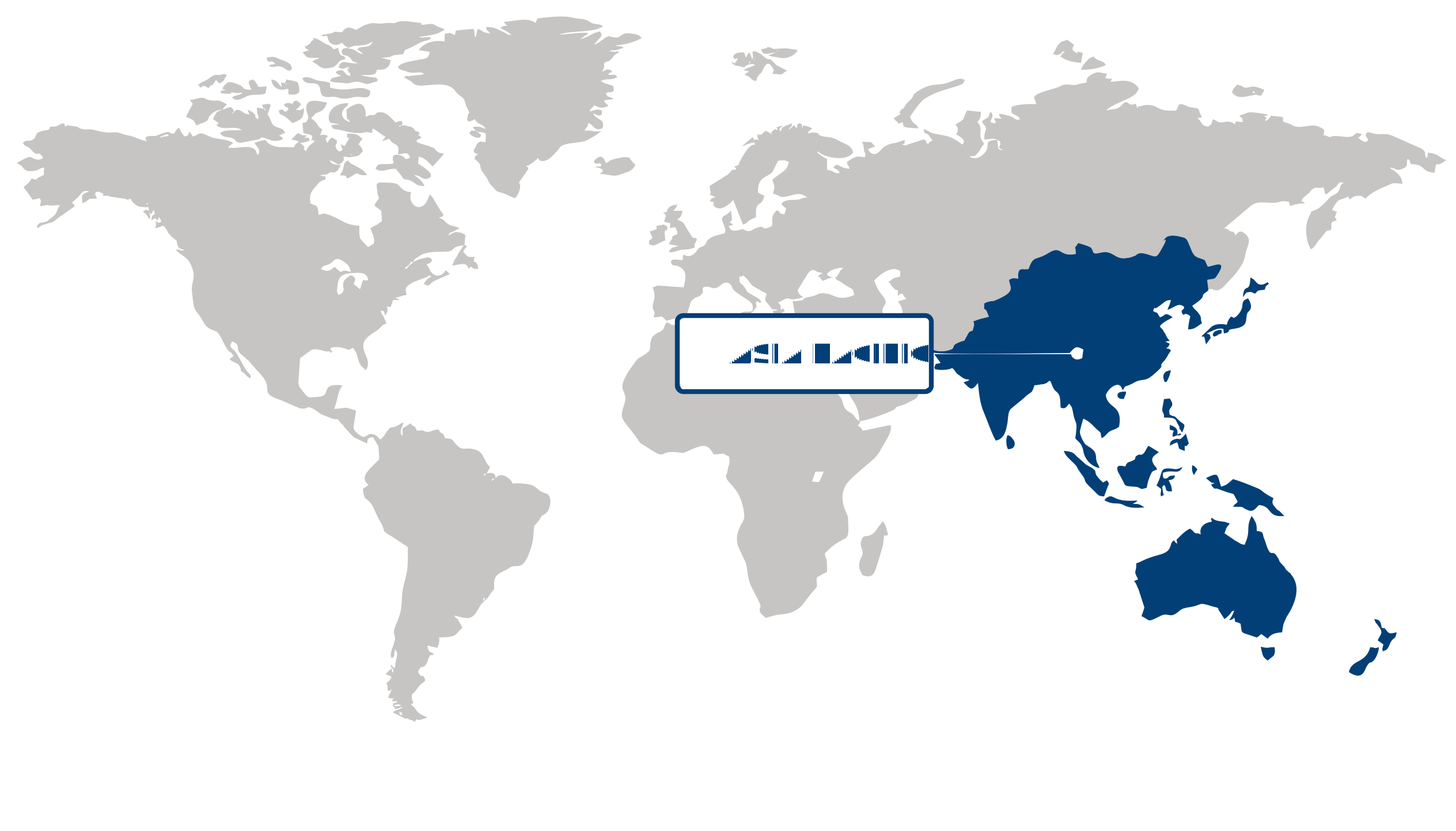
Asia Pacific dominated the photodiode sensors market in 2025, capturing approximately 46% of the global share. This region leads primarily due to its robust electronics manufacturing base alongside rising demand in consumer electronics, automotive, and optical communications sectors. The region's ability to rapidly adapt to technological advancements and integrate photodiode sensors into innovative applications, supported by government incentives in countries like China and Japan, fuels expansion. For instance, the Ministry of Industry and Information Technology of China actively promotes semiconductor advancements, boosting sensor adoption. Moreover, culturally driven digital transformation and growing middle-class spending power further accelerate demand. Looking ahead, Asia Pacific’s ecosystem, marked by competitive supply chains and emerging technological capabilities, positions it for sustained opportunities in photodiode sensor innovations and application diversification.
Japan is positioned as a pivotal hub in the Asia Pacific photodiode sensors market, leveraging its advanced automotive industry and pioneering optical communication technologies. The country's commitment to precision manufacturing and integrated circuit innovation, as underscored by the Japan Electronics and Information Technology Industries Association, enhances its market role. Japan's focus on energy-efficient and miniaturized sensor solutions aligns with shifting consumer preferences towards smarter and more sustainable devices. This strategic emphasis cements Japan’s influence in the regional photodiode sensors market and underpins broader Asia Pacific growth.
China anchors the Asia Pacific photodiode sensors market through its massive consumer electronics production and expansive automotive sector. The Chinese government's strong support for semiconductor self-sufficiency and the large-scale deployment of 5G infrastructure, highlighted by the China Semiconductor Industry Association, underpin sensor demand. Furthermore, local firms are aggressively innovating to meet shifting preferences favoring affordable, high-performance sensors, boosting competitive dynamics. China’s strategic investments in supply chain resilience and R&D capacity extend its vital contribution to Asia Pacific’s leadership in the photodiode sensors market.
North America Market Analysis:
North America emerged as the fastest-growing region in the photodiode sensors market, registering a robust CAGR of 9.5%. This rapid growth is driven primarily by the region’s advanced adoption of sensing technologies across diverse sectors such as healthcare, automotive, defense, and research and development. Increasing demand for precise and reliable photodiode sensors in medical diagnostic devices, autonomous vehicle systems, and defense-grade surveillance equipment reflects the sophisticated technological ecosystem prevalent in the region. According to the U.S. Department of Energy, ongoing investments in innovative sensor technologies and collaborative R&D efforts between industry and academia further amplify North America’s leadership. Additionally, regulatory emphasis on safety standards and data accuracy in these sectors fosters innovation and market penetration. As digital transformation continues to accelerate and cross-sector integration of photodiode sensors expands, North America offers significant opportunities driven by its dynamic innovation landscape and high value on precision instrumentation.
The U.S. is a pivotal market within North America, spearheading adoption of photodiode sensors due to its dominance in healthcare technology and automotive innovation. The country’s healthcare sector, supported by agencies like the National Institutes of Health, increasingly leverages advanced photodiode sensors for non-invasive diagnostic tools and enhanced patient monitoring systems, responding to rising consumer demand for accuracy and early disease detection. Meanwhile, automotive manufacturers such as General Motors and Tesla are integrating photodiode sensor arrays for LIDAR and driver assistance technologies, influenced by stringent safety regulations under the National Highway Traffic Safety Administration. These trends illustrate how U.S.-based innovation, strict regulatory environments, and escalating consumer expectations position the country as a critical nucleus fueling North America’s growth in the photodiode sensors market. This leadership solidifies the U.S. as both a strategic innovation hub and a high-demand market, reinforcing broader regional expansion prospects.
Europe Market Trends:
Europe held a substantial share in the photodiode sensors market, driven by the region’s robust industrial base and escalating adoption of precision automation and smart manufacturing technologies. Regulatory frameworks emphasizing energy efficiency and environmental sustainability, such as the European Green Deal, have accelerated demand for advanced sensing solutions in automotive, healthcare, and consumer electronics sectors. Leading European players, including Infineon Technologies and Osram Opto Semiconductors, have intensified innovation in photodiode sensor technology, aligning with Industry 4.0 initiatives and digital transformation trends highlighted by the European Semiconductor Industry Association. Additionally, the region's resilient supply chains and skilled talent pool support high-value manufacturing and R&D capabilities, creating a competitive edge. Given these factors, Europe presents significant opportunities for expanding application areas like autonomous vehicle systems and healthcare diagnostics, underscoring its role as a strategic hub within the global photodiode sensors market.
Germany serves as a pivotal market within Europe’s photodiode sensors landscape, anchored by its commanding automotive and industrial automation sectors. The German government’s focus on Industry 4.0 and its substantial investment in next-generation manufacturing technologies, as emphasized in announcements from the Federal Ministry for Economic Affairs and Climate Action, have spurred innovation and integration of photodiode sensors in precision control systems. Furthermore, companies like Infineon Technologies AG are pioneering advanced sensor solutions tailored for electric vehicles and industrial equipment, reflecting Germany’s technology-driven consumer and industrial demand. These dynamics position Germany as a key driver of regional growth, leveraging its advanced innovation ecosystem and manufacturing expertise to fuel the broader European photodiode sensors market expansion.
France occupies a significant position in Europe’s photodiode sensors market, with growth propelled by its strong healthcare and aerospace industries, complemented by government initiatives to boost digital health technologies and environmental sustainability. The French National Research Agency’s support for photonic innovations and corporate expansions, including Safran’s advancements in sensor technology for aerospace applications, underscore increasing adoption of photodiode sensors in high-precision contexts. Additionally, France’s commitment to reducing carbon emissions enhances demand for sensor-integrated smart infrastructure solutions. These factors collectively enhance the country’s strategic contribution to Europe’s photodiode sensors market, fostering opportunities to scale innovative solutions aligned with evolving sectoral requirements and regulatory priorities.
| Parameter | North America | Asia Pacific | Europe | Latin America | MEA |
|---|---|---|---|---|---|
| Innovation Hub i Scale Nascent Developing Advanced | |||||
| Cost-Sensitive Region i Scale Low Medium High | |||||
| Regulatory Environment i Scale Restrictive Neutral Supportive | |||||
| Demand Drivers i Scale Weak Moderate Strong | |||||
| Development Stage i Scale Emerging Developing Developed | |||||
| Adoption Rate i Scale Low Medium High | |||||
| New Entrants / Startups i Scale Sparse Moderate Dense | |||||
| Macro Indicators i Scale Weak Stable Strong |
Segment Leadership and Growth Trends
Photodiode Sensors Market Share (%), by Wavelength, 2026
Go beyond the chart, access full insights & data tables
Request Free Sample ReportNear Infrared (NIR) Spectrum held the largest share in the photodiode sensors market in 2025, driven by robust demand from telecommunications, ambient-light sensing, and industrial modules. The segment’s leadership is reinforced by the increasing need for efficient data transmission and precise environmental monitoring, aligning with evolving customer preferences for enhanced connectivity and automation. The International Telecommunication Union (ITU) has highlighted NIR’s critical role in expanding optical communication infrastructure, supporting industry-wide digital transformation efforts. This segment strategically enables established firms to innovate high-performance telecom components while allowing newcomers to penetrate industrial sensing markets with niche applications. Given ongoing advancements in fiber optic technology and smart sensor integration, the NIR segment is poised to maintain its dominance as digital ecosystems expand globally.
Analysis by Material
Silicon (Si) represented the largest share in the photodiode sensors market in 2025, owing to its cost-effectiveness, reliability, and widespread integration in consumer and telecom applications. The material’s dominance stems from mature manufacturing processes and broad supply-chain resilience that meet rising consumer demand for affordable, high-quality photodiodes. As noted by the Semiconductor Industry Association (SIA), silicon’s compatibility with existing semiconductor fabs ensures scalability and innovation velocity amid tightening global supply conditions. Silicon’s versatility creates opportunities for both incumbent technology leaders to optimize performance and emerging vendors to offer specialized solutions in wearable and optical interface markets. Continued advancements in silicon photonics and expanding application footprints in emerging economies will sustain its leading position in the foreseeable future.
Analysis by End Use Industry
Consumer Electronics represented the largest share of the photodiode sensors market in 2025, fueled by the expanding adoption of photodiodes in smartphones, wearables, and consumer optical systems. This segment is propelled by consumers’ growing demand for enhanced device functionality, including biometric sensing and ambient light adaptation, which are critical in smart devices. Leading brands like Apple and Samsung have publicly underscored investments in advanced sensor integration to improve user experience, validating this demand trend. The consumer electronics segment offers strategic advantages by allowing established players to consolidate market share while enabling innovative startups to develop miniaturized, energy-efficient sensor solutions. Given continuous innovation cycles and escalating consumer expectations, photodiode sensors will remain integral to consumer electronics development well into the medium term.
| Segment | Sub-Segment | Largest Segment | Fastest Growing |
|---|---|---|---|
| Wavelength | Visible Spectrum, Ultra Violet (UV) Spectrum, Infrared (IR) Spectrum, Near Infrared (NIR) Spectrum | ||
| Material | Germanium (Ge), Silicon (Si), Indium Gallium Arsenide (InGaAs), Gallium Phosphide (GaP) | ||
| End use Industry | Telecommunications, Healthcare, Aerospace & Defense, Consumer Electronics, Others | ||
| Photodiode | PIN Photodiode, PN Photodiode, Schottky Photodiode, Avalanche Photodiode |
Competitive Landscape and Market Positioning
The competitive landscape is shaped by a series of targeted initiatives that underscore the priority placed on innovation and market responsiveness. Leading players have enhanced their portfolios through strategic alignments and the introduction of next-generation photodiodes optimized for emerging applications like LiDAR and wearables. Increased investment in miniaturization and energy efficiency reflects attempts to meet evolving customer demands. Collaborative developments also amplify their capabilities in precision sensing and broaden application scopes. Collectively, these moves consolidate their market positions, stimulate technological advancement, and maintain a high barrier to entry for new entrants.
Strategic / Actionable Recommendations for Regional Players
North American entities should intensify collaborations with technology innovators and OEMs focused on automotive and medical sectors, areas witnessing rapid photodiode sensor adoption. Enhancing R&D directed toward ultra-sensitive and low-power sensors can differentiate offerings while addressing stringent regulatory and performance standards.
In the Asia Pacific region, capitalizing on integration with semiconductor manufacturing hubs and expanding into high-growth smart device markets will be crucial. Fostering synergies with electronics manufacturers can accelerate product scalability and adaptation to consumer trends, while advancing research in novel materials may offer competitive advantages.
European players are well-positioned to leverage their strengths in precision engineering and industry 4.0 applications. Emphasizing partnerships with industrial automation firms and prioritizing sustainable sensor technologies can improve their value proposition. Additionally, investing in adaptive sensing solutions tailored to energy and environmental monitoring could unlock new avenues for growth.
| Company | Market Share | Company Revenue | Revenue CAGR (%) | Product Portfolio | Geographic Presence | Innovation / R&D Focus | Strategic Developments |
|---|---|---|---|---|---|---|---|
| No companies available. | |||||||
Industry Development/News
| Company Name | Date | Key Development |
|---|
Customize Your Report
Explore examples of how this report can be tailored to different research needs, including custom segments, additional topics or chapters, and related reports. Click a section of the wheel or its numbered marker to explore the available options.
Photodiode Sensors Market — Custom Segments
| Segment | Sub-Segment |
|---|---|
| No segment data available. | |
Photodiode Sensors Market — Custom TOC
| Custom Chapter | Custom Details | ||
|---|---|---|---|
| No custom TOC data available. | |||
Need a different cut of the data?
Request Custom ResearchWhat is the forecasted size of the photodiode sensors industry?
Which territory demonstrates the strongest presence in the photodiode sensors market?
In which region is the photodiode sensors sector expanding most rapidly?
Why does near infrared (NIR) spectrum sub-segment dominate the wavelength segment of photodiode sensors sector?
How much is the silicon (si) segment expected to grow in the photodiode sensors industry beyond 2025?
What factors give consumer electronics segment a competitive edge in the photodiode sensors sector?
Which is the largest sub-segment within the photodiode segment for photodiode sensors industry?
What are the prominent companies operating in the photodiode sensors landscape?
Our Clients
"Working with FBI has been a good experience. The market report provided a holistic view, covering everything from emerging trends to potential risks."
Semtech Corporation
"The experience was highly positive. The team showcased remarkable flexibility in adapting to our specific needs and delivered report that perfectly aligned with all our requirements."
TSMC
"What really stood out to me was how clearly and promptly the Fundamental Business Insights team communicated throughout. It made the collaboration feel effortless."
NXP Semiconductors
Our Research Team & Methodology
Every Fundamental Business Insights report is built by a dedicated vertical research team, validated through a structured primary-and-secondary methodology, and reviewed for accuracy before it reaches you.
Research Team Overview
Prepared by the Electronics & Semiconductors Research Team
Delivery
Published
Demand
Available
Support
Trust & Compliance
Research Domains
10 coverage areasResearch Intelligence
| Source | Reference |
|---|---|
| Semiconductor Industry Association (SIA) | www.semiconductors.org |
| SEMI | www.semi.org |
| JEDEC Solid State Technology Association | www.jedec.org |
| IEEE | www.ieee.org |
| IPC – Association Connecting Electronics Industries | www.ipc.org |
| International Electrotechnical Commission (IEC) | www.iec.ch |
| International Organization for Standardization (ISO) | www.iso.org |
| U.S. Bureau of Industry and Security (BIS) | www.bis.gov |
| U.S. Patent and Trademark Office (USPTO) | www.uspto.gov |
| European Patent Office (EPO) | www.epo.org |
| Taiwan Semiconductor Industry Association (TSIA) | www.tsia.org.tw |
| World Semiconductor Trade Statistics (WSTS) | www.wsts.org |
| International Energy Agency (IEA) | www.iea.org |
| GSMA | www.gsma.com |
| 3GPP | www.3gpp.org |
| ITU (International Telecommunication Union) | www.itu.int |
| Omdia (public insights) | omdia.tech.informa.com |
| Display Supply Chain Consultants (DSCC) | www.displaysupplychain.com |
| U.S. Department of Energy (DOE) | www.energy.gov |
| NIST (National Institute of Standards and Technology) | www.nist.gov |
Research Workflow & Quality Assurance
Data Collection
Verified information gathered through primary and secondary research.
Data Triangulation
Cross-validation using multiple independent data sources.
Forecast Modelling
Market estimates developed using historical trends and analytical models.
Analyst Validation
Findings reviewed by domain experts for accuracy and consistency.
Editorial & Quality Review
Final editorial, quality, and compliance checks before publication.
Final Publication
Released after successful completion of the internal review process.
Report Coverage
📊 Market Assessment
- Market Size & Forecast
- Market Segmentation
- Regional Analysis
- Growth Drivers & Challenges
- Market Dynamics
🏢 Competitive Intelligence
- Competitive Landscape
- Company Profiles
- Competitive Benchmarking
- Mergers & Acquisitions
- Market Share Analysis or Key Company Strategies
🔍 Strategic Analysis
- Value Chain Analysis
- Porter's Five Forces
- PESTLE Analysis
- Pricing Trends
- Supply-Demand Analysis
🚀 Future Outlook
- Technology Landscape
- Regulatory Landscape
- Investment & Funding Landscape
- Emerging Opportunities
- Future Market Outlook
Have a question about this report or need a custom scope?
Request Customization