Palletizing Robot Market Size & Growth Forecast 2027–2036, By Segments (Robot Type, End-use, Payload, Application, Range), Regional Demand Trends (North America, Asia Pacific, Europe), Key Country Insights (U.S., Japan, South Korea, Germany, France, Italy), and Competitive Landscape
Jump to Content
Market Size and Growth Outlook
Palletizing Robot Market size was over USD 61.01 Billion in 2026 and is likely to grow at 6.36% CAGR between 2027 and 2036, exceeding USD 113.03 Billion by 2036. The industry revenue for 2027 is calculated at USD 64.3 Billion.
Get more details on this report
Request Free Sample ReportPalletizing Robot Market Intelligence Snapshot
Regional Market Dynamics
- Asia Pacific held a 36.72% share in 2026, supported by its manufacturing base, warehouse automation, and rising demand for efficient, consistent material-handling operations.
- Growing emphasis on production efficiency, labor optimization, automated logistics, and consistent handling performance is encouraging manufacturers and distribution facilities to integrate robotic palletizing solutions.
Segment Momentum
- Articulated robots accounted for 59.36% of the market in 2026 because they offer extensive motion, reliable high-volume operation, and flexibility to handle diverse package sizes and complex palletizing tasks.
- The above 500 kg payload segment is expanding rapidly as industries automate heavy-load handling in manufacturing, construction materials, and bulk logistics, supported by investments in warehouse modernization and heavy-duty automation.
Market Expansion Drivers
- Rising automation demand in manufacturing and logistics accelerating robotic palletizing deployment
- E-commerce expansion and supply chain scaling driving warehouse robotics adoption
- Labor shortages and workplace safety concerns increasing adoption of industrial palletizing robots
Leading Market Participants
- Prominent players in the palletizing robot market include ABB Ltd. (Switzerland), FANUC Corporation (Japan), KUKA AG (Germany), Yaskawa Electric Corporation (Japan), Mitsubishi Electric Corporation (Japan), Kawasaki Heavy Industries, Ltd. (Japan), Universal Robots A/S (Denmark), BEUMER Group GmbH & Co. KG (Germany), Honeywell International Inc. (United States), Schneider Electric SE (France)
Global Market Forecast Snapshot
Market Outlook
- 2026 Market Size: USD 61.01 Billion
- 2027 Estimated Market Size: USD 64.3 Billion
- Projected Market Size: USD 113.03 Billion by 2036
- Growth Forecast: 6.36% CAGR (2027-2036)
Regional and Segment Outlook
- Leading Regional Market: Asia Pacific
- High-Growth Regional Hub: Asia Pacific
- Core Revenue Segment: Articulated Robot (Robot Type) | Food and Beverage (End-use) | 100-300 Kg (Payload) | Cases and Boxes Palletizing (Application) | 1,000-3,000 Mm (Range)
- Emerging Opportunity Segment: Cobots (Robot Type) | Food and Beverage (End-use) | Above 500 Kg (Payload) | Cases and Boxes Palletizing (Application) | Above 3,000 Mm (Range)
Market Growth Drivers and Industry Trends
Rising automation demand in manufacturing and logistics accelerating robotic palletizing deployment
Manufacturers and logistics operators are increasingly adopting automation solutions to improve operational efficiency, reduce manual handling, and maintain consistent production workflows. Rising automation requirements will drive the palletizing robot market growth as robotic systems enable faster pallet handling, improved accuracy, and streamlined end-of-line processes. Industries are integrating these solutions to optimize throughput and address the need for more flexible material movement across production environments.
E-commerce expansion and supply chain scaling driving warehouse robotics adoption
Rapid growth in online commerce is increasing pressure on warehouses to manage higher order volumes and improve fulfillment efficiency. The palletizing robot market growth is strengthened by expanding warehouse automation initiatives, as robotic palletizing systems help distribution centers manage repetitive packaging and stacking operations with greater speed and reliability. Businesses are investing in robotics to support scalable supply chain operations and enhance responsiveness to changing consumer demand patterns.
Labor shortages and workplace safety concerns increasing adoption of industrial palletizing robots
Persistent workforce challenges and the need to reduce workplace risks are encouraging companies to replace physically demanding manual palletizing activities with automated solutions. The palletizing robot market demand is rising as industrial robots help minimize employee exposure to repetitive lifting tasks while improving operational safety. Industries are increasingly deploying robotic palletizers to maintain productivity levels and create safer working environments across manufacturing facilities.
| Growth Driver | Impact on CAGR | Regulatory Influence | Geographic Relevance | Adoption Rate | Impact Timeline |
|---|---|---|---|---|---|
| Rising automation demand in manufacturing and logistics accelerating robotic palletizing deployment | 2% | Moderate | Asia Pacific, North America | High | Near Term |
| E-commerce expansion and supply chain scaling driving warehouse robotics adoption | 1.9% | Low | North America, Asia Pacific | High | Near Term |
| Labor shortages and workplace safety concerns increasing adoption of industrial palletizing robots | 1.7% | Moderate | Europe, North America | High | Mid Term |
Explore Growth Opportunities
Request Free Sample ReportRegional Demand Dynamics
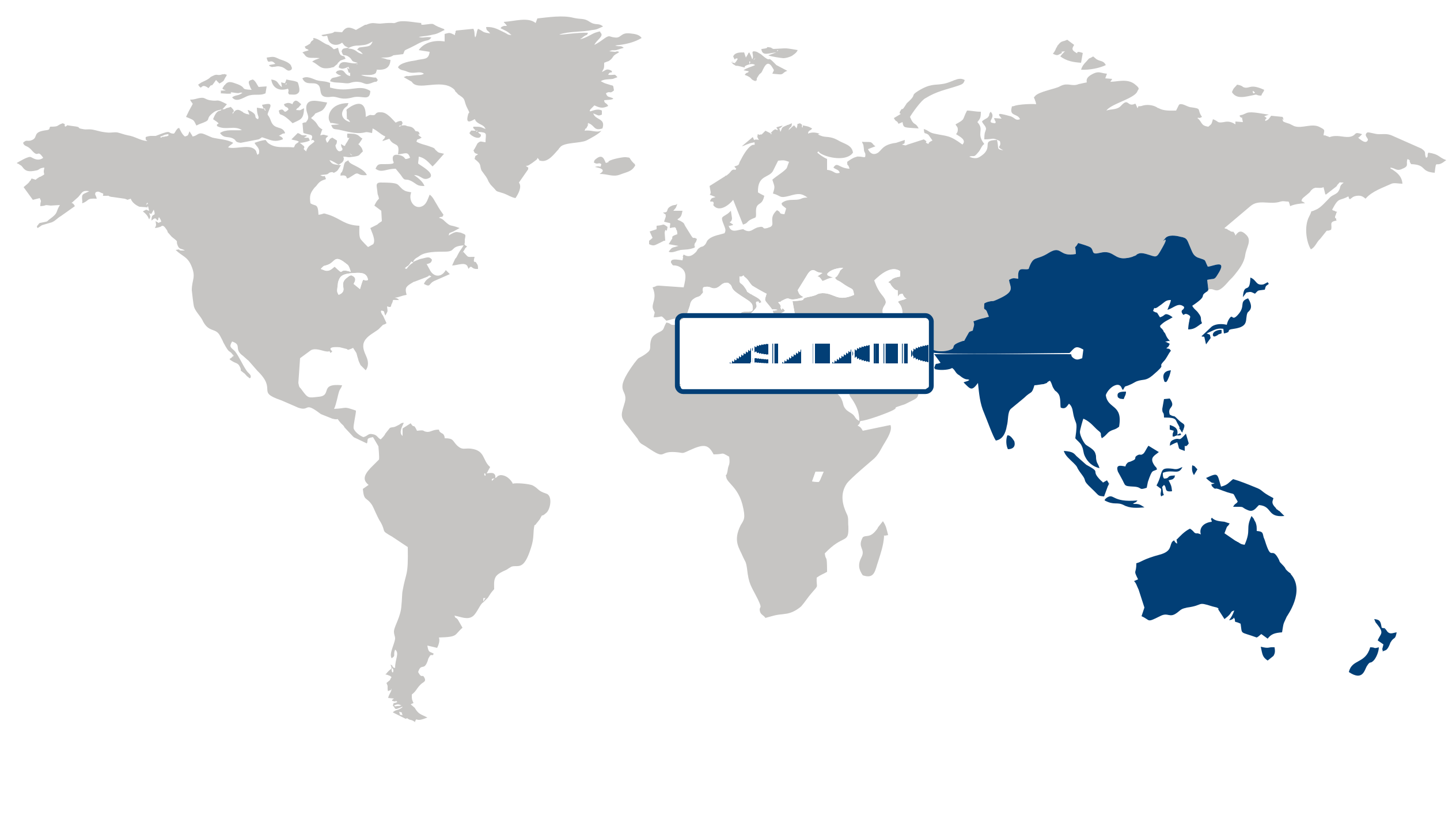
Asia Pacific (Largest & Fastest-Growing Region)
Asia Pacific led the palletizing robot market with a 36.72% share in 2026 and is also positioned as the fastest-growing region. The region’s strong manufacturing base, increasing warehouse automation, and expanding demand for efficient material-handling operations are accelerating the adoption of robotic palletizing solutions. Growing emphasis on production efficiency, consistent handling performance, labor optimization, and automated logistics is encouraging manufacturers and distribution facilities to integrate palletizing robots into increasingly automated operations.
| Parameter | North America | Asia Pacific | Europe | Latin America | MEA |
|---|---|---|---|---|---|
| Innovation HubiScaleNascentDeveloping Advanced | |||||
| Cost-Sensitive RegioniScaleLowMedium High | |||||
| Regulatory EnvironmentiScaleRestrictiveNeutral Supportive | |||||
| Demand DriversiScaleWeakModerate Strong | |||||
| Development StageiScaleEmergingDeveloping Developed | |||||
| Adoption RateiScaleLowMedium High | |||||
| New Entrants / StartupsiScaleSparseModerate Dense | |||||
| Macro IndicatorsiScaleWeakStable Strong |
Key Country Insights
United States 🇺🇸
Warehouse Automation ExpansionThe U.S. is accelerating palletizing robot deployment across logistics, e-commerce fulfillment, and manufacturing facilities to improve throughput and labor efficiency. In the U.S., companies are prioritizing flexible robotic systems that can handle diverse packaging formats and integrate with existing warehouse management platforms.
Germany 🇩🇪
Smart Factory IntegrationGermany emphasizes palletizing robots as part of broader Industry 4.0 manufacturing upgrades, particularly in automotive and industrial production lines. German facilities are focusing on high-precision automation systems that can operate within tightly controlled production environments.
Japan 🇯🇵
Labor-Efficiency AutomationJapan is increasingly deploying palletizing robots to address labor constraints in manufacturing and logistics operations. In Japan, companies are prioritizing compact, high-reliability robotic systems designed for continuous operation in space-efficient industrial environments.
South Korea 🇰🇷
High-Speed Robotics DeploymentSouth Korea is adopting palletizing robots to enhance production speed and logistics efficiency in electronics and consumer goods manufacturing. Domestic industries in South Korea focus on high-speed automation systems that support rapid order fulfillment and production scalability.
France 🇫🇷
Industrial Logistics AutomationFrance is integrating palletizing robots into manufacturing and distribution centers to streamline material handling processes. In France, adoption is driven by demand for safer, more consistent warehouse operations and improved handling efficiency across industrial supply chains.
Italy 🇮🇹
SME Automation AdoptionItaly is expanding palletizing robot usage among small and mid-sized manufacturers seeking cost-effective automation solutions. Italian firms are increasingly investing in modular robotic systems that improve packaging efficiency while maintaining operational flexibility.
Palletizing Robot Market Share (%), by Robot Type, 2026
Go beyond the chart, access full insights & data tables
Request Free Sample ReportRobot Type Segment Analysis: Articulated Robot (Largest Segment) vs Cobots (Fastest-Growing Segment)
The palletizing robot market was led by the articulated robot segment, which accounted for a 59.36% share in 2026. Articulated robots remain the preferred choice for high-volume palletizing operations due to their extensive range of motion, ability to handle diverse package sizes, and suitability for complex stacking patterns. Their reliability in continuous industrial environments, coupled with compatibility with automated production lines, has strengthened their adoption across manufacturing, warehousing, and logistics facilities seeking improved operational efficiency.
The cobots segment is witnessing the fastest growth as manufacturers increasingly prioritize flexible automation that can safely operate alongside human workers. Cobots require less floor space and simpler deployment than conventional industrial robots, making them particularly attractive for facilities with changing production requirements or limited automation infrastructure. Their ease of programming and adaptability to multiple palletizing tasks further support expanding adoption among businesses pursuing scalable automation solutions.
End-use Segment Analysis: Food and Beverage (Largest & Fastest-Growing Segment)
Holding the largest share of the palletizing robot market, the food and beverage segment accounted for 38.88% in 2026 while also emerging as the fastest-growing segment. The industry's emphasis on high-throughput production, strict hygiene standards, and consistent packaging quality has accelerated the deployment of automated palletizing systems. Rising demand for packaged foods and beverages, combined with the need to reduce manual handling and improve workplace safety, continues to encourage manufacturers to invest in robotic palletizing solutions capable of operating efficiently across varied packaging formats.
Payload Segment Analysis: 100-300 Kg (Largest Segment) vs Above 500 Kg (Fastest-Growing Segment)
The 100-300 kg payload segment held the largest share in 2026, reflecting its versatility across a broad range of palletizing applications. Robots within this payload category provide an effective balance between lifting capacity, speed, and operational flexibility, enabling manufacturers to handle medium-weight loads efficiently while maintaining high productivity. Their suitability for multiple industries has reinforced their widespread deployment in automated material handling operations.
Demand for robots with payloads above 500 kg is expanding at the fastest pace as industries increasingly automate the handling of oversized and heavy products. Large-scale manufacturing, construction materials, and bulk logistics operations require robotic systems capable of moving heavier loads while maintaining precision and reliability. Continued investments in heavy-duty automation and warehouse modernization are expected to strengthen the adoption of this payload category.
| Segment | Sub-Segment | Largest Segment | Fastest Growing |
|---|---|---|---|
| Robot Type | SCARA, Cobots, Deltas, Articulated Robot, Gantry Robot | Articulated Robot | Cobots |
| End-use | Discrete Manufacturing, Chemicals & Materials, Electrical & Electronics, Food and Beverage, Pharmaceutical & Healthcare, Transportation & Warehousing, Others | Food and Beverage | Food and Beverage |
| Payload | Less Than 100 Kg,100-300 Kg,300-500 Kg, Above 500 Kg | 100-300 Kg | Above 500 Kg |
| Application | Cases and Boxes Palletizing, Bags and Sacks Palletizing, Bundles Palletizing, Others | Cases and Boxes Palletizing | Cases and Boxes Palletizing |
| Range | Below 1,000 Mm,1,000-3,000 Mm, Above 3,000 Mm | 1,000-3,000 Mm | Above 3,000 Mm |
Unlock insights tailored to your business with our bespoke market research solutions.
Click to get your customized report now.
Competitive Landscape and Market Positioning
Key companies in the palletizing robot market:
- ABB Ltd. (Switzerland)
- FANUC Corporation (Japan)
- KUKA AG (Germany)
- Yaskawa Electric Corporation (Japan)
- Mitsubishi Electric Corporation (Japan)
- Kawasaki Heavy Industries Ltd. (Japan)
- Universal Robots A/S (Denmark)
- BEUMER Group GmbH & Co. KG (Germany)
- Honeywell International, Inc. (United States)
- Schneider Electric SE (France)
Automation providers are shifting their competitive focus from standalone robotic hardware toward complete palletizing solutions that integrate software, vision systems, and operational analytics. Customers increasingly expect flexible platforms capable of adapting to changing package dimensions, mixed-product handling, and evolving warehouse workflows with minimal reconfiguration, prompting suppliers to emphasize programming simplicity and deployment speed. The growing importance of lifecycle support is also reshaping competition, as manufacturers expand predictive maintenance capabilities and remote diagnostics to improve equipment availability, making long-term operational performance as influential as initial installation capabilities.
| Company | Market Share | Company Revenue | Revenue CAGR (%) | Product Portfolio | Geographic Presence | Innovation / R&D Focus | Strategic Developments |
|---|---|---|---|---|---|---|---|
| ABB Ltd. (Switzerland) | |||||||
| FANUC Corporation (Japan) | |||||||
| KUKA AG (Germany) | |||||||
| Yaskawa Electric Corporation (Japan) | |||||||
| Mitsubishi Electric Corporation (Japan) | |||||||
| Kawasaki Heavy Industries Ltd. (Japan) | |||||||
| Universal Robots A/S (Denmark) | |||||||
| BEUMER Group GmbH & Co. KG (Germany) | |||||||
| Honeywell International Inc. (United States) | |||||||
| Schneider Electric SE (France) |
Industry Development/News
| Company Name | Date | Key Development |
|---|---|---|
| Honeywell | Apr-26 | Honeywell agreed to divest its Intelligrated and Transnorm warehouse automation businesses to American Industrial Partners. This strategic portfolio realignment shifts ownership of significant warehouse automation operations, directly impacting the development and distribution of the company's robotic material handling and palletizing technologies. |
| Sojo Industries | Jun-25 | Sojo Industries secured USD 40 million in funding to expand its modular robotic packaging and mobile manufacturing operations. The capital injection is directed toward scaling its automated packaging and material handling capabilities across its national sortation network and customer-site deployments. |
| KUKA | Jun-25 | KUKA introduced its updated autonomous mobile robot (AMR) portfolio designed to optimize material handling efficiency and simplify warehouse integration. This expansion enhances the company's automated logistics ecosystem, supporting flexible component transport within broader robotic palletizing workflows. |
| ABB | Oct-21 | ABB partnered with AI robotics developer Covariant to integrate advanced artificial intelligence with its IRB 1300 robotic platform. The collaboration resulted in a specialized pick-and-place system, advancing autonomous material handling and high-precision capabilities relevant to automated robotic palletizing applications. |
Customize Your Report
Explore examples of how this report can be tailored to different research needs, including custom segments, additional topics or chapters, and related reports. Click a section of the wheel or its numbered marker to explore the available options.
Palletizing Robot Market — Custom Segments
| Segment | Sub-Segment |
|---|---|
| Level of Automation | Standalone Robotic Palletizing, Semi-Automated Palletizing, Fully Automated Palletizing |
| Gripper Technology | Vacuum Grippers, Mechanical Grippers, Magnetic Grippers, Hybrid Grippers |
| Ownership Model | Direct Ownership, Robotics-as-a-Service, Rental/Leasing |
Palletizing Robot Market — Custom TOC
| Custom Chapter | Chapter Details |
|---|---|
| Brownfield Deployment Strategies |
|
| Labor Substitution Economics |
|
| Robot-as-a-Service Adoption |
|
Need a different cut of the data?
Request Custom ResearchFrequently Asked Questions
How large is the palletizing robot market?
What is the anticipated CAGR of the palletizing robot industry?
How is warehouse automation influencing adoption in the palletizing robot market?
Why are labor shortages accelerating investment in palletizing robots?
Why do articulated robots lead the palletizing robot market?
Why is the above 500 kg payload segment growing the fastest?
Why does Asia Pacific lead the palletizing robot market?
What is driving palletizing robot adoption across Asia Pacific?
Who holds a significant market share in the palletizing robot landscape?
Our Clients
"The team at Fundamental Business Insights & Consulting demonstrated a commitment to excellence, not only in the quality of the report but also in their client-centric approach."
FANUC
"The level of detail in the market segmentation provided were particularly noteworthy. The detailed country-level insights were also very helpful."
B&R Industrial Automation GmbH
"The consultant took the time to understand our specific business objectives, ensuring that the reports were tailored to address our unique challenges and opportunities."
KUKA SE & Co. KGaA
Our Research Team & Methodology
Every Fundamental Business Insights report is built by a dedicated vertical research team, validated through a structured primary-and-secondary methodology, and reviewed for accuracy before it reaches you.
This report was prepared by the Industrial Automation & Equipment Research Team at Fundamental Business Insights, a dedicated research group specializing in industrial automation technologies, manufacturing systems, and industrial equipment markets. Our analysts continuously monitor advancements in factory automation, robotics, industrial IoT (IIoT), smart manufacturing, process optimization, equipment modernization, supply chain developments, industrial safety standards, and evolving digital transformation initiatives across manufacturing industries to deliver timely and reliable market intelligence. The research is developed using a structured methodology that combines primary discussions with equipment manufacturers, automation solution providers, system integrators, industrial end users, distributors, and industry experts, along with company annual reports, regulatory publications, government industrial statistics, industry associations, technical standards, engineering publications, and other authoritative secondary sources. Market estimates are validated through multiple research techniques, including top-down and bottom-up analysis, before undergoing an internal quality review to ensure accuracy, consistency, and methodological integrity prior to publication.
Delivery
Published
Available
Support
- Market Size & Forecast
- Market Segmentation
- Regional Analysis
- Growth Drivers & Challenges
- Market Dynamics
- Competitive Landscape
- Company Profiles
- Competitive Benchmarking
- Mergers & Acquisitions
- Market Share Analysis or Key Company Strategies
- Value Chain Analysis
- Porter's Five Forces
- PESTLE Analysis
- Pricing Trends
- Supply-Demand Analysis
- Technology Landscape
- Regulatory Landscape
- Investment & Funding Landscape
- Emerging Opportunities
- Future Market Outlook