Organic Wine Market Size & Growth Forecast 2027–2036, By Segments (Type, Distribution Channel, Packaging), Regional Demand Trends (North America, Asia Pacific, Europe), Key Country Insights (U.S., Japan, South Korea, Germany, France, Italy), and Competitive Landscape
Market Size and Growth Outlook
Organic Wine Market size was around USD 14.4 billion in 2026 and is slated to grow at a 10.07% CAGR from 2027 to 2036, attaining USD 37.59 billion by 2036. The industry revenue for 2027 is estimated at USD 15.62 billion.
Get more details on this report
Request Free Sample ReportOrganic Wine Market Intelligence Snapshot
Regional Market Dynamics
- Europe held a 74.40% market share in 2026, supported by established organic viticulture, strong wine production, broad certified product availability, and mature consumer acceptance of organic wines.
- North America is projected to grow at an 11.54% CAGR as demand for cleaner-label alcoholic beverages increases and organic wine availability expands across retail, supermarkets, and e-commerce.
Segment Momentum
- Organic Red Wine held a 60.04% share in 2026 due to established consumer purchasing habits, wider retail availability, and consistent demand from buyers seeking organic alternatives without changing their usual wine preferences.
- On-Trade is growing fastest as restaurants, bars, and hospitality venues create more opportunities for product discovery, premium menu placement, and curated social dining experiences featuring organic wines.
Market Expansion Drivers
- Growing consumer preference for clean-label and health-conscious alcoholic beverage choices.
- Expansion of biodynamic farming and sustainable viticulture practices supporting organic wine production.
- Growth of e-commerce channels and premium wine tourism boosting organic wine accessibility.
Leading Market Participants
- Major players in the organic wine market include Emiliana Organic Vineyards (Chile), Bronco Wine Company (United States), Jackson Family Wines, Inc. (United States), Boisset Collection (France), King Estate Winery (United States), Frey Vineyards Ltd. (United States), Querciabella Società Agricola S.r.l. (Italy), Grgich Hills Estate (United States), Avondale Wine Estate (South Africa), The Organic Wine Company (United States).
Global Market Forecast Snapshot
Market Outlook
- 2026 Market Size: USD 14.4 billion
- 2027 Estimated Market Size: USD 15.62 billion.
- Projected Market Size: USD 37.59 billion by 2036
- Growth Forecast: 10.07% CAGR (2027-2036)
Regional and Segment Outlook
- Leading Regional Market: Europe
- High-Growth Regional Hub: North America
- Core Revenue Segment: Organic Red Wine (Type) | Off-Trade (Distribution Channel) | Bottles (Packaging)
- Emerging Opportunity Segment: Organic White Wine (Type) | On-Trade (Distribution Channel) | Cans (Packaging)
Market Growth Drivers and Industry Trends
Growing consumer preference for clean-label and health-conscious alcoholic beverage choices
Increasing consumer attention to ingredient transparency, production methods, and lifestyle-oriented purchasing is supporting demand for alcoholic beverages perceived as more natural and responsibly produced. The organic wine market is benefiting from consumers who seek products made with organically cultivated grapes and who associate transparent production practices with cleaner consumption choices. This preference is particularly relevant among premium beverage buyers who evaluate wine based not only on taste but also on sourcing, agricultural practices, and product positioning. Greater interest in wellness-oriented lifestyles is also encouraging consumers to examine the composition and origin of alcoholic beverages when selecting products for personal consumption or social occasions.
Expansion of biodynamic farming and sustainable viticulture practices supporting organic wine production
The increasing adoption of environmentally responsible agricultural practices is strengthening the production base for organically produced wines. In the organic wine market, biodynamic and sustainable viticulture approaches can emphasize soil health, biodiversity, responsible resource management, and reduced dependence on synthetic agricultural inputs. Winemakers adopting these practices can differentiate their products through production methods that appeal to environmentally conscious consumers while supporting long-term vineyard sustainability. Growing attention to climate-conscious agriculture and responsible land management is encouraging wine producers to explore cultivation practices that align with changing expectations around environmental stewardship.
Growth of e-commerce channels and premium wine tourism boosting organic wine accessibility
Digital retail platforms are expanding consumer access to specialty wines by enabling buyers to discover products beyond the selection available through conventional local retailers. The organic wine market is also benefiting from premium wine tourism, where consumers can experience vineyard production methods, learn about sustainable cultivation, and develop stronger connections with specialty wine products. E-commerce facilitates convenient purchasing and product discovery, while tourism experiences can strengthen consumer awareness of organic and biodynamic production practices. Together, these channels are helping specialty producers reach consumers interested in provenance, craftsmanship, sustainability, and premium wine experiences.
| Growth Driver | Impact on CAGR | Regulatory Influence | Geographic Relevance | Adoption Rate | Impact Timeline |
|---|---|---|---|---|---|
| Growing consumer preference for clean-label and health-conscious alcoholic beverage choices | 2.00% | Moderate | Europe, North America | High | Near Term |
| Expansion of biodynamic farming and sustainable viticulture practices supporting organic wine production | 1.80% | Moderate | Europe | High | Mid Term |
| Growth of e-commerce channels and premium wine tourism boosting organic wine accessibility | 1.60% | Low | Europe, Asia Pacific | High | Mid Term |
Unlock insights tailored to your business with our bespoke market research solutions.
Click to get your customized report now.
Regional Demand Dynamics
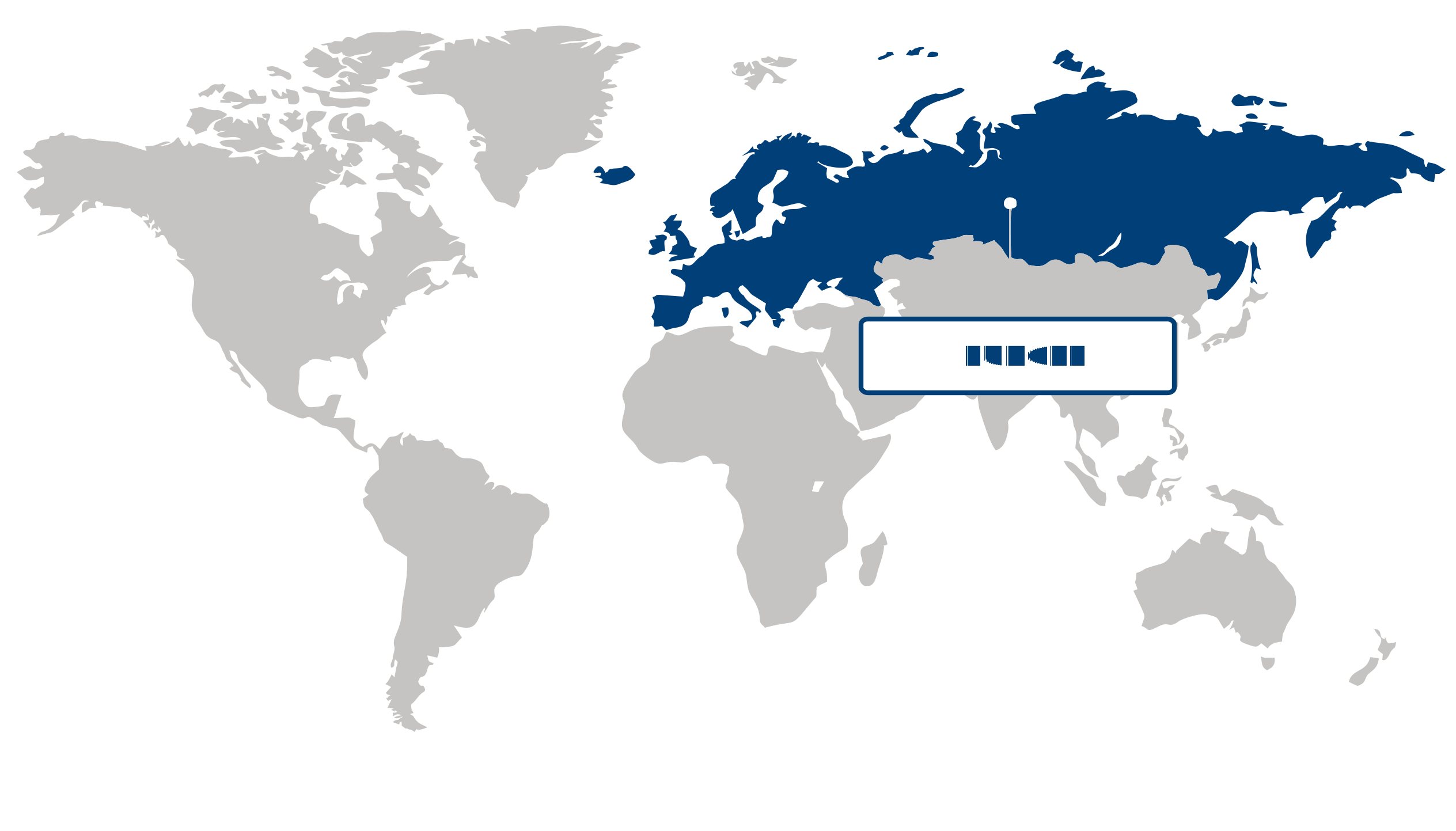
Europe (Largest Region)
Holding the largest share of the organic wine market at 74.40% in 2026, Europe benefits from a mature wine culture, established organic agriculture practices, and strong consumer awareness of environmentally responsible food and beverage choices. Demand is supported by growing interest in sustainably produced beverages, traceable agricultural practices, and premium wine offerings. The region's established viticulture infrastructure and increasing adoption of environmentally conscious farming methods provide a strong foundation for organic wine production. Consumer preference for products aligned with health, sustainability, and responsible land management further reinforces Europe's market leadership.
North America (Fastest-Growing Region)
North America is the fastest-growing regional market, supported by increasing consumer interest in organic and sustainably produced beverages and expanding awareness of environmental impacts across agricultural supply chains. Premiumization within the wine sector is encouraging consumers to explore products differentiated by production methods, authenticity, and sustainability credentials. Growing availability through specialty retailers, hospitality channels, and digital commerce is improving consumer access to organic wine. In addition, evolving preferences among younger and environmentally conscious consumers are creating stronger demand for products that combine premium positioning with sustainable production attributes.
| Parameter | North America | Asia Pacific | Europe | Latin America | MEA |
|---|---|---|---|---|---|
| Innovation Hub i Scale Nascent Developing Advanced | |||||
| Cost-Sensitive Region i Scale Low Medium High | |||||
| Regulatory Environment i Scale Restrictive Neutral Supportive | |||||
| Demand Drivers i Scale Weak Moderate Strong | |||||
| Development Stage i Scale Emerging Developing Developed | |||||
| Adoption Rate i Scale Low Medium High | |||||
| New Entrants / Startups i Scale Sparse Moderate Dense | |||||
| Macro Indicators i Scale Weak Stable Strong |
Key Country Insights
Germany 🇩🇪
Certified Production FocusGermany emphasizes certified organic viticulture supported by established environmental standards and quality-focused wine production. Producers increasingly invest in organic vineyard management and traceable sourcing to strengthen consumer confidence across domestic and export markets.
France 🇫🇷
Sustainable Vineyard PracticesFrance reinforces organic wine production through vineyard sustainability initiatives and growing certification adoption among established wineries. Producers increasingly balance traditional winemaking expertise with environmentally responsible cultivation to meet changing consumer preferences.
Italy 🇮🇹
Organic Estate DevelopmentItaly continues expanding organic vineyard cultivation while highlighting regional wine heritage and sustainable production methods. Wineries increasingly position certified organic wines as value-added offerings for both domestic consumers and international buyers seeking authenticity.
Japan 🇯🇵
Selective Premium DemandJapan's organic wine market is driven by consumers seeking premium imported and domestic wines with verified organic credentials. Importers and distributors increasingly curate specialized product offerings that combine quality, authenticity, and sustainable production practices.
South Korea 🇰🇷
Lifestyle Wine AdoptionSouth Korea continues integrating organic wine into premium retail and hospitality channels as consumers explore environmentally conscious beverage choices. Importers prioritize certified products with distinctive regional identities to differentiate offerings in competitive urban markets.
United States 🇺🇸
Premium Retail ExpansionThe U.S. organic wine market is shaped by growing consumer interest in sustainably produced alcoholic beverages and transparent labeling. Retailers and wineries in the U.S. continue expanding certified organic portfolios to address premium purchasing preferences and evolving environmental expectations.
Segment Leadership and Growth Trends
Organic Wine Market Share (%), by Type, 2026
Go beyond the chart, access full insights & data tables
Request Free Sample ReportType Segment Analysis: Organic Red Wine (Largest Segment) vs Organic White Wine (Fastest-Growing Segment)
Organic red wine dominated the organic wine market, accounting for a 60.04% share in 2026, supported by its established consumer base and broad presence across organic wine offerings. Increasing consumer awareness of sustainable agricultural practices and interest in wines produced with fewer synthetic inputs are strengthening demand for organic varieties. Red wine's established position within the broader wine category, combined with growing interest in premium and environmentally conscious products, continues to support its leading role in the organic wine segment.
Organic white wine is the fastest-growing type, driven by increasing consumer interest in lighter wine styles and expanding demand for organically produced alternatives across diverse drinking occasions. Rising awareness of sustainable viticulture and greater availability of organic white wine products are encouraging consumers to explore alternatives beyond conventional wine offerings. The broader premiumization of wine consumption and growing preference for products aligned with environmental and wellness considerations are creating favorable conditions for continued adoption of organic white wine.
Distribution Channel Segment Analysis: Off-Trade (Largest Segment) vs On-Trade (Fastest-Growing Segment)
Off-Trade held the largest position in the organic wine market, representing a 59.56% share in 2026, supported by the convenience and accessibility of purchasing organic wine through retail outlets for consumption at home. Supermarkets, specialty stores, and other retail channels provide consumers with broad product availability and opportunities to compare different organic wine offerings. Growing household consumption of wine, increasing retail availability of organic products, and rising consumer interest in sustainable beverages are reinforcing the importance of off-trade distribution.
On-Trade is the fastest-growing distribution channel as restaurants, bars, hotels, and other hospitality venues increasingly incorporate organic wine into their beverage selections. Expanding consumer interest in premium, sustainably produced beverages is encouraging foodservice establishments to diversify their wine offerings and respond to evolving preferences. The growing role of dining and hospitality experiences in wine discovery, together with greater awareness of organic production practices, is supporting increased demand through on-trade channels.
| Segment | Sub-Segment | Largest Segment | Fastest Growing |
|---|---|---|---|
| Type | Organic Red Wine, Organic White Wine | Organic Red Wine | Organic White Wine |
| Distribution Channel | On-Trade, Off-Trade | Off-Trade | On-Trade |
| Packaging | Bottles, Cans, Others | Bottles | Cans |
Competitive Landscape and Market Positioning
Prominent players in the organic wine market:
1. Emiliana Organic Vineyards (Chile)
2. Bronco Wine Company (United States)
3. Jackson Family Wines Inc. (United States)
4. Boisset Collection (France)
5. King Estate Winery (United States)
6. Frey Vineyards Ltd. (United States)
7. Querciabella Società Agricola S.r.l. (Italy)
8. Grgich Hills Estate (United States)
9. Avondale Wine Estate (South Africa)
10. The Organic Wine Company (United States)
Growing preference for sustainable beverages is driving momentum in the organic wine market. Eco-friendly cultivation practices are improving grape quality and environmental balance. Expanding consumer awareness is supporting premium product positioning. The organic wine market is evolving through sustainable viticulture and responsible consumption trends.
| Company | Market Share | Company Revenue | Revenue CAGR (%) | Product Portfolio | Geographic Presence | Innovation / R&D Focus | Strategic Developments |
|---|---|---|---|---|---|---|---|
| Emiliana Organic Vineyards (Chile) | |||||||
| Bronco Wine Company (United States) | |||||||
| Jackson Family Wines Inc. (United States) | |||||||
| Boisset Collection (France) | |||||||
| King Estate Winery (United States) | |||||||
| Frey Vineyards Ltd. (United States) | |||||||
| Querciabella Società Agricola S.r.l. (Italy) | |||||||
| Grgich Hills Estate (United States) | |||||||
| Avondale Wine Estate (South Africa) | |||||||
| The Organic Wine Company (United States). |
Industry Development/News
| Company Name | Date | Key Development |
|---|---|---|
| Mindset Winery & Lounge | Jan-26 | Mindset Winery & Lounge launched a new in-house wine range sourced from multiple Pacific Northwest regions. By integrating wine production with onsite hospitality experiences like workshops and tastings, the company is utilizing a vertically integrated, experiential consumption model to drive premium sales and build direct-to-consumer brand equity in the organic wine space. |
| Kind of Wild Wines | Feb-25 | Kind of Wild Wines expanded its portfolio with the launch of an organic, vegan-certified Grenache Blanc "Orange Wine." By adopting skin-contact fermentation, the company is capitalizing on the growing market preference for natural, minimal-intervention wine styles, reinforcing its competitive positioning within the sustainable and experimental organic beverage sector. |
| San Valentino | May-24 | San Valentino launched its “Floowers” range in the U.S. market, featuring the first Italian no-sulfites-added Sangiovese. By utilizing chestnut flower extract as a preservative, the company demonstrates material innovation in clean-label winemaking, addressing rising consumer demand for minimal-intervention, health-conscious, and organic-certified wine products. |
| Overstory | Apr-24 | Overstory acquired a 24-hectare vineyard in Tasmania’s Coal River Valley to expand its Small Wonder wine brand. This strategic investment increases the company's total vineyard assets and production capacity, directly supporting the long-term scale-up of its organic wine output and strengthening its competitive footprint in the premium regional wine segment. |
| Domaine Clarence Dillon | Apr-24 | Domaine Clarence Dillon introduced the “Klara” organic wine label, sourcing grapes from Southern France. This move represents a strategic portfolio diversification by an established producer, leveraging corporate heritage to capture growth in the sustainable and organic wine category, while signaling a commitment to long-term investment in eco-friendly viticulture and production practices. |
| Big Country Organic Brewing Co. | Apr-24 | Big Country Organic Brewing Co. pivoted its operational strategy by closing its retail taproom to prioritize the expansion of its packaged organic beverage distribution. This transition to a more scalable production-focused model reflects a strategic shift aimed at increasing retail market penetration and optimizing long-term supply chain efficiency for its organic product line. |
| Zurab Kviriashvili Vineyards | Mar-24 | Zurab Kviriashvili Vineyards is advancing an integrated agritourism and production strategy in Georgia. By expanding into hospitality through a dedicated hotel project while scaling its organic wine production, the company is creating a scalable ecosystem that combines premium product commercialization with experiential retail, enhancing brand loyalty and regional market reach. |
| Melea | Jan-24 | Melea launched its “Melea Organic Orange” wine, utilizing organic and Demeter biodynamic-certified Verdejo grapes. The product leverages distinct production techniques, including fermentation in clay amphorae and extended skin contact, to differentiate its offering within the premium organic market, reflecting broader industry trends toward biodiversity and artisanal winemaking methods. |
Customize Your Report
Explore examples of how this report can be tailored to different research needs, including custom segments, additional topics or chapters, and related reports. Click a section of the wheel or its numbered marker to explore the available options.
Organic Wine Market — Custom Segments
| Segment | Sub-Segment |
|---|---|
| Certification Standard | USDA Organic, EU Organic, Other Regional Organic Certifications |
| Price Tier | Economy, Mid-Range, Premium, Super-Premium |
| Consumer Occasion | Everyday Consumption, Social Gatherings, Celebrations & Special Occasions, Gifting |
Organic Wine Market — Custom TOC
| Custom Chapter | Custom Details |
|---|---|
| Consumer Premiumization and Lifestyle Trend Assessment |
|
| Sustainable Vineyard Practices Assessment |
|
| Distribution Channel Transformation Assessment |
|
Need a different cut of the data?
Request Custom ResearchWhat is the current size of the organic wine market?
What are the growth projections for the organic wine industry?
How is the shift toward clean-label and wellness-oriented consumption influencing purchasing behavior in the organic wine market?
Why is the expansion of sustainable viticulture and biodynamic farming reshaping supply-side competitiveness in the organic wine market?
Why is Organic Red Wine the leading type in the organic wine market?
Why is On-Trade the fastest-growing distribution channel in the organic wine market?
Why does Europe lead the organic wine market?
What is driving organic wine market growth in North America?
Who are the leading players in the organic wine landscape?
Our Clients
"The report provided a thorough look at market trends, technological advancements, and the competitive landscape. The depth of insights was really valuable."
ITC Limited
"We would highly recommend Fundamental Business Insights & Consulting to anyone looking for reliable, detailed, and comprehensive market research in the Food industry."
Tyson Foods
"The clarity and presentation of the information were commendable. The report was delivered timely, which made the overall experience smooth and convenient."
Mondelēz International
Our Research Team & Methodology
Every Fundamental Business Insights report is built by a dedicated vertical research team, validated through a structured primary-and-secondary methodology, and reviewed for accuracy before it reaches you.
Research Team Overview
Prepared by the Food & Beverage Research Team
Delivery
Published
Demand
Available
Support
Trust & Compliance
Research Domains
10 coverage areasResearch Intelligence
| Source | Reference |
|---|---|
| Food and Agriculture Organization (FAO) | www.fao.org |
| World Health Organization (WHO) | www.who.int |
| U.S. Food & Drug Administration (FDA) | www.fda.gov |
| European Food Safety Authority (EFSA) | www.efsa.europa.eu |
| U.S. Department of Agriculture (USDA) | www.usda.gov |
| Codex Alimentarius Commission | www.fao.org/fao-who-codexalimentarius |
| International Organization for Standardization (ISO) | www.iso.org |
| AOAC INTERNATIONAL | www.aoac.org |
| Institute of Food Technologists (IFT) | www.ift.org |
| International Dairy Foods Association (IDFA) | www.idfa.org |
| International Sweeteners Association (ISA) | www.sweeteners.org |
| International Probiotics Association (IPA) | internationalprobiotics.org |
| Good Food Institute (GFI) | gfi.org |
| American Feed Industry Association (AFIA) | www.afia.org |
| International Feed Industry Federation (IFIF) | ifif.org |
| Specialty Food Association (SFA) | www.specialtyfood.com |
| Brewers Association | www.brewersassociation.org |
| International Bottled Water Association (IBWA) | bottledwater.org |
| International Alliance for Dietary/Food Supplement Associations (IADSA) | www.iadsa.org |
| OECD Agriculture & Food | www.oecd.org/agriculture |
Research Workflow & Quality Assurance
Data Collection
Verified information gathered through primary and secondary research.
Data Triangulation
Cross-validation using multiple independent data sources.
Forecast Modelling
Market estimates developed using historical trends and analytical models.
Analyst Validation
Findings reviewed by domain experts for accuracy and consistency.
Editorial & Quality Review
Final editorial, quality, and compliance checks before publication.
Final Publication
Released after successful completion of the internal review process.
Report Coverage
📊 Market Assessment
- Market Size & Forecast
- Market Segmentation
- Regional Analysis
- Growth Drivers & Challenges
- Market Dynamics
🏢 Competitive Intelligence
- Competitive Landscape
- Company Profiles
- Competitive Benchmarking
- Mergers & Acquisitions
- Market Share Analysis or Key Company Strategies
🔍 Strategic Analysis
- Value Chain Analysis
- Porter's Five Forces
- PESTLE Analysis
- Pricing Trends
- Supply-Demand Analysis
🚀 Future Outlook
- Technology Landscape
- Regulatory Landscape
- Investment & Funding Landscape
- Emerging Opportunities
- Future Market Outlook
Have a question about this report or need a custom scope?
Request Customization