Online Poker Market Size & Forecasts 2026-2035, By Segments (Device Type, End-User), Growth Opportunities, Innovation Landscape, Regulatory Shifts, Strategic Regional Insights (U.S., Japan, China, South Korea, UK, Germany, France), and Competitive Dynamics (PokerStars, GGPoker, partypoker, 888poker, BetMGM Poker)
Market Size and Growth Outlook
Online Poker Market size is predicted to expand from USD 123.12 billion in 2025 to USD 444.56 billion by 2035, with growth underpinned by a CAGR above 13.7% between 2026 and 2035. The industry revenue outlook for 2026 is USD 138.2 billion.
Get more details on this report
Request Free Sample ReportOnline Poker Market Intelligence Snapshot
Regional Market Dynamics
Segment Momentum
Market Expansion Drivers
Leading Market Participants
Global Market Forecast Snapshot
Market Outlook
Regional and Segment Outlook
Market Growth Drivers and Industry Trends
The proliferation of mobile and online poker platforms is fundamentally reshaping the online poker market by enabling broader accessibility and enhanced user engagement. Market leaders like PokerStars and 888 Holdings have continually invested in mobile-optimized interfaces and app-based experiences, responding to shifting consumer preferences for convenient, on-the-go gaming. This evolution caters to both casual players and high-stakes participants by integrating social features and live tournament access within digital ecosystems. The ability to connect globally through mobile devices drives player retention and attracts younger demographics, who prioritize digital fluidity. For incumbents, this trend offers avenues to deepen customer loyalty through personalized offers, while new entrants can differentiate via innovative UX designs. Going forward, the sustained emphasis on seamless mobile integration is expected to consolidate market reach as device capabilities and network speeds continue improving worldwide.
AI-Powered Game Analytics Enhancing Personalization and Security
Artificial intelligence’s incorporation into game analytics is a pivotal growth driver within the online poker market, improving personalization, fraud detection, and operational efficiency. Companies such as PartyPoker utilize AI algorithms for real-time player behavior analysis, tailoring game recommendations and bonus structures to individual preferences. This approach not only enhances user satisfaction but also strengthens security frameworks by quickly identifying cheating or collusive patterns, which regulators increasingly demand. Furthermore, AI-driven insights assist operators in managing game fairness and compliance, key components as licensing bodies raise industry standards. Both established firms and startups stand to benefit by leveraging these technologies to optimize player lifetime value and reduce risk. The trajectory toward ever more sophisticated AI tools signals a shift toward data-centric market strategies grounded in transparent and secure gaming environments.
Regulatory and Licensing Adaptation Fuels Market Legitimacy and Expansion
The evolving regulatory and licensing frameworks around online poker are critical to market maturation and sustained growth. Jurisdictions such as the UK Gambling Commission and the Malta Gaming Authority have advanced clear, robust licensing regimes that encourage responsible gaming and protect consumers, thus increasing player confidence. Operators like Betfair have publicly emphasized adherence to these frameworks as a strategic priority, enabling legal market entry and building trust among investors and users. This shift opens new regional markets, particularly in North America and parts of Europe, where updated legislation adapts to digital trends. For incumbents, compliance presents an opportunity to solidify brand reputation, while newcomers can capitalize on fresh market openings. Regulatory evolution will continue shaping competitive dynamics, underpinning long-term industry stability driven by transparency and consumer protection.
Industry Restraints:
Fragmented Regulatory Landscape
Divergent jurisdictional regulations notably inhibit the online poker market by creating operational complexities and limiting cross-border player pools. For instance, the U.S. presents a patchwork regulatory environment where states like New Jersey and Pennsylvania allow regulated online poker, while others enforce outright prohibitions (as reported by the Washington Post). This fragmentation restricts platform scalability and increases compliance costs, disproportionately impacting smaller entrants lacking legal resources. Established operators must navigate varying age verification, anti-money laundering, and responsible gaming frameworks, constraining innovation and user acquisition strategies. Looking ahead, ongoing regulatory divergence will likely prolong market segmentation, compelling operators to prioritize specific geographies while awaiting broader harmonization initiatives, such as those proposed by the European Gaming and Betting Association (EGBA), which may gradually ease cross-market access.
High Customer Acquisition Costs and Retention Challenges
The online poker market faces significant hurdles from rising customer acquisition expenses and volatile player retention, fueled by intense competition and consumer skepticism. Marketing intelligence from SuperData Research reveals that excessive promotional spending strains profitability, especially as novice users often display low loyalty due to concerns over fairness and game integrity. Additionally, fluctuations in disposable income and heightened recreational alternatives intensify churn rates. Established platforms are investing heavily in AI-driven personalization and loyalty programs to counteract these trends, while new entrants struggle to gain visibility without deep pockets. This persistent challenge forces companies to balance aggressive marketing with sustainable growth models. Consequently, high acquisition costs and retention volatility will remain key strategic priorities, shaping investment focus on value-driven user experiences and stricter fraud prevention measures moving forward.
| Growth Driver | Impact on CAGR | Regulatory Influence | Geographic Relevance | Adoption Rate | Impact Timeline |
|---|---|---|---|---|---|
| Mobile & Online Poker Platforms | 5.00% | Short term (≤ 2 yrs) | North America, Europe; Spillover: Asia Pacific | Medium | Fast |
| AI-Powered Game Analytics | 4.00% | Medium term (2–5 yrs) | North America, Europe; Spillover: Asia Pacific | Low | Moderate |
| Regulatory & Licensing Adaptation | 4.70% | Long term (5+ yrs) | Europe, North America; Spillover: Asia Pacific | High | Moderate |
Explore Growth Opportunities
Request Free Sample ReportRegional Demand Dynamics
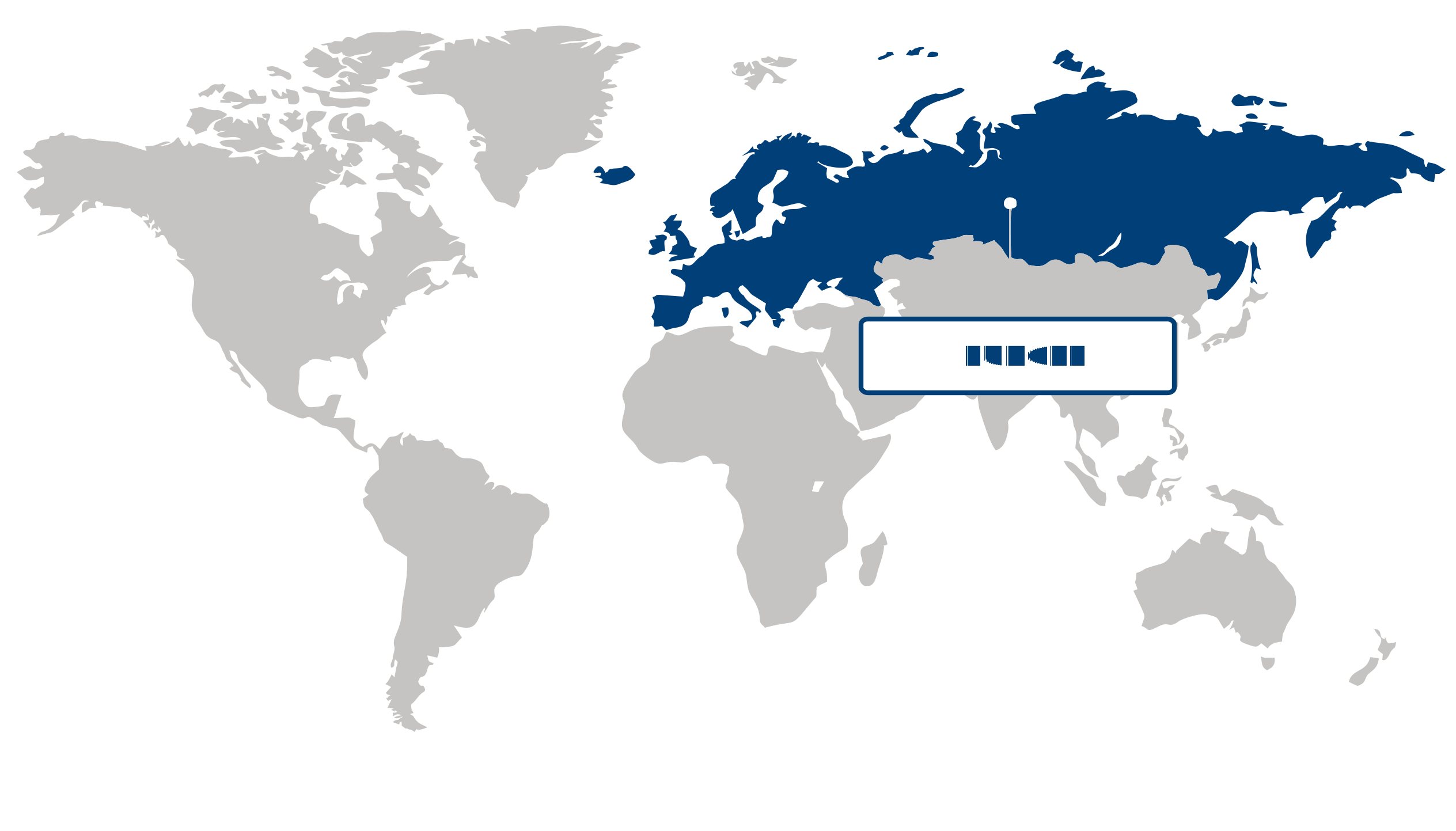
Europe captured over 41% of the global online poker market in 2025, establishing it as the largest regional player. This leadership is chiefly attributed to favorable online gambling regulations and high player participation rates that create a conducive environment for sustained market expansion. Regulatory bodies such as the UK Gambling Commission and the Malta Gaming Authority have set stringent yet enabling frameworks that enhance consumer trust and operational transparency. Concurrently, consumer preference shifts towards digital entertainment and seamless mobile experiences bolster demand. Companies like PokerStars have capitalized on these trends, expanding product offerings and integrating advanced security technologies. Europe’s cultural affinity for poker combined with economic resilience and advanced digital infrastructure positions the region as a significant growth hub, offering investors robust opportunities amid evolving market dynamics and intensified competitive activities.
Germany anchors the European online poker market with its progressive regulatory reforms and robust player base. The German Interstate Treaty on Gambling has facilitated a legal framework permitting online poker operations under strict licensing conditions, fostering safer gaming environments. This regulatory clarity has encouraged operators such as bwin and 888poker, who actively promote responsible gaming through innovative platforms and targeted marketing. Germany’s large population and rising internet penetration further amplify demand, underpinning its pivotal role in regional growth. This reinforces Europe’s leading position by combining regulatory rigor with expanding consumer engagement.
France plays a pivotal role in elevating Europe’s online poker market through its carefully monitored liberalization of online gambling. The Autorité Nationale des Jeux (ANJ) maintains regulatory oversight, ensuring market integrity while supporting innovation among licensed operators like Winamax. French cultural enthusiasm for skill-based games and social engagement through online platforms enhances player participation. Moreover, the government’s efforts to curb illegal gambling channels increase market transparency and growth potential. France’s regulatory and consumer dynamics complement Germany’s, together driving Europe’s dominance and attractiveness in the global online poker market landscape.
Asia Pacific Market Analysis:
Asia Pacific emerged as the fastest-growing region in the online poker market, registering a robust CAGR of 16.44%. This striking expansion is primarily fueled by increasing smartphone penetration coupled with a rising interest in online gaming platforms across the region. The widespread availability of affordable smartphones and improving internet infrastructure have significantly broadened access to digital entertainment options, capturing diverse consumer segments. Moreover, shifting consumer preferences toward mobile-first gaming and interactive experiences have accelerated engagement, as evidenced by data from the Asia Internet Coalition’s 2023 report highlighting surging digital content consumption. These dynamics, combined with heightened investments in technological advancements by key market players like Tencent and NetEase, reinforce Asia Pacific’s pivotal role in shaping the future landscape of the online poker market. The region offers substantial opportunities as evolving consumer habits and digital innovation continue to align with regulatory frameworks favoring responsible gaming and secure transactions.
Japan stands out as a crucial contributor to the Asia Pacific online poker market due to its sophisticated digital ecosystem and tech-savvy population. The nation’s advanced smartphone adoption and a strong culture of online entertainment, underscored by NTT Docomo’s 2023 usage analytics, support sustained demand for engaging gaming platforms. Japan’s progressively favorable regulatory stance, including the 2022 amendments to the Integrated Resort Promotion Act promoting digital gaming, encourages market entrants to innovate responsibly. Japanese consumers exhibit high willingness to invest in premium gaming experiences bolstered by seamless payment systems and robust data privacy frameworks, enhancing user trust and retention. These attributes position Japan as a leading market within the region, driving innovation and elevating standards that other Asia Pacific countries look toward for best practices.
China’s role in the Asia Pacific online poker market is shaped by its vast population and expanding middle class increasingly inclined toward digital recreation on smartphones. Despite stringent regulations on gambling, the rising interest in skill-based gaming and digital entertainment formats fosters unique demand pathways. State-backed initiatives to promote digital literacy and improve connectivity, as reported by the Ministry of Industry and Information Technology in 2023, have underpinned exponential growth in mobile gaming adoption. Players like Tencent leverage advanced AI and cloud technologies to tailor immersive poker experiences while ensuring compliance with regulatory frameworks. China’s evolving digital economy, characterized by rising disposable incomes and widespread e-wallet usage, supports increasing consumer participation. These factors collectively amplify China’s strategic importance in consolidating Asia Pacific’s leading position in the online poker market, creating avenues for innovation and sustainable growth.
North America Market Trends:
North America maintained notable presence in the online poker market, driven by robust consumer engagement and advanced digital infrastructure. The region’s significance stems from its mature gaming culture combined with evolving regulatory frameworks fostering safer and more reliable gaming environments. The U.S. Department of Justice’s 2018 clarification on the Wire Act and state-level legalization initiatives, such as those by New Jersey’s Division of Gaming Enforcement, have catalyzed renewed interest and trust in online poker platforms. Additionally, rising adoption of mobile technologies and data-driven personalization by companies like PokerStars have enhanced user experiences. This confluence of regulatory refinement, technological innovation, and a sizable, digitally savvy player base presents sustained growth potential, with further market expansion anticipated as states continue to legalize and regulate online poker activities.
The U.S. occupies a pivotal role in the online poker market, largely propelled by fragmented but progressively liberalizing regulatory stance at the state level. States like Pennsylvania and Michigan, governed by their respective Gaming Control Boards, have witnessed rapid market expansion fueled by localized licensing frameworks and aggressive marketing strategies from operators such as DraftKings and WSOP.com. Consumer demand is bolstered by culturally ingrained card playing habits and increased disposable income among millennials and Gen Z demographics who favor digital entertainment avenues. This gradual yet strategic regulatory unbundling encourages competitive innovation and market entry, reinforcing the U.S. as a linchpin for North America’s broader online poker opportunities, suggesting that compliance-driven growth will underpin sector vitality.
| Parameter | North America | Asia Pacific | Europe | Latin America | MEA |
|---|---|---|---|---|---|
| Innovation Hub i Scale Nascent Developing Advanced | |||||
| Cost-Sensitive Region i Scale Low Medium High | |||||
| Regulatory Environment i Scale Restrictive Neutral Supportive | |||||
| Demand Drivers i Scale Weak Moderate Strong | |||||
| Development Stage i Scale Emerging Developing Developed | |||||
| Adoption Rate i Scale Low Medium High | |||||
| New Entrants / Startups i Scale Sparse Moderate Dense | |||||
| Macro Indicators i Scale Weak Stable Strong |
Segment Leadership and Growth Trends
Online Poker Market Share (%), by Device Type, 2026
Go beyond the chart, access full insights & data tables
Request Free Sample ReportThe mobile segment held the largest share in the online poker market in 2025, driven primarily by the rising penetration of mobile gaming and the convenience it offers to users. Smartphones enable seamless access and real-time gameplay, aligning with evolving consumer expectations for anytime, anywhere entertainment. Leading operators such as PokerStars have emphasized mobile app innovations, reflecting technological advancements and digital transformation trends. This segment benefits from diversified demographic engagement and the proliferation of high-speed mobile networks, which enhance user experience. For both established platforms and new entrants, mobile-focused strategies present significant opportunities to scale user bases and innovate product offerings. The continued expansion of mobile infrastructure and increasing smartphone adoption suggest this segment will sustain its market leadership in the near to medium term.
Analysis by End-User
The gambling enthusiasts segment represented the largest share within the online poker market in 2025, propelled by growing interest in competitive online gaming formats. This group’s preference for skill-based challenges and tournament play has encouraged operators like 888poker to develop advanced competitive features and immersive platforms. Regulatory evolutions in key markets have legitimized online poker as a skill game, attracting a dedicated user base focused on strategy and performance. This segment's demand for sophisticated gameplay designs fuels sustained innovation and competitive differentiation. The strong engagement of gambling enthusiasts creates strategic advantages for companies that prioritize high-quality, interactive offerings. Given ongoing regulatory refinements and heightened consumer expectations, gambling enthusiasts are expected to remain a core driver of market dynamics going forward.
| Segment | Sub-Segment | Largest Segment | Fastest Growing |
|---|---|---|---|
| Device Type | Mobile, Desktop | ||
| End-User | Gambling Enthusiasts, Dabblers, Social Exuberant |
Unlock insights tailored to your business with our bespoke market research solutions.
Click to get your customized report now.
Competitive Landscape and Market Positioning
The competitive environment is characterized by a flurry of strategic moves that continuously redefine market positioning. Expanding collaborative networks with gaming providers and regulatory bodies enables these companies to navigate legal complexities while broadening their player bases. The adoption of advanced software technologies and integration of real-time analytics enhance gameplay customization and security, directly impacting user satisfaction and trust. Strategic alliances underpin efforts to enrich tournament offerings and diversify game variants, thereby appealing to a broader demographic spectrum. Investment in mobile optimization and cross-platform compatibility bolsters engagement, particularly as consumer preferences shift towards convenience and accessibility. This dynamic environment compels incumbents and new entrants alike to innovate rapidly, ensuring differentiation amid intensifying rivalry.
Strategic / Actionable Recommendations for Regional Players
In North America, aligning with emerging fintech and secure payment providers could amplify transactional efficiency and player confidence. Embracing augmented reality or AI-driven opponent simulation may deepen user engagement, especially in markets with increasing regulatory clarity. Targeting sub-segments such as poker enthusiasts interested in skill-based formats or socially interactive gaming forums can foster loyalty and community growth.
Within the Asia Pacific sphere, partnerships with local content creators and e-sports platforms could expand reach and resonate with younger demographics. Investing in multilingual interfaces and culturally tailored tournaments might elevate regional acceptance. Exploiting advancements in blockchain technology for transparency and fairness can address market-specific regulatory challenges and enhance trust.
For Europe, collaborating with established sports betting operators to enable cross-selling opportunities would capitalize on existing customer bases. Leveraging data analytics to personalize player incentives and integrating gamification elements can enhance retention. Monitoring competitor movements closely and swiftly adapting product suites will be essential to maintaining relevance in this mature but highly competitive landscape.
| Company | Market Share | Company Revenue | Revenue CAGR (%) | Product Portfolio | Geographic Presence | Innovation / R&D Focus | Strategic Developments |
|---|---|---|---|---|---|---|---|
| No companies available. | |||||||
Industry Development/News
| Company Name | Date | Key Development |
|---|
Customize Your Report
Explore examples of how this report can be tailored to different research needs, including custom segments, additional topics or chapters, and related reports. Click a section of the wheel or its numbered marker to explore the available options.
Online Poker Market — Custom Segments
| Segment | Sub-Segment |
|---|---|
| No segment data available. | |
Online Poker Market — Custom TOC
| Custom Chapter | Custom Details | ||
|---|---|---|---|
| No custom TOC data available. | |||
Need a different cut of the data?
Request Custom ResearchWhat are the growth projections for the online poker industry?
Which region shows the largest market footprint in the online poker market?
Which area is showing the greatest surge in online poker sector?
Where is the mobile segment seeing the strongest adoption within the online poker industry?
When did gambling enthusiasts sub-segment emerge as the largest sub-segment in the end-user segment of online poker sector?
Who are the leading players in the online poker landscape?
Our Clients
"The report provided us with a clear direction, and the level of detail was beyond what we expected. I would definitely recommend their services to others."
Haier Appliances
"The collaboration with Fundamental Business Insights has added significant value to our decision-making process, and we look forward to continuing this partnership for our future market research requirements."
Luxottica Group S.p.A.
"The team at FBI delivered an exceptional research report. The insights on industry innovations were particularly impressive and added a lot of value to the overall report."
Nike
Our Research Team & Methodology
Every Fundamental Business Insights report is built by a dedicated vertical research team, validated through a structured primary-and-secondary methodology, and reviewed for accuracy before it reaches you.
Research Team Overview
Prepared by the Consumer Goods & Services Research Team
Delivery
Published
Demand
Available
Support
Trust & Compliance
Research Intelligence
Research Workflow & Quality Assurance
Data Collection
Verified information gathered through primary and secondary research.
Data Triangulation
Cross-validation using multiple independent data sources.
Forecast Modelling
Market estimates developed using historical trends and analytical models.
Analyst Validation
Findings reviewed by domain experts for accuracy and consistency.
Editorial & Quality Review
Final editorial, quality, and compliance checks before publication.
Final Publication
Released after successful completion of the internal review process.
Report Coverage
📊 Market Assessment
- Market Size & Forecast
- Market Segmentation
- Regional Analysis
- Growth Drivers & Challenges
- Market Dynamics
🏢 Competitive Intelligence
- Competitive Landscape
- Company Profiles
- Competitive Benchmarking
- Mergers & Acquisitions
- Market Share Analysis or Key Company Strategies
🔍 Strategic Analysis
- Value Chain Analysis
- Porter's Five Forces
- PESTLE Analysis
- Pricing Trends
- Supply-Demand Analysis
🚀 Future Outlook
- Technology Landscape
- Regulatory Landscape
- Investment & Funding Landscape
- Emerging Opportunities
- Future Market Outlook
Have a question about this report or need a custom scope?
Request Customization