Off-Grid Solar Energy Market Size & Forecasts 2026-2035, By Segments (Application, Technology), Growth Opportunities, Innovation Landscape, Regulatory Shifts, Strategic Regional Insights (U.S., Japan, China, South Korea, UK, Germany, France), and Competitive Dynamics (First Solar, SunPower, JinkoSolar, Canadian Solar, Trina Solar)
Market Size and Growth Outlook
Off-Grid Solar Energy Market size is anticipated to rise from USD 3.25 billion in 2025 to USD 8.58 billion by 2035, reflecting a CAGR surpassing 10.2% over the forecast horizon of 2026-2035. The estimated revenue for 2026 is USD 3.55 billion.
Get more details on this report
Request Free Sample ReportOff-Grid Solar Energy Market Intelligence Snapshot
Regional Market Dynamics
Segment Momentum
Market Expansion Drivers
Leading Market Participants
Global Market Forecast Snapshot
Market Outlook
Regional and Segment Outlook
Market Growth Drivers and Industry Trends
The expansion of rural electrification projects is a critical growth driver for the off-grid solar energy market, particularly in underserved regions where grid extension remains economically unfeasible. Governments and development agencies, such as the International Renewable Energy Agency (IRENA), have prioritized rural access initiatives, facilitating partnerships between public entities and private providers to deploy solar home systems and mini-grids. This trend aligns with shifting consumer demand towards reliable, clean energy sources in remote communities, enhancing quality of life and economic productivity. For market participants, these projects present opportunities to scale operations through collaborations with local authorities and leverage project financing frameworks. Established companies can deepen regional penetration, while new entrants may find entry points via niche, community-focused solutions. As rural electrification intensifies, integration with digital platforms for system management and payments is expected to accelerate, driving greater market efficiency and impact.
Government Incentives & Subsidies for Off-Grid Solar
Government incentives and subsidies remain decisive in stimulating growth within the off-grid solar energy market by lowering upfront costs and reducing financial risk for end-users. For example, the U.S. Agency for International Development (USAID) has implemented programs providing grants and concessional loans targeting solar enterprises in Africa and Asia, catalyzing demand. This financial support fosters consumer adoption even in low-income segments reluctant to commit capital to new technologies. Companies can capitalize on such policy frameworks by optimizing product offerings to meet subsidy criteria and expanding sales channels aligned with public initiatives. Additionally, this encourages innovation in affordable, modular solar solutions tailored to diverse demographic needs. Maintaining alignment with evolving subsidy schemes will be essential for sustained competitiveness, enabling firms to harness government backing in tandem with market-driven growth.
Technological Advancements in Solar PV Modules
Technological advancements in solar photovoltaic (PV) modules are transforming the off-grid solar energy market by boosting system efficiency and durability while reducing costs. Innovations such as bifacial cells and perovskite layers, highlighted in recent product releases by companies like First Solar and SunPower, demonstrate marked improvements in energy yield and lifespan. These enhancements fit well within consumers’ rising expectations for dependable, low-maintenance power solutions suitable for remote deployment. Enhanced PV performance allows manufacturers to develop smaller, more cost-effective systems tailored to specific off-grid applications, reinforcing competitive differentiation. New entrants can leverage emerging technologies to disrupt traditional configurations, while incumbent manufacturers are incentivized to integrate R&D investments into product lines rapidly. Continued technological progression in PV modules will likely drive greater adoption and integration into hybrid off-grid systems, reinforcing the sector’s momentum without reliance on grid expansion.
Industry Restraints:
Regulatory Fragmentation and Policy Uncertainty
Diverse regulatory frameworks across key off-grid solar markets create significant barriers to scaling deployment. Variations in licensing requirements, subsidy programs, and import tariffs contribute to operational inefficiencies and elevated compliance costs, deterring investment. The International Renewable Energy Agency (IRENA) highlights inconsistent policies in regions like Sub-Saharan Africa, where unclear certification processes delay product approvals. This unpredictability restricts market participants from standardizing offerings, complicating expansion efforts for both established firms such as d.light and emerging startups. Navigating fragmented regulations demands extensive local expertise and increases time-to-market, undermining competitive agility. As governments worldwide refine energy access commitments, regulatory harmonization remains gradual, implying persistent complexity. Market players must prioritize adaptive compliance strategies and stakeholder engagement to mitigate risks while leveraging evolving policy frameworks to capture emerging off-grid solar opportunities.
Supply Chain Disruptions and Component Scarcity
The off-grid solar energy market faces critical supply chain constraints, particularly for lithium-ion batteries and semiconductor components integral to product reliability and performance. Pandemic-induced logistics bottlenecks and geopolitical tensions have exacerbated delays and cost volatility, as reported by the Solar Energy Industries Association (SEIA). Limited availability of high-quality components forces manufacturers to either compromise on product durability or increase prices, reducing affordability for end consumers in low-income regions. This dynamic restricts market penetration and challenges newcomers without established supplier networks, while incumbents grapple with inventory unpredictability. Prolonged supply chain fragility incentivizes strategic diversification and vertical integration but also raises capital intensity. Consequently, supply chain resilience will remain a pivotal determinant of competitive positioning and innovation cadence in the near term, pressing companies to enhance procurement agility and invest in alternative sourcing solutions.
| Growth Driver | Impact on CAGR | Regulatory Influence | Geographic Relevance | Adoption Rate | Impact Timeline |
|---|---|---|---|---|---|
| Expansion of Rural Electrification Projects | 3.00% | Short term (≤ 2 yrs) | Asia Pacific, Africa; Spillover: Latin America | Medium | Fast |
| Government Incentives & Subsidies for Off-Grid Solar | 3.20% | Medium term (2–5 yrs) | Europe, Asia Pacific; Spillover: North America | High | Fast |
| Technological Advancements in Solar PV Modules | 3.00% | Long term (5+ yrs) | Asia Pacific, North America; Spillover: Europe | Medium | Moderate |
Unlock insights tailored to your business with our bespoke market research solutions.
Click to get your customized report now.
Regional Demand Dynamics
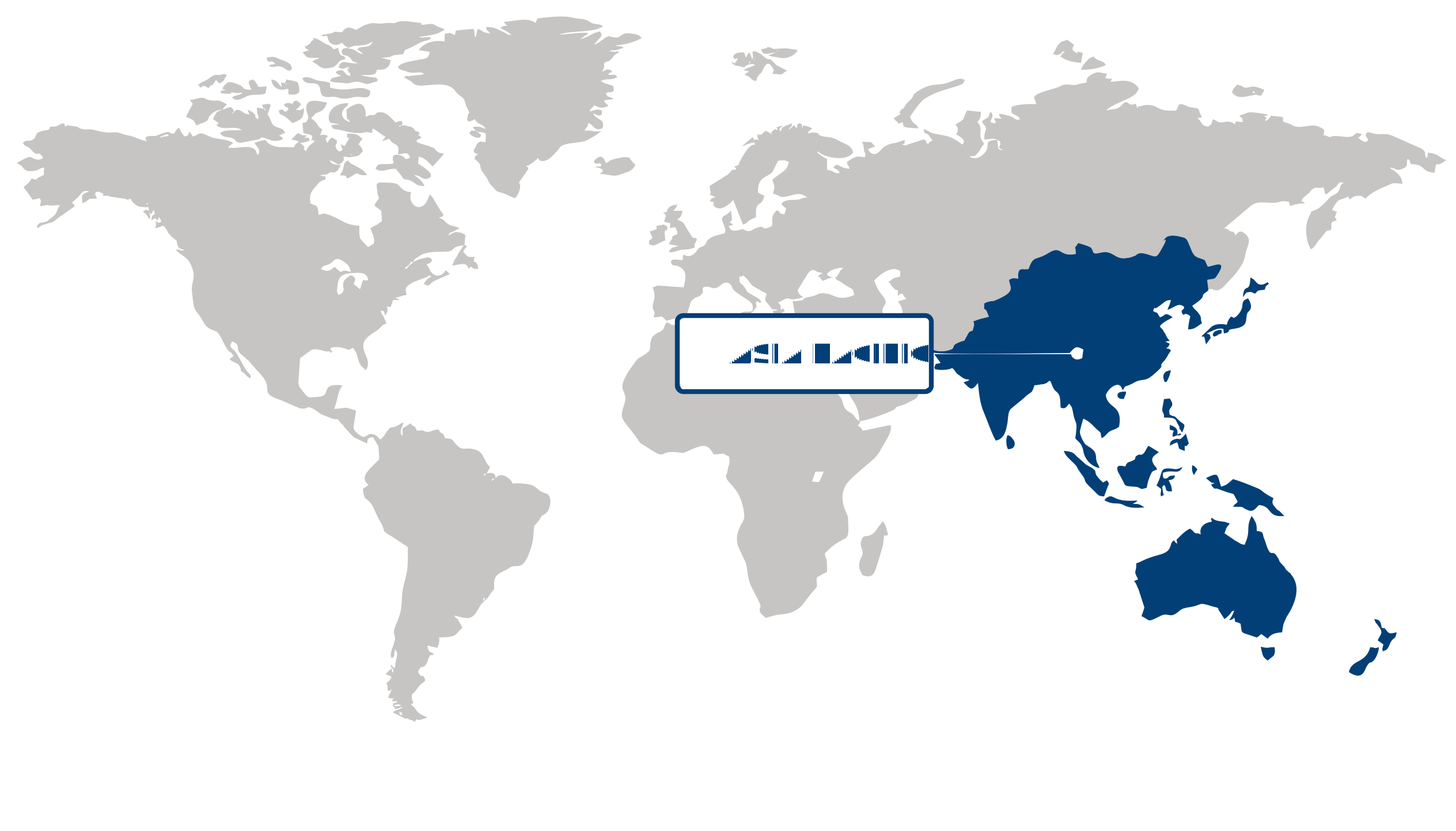
Asia Pacific captured over 43% of the global off-grid solar energy market in 2025, making it the largest and fastest-growing region with a 12.24% CAGR. The market growth is propelled by strong rural electrification programs, declining solar-component costs, and high demand for decentralized energy across APAC. Governments, such as India’s Ministry of New and Renewable Energy, actively promote solar home systems in remote areas to bridge the energy gap. Additionally, companies like d.light and M-KOPA are innovating affordable solar solutions tailored for rural consumers. Rising environmental awareness and supportive policies across countries accelerate technology adoption and foster competitive market dynamics. These factors collectively position Asia Pacific as a critical hub in the global energy transformation, offering sustained opportunities for investors and strategists focused on off-grid solar energy.
Japan is positioned as a pivotal hub in Asia Pacific’s off-grid solar energy market with its focus on technological innovation and energy security. The Japanese government’s strategic investments in solar R&D and initiatives like METI’s Subsidy Program for Renewable Energy Storage Systems highlight the country's commitment to decentralized energy solutions. Major corporations, including Sharp Corporation, leverage advanced photovoltaic technologies to enhance efficiency and reliability. This aligns with Japan’s demographic shifts and resilience priorities amid natural disasters, promoting smart energy systems. Japan’s leadership in clean technology innovation significantly strengthens the regional ecosystem, providing a model that fuels broader market expansion in Asia Pacific.
China anchors Asia Pacific’s off-grid solar energy market through its vast rural electrification initiatives and aggressive cost reductions in solar manufacturing. The National Energy Administration’s support for distributed solar projects and subsidies incentivize adoption in off-grid communities. Industry leaders such as LONGi Green Energy and JinkoSolar continually drive down solar component costs while enhancing production scalability. China’s expansive supply chain capabilities and government-backed programs create a competitive advantage, accelerating energy access in underserved regions. This momentum reinforces Asia Pacific’s dominance and signals robust growth potential, making China indispensable for investors aiming to capitalize on the region’s off-grid solar energy market expansion.
North America Market Analysis:
North America held a commanding share in the off-grid solar energy market, driven by sustained investments in renewable infrastructure and increasing consumer preference for energy independence. The region’s mature policy frameworks, including incentives and subsidies from the U.S. Department of Energy, have accelerated adoption of off-grid solutions, particularly in remote and disaster-prone areas. Market players like Sunrun and Vivint Solar are expanding portfolios to cater to residential and commercial demand, emphasizing cutting-edge battery storage and integrated smart technologies. Furthermore, rising awareness of sustainability and resilience against grid failures amid climate change effects have strengthened North America’s foothold. The competitive landscape is marked by technological innovation and streamlined supply chains, bolstering affordability and scalability. These factors position North America as a crucial market with significant opportunities in advancing off-grid solar energy solutions fueled by resilient economic conditions and consumer spending power.
The U.S. stands at the forefront of North America’s off-grid solar energy market, propelled by strong federal and state initiatives promoting clean energy access. Consumer demand skews toward reliable, self-sufficient power sources for rural and off-the-grid residential communities, supported by programs from the U.S. Department of Agriculture’s Rural Energy for America Program (REAP). Corporate strategies by firms like Tesla, with its Powerwall products, highlight trends in integrating solar with energy storage and home automation, meeting evolving purchasing patterns. Regulatory shifts favoring decarbonization and enhanced grid resilience reinforce market growth, while advances in digital monitoring and remote system management enhance operational efficiency. The U.S. market’s dynamic innovation ecosystem and supportive policies ensure it remains key to driving North America’s broader off-grid solar energy opportunities, fostering further investment and technology diffusion across the region.
Europe Market Trends:
Europe maintained a notable presence in the off-grid solar energy market, driven by a growing emphasis on energy autonomy and sustainability. Increasing adoption of decentralized renewable solutions across rural and remote areas, combined with supportive policy frameworks such as Germany’s Renewable Energy Sources Act, has facilitated moderate yet steady growth in this region. European consumers demonstrate a rising preference for eco-friendly energy sources amid fluctuating energy prices and supply chain recalibrations influenced by wider geopolitical tensions, as reported by the European Commission. Technological advancements in battery storage and smart energy management have enhanced system reliability, encouraging greater integration of off-grid solar solutions in lifestyle and industrial applications. With growing investments in digitization and automation, Europe is positioned to capitalize on expanding off-grid solar opportunities as energy security and environmental commitments intensify.
Germany plays a pivotal role in Europe’s off-grid solar energy market, bolstered by rigorous national incentives and advanced research ecosystems led by agencies like the Fraunhofer Institute for Solar Energy Systems. Germany’s dedication to phasing out nuclear and fossil fuels sharpens focus on off-grid solar deployments, especially in underserved rural localities and disaster-resilient infrastructure planning. Corporate entities including SMA Solar Technology are innovating in inverter technologies and grid-independent systems, reflecting strong market dynamism. The country’s robust manufacturing base fosters supply chain stability and continuous product innovation, reinforcing Germany’s leadership in European off-grid solar advancements and shaping regional market trajectories.
France presents a growing market for off-grid solar energy characterized by increasing rural electrification initiatives and climate action commitments aligned with the French Multiannual Energy Plan. Despite slower uptake compared to Germany, France leverages supportive mechanisms from the French Environment and Energy Management Agency (ADEME) to stimulate investments in off-grid solar projects, particularly in Corsica and overseas territories where grid access is limited. Emerging partnerships between local authorities and solar providers, as highlighted by TotalEnergies’ recent expansions, are advancing localized energy independence and resilience. France’s strategic position complements broader European ambitions for renewable decentralization, contributing meaningful momentum to the continent’s off-grid solar energy market development.
| Parameter | North America | Asia Pacific | Europe | Latin America | MEA |
|---|---|---|---|---|---|
| Innovation Hub i Scale Nascent Developing Advanced | |||||
| Cost-Sensitive Region i Scale Low Medium High | |||||
| Regulatory Environment i Scale Restrictive Neutral Supportive | |||||
| Demand Drivers i Scale Weak Moderate Strong | |||||
| Development Stage i Scale Emerging Developing Developed | |||||
| Adoption Rate i Scale Low Medium High | |||||
| New Entrants / Startups i Scale Sparse Moderate Dense | |||||
| Macro Indicators i Scale Weak Stable Strong |
Segment Leadership and Growth Trends
Off-Grid Solar Energy Market Share (%), by Application, 2026
Go beyond the chart, access full insights & data tables
Request Free Sample ReportThe residential segment held the largest share in the off-grid solar energy market in 2025, driven primarily by increasing household adoption in remote and underserved regions with unreliable grid connectivity. This leadership reflects growing consumer preference for self-sufficiency and energy independence, particularly in rural areas where traditional infrastructure is deficient. Government initiatives such as India’s Ministry of New and Renewable Energy (MNRE) programs underscore the push for solar home systems, enhancing affordability and accessibility. The segment presents strategic opportunities for companies to develop scalable, user-friendly solutions tailored to diverse demographic needs. With sustained rural electrification efforts and evolving consumer awareness about sustainability, the residential segment is poised to maintain its prominence, supported by ongoing technological innovation and expanding supply chains.
Analysis by Technology
The thin film segment dominated the off-grid solar energy market in 2025, propelled by its lightweight, flexible design and cost-effectiveness. These attributes address key challenges in off-grid applications, allowing easier installation on varied surfaces and reducing logistics complexities. Industry leaders like First Solar have advanced thin film technologies that optimize performance in low-light conditions, satisfying increasing demand for versatile and durable solar solutions. The segment benefits from competitive manufacturing efficiencies and rising sustainability priorities, attracting investment from both established firms and startups. As innovation continues in materials science and manufacturing processes, thin film technology is expected to retain its market leadership by offering adaptable and economically viable options aligned with the evolving needs of off-grid consumers.
| Segment | Sub-Segment | Largest Segment | Fastest Growing |
|---|---|---|---|
| Application | Industrial, Commercial, Residential | ||
| Technology | Crystalline Silicon, Thin Film, Others |
Competitive Landscape and Market Positioning
The competitive landscape is marked by dynamic initiatives where the top players actively pursue integrated solutions and enhanced efficiencies. Collaborations between manufacturers and technology firms underpin new product cycles emphasizing storage and inverter advancements. Strategic acquisitions and cross-border partnerships fuel capacity expansion and demand responsiveness. Investment in next-generation materials and digital monitoring capabilities further differentiates offerings, sustaining a competitive edge. Such proactive measures collectively foster an innovation-driven environment that redefines market standards and accelerates deployment in diverse geographical settings.
Strategic / Actionable Recommendations for Regional Players
In North America, pursuing synergistic collaborations with technology startups focused on energy storage and smart-grid integration could enrich product differentiation. Emphasizing modular and scalable systems tailored to remote residential and commercial users may unlock niche segments, while leveraging digital platforms to optimize customer engagement would solidify market presence.
Within the Asia Pacific, deepening alliances with regional governments and financial institutions can facilitate adoption in rural areas. Harnessing advances in high-efficiency solar cells and cost-effective manufacturing techniques could address price sensitivity. Focused efforts on hybrid systems combining solar with other renewable sources can create resilient off-grid solutions amid infrastructure challenges.
For Europe, prioritizing integration with smart home and building management technologies offers pathways to elevate user experience and energy autonomy. A concentrated investment in sustainability certifications and lifecycle analyses may enhance credibility with environmentally conscious consumers. Strengthening participation in pan-European initiatives would also foster knowledge exchange and joint innovation efforts.
| Company | Market Share | Company Revenue | Revenue CAGR (%) | Product Portfolio | Geographic Presence | Innovation / R&D Focus | Strategic Developments |
|---|---|---|---|---|---|---|---|
| No companies available. | |||||||
Industry Development/News
| Company Name | Date | Key Development |
|---|
Customize Your Report
Explore examples of how this report can be tailored to different research needs, including custom segments, additional topics or chapters, and related reports. Click a section of the wheel or its numbered marker to explore the available options.
Off-Grid Solar Energy Market — Custom Segments
| Segment | Sub-Segment |
|---|---|
| No segment data available. | |
Off-Grid Solar Energy Market — Custom TOC
| Custom Chapter | Custom Details | ||
|---|---|---|---|
| No custom TOC data available. | |||
Need a different cut of the data?
Request Custom ResearchWhat is the anticipated CAGR of the off-grid solar energy industry?
Which part of the world shows the greatest dominance in the off-grid solar energy market?
Which region shows the most rapid acceleration in the off-grid solar energy sector?
Why does residential sub-segment dominate the application segment of off-grid solar energy sector?
How much is the thin film segment expected to grow in the off-grid solar energy industry beyond 2025?
Who holds a significant market share in the off-grid solar energy landscape?
Our Clients
"The information presented in the report was genuinely insightful. The data was clear and easy to understand, which made it much easier to interpret the findings."
Amara Raja Group
"The responsiveness and professionalism exhibited by the team were exemplary. They were readily available to address queries, provide clarifications, and offer additional insights."
ONGC
"The reports offered a comprehensive analysis of various segments within the market. The detailed insights into market trends, and regulatory landscapes were excellent."
TotalEnergies
Our Research Team & Methodology
Every Fundamental Business Insights report is built by a dedicated vertical research team, validated through a structured primary-and-secondary methodology, and reviewed for accuracy before it reaches you.
Research Team Overview
Prepared by the Energy & Power Research Team
Delivery
Published
Demand
Available
Support
Trust & Compliance
Research Domains
10 coverage areasResearch Intelligence
| Source | Reference |
|---|---|
| International Energy Agency (IEA) | www.iea.org |
| U.S. Energy Information Administration (EIA) | www.eia.gov |
| International Renewable Energy Agency (IRENA) | www.irena.org |
| International Electrotechnical Commission (IEC) | www.iec.ch |
| International Organization for Standardization (ISO) | www.iso.org |
| IEEE | www.ieee.org |
| CIGRE (International Council on Large Electric Systems) | www.cigre.org |
| World Energy Council (WEC) | www.worldenergy.org |
| U.S. Department of Energy (DOE) | www.energy.gov |
| International Atomic Energy Agency (IAEA) | www.iaea.org |
| American Petroleum Institute (API) | www.api.org |
| Society of Petroleum Engineers (SPE) | www.spe.org |
| Hydrogen Council | hydrogencouncil.com |
| Battery Council International (BCI) | batterycouncil.org |
| Global Wind Energy Council (GWEC) | gwec.net |
| SolarPower Europe | www.solarpowereurope.org |
| World Bioenergy Association (WBA) | worldbioenergy.org |
| International Hydropower Association (IHA) | www.hydropower.org |
| Edison Electric Institute (EEI) | www.eei.org |
| National Renewable Energy Laboratory (NREL) | www.nrel.gov |
Research Workflow & Quality Assurance
Data Collection
Verified information gathered through primary and secondary research.
Data Triangulation
Cross-validation using multiple independent data sources.
Forecast Modelling
Market estimates developed using historical trends and analytical models.
Analyst Validation
Findings reviewed by domain experts for accuracy and consistency.
Editorial & Quality Review
Final editorial, quality, and compliance checks before publication.
Final Publication
Released after successful completion of the internal review process.
Report Coverage
📊 Market Assessment
- Market Size & Forecast
- Market Segmentation
- Regional Analysis
- Growth Drivers & Challenges
- Market Dynamics
🏢 Competitive Intelligence
- Competitive Landscape
- Company Profiles
- Competitive Benchmarking
- Mergers & Acquisitions
- Market Share Analysis or Key Company Strategies
🔍 Strategic Analysis
- Value Chain Analysis
- Porter's Five Forces
- PESTLE Analysis
- Pricing Trends
- Supply-Demand Analysis
🚀 Future Outlook
- Technology Landscape
- Regulatory Landscape
- Investment & Funding Landscape
- Emerging Opportunities
- Future Market Outlook
Have a question about this report or need a custom scope?
Request Customization