NPK Fertilizers Market Size & Growth Forecast 2027–2036, By Segments (Form Type, Mode of Application, Crop Type), Regional Demand Trends (North America, Asia Pacific, Europe), Key Country Insights (U.S., Japan, South Korea, Germany, France, Italy), and Competitive Landscape
Market Size and Growth Outlook
NPK Fertilizers Market size was around USD 104.3 billion in 2026 and is slated to grow at a 2.95% CAGR from 2027 to 2036, surpassing USD 139.49 billion by 2036. The industry revenue for 2027 is assessed at USD 106.89 billion.
Get more details on this report
Request Free Sample ReportNPK Fertilizers Market Intelligence Snapshot
Regional Market Dynamics
- Asia Pacific captured a 55.76% share in 2026, supported by intensive agriculture, high fertilizer consumption, and consistent demand for balanced nutrient formulations across major farming economies.
- North America is projected to grow at a 3.65% CAGR as commercial growers increasingly adopt crop-specific nutrient management and efficient fertilizer application practices across mechanized farming operations.
Segment Momentum
- Foliar accounted for 58.38% of the market in 2026 because it delivers nutrients directly during critical crop stages, enabling rapid plant response and effective in-season nutrient management.
- Dry NPK fertilizers are growing fastest because they offer easier storage, handling, and large-scale field application, making them well suited to established farming and distribution practices.
Market Expansion Drivers
- Growing global food demand and agricultural expansion increasing need for high-yield fertilizer solutions.
- Rising shift toward precision agriculture and customized nutrient formulations improving crop productivity.
- Increasing environmental regulations promoting low-emission and sustainable fertilizer production practices.
Leading Market Participants
- Top players in the NPK fertilizers market include Yara International ASA (Norway), The Mosaic Company (United States), Nutrien Ltd. (Canada), EuroChem Group AG (Switzerland), K+S Aktiengesellschaft (Germany), ICL Group Ltd. (Israel), Haifa Group (Israel), CF Industries Holdings, Inc. (United States), OCI Global (Netherlands), Coromandel International Limited (India).
Global Market Forecast Snapshot
Market Outlook
- 2026 Market Size: USD 104.3 billion
- 2027 Estimated Market Size: USD 106.89 billion.
- Projected Market Size: USD 139.49 billion by 2036
- Growth Forecast: 2.95% CAGR (2027-2036)
Regional and Segment Outlook
- Leading Regional Market: Asia Pacific
- High-Growth Regional Hub: North America
- Core Revenue Segment: Liquid (Form Type) | Foliar (Mode of Application) | Cereals & Grains (Crop Type)
- Emerging Opportunity Segment: Dry (Form Type) | Fertigation (Mode of Application) | Fruits & Vegetables (Crop Type)
Market Growth Drivers and Industry Trends
Growing global food demand and agricultural expansion increasing need for high-yield fertilizer solutions
Rising food consumption and the expansion of agricultural production are supporting NPK fertilizers market growth by increasing the need for effective nutrient management and higher crop productivity. Farmers require balanced supplies of nitrogen, phosphorus, and potassium to support plant development, improve soil nutrient availability, and maintain yields across diverse cropping systems. Expansion of cultivated areas and the intensification of existing farmland are further increasing demand for fertilizer products that can deliver essential nutrients efficiently. NPK formulations provide a practical approach to supplying multiple nutrients within a single product, making them suitable for commercial farming operations seeking consistent nutrient application across different crops and soil conditions.
Rising shift toward precision agriculture and customized nutrient formulations improving crop productivity
The adoption of precision agriculture is creating new opportunities for the NPK fertilizers market as farmers increasingly seek nutrient applications tailored to specific crop and soil requirements. Advances in soil analysis, field mapping, digital farm management, and application technologies allow growers to determine nutrient deficiencies more accurately and adjust fertilizer programs accordingly. Customized NPK formulations can address differences in crop type, growth stage, soil characteristics, and local cultivation conditions, helping reduce inefficient nutrient application while supporting plant development. This more targeted approach is also encouraging fertilizer producers to develop formulations with varying nutrient ratios and application characteristics suited to specialized agricultural requirements.
Increasing environmental regulations promoting low-emission and sustainable fertilizer production practices
Environmental regulations are influencing the NPK fertilizers market by encouraging producers to reduce emissions, improve resource efficiency, and adopt more sustainable manufacturing practices. Fertilizer production can involve energy-intensive processes and environmental impacts associated with raw material use, emissions, and nutrient losses, prompting greater attention to cleaner production methods and responsible nutrient management. Regulatory pressure is encouraging manufacturers to improve process efficiency, optimize resource consumption, and develop products that support more controlled nutrient application. At the agricultural level, sustainability requirements are also increasing interest in fertilizer solutions that help limit nutrient losses and improve the efficiency with which applied nutrients are utilized by crops.
| Growth Driver | Impact on CAGR | Regulatory Influence | Geographic Relevance | Adoption Rate | Impact Timeline |
|---|---|---|---|---|---|
| Growing global food demand and agricultural expansion increasing need for high-yield fertilizer solutions | 2.00% | High | Asia Pacific, Latin America | High | Near Term |
| Rising shift toward precision agriculture and customized nutrient formulations improving crop productivity | 1.70% | Moderate | North America, Europe, Asia Pacific | High | Mid Term |
| Increasing environmental regulations promoting low-emission and sustainable fertilizer production practices | 1.30% | High | Europe, North America | Medium | Long Term |
Explore Growth Opportunities
Request Free Sample ReportRegional Demand Dynamics
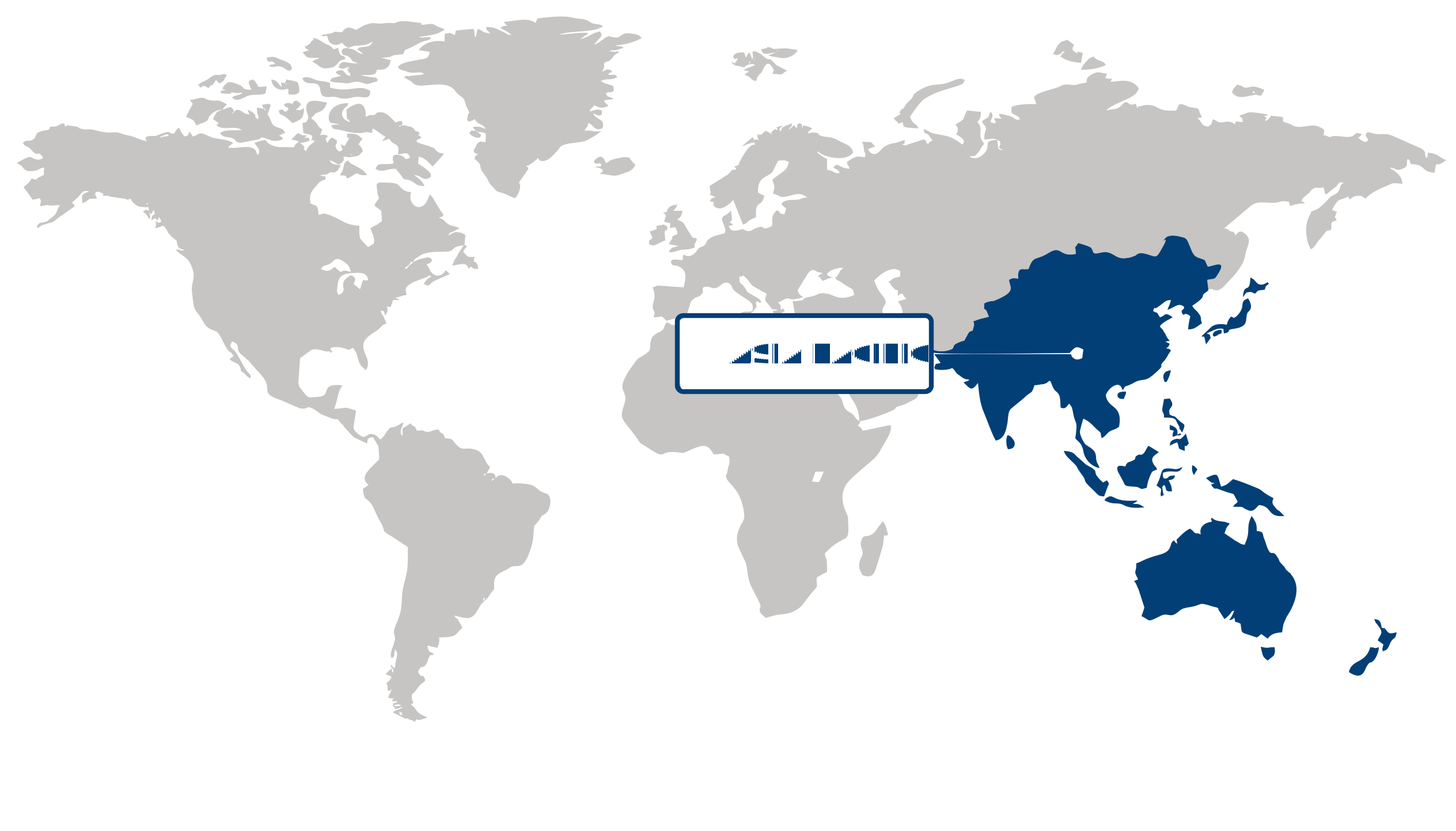
Asia Pacific (Largest Region)
Asia Pacific held the largest share of the NPK fertilizers market at 55.76% in 2026, supported by extensive agricultural activity, high food demand, and the need to improve crop productivity across diverse farming systems. Fertilizer consumption is reinforced by intensive cultivation, efforts to enhance soil nutrient management, and growing adoption of balanced nutrient formulations. Expanding agricultural modernization and increasing focus on improving fertilizer-use efficiency are also encouraging farmers to adopt NPK products tailored to specific crop and soil requirements.
North America (Fastest-Growing Region)
North America is the fastest-growing region, supported by technologically advanced agriculture, increasing emphasis on precision nutrient management, and demand for products that improve fertilizer efficiency. Farmers are increasingly using data-driven approaches to optimize nutrient application and reduce input losses, creating opportunities for balanced fertilizer formulations. Growing attention to soil health, sustainable agricultural practices, and productivity optimization is further supporting the adoption of NPK fertilizers across the region.
| Parameter | North America | Asia Pacific | Europe | Latin America | MEA |
|---|---|---|---|---|---|
| Innovation Hub i Scale Nascent Developing Advanced | |||||
| Cost-Sensitive Region i Scale Low Medium High | |||||
| Regulatory Environment i Scale Restrictive Neutral Supportive | |||||
| Demand Drivers i Scale Weak Moderate Strong | |||||
| Development Stage i Scale Emerging Developing Developed | |||||
| Adoption Rate i Scale Low Medium High | |||||
| New Entrants / Startups i Scale Sparse Moderate Dense | |||||
| Macro Indicators i Scale Weak Stable Strong |
Key Country Insights
Germany 🇩🇪
Sustainable nutrient formulation focusIn Germany, NPK fertilizers are strongly influenced by sustainability-driven agricultural policies and soil conservation practices. Producers and distributors emphasize balanced nutrient formulations that minimize environmental impact while maintaining crop productivity. Demand aligns with regulated fertilizer usage norms and efficiency-focused farming across both arable and mixed agricultural systems.
France 🇫🇷
Soil-balanced fertilization programsIn France, NPK fertilizer demand is guided by structured soil management programs that balance crop productivity with long-term soil fertility. Farmers adopt tailored nutrient applications across cereals and vineyard systems, with increasing attention to regulatory compliance and optimized fertilizer use within diverse agricultural regions.
Italy 🇮🇹
Horticulture-intensive nutrient applicationIn Italy, NPK fertilizers are heavily utilized in horticulture and specialty crop cultivation, where nutrient balance directly impacts quality and yield. Growers emphasize customized fertilizer blends for fruits, vegetables, and vineyards, aligning application practices with regional soil conditions and high-value agricultural production systems.
Japan 🇯🇵
Limited arable efficiency optimizationIn Japan, NPK fertilizer usage is centered on maximizing productivity from limited arable land through highly efficient nutrient management. Farmers prioritize carefully calibrated blends for rice and horticulture crops, with strong emphasis on soil health preservation and minimizing excess application in densely cultivated agricultural zones.
South Korea 🇰🇷
High-efficiency greenhouse usageIn South Korea, NPK fertilizers are widely used in intensive greenhouse farming systems that require precise nutrient control. Growers focus on high-efficiency formulations that support year-round vegetable and fruit production. Application practices are closely managed to optimize yield quality in controlled agricultural environments with limited land availability.
United States 🇺🇸
Precision agriculture blending demandIn the U.S., NPK fertilizer consumption is shaped by precision agriculture practices that optimize nutrient blending for large-scale row crops. Farmers increasingly adopt soil-specific formulations and data-driven application methods to improve yield efficiency. Demand is closely tied to corn and soybean cultivation cycles and input optimization strategies.
Segment Leadership and Growth Trends
NPK Fertilizers Market Share (%), by Form Type, 2026
Go beyond the chart, access full insights & data tables
Request Free Sample ReportForm Type Segment Analysis: Liquid (Largest Segment) vs Dry (Fastest-Growing Segment)
Liquid fertilizers accounted for a 59.45% share of the NPK fertilizers market in 2026, supported by their efficient nutrient delivery and suitability for precision-oriented crop management. Liquid formulations can be applied uniformly and are well suited to modern agricultural practices that emphasize controlled nutrient distribution and improved fertilizer utilization. Their compatibility with irrigation systems and foliar application methods also provides growers with greater flexibility in managing crop nutrient requirements. Increasing adoption of intensive farming practices and greater attention to nutrient-use efficiency are reinforcing demand for liquid NPK formulations across commercial agricultural operations.
The dry segment is gaining momentum as farmers seek convenient, cost-effective fertilizer formats that can support broad-acre crop production and diverse application practices. Dry NPK fertilizers offer practical handling, storage, and distribution characteristics, making them suitable for a wide range of farming environments. Their compatibility with conventional spreading equipment also facilitates efficient application across larger cultivated areas. Growing emphasis on crop productivity, balanced plant nutrition, and efficient input management is supporting increased adoption of dry formulations, particularly where farmers require flexible and easily deployable nutrient solutions.
Mode of Application Segment Analysis: Foliar (Largest Segment) vs Fertigation (Fastest-Growing Segment)
Foliar application held a 58.38% share of the NPK fertilizers market in 2026, reflecting its effectiveness in delivering nutrients directly to plant foliage when rapid nutrient supplementation is required. This approach enables growers to address specific nutrient deficiencies while complementing soil-based fertilization practices. Foliar feeding is particularly valuable in intensive crop production, where maintaining plant health and supporting crop development requires responsive nutrient management. Increasing awareness of precision agriculture and the need to optimize fertilizer utilization are sustaining the segment's strong position.
Fertigation is emerging as the fastest-growing application method as agriculture increasingly adopts irrigation-based nutrient management and precision farming practices. By delivering dissolved fertilizers through irrigation systems, fertigation allows nutrients to be distributed more consistently around plant root zones while supporting efficient water and fertilizer use. The method is particularly relevant to modern agricultural systems focused on controlled input application and improved resource efficiency. Expanding adoption of drip and other efficient irrigation practices is further creating favorable conditions for fertigation-based NPK fertilizer use.
| Segment | Sub-Segment | Largest Segment | Fastest Growing |
|---|---|---|---|
| Form Type | Dry, Liquid | Liquid | Dry |
| Mode of Application | Fertigation, Foliar, Others | Foliar | Fertigation |
| Crop Type | Cereals & Grains, Oilseeds & Pulses, Fruits & Vegetables, Others | Cereals & Grains | Fruits & Vegetables |
Unlock insights tailored to your business with our bespoke market research solutions.
Click to get your customized report now.
Competitive Landscape and Market Positioning
Major players in the NPK fertilizers market:
1. Yara International ASA (Norway)
2. The Mosaic Company (United States)
3. Nutrien Ltd. (Canada)
4. EuroChem Group AG (Switzerland)
5. K+S Aktiengesellschaft (Germany)
6. ICL Group Ltd. (Israel)
7. Haifa Group (Israel)
8. CF Industries Holdings Inc. (United States)
9. OCI Global (Netherlands)
10. Coromandel International Limited (India)
Soil productivity enhancement needs are strongly influencing the NPK fertilizers market, particularly in response to global food demand growth. The NPK fertilizers market is evolving through improved nutrient delivery formulations and precision application methods. Innovation is supporting more efficient resource utilization in agriculture. Continuous development is improving crop yield optimization strategies.
| Company | Market Share | Company Revenue | Revenue CAGR (%) | Product Portfolio | Geographic Presence | Innovation / R&D Focus | Strategic Developments |
|---|---|---|---|---|---|---|---|
| Yara International ASA (Norway) | |||||||
| The Mosaic Company (United States) | |||||||
| Nutrien Ltd. (Canada) | |||||||
| EuroChem Group AG (Switzerland) | |||||||
| K+S Aktiengesellschaft (Germany) | |||||||
| ICL Group Ltd. (Israel) | |||||||
| Haifa Group (Israel) | |||||||
| CF Industries Holdings Inc. (United States) | |||||||
| OCI Global (Netherlands) | |||||||
| Coromandel International Limited (India). |
Industry Development/News
| Company Name | Date | Key Development |
|---|---|---|
| Paradeep Phosphates Limited | Aug-24 | Paradeep Phosphates Limited reported a 29% revenue growth for the fiscal year, driven by robust sales volumes and rising market demand. This performance solidifies the company’s competitive positioning within the NPK fertilizer sector and highlights successful scaling of operations amidst favorable market conditions. |
| Indorama Group / ICS | Aug-24 | Indorama Group and Industries Chimiques du Sénégal announced a $210 million investment to expand fertilizer production capacity. This capital expenditure is strategically focused on alleviating regional supply constraints and enhancing the availability of critical NPK fertilizer products in high-growth agricultural markets. |
| NEXTCHEM (MAIRE Group) | Aug-24 | NEXTCHEM, a subsidiary of MAIRE Group, signed a definitive agreement to acquire the Ballestra Group. This acquisition strategically expands the company’s portfolio of sustainable fertilizer and specialty chemical technologies, enabling enhanced technical capabilities for NPK manufacturing and processing innovation. |
| PLN / Pupuk Indonesia / ACWA Power | Aug-24 | A Green Hydrogen Purchase Agreement was signed between PLN, Pupuk Indonesia, and ACWA Power to facilitate green ammonia production. This strategic partnership represents a significant advancement in sustainable fertilizer manufacturing, aligning operational processes with global decarbonization mandates and supporting the development of low-carbon NPK supply chains. |
| Uralchem Group | Aug-24 | Uralchem Group expanded its commercial operations in Vietnam’s agricultural sector to strengthen fertilizer distribution networks. By deepening its presence in Southeast Asia, the company aims to optimize its supply chain reach and capture market share in a region experiencing rising demand for balanced crop nutrition. |
| Azomureș | Aug-24 | Azomureș restarted its ammonia production facility in Romania, bolstering the local supply of key feedstocks essential for NPK fertilizer manufacturing. This operational recovery is critical for stabilizing the regional supply chain and reducing dependency on external nutrient inputs for downstream fertilizer production. |
| OCI Global / COMPO EXPERT | Jul-24 | OCI Global began supplying low-carbon ammonia to COMPO EXPERT to support the production of sustainable fertilizer ranges. This initiative reflects an increasing market-wide emphasis on lowering the carbon footprint of specialty and NPK fertilizers through cleaner raw material sourcing and strategic value-chain integration. |
| UPM Biochemicals | Jul-24 | UPM Biochemicals launched the UPM Solargo™ biostimulant range, designed to optimize crop nutrition. This product development represents a strategic expansion into adjacent agricultural solutions, providing advanced alternatives and complements to conventional NPK fertilizer applications that address soil health and nutrient absorption efficiency. |
| FACT | Jun-23 | Fertilizers and Chemicals Travancore (FACT) officially joined the "One Nation One Fertilizer" initiative by introducing its first consignment of Bharat NPK. This government-led alignment standardizes branding and distribution under the Pradhan Mantri Bhartiya Jan Urvarak Pariyojna, significantly impacting the commercial landscape for subsidized fertilizers in India. |
| AGROFERT | Jun-22 | AGROFERT completed the acquisition of Borealis AG's nitrogen business, valued at approximately $878 million. This strategic consolidation significantly increased AGROFERT’s production capacity and expanded its sales and distribution footprint across Europe, fundamentally altering the competitive structure of the regional nitrogen-based fertilizer market. |
Customize Your Report
Explore examples of how this report can be tailored to different research needs, including custom segments, additional topics or chapters, and related reports. Click a section of the wheel or its numbered marker to explore the available options.
NPK Fertilizers Market — Custom Segments
| Segment | Sub-Segment |
|---|---|
| Nutrient Grade | Balanced NPK Grades, High-Nitrogen Grades, High-Phosphorus Grades, High-Potassium Grades |
| Distribution Channel | Direct Sales, Agricultural Cooperatives, Retail & Dealer Networks, E-Commerce |
| Farm Size | Small Farms, Medium Farms, Large & Commercial Farms |
NPK Fertilizers Market — Custom TOC
| Custom Chapter | Chapter Details |
|---|---|
| Precision Nutrient Management Adoption Study |
|
| Sustainable Fertilizer Transition Strategy |
|
| Raw Material Supply Risk Analysis |
|
Need a different cut of the data?
Request Custom ResearchWhat is the market size of NPK fertilizers?
How is the NPK fertilizers industry projected to perform over the next decade?
How is precision agriculture changing purchasing behavior in the NPK fertilizers market?
Why are sustainability regulations influencing competition in the NPK fertilizers market?
Why is Foliar the leading mode of application in the NPK fertilizers market?
Why is Dry the fastest-growing form type in the NPK fertilizers market?
Why is Asia Pacific the leading region in the NPK fertilizers market?
What is supporting NPK fertilizers market growth in North America?
Which organizations are considered leaders in the NPK fertilizers landscape?
Our Clients
"The report helped us understand emerging consumer trends in our product category. It clarified where to focus innovation for the next product launch."
LyondellBasell
"The regional forecast section was incredibly useful. We were able to identify two new potential partners in Europe thanks to the vendor mapping you included."
SABIC
"We appreciated how actionable the recommendations were. It guided us to improve supply chain resilience."
Olin Corporation
Our Research Team & Methodology
Every Fundamental Business Insights report is built by a dedicated vertical research team, validated through a structured primary-and-secondary methodology, and reviewed for accuracy before it reaches you.
Research Team Overview
Prepared by the Chemicals & Materials Research Team
Delivery
Published
Demand
Available
Support
Trust & Compliance
Research Intelligence
| Source | Reference |
|---|---|
| American Chemistry Council (ACC) | www.americanchemistry.com |
| European Chemical Industry Council (Cefic) | cefic.org |
| International Council of Chemical Associations (ICCA) | icca-chem.org |
| European Chemicals Agency (ECHA) | echa.europa.eu |
| U.S. Environmental Protection Agency (EPA) | www.epa.gov |
| ASTM International | www.astm.org |
| International Organization for Standardization (ISO) | www.iso.org |
| National Institute of Standards and Technology (NIST) | www.nist.gov |
| Plastics Industry Association (PLASTICS) | www.plasticsindustry.org |
| European Biplastics | www.european-bioplastics.org |
| The Adhesive and Sealant Council (ASC) | www.ascouncil.org |
| National Association of Corrosion Engineers (AMPP) | www.ampp.org |
| Society of Plastics Engineers (SPE) | www.4spe.org |
| International Fertilizer Association (IFA) | www.fertilizer.org |
| CropLife International | croplife.org |
| Packaging Europe | packagingeurope.com |
| Flexible Packaging Association (FPA) | www.flexpack.org |
| Battery Council International (BCI) | batterycouncil.org |
| International Copper Association (ICA) | internationalcopper.org |
| World Steel Association | worldsteel.org |
Research Workflow & Quality Assurance
Data Collection
Verified information gathered through primary and secondary research.
Data Triangulation
Cross-validation using multiple independent data sources.
Forecast Modelling
Market estimates developed using historical trends and analytical models.
Analyst Validation
Findings reviewed by domain experts for accuracy and consistency.
Editorial & Quality Review
Final editorial, quality, and compliance checks before publication.
Final Publication
Released after successful completion of the internal review process.
Report Coverage
📊 Market Assessment
- Market Size & Forecast
- Market Segmentation
- Regional Analysis
- Growth Drivers & Challenges
- Market Dynamics
🏢 Competitive Intelligence
- Competitive Landscape
- Company Profiles
- Competitive Benchmarking
- Mergers & Acquisitions
- Market Share Analysis or Key Company Strategies
🔍 Strategic Analysis
- Value Chain Analysis
- Porter's Five Forces
- PESTLE Analysis
- Pricing Trends
- Supply-Demand Analysis
🚀 Future Outlook
- Technology Landscape
- Regulatory Landscape
- Investment & Funding Landscape
- Emerging Opportunities
- Future Market Outlook
Have a question about this report or need a custom scope?
Request Customization