Neuromorphic Computing Market Size & Forecasts 2026-2035, By Segments (Application, Industry), Growth Opportunities, Innovation Landscape, Regulatory Shifts, Strategic Regional Insights (U.S., Japan, China, South Korea, UK, Germany, France), and Competitive Dynamics (Intel, IBM, Qualcomm, BrainChip, SynSense)
Jump to Content
Market Size and Growth Outlook
Neuromorphic Computing Market size is estimated to increase from USD 7.39 billion in 2025 to USD 49.31 billion by 2035, supported by a CAGR exceeding 20.9% during 2026-2035. In 2026, revenues are forecast to reach USD 8.79 billion.
Get more details on this report
Request Free Sample ReportNeuromorphic Computing Market Intelligence Snapshot
Regional Market Dynamics
Segment Momentum
Market Expansion Drivers
Leading Market Participants
Global Market Forecast Snapshot
Market Outlook
Regional and Segment Outlook
Market Growth Drivers and Industry Trends
Growing demand for low-latency, energy-efficient AI in edge devices is directly expanding the neuromorphic computing market as vendors seek hardware that mimics brain-like processing. Evidence includes Intel’s publicized Loihi research chips and BrainChip’s Akida product announcements, both positioning neuromorphic designs for edge inference, while DARPA-funded programs signaled sustained government interest. For incumbents, this creates a chance to integrate neuromorphic IP into existing accelerator roadmaps; for new entrants, vertical differentiation in sensors-to-inference stacks and targeted vertical deployments (automotive, IoT, robotics) are attractive. With continuing product roadmaps from Intel and BrainChip and procurement pilots visible today, commercial adoption pathways will increasingly favor solutions demonstrably delivering lower power and higher responsiveness.
Advancements in neuromorphic chip design and materials
Progress in device architectures and novel materials is reshaping feasibility and cost profiles for the neuromorphic computing market, driven by work from research institutions and industry labs. University of Manchester’s SpiNNaker research, Hewlett Packard Labs’ memristor investigations, and publications from Stanford and MIT reporting new synaptic device prototypes provide qualitative evidence of technical maturation. Established semiconductor fabs and design-tool vendors can capitalize by offering integration and manufacturing services; startups and specialized IP houses can monetize novel architectures and materials stacks. Given active academic–industry collaborations and publicized prototype milestones, hardware diversification and ecosystem tooling are likely to accelerate deployment-ready solutions.
Development of regulatory and ethical frameworks for neuromorphic computing
Emerging regulatory attention and ethical guidance are beginning to shape procurement and R&D priorities across the neuromorphic computing market, with tangible signals from policymakers and standards bodies. The European Commission’s proposed AI Act, NIST’s AI Risk Management Framework work, UNESCO’s Recommendation on the Ethics of AI, and IEEE standards activities illustrate governance trends that prioritize transparency, safety, and accountability. Incumbents can leverage compliance capabilities and certification services to reassure enterprise buyers; entrants can differentiate through explainability, verifiability, and built-in safety mechanisms. As regulators and standards organizations publish drafts and pilots today, governance requirements will increasingly influence product design, vendor qualification, and buyer decision criteria.
Industry Restraints:
Immature Software and Algorithm Ecosystem: The absence of standardized toolchains, benchmarks and production-ready algorithms constrains deployment by increasing integration costs and slowing developer adoption; hardware vendors report long lead times to map applications to event-driven architectures and to validate reliability. Intel’s Loihi program and IBM Research’s TrueNorth publications explicitly note the need for co-designed software and hardware, while BrainChip’s Akida relies on a proprietary SDK that limits portability across platforms. For established firms, owning an end-to-end stack becomes a competitive moat; for startups and systems integrators, the need to build bespoke toolchains raises burn rates and slows customer wins. Expect incremental progress via academic consortia and vendor SDKs, but limited portability and slow tooling maturation will restrain broad commercial uptake in the near-to-medium term.
Manufacturing and Supply Chain Constraints: Specialized analog/mixed-signal processes and low-volume demand make wafer scheduling and yield optimization difficult, driving higher unit costs and long lead times. DARPA’s SyNAPSE investments helped demonstrate neuromorphic prototypes, yet commercial scale has been hindered by foundry dynamics—GlobalFoundries’ 2018 decision to deprioritize bleeding-edge nodes and TSMC’s and Samsung’s focus on high-volume GPU/SoC production illustrate capacity allocation risks. Large incumbents with privileged foundry relationships are better positioned to absorb long cycle times, while new entrants face financing and ramp constraints. Absent a clear surge in demand or dedicated foundry initiatives, constrained manufacturing economics will continue to limit rapid scale-up over the next several years.
| Growth Driver | Impact on CAGR | Regulatory Influence | Geographic Relevance | Adoption Rate | Impact Timeline |
|---|---|---|---|---|---|
| Rising demand for AI accelerators and cognitive computing applications | 5.00% | Short term (≤ 2 yrs) | North America, Asia Pacific | Medium | Fast |
| Advancements in neuromorphic chip design and materials | 4.00% | Medium term (2–5 yrs) | Europe, Asia Pacific | Medium | Moderate |
| Development of regulatory and ethical frameworks for neuromorphic computing | 2.00% | Long term (5+ yrs) | North America, Europe | High | Slow |
Explore Growth Opportunities
Request Free Sample ReportRegional Demand Dynamics
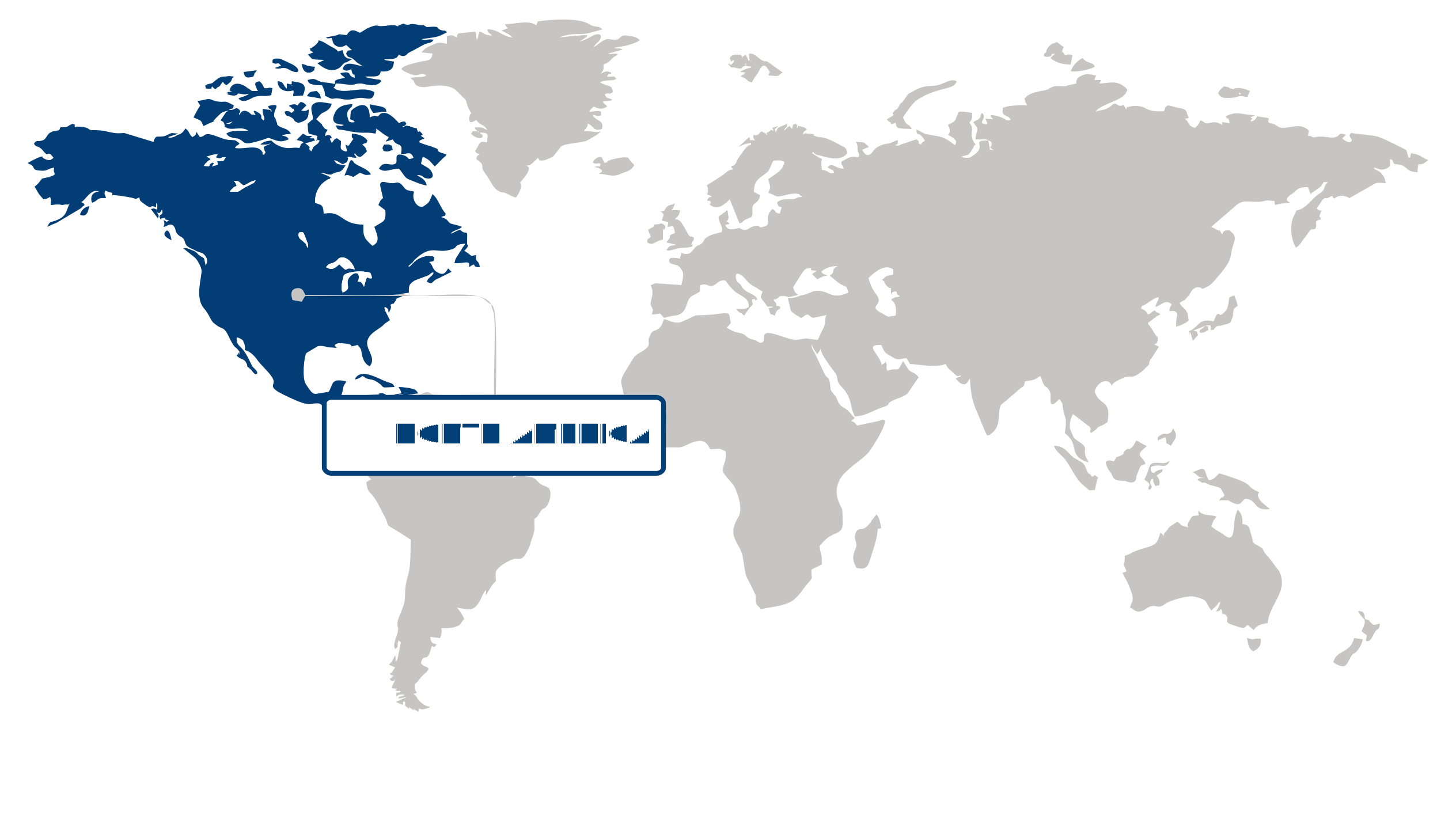
The North American neuromorphic computing market captured 37% of the global market in 2025, making the region the largest by share. Leadership is rooted in advanced R&D infrastructure and early enterprise and defense adoption—evidenced by DARPA’s neuromorphic programs (e.g., SyNAPSE), sustained funding from the National Science Foundation and the Department of Energy, and corporate investments such as Intel’s Loihi development and IBM Research’s TrueNorth work. Large integrators and universities like MIT and Stanford publish applied results that accelerate transfer to startups, while established semiconductor supply chains and active capital markets enable scale-up. These combined dynamics create a durable platform for commercial deployments and operational systems, offering significant investor and industrial opportunities across edge, autonomy, and low-power AI applications.
The United States anchors the North American neuromorphic computing market, concentrating defense demand, corporate labs, and academic talent. U.S. activity—DARPA-funded projects, U.S. Department of Defense trials, Intel press releases on Loihi, IBM Research publications, and NSF-funded university programs—creates a clear pipeline from prototypes to pilots; university spinouts and company announcements demonstrate active commercialization paths. Procurement priorities and large enterprise pilots in autonomy and cybersecurity increase buyer readiness, and U.S. leadership helps standardize supply-chain and integration practices that will amplify regional opportunity and investor returns.
Asia Pacific Market Analysis:
Asia Pacific emerged as the fastest-growing region, registering a CAGR of 24% in the neuromorphic computing market, driven by rising AI adoption, expanding semiconductor capacity, and surging demand for edge-AI and ultra‑low‑power solutions. Regional momentum reflects coordinated public and private activity—examples include capacity investments by Semiconductor Manufacturing International Corporation (SMIC), Japan’s Rapidus initiative and Ministry of Economy, Trade and Industry (METI) support for domestic fabs, and research programs at Alibaba DAMO Academy—which together compress time to market for neuromorphic silicon and systems. Given large-scale edge deployments across industrial IoT and autonomous systems, Asia Pacific’s integrated supply chain and strong AI demand profile present sustained commercial opportunities for neuromorphic hardware and software vendors.
Japan acts as an advanced-integration and research hub in the neuromorphic computing market, where government backing and specialized R&D accelerate prototypes toward commercial integration. Japan’s Ministry of Economy, Trade and Industry (METI) and the Rapidus consortium are strengthening local fabrication and packaging capabilities that support low-power neuromorphic ASICs, while institutions such as RIKEN and companies like Sony and NEC are advancing spiking neural network research and sensor integration. These dynamics favor partnerships between fab-capable suppliers and system integrators, making Japan a source of validated, high-reliability neuromorphic solutions that feed broader Asia Pacific commercialization.
China serves as a scale-deployment and ecosystem leader in the neuromorphic computing market, where large domestic demand and industrial policy accelerate adoption at the edge. Policy and investment signals from the Ministry of Industry and Information Technology (MIIT), capacity expansion by SMIC, and applied research from Tsinghua University and the Institute of Automation, Chinese Academy of Sciences combine with commercial initiatives at Alibaba DAMO Academy and Huawei to drive trial and pilot deployments in smart cities, industrial automation, and consumer devices. For investors and strategists, China’s ability to pair mass deployment with a growing local supply chain amplifies regional volume opportunities while shortening commercialization cycles.
Europe Market Trends:
Europe held a significant share of the neuromorphic computing market, supported by concentrated public funding, strong applied-research centers, and industrial integration of low-power AI. The European Commission’s Horizon Europe program and the European Investment Bank have directed grants and financing to next‑gen AI projects; Fraunhofer‑Gesellschaft, CEA, and IMEC drive translational research, while STMicroelectronics and Prophesee have announced commercial roadmaps and partnerships. These developments reflect shifting procurement toward energy-efficient inference, resilient regional supply chains, and a skilled talent pipeline from universities, positioning Europe for scaled commercialization and investor opportunities across edge sensing and industrial AI applications.
Germany served as a leading commercialization hub in the neuromorphic computing market, propelled by strong industrial demand from automotive and manufacturing sectors. Siemens and Bosch have publicly described pilots and collaborations that integrate event-based sensing and low-power inference; the Federal Ministry of Education and Research (BMBF) funds applied AI testbeds, and Fraunhofer institutes run deployment-focused labs. Germany’s manufacturing scale, procurement programs, and skilled engineering workforce accelerate real-world validation, making it an attractive market for companies seeking rapid industrial uptake and for investors targeting commercialization pathways that can be scaled regionally.
France maintained notable presence in the neuromorphic computing market through a vibrant research‑to‑startup ecosystem emphasizing sensing and edge efficiency. CEA and CNRS host core neuromorphic projects, the Agence Nationale de la Recherche (ANR) funds targeted initiatives, and startups such as Prophesee and Kalray have issued press releases on event‑based vision and edge processing solutions. This concentration of IP, early‑stage venture activity, and public research support creates acquisition and partnership opportunities that complement Germany’s industrialization, enhancing Europe’s broader strategic case for neuromorphic investment.
| Parameter | North America | Asia Pacific | Europe | Latin America | MEA |
|---|---|---|---|---|---|
| Innovation HubiScaleNascentDeveloping Advanced | |||||
| Cost-Sensitive RegioniScaleLowMedium High | |||||
| Regulatory EnvironmentiScaleRestrictiveNeutral Supportive | |||||
| Demand DriversiScaleWeakModerate Strong | |||||
| Development StageiScaleEmergingDeveloping Developed | |||||
| Adoption RateiScaleLowMedium High | |||||
| New Entrants / StartupsiScaleSparseModerate Dense | |||||
| Macro IndicatorsiScaleWeakStable Strong |
Neuromorphic Computing Market Share (%), by Application, 2026
Go beyond the chart, access full insights & data tables
Request Free Sample ReportImage recognition held largest share in the neuromorphic computing market in 2025, reflecting its central role in autonomous vehicles and surveillance where event-driven, low-power perception is critical. This leadership is driven by demand for real-time, energy-efficient vision in ADAS and security systems, evidenced by research and demos from Intel (Loihi) and IBM Research (TrueNorth) on spiking approaches and by deployment momentum from NVIDIA Drive, Waymo and Hikvision for vision-first systems. Customer preference for on-device, privacy-preserving inference, supply-chain advances in sensors (e.g., Prophesee event cameras) and competitive focus on power efficiency create openings for incumbents to integrate neuromorphic IP and for startups to supply specialized sensors and firmware; ongoing ADAS rollouts and surveillance modernization suggest sustained relevance near term.
Analysis by Industry
Consumer electronics represented largest share in the neuromorphic computing market in 2025, propelled by adoption in smart devices and edge AI processing that value ultra-low-power, always-on inference. The segment leads because device makers prioritize battery life and instantaneous inference—trends reflected in BrainChip’s Akida announcements and the broader industry push by Qualcomm and Apple toward on-device NPUs. Shifts in consumer demand for privacy-preserving, offline AI, semiconductor supply-chain investments, and standards activity (e.g., European Commission AI policy discussions) favor integration of neuromorphic accelerators; established OEMs can embed IP at scale while nimble vendors can win niche edge opportunities, supporting continued adoption through near-term product cycles.
| Segment | Sub-Segment | Largest Segment | Fastest Growing |
|---|---|---|---|
| Application | Data Mining, Image Recognition, Object Detection, Signal Recognition | ||
| Industry | IT & Telecom, Medical, Consumer Electronics, Aerospace & Defense, Automotive, Industrial, Others |
Unlock insights tailored to your business with our bespoke market research solutions.
Click to get your customized report now.
Competitive Landscape and Market Positioning
The competitive landscape reflects differentiated plays between breadth and depth. Larger players are broadening hardware-software stacks and extending channel reach while niche vendors intensify focus on event-driven algorithms and low-power form factors. Cross-organizational technology alignments, selective consolidation of capabilities and coordinated platform rollouts are shortening commercialization paths, elevating integration requirements and privileging actors that can combine fabrication access, toolchains and validated application stacks to meet enterprise and edge needs.
Strategic / Actionable Recommendations for Regional Players
In markets with deep cloud, enterprise and semiconductor ecosystems, cultivate closer commercial links with hyperscalers and system integrators, prioritize modular reference platforms and emphasize developer-facing toolchains to accelerate enterprise uptake and platform stickiness.
Where strong foundry capacity and high-volume device OEMs dominate, synchronize product roadmaps with manufacturing partners, focus on cost-competitive silicon implementations for mobile and IoT endpoints, and leverage regional R&D consortia to secure supply-chain predictability.
In jurisdictions emphasizing safety-critical and industrial applications, engage automotive and industrial consortia, invest in interoperability and validation frameworks, and partner with specialized fabless SMEs and research institutes to translate prototypes into certified deployments.
| Company | Market Share | Company Revenue | Revenue CAGR (%) | Product Portfolio | Geographic Presence | Innovation / R&D Focus | Strategic Developments |
|---|---|---|---|---|---|---|---|
| No companies available. | |||||||
Customize Your Report
Explore examples of how this report can be tailored to different research needs, including custom segments, additional topics or chapters, and related reports. Click a section of the wheel or its numbered marker to explore the available options.
Neuromorphic Computing Market — Custom Segments
| Segment | Sub-Segment |
|---|---|
| No segment data available. | |
Neuromorphic Computing Market — Custom TOC
| Custom Chapter | Chapter Details |
|---|---|
| No custom TOC data available. | |
Need a different cut of the data?
Request Custom ResearchFrequently Asked Questions
What is the market size of neuromorphic computing?
What is the expected industry size of neuromorphic computing by 2035?
Which territory demonstrates the strongest presence in the neuromorphic computing market?
Which region has emerged as the fastest-growing for the neuromorphic computing sector?
Where is the image recognition segment seeing the strongest adoption within the neuromorphic computing industry?
When did consumer electronics sub-segment emerge as the largest sub-segment in the industry segment of neuromorphic computing sector?
Which organizations are considered leaders in the neuromorphic computing landscape?
Our Clients
"The team demonstrated a great understanding of our business needs, and the reports were tailored to address our specific concerns and objectives."
Infosys
"The report was up-to-date with the latest industry trends and technological advancements. The detailed competitive landscape analysis was quite helpful."
Zebra Technologies
"The data presented in the report was accurate and well-researched. I also found the market dynamics section particularly useful."
Arlo Technologies
Our Research Team & Methodology
Every Fundamental Business Insights report is built by a dedicated vertical research team, validated through a structured primary-and-secondary methodology, and reviewed for accuracy before it reaches you.
This report was prepared by the Smart Technologies Research Team at Fundamental Business Insights, a dedicated research group specializing in emerging digital technologies and intelligent connected systems. Our analysts continuously monitor advancements in artificial intelligence, Internet of Things (IoT), cloud computing, edge computing, cybersecurity, automation, digital transformation strategies, and evolving enterprise adoption trends to deliver timely and reliable market intelligence. The research is developed using a structured methodology that combines primary discussions with technology providers, software vendors, system integrators, enterprise users, and industry experts, along with company annual reports, investor presentations, regulatory publications, technology standards, industry associations, technical white papers, and other authoritative secondary sources. Market estimates are validated through multiple research techniques, including top-down and bottom-up analysis, before undergoing an internal quality review to ensure accuracy, consistency, and methodological integrity prior to publication.
Delivery
Published
Available
Support
- Market Size & Forecast
- Market Segmentation
- Regional Analysis
- Growth Drivers & Challenges
- Market Dynamics
- Competitive Landscape
- Company Profiles
- Competitive Benchmarking
- Mergers & Acquisitions
- Market Share Analysis or Key Company Strategies
- Value Chain Analysis
- Porter's Five Forces
- PESTLE Analysis
- Pricing Trends
- Supply-Demand Analysis
- Technology Landscape
- Regulatory Landscape
- Investment & Funding Landscape
- Emerging Opportunities
- Future Market Outlook