Navy Marine Scrubber Systems Market Size & Growth Forecast 2027–2036, By Segments (Fuel, Technology), Regional Demand Trends (North America, Asia Pacific, Europe), Key Country Insights (U.S., Japan, South Korea, Germany, France, Italy), and Competitive Landscape
Market Size and Growth Outlook
Navy Marine Scrubber Systems Market size was assessed at USD 2.11 Billion in 2026 and is poised to grow at 10.18% CAGR between 2027 and 2036, exceeding USD 5.56 Billion by 2036. The industry revenue for 2027 is calculated at USD 2.29 Billion.
Get more details on this report
Request Free Sample ReportNavy Marine Scrubber Systems Market Intelligence Snapshot
Regional Market Dynamics
- Asia Pacific led the market in 2026, supported by extensive naval fleets, shipbuilding infrastructure, maritime activity, and investments in naval modernization and emissions control.
- North America is projected to grow fastest, driven by naval fleet modernization, vessel-system upgrades, environmental expectations, and investments in maritime defense capabilities.
Segment Momentum
- MDO held 61.25% of the market in 2026 because its widespread use in naval vessels and compatibility with existing marine systems continue to support strong demand for scrubber technologies.
- Dry technology is growing quickly as naval operators seek emissions-control solutions that reduce reliance on liquid treatment while offering greater flexibility for diverse vessel configurations and operating environments.
Market Expansion Drivers
- Stringent maritime emissions regulations driving scrubber system installations
- Sustainability commitments accelerating adoption of green naval operations technologies
- Advancements in exhaust gas cleaning systems improving marine compliance efficiency
Leading Market Participants
- Prominent players in the navy marine scrubber systems market include Wärtsilä Corporation (Finland), Mitsubishi Heavy Industries, Ltd. (Japan), Alfa Laval AB (Sweden), ANDRITZ AG (Austria), Fuji Electric Co., Ltd. (Japan), Schneider Electric SE (France), Damen Shipyards Group (Netherlands), SAACKE GmbH (Germany), Hitachi Energy Ltd. (Switzerland), PureteQ A/S (Denmark)
Global Market Forecast Snapshot
Market Outlook
- 2026 Market Size: USD 2.11 Billion
- 2027 Estimated Market Size: USD 2.29 Billion
- Projected Market Size: USD 5.56 Billion by 2036
- Growth Forecast: 10.18% CAGR (2027-2036)
Regional and Segment Outlook
- Leading Regional Market: Asia Pacific
- High-Growth Regional Hub: North America
- Core Revenue Segment: MDO (Fuel) | Wet Technology (Technology)
- Emerging Opportunity Segment: Hybrid (Fuel) | Dry Technology (Technology)
Market Growth Drivers and Industry Trends
Stringent maritime emissions regulations driving scrubber system installations
Increasingly rigorous environmental regulations governing vessel emissions are encouraging naval operators to adopt technologies that reduce sulfur oxide and particulate emissions while maintaining operational readiness. This regulatory shift will drive the navy marine scrubber systems market growth as defense organizations retrofit existing fleets and integrate exhaust gas cleaning systems into new naval vessels. Scrubber installations allow ships to comply with evolving environmental standards while preserving fuel flexibility and supporting long-duration maritime operations across diverse deployment conditions.
Sustainability commitments accelerating adoption of green naval operations technologies
Naval forces are placing greater emphasis on reducing the environmental impact of fleet operations through cleaner propulsion support systems and improved emissions management. The navy marine scrubber systems market benefits from these sustainability initiatives as military organizations incorporate exhaust treatment technologies into broader strategies focused on responsible resource utilization and environmentally conscious maritime operations. Adoption of greener operational practices also aligns with long-term fleet modernization programs that prioritize efficiency, environmental stewardship, and compliance with evolving international standards.
Advancements in exhaust gas cleaning systems improving marine compliance efficiency
Continuous innovation in exhaust gas cleaning technologies is enhancing the performance, reliability, and operational flexibility of onboard emissions control systems. These advancements will propel the navy marine scrubber systems market growth by enabling naval vessels to achieve higher pollutant removal efficiency while simplifying system integration and reducing maintenance requirements. Improvements in monitoring capabilities, corrosion-resistant materials, and automated control systems also help operators optimize emissions management across varying operating conditions without compromising mission effectiveness.
| Growth Driver | Impact on CAGR | Regulatory Influence | Geographic Relevance | Adoption Rate | Impact Timeline |
|---|---|---|---|---|---|
| Stringent maritime emissions regulations driving scrubber system installations | 2% | High | Europe, North America | High | Near Term |
| Sustainability commitments accelerating adoption of green naval operations technologies | 1.8% | High | Asia Pacific, Europe | High | Near Term |
| Advancements in exhaust gas cleaning systems improving marine compliance efficiency | 1.6% | High | North America, Asia Pacific | Medium | Mid Term |
Unlock insights tailored to your business with our bespoke market research solutions.
Click to get your customized report now.
Regional Demand Dynamics
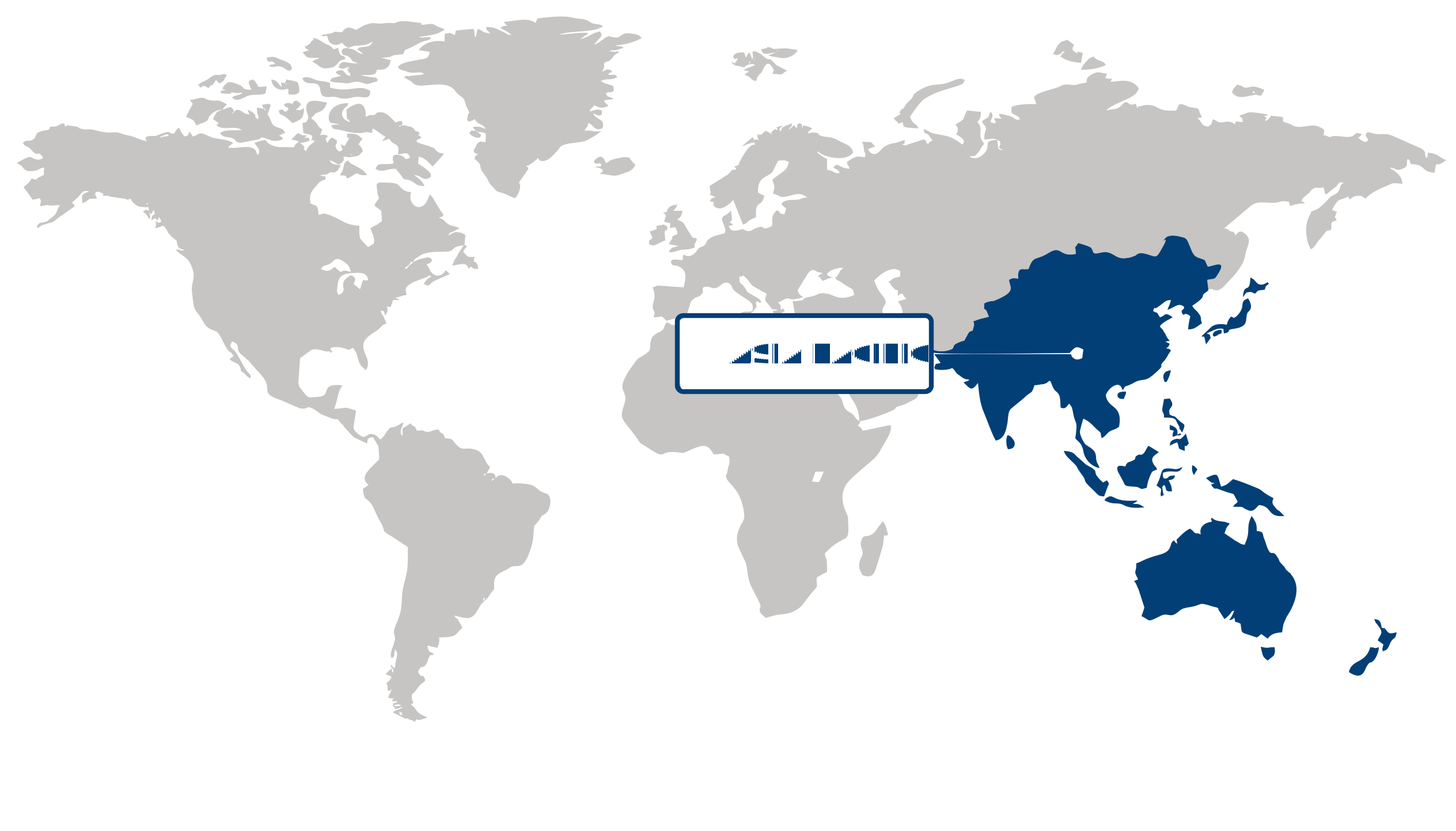
Asia Pacific (Largest Region)
The navy marine scrubber systems market was led by Asia Pacific in 2026, reflecting the region's extensive naval fleets, shipbuilding capabilities, and growing emphasis on reducing emissions from marine operations. Increasing maritime activity and continued investments in naval modernization are supporting demand for technologies that help vessels meet environmental requirements while maintaining operational efficiency. The region's substantial shipbuilding infrastructure and concentration of maritime industries also facilitate the deployment of emission-control systems across new and existing vessels.
North America (Fastest-Growing Region)
North America is projected to experience the fastest growth, supported by continued naval fleet modernization and increasing attention to marine environmental performance. Investments in upgrading vessel systems are creating opportunities for emission-control technologies, while stricter environmental expectations encourage naval operators to consider solutions that reduce harmful exhaust emissions. The expansion of maritime defense capabilities and ongoing improvements to vessel efficiency are expected to strengthen regional demand for marine scrubber systems.
| Parameter | North America | Asia Pacific | Europe | Latin America | MEA |
|---|---|---|---|---|---|
| Innovation Hub i Scale Nascent Developing Advanced | |||||
| Cost-Sensitive Region i Scale Low Medium High | |||||
| Regulatory Environment i Scale Restrictive Neutral Supportive | |||||
| Demand Drivers i Scale Weak Moderate Strong | |||||
| Development Stage i Scale Emerging Developing Developed | |||||
| Adoption Rate i Scale Low Medium High | |||||
| New Entrants / Startups i Scale Sparse Moderate Dense | |||||
| Macro Indicators i Scale Weak Stable Strong |
Key Country Insights
United States 🇺🇸
Fleet Modernization FocusThe U.S. prioritizes navy marine scrubber systems that integrate with vessel modernization programs while meeting evolving naval environmental standards. Procurement emphasizes durable, low-maintenance technologies that can operate reliably during extended deployments.
Germany 🇩🇪
Naval Engineering IntegrationGermany emphasizes navy marine scrubber systems that complement advanced naval engineering and efficient ship design. Domestic suppliers focus on compact, compliant solutions that simplify installation during vessel upgrades and maintenance cycles.
Japan 🇯🇵
Compliance-Oriented RetrofitsJapan advances navy marine scrubber systems through retrofit programs that improve environmental performance without disrupting fleet availability. Japanese shipbuilders and equipment providers prioritize space-efficient designs with dependable operational performance.
South Korea 🇰🇷
Shipyard CollaborationSouth Korea aligns navy marine scrubber system development with its established naval shipbuilding capabilities. Local shipyards and equipment manufacturers work closely to deliver integrated emission control solutions suited for new-build and modernization projects.
France 🇫🇷
Defense Sustainability AlignmentFrance incorporates navy marine scrubber systems into naval sustainability initiatives while maintaining operational readiness. French procurement favors technologies offering lifecycle efficiency, regulatory compliance, and compatibility with advanced naval platforms.
Italy 🇮🇹
Specialized Retrofit ExpertiseItaly supports navy marine scrubber systems through specialized marine engineering expertise for naval retrofit projects. Italian suppliers focus on adaptable configurations that accommodate varied vessel classes while minimizing installation complexity.
Segment Leadership and Growth Trends
Navy Marine Scrubber Systems Market Share (%), by Fuel, 2026
Go beyond the chart, access full insights & data tables
Request Free Sample ReportFuel Segment Analysis: MDO (Largest Segment) vs Hybrid (Fastest-Growing Segment)
The MDO segment led the navy marine scrubber systems market, accounting for 61.25% of the market share in 2026. Marine diesel oil remains an important fuel choice for naval vessels because of its established use across marine propulsion and auxiliary systems and its compatibility with existing vessel operating requirements. The widespread presence of vessels designed around conventional marine fuel infrastructure supports continued demand for scrubber systems capable of addressing emissions generated during fuel combustion. The need to manage exhaust emissions while maintaining operational reliability is encouraging the integration of emissions-control technologies into naval marine systems. The established role of MDO in marine operations, combined with ongoing efforts to balance environmental compliance with fleet performance, is supporting its leading position in the market.
Hybrid fuel systems are anticipated to experience the fastest growth, reflecting increasing interest in flexible marine propulsion and emissions-management solutions. Hybrid configurations can provide greater operational adaptability by allowing vessels to utilize different fuel or power sources according to mission requirements, operating conditions, and environmental considerations. This flexibility is particularly relevant for naval fleets that may need to operate across diverse maritime environments while maintaining efficiency and emissions performance. The growing emphasis on reducing the environmental impact of marine operations is also encouraging the adoption of technologies that can work effectively across multiple operating modes. As naval operators seek greater flexibility and improved emissions management, hybrid solutions are gaining momentum within the marine scrubber systems landscape.
Technology Segment Analysis: Wet Technology (Largest Segment) vs Dry Technology (Fastest-Growing Segment)
Wet technology held the largest share of the navy marine scrubber systems market in 2026, reflecting its established application in marine exhaust gas treatment. Wet scrubber systems use liquid-based processes to remove targeted pollutants from exhaust streams and are widely recognized for their effectiveness in managing emissions from marine engines. Their established technology base and suitability for marine environments have supported broad adoption, particularly among vessel operators seeking proven approaches to emissions control. The continued focus on reducing marine pollution and meeting increasingly stringent environmental requirements is sustaining demand for wet scrubber solutions across naval applications.
Dry technology is expected to be the fastest-growing technology segment, supported by increasing interest in alternative approaches to marine emissions treatment. Dry scrubber systems can offer operational advantages in applications where water availability, wastewater management, or vessel-specific installation considerations influence technology selection. Their potential to reduce reliance on liquid treatment processes can make them attractive for certain naval operating environments and vessel configurations. As fleet operators evaluate emissions-control technologies based on operational flexibility, environmental performance, and system integration requirements, dry scrubber solutions are gaining greater attention and are positioned for accelerated adoption.
| Segment | Sub-Segment | Largest Segment | Fastest Growing |
|---|---|---|---|
| Fuel | MDO, MGO, Hybrid, Others | MDO | Hybrid |
| Technology | Wet Technology, Dry Technology | Wet Technology | Dry Technology |
Competitive Landscape and Market Positioning
Major players in the navy marine scrubber systems market:
- Wärtsilä Corporation (Finland)
- Mitsubishi Heavy Industries Ltd. (Japan)
- Alfa Laval AB (Sweden)
- ANDRITZ AG (Austria)
- Fuji Electric Co., Ltd. (Japan)
- Schneider Electric SE (France)
- Damen Shipyards Group (Netherlands)
- SAACKE GmbH (Germany)
- Hitachi Energy Ltd. (Switzerland)
- PureteQ A/S (Denmark)
Regulatory compliance is increasingly serving as the foundation for competitive differentiation in the navy marine scrubber systems market, but suppliers are extending their focus toward solutions that minimize operational complexity throughout a vessel's service life. Procurement decisions are placing greater emphasis on long-term reliability, integration with existing naval platforms, and maintenance efficiency, encouraging manufacturers to invest in engineering capabilities tailored to specialized defense requirements. Competition is also evolving around lifecycle support, technical customization, and the ability to accommodate diverse vessel configurations, making sustained service expertise and system adaptability as influential as the core emissions control technology itself.
| Company | Market Share | Company Revenue | Revenue CAGR (%) | Product Portfolio | Geographic Presence | Innovation / R&D Focus | Strategic Developments |
|---|---|---|---|---|---|---|---|
| Wärtsilä Corporation (Finland) | |||||||
| Mitsubishi Heavy Industries Ltd. (Japan) | |||||||
| Alfa Laval AB (Sweden) | |||||||
| ANDRITZ AG (Austria) | |||||||
| Fuji Electric Co. Ltd. (Japan) | |||||||
| Schneider Electric SE (France) | |||||||
| Damen Shipyards Group (Netherlands) | |||||||
| SAACKE GmbH (Germany) | |||||||
| Hitachi Energy Ltd. (Switzerland) | |||||||
| PureteQ A/S (Denmark) |
Industry Development/News
| Company Name | Date | Key Development |
|---|
Customize Your Report
Explore examples of how this report can be tailored to different research needs, including custom segments, additional topics or chapters, and related reports. Click a section of the wheel or its numbered marker to explore the available options.
Navy Marine Scrubber Systems Market — Custom Segments
| Segment | Sub-Segment |
|---|---|
| Naval Vessel Type | Aircraft Carriers, Destroyers, Frigates, Corvettes, Patrol Vessels, Amphibious Ships |
| Installation Type | Newbuild Installations, Retrofit Installations |
Navy Marine Scrubber Systems Market — Custom TOC
| Custom Chapter | Custom Details |
|---|---|
| Fleet Decarbonization Roadmaps |
|
| Naval Retrofit Prioritization |
|
| Shipyard Integration Landscape |
|
Need a different cut of the data?
Request Custom ResearchWhat is the current size of the navy marine scrubber systems market?
What is the projected value of the navy marine scrubber systems industry by 2036?
How are maritime emissions regulations shaping investment in the navy marine scrubber systems market?
Why are advances in exhaust gas cleaning technologies supporting adoption in the navy marine scrubber systems market?
Why does MDO remain the leading fuel segment in the navy marine scrubber systems market?
What is driving the rapid growth of dry scrubber technology?
What makes Asia Pacific a key market for navy marine scrubber systems?
Why is North America expected to grow rapidly in this market?
Who are the leading players in the navy marine scrubber systems landscape?
Our Clients
"The information presented in the report was genuinely insightful. The data was clear and easy to understand, which made it much easier to interpret the findings."
Amara Raja Group
"The responsiveness and professionalism exhibited by the team were exemplary. They were readily available to address queries, provide clarifications, and offer additional insights."
ONGC
"The reports offered a comprehensive analysis of various segments within the market. The detailed insights into market trends, and regulatory landscapes were excellent."
TotalEnergies
Our Research Team & Methodology
Every Fundamental Business Insights report is built by a dedicated vertical research team, validated through a structured primary-and-secondary methodology, and reviewed for accuracy before it reaches you.
Research Team Overview
Prepared by the Energy & Power Research Team
Delivery
Published
Demand
Available
Support
Trust & Compliance
Research Domains
10 coverage areasResearch Intelligence
| Source | Reference |
|---|---|
| International Energy Agency (IEA) | www.iea.org |
| U.S. Energy Information Administration (EIA) | www.eia.gov |
| International Renewable Energy Agency (IRENA) | www.irena.org |
| International Electrotechnical Commission (IEC) | www.iec.ch |
| International Organization for Standardization (ISO) | www.iso.org |
| IEEE | www.ieee.org |
| CIGRE (International Council on Large Electric Systems) | www.cigre.org |
| World Energy Council (WEC) | www.worldenergy.org |
| U.S. Department of Energy (DOE) | www.energy.gov |
| International Atomic Energy Agency (IAEA) | www.iaea.org |
| American Petroleum Institute (API) | www.api.org |
| Society of Petroleum Engineers (SPE) | www.spe.org |
| Hydrogen Council | hydrogencouncil.com |
| Battery Council International (BCI) | batterycouncil.org |
| Global Wind Energy Council (GWEC) | gwec.net |
| SolarPower Europe | www.solarpowereurope.org |
| World Bioenergy Association (WBA) | worldbioenergy.org |
| International Hydropower Association (IHA) | www.hydropower.org |
| Edison Electric Institute (EEI) | www.eei.org |
| National Renewable Energy Laboratory (NREL) | www.nrel.gov |
Research Workflow & Quality Assurance
Data Collection
Verified information gathered through primary and secondary research.
Data Triangulation
Cross-validation using multiple independent data sources.
Forecast Modelling
Market estimates developed using historical trends and analytical models.
Analyst Validation
Findings reviewed by domain experts for accuracy and consistency.
Editorial & Quality Review
Final editorial, quality, and compliance checks before publication.
Final Publication
Released after successful completion of the internal review process.
Report Coverage
📊 Market Assessment
- Market Size & Forecast
- Market Segmentation
- Regional Analysis
- Growth Drivers & Challenges
- Market Dynamics
🏢 Competitive Intelligence
- Competitive Landscape
- Company Profiles
- Competitive Benchmarking
- Mergers & Acquisitions
- Market Share Analysis or Key Company Strategies
🔍 Strategic Analysis
- Value Chain Analysis
- Porter's Five Forces
- PESTLE Analysis
- Pricing Trends
- Supply-Demand Analysis
🚀 Future Outlook
- Technology Landscape
- Regulatory Landscape
- Investment & Funding Landscape
- Emerging Opportunities
- Future Market Outlook
Have a question about this report or need a custom scope?
Request Customization