Natural Skin Care Products Market Size & Growth Forecast 2027–2036, By Segments (Distribution Channel, Type, Product, End-use), Regional Demand Trends (North America, Asia Pacific, Europe), Key Country Insights (U.S., Japan, South Korea, Germany, France, Italy), and Competitive Landscape
Market Size and Growth Outlook
Natural Skin Care Products Market size was worth USD 9.8 billion in 2026 and is expected to grow at a 5.99% CAGR between 2027 and 2036, exceeding USD 17.53 billion by 2036. The industry revenue for 2027 is estimated at USD 10.29 billion.
Get more details on this report
Request Free Sample ReportNatural Skin Care Products Market Intelligence Snapshot
Regional Market Dynamics
- Europe accounted for 35.19% of the market in 2026, supported by strong demand for ingredient transparency, established preference for natural formulations, and broad availability across premium retail channels.
- Asia Pacific is forecast to expand at a 7.57% CAGR, driven by growing awareness of plant-based skincare, expanding e-commerce access, and rising adoption among younger urban consumers.
Segment Momentum
- Hypermarkets lead with a 50.99% share due to high product visibility, strong foot traffic, and convenient one-stop shopping that supports trial and repeat skincare purchases.
- E-commerce is growing fastest as consumers prefer ingredient comparison, wider product selection, and convenient access to specialized natural formulations through digital platforms.
Market Expansion Drivers
- Rising demand for chemical-free and organic ingredient-based skincare products globally.
- Increasing millennial preference for sustainable beauty and influencer-driven product adoption.
- Growth of e-commerce and D2C beauty brands enabling personalized skincare offerings.
Leading Market Participants
- Key companies in the natural skin care products market include Procter & Gamble Company (United States), The Estée Lauder Companies Inc. (United States), Unilever PLC (United Kingdom), L'Oréal S.A. (France), The Honest Company, Inc. (United States), The Body Shop International Limited (United Kingdom), Mamaearth (India), The Clorox Company (United States), Bloomtown Ltd. (United Kingdom), FOM London Skincare Ltd. (United Kingdom).
Global Market Forecast Snapshot
Market Outlook
- 2026 Market Size: USD 9.8 billion
- 2027 Estimated Market Size: USD 10.29 billion.
- Projected Market Size: USD 17.53 billion by 2036
- Growth Forecast: 5.99% CAGR (2027-2036)
Regional and Segment Outlook
- Leading Regional Market: Europe
- High-Growth Regional Hub: Asia Pacific
- Core Revenue Segment: Hypermarkets & Retail Chain (Distribution Channel) | Mass (Type) | Facial Care (Product) | Women (End-use)
- Emerging Opportunity Segment: E-commerce (Distribution Channel) | Premium (Type) | Body Care (Product) | Men (End-use)
Market Growth Drivers and Industry Trends
Rising demand for chemical-free and organic ingredient-based skincare products globally
Consumer concerns surrounding synthetic ingredients, harsh formulations, and long-term skin health are driving the natural skin care products market growth as shoppers increasingly seek products formulated with naturally derived and organic ingredients. Greater awareness of ingredient labels is encouraging consumers to evaluate the composition of cleansers, moisturizers, serums, masks, and other personal care products before purchasing. Natural formulations are also increasingly associated with gentler skincare routines and ingredient transparency, particularly among consumers seeking alternatives to conventional products. This shift is encouraging manufacturers to develop formulations incorporating botanical extracts, plant-based oils, natural antioxidants, and other naturally sourced ingredients while providing clearer product positioning around clean and responsible skincare.
Increasing millennial preference for sustainable beauty and influencer-driven product adoption
Millennial consumers are strengthening demand for environmentally responsible beauty products, supporting the natural skin care products market as sustainability becomes increasingly connected with purchasing decisions. This consumer group often places greater emphasis on ingredient sourcing, packaging materials, ethical production practices, and product transparency when evaluating skincare brands. At the same time, social media influencers and beauty content creators can introduce natural skincare routines and product categories to highly engaged audiences, accelerating awareness and trial. Reviews, demonstrations, educational content, and personal recommendations shared through digital platforms can influence perceptions of emerging ingredients and formulations, helping sustainable and naturally positioned skincare products gain visibility among consumers who actively research beauty products online.
Growth of e-commerce and D2C beauty brands enabling personalized skincare offerings
The expansion of online beauty retail is widening access to natural skincare products while allowing direct-to-consumer brands to build more personalized purchasing experiences. E-commerce growth will propel the natural skin care products market by enabling consumers to compare formulations, ingredient profiles, product reviews, and usage recommendations before making purchases. D2C platforms can also collect consumer preferences and use digital tools such as skincare assessments, recommendation engines, and targeted product suggestions to match formulations with individual needs. This model enables smaller and specialized skincare businesses to reach consumers beyond traditional retail locations while creating opportunities to develop targeted product ranges for specific skin concerns, routines, and ingredient preferences.
| Growth Driver | Impact on CAGR | Regulatory Influence | Geographic Relevance | Adoption Rate | Impact Timeline |
|---|---|---|---|---|---|
| Rising demand for chemical-free and organic ingredient-based skincare products globally | 2.30% | Moderate | Europe, North America, Asia Pacific | High | Near Term |
| Increasing millennial preference for sustainable beauty and influencer-driven product adoption | 1.80% | Moderate | North America, Europe | High | Near Term |
| Growth of e-commerce and D2C beauty brands enabling personalized skincare offerings | 1.20% | Moderate | Asia Pacific, North America | High | Mid Term |
Unlock insights tailored to your business with our bespoke market research solutions.
Click to get your customized report now.
Regional Demand Dynamics
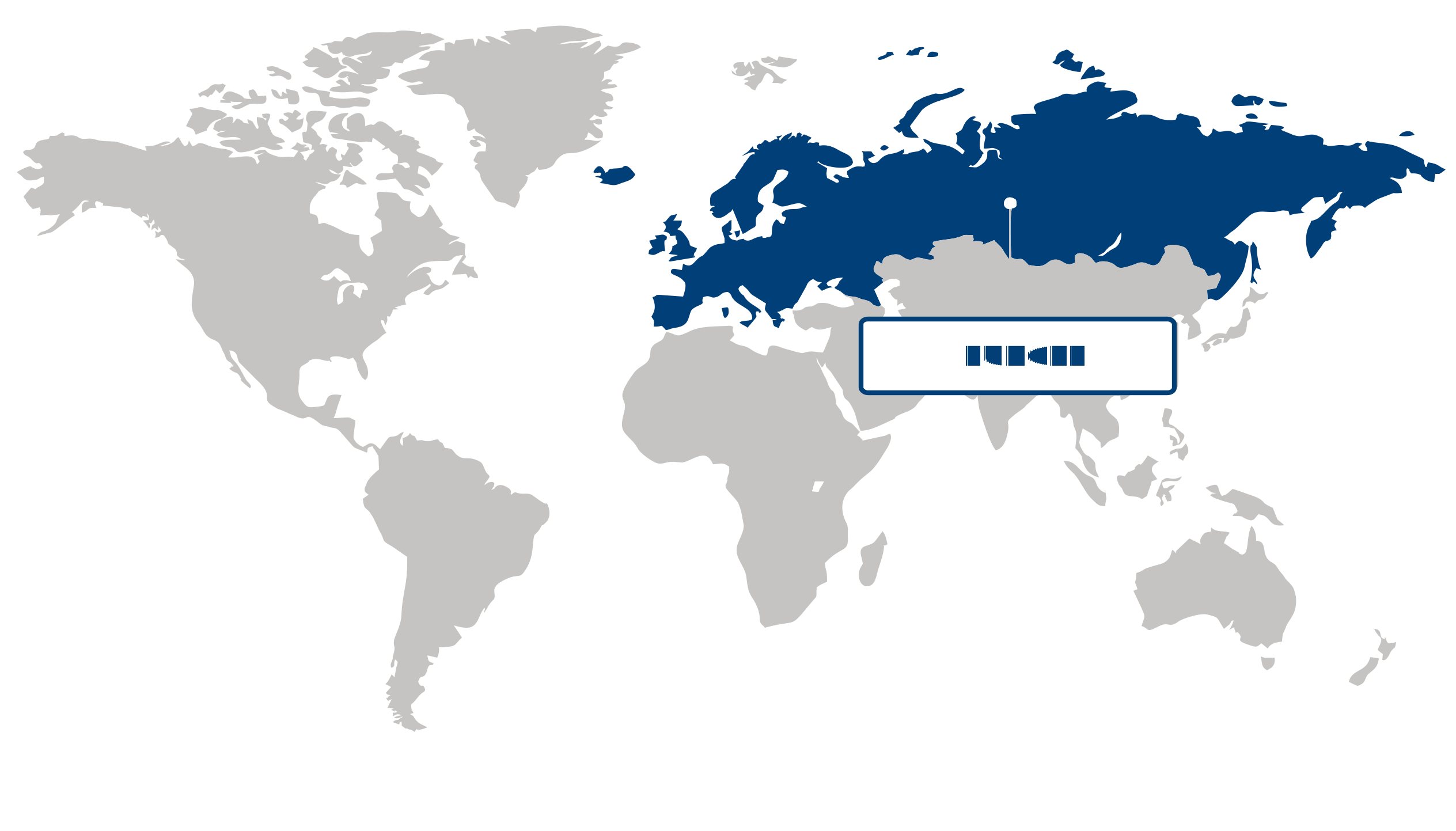
Europe (Largest Region)
Europe accounted for a 35.19% share of the natural skin care products market in 2026, reflecting strong consumer awareness of ingredient transparency, product safety, and environmentally responsible personal care. Consumers across the region increasingly favor formulations perceived as gentle, naturally derived, and aligned with clean beauty preferences. Established organic and premium personal care channels provide broad access to natural formulations, while stringent product standards reinforce consumer confidence in ingredient quality and labeling. Growing attention to sustainable packaging, ethical sourcing, and reduced environmental impact is further shaping purchasing behavior and supporting continued demand for natural skin care products.
Asia Pacific (Fastest-Growing Region)
Asia Pacific represents the fastest-growing regional market, propelled by rising disposable incomes, expanding beauty and personal care consumption, and increasing awareness of skincare routines. Consumers are showing greater interest in products combining natural ingredients with targeted functional benefits, creating opportunities for premium and specialized formulations. Rapid growth in e-commerce and social commerce is improving access to emerging skincare concepts and broadening consumer education around ingredients and product efficacy. Urbanization and the influence of evolving beauty trends are also encouraging greater experimentation with natural and botanical-based skincare, supporting wider market adoption across the region.
| Parameter | North America | Asia Pacific | Europe | Latin America | MEA |
|---|---|---|---|---|---|
| Innovation Hub i Scale Nascent Developing Advanced | |||||
| Cost-Sensitive Region i Scale Low Medium High | |||||
| Regulatory Environment i Scale Restrictive Neutral Supportive | |||||
| Demand Drivers i Scale Weak Moderate Strong | |||||
| Development Stage i Scale Emerging Developing Developed | |||||
| Adoption Rate i Scale Low Medium High | |||||
| New Entrants / Startups i Scale Sparse Moderate Dense | |||||
| Macro Indicators i Scale Weak Stable Strong |
Key Country Insights
Germany 🇩🇪
Certified Organic FocusGermany prioritizes certified natural skin care products that emphasize ingredient traceability, environmental responsibility, and product safety. Manufacturers in Germany continue developing formulations aligned with established organic standards while responding to growing demand for sustainable personal care solutions.
France 🇫🇷
Premium Botanical HeritageFrance values natural skin care products that combine botanical expertise with premium cosmetic formulation. Brands operating in France continue investing in responsibly sourced ingredients and refined product positioning that aligns with consumer interest in authentic, environmentally conscious beauty solutions.
Italy 🇮🇹
Mediterranean Ingredient AppealItaly's natural skin care products market benefits from strong interest in formulations featuring locally sourced botanical ingredients and traditional plant extracts. Manufacturers in Italy continue expanding premium natural product portfolios while emphasizing ingredient quality and sustainable production practices.
Japan 🇯🇵
Botanical Skincare RefinementJapan emphasizes gentle, botanical-based skin care products designed for daily use and sensitive skin. Companies in Japan increasingly combine natural ingredients with advanced formulation technologies to deliver products that balance efficacy, texture, and long-term skin health.
South Korea 🇰🇷
Functional Natural BlendsSouth Korea integrates natural ingredients with advanced cosmetic science to create multifunctional skin care products. The market in South Korea continues introducing formulations featuring botanical extracts alongside proven active ingredients to satisfy evolving consumer expectations for effective clean beauty products.
United States 🇺🇸
Clean Beauty InnovationThe U.S. natural skin care products market is shaped by consumer demand for plant-based ingredients, transparent labeling, and clinically supported formulations. Brands in the U.S. continue expanding sustainable packaging and premium product lines while strengthening direct-to-consumer and digital retail channels.
Segment Leadership and Growth Trends
Natural Skin Care Products Market Share (%), by Distribution Channel, 2026
Go beyond the chart, access full insights & data tables
Request Free Sample ReportDistribution Channel Segment Analysis: Hypermarkets & Retail Chain (Largest Segment) vs E-commerce (Fastest-Growing Segment)
Hypermarkets & retail chains represented the largest share of the natural skin care products market in 2026, accounting for 50.99% of the market. These channels benefit from high consumer accessibility, broad product assortments, and the ability to compare multiple personal care products during a single shopping trip. Physical retail also enables consumers to examine packaging, ingredients, product claims, and textures before purchase, which is particularly relevant for natural skin care products where formulation and perceived authenticity influence buying decisions. Promotional displays, in-store visibility, and established retail relationships further strengthen the channel's reach.
E-commerce is expanding at a faster pace as consumers increasingly use digital platforms to research ingredients, compare formulations, and evaluate customer feedback before purchasing natural skin care products. Online channels provide access to a wider assortment of specialized and niche products than many physical outlets, supporting discovery among consumers seeking specific natural formulations. Digital education around ingredients and skin care routines is also encouraging more informed purchasing behavior. The convenience of home delivery and the growing integration of personalized product recommendations are further accelerating the shift toward online natural skin care shopping.
Type Segment Analysis: Mass (Largest Segment) vs Premium (Fastest-Growing Segment)
The mass segment held the largest share of the natural skin care products market in 2026, reflecting broad consumer demand for accessible skin care products that combine natural positioning with everyday affordability. Mass-market offerings benefit from wide retail availability and appeal to consumers seeking familiar personal care formats without a substantial price premium. Increasing awareness of natural ingredients is also encouraging mainstream consumers to incorporate naturally positioned products into routine skin care. Broad product availability across essential categories further supports the segment's established market presence.
Premium natural skin care products are gaining momentum as consumers increasingly associate high-quality ingredients, transparent formulations, specialized benefits, and responsible sourcing with greater product value. Rising interest in wellness-oriented beauty is encouraging consumers to spend more on targeted skin care solutions that offer differentiated experiences and sophisticated formulations. Premium products can also benefit from growing consumer scrutiny of ingredient quality and sustainability practices. As natural skin care becomes increasingly connected with broader wellness and self-care trends, premium offerings are positioned to attract consumers seeking enhanced efficacy and elevated product experiences.
| Segment | Sub-Segment | Largest Segment | Fastest Growing |
|---|---|---|---|
| Distribution Channel | Direct Selling, Hypermarkets & Retail Chain, E-commerce, Pharmacy & Drugstores, Others | Hypermarkets & Retail Chain | E-commerce |
| Type | Mass, Premium | Mass | Premium |
| Product | Facial Care, Body Care | Facial Care | Body Care |
| End-use | Men, Women | Women | Men |
Competitive Landscape and Market Positioning
Key companies in the natural skin care products market:
1. Procter & Gamble Company (United States)
2. The Estée Lauder Companies Inc. (United States)
3. Unilever PLC (United Kingdom)
4. L'Oréal S.A. (France)
5. The Honest Company Inc. (United States)
6. The Body Shop International Limited (United Kingdom)
7. Mamaearth (India)
8. The Clorox Company (United States)
9. Bloomtown Ltd. (United Kingdom)
10. FOM London Skincare Ltd. (United Kingdom)
Increasing consumer demand for clean beauty solutions is accelerating innovation in the natural skin care products market. Manufacturers are introducing plant-based formulations, eco-friendly packaging, and multifunctional skincare products that align with evolving sustainability and wellness preferences.
| Company | Market Share | Company Revenue | Revenue CAGR (%) | Product Portfolio | Geographic Presence | Innovation / R&D Focus | Strategic Developments |
|---|---|---|---|---|---|---|---|
| Procter & Gamble Company (United States) | |||||||
| The Estée Lauder Companies Inc. (United States) | |||||||
| Unilever PLC (United Kingdom) | |||||||
| L'Oréal S.A. (France) | |||||||
| The Honest Company Inc. (United States) | |||||||
| The Body Shop International Limited (United Kingdom) | |||||||
| Mamaearth (India) | |||||||
| The Clorox Company (United States) | |||||||
| Bloomtown Ltd. (United Kingdom) | |||||||
| FOM London Skincare Ltd. (United Kingdom). |
Industry Development/News
| Company Name | Date | Key Development |
|---|---|---|
| KGL Group | May-26 | Group Executive Chairman Alex Apau Dadey articulated a strategic mandate to prioritize African enterprise development, aiming to decrease reliance on external markets. This initiative focuses on bolstering domestic value chains and manufacturing capabilities, which supports the localized scaling of natural skincare production and increases competitiveness within the regional consumer goods sector. |
| Qingdao Port | Dec-25 | Enhanced zero-tariff policies combined with upgraded logistical infrastructure at Qingdao and Yantai ports have streamlined trade corridors between Africa and China. This development significantly improves market access and distribution efficiency for African natural and organic skincare exporters, facilitating broader entry into the Chinese beauty market. |
Customize Your Report
Explore examples of how this report can be tailored to different research needs, including custom segments, additional topics or chapters, and related reports. Click a section of the wheel or its numbered marker to explore the available options.
Natural Skin Care Products Market — Custom Segments
| Segment | Sub-Segment |
|---|---|
| Ingredient Source | Plant-Derived Ingredients, Mineral-Derived Ingredients, Marine-Derived Ingredients, Animal-Derived Ingredients |
| Skin Type | Normal Skin, Dry Skin, Oily Skin, Combination Skin, Sensitive Skin |
| Product Form | Creams & Lotions, Oils & Serums, Gels, Cleansers & Washes, Balms & Butters, Masks & Scrubs |
Natural Skin Care Products Market — Custom TOC
| Custom Chapter | Custom Details |
|---|---|
| Consumer Ingredient Preferences and Claims Assessment |
|
| Retail Channel White Space Analysis |
|
| Personalized Skincare Demand Outlook |
|
Need a different cut of the data?
Request Custom ResearchWhat is the current revenue of the natural skin care products market?
What is the forecasted size of the natural skin care products industry?
How is consumer demand for ingredient transparency influencing the natural skin care products market?
How are digital commerce and direct-to-consumer models transforming growth in the natural skin care products market?
Why do hypermarkets and retail chains lead natural skin care sales?
How is e-commerce accelerating growth in the natural skin care market?
Why does Europe lead the natural skin care products market?
What factors are driving growth in Asia Pacific's natural skin care products market?
Which companies are driving growth in the natural skin care products landscape?
Our Clients
"The report provided us with a clear direction, and the level of detail was beyond what we expected. I would definitely recommend their services to others."
Haier Appliances
"The collaboration with Fundamental Business Insights has added significant value to our decision-making process, and we look forward to continuing this partnership for our future market research requirements."
Luxottica Group S.p.A.
"The team at FBI delivered an exceptional research report. The insights on industry innovations were particularly impressive and added a lot of value to the overall report."
Nike
Our Research Team & Methodology
Every Fundamental Business Insights report is built by a dedicated vertical research team, validated through a structured primary-and-secondary methodology, and reviewed for accuracy before it reaches you.
Research Team Overview
Prepared by the Consumer Goods & Services Research Team
Delivery
Published
Demand
Available
Support
Trust & Compliance
Research Domains
10 coverage areasResearch Intelligence
| Source | Reference |
|---|---|
| International Organization for Standardization (ISO) | www.iso.org |
| ASTM International | www.astm.org |
| U.S. Consumer Product Safety Commission (CPSC) | www.cpsc.gov |
| European Commission – Consumer Safety | ec.europa.eu/safety-gate |
| Consumer Technology Association (CTA) | www.cta.tech |
| National Retail Federation (NRF) | nrf.com |
| World Retail Congress | www.worldretailcongress.com |
| World Travel & Tourism Council (WTTC) | wttc.org |
| UN Tourism | www.unwto.org |
| Personal Care Products Council (PCPC) | www.personalcarecouncil.org |
| Cosmetics Europe | cosmeticseurope.eu |
| International Housewares Association (IHA) | www.housewares.org |
| American Apparel & Footwear Association (AAFA) | www.aafaglobal.org |
| World Federation of the Sporting Goods Industry (WFSGI) | wfsgi.org |
| Juvenile Products Manufacturers Association (JPMA) | www.jpma.org |
| Pet Industry Joint Advisory Council (PIJAC) | pijac.org |
| International Council of Toy Industries (ICTI) | www.toy-icti.org |
| International Association of Amusement Parks and Attractions (IAAPA) | iaapa.org |
| Organisation for Economic Co-operation and Development (OECD) | www.oecd.org |
| World Bank Data | data.worldbank.org |
Research Workflow & Quality Assurance
Data Collection
Verified information gathered through primary and secondary research.
Data Triangulation
Cross-validation using multiple independent data sources.
Forecast Modelling
Market estimates developed using historical trends and analytical models.
Analyst Validation
Findings reviewed by domain experts for accuracy and consistency.
Editorial & Quality Review
Final editorial, quality, and compliance checks before publication.
Final Publication
Released after successful completion of the internal review process.
Report Coverage
📊 Market Assessment
- Market Size & Forecast
- Market Segmentation
- Regional Analysis
- Growth Drivers & Challenges
- Market Dynamics
🏢 Competitive Intelligence
- Competitive Landscape
- Company Profiles
- Competitive Benchmarking
- Mergers & Acquisitions
- Market Share Analysis or Key Company Strategies
🔍 Strategic Analysis
- Value Chain Analysis
- Porter's Five Forces
- PESTLE Analysis
- Pricing Trends
- Supply-Demand Analysis
🚀 Future Outlook
- Technology Landscape
- Regulatory Landscape
- Investment & Funding Landscape
- Emerging Opportunities
- Future Market Outlook
Have a question about this report or need a custom scope?
Request Customization