Nanobubble Generator Market Size & Forecasts 2026-2035, By Segments (Technology, Configuration, Application, End-User, Distribution Channel), Growth Opportunities, Innovation Landscape, Regulatory Shifts, Strategic Regional Insights (U.S., Japan, China, South Korea, UK, Germany, France), and Competitive Dynamics (Hitachi, Mitsubishi, Evoqua, Xylem, Gardner Denver)
Market Size and Growth Outlook
Nanobubble Generator Market size is projected to expand significantly, moving from USD 45.78 million in 2025 to USD 175.77 million by 2035, with a CAGR of 14.4% during the 2026-2035 forecast period. The expected revenue for 2026 is USD 51.67 million.
Get more details on this report
Request Free Sample ReportNanobubble Generator Market Intelligence Snapshot
Regional Market Dynamics
Segment Momentum
Market Expansion Drivers
Leading Market Participants
Global Market Forecast Snapshot
Market Outlook
Regional and Segment Outlook
Market Growth Drivers and Industry Trends
The growing emphasis on sustainable agriculture has catalyzed the adoption of nanobubble generator technology in irrigation and crop protection, significantly influencing the nanobubble generator market. Organizations like the Food and Agriculture Organization (FAO) have highlighted water efficiency and reduced pesticide use as critical priorities, aligning with nanobubble technology’s ability to enhance oxygenation and nutrient delivery in soil and water. Companies such as Aqua Assist demonstrate how enhanced dissolved oxygen levels improve plant health and yield, driving demand from agribusinesses eager to reduce chemical inputs. This trend generates strategic openings for incumbents to diversify product portfolios into agri-tech, while startups can leverage targeted innovations for precision farming solutions. With worldwide water scarcity and regulatory pressures mounting, this expansion in agricultural applications is set to remain a vital growth frontier for the nanobubble generator market.
Increasing Adoption in Industrial Water Treatment
Industrial sectors are intensifying their pursuit of advanced water treatment solutions, making this a pivotal growth driver in the nanobubble generator market. Regulatory bodies like the Environmental Protection Agency (EPA) have issued stricter discharge and effluent standards, pushing manufacturers to adopt high-efficiency oxygenation methods. Firms such as Xylem Incorporated have announced integration of nanobubble generators in municipal and industrial wastewater treatment systems, showcasing operational efficiencies and compliance gains. This shift opens substantial opportunities for established corporations to upgrade legacy systems, while innovators can capitalize on modular and energy-efficient nanobubble solutions. With increasing urbanization and the necessity for circular water management, the industrial water treatment segment will continue to propel the nanobubble generator market’s evolution.
Advancements in Healthcare and Pharmaceutical Applications
Nanobubble generator technology is rapidly gaining traction in healthcare and pharmaceuticals, driven by its innovative potential to improve drug delivery and sterilization processes, which is reshaping the nanobubble generator market. Regulatory authorities like the U.S. Food and Drug Administration (FDA) have encouraged innovations that enhance patient safety and reduce contamination risks, prompting companies such as Pfizer and GE Healthcare to explore nanobubbles for targeted therapies and medical equipment cleaning. This spotlight on regulatory support and therapeutic advancements offers new entrants the chance to develop specialized solutions tailored to clinical needs, while incumbents can forge partnerships to accelerate product development. Given ongoing investments in biotech innovation and infection control, healthcare applications will be a dynamic contributor to market expansion.
Industry Restraints:
High Capital Expenditure and Operational Complexity
The nanobubble generator market faces significant barriers due to the high capital investment and intricate operational requirements associated with current technology deployments. Advanced nanobubble generation systems necessitate costly components and specialized maintenance, as highlighted by equipment manufacturers like Mitsubishi Heavy Industries, which cite precise engineering and consistent energy input as cost drivers. This complexity limits adoption, particularly among small to medium-sized enterprises and regions with constrained industrial budgets, where operational inefficiencies increase total cost of ownership. Both incumbents and startups must navigate these financial and technical hurdles, potentially delaying market penetration and scaling. Moving forward, unless technological innovations reduce system complexity and expense, this restraint will continue tempering market expansion by deterring capital allocation and elongating deployment cycles.
Regulatory Uncertainty and Environmental Standards
Evolving regulatory frameworks present a critical restraint, with varying standards on water and air treatment technologies complicating market entry and product certification. Agencies like the U.S. Environmental Protection Agency (EPA) and the European Chemicals Agency (ECHA) have yet to establish comprehensive guidelines specifically addressing nanobubbles’ environmental and health impacts, creating ambiguity for manufacturers and end users. This regulatory opacity induces caution among industrial buyers, slowing integration in sectors such as wastewater management and agriculture, where compliance risk is paramount. Established firms must invest heavily in compliance assurance while new entrants face elevated barriers due to unclear approval pathways. Given ongoing policy reviews and the increasing focus on sustainable water technologies, regulatory uncertainty will likely remain a decisive factor influencing strategic positioning and investment decisions in the near term.
| Growth Driver | Impact on CAGR | Regulatory Influence | Geographic Relevance | Adoption Rate | Impact Timeline |
|---|---|---|---|---|---|
| Agricultural Applications Expansion | 4.50% | Short term (≤ 2 yrs) | Asia Pacific, North America | Low | Fast |
| Industrial Water Treatment Adoption | 3.50% | Medium term (2–5 yrs) | Europe, North America; Spillover: Asia Pacific | Medium | Moderate |
| Nanobubble Tech in Healthcare & Pharma | 2.50% | Long term (5+ yrs) | North America, Europe; Spillover: Asia Pacific | Medium | Slow |
Unlock insights tailored to your business with our bespoke market research solutions.
Click to get your customized report now.
Regional Demand Dynamics
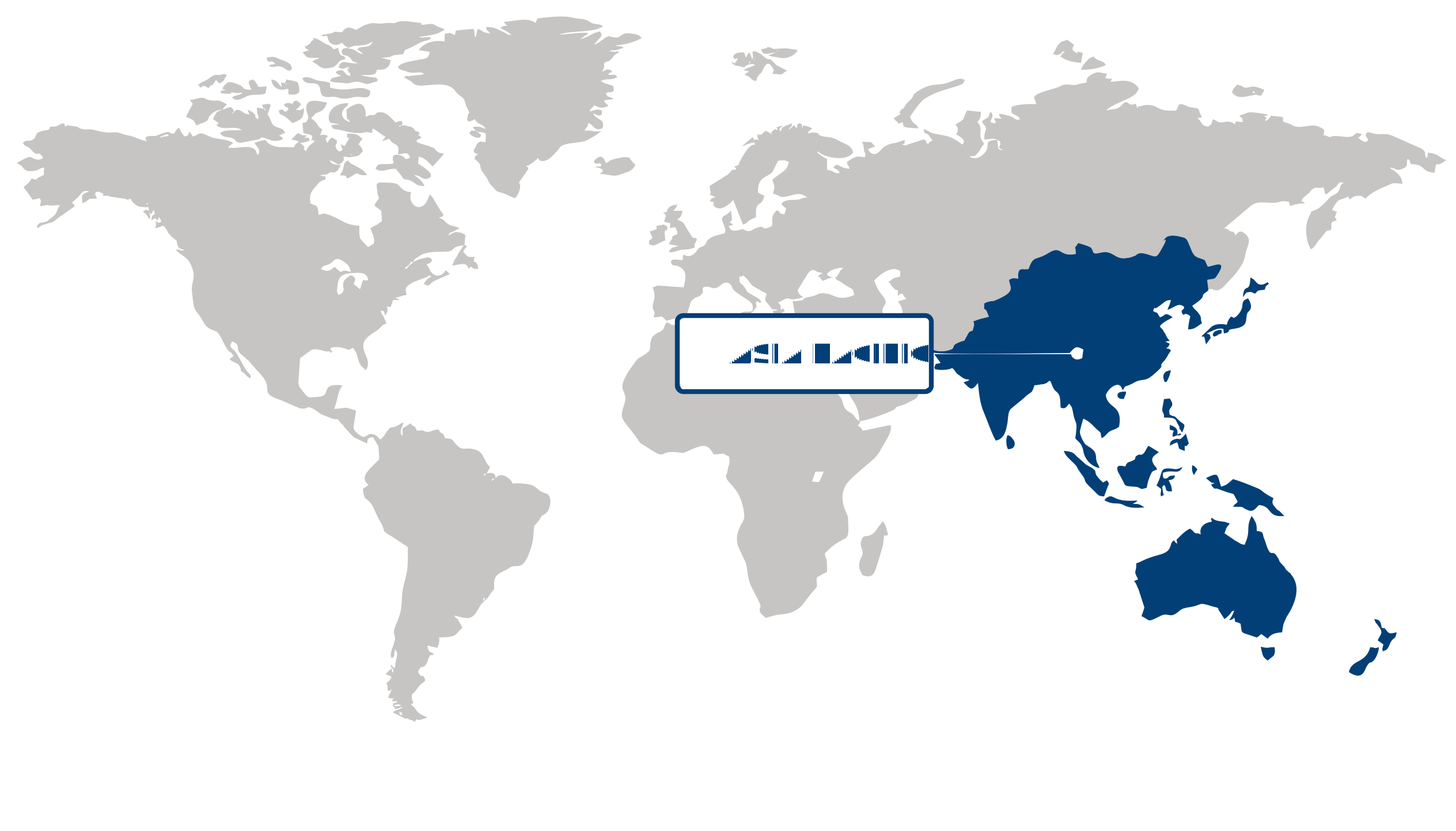
The Asia Pacific nanobubble generator market captured over 46% of the global share in 2025, establishing it as the largest and fastest-growing region with a remarkable CAGR of 17.28%. This dominance is largely driven by escalating demand for advanced water treatment solutions across diverse industrial sectors. Countries in this region are increasingly adopting innovative technologies to meet stringent environmental regulations and sustainability goals. For example, Mitsubishi Heavy Industries in Japan has announced the integration of nanobubble technology in wastewater treatment plants to enhance efficiency and reduce operational costs. Furthermore, government incentives in countries like China, promoting eco-friendly industrial practices, continue to stimulate market expansion. The region’s robust manufacturing base and increasing investments in digital water management pave the way for sustained growth, positioning Asia Pacific as a critical hub for future nanobubble generator market development.
Japan plays a pivotal role in the Asia Pacific nanobubble generator market, driven by its strong focus on technological innovation and environmental sustainability. The Japanese government’s stringent water quality standards and support for eco-innovation encourage adoption of nanobubble generators in sectors such as pharmaceuticals and food processing. Corporations like Toray Industries have actively advanced nanobubble applications in water purification systems, showcasing Japan’s leadership in this domain. Meanwhile, China anchors the regional market with vast industrial demand and policy frameworks favoring green technologies. State-owned enterprises, such as China National Chemical Corporation, are investing heavily to deploy nanobubble systems for chemical waste treatment, reflecting the country’s strategic emphasis on reducing industrial pollution. Collectively, these national trends amplify Asia Pacific’s growth trajectory and reinforce its preeminent position in the global nanobubble generator market.
North America Market Analysis:
North America held a substantial share in the nanobubble generator market, driven primarily by its established industrial base and increasing emphasis on sustainable water treatment solutions. The region’s demand is bolstered by stringent environmental regulations from agencies such as the U.S. Environmental Protection Agency (EPA) and Canada’s Environment and Climate Change department, encouraging adoption of advanced oxidation and water purification technologies. Additionally, North America’s robust R&D infrastructure, supported by organizations like the National Science Foundation (NSF), accelerates innovation in nanobubble generation systems tailored for diverse sectors including agriculture, wastewater treatment, and biomedical applications. The integration of digital monitoring systems to optimize nanobubble generator performance is also gaining traction, enhancing operational efficiency for end-users. Given these dynamics, North America is well-positioned to maintain its market dominance, offering investors and strategists sustainable growth avenues grounded in evolving regulatory frameworks and technological advancements.
The U.S. plays a pivotal role in North America’s nanobubble generator market, benefiting from dynamic water management policies and a mature industrial landscape. Growing agricultural and municipal water treatment initiatives reflect shifting consumer and regulatory priorities toward environmentally friendly technologies, highlighted by funding programs from the U.S. Department of Energy (DOE) that support innovative water treatment solutions. Leading players like Ozonix and Enexor BioEnergy have announced U.S.-based pilot projects integrating nanobubble generators to enhance wastewater treatment efficiency and reduce chemical use. Furthermore, increased capital expenditure from both public and private sectors on sustainable infrastructure reinforces demand. The U.S. market’s advanced operational capabilities and regulatory support underpin North America’s prominence, consolidating the region’s strategic advantage in the evolving global nanobubble generator market.
Europe Market Trends:
Europe maintained a notable presence in the nanobubble generator market, driven by the region’s commitment to environmental sustainability and advanced industrial applications. Increasing regulatory emphasis on water and air purification, coupled with growing investments in green technologies, underpins regional demand as industries seek efficient, eco-friendly solutions. Entities like the European Environment Agency have highlighted stricter mandates on water treatment standards, encouraging the adoption of innovative technologies such as nanobubble generators. Additionally, the region benefits from a robust manufacturing base with access to skilled workforce and efficient logistics networks, supporting technological scalability and competitive differentiation. This integration of sustainability priorities with operational efficiency indicates that Europe will continue offering significant growth potential as industries expand their utilization of nanobubble technology across sectors including agriculture, wastewater management, and aquaculture.
Germany serves as a key market within Europe’s nanobubble generator industry, leveraging the country’s strong engineering tradition and leadership in environmental technologies. German firms such as Xylem have actively advanced nanobubble applications, emphasizing water treatment and industrial process optimization, reflecting the broader national drive for innovation and compliance with stringent environmental regulations from the Federal Environment Agency (UBA). Consumer preference in Germany for sustainable industrial practices and transparent corporate responsibility further stimulates market adoption. This focus positions Germany as a critical hub for piloting next-generation nanobubble solutions, enhancing its influence on broader European market dynamics, especially as the government promotes funding in clean-tech via the German Federal Ministry for Economic Affairs and Climate Action.
France plays an increasing role in the European nanobubble generator market by integrating the technology into diverse sectors including agriculture and wastewater management, supported by government initiatives targeting water resource sustainability. The French Water Academy (Académie de l’Eau) has underscored the importance of innovative water purification methods, aiding adoption across municipal and private enterprises. French regulatory frameworks, aligned with EU directives, provide a conducive environment for scaling nanobubble usage to improve resource efficiency and reduce environmental impact. Corporate interest, illustrated by Veolia’s pilot projects in nanobubble-enhanced treatment plants, underscores the market’s traction. France’s strategic emphasis on innovation and sustainability aligns closely with broader European trends, reinforcing its role as a vital contributor to regional growth opportunities in the nanobubble generator market.
| Parameter | North America | Asia Pacific | Europe | Latin America | MEA |
|---|---|---|---|---|---|
| Innovation Hub i Scale Nascent Developing Advanced | |||||
| Cost-Sensitive Region i Scale Low Medium High | |||||
| Regulatory Environment i Scale Restrictive Neutral Supportive | |||||
| Demand Drivers i Scale Weak Moderate Strong | |||||
| Development Stage i Scale Emerging Developing Developed | |||||
| Adoption Rate i Scale Low Medium High | |||||
| New Entrants / Startups i Scale Sparse Moderate Dense | |||||
| Macro Indicators i Scale Weak Stable Strong |
Segment Leadership and Growth Trends
Nanobubble Generator Market Share (%), by Technology, 2026
Go beyond the chart, access full insights & data tables
Request Free Sample ReportMicrofluidic technology held the largest share in the nanobubble generator market in 2025, driven by its increasing adoption in efficient water treatment solutions. This segment leads due to its ability to produce uniform and stable nanobubbles that enhance oxygen transfer rates and pollutant degradation, aligning with rising global water quality standards set by organizations such as the U.S. Environmental Protection Agency. Growing customer demand for sustainable and energy-efficient water treatment methods further boosts this technology's prominence. Leaders like Mitsubishi Electric have highlighted advancements in microfluidic systems that reduce operational costs and improve scalability. These factors create significant strategic opportunities for players focusing on innovation and digital integration. Given ongoing regulatory emphasis on water conservation and industrial sustainability, microfluidic technology is poised to remain a critical segment in the nanobubble generator market in the near future.
Analysis by Configuration
Portable nanobubble generators represented the largest share of the nanobubble generator market in 2025, reflecting strong demand for versatile, mobile gas-in-liquid injection systems. The segment benefits from increasing field applications requiring easy deployment and flexible operation, including remote agricultural sites and temporary water treatment facilities. This preference aligns with trends toward on-site, real-time environmental management solutions, underscored by the U.S. Department of Agriculture’s promotion of precision farming technologies. Enhanced supply chain efficiencies and competitive innovation have made portable units more accessible and reliable. Market players capitalizing on compact design and integration with IoT-enabled sensors gain a competitive edge. As portability and adaptability remain essential for addressing dynamic treatment needs, this segment is expected to sustain its leadership through progressive usage scenarios driven by workforce mobility and environmental constraints.
Analysis by Application
The agriculture segment dominated the nanobubble generator market in 2025, fueled by its role in improving crop yields and water oxygenation. This segment's leadership reflects the growing emphasis on sustainable agriculture, supported by UN Food and Agriculture Organization initiatives promoting water-efficient practices. Nanobubble technology enhances root oxygen availability, reducing the dependence on chemical fertilizers and aligning with farm-to-table consumer preferences for organic produce. Companies such as EcoSynthetix have publicly underscored these environmental benefits alongside economic returns for farmers. This application segment offers fertile ground for both established agritech firms and startups focused on climate-resilient solutions. Continuing pressures from climate variability and water scarcity consolidate agriculture’s need for nanobubble technology, highlighting its enduring relevance in achieving productivity and ecological balance.
| Segment | Sub-Segment | Largest Segment | Fastest Growing |
|---|---|---|---|
| Technology | Microfluidic Technology, Ultrasonic Cavitation, Membrane Technology, Electrolysis Technology | ||
| Configuration | Portable Nanobubble Generators, Fixed Installation Generators, Customized Systems for Large Scale Operations, Skid-mounted Solutions | ||
| Application | Agriculture, Water Treatment, Food and Beverage, Ornamental Fish Farming, Industrial Cleaning | ||
| End-User | Agricultural Producers, Municipal Water Treatment Facilities, Food Processors, Aquaculture Farms, Industrial Manufacturing Facilities | ||
| Distribution Channel | Direct Sales, Online Retailers, Distributors and Resellers, Trade Shows and Exhibitions, OEM Partnerships |
Competitive Landscape and Market Positioning
The competitive landscape reveals a dynamic interplay of strategic maneuvers among these firms. Collaborative efforts and partnerships enable rapid technology integration and expanded service networks, amplifying market influence. Incremental advancements in nanobubble generation technology demonstrate a commitment to innovation, while selective acquisitions enhance product capabilities and geographic footprint. Launching sophisticated product variants tailored to niche applications further cements leadership. This continual evolution ensures responsiveness to emerging environmental regulations and growing demand from industrial and municipal sectors, reinforcing their resilience and adaptability in a complex marketplace.
Strategic / Actionable Recommendations for Regional Players
In North America, tapping into collaborative ventures with technology innovators, especially those emphasizing sustainable water and air treatment solutions, could sharpen competitive edges. Prioritizing enhancements in energy efficiency and customization will better address varied industrial requirements, enabling stronger market penetration.
For Asia Pacific, where urbanization drives demand, aligning with regional infrastructure projects and leveraging digital monitoring technologies can open new avenues. Fostering partnerships with local governments and industrial conglomerates may facilitate accelerated deployment and trust-building.
European players should emphasize synergies with environmental regulation bodies and integrate advanced materials science to refine performance. Engaging with clean-tech ecosystems will bolster innovation pipelines and help capitalize on high-growth opportunities in water quality management and renewable energy sectors.
| Company | Market Share | Company Revenue | Revenue CAGR (%) | Product Portfolio | Geographic Presence | Innovation / R&D Focus | Strategic Developments |
|---|---|---|---|---|---|---|---|
| No companies available. | |||||||
Industry Development/News
| Company Name | Date | Key Development |
|---|
Customize Your Report
Explore examples of how this report can be tailored to different research needs, including custom segments, additional topics or chapters, and related reports. Click a section of the wheel or its numbered marker to explore the available options.
Nanobubble Generator Market — Custom Segments
| Segment | Sub-Segment |
|---|---|
| No segment data available. | |
Nanobubble Generator Market — Custom TOC
| Custom Chapter | Custom Details | ||
|---|---|---|---|
| No custom TOC data available. | |||
Need a different cut of the data?
Request Custom ResearchHow much is the nanobubble generator industry expected to grow by 2035?
Which region captures the largest portion of the nanobubble generator market value?
Which region is experiencing the fastest growth in the nanobubble generator sector?
When did microfluidic technology sub-segment emerge as the largest sub-segment in the technology segment of nanobubble generator sector?
Why is the portable nanobubble generators segment leading in the nanobubble generator industry?
Why does agriculture sub-segment dominate the application segment of nanobubble generator sector?
How much is the agricultural producers segment expected to grow in the nanobubble generator industry beyond 2025?
What factors give direct sales segment a competitive edge in the nanobubble generator sector?
What are the prominent companies operating in the nanobubble generator landscape?
Our Clients
"The team at Fundamental Business Insights & Consulting demonstrated a commitment to excellence, not only in the quality of the report but also in their client-centric approach."
FANUC
"The level of detail in the market segmentation provided were particularly noteworthy. The detailed country-level insights were also very helpful."
B&R Industrial Automation GmbH
"The consultant took the time to understand our specific business objectives, ensuring that the reports were tailored to address our unique challenges and opportunities."
KUKA SE & Co. KGaA
Our Research Team & Methodology
Every Fundamental Business Insights report is built by a dedicated vertical research team, validated through a structured primary-and-secondary methodology, and reviewed for accuracy before it reaches you.
Research Team Overview
Prepared by the Industrial Automation & Equipment Research Team
Delivery
Published
Demand
Available
Support
Trust & Compliance
Research Domains
10 coverage areasResearch Intelligence
| Source | Reference |
|---|---|
| International Society of Automation (ISA) | www.isa.org |
| International Organization for Standardization (ISO) | www.iso.org |
| National Institute of Standards and Technology (NIST) | www.nist.gov |
| IEEE | www.ieee.org |
| VDMA (German Mechanical Engineering Industry Association) | www.vdma.org |
| Association for Advancing Automation (A3) | www.automate.org |
| International Federation of Robotics (IFR) | ifr.org |
| ASME (American Society of Mechanical Engineers) | www.asme.org |
| ASHRAE | www.ashrae.org |
| American Society of Heating, Refrigerating and Air-Conditioning Engineers (ASHRAE) | www.ashrae.org |
| Material Handling Industry (MHI) | www.mhi.org |
| OSHA (Occupational Safety and Health Administration) | www.osha.gov |
| National Fire Protection Association (NFPA) | www.nfpa.org |
| ASTM International | www.astm.org |
| International Electrotechnical Commission (IEC) | www.iec.ch |
| Open Process Automation Forum (The Open Group) | www.opengroup.org/open-process-automation-forum |
| AGMA (American Gear Manufacturers Association) | www.agma.org |
| Association of Equipment Manufacturers (AEM) | www.aem.org |
| Food and Agriculture Organization (FAO) | www.fao.org |
| International Labour Organization (ILO) | www.ilo.org |
Research Workflow & Quality Assurance
Data Collection
Verified information gathered through primary and secondary research.
Data Triangulation
Cross-validation using multiple independent data sources.
Forecast Modelling
Market estimates developed using historical trends and analytical models.
Analyst Validation
Findings reviewed by domain experts for accuracy and consistency.
Editorial & Quality Review
Final editorial, quality, and compliance checks before publication.
Final Publication
Released after successful completion of the internal review process.
Report Coverage
📊 Market Assessment
- Market Size & Forecast
- Market Segmentation
- Regional Analysis
- Growth Drivers & Challenges
- Market Dynamics
🏢 Competitive Intelligence
- Competitive Landscape
- Company Profiles
- Competitive Benchmarking
- Mergers & Acquisitions
- Market Share Analysis or Key Company Strategies
🔍 Strategic Analysis
- Value Chain Analysis
- Porter's Five Forces
- PESTLE Analysis
- Pricing Trends
- Supply-Demand Analysis
🚀 Future Outlook
- Technology Landscape
- Regulatory Landscape
- Investment & Funding Landscape
- Emerging Opportunities
- Future Market Outlook
Have a question about this report or need a custom scope?
Request Customization