Molluscicide Market Size & Growth Forecast 2027–2036, By Segments (Source, Form, Application), Regional Demand Trends (North America, Asia Pacific, Europe), Key Country Insights (U.S., Japan, South Korea, Germany, France, Italy), and Competitive Landscape
Market Size and Growth Outlook
Molluscicide Market size was assessed at USD 147.24 million in 2026 and is poised to grow at a 6.46% CAGR between 2027 and 2036, exceeding USD 275.35 million by 2036. The industry revenue for 2027 is calculated at USD 155.25 million.
Get more details on this report
Request Free Sample ReportMolluscicide Market Intelligence Snapshot
Regional Market Dynamics
- Asia Pacific captured a 41.23% share in 2026, supported by extensive agricultural production, recurring pest pressure, and strong demand for crop protection across high-value and staple crops.
- Asia Pacific is expected to grow at a 7.8% CAGR as agricultural intensification and targeted pest management increase demand for effective mollusc control across diverse farming systems.
Segment Momentum
- Chemical molluscicides held a 64.99% share in 2026 because growers rely on their proven field performance, familiar application methods, and dependable control of slug and snail damage in commercial agriculture.
- Biological is the fastest-growing source segment as growers increasingly adopt solutions that support integrated pest management, reduce dependence on conventional chemicals, and align with evolving production standards.
Market Expansion Drivers
- Rainfast formulation demand improving efficacy in horticulture and high-value crop protection.
- Shift toward biological molluscicides reducing chemical pesticide dependency in sustainable farming.
- Integration of precision agriculture and pest monitoring systems enhancing targeted mollusk control applications.
Leading Market Participants
- Key companies in the molluscicide market include Bayer AG (Germany), Syngenta AG (Switzerland), BASF SE (Germany), Corteva Agriscience (United States), Lonza Group AG (Switzerland), Certis USA LLC (United States), ADAMA Agricultural Solutions Ltd. (Israel), Nufarm Limited (Australia), AMGUARD Environmental Technologies (United States), Neudorff GmbH KG (Germany).
Global Market Forecast Snapshot
Market Outlook
- 2026 Market Size: USD 147.24 million
- 2027 Estimated Market Size: USD 155.25 million.
- Projected Market Size: USD 275.35 million by 2036
- Growth Forecast: 6.46% CAGR (2027-2036)
Regional and Segment Outlook
- Leading Regional Market: Asia Pacific
- High-Growth Regional Hub: Asia Pacific
- Core Revenue Segment: Chemical (Source) | Pellet (Form) | Agricultural (Application)
- Emerging Opportunity Segment: Biological (Source) | Pellet (Form) | Agricultural (Application)
Market Growth Drivers and Industry Trends
Rainfast formulation demand improving efficacy in horticulture and high-value crop protection
The growing need for reliable pest control under variable weather conditions will drive the molluscicide market growth as rainfast formulations help maintain treatment effectiveness after rainfall and irrigation. In horticulture and high-value crop production, growers require molluscicide products that remain active on plant surfaces or within treated areas long enough to control slugs and snails despite moisture exposure. Improved formulation technologies can enhance adhesion, persistence, and resistance to wash-off, reducing the risk of premature treatment loss and the need for repeated applications. This characteristic is particularly valuable for crops where pest damage can directly affect marketable quality, including vegetables, fruits, ornamentals, and other intensively managed horticultural produce.
Shift toward biological molluscicides reducing chemical pesticide dependency in sustainable farming
Growing interest in environmentally responsible crop protection is supporting the adoption of biological alternatives, strengthening demand within the molluscicide market as farmers seek to reduce dependence on conventional chemical pesticides. Biological molluscicides can fit into integrated pest management programs by providing pest-control options that align with sustainability objectives and changing preferences for reduced chemical inputs. Their use can also complement other biological and cultural control measures, allowing growers to develop more diversified approaches to managing slug and snail populations. As sustainable farming practices become increasingly important in crop production, biological formulations are gaining relevance among producers seeking effective pest management while maintaining compatibility with environmentally conscious cultivation practices.
Integration of precision agriculture and pest monitoring systems enhancing targeted mollusk control applications
The integration of precision agriculture technologies is enabling growers to identify pest pressure more accurately and apply molluscicides according to localized field conditions, which will boost the molluscicide market demand. Digital monitoring systems, field sensors, mapping technologies, and data-based crop management can help detect areas experiencing higher concentrations of slugs and snails rather than treating entire production areas uniformly. Targeted application supports more efficient use of crop protection products while helping growers respond to variations in pest activity, soil conditions, moisture, and crop development. Such approaches are particularly useful in large-scale and high-value cultivation environments where detailed pest monitoring can be incorporated into broader farm management systems.
| Growth Driver | Impact on CAGR | Regulatory Influence | Geographic Relevance | Adoption Rate | Impact Timeline |
|---|---|---|---|---|---|
| Increased Agricultural Pest Control Demand | 3.00% | Short term (≤ 2 yrs) | North America, Europe (spillover: Asia Pacific) | Medium | Fast |
| Technological Advances in Molluscicides | 2.00% | Medium term (2–5 yrs) | Europe, Asia Pacific (spillover: North America) | Low | Moderate |
| Environmental & Regulatory Approvals | 1.90% | Long term (5+ yrs) | North America, Europe (spillover: MEA) | High | Moderate |
| Rainfast formulation demand improving efficacy in horticulture and high-value crop protection | 2.50% | Moderate | Asia Pacific, Europe | High | Near Term |
| Shift toward biological molluscicides reducing chemical pesticide dependency in sustainable farming | 2.10% | High | Europe, Asia Pacific | Medium | Mid Term |
| Integration of precision agriculture and pest monitoring systems enhancing targeted mollusk control applications | 1.70% | Moderate | North America, Asia Pacific | Emerging | Mid Term |
Unlock insights tailored to your business with our bespoke market research solutions.
Click to get your customized report now.
Regional Demand Dynamics
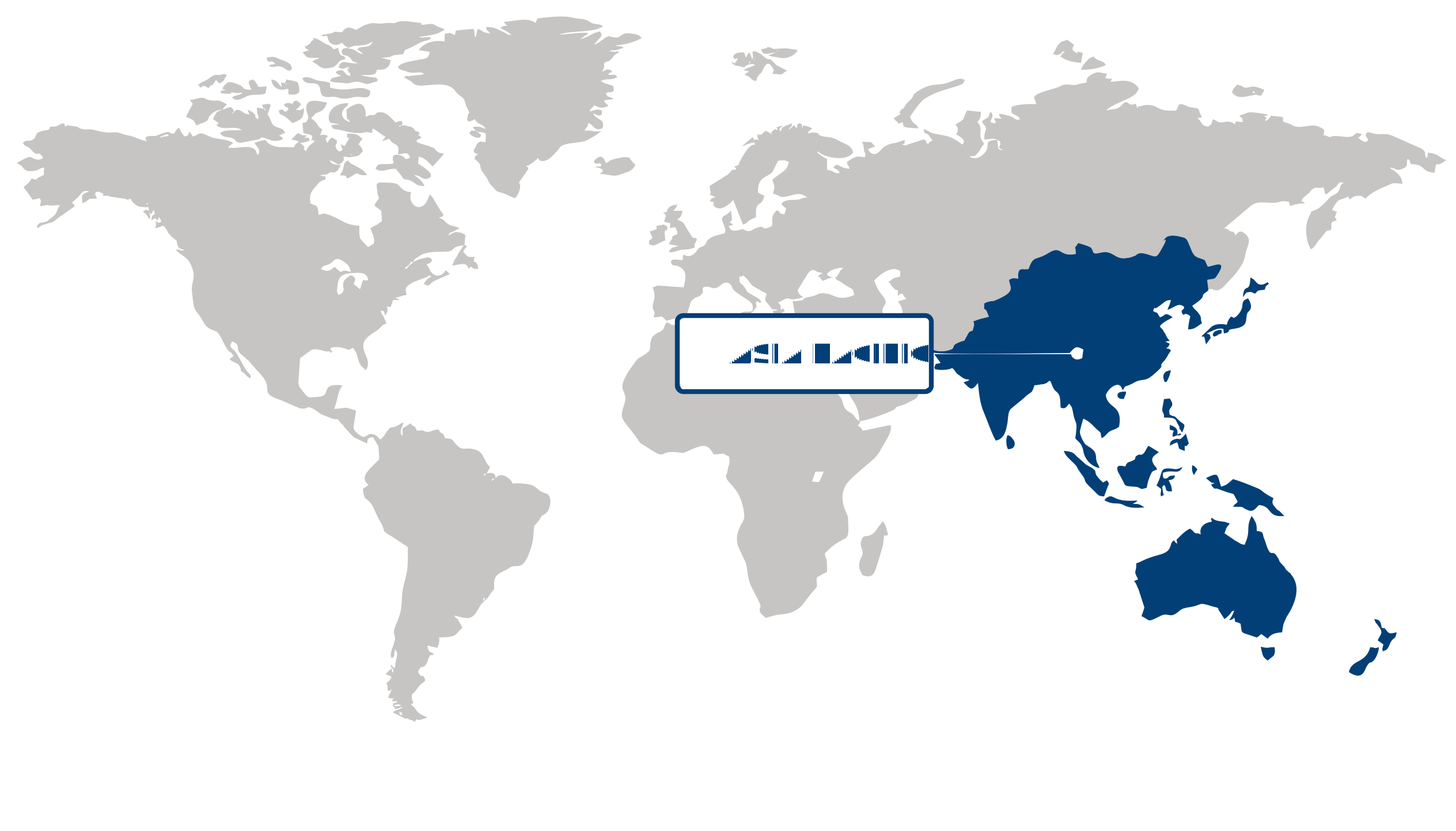
Asia Pacific (Largest & Fastest-Growing Region)
The Asia Pacific molluscicide market held the largest share of 41.23% in 2026 and is also positioned as the fastest-growing regional market, supported by extensive agricultural activity, increasing pressure to protect crop yields, and the need to manage mollusk-related crop damage in farming areas. Expanding cultivation of rice, vegetables, fruits, and other moisture-sensitive crops is sustaining demand for effective pest-control solutions, particularly where favorable climatic conditions support mollusk proliferation. Growing adoption of modern crop protection practices, rising awareness of integrated pest management, and efforts to improve farm productivity are encouraging farmers to incorporate molluscicides into broader pest-control programs. The region's expanding commercial agriculture sector and increasing emphasis on food security further strengthen demand, while greater access to agricultural inputs and improved distribution networks is supporting wider product availability across both established and emerging farming markets.
| Parameter | North America | Asia Pacific | Europe | Latin America | MEA |
|---|---|---|---|---|---|
| Innovation Hub i Scale Nascent Developing Advanced | |||||
| Cost-Sensitive Region i Scale Low Medium High | |||||
| Regulatory Environment i Scale Restrictive Neutral Supportive | |||||
| Demand Drivers i Scale Weak Moderate Strong | |||||
| Development Stage i Scale Emerging Developing Developed | |||||
| Adoption Rate i Scale Low Medium High | |||||
| New Entrants / Startups i Scale Sparse Moderate Dense | |||||
| Macro Indicators i Scale Weak Stable Strong |
Key Country Insights
Germany 🇩🇪
Sustainable Pest ControlGermany encourages molluscicide solutions that align with sustainable farming practices and evolving environmental requirements. German growers prioritize targeted pest management products that protect crop quality while reducing unnecessary chemical use.
France 🇫🇷
Vineyard Protection StrategiesFrance uses molluscicides across vineyards and diverse crop production where pest management supports product quality and yield stability. French growers increasingly integrate targeted control measures with broader sustainable agricultural practices.
Italy 🇮🇹
Horticulture Pest ManagementItaly emphasizes molluscicide use in fruit, vegetable, and specialty crop cultivation where slug and snail control remains important. Italian producers increasingly adopt application strategies that balance effective pest control with responsible farm management practices.
Japan 🇯🇵
Precision Agriculture ApplicationsJapan applies molluscicides selectively in intensive farming systems where effective pest control supports consistent crop production. Japanese agricultural practices favor products offering reliable performance with careful consideration of environmental management.
South Korea 🇰🇷
Protected Cultivation DemandSouth Korea utilizes molluscicides across horticulture and protected cultivation to minimize crop losses from slugs and snails. Farmers in South Korea increasingly seek practical pest control options compatible with modern cultivation techniques.
United States 🇺🇸
Crop Protection SupportThe U.S. molluscicide market concentrates on protecting high-value crops from slug and snail damage while balancing environmental stewardship. Agricultural producers in the U.S. increasingly evaluate application efficiency and compatibility with integrated pest management programs.
Segment Leadership and Growth Trends
Molluscicide Market Share (%), by Source, 2026
Go beyond the chart, access full insights & data tables
Request Free Sample ReportSource Segment Analysis: Chemical (Largest Segment) vs Biological (Fastest-Growing Segment)
Chemical molluscicides dominated the molluscicide market with a 64.99% share in 2026, supported by their established effectiveness in controlling damaging mollusks across agricultural environments. Chemical formulations provide a direct and practical approach to managing pests that can threaten crop productivity, making them widely used where rapid and dependable control is required. Familiarity among growers, established application practices, and broad availability continue to sustain the strong position of chemical molluscicides.
Biological molluscicides are projected to be the fastest-growing source segment, driven by increasing interest in pest management approaches that reduce reliance on conventional chemical inputs. Biological solutions can support more environmentally conscious crop protection strategies while aligning with growing attention to sustainable agricultural practices. Rising awareness of ecological impacts, integrated pest management, and the need for alternatives with favorable environmental profiles are encouraging greater adoption of biological molluscicides.
Form Segment Analysis: Pellet (Largest & Fastest-Growing Segment)
The pellet segment held the largest share of the molluscicide market, accounting for 63% share in 2026, while also emerging as the fastest-growing form. Pellet formulations offer convenient handling, storage, transport, and targeted application, making them practical for agricultural pest control. Their ability to deliver molluscicide directly to areas where pests are active can improve application efficiency and reduce unnecessary product dispersion. Ease of use and suitability for field-scale pest management continue to support strong demand for pellet-based formulations.
| Segment | Sub-Segment | Largest Segment | Fastest Growing |
|---|---|---|---|
| Source | Biological, Chemical | Chemical | Biological |
| Form | Pellet, Liquid/Gel | Pellet | Pellet |
| Application | Agricultural, Non-Agricultural | Agricultural | Agricultural |
Competitive Landscape and Market Positioning
Key companies in the molluscicide market:
1. Bayer AG (Germany)
2. Syngenta AG (Switzerland)
3. BASF SE (Germany)
4. Corteva Agriscience (United States)
5. Lonza Group AG (Switzerland)
6. Certis USA LLC (United States)
7. ADAMA Agricultural Solutions Ltd. (Israel)
8. Nufarm Limited (Australia)
9. AMGUARD Environmental Technologies (United States)
10. Neudorff GmbH KG (Germany)
The molluscicide market is witnessing innovation driven by the need for effective and environmentally balanced pest control solutions. Research advancements are focusing on improved efficacy with reduced ecological impact. The molluscicide market continues to grow as agricultural protection needs intensify.
| Company | Market Share | Company Revenue | Revenue CAGR (%) | Product Portfolio | Geographic Presence | Innovation / R&D Focus | Strategic Developments |
|---|---|---|---|---|---|---|---|
| Bayer AG (Germany) | |||||||
| Syngenta AG (Switzerland) | |||||||
| BASF SE (Germany) | |||||||
| Corteva Agriscience (United States) | |||||||
| Lonza Group AG (Switzerland) | |||||||
| Certis USA LLC (United States) | |||||||
| ADAMA Agricultural Solutions Ltd. (Israel) | |||||||
| Nufarm Limited (Australia) | |||||||
| AMGUARD Environmental Technologies (United States) | |||||||
| Neudorff GmbH KG (Germany). |
Industry Development/News
| Company Name | Date | Key Development |
|---|---|---|
| De Sangosse | May-25 | De Sangosse launched IRONMAX PRO, a ferric phosphate-based molluscicide formulated for slug and snail control with a patented attractant system enhancing bait consumption. The product is positioned for long-lasting pest management efficacy and is certified for organic agriculture use in selected European markets, reflecting continued innovation in bio-based crop protection solutions. |
| Feralla | Apr-25 | Feralla received EU approval for a newly developed active ingredient for mollusc control targeting slugs and snails. The compound introduces a novel mode of action designed to support sustainable agricultural practices in Europe, contributing to regulatory-approved innovation in next-generation pest management chemistry. |
| Cellora | Aug-24 | Cellora’s new molluscicide was selected for field trials by the Australian grain industry to evaluate its effectiveness under high-pressure pest conditions. The initiative highlights growing industry interest in sustainable and regenerative agriculture-aligned pest control solutions with potential for commercial deployment following trial validation. |
| American Vanguard Corporation | Nov-20 | American Vanguard Corporation acquired Agrinos (US), a biological crop inputs technology company, to expand its agricultural product portfolio. The acquisition enhances its exposure to biological crop protection solutions relevant to pest management applications, supporting broader diversification within sustainable agricultural input markets. |
| Marrone Bio Innovations | Aug-20 | Marrone Bio Innovations entered an agreement with Vive Crop Protection to extract and develop active ingredients for use in pest control solutions. The collaboration strengthens its R&D and formulation capabilities within biological crop protection, supporting innovation in environmentally focused molluscicide and related applications. |
| BASF SE | Jan-20 | BASF SE inaugurated a new crop protection facility in Singapore aimed at increasing production capacity in the Asia-Pacific region. The expansion enhances supply capabilities for agricultural inputs, including crop protection and pest control solutions, in response to growing regional demand. |
| Adama Ltd | Nov-19 | Adama Ltd acquired French-Swiss crop protection company SFP to strengthen its production capabilities for active ingredients. The acquisition expands its manufacturing integration within crop protection inputs, enhancing supply chain control and reinforcing its position in the agricultural chemicals value chain. |
Customize Your Report
Explore examples of how this report can be tailored to different research needs, including custom segments, additional topics or chapters, and related reports. Click a section of the wheel or its numbered marker to explore the available options.
Molluscicide Market — Custom Segments
| Segment | Sub-Segment |
|---|---|
| Target Pest | Slugs, Snails, Other Mollusks |
| Crop Type | Cereals and Grains, Fruits and Vegetables, Oilseeds and Pulses, Turf and Ornamentals, Other Crops |
| Sales Channel | Direct Sales, Agricultural Distributors, Agrochemical Retailers, Online Channels |
Molluscicide Market — Custom TOC
| Custom Chapter | Custom Details |
|---|---|
| Integrated Pest Management Adoption Outlook |
|
| Climate Change Impact on Pest Control Demand |
|
| Crop-specific Usage Opportunity Assessment |
|
Need a different cut of the data?
Request Custom ResearchWhat is the current revenue of the molluscicide market?
How is the molluscicide industry size expected to evolve during the forecast period?
How are biological molluscicides influencing procurement strategies in the molluscicide market?
Why is precision agriculture becoming strategically important for molluscicide deployment?
Why does the Chemical source segment dominate the molluscicide market?
Which source segment is expanding fastest in the molluscicide market?
Why is Asia Pacific the largest market for molluscicides?
What supports long-term growth in the Asia Pacific molluscicide market?
Which companies are driving growth in the molluscicide landscape?
Our Clients
"The report helped us understand emerging consumer trends in our product category. It clarified where to focus innovation for the next product launch."
LyondellBasell
"The regional forecast section was incredibly useful. We were able to identify two new potential partners in Europe thanks to the vendor mapping you included."
SABIC
"We appreciated how actionable the recommendations were. It guided us to improve supply chain resilience."
Olin Corporation
Our Research Team & Methodology
Every Fundamental Business Insights report is built by a dedicated vertical research team, validated through a structured primary-and-secondary methodology, and reviewed for accuracy before it reaches you.
Research Team Overview
Prepared by the Chemicals & Materials Research Team
Delivery
Published
Demand
Available
Support
Trust & Compliance
Research Domains
10 coverage areasResearch Intelligence
| Source | Reference |
|---|---|
| American Chemistry Council (ACC) | www.americanchemistry.com |
| European Chemical Industry Council (Cefic) | cefic.org |
| International Council of Chemical Associations (ICCA) | icca-chem.org |
| European Chemicals Agency (ECHA) | echa.europa.eu |
| U.S. Environmental Protection Agency (EPA) | www.epa.gov |
| ASTM International | www.astm.org |
| International Organization for Standardization (ISO) | www.iso.org |
| National Institute of Standards and Technology (NIST) | www.nist.gov |
| Plastics Industry Association (PLASTICS) | www.plasticsindustry.org |
| European Biplastics | www.european-bioplastics.org |
| The Adhesive and Sealant Council (ASC) | www.ascouncil.org |
| National Association of Corrosion Engineers (AMPP) | www.ampp.org |
| Society of Plastics Engineers (SPE) | www.4spe.org |
| International Fertilizer Association (IFA) | www.fertilizer.org |
| CropLife International | croplife.org |
| Packaging Europe | packagingeurope.com |
| Flexible Packaging Association (FPA) | www.flexpack.org |
| Battery Council International (BCI) | batterycouncil.org |
| International Copper Association (ICA) | internationalcopper.org |
| World Steel Association | worldsteel.org |
Research Workflow & Quality Assurance
Data Collection
Verified information gathered through primary and secondary research.
Data Triangulation
Cross-validation using multiple independent data sources.
Forecast Modelling
Market estimates developed using historical trends and analytical models.
Analyst Validation
Findings reviewed by domain experts for accuracy and consistency.
Editorial & Quality Review
Final editorial, quality, and compliance checks before publication.
Final Publication
Released after successful completion of the internal review process.
Report Coverage
📊 Market Assessment
- Market Size & Forecast
- Market Segmentation
- Regional Analysis
- Growth Drivers & Challenges
- Market Dynamics
🏢 Competitive Intelligence
- Competitive Landscape
- Company Profiles
- Competitive Benchmarking
- Mergers & Acquisitions
- Market Share Analysis or Key Company Strategies
🔍 Strategic Analysis
- Value Chain Analysis
- Porter's Five Forces
- PESTLE Analysis
- Pricing Trends
- Supply-Demand Analysis
🚀 Future Outlook
- Technology Landscape
- Regulatory Landscape
- Investment & Funding Landscape
- Emerging Opportunities
- Future Market Outlook
Have a question about this report or need a custom scope?
Request Customization