Microencapsulated Pesticides Market Size & Growth Forecast 2027–2036, By Segments (Application, Type), Regional Demand Trends (North America, Asia Pacific, Europe), Key Country Insights (U.S., Japan, South Korea, Germany, France, Italy), and Competitive Landscape
Market Size and Growth Outlook
Microencapsulated Pesticides Market size was more than USD 943.8 million in 2026 and is set to grow at a 10.64% CAGR between 2027 and 2036, attaining USD 2.59 billion by 2036. The industry revenue for 2027 is calculated at USD 1.03 billion.
Get more details on this report
Request Free Sample ReportMicroencapsulated Pesticides Market Intelligence Snapshot
Regional Market Dynamics
- Europe held a 36.04% market share in 2026, supported by advanced crop protection practices, strong precision application adoption, and demand for controlled-release formulations meeting stricter agricultural standards.
- Asia Pacific is forecast to expand at a 14% CAGR as agricultural intensification and large-scale farming increase demand for efficient pest control solutions with improved application performance and longer-lasting protection.
Segment Momentum
- Agricultural applications accounted for 63.05% of the market in 2026 because controlled release, reduced drift, and longer field persistence improve crop protection and application efficiency.
- Fungicides are growing fastest because controlled-release formulations provide longer-lasting disease protection and more consistent coverage under challenging crop conditions.
Market Expansion Drivers
- Increasing regulatory restrictions on conventional pesticides accelerating safer formulation adoption.
- Expanding precision farming and controlled-release agrochemical adoption improving crop efficiency.
- Advancements in polymer encapsulation technology enhancing pesticide stability and performance.
Leading Market Participants
- Prominent companies in the microencapsulated pesticides market include BASF SE (Germany), Bayer AG (Germany), Syngenta AG (Switzerland), FMC Corporation (United States), Sumitomo Chemical Co., Ltd. (Japan), UPL Limited (India), Corteva, Inc. (United States), ADAMA Ltd. (Israel), Nufarm Limited (Australia), McLaughlin Gormley King Company (United States).
Global Market Forecast Snapshot
Market Outlook
- 2026 Market Size: USD 943.8 million
- 2027 Estimated Market Size: USD 1.03 billion.
- Projected Market Size: USD 2.59 billion by 2036
- Growth Forecast: 10.64% CAGR (2027-2036)
Regional and Segment Outlook
- Leading Regional Market: Europe
- High-Growth Regional Hub: Asia Pacific
- Core Revenue Segment: Agricultural (Application) | Insecticides (Type)
- Emerging Opportunity Segment: Non-agricultural (Application) | Fungicides (Type)
Market Growth Drivers and Industry Trends
Increasing regulatory restrictions on conventional pesticides accelerating safer formulation adoption
Increasing restrictions on conventional pesticides are creating stronger demand in the microencapsulated pesticides market as agricultural stakeholders seek formulations that can align with evolving safety and environmental requirements. Microencapsulation can support more controlled pesticide delivery while reducing unnecessary exposure and improving handling characteristics, making these formulations increasingly relevant as regulatory expectations influence agrochemical selection and product development.
Expanding precision farming and controlled-release agrochemical adoption improving crop efficiency
Precision farming practices are strengthening the microencapsulated pesticides market by increasing demand for targeted and controlled agrochemical application. Microencapsulated formulations can facilitate gradual release of active ingredients and more precise delivery to crops, helping agricultural producers manage inputs more efficiently while supporting crop protection strategies based on optimized application and resource utilization.
Advancements in polymer encapsulation technology enhancing pesticide stability and performance
Advances in polymer encapsulation are improving the microencapsulated pesticides market through better control over the protection and release of active ingredients. Enhanced encapsulation technologies can improve formulation stability and performance during application, enabling pesticide products to maintain their functional characteristics while supporting more consistent delivery across agricultural use conditions.
| Growth Driver | Impact on CAGR | Regulatory Influence | Geographic Relevance | Adoption Rate | Impact Timeline |
|---|---|---|---|---|---|
| Increasing regulatory restrictions on conventional pesticides accelerating safer formulation adoption | 2.50% | High | Europe, Asia Pacific | High | Near Term |
| Expanding precision farming and controlled-release agrochemical adoption improving crop efficiency | 2.30% | High | Asia Pacific, Latin America | High | Mid Term |
| Advancements in polymer encapsulation technology enhancing pesticide stability and performance | 2.00% | Moderate | North America, Europe | Medium | Mid Term |
Unlock insights tailored to your business with our bespoke market research solutions.
Click to get your customized report now.
Regional Demand Dynamics
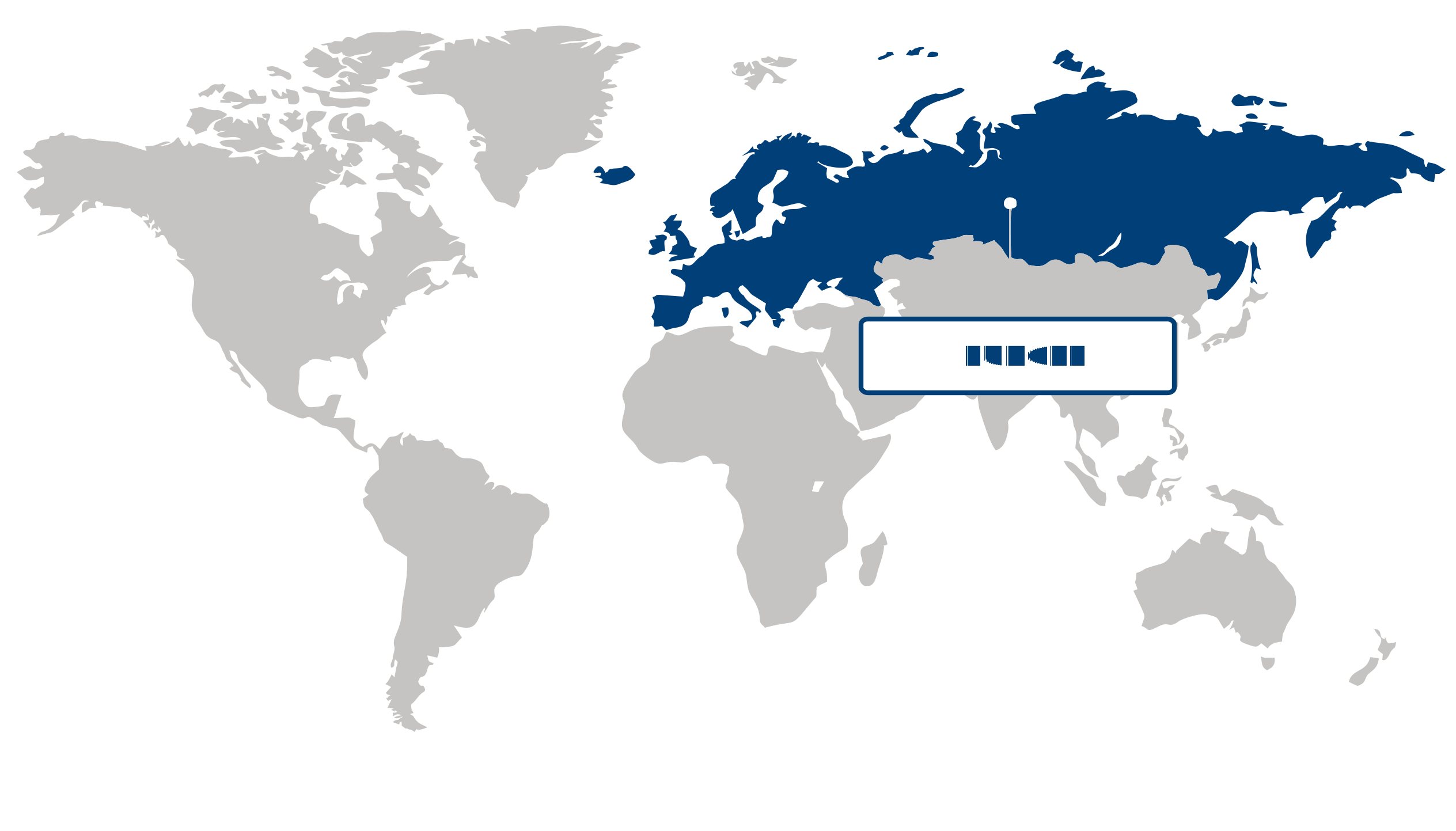
Europe (Largest Region)
The microencapsulated pesticides market was led by Europe, which held the largest share of 36.04% in 2026, supported by the region's emphasis on sustainable agriculture, controlled pesticide application, and stringent environmental and chemical-use requirements. Microencapsulation enables active ingredients to be released in a more controlled manner, helping improve application efficiency while reducing unnecessary exposure and supporting more targeted crop protection. The region's advanced agricultural practices, increasing adoption of precision farming techniques, and focus on reducing environmental impact are encouraging interest in innovative crop protection formulations. Strong research capabilities in agricultural chemistry and growing demand for solutions that balance crop productivity with regulatory compliance further reinforce Europe's market position.
Asia Pacific (Fastest-Growing Region)
Asia Pacific represents the fastest-growing region, driven by expanding agricultural production, rising food demand, and the need to improve crop protection efficiency across diverse farming systems. Increasing pressure to enhance agricultural productivity while managing pesticide use is creating opportunities for controlled-release formulations that can provide more targeted and efficient pest management. The expansion of commercial farming, modernization of agricultural practices, and growing awareness of advanced crop protection technologies are supporting adoption across the region. In addition, improving agricultural infrastructure and increasing investment in innovative inputs are helping farmers and producers transition toward more efficient pesticide application methods, strengthening the growth prospects for microencapsulated formulations.
| Parameter | North America | Asia Pacific | Europe | Latin America | MEA |
|---|---|---|---|---|---|
| Innovation Hub i Scale Nascent Developing Advanced | |||||
| Cost-Sensitive Region i Scale Low Medium High | |||||
| Regulatory Environment i Scale Restrictive Neutral Supportive | |||||
| Demand Drivers i Scale Weak Moderate Strong | |||||
| Development Stage i Scale Emerging Developing Developed | |||||
| Adoption Rate i Scale Low Medium High | |||||
| New Entrants / Startups i Scale Sparse Moderate Dense | |||||
| Macro Indicators i Scale Weak Stable Strong |
Key Country Insights
Germany 🇩🇪
Environmental compliance focusIn Germany, microencapsulated pesticides adoption is shaped by strict environmental regulations and integrated pest management practices. Farmers and agrochemical firms emphasize reduced runoff, targeted application efficiency, and compliance with EU sustainability standards in crop protection strategies.
France 🇫🇷
Sustainable crop protectionIn France, the market is influenced by sustainability-oriented agricultural policy and integrated pest management practices. Adoption focuses on reducing environmental impact while maintaining crop productivity, particularly in large-scale cereal and vineyard farming systems.
Italy 🇮🇹
High-value crop optimizationIn Italy, microencapsulated pesticides are primarily used in high-value crops such as fruits and vineyards. Farmers prioritize targeted pest control and residue management, balancing traditional agricultural practices with increasing demand for precision crop protection solutions.
Japan 🇯🇵
Controlled agrochemical usageIn Japan, microencapsulated pesticides are used within highly controlled agricultural systems focused on safety and residue minimization. Adoption emphasizes precision dosing and compatibility with small-scale, high-value crop production in densely cultivated farming regions.
South Korea 🇰🇷
Smart farming integrationIn South Korea, microencapsulated pesticides are increasingly integrated into smart farming systems and greenhouse agriculture. Farmers prioritize efficiency, reduced chemical frequency, and compatibility with technology-enabled crop monitoring platforms.
United States 🇺🇸
Precision agriculture adoptionIn the U.S., microencapsulated pesticides are driven by precision agriculture practices aimed at improving crop protection efficiency and reducing chemical exposure. Agricultural producers prioritize controlled-release formulations that enhance yield stability while aligning with environmental stewardship expectations.
Segment Leadership and Growth Trends
Microencapsulated Pesticides Market Share (%), by Application, 2026
Go beyond the chart, access full insights & data tables
Request Free Sample ReportApplication Segment Analysis: Agricultural (Largest Segment) vs Non-agricultural (Fastest-Growing Segment)
The agricultural segment accounted for 63.05% share of the microencapsulated pesticides market in 2026, supported by the widespread need for effective crop protection and improved management of pest-related threats. Microencapsulation can help control the release of active ingredients, improve their persistence, and support more targeted application, making the technology valuable for agricultural pest management. Farmers and agricultural producers are increasingly seeking approaches that improve pesticide utilization while limiting unnecessary exposure and enhancing application efficiency. The growing emphasis on productivity, crop protection, and more controlled agrochemical delivery is reinforcing the leading position of agricultural applications.
Non-agricultural applications are the fastest-growing segment as microencapsulated pesticide technologies gain broader relevance in pest management outside conventional crop production. These applications can benefit from controlled-release characteristics that enable more targeted and sustained action in environments where prolonged pest control is required. Increasing attention to hygiene, property protection, and effective management of pests in residential, commercial, institutional, and other non-farm settings is creating additional opportunities. The ability of encapsulation technologies to improve handling and controlled delivery is further supporting adoption across diverse non-agricultural pest management applications.
Type Segment Analysis: Insecticides (Largest Segment) vs Fungicides (Fastest-Growing Segment)
Insecticides led the microencapsulated pesticides market with a 57.75% share in 2026, reflecting the substantial need for effective control of insects that can affect agricultural productivity and other environments. Microencapsulation can provide controlled delivery of insecticidal active ingredients, helping extend protection and improve the efficiency of treatment applications. The approach is particularly valuable where sustained pest management and reduced application losses are important considerations. Increasing pressure to protect crops from insect damage, combined with the broader shift toward more targeted pesticide delivery systems, continues to support demand for microencapsulated insecticides.
Fungicides are the fastest-growing type segment as growers increasingly prioritize effective management of fungal diseases that can reduce crop quality and productivity. Microencapsulation offers opportunities to regulate the release of fungicidal ingredients and improve their persistence on or around treated areas, supporting more efficient disease-control strategies. Growing emphasis on precision in crop protection and improved utilization of active ingredients is encouraging interest in encapsulated fungicide formulations. As agricultural producers seek more effective and controlled approaches to disease management, fungicides are gaining momentum within the microencapsulated pesticide landscape.
| Segment | Sub-Segment | Largest Segment | Fastest Growing |
|---|---|---|---|
| Application | Agricultural, Non-agricultural | Agricultural | Non-agricultural |
| Type | Insecticides, Herbicides, Rodenticides, Fungicides, Others | Insecticides | Fungicides |
Competitive Landscape and Market Positioning
Prominent players in the microencapsulated pesticides market:
1. BASF SE (Germany)
2. Bayer AG (Germany)
3. Syngenta AG (Switzerland)
4. FMC Corporation (United States)
5. Sumitomo Chemical Co. Ltd. (Japan)
6. UPL Limited (India)
7. Corteva Inc. (United States)
8. ADAMA Ltd. (Israel)
9. Nufarm Limited (Australia)
10. McLaughlin Gormley King Company (United States)
In the microencapsulated pesticides market, advancements are focused on improving controlled-release mechanisms that enhance crop protection efficiency. Evolving regulatory expectations are encouraging safer and more targeted pesticide delivery systems. The microencapsulated pesticides market is also seeing increased emphasis on formulation stability under varying environmental conditions. Research initiatives are strengthening efficacy while reducing environmental residue impact.
| Company | Market Share | Company Revenue | Revenue CAGR (%) | Product Portfolio | Geographic Presence | Innovation / R&D Focus | Strategic Developments |
|---|---|---|---|---|---|---|---|
| BASF SE (Germany) | |||||||
| Bayer AG (Germany) | |||||||
| Syngenta AG (Switzerland) | |||||||
| FMC Corporation (United States) | |||||||
| Sumitomo Chemical Co. Ltd. (Japan) | |||||||
| UPL Limited (India) | |||||||
| Corteva Inc. (United States) | |||||||
| ADAMA Ltd. (Israel) | |||||||
| Nufarm Limited (Australia) | |||||||
| McLaughlin Gormley King Company (United States). |
Industry Development/News
| Company Name | Date | Key Development |
|---|---|---|
| Syngenta Group | Oct-24 | Syngenta Group introduced INZAK ZEON in Brazil, a microencapsulated insecticide combining acetamiprid and lambda-cyhalothrin for use on major crops including soybeans, corn, cotton, and beans. The formulation enables rapid pest knockdown alongside sustained residual control through controlled release, reflecting growing adoption of advanced encapsulation systems in crop protection markets. |
| FMC Corporation | May-24 | FMC Corporation collaborated with AgroSpheres to develop microencapsulation solutions for sustainable agriculture, focusing on biodegradable polymer-based delivery systems. The partnership targets improved controlled-release pesticide performance while addressing environmental persistence concerns, reinforcing the industry shift toward advanced encapsulation technologies that enhance efficacy, reduce ecological impact, and support precision crop protection strategies. |
| UPL Ltd | Jul-23 | UPL Ltd secured an exclusive long-term global license from the University of Arkansas System Division of Agriculture for seed treatment technology integrating Fenclorim with micro-encapsulated herbicides. The technology enhances crop protection in rice and other grass crops against Group 15 herbicides while improving crop safety, demonstrating increasing reliance on encapsulation-based controlled delivery systems in agrochemical applications. |
Customize Your Report
Explore examples of how this report can be tailored to different research needs, including custom segments, additional topics or chapters, and related reports. Click a section of the wheel or its numbered marker to explore the available options.
Microencapsulated Pesticides Market — Custom Segments
| Segment | Sub-Segment |
|---|---|
| Crop Type | Cereals & Grains, Fruits & Vegetables, Oilseeds & Pulses, Plantation & Specialty Crops |
| Mode of Application | Foliar Application, Soil Application, Seed Treatment, Post-Harvest Application |
| Formulation Type | Suspension-Based Formulations, Emulsion-Based Formulations, Polymer-Based Formulations, Other Formulations |
Microencapsulated Pesticides Market — Custom TOC
| Custom Chapter | Custom Details |
|---|---|
| Crop-Specific Adoption Opportunity Assessment |
|
| Agrochemical Formulation Innovation Landscape |
|
| Contract Manufacturing & Encapsulation Partner Ecosystem |
|
Need a different cut of the data?
Request Custom ResearchWhat is the market valuation of microencapsulated pesticides?
How is the microencapsulated pesticides industry size expected to evolve during the forecast period?
How are regulatory restrictions on conventional pesticides driving adoption of microencapsulated formulations?
How is precision farming influencing demand for controlled-release pesticide technologies?
Why do agricultural applications lead the microencapsulated pesticides market?
Why are fungicides the fastest-growing type in the microencapsulated pesticides market?
What makes Europe the leading regional market for microencapsulated pesticides?
Why is Asia Pacific the fastest-growing region in the microencapsulated pesticides market?
Which companies dominate the microencapsulated pesticides landscape?
Our Clients
"The report helped us understand emerging consumer trends in our product category. It clarified where to focus innovation for the next product launch."
LyondellBasell
"The regional forecast section was incredibly useful. We were able to identify two new potential partners in Europe thanks to the vendor mapping you included."
SABIC
"We appreciated how actionable the recommendations were. It guided us to improve supply chain resilience."
Olin Corporation
Our Research Team & Methodology
Every Fundamental Business Insights report is built by a dedicated vertical research team, validated through a structured primary-and-secondary methodology, and reviewed for accuracy before it reaches you.
Research Team Overview
Prepared by the Chemicals & Materials Research Team
Delivery
Published
Demand
Available
Support
Trust & Compliance
Research Domains
10 coverage areasResearch Intelligence
| Source | Reference |
|---|---|
| American Chemistry Council (ACC) | www.americanchemistry.com |
| European Chemical Industry Council (Cefic) | cefic.org |
| International Council of Chemical Associations (ICCA) | icca-chem.org |
| European Chemicals Agency (ECHA) | echa.europa.eu |
| U.S. Environmental Protection Agency (EPA) | www.epa.gov |
| ASTM International | www.astm.org |
| International Organization for Standardization (ISO) | www.iso.org |
| National Institute of Standards and Technology (NIST) | www.nist.gov |
| Plastics Industry Association (PLASTICS) | www.plasticsindustry.org |
| European Biplastics | www.european-bioplastics.org |
| The Adhesive and Sealant Council (ASC) | www.ascouncil.org |
| National Association of Corrosion Engineers (AMPP) | www.ampp.org |
| Society of Plastics Engineers (SPE) | www.4spe.org |
| International Fertilizer Association (IFA) | www.fertilizer.org |
| CropLife International | croplife.org |
| Packaging Europe | packagingeurope.com |
| Flexible Packaging Association (FPA) | www.flexpack.org |
| Battery Council International (BCI) | batterycouncil.org |
| International Copper Association (ICA) | internationalcopper.org |
| World Steel Association | worldsteel.org |
Research Workflow & Quality Assurance
Data Collection
Verified information gathered through primary and secondary research.
Data Triangulation
Cross-validation using multiple independent data sources.
Forecast Modelling
Market estimates developed using historical trends and analytical models.
Analyst Validation
Findings reviewed by domain experts for accuracy and consistency.
Editorial & Quality Review
Final editorial, quality, and compliance checks before publication.
Final Publication
Released after successful completion of the internal review process.
Report Coverage
📊 Market Assessment
- Market Size & Forecast
- Market Segmentation
- Regional Analysis
- Growth Drivers & Challenges
- Market Dynamics
🏢 Competitive Intelligence
- Competitive Landscape
- Company Profiles
- Competitive Benchmarking
- Mergers & Acquisitions
- Market Share Analysis or Key Company Strategies
🔍 Strategic Analysis
- Value Chain Analysis
- Porter's Five Forces
- PESTLE Analysis
- Pricing Trends
- Supply-Demand Analysis
🚀 Future Outlook
- Technology Landscape
- Regulatory Landscape
- Investment & Funding Landscape
- Emerging Opportunities
- Future Market Outlook
Have a question about this report or need a custom scope?
Request Customization