Metal & Metal Oxide Nanoparticles Market Size & Forecasts 2026-2035, By Segments (Application, Product), Growth Opportunities, Innovation Landscape, Regulatory Shifts, Strategic Regional Insights (U.S., Japan, China, South Korea, UK, Germany, France), and Competitive Dynamics (Evonik Industries, BASF, Nanophase Technologies, Strem Chemicals, US Research Nanomaterials)
Market Size and Growth Outlook
Metal & Metal Oxide Nanoparticles Market size is projected to grow steadily from USD 1.3 billion in 2025 to USD 2.68 billion by 2035, demonstrating a CAGR exceeding 7.5% through the forecast period (2026-2035). The 2026 revenue is estimated at USD 1.39 billion.
Get more details on this report
Request Free Sample ReportMetal & Metal Oxide Nanoparticles Market Intelligence Snapshot
Regional Market Dynamics
Segment Momentum
Market Expansion Drivers
Leading Market Participants
Global Market Forecast Snapshot
Market Outlook
Regional and Segment Outlook
Market Growth Drivers and Industry Trends
Advancements in nanoparticle synthesis and functionalization: Innovations in controlled synthesis, surface ligands and scalable processes are reshaping supplier economics and product differentiation within the metal & metal oxide nanoparticles market. Peer-reviewed work published through the American Chemical Society and translational projects at Lawrence Berkeley National Laboratory, combined with commercial formulations from Merck (MilliporeSigma) and Thermo Fisher Scientific, show how precision surface chemistries are moving from labs to catalog portfolios. Larger producers can monetize scale by offering application-ready grades; contract manufacturers and start-ups can win share by specializing in bespoke functionalization for medtech, electronics, or catalysis. Observable increases in patent filings and university–industry partnerships signal a maturing value chain.
Expansion in industrial coatings, catalysis, and sensors: Demand for durable, efficient coatings, nano-enabled catalysts and high-sensitivity sensors is increasing adoption across manufacturing sectors, directly affecting the metal & metal oxide nanoparticles market. Company initiatives at Johnson Matthey in catalyst technology, product lines at 3M and BASF in coatings, and regulatory engagement by the European Chemicals Agency (ECHA) to clarify nanomaterial obligations demonstrate commercial and compliance drivers. Incumbents can integrate nanoparticles into existing product platforms and leverage distribution, while agile entrants may capture specialty sensor niches or retrofit catalysts for circular-economy applications. The combination of supplier product launches and clearer regulatory guidance points to broad, practical deployment across industrial value chains.
Industry Restraints:
Regulatory Compliance Burdens
Divergent and tightening regulatory regimes materially slow commercialization by increasing time‑to‑market and raising upfront costs for testing, labeling, and registration. The European Chemicals Agency (ECHA) has issued nanomaterial-specific guidance under REACH, the U.S. Environmental Protection Agency (EPA) has expanded oversight of nanoscale substances under TSCA, and the U.S. Food and Drug Administration (FDA) maintains product-specific nanotechnology guidances—each imposing different data demands and approval pathways. Established producers can absorb compliance expenditures but face margin compression and delayed launches; start‑ups confront financing gaps and acquisition pressure. Expect continued regulatory activity and incremental harmonization efforts that will sustain high compliance costs in the near term while gradually reducing uncertainty for firms that invest early in regulatory capabilities.
Measurement and Standardization Deficits
Persistent gaps in characterization methods and standards constrain quality assurance, cross‑border acceptance, and scale‑up of metal and metal‑oxide nanoparticles. The OECD Working Party on Manufactured Nanomaterials and the International Organization for Standardization (ISO/TC 229) have documented method variability, and the European Commission’s Joint Research Centre (JRC) has highlighted analytical limitations for size, surface area, and reactivity metrics. Buyers and regulators demand validated metrics, forcing suppliers to invest in in‑house analytics or third‑party testing, raising unit costs and elongating qualification cycles. Market participants that develop accredited measurement capabilities will gain commercial advantage; incremental standard development will improve interoperability but will not eliminate near‑term barriers to rapid market expansion.
| Growth Driver | Impact on CAGR | Regulatory Influence | Geographic Relevance | Adoption Rate | Impact Timeline |
|---|---|---|---|---|---|
| Growth in biomedical, electronics, and energy applications | 2.80% | Short term (≤ 2 yrs) | North America, Asia Pacific | Medium | Fast |
| Advancements in nanoparticle synthesis and functionalization | 2.50% | Medium term (2–5 yrs) | Europe, North America | Medium | Moderate |
| Expansion in industrial coatings, catalysis, and sensors | 2.20% | Long term (5+ yrs) | Asia Pacific, Europe; Spillover: North America | Low | Slow |
Explore Growth Opportunities
Request Free Sample ReportRegional Demand Dynamics
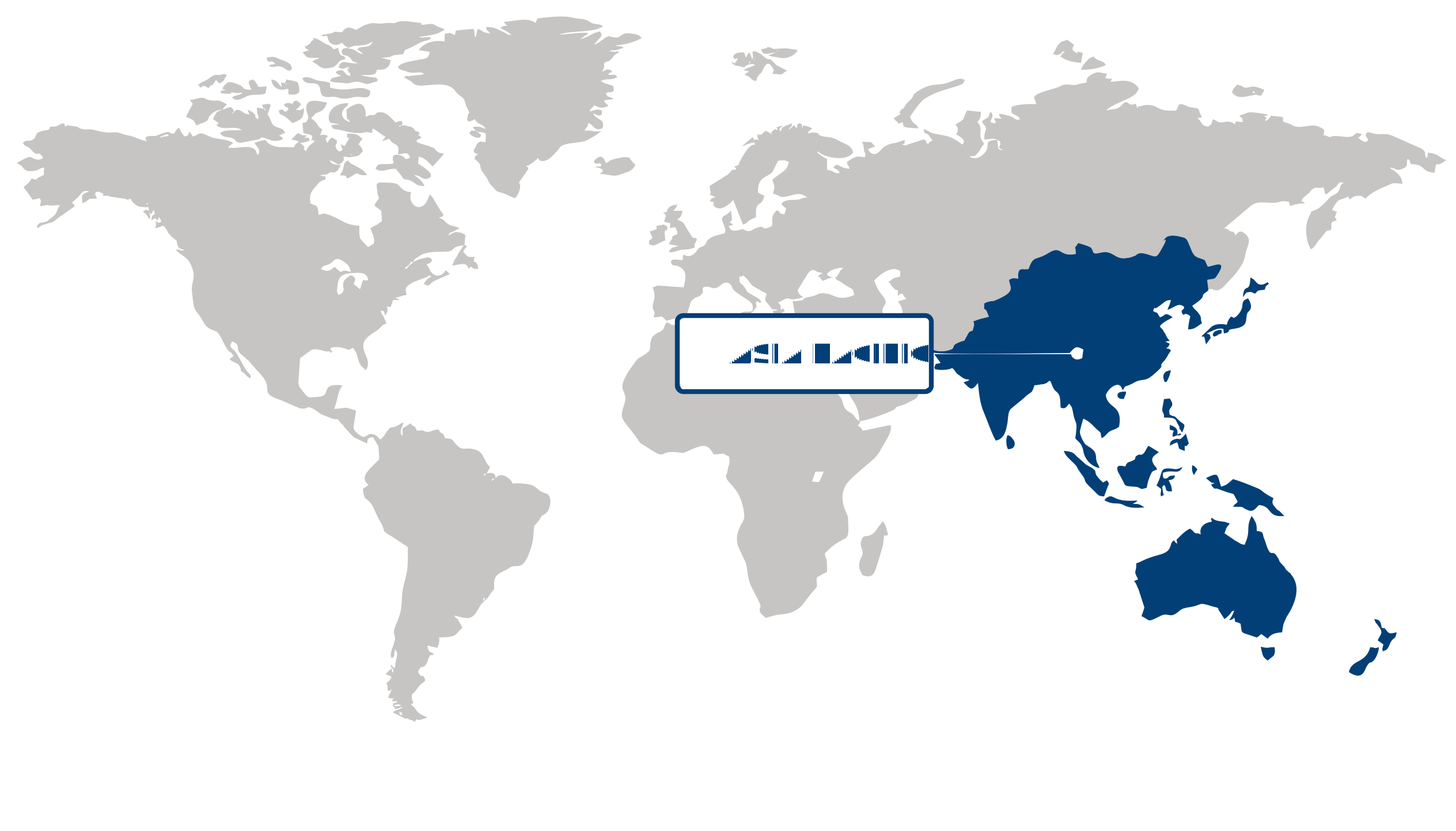
The metal & metal oxide nanoparticles market in Asia Pacific captured over 47.96% of the global market in 2025 and, at a 10.5% CAGR, is both the largest and fastest-growing region. This leadership is driven by rapid industrialization and surging demand across electronics, coatings, healthcare and environmental remediation, supported by policy and investment—evidenced by directives from the Ministry of Industry and Information Technology of the PRC and financing and infrastructure programs from the Asian Development Bank. Private-sector capacity and innovation—from Shin‑Etsu Chemical Co., Ltd. expansions to materials R&D at regional universities—have tightened regional supply chains and accelerated commercial adoption. Given ongoing public–private commitments and broad sectoral demand, Asia Pacific offers sustained, high‑quality opportunities for investors targeting advanced materials, specialty coatings, and medical-technology supply chains.
The metal & metal oxide nanoparticles market in Japan is positioned as a pivotal hub in Asia Pacific, concentrating high-margin applications for semiconductors, precision coatings and biomedical devices. Japan’s Ministry of Economy, Trade and Industry (METI) initiatives to commercialize advanced materials and companies such as Shin‑Etsu Chemical Co., Ltd. reinforcing specialty materials supply illustrate how innovation, regulatory rigor and premium demand converge. For strategists, Japan is a critical source of high‑quality IP, qualification processes and downstream partnerships that elevate regional product specifications and enable premium market segments.
The metal & metal oxide nanoparticles market in China anchors regional scale and price-competitive manufacturing, supplying volumes for electronics, construction coatings and water treatment. China’s Ministry of Industry and Information Technology policy signals, together with R&D outputs from the Chinese Academy of Sciences and capabilities at the China National Center for Nanoscience and Technology (NCNST), demonstrate coordinated capability from discovery to mass production. Strategically, China’s scale complements Japan’s premium focus, creating a regional value chain that supports both cost leadership and technology-driven differentiation for investors and OEMs.
North America Market Analysis:
North America maintained a significant share of the metal & metal oxide nanoparticles market, driven by concentrated R&D ecosystems, deep healthcare and electronics procurement, and integrated manufacturing supply chains. Strong federal support through the National Nanotechnology Initiative (NNI), regulatory engagement from the U.S. Food and Drug Administration (FDA) and U.S. Environmental Protection Agency (EPA), and targeted defense and energy research investments from agencies such as DARPA bolster translational activity and commercial adoption. Industry players and instrument suppliers like Thermo Fisher Scientific and Merck (Sigma-Aldrich) support scale-up and quality control, while leading purchasers in medical devices and specialty coatings sustain demand. These institutional and commercial linkages position North America to convert scientific leadership into commercial scale, making it an attractive region for investment in application-focused nanoparticle solutions.
U.S. The U.S. plays the leading national role in the metal & metal oxide nanoparticles market through concentrated translational research, large clinical and industrial end markets, and an active regulatory framework. Federal funders including the National Institutes of Health (NIH) and the National Nanotechnology Initiative (NNI) underwrite applied projects, while the U.S. Food and Drug Administration (FDA) provides guidance that shapes product development pathways; suppliers such as Thermo Fisher Scientific and Merck (Sigma-Aldrich) enable commercialization through analytics and materials supply. Strong demand from biomedical OEMs and advanced materials manufacturers, combined with venture and corporate R&D spend, makes the U.S. a strategic on-ramp for firms seeking to scale nanoparticle technologies across North America.
Europe Market Trends:
Held a substantial share, the metal & metal oxide nanoparticles market in North America is supported by concentrated R&D funding, established manufacturing clusters and diversified end‑use demand across healthcare, electronics and energy. Evidence includes sustained federal investment through the National Nanotechnology Initiative (NNI), regulatory engagement from the U.S. Environmental Protection Agency (EPA) on nanoscale materials, and commercial supply from firms such as Thermo Fisher Scientific and NanoComposix. Combined policy clarity, private‑sector scale and procurement pull create near‑term scale‑up opportunities for suppliers and integrators across the region.
The United States is the regional leader in the metal & metal oxide nanoparticles market, propelled by strong domestic demand, large commercial players and active regulatory pathways. Examples include Department of Energy (DOE) support for nanoparticle research, National Nanotechnology Initiative (NNI) coordination of federal efforts, and product commercialization by Thermo Fisher Scientific; regulatory oversight from the U.S. Food and Drug Administration (FDA) and EPA further shapes market readiness. Strategic implication: U.S. manufacturing and regulatory engagement accelerate commercialization and attract investment for scale deployments.
Canada is an innovation‑centric contributor to the metal & metal oxide nanoparticles market, prioritizing sustainable synthesis and collaborative research. Illustrative evidence includes programs at the National Research Council Canada (NRC), funding and policy alignment led by Innovation, Science and Economic Development Canada (ISED), and university partnerships such as initiatives at the University of Toronto advancing green nanomaterial processes. Strategic implication: Canada’s research‑to‑policy focus complements U.S. scale, creating a regional pipeline for sustainability‑oriented products and regulatory harmonization.
| Parameter | North America | Asia Pacific | Europe | Latin America | MEA |
|---|---|---|---|---|---|
| Innovation Hub i Scale Nascent Developing Advanced | |||||
| Cost-Sensitive Region i Scale Low Medium High | |||||
| Regulatory Environment i Scale Restrictive Neutral Supportive | |||||
| Demand Drivers i Scale Weak Moderate Strong | |||||
| Development Stage i Scale Emerging Developing Developed | |||||
| Adoption Rate i Scale Low Medium High | |||||
| New Entrants / Startups i Scale Sparse Moderate Dense | |||||
| Macro Indicators i Scale Weak Stable Strong |
Segment Leadership and Growth Trends
Metal & Metal Oxide Nanoparticles Market Share (%), by Application, 2026
Go beyond the chart, access full insights & data tables
Request Free Sample ReportElectronics represented largest share in 2025 of the metal & metal oxide nanoparticles market within the segments, driven by their use in conductive, miniaturized, high-performance components that enable next-generation consumer devices and infrastructure. This leadership reflects the growth driver of improved conductivity and miniaturization, evidenced by R&D investments and patent activity from Samsung and Intel and technical publications in IEEE highlighting nanoscale interconnects. Demand patterns favor suppliers who meet sustainability and supply-chain traceability expectations set by Apple and leading OEMs, creating scope for specialty material suppliers and tier-one partners. Opportunities include integrated conductive inks and advanced packaging, and relevance will persist due to 5G, AI hardware demands and continued digital transformation in electronics manufacturing.
Analysis by Product
Silver held largest share in 2025 of the metal & metal oxide nanoparticles market among the segments, propelled by strong demand for silver nanoparticles in electronics, antimicrobial coatings, and conductive inks. The growth driver is reflected in product and collaboration announcements from DuPont and 3M and BASF’s interest in specialty conductive formulations, while public-health emphasis from the World Health Organization and regulatory scrutiny by the European Chemicals Agency frame safety and compliance priorities. Strategic advantages accrue to established chemical producers scaling sustainable synthesis and recyclers, and to nimble entrants offering green processes; continued relevance is underpinned by IoT proliferation and hygiene-driven procurement in healthcare and consumer goods.
| Segment | Sub-Segment | Largest Segment | Fastest Growing |
|---|---|---|---|
| Application | Defense, Electronics, Personal Care and Cosmetics, Transportation, Pharma and Healthcare, Chemical and Coatings | ||
| Product | Zinc, Platinum, Magnesium, Silver, Copper, Iron, Aluminum, Gold |
Unlock insights tailored to your business with our bespoke market research solutions.
Click to get your customized report now.
Competitive Landscape and Market Positioning
The competitive landscape reflects intensified capability building across the value chain: established producers are broadening portfolios and strengthening upstream-downstream linkages, and niche suppliers are enhancing bespoke offerings and analytical services. There is clear movement toward tighter engagement with end markets, faster introduction of function-specific formulations, and stepped-up investment in pilot-scale facilities and characterization platforms. These actions sharpen positioning by reducing time-to-application, raising technical entry barriers, and creating distinct value propositions for regulated sectors such as healthcare and electronics.
Strategic / Actionable Recommendations for Regional Players
North America: Leverage proximity to advanced end-users by deepening co-development arrangements with electronics and biomedical OEMs, expanding pilot-scale capabilities, and showcasing compliance and traceability credentials to win specification-driven contracts.
Asia Pacific: Build regional manufacturing footprints paired with academic partnerships to accelerate cost-competitive scale-up and target rapidly growing electronics and coatings segments; adopt process automation and local supply agreements to shorten lead times.
Europe: Differentiate through sustainability, high-purity standards, and certification-led trust; collaborate with large chemical integrators for specialty applications and invest in eco-friendly synthesis and comprehensive safety characterization to access premium regulatory-sensitive markets.
| Company | Market Share | Company Revenue | Revenue CAGR (%) | Product Portfolio | Geographic Presence | Innovation / R&D Focus | Strategic Developments |
|---|---|---|---|---|---|---|---|
| No companies available. | |||||||
Customize Your Report
Explore examples of how this report can be tailored to different research needs, including custom segments, additional topics or chapters, and related reports. Click a section of the wheel or its numbered marker to explore the available options.
Metal & Metal Oxide Nanoparticles Market — Custom Segments
| Segment | Sub-Segment |
|---|---|
| No segment data available. | |
Metal & Metal Oxide Nanoparticles Market — Custom TOC
| Custom Chapter | Chapter Details | ||
|---|---|---|---|
| No custom TOC data available. | |||
Need a different cut of the data?
Request Custom ResearchHow much is the metal & metal oxide nanoparticles market worth?
How is the metal & metal oxide nanoparticles industry expected to grow over the next 10 years?
Which region captures the largest portion of the metal & metal oxide nanoparticles market value?
In which region is the metal & metal oxide nanoparticles sector expanding at the quickest pace?
What factors give electronics segment a competitive edge in the metal & metal oxide nanoparticles sector?
Which is the largest sub-segment within the product segment for metal & metal oxide nanoparticles industry?
What are the key competitors in the metal & metal oxide nanoparticles landscape?
Our Clients
"The report helped us understand emerging consumer trends in our product category. It clarified where to focus innovation for the next product launch."
LyondellBasell
"The regional forecast section was incredibly useful. We were able to identify two new potential partners in Europe thanks to the vendor mapping you included."
SABIC
"We appreciated how actionable the recommendations were. It guided us to improve supply chain resilience."
Olin Corporation
Our Research Team & Methodology
Every Fundamental Business Insights report is built by a dedicated vertical research team, validated through a structured primary-and-secondary methodology, and reviewed for accuracy before it reaches you.
Research Team Overview
Prepared by the Chemicals & Materials Research Team
Delivery
Published
Demand
Available
Support
Trust & Compliance
Research Intelligence
Research Workflow & Quality Assurance
Data Collection
Verified information gathered through primary and secondary research.
Data Triangulation
Cross-validation using multiple independent data sources.
Forecast Modelling
Market estimates developed using historical trends and analytical models.
Analyst Validation
Findings reviewed by domain experts for accuracy and consistency.
Editorial & Quality Review
Final editorial, quality, and compliance checks before publication.
Final Publication
Released after successful completion of the internal review process.
Report Coverage
📊 Market Assessment
- Market Size & Forecast
- Market Segmentation
- Regional Analysis
- Growth Drivers & Challenges
- Market Dynamics
🏢 Competitive Intelligence
- Competitive Landscape
- Company Profiles
- Competitive Benchmarking
- Mergers & Acquisitions
- Market Share Analysis or Key Company Strategies
🔍 Strategic Analysis
- Value Chain Analysis
- Porter's Five Forces
- PESTLE Analysis
- Pricing Trends
- Supply-Demand Analysis
🚀 Future Outlook
- Technology Landscape
- Regulatory Landscape
- Investment & Funding Landscape
- Emerging Opportunities
- Future Market Outlook
Have a question about this report or need a custom scope?
Request Customization