Maternity Innerwear Market Size & Growth Forecast 2027–2036, By Segments (Distribution Channel, Type), Regional Demand Trends (North America, Asia Pacific, Europe), Key Country Insights (U.S., Japan, South Korea, Germany, France, Italy), and Competitive Landscape
Market Size and Growth Outlook
Maternity Innerwear Market size was estimated at USD 8.7 billion in 2026 and is projected to grow at a 6.08% CAGR from 2027 to 2036, surpassing USD 15.7 billion by 2036. The industry revenue for 2027 is assessed at USD 9.15 billion.
Get more details on this report
Request Free Sample ReportMaternity Innerwear Market Intelligence Snapshot
Regional Market Dynamics
- Asia Pacific held a 43.78% market share in 2026, supported by its large consumer base, extensive retail reach, and steady demand for comfortable, adaptable maternity products.
- Asia Pacific is expected to grow at an 8.25% CAGR, driven by repeat purchases throughout pregnancy and postpartum, along with rising demand across both offline and online channels.
Segment Momentum
- Maternity/Nursing Bras lead the market because they meet essential daily comfort, support, and breastfeeding needs while benefiting from repeat purchases throughout pregnancy and postpartum stages.
- Online is the fastest-growing distribution channel as expectant and new mothers increasingly prefer convenient shopping, wider product availability, and easy comparison of specialized maternity innerwear.
Market Expansion Drivers
- Rising working women population increasing demand for functional maternity apparel solutions.
- Expansion of e-commerce and O2O retail channels enhancing maternity product accessibility.
- Social media driven fashion influence accelerating adoption of premium maternity innerwear.
Leading Market Participants
- Top players in the maternity innerwear market include Seraphine Ltd (United Kingdom), H&M Hennes & Mauritz AB (Sweden), Triumph International AG (Switzerland), Wacoal Holdings Corp. (Japan), Hotmilk Lingerie (New Zealand), Adore Me, Inc. (United States), Clovia (India), Mothercare plc (United Kingdom).
Global Market Forecast Snapshot
Market Outlook
- 2026 Market Size: USD 8.7 billion
- 2027 Estimated Market Size: USD 9.15 billion.
- Projected Market Size: USD 15.7 billion by 2036
- Growth Forecast: 6.08% CAGR (2027-2036)
Regional and Segment Outlook
- Leading Regional Market: Asia Pacific
- High-Growth Regional Hub: Asia Pacific
- Core Revenue Segment: Offline (Distribution Channel) | Maternity/Nursing Bras (Type)
- Emerging Opportunity Segment: Online (Distribution Channel) | Shapewear (Type)
Market Growth Drivers and Industry Trends
Rising working women population increasing demand for functional maternity apparel solutions
The growing participation of women in the workforce will drive the maternity innerwear market as expectant and new mothers increasingly seek undergarments that provide comfort, support, flexibility, and suitability for active daily routines. Pregnancy and postpartum body changes create specific requirements for adjustable fits, breathable fabrics, supportive structures, and designs that accommodate changing body contours. Working women may place particular emphasis on maternity innerwear that can be worn comfortably for extended periods while fitting beneath professional and casual clothing. Manufacturers are responding through designs that combine practical support with improved aesthetics, allowing maternity products to address functional requirements without compromising everyday wearability.
Expansion of e-commerce and O2O retail channels enhancing maternity product accessibility
Expansion of e-commerce and online-to-offline retail channels will propel the maternity innerwear market by making specialized products more accessible to consumers across different locations and shopping environments. Online platforms allow expectant mothers to browse a broader range of sizes, styles, fabrics, and support levels than may be available through conventional physical stores, while detailed product information can help shoppers evaluate fit and functionality. O2O models further connect digital product discovery with physical retail services, providing opportunities for consumers to combine online convenience with in-store purchasing or fitting experiences. The discreet nature of online shopping can also be particularly relevant for maternity innerwear, enabling consumers to purchase specialized products conveniently from home.
Social media driven fashion influence accelerating adoption of premium maternity innerwear
Social media trends are strengthening the maternity innerwear market by increasing exposure to fashionable, premium, and design-oriented products that move beyond purely functional maternity apparel. Influencers, parenting communities, and digital fashion content can shape consumer perceptions of suitable pregnancy and postpartum clothing while highlighting product features such as supportive construction, attractive styling, fabric quality, and comfort. Increased visibility of maternity-focused fashion is encouraging consumers to consider innerwear as part of their broader personal style rather than only as a necessity associated with pregnancy. This shift is supporting interest in premium designs that combine ergonomic fit with contemporary aesthetics and specialized maternity functionality.
| Growth Driver | Impact on CAGR | Regulatory Influence | Geographic Relevance | Adoption Rate | Impact Timeline |
|---|---|---|---|---|---|
| Increasing maternity population and awareness | 3.00% | Short term (≤ 2 yrs) | North America, Europe (spillover: Asia Pacific) | Low | Fast |
| Expansion of e-commerce and retail channels | 2.00% | Medium term (2–5 yrs) | Europe, Asia Pacific (spillover: North America) | Medium | Moderate |
| Development of sustainable and organic innerwear | 2.30% | Long term (5+ yrs) | North America, Europe (spillover: Asia Pacific) | High | Slow |
| Rising working women population increasing demand for functional maternity apparel solutions | 2.20% | Low | Asia Pacific, North America | High | Near Term |
| Expansion of e-commerce and O2O retail channels enhancing maternity product accessibility | 1.80% | Low | Asia Pacific | High | Near Term |
| Social media driven fashion influence accelerating adoption of premium maternity innerwear | 1.50% | Low | Global | High | Mid Term |
Unlock insights tailored to your business with our bespoke market research solutions.
Click to get your customized report now.
Regional Demand Dynamics
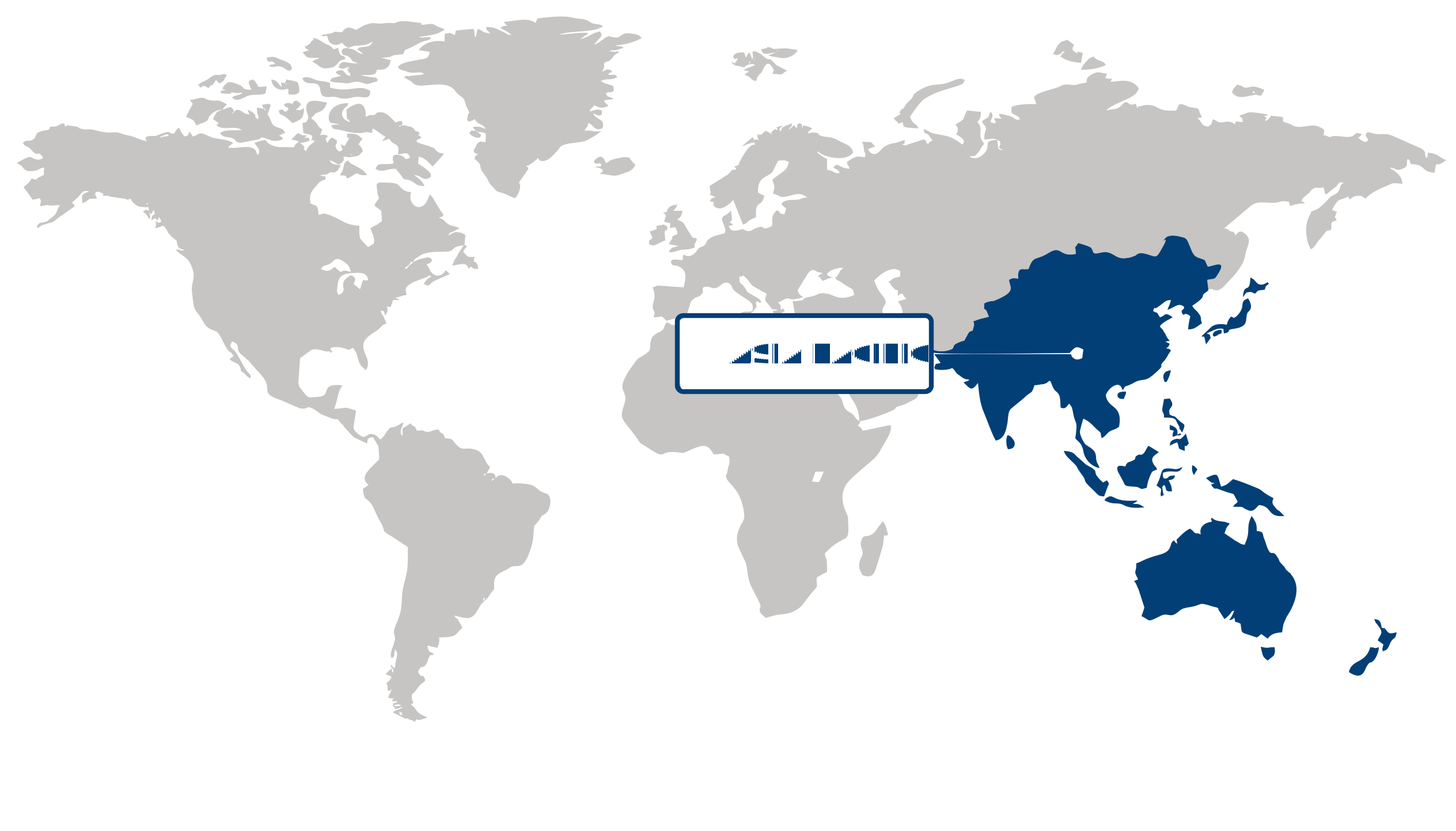
Asia Pacific (Largest & Fastest-Growing Region)
The Asia Pacific maternity innerwear market held the largest share in 2026 at 43.78% share and is also the fastest-growing regional market, supported by a large consumer base, increasing awareness of maternal comfort, and expanding access to specialized maternity products. Pregnant and postpartum consumers are increasingly seeking innerwear designed to accommodate changing body shapes while providing adequate support, flexibility, breathability, and comfort. Rising health and wellness awareness is encouraging greater attention to suitable maternity apparel rather than conventional innerwear during pregnancy and after childbirth. Urbanization and increasing household purchasing power are also supporting demand for higher-quality products with functional designs. In addition, the expansion of organized retail and e-commerce is making maternity-specific products more accessible, particularly to consumers seeking greater variety and convenience. Growing acceptance of specialized maternal apparel and continued product innovation are strengthening the region's leading position and supporting rapid market development.
| Parameter | North America | Asia Pacific | Europe | Latin America | MEA |
|---|---|---|---|---|---|
| Innovation Hub i Scale Nascent Developing Advanced | |||||
| Cost-Sensitive Region i Scale Low Medium High | |||||
| Regulatory Environment i Scale Restrictive Neutral Supportive | |||||
| Demand Drivers i Scale Weak Moderate Strong | |||||
| Development Stage i Scale Emerging Developing Developed | |||||
| Adoption Rate i Scale Low Medium High | |||||
| New Entrants / Startups i Scale Sparse Moderate Dense | |||||
| Macro Indicators i Scale Weak Stable Strong |
Key Country Insights
Germany 🇩🇪
Quality Performance ApparelGermany focuses on maternity innerwear that combines ergonomic support, premium textiles, and long-lasting product quality. German consumers increasingly favor products made with certified materials that provide comfort alongside responsible manufacturing practices.
France 🇫🇷
Premium Lifestyle FocusFrance prioritizes maternity innerwear that blends comfort with refined design and premium fabric selection. French brands increasingly introduce collections that address both prenatal and postnatal needs while emphasizing quality craftsmanship and consumer well-being.
Italy 🇮🇹
Fashion-Oriented ComfortItaly integrates maternity innerwear with fashion-conscious design, premium materials, and flexible product construction. Italian manufacturers continue developing collections that balance elegance, functionality, and lasting comfort for expectant and new mothers.
Japan 🇯🇵
Everyday Wear InnovationJapan emphasizes lightweight maternity innerwear designed for everyday comfort, discreet fit, and soft-touch materials. Japanese manufacturers continue refining seamless construction and moisture management technologies to improve wearability across different stages of motherhood.
South Korea 🇰🇷
Design-Led EssentialsSouth Korea combines functional maternity innerwear with contemporary styling and innovative fabric technologies. Local brands increasingly develop versatile products that appeal to digitally engaged consumers seeking comfort without compromising aesthetics.
United States 🇺🇸
Functional Comfort DemandThe U.S. maternity innerwear market prioritizes supportive, breathable, and size-adaptive products for changing consumer needs throughout pregnancy and postpartum recovery. Brands in the U.S. continue expanding direct-to-consumer offerings with inclusive sizing and performance-oriented fabrics.
Segment Leadership and Growth Trends
Maternity Innerwear Market Share (%), by Distribution Channel, 2026
Go beyond the chart, access full insights & data tables
Request Free Sample ReportDistribution Channel Segment Analysis: Offline (Largest Segment) vs Online (Fastest-Growing Segment)
The offline segment led the maternity innerwear market in 2026, supported by consumers' preference for physical evaluation of maternity garments before purchase. In-store shopping allows expectant and new mothers to assess fit, comfort, fabric softness, support, and sizing directly, which is particularly important for products designed to accommodate changing body requirements. The availability of personalized assistance and the ability to compare products physically further strengthen offline purchasing, sustaining its leading position in the distribution channel segment.
Online is the fastest-growing distribution channel, driven by the increasing convenience and accessibility of digital shopping for maternity products. E-commerce platforms provide broader product selections, discreet purchasing, detailed product information, and convenient home delivery, which can be particularly attractive during pregnancy and the postpartum period. Greater digital engagement and the growing availability of maternity-specific products through online channels are encouraging consumers to shift more purchases toward e-commerce, supporting rapid segment expansion.
Type Segment Analysis: Maternity/Nursing Bras (Largest Segment) vs Shapewear (Fastest-Growing Segment)
Maternity/nursing bras represented the largest share of the maternity innerwear market in 2026, reflecting their essential role in providing comfort, support, and convenient breastfeeding access during pregnancy and after childbirth. These products are specifically designed to accommodate changes in breast size and shape while incorporating features such as flexible construction and easy-access nursing mechanisms. Growing awareness of specialized maternity apparel and increasing emphasis on comfort throughout pregnancy and lactation continue to sustain demand for maternity/nursing bras.
The shapewear segment is expanding at the fastest pace as consumers increasingly seek maternity innerwear that combines functional support with body-contouring benefits. Advances in fabric flexibility and garment construction are enabling shapewear products to provide support while accommodating changing body shapes. Rising interest in comfortable, versatile maternity apparel that can be integrated into everyday wardrobes is creating additional opportunities for shapewear, particularly as consumers place greater emphasis on both functionality and appearance.
| Segment | Sub-Segment | Largest Segment | Fastest Growing |
|---|---|---|---|
| Distribution Channel | Offline, Online | Offline | Online |
| Type | Maternity/Nursing Bras, Camisoles, Shapewear, Maternity Briefs | Maternity/Nursing Bras | Shapewear |
Competitive Landscape and Market Positioning
Major players in the maternity innerwear market:
1. Seraphine Ltd (United Kingdom)
2. H&M Hennes & Mauritz AB (Sweden)
3. Triumph International AG (Switzerland)
4. Wacoal Holdings Corp. (Japan)
5. Hotmilk Lingerie (New Zealand)
6. Adore Me Inc. (United States)
7. Clovia (India)
8. Mothercare plc (United Kingdom)
The maternity innerwear market is expanding as consumer preference shifts toward comfort-driven and functional apparel solutions. Fabric innovation is improving flexibility, breathability, and support features. Increasing focus on personalization and lifestyle-oriented design is shaping product development, while evolving consumer expectations are driving continuous innovation.
| Company | Market Share | Company Revenue | Revenue CAGR (%) | Product Portfolio | Geographic Presence | Innovation / R&D Focus | Strategic Developments |
|---|---|---|---|---|---|---|---|
| Seraphine Ltd (United Kingdom) | |||||||
| H&M Hennes & Mauritz AB (Sweden) | |||||||
| Triumph International AG (Switzerland) | |||||||
| Wacoal Holdings Corp. (Japan) | |||||||
| Hotmilk Lingerie (New Zealand) | |||||||
| Adore Me Inc. (United States) | |||||||
| Clovia (India) | |||||||
| Mothercare plc (United Kingdom). |
Industry Development/News
| Company Name | Date | Key Development |
|---|---|---|
| Nike | Aug-22 | Nike launched its maternity apparel collection in India, expanding into the maternity wear segment with products including bras, tanks, and leggings. The launch reflects diversification into pregnancy-focused activewear, strengthening Nike’s presence in maternity innerwear markets and expanding its product portfolio within women’s performance and lifestyle apparel categories. |
| MORI | Jul-21 | MORI introduced its first maternity clothing line, expanding into pregnancy apparel with products including leggings, sweaters, pajamas, robes, and t-shirts. The launch represents entry into maternity innerwear and apparel categories, strengthening MORI’s product diversification strategy and expanding its presence in the maternity-focused consumer clothing market. |
| Seraphine | Jun-21 | Seraphine announced plans for an initial public offering to raise capital for debt repayment and operational strengthening. The IPO strategy reflects efforts to improve financial structure and support expansion in maternity apparel markets, enhancing the company’s ability to scale product distribution and reinforce its competitive position in global maternity innerwear segments. |
| H&M Hennes & Mauritz AB | Apr-21 | H&M expanded its e-commerce reach by launching its Zalora-based retail presence in Southeast Asia, improving access to key regional markets. The expansion supports broader distribution of apparel brands across multiple countries, strengthening H&M’s digital commerce infrastructure and enhancing market penetration for maternity and related clothing segments through cross-border online platforms. |
| Hatch Collection LLC | Feb-21 | Hatch launched a maternity clothing line through Target, expanding access to affordable maternity apparel across online and selected retail channels. The product line includes functional garments designed for pregnancy stages, strengthening Hatch’s distribution reach and reinforcing its position in the maternity innerwear and apparel market through mass-market retail integration. |
| Seraphine | Dec-20 | Seraphine was acquired by Mayfair Equity Partners in a management buyout transaction, providing strategic capital support and ownership restructuring. The acquisition strengthens Seraphine’s financial backing and supports expansion in maternity apparel markets through improved investment capacity and operational flexibility within the global maternity innerwear industry. |
| H&M Hennes & Mauritz AB | May-20 | H&M expanded its online market presence by making multiple brands available across additional European markets through digital channels. The initiative strengthens its e-commerce distribution network and improves regional accessibility, supporting broader apparel market penetration including maternity-related product categories through enhanced cross-border online retail infrastructure. |
Customize Your Report
Explore examples of how this report can be tailored to different research needs, including custom segments, additional topics or chapters, and related reports. Click a section of the wheel or its numbered marker to explore the available options.
Maternity Innerwear Market — Custom Segments
| Segment | Sub-Segment |
|---|---|
| Stage of Pregnancy | First Trimester, Second Trimester, Third Trimester, Postpartum |
| Product Functionality | Nursing Access, Adjustable Fit, Postpartum Support, Everyday Maternity |
| Price Tier | Economy, Mid-Range, Premium |
Maternity Innerwear Market — Custom TOC
| Custom Chapter | Custom Details |
|---|---|
| Consumer Preference & Purchase Behavior Study |
|
| Product Innovation Opportunity Mapping |
|
| Brand Positioning & Differentiation Analysis |
|
Need a different cut of the data?
Request Custom ResearchHow large is the maternity innerwear market?
How is the maternity innerwear industry projected to perform over the next decade?
How is the rise in working women influencing demand patterns in maternity innerwear purchasing behavior?
What is driving the rapid growth of e-commerce in maternity innerwear distribution channels?
Why do Maternity/Nursing Bras hold the largest share of the maternity innerwear market?
Which distribution channel is growing the fastest in the maternity innerwear market?
Why does Asia Pacific lead the maternity innerwear market?
What is fueling the rapid growth of the maternity innerwear market in Asia Pacific?
Who holds a significant market share in the maternity innerwear landscape?
Our Clients
"The report provided us with a clear direction, and the level of detail was beyond what we expected. I would definitely recommend their services to others."
Haier Appliances
"The collaboration with Fundamental Business Insights has added significant value to our decision-making process, and we look forward to continuing this partnership for our future market research requirements."
Luxottica Group S.p.A.
"The team at FBI delivered an exceptional research report. The insights on industry innovations were particularly impressive and added a lot of value to the overall report."
Nike
Our Research Team & Methodology
Every Fundamental Business Insights report is built by a dedicated vertical research team, validated through a structured primary-and-secondary methodology, and reviewed for accuracy before it reaches you.
Research Team Overview
Prepared by the Consumer Goods & Services Research Team
Delivery
Published
Demand
Available
Support
Trust & Compliance
Research Domains
10 coverage areasResearch Intelligence
| Source | Reference |
|---|---|
| International Organization for Standardization (ISO) | www.iso.org |
| ASTM International | www.astm.org |
| U.S. Consumer Product Safety Commission (CPSC) | www.cpsc.gov |
| European Commission – Consumer Safety | ec.europa.eu/safety-gate |
| Consumer Technology Association (CTA) | www.cta.tech |
| National Retail Federation (NRF) | nrf.com |
| World Retail Congress | www.worldretailcongress.com |
| World Travel & Tourism Council (WTTC) | wttc.org |
| UN Tourism | www.unwto.org |
| Personal Care Products Council (PCPC) | www.personalcarecouncil.org |
| Cosmetics Europe | cosmeticseurope.eu |
| International Housewares Association (IHA) | www.housewares.org |
| American Apparel & Footwear Association (AAFA) | www.aafaglobal.org |
| World Federation of the Sporting Goods Industry (WFSGI) | wfsgi.org |
| Juvenile Products Manufacturers Association (JPMA) | www.jpma.org |
| Pet Industry Joint Advisory Council (PIJAC) | pijac.org |
| International Council of Toy Industries (ICTI) | www.toy-icti.org |
| International Association of Amusement Parks and Attractions (IAAPA) | iaapa.org |
| Organisation for Economic Co-operation and Development (OECD) | www.oecd.org |
| World Bank Data | data.worldbank.org |
Research Workflow & Quality Assurance
Data Collection
Verified information gathered through primary and secondary research.
Data Triangulation
Cross-validation using multiple independent data sources.
Forecast Modelling
Market estimates developed using historical trends and analytical models.
Analyst Validation
Findings reviewed by domain experts for accuracy and consistency.
Editorial & Quality Review
Final editorial, quality, and compliance checks before publication.
Final Publication
Released after successful completion of the internal review process.
Report Coverage
📊 Market Assessment
- Market Size & Forecast
- Market Segmentation
- Regional Analysis
- Growth Drivers & Challenges
- Market Dynamics
🏢 Competitive Intelligence
- Competitive Landscape
- Company Profiles
- Competitive Benchmarking
- Mergers & Acquisitions
- Market Share Analysis or Key Company Strategies
🔍 Strategic Analysis
- Value Chain Analysis
- Porter's Five Forces
- PESTLE Analysis
- Pricing Trends
- Supply-Demand Analysis
🚀 Future Outlook
- Technology Landscape
- Regulatory Landscape
- Investment & Funding Landscape
- Emerging Opportunities
- Future Market Outlook
Have a question about this report or need a custom scope?
Request Customization