Marine Electrostatic Precipitator Market Size & Growth Forecast 2027–2036, By Segments (System, Design), Regional Demand Trends (North America, Asia Pacific, Europe), Key Country Insights (U.S., Japan, South Korea, Germany, France, Italy), and Competitive Landscape
Market Size and Growth Outlook
Marine Electrostatic Precipitator Market size stood at USD 217.18 Million in 2026 and is predicted to grow at 8.59% CAGR from 2027 to 2036, crossing USD 495.13 Million by 2036. The industry revenue for 2027 is calculated at USD 233.01 Million.
Get more details on this report
Request Free Sample ReportMarine Electrostatic Precipitator Market Intelligence Snapshot
Regional Market Dynamics
- Asia Pacific led in 2026 due to its extensive maritime industry, shipbuilding capabilities, major ports, and growing adoption of marine emission-control technologies.
- North America is growing fastest as environmental awareness, regulatory pressure, vessel modernization, and investments in sustainable marine operations encourage emission-control system adoption.
Segment Momentum
- The dry system segment accounted for 84.48% of the market in 2026, supported by efficient particulate removal, straightforward installation, low maintenance requirements, and dependable compliance with marine emission regulations.
- The tubular design segment is expanding quickly because it offers compact, high-efficiency emission control for space-constrained installations while benefiting from ongoing improvements that enhance particulate collection and regulatory compliance.
Market Expansion Drivers
- Strict environmental regulations accelerating vessel emission control equipment adoption
- Growing focus on black carbon emission reduction in maritime operations
- Increasing fleet retrofitting investments to meet evolving sustainability targets
Leading Market Participants
- Major companies in the marine electrostatic precipitator market include ANDRITZ AG (Austria), Mitsubishi Heavy Industries, Ltd. (Japan), Siemens Energy AG (Germany), Fuji Electric Co., Ltd. (Japan), GEA Group AG (Germany), Valmet Oyj (Finland), Sumitomo Heavy Industries, Ltd. (Japan), KC Cottrell Co., Ltd. (South Korea), KraftPowercon AB (Sweden), McGill AirClean LLC (USA)
Global Market Forecast Snapshot
Market Outlook
- 2026 Market Size: USD 217.18 Million
- 2027 Estimated Market Size: USD 233.01 Million
- Projected Market Size: USD 495.13 Million by 2036
- Growth Forecast: 8.59% CAGR (2027-2036)
Regional and Segment Outlook
- Leading Regional Market: Asia Pacific
- High-Growth Regional Hub: North America
- Core Revenue Segment: Dry (System) | Plate (Design)
- Emerging Opportunity Segment: Wet (System) | Tubular (Design)
Market Growth Drivers and Industry Trends
Strict environmental regulations accelerating vessel emission control equipment adoption
Stringent environmental regulations governing air emissions from marine vessels are encouraging shipowners and fleet operators to adopt advanced pollution control technologies that ensure regulatory compliance. The marine electrostatic precipitator market will drive growth as tightening emission standards increase the installation of systems capable of capturing fine particulate matter generated by marine engines and onboard combustion processes. Regulatory oversight across international shipping routes and port authorities is prompting vessel operators to invest in emission control equipment that supports cleaner operations while reducing environmental impact. Compliance requirements are also influencing the design of new vessels and modernization programs for existing fleets, creating sustained demand for integrated exhaust gas treatment solutions with reliable operational performance.
Growing focus on black carbon emission reduction in maritime operations
The maritime industry's increasing attention to reducing black carbon emissions is strengthening demand for technologies that improve exhaust particulate removal and minimize environmental pollution. Growing awareness of the impact of black carbon on air quality and climate is expected to propel the marine electrostatic precipitator market by encouraging wider deployment of high-efficiency emission control systems across commercial shipping, offshore vessels, and specialized marine operations. Electrostatic precipitation technology offers an effective approach to capturing ultrafine particulate emissions before they are released into the atmosphere, supporting cleaner vessel operation while addressing environmental objectives. Shipping companies are also prioritizing emission reduction strategies as part of broader sustainability initiatives that extend beyond regulatory compliance.
Increasing fleet retrofitting investments to meet evolving sustainability targets
Fleet modernization programs are increasingly incorporating advanced emission control equipment as operators seek to extend vessel lifecycles while aligning with evolving environmental expectations. Rising investments in retrofit projects will boost the marine electrostatic precipitator market by creating opportunities to integrate electrostatic precipitation systems into existing marine exhaust configurations without requiring complete vessel replacement. Retrofitting enables shipowners to improve environmental performance while maintaining operational continuity and adapting to changing sustainability requirements. Engineering upgrades frequently include complementary exhaust treatment technologies, monitoring systems, and energy-efficient components that improve overall emission management across a wide range of vessel classes.
| Growth Driver | Impact on CAGR | Regulatory Influence | Geographic Relevance | Adoption Rate | Impact Timeline |
|---|---|---|---|---|---|
| Strict environmental regulations accelerating vessel emission control equipment adoption | 2% | High | Europe, Asia Pacific | High | Near Term |
| Growing focus on black carbon emission reduction in maritime operations | 1.8% | High | Europe, North America | High | Mid Term |
| Increasing fleet retrofitting investments to meet evolving sustainability targets | 1.5% | High | Global | Medium | Mid Term |
Unlock insights tailored to your business with our bespoke market research solutions.
Click to get your customized report now.
Regional Demand Dynamics
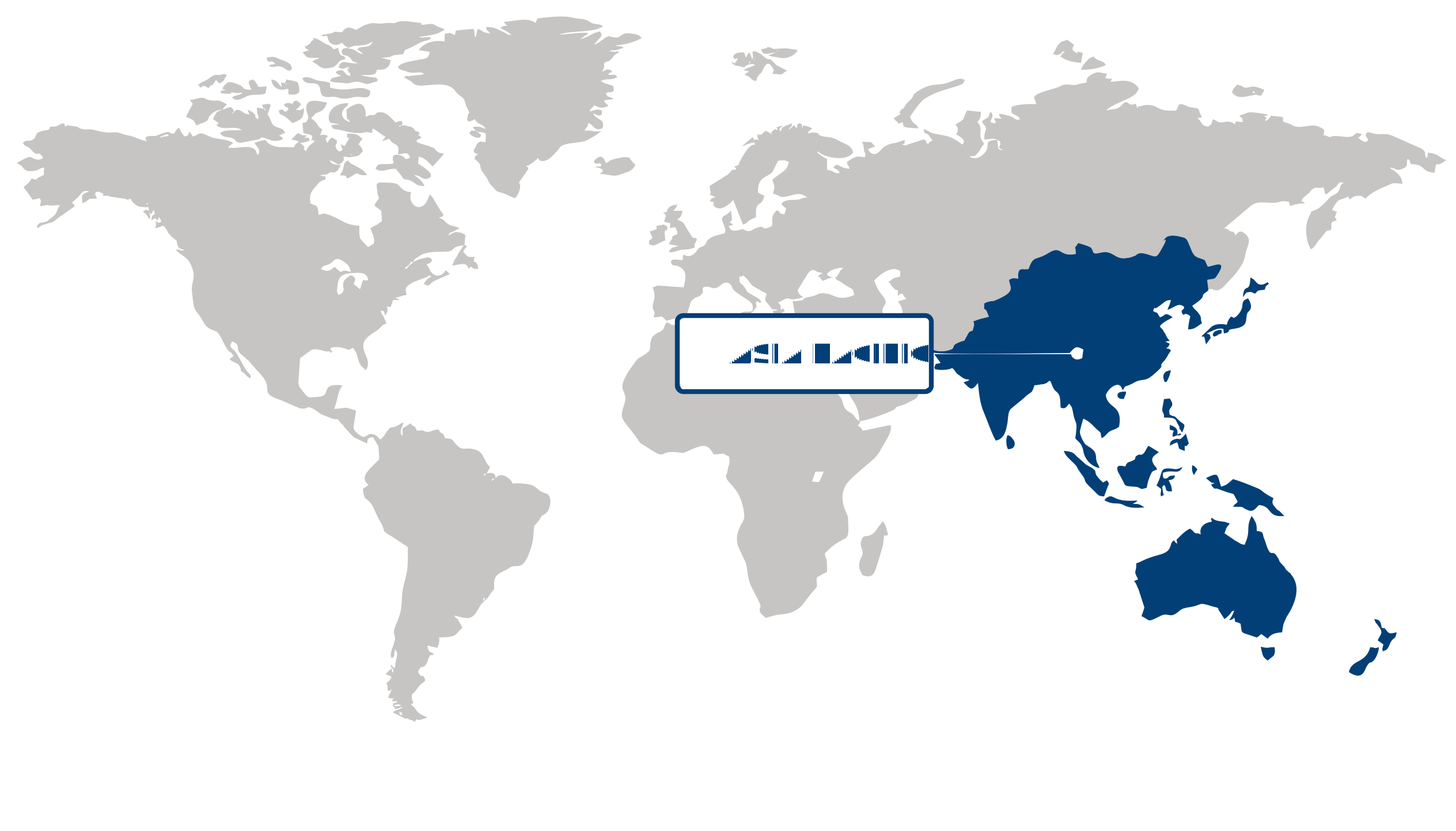
Asia Pacific (Largest Region)
Asia Pacific held the largest position in the marine electrostatic precipitator market in 2026, reflecting the region’s extensive maritime industry, shipbuilding capabilities, and growing focus on controlling emissions from marine operations. Stringent environmental requirements for vessels and increasing efforts to reduce particulate emissions are encouraging shipowners and operators to adopt advanced exhaust treatment technologies. The concentration of major ports, commercial shipping activity, and marine manufacturing infrastructure further creates a favorable environment for electrostatic precipitator deployment. Continued modernization of marine fleets and increasing emphasis on cleaner propulsion and emission-control systems are reinforcing regional demand.
North America (Fastest-Growing Region)
North America is registering the fastest growth, supported by increasing environmental awareness, regulatory pressure on marine emissions, and modernization of commercial and industrial vessels. Marine operators are increasingly evaluating technologies that can help improve exhaust quality while maintaining operational efficiency and compliance with evolving environmental expectations. The region’s established maritime infrastructure and ongoing investments in vessel upgrades provide additional opportunities for electrostatic precipitator adoption. Growing attention to sustainable marine operations is also encouraging the integration of advanced emission-control systems across relevant vessel applications.
| Parameter | North America | Asia Pacific | Europe | Latin America | MEA |
|---|---|---|---|---|---|
| Innovation Hub i Scale Nascent Developing Advanced | |||||
| Cost-Sensitive Region i Scale Low Medium High | |||||
| Regulatory Environment i Scale Restrictive Neutral Supportive | |||||
| Demand Drivers i Scale Weak Moderate Strong | |||||
| Development Stage i Scale Emerging Developing Developed | |||||
| Adoption Rate i Scale Low Medium High | |||||
| New Entrants / Startups i Scale Sparse Moderate Dense | |||||
| Macro Indicators i Scale Weak Stable Strong |
Key Country Insights
United States 🇺🇸
Emissions Compliance FocusThe U.S. supports marine electrostatic precipitator adoption through stricter vessel emission controls and fleet modernization initiatives. Shipowners prioritize high-efficiency particulate removal systems that integrate with advanced exhaust treatment technologies while minimizing operational disruption.
Germany 🇩🇪
Marine Engineering IntegrationGermany emphasizes marine electrostatic precipitators for commercial vessels requiring efficient exhaust cleaning and compliance with international environmental regulations. Equipment suppliers focus on compact, energy-efficient designs suited for modern shipbuilding and retrofit projects.
Japan 🇯🇵
Shipyard Retrofit DemandJapan strengthens demand for marine electrostatic precipitators through active shipbuilding and retrofit programs. Domestic manufacturers prioritize reliable emission control systems that improve operational efficiency while supporting long-term vessel performance.
South Korea 🇰🇷
Advanced Vessel SolutionsSouth Korea integrates marine electrostatic precipitators into new-build vessels and environmental upgrade projects. Shipbuilders focus on scalable emission control technologies that align with evolving international maritime standards and customer requirements.
France 🇫🇷
Sustainable Fleet UpgradesFrance promotes marine electrostatic precipitator adoption across commercial and specialized vessels seeking cleaner exhaust management. Operators prioritize dependable technologies that reduce particulate emissions while supporting efficient onboard operations.
Italy 🇮🇹
Maritime Compliance SystemsItaly expands marine electrostatic precipitator deployment in cargo and passenger vessels operating under increasingly stringent environmental requirements. Equipment providers focus on retrofit-friendly systems that fit diverse vessel configurations and maintenance schedules.
Segment Leadership and Growth Trends
Marine Electrostatic Precipitator Market Share (%), by System, 2026
Go beyond the chart, access full insights & data tables
Request Free Sample ReportSystem Segment Analysis: Dry (Largest Segment) vs Wet (Fastest-Growing Segment)
The dry system segment dominated the marine electrostatic precipitator market with an 84.48% share in 2026. Its market leadership is attributed to its proven efficiency in removing particulate emissions while offering comparatively simple installation and maintenance requirements. Dry systems are extensively deployed across various vessel types because they deliver dependable emission control without the need for additional water treatment infrastructure, making them a practical choice for ship operators focused on operational reliability and regulatory compliance.
The wet system segment is expected to witness the fastest growth over the forecast period. Increasingly stringent marine emission standards and the need to capture finer particulate matter are encouraging the adoption of wet electrostatic precipitator technologies. Their ability to handle moisture-laden exhaust streams and improve overall emission control efficiency makes them well suited for vessels operating under demanding environmental regulations.
Design Segment Analysis: Plate (Largest Segment) vs Tubular (Fastest-Growing Segment)
The plate design segment held the largest share in 2026. Plate-based electrostatic precipitators are widely utilized because they provide effective particulate collection across large exhaust gas volumes while maintaining reliable long-term performance in marine environments. Their established design, ease of integration into existing exhaust systems, and suitability for a broad range of vessel configurations have contributed to their continued market leadership.
The tubular design segment is expected to register the fastest growth over the forecast period. Rising demand for compact, high-efficiency emission control systems is encouraging wider adoption of tubular configurations, particularly where installation space is limited or exhaust conditions are more challenging. Ongoing technological improvements aimed at enhancing collection efficiency and supporting compliance with evolving maritime environmental standards are expected to further strengthen growth in this segment.
| Segment | Sub-Segment | Largest Segment | Fastest Growing |
|---|---|---|---|
| System | Dry, Wet | Dry | Wet |
| Design | Plate, Tubular | Plate | Tubular |
Competitive Landscape and Market Positioning
Prominent players in the marine electrostatic precipitator market:
- ANDRITZ AG (Austria)
- Mitsubishi Heavy Industries Ltd. (Japan)
- Siemens Energy AG (Germany)
- Fuji Electric Co., Ltd. (Japan)
- GEA Group AG (Germany)
- Valmet Oyj (Finland)
- Sumitomo Heavy Industries Ltd. (Japan)
- KC Cottrell Co., Ltd. (South Korea)
- KraftPowercon AB (Sweden)
- McGill AirClean LLC (USA)
The marine electrostatic precipitator market is evolving around the industry's transition toward cleaner vessel operations, prompting suppliers to compete through emission control performance and installation flexibility rather than equipment supply alone. Demand from both new vessel construction and retrofit projects has encouraged the development of systems that can be integrated into space-constrained engine rooms while minimizing operational disruption and maintenance requirements. Digital monitoring, remote diagnostics, and adaptive control capabilities are becoming increasingly important sources of differentiation, reflecting ship operators' preference for solutions that simplify compliance management and improve long-term operational reliability across varied marine environments.
| Company | Market Share | Company Revenue | Revenue CAGR (%) | Product Portfolio | Geographic Presence | Innovation / R&D Focus | Strategic Developments |
|---|---|---|---|---|---|---|---|
| ANDRITZ AG (Austria) | |||||||
| Mitsubishi Heavy Industries Ltd. (Japan) | |||||||
| Siemens Energy AG (Germany) | |||||||
| Fuji Electric Co. Ltd. (Japan) | |||||||
| GEA Group AG (Germany) | |||||||
| Valmet Oyj (Finland) | |||||||
| Sumitomo Heavy Industries Ltd. (Japan) | |||||||
| KC Cottrell Co. Ltd. (South Korea) | |||||||
| KraftPowercon AB (Sweden) | |||||||
| McGill AirClean LLC (USA) |
Industry Development/News
| Company Name | Date | Key Development |
|---|---|---|
| Mitsubishi Heavy Industries Power Environmental Solutions | Oct-22 | Mitsubishi Heavy Industries Power Environmental Solutions developed a new Ionic Wind Type Electrode electrostatic precipitator designed to reduce particulate emissions. The system enhances collection efficiency while decreasing installation space requirements. Following two years of testing, it demonstrated high durability and stable performance, supporting maritime compliance with stricter International Maritime Organization regulations. |
| Andritz | Jul-21 | Andritz acquired pivotal assets from GE Steam Power's Air Quality Control System division, including its technology hub in Vaxjo, Sweden. This transaction expands Andritz's portfolio to include industrial dedusting technologies such as electrostatic precipitators, fabric filters, and wet ESPs. The agreement also incorporates Vaxjo site facilities and personnel from Sweden and Finland, strengthening the company's position in air pollution control. |
Customize Your Report
Explore examples of how this report can be tailored to different research needs, including custom segments, additional topics or chapters, and related reports. Click a section of the wheel or its numbered marker to explore the available options.
Marine Electrostatic Precipitator Market — Custom Segments
| Segment | Sub-Segment |
|---|---|
| Vessel Type | Commercial Ships, Passenger Ships, Naval & Defense Vessels, Offshore Vessels |
| Installation Type | Newbuild, Retrofit |
| Pollutant Target | Particulate Matter, Smoke & Soot, Oil Mist, Multi-Pollutant Control |
Marine Electrostatic Precipitator Market — Custom TOC
| Custom Chapter | Custom Details |
|---|---|
| Ship Retrofit Opportunity Assessment |
|
| Maritime Emissions Compliance Roadmap |
|
| Shipowner Procurement Decision Factors |
|
Need a different cut of the data?
Request Custom ResearchWhat is the market valuation of marine electrostatic precipitator?
What is the forecasted size of the marine electrostatic precipitator industry?
How are environmental regulations driving demand for marine electrostatic precipitators?
Why are fleet retrofit programs accelerating adoption of marine electrostatic precipitators?
Which system segment dominates the marine electrostatic precipitator market?
Why is the tubular design segment growing rapidly in the marine electrostatic precipitator market?
What makes Asia Pacific the leading marine electrostatic precipitator market?
Why is North America the fastest-growing market for marine electrostatic precipitators?
Which companies dominate the marine electrostatic precipitator landscape?
Our Clients
"The reports offered a comprehensive view of the Food and Beverage landscape, covering market trends, consumer behavior, and competitive dynamics."
Terma A/S
"Our experience in acquiring market research reports has been outstanding — the depth of analysis and actionable insights have proven invaluable."
The Aerospace Corporation
"Fundamental Business Insights demonstrated a keen understanding of our business needs, delivering reports tailored to our specific objectives."
Kongsberg Gruppen
Our Research Team & Methodology
Every Fundamental Business Insights report is built by a dedicated vertical research team, validated through a structured primary-and-secondary methodology, and reviewed for accuracy before it reaches you.
Research Team Overview
Prepared by the Aerospace & Defence Research Team
Delivery
Published
Demand
Available
Support
Trust & Compliance
Research Domains
10 coverage areasResearch Intelligence
| Source | Reference |
|---|---|
| International Civil Aviation Organization (ICAO) | www.icao.int |
| International Air Transport Association (IATA) | www.iata.org |
| Federal Aviation Administration (FAA) | www.faa.gov |
| European Union Aviation Safety Agency (EASA) | www.easa.europa.eu |
| Aerospace Industries Association (AIA) | www.aia-aerospace.org |
| NATO | www.nato.int |
| U.S. Department of Defense (DoD) | www.defense.gov |
| Defense Advanced Research Projects Agency (DARPA) | www.darpa.mil |
| National Aeronautics and Space Administration (NASA) | www.nasa.gov |
| European Space Agency (ESA) | www.esa.int |
| SAE International | www.sae.org |
| RTCA | www.rtca.org |
| ASTM International | www.astm.org |
| International Organization for Standardization (ISO) | www.iso.org |
| National Institute of Standards and Technology (NIST) | www.nist.gov |
| International Organization for Standardization - Aerospace (IAQG standards via 9100 series) | iaqg.org |
| Airports Council International (ACI World) | aci.aero |
| Missile Defense Agency (MDA) | www.mda.mil |
| Stockholm International Peace Research Institute (SIPRI) | www.sipri.org |
| Jane's (Janes) | www.janes.com |
Research Workflow & Quality Assurance
Data Collection
Verified information gathered through primary and secondary research.
Data Triangulation
Cross-validation using multiple independent data sources.
Forecast Modelling
Market estimates developed using historical trends and analytical models.
Analyst Validation
Findings reviewed by domain experts for accuracy and consistency.
Editorial & Quality Review
Final editorial, quality, and compliance checks before publication.
Final Publication
Released after successful completion of the internal review process.
Report Coverage
📊 Market Assessment
- Market Size & Forecast
- Market Segmentation
- Regional Analysis
- Growth Drivers & Challenges
- Market Dynamics
🏢 Competitive Intelligence
- Competitive Landscape
- Company Profiles
- Competitive Benchmarking
- Mergers & Acquisitions
- Market Share Analysis or Key Company Strategies
🔍 Strategic Analysis
- Value Chain Analysis
- Porter's Five Forces
- PESTLE Analysis
- Pricing Trends
- Supply-Demand Analysis
🚀 Future Outlook
- Technology Landscape
- Regulatory Landscape
- Investment & Funding Landscape
- Emerging Opportunities
- Future Market Outlook
Have a question about this report or need a custom scope?
Request Customization