Male Infertility Market Size & Growth Forecast 2027–2036, By Segments (Treatment, Test), Regional Demand Trends (North America, Asia Pacific, Europe), Key Country Insights (U.S., Japan, South Korea, Germany, France, Italy), and Competitive Landscape
Market Size and Growth Outlook
Male Infertility Market size was over USD 4.9 billion in 2026 and is likely to grow at a 4.66% CAGR between 2027 and 2036, reaching USD 7.73 billion by 2036. The industry revenue for 2027 is assessed at USD 5.09 billion.
Get more details on this report
Request Free Sample ReportMale Infertility Market Intelligence Snapshot
Regional Market Dynamics
- Europe accounted for 39.54% of the market in 2026, supported by established reproductive healthcare systems, specialist fertility clinics, structured referrals, and broad access to advanced diagnostics and treatments.
- Asia Pacific is projected to grow at a 5.76% CAGR as fertility care access expands, specialist treatment infrastructure improves, and more patients enter diagnosis-led reproductive care pathways.
Segment Momentum
- This segment held a 67.95% share in 2026 because it addresses a broad range of infertility causes and provides effective treatment pathways for clinically significant reproductive challenges.
- Computer Assisted Semen Analysis is the fastest-growing segment as it improves testing consistency, reduces manual variability, and supports more standardized diagnostic workflows in fertility clinics.
Market Expansion Drivers
- Rising global infertility rates driving increased adoption of assisted reproductive technologies.
- Increasing use of DNA fragmentation testing improving male infertility diagnostics accuracy.
- Lifestyle-related risk factors such as obesity and smoking increasing male reproductive health issues.
Leading Market Participants
- Major companies in the male infertility market include Bayer AG (Germany), Aytu BioPharma, Inc. (United States), Cadila Pharmaceuticals Limited (India), Halotech DNA, S.L. (Spain), Merck KGaA (Germany), Intas Pharmaceuticals Ltd. (India), CooperSurgical, Inc. (United States), Vitrolife AB (Sweden), Ferring Pharmaceuticals (Switzerland), SCSA Diagnostics, Inc. (United States).
Global Market Forecast Snapshot
Market Outlook
- 2026 Market Size: USD 4.9 billion
- 2027 Estimated Market Size: USD 5.09 billion.
- Projected Market Size: USD 7.73 billion by 2036
- Growth Forecast: 4.66% CAGR (2027-2036)
Regional and Segment Outlook
- Leading Regional Market: Europe
- High-Growth Regional Hub: Asia Pacific
- Core Revenue Segment: Assisted Reproductive Technology and Varicocele Surgery (Treatment) | DNA Fragmentation Technique (Test)
- Emerging Opportunity Segment: Assisted Reproductive Technology and Varicocele Surgery (Treatment) | Computer Assisted Semen Analysis (Test)
Market Growth Drivers and Industry Trends
Rising global infertility rates driving increased adoption of assisted reproductive technologies
Increasing recognition of infertility as a reproductive health concern is encouraging more couples to seek specialized evaluation and treatment, supporting the male infertility market through greater utilization of assisted reproductive technologies. Male reproductive factors contribute substantially to difficulties in conception, prompting diagnostic assessment before selecting appropriate interventions such as intrauterine insemination, in vitro fertilization, or intracytoplasmic sperm injection. Improvements in fertility care pathways and greater willingness to pursue specialized reproductive services are also encouraging earlier evaluation of sperm quality and reproductive function.
Increasing use of DNA fragmentation testing improving male infertility diagnostics accuracy
Greater attention to sperm quality beyond conventional semen parameters is strengthening demand for advanced diagnostic approaches, which will boost male infertility market development through increased use of DNA fragmentation testing. Sperm DNA integrity can provide additional information about reproductive potential when standard measures such as concentration, motility, and morphology do not fully explain infertility. Incorporating DNA fragmentation assessment into selected fertility evaluations can help clinicians identify underlying sperm-related factors and refine treatment decisions, particularly for patients experiencing unexplained infertility or repeated assisted reproduction difficulties.
Lifestyle-related risk factors such as obesity and smoking increasing male reproductive health issues
Lifestyle factors are increasingly recognized as contributors to impaired reproductive function, creating a broader need for male fertility assessment and treatment. Obesity, smoking, sedentary behavior, poor dietary patterns, and related metabolic stresses can adversely affect hormonal balance, sperm production, motility, and overall sperm quality, thereby supporting male infertility market demand. Growing awareness of these risk factors is encouraging men to seek reproductive health evaluations and prompting fertility specialists to assess lifestyle and metabolic conditions alongside conventional semen analysis when determining potential causes of impaired fertility.
| Growth Driver | Impact on CAGR | Regulatory Influence | Geographic Relevance | Adoption Rate | Impact Timeline |
|---|---|---|---|---|---|
| Rising prevalence of male infertility | 1.80% | Short term (≤ 2 yrs) | North America, Europe (spillover: Asia Pacific) | High | Fast |
| Adoption of advanced diagnostics and treatments | 1.70% | Medium term (2–5 yrs) | Europe, Asia Pacific (spillover: North America) | Medium | Moderate |
| Expansion of fertility clinics and telemedicine solutions | 1.60% | Long term (5+ yrs) | North America, Europe (spillover: Asia Pacific) | Medium | Slow |
| Rising global infertility rates driving increased adoption of assisted reproductive technologies | 2.90% | High | Europe, Asia Pacific | High | Near Term |
| Increasing use of DNA fragmentation testing improving male infertility diagnostics accuracy | 2.40% | Moderate | North America, Europe | Medium | Mid Term |
| Lifestyle-related risk factors such as obesity and smoking increasing male reproductive health issues | 2.60% | Moderate | North America, Asia Pacific | High | Near Term |
Unlock insights tailored to your business with our bespoke market research solutions.
Click to get your customized report now.
Regional Demand Dynamics
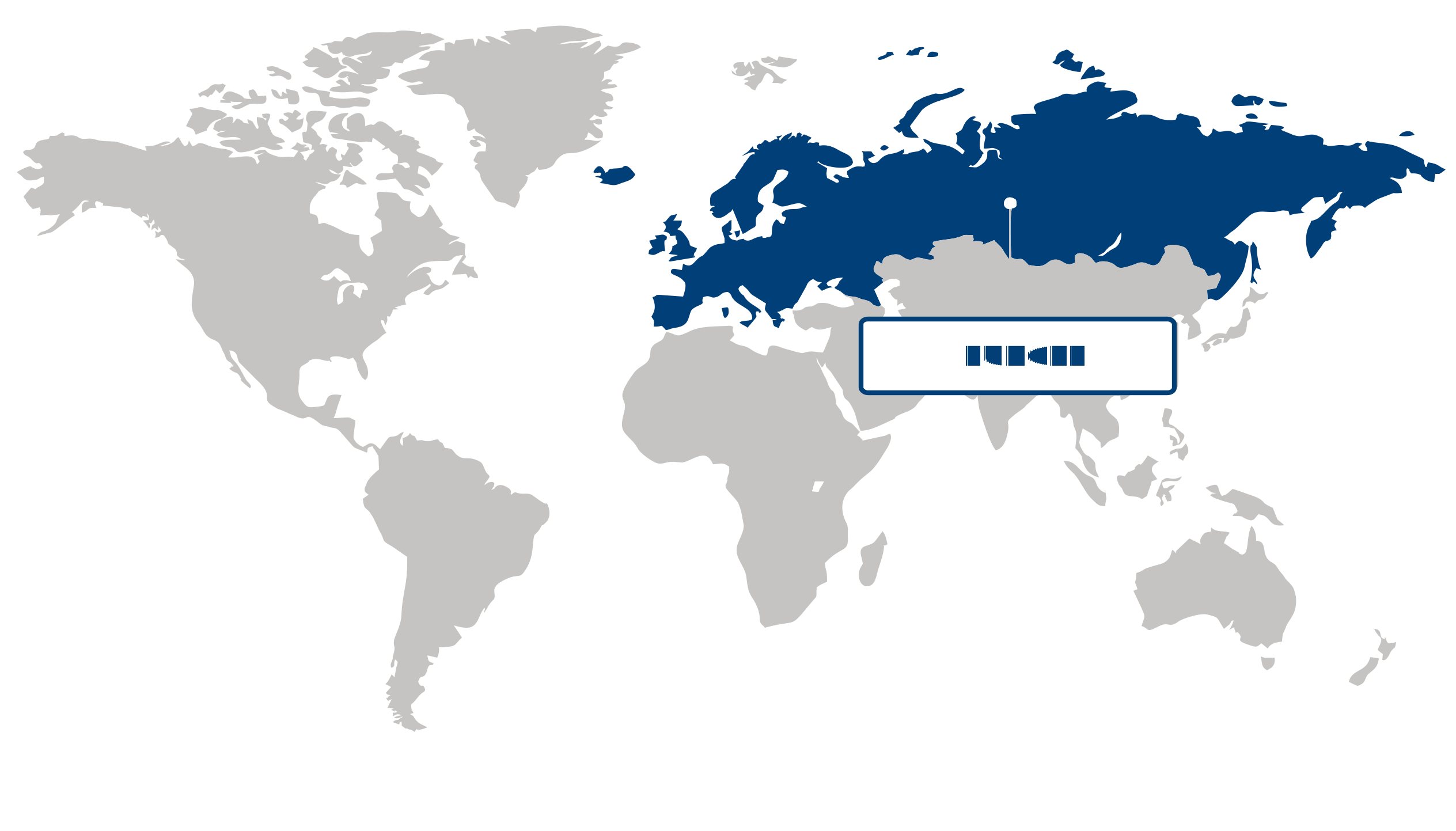
Europe (Largest Region)
Europe dominated the male infertility market in 2026, holding a 39.54% share, supported by developed reproductive healthcare infrastructure, greater awareness of male reproductive health, and broad access to specialized diagnostic and treatment services. Increasing recognition of male factors in infertility is encouraging couples to pursue comprehensive fertility assessments and specialized interventions. The region's established healthcare systems facilitate access to diagnostic testing, assisted reproductive procedures, and fertility counseling, while improvements in laboratory techniques are supporting more precise evaluation of reproductive conditions. Greater openness toward fertility treatment and continued emphasis on reproductive health services are also reinforcing demand across the region.
Asia Pacific (Fastest-Growing Region)
Asia Pacific represents the fastest-growing region for the male infertility market, supported by rising awareness of reproductive health, improving healthcare access, and expanding availability of fertility services. Urbanization and changing lifestyles are contributing to greater attention toward infertility diagnosis, while increased health awareness is encouraging men to seek specialized medical evaluation. Investments in fertility clinics, diagnostic laboratories, and advanced reproductive technologies are improving treatment accessibility across the region. Growing acceptance of assisted reproductive care, combined with expanding healthcare infrastructure and increasing demand for specialized fertility services, is creating substantial opportunities for market development.
| Parameter | North America | Asia Pacific | Europe | Latin America | MEA |
|---|---|---|---|---|---|
| Innovation Hub i Scale Nascent Developing Advanced | |||||
| Cost-Sensitive Region i Scale Low Medium High | |||||
| Regulatory Environment i Scale Restrictive Neutral Supportive | |||||
| Demand Drivers i Scale Weak Moderate Strong | |||||
| Development Stage i Scale Emerging Developing Developed | |||||
| Adoption Rate i Scale Low Medium High | |||||
| New Entrants / Startups i Scale Sparse Moderate Dense | |||||
| Macro Indicators i Scale Weak Stable Strong |
Key Country Insights
Germany 🇩🇪
Diagnostic Pathway EnhancementGermany prioritizes evidence-based diagnosis and multidisciplinary management within the male infertility market. Fertility specialists increasingly adopt advanced laboratory testing and individualized treatment strategies to improve clinical decision-making.
France 🇫🇷
Integrated Reproductive CareFrance supports the male infertility market through coordinated reproductive healthcare and wider access to fertility assessments. Clinical practice increasingly emphasizes identifying male factors early to improve overall treatment planning for couples.
Italy 🇮🇹
Personalized Treatment ApproachItaly is strengthening male infertility services through improved diagnostic capabilities and specialized fertility centers. Healthcare professionals increasingly tailor treatment plans according to individual clinical profiles and reproductive goals.
Japan 🇯🇵
Early Assessment FocusJapan is encouraging earlier assessment of male infertility as awareness of reproductive health continues to improve. Fertility clinics increasingly integrate advanced diagnostics with personalized treatment plans to address diverse underlying causes.
South Korea 🇰🇷
Specialized Fertility ServicesSouth Korea continues expanding specialized fertility services that include comprehensive male infertility evaluation and treatment. Healthcare providers increasingly combine advanced diagnostics with assisted reproductive technologies to support individualized patient care.
United States 🇺🇸
Comprehensive Fertility CareThe U.S. male infertility market benefits from broader access to reproductive diagnostics, fertility clinics, and assisted reproductive technologies. Healthcare providers increasingly promote earlier evaluation and personalized treatment pathways for male reproductive health.
Segment Leadership and Growth Trends
Male Infertility Market Share (%), by Treatment, 2026
Go beyond the chart, access full insights & data tables
Request Free Sample ReportTreatment Segment Analysis: Assisted Reproductive Technology and Varicocele Surgery (Largest & Fastest-Growing Segment)
The male infertility market was led by the assisted reproductive technology and varicocele surgery segment, which accounted for 67.95% share in 2026. Its strong position reflects the clinical importance of these interventions in addressing underlying reproductive challenges and improving the likelihood of conception. Assisted reproductive techniques provide treatment pathways for patients with varying degrees of male-factor infertility, while varicocele surgery can address a correctable anatomical condition associated with impaired sperm production and quality. Increasing awareness of male reproductive health, greater willingness to seek specialized fertility care, and continued improvements in diagnostic and treatment approaches are supporting the segment's broad clinical adoption. Its combined role in addressing both direct causes and fertility outcomes also contributes to its continued prominence.
Test Segment Analysis: DNA Fragmentation Technique (Largest Segment) vs Computer Assisted Semen Analysis (Fastest-Growing Segment)
The DNA fragmentation technique segment held the largest share of the male infertility market at 23.51% in 2026, supported by growing recognition of sperm DNA integrity as an important factor in evaluating male reproductive potential. Conventional semen parameters do not always capture underlying sperm quality issues, making DNA fragmentation assessment valuable for patients experiencing unexplained infertility, recurrent reproductive failure, or poor treatment outcomes. Greater emphasis on comprehensive fertility evaluation is encouraging clinicians to incorporate advanced testing methods that provide deeper insight into sperm function and reproductive prospects.
Computer assisted semen analysis is gaining momentum as fertility centers increasingly adopt automated and objective approaches to evaluate semen characteristics. These systems can support standardized assessment of sperm concentration, motility, morphology, and other parameters while reducing dependence on subjective manual interpretation. The broader shift toward digital diagnostics, improved laboratory reproducibility, and data-supported fertility management is creating favorable conditions for wider adoption. As fertility providers seek efficient tools that can enhance diagnostic consistency and treatment planning, computer assisted semen analysis is becoming increasingly relevant within male infertility testing.
| Segment | Sub-Segment | Largest Segment | Fastest Growing |
|---|---|---|---|
| Treatment | Assisted Reproductive Technology and Varicocele Surgery, Medication | Assisted Reproductive Technology and Varicocele Surgery | Assisted Reproductive Technology and Varicocele Surgery |
| Test | DNA Fragmentation Technique, Oxidative Stress Analysis, Microscopic Examination, Sperm Agglutination, Computer Assisted Semen Analysis, Sperm Penetration Assay, Others | DNA Fragmentation Technique | Computer Assisted Semen Analysis |
Competitive Landscape and Market Positioning
Top players in the male infertility market:
1. Bayer AG (Germany)
2. Aytu BioPharma Inc. (United States)
3. Cadila Pharmaceuticals Limited (India)
4. Halotech DNA S.L. (Spain)
5. Merck KGaA (Germany)
6. Intas Pharmaceuticals Ltd. (India)
7. CooperSurgical Inc. (United States)
8. Vitrolife AB (Sweden)
9. Ferring Pharmaceuticals (Switzerland)
10. SCSA Diagnostics Inc. (United States)
The male infertility market is witnessing increased attention due to rising awareness and diagnostic advancements. Improved therapeutic approaches are enabling more targeted treatment pathways. The male infertility market is also shaped by innovation in reproductive technologies and personalized care models. Continuous development is expanding access to effective fertility solutions.
| Company | Market Share | Company Revenue | Revenue CAGR (%) | Product Portfolio | Geographic Presence | Innovation / R&D Focus | Strategic Developments |
|---|---|---|---|---|---|---|---|
| Bayer AG (Germany) | |||||||
| Aytu BioPharma Inc. (United States) | |||||||
| Cadila Pharmaceuticals Limited (India) | |||||||
| Halotech DNA S.L. (Spain) | |||||||
| Merck KGaA (Germany) | |||||||
| Intas Pharmaceuticals Ltd. (India) | |||||||
| CooperSurgical Inc. (United States) | |||||||
| Vitrolife AB (Sweden) | |||||||
| Ferring Pharmaceuticals (Switzerland) | |||||||
| SCSA Diagnostics Inc. (United States). |
Industry Development/News
| Company Name | Date | Key Development |
|---|---|---|
| Ontario Government | May-26 | The provincial government’s $100 million investment to expand publicly funded fertility services significantly bolsters reproductive healthcare infrastructure. This initiative improves patient access to diagnostic pathways and treatments, indirectly supporting a broader patient base and increasing clinical demand for male-factor infertility services across the healthcare system. |
| Nova IVF Fertility | Jul-25 | The opening of the company's 100th fertility center marks a major expansion of its clinical footprint across 63 Indian cities. By increasing accessibility in tier 2 and tier 3 regions, this expansion enhances the distribution network for assisted reproductive services and addresses growing demand for specialized fertility diagnostics and treatment. |
| Farwaniya Hospital | Aug-24 | The inauguration of a new Fertility and Assisted Reproduction Unit in Kuwait significantly enhances national reproductive healthcare capacity. By providing comprehensive diagnostic testing and advanced treatment options, the facility strengthens the local healthcare infrastructure and improves access to specialized reproductive technologies for patients within the region. |
| Archish Fertility & IVF | Jul-24 | The launch of a new facility in HSR Layout, India, expands the provider’s clinical network and regional reach. The unit integrates specialized male infertility diagnostics and treatment into its service offerings, strengthening local market access to comprehensive reproductive healthcare and supporting the firm's overall competitive positioning in fertility services. |
| Ferring Pharmaceuticals | Jun-24 | The launch of a digital assessment tool and educational platform represents a strategic move to optimize the patient funnel toward early diagnosis. By addressing awareness gaps, the platform facilitates better patient engagement and clinical navigation, ultimately supporting the commercialization of diagnostic and treatment pathways within the male infertility segment. |
| FertGroup; Future Fertility | Apr-24 | The strategic partnership to deploy AI-enabled oocyte assessment software across Brazilian clinics represents a material advancement in digital reproductive analytics. This technology integration improves clinical decision-making and standardizes embryo evaluation processes, enhancing the quality of care and operational efficiency within the provider’s network to drive better treatment outcomes. |
| AINU Chennai | Feb-24 | The inauguration of a dedicated andrology department provides a consolidated hub for male-specific reproductive healthcare. By integrating specialized diagnostics, sexual dysfunction management, and advanced infertility treatments, the institution strengthens its clinical infrastructure and enhances its capacity to manage complex male-factor infertility cases with a specialized, multidisciplinary approach. |
Customize Your Report
Explore examples of how this report can be tailored to different research needs, including custom segments, additional topics or chapters, and related reports. Click a section of the wheel or its numbered marker to explore the available options.
Male Infertility Market — Custom Segments
| Segment | Sub-Segment |
|---|---|
| Etiology | Varicocele-Related, Hormonal/Endocrine, Genetic, Infectious/Inflammatory, Idiopathic |
| Age Group | Under 30 Years, 30–39 Years, 40–49 Years, 50 Years and Above |
| Care Setting | Fertility Clinics, Hospitals, Specialty Clinics, Diagnostic Centers |
Male Infertility Market — Custom TOC
| Custom Chapter | Custom Details |
|---|---|
| Male Fertility Diagnostic Landscape |
|
| Treatment Pathway Optimization Study |
|
| Digital Fertility Solutions Opportunity Map |
|
Need a different cut of the data?
Request Custom ResearchHow much revenue does the male infertility market generate?
What is the projected value of the male infertility industry by 2036?
How is expansion of assisted reproductive technologies shaping male infertility treatment pathways?
What role does DNA fragmentation testing and lifestyle risk play in male infertility diagnostics demand?
Why are Assisted Reproductive Technology and Varicocele Surgery the leading treatments in the male infertility market?
Which diagnostic test segment is growing fastest in the male infertility market?
Why is Europe the largest male infertility market?
What is driving male infertility market growth in Asia Pacific?
What are the prominent companies operating in the male infertility landscape?
Our Clients
"The team took the time to understand our specific business needs and delivered a report that was well aligned with our objectives. Their expertise and understanding of the industry were clearly reflected in the quality and relevance of the insights provided."
Siemens Healthcare
"Our experience in acquiring the research report has been excellent. The depth of analysis, and actionable insights provided have been extremely valuable in supporting our ongoing R&D efforts."
GC Biopharma
"The report offered a comprehensive view of the market trends. The in-depth segmentation and analysis of emerging opportunities gave us a better understanding of the market."
Medtronic
Our Research Team & Methodology
Every Fundamental Business Insights report is built by a dedicated vertical research team, validated through a structured primary-and-secondary methodology, and reviewed for accuracy before it reaches you.
Research Team Overview
Prepared by the Healthcare & Medical Devices Research Team
Delivery
Published
Demand
Available
Support
Trust & Compliance
Research Domains
10 coverage areasResearch Intelligence
| Source | Reference |
|---|---|
| World Health Organization (WHO) | www.who.int |
| U.S. Food & Drug Administration (FDA) | www.fda.gov |
| European Medicines Agency (EMA) | www.ema.europa.eu |
| Centers for Disease Control and Prevention (CDC) | www.cdc.gov |
| National Institutes of Health (NIH) | www.nih.gov |
| National Center for Biotechnology Information (NCBI) | www.ncbi.nlm.nih.gov |
| PubMed | pubmed.ncbi.nlm.nih.gov |
| ClinicalTrials.gov | clinicaltrials.gov |
| International Organization for Standardization (ISO) | www.iso.org |
| ASTM International | www.astm.org |
| Advanced Medical Technology Association (AdvaMed) | www.advamed.org |
| Medical Device Innovation Consortium (MDIC) | mdic.org |
| Biotechnology Innovation Organization (BIO) | www.bio.org |
| International Federation of Pharmaceutical Manufacturers & Associations (IFPMA) | www.ifpma.org |
| U.S. Pharmacopeia (USP) | www.usp.org |
| European Directorate for the Quality of Medicines & HealthCare (EDQM) | www.edqm.eu |
| World Organisation for Animal Health (WOAH) | www.woah.org |
| American Hospital Association (AHA) | www.aha.org |
| OECD Health | www.oecd.org/health |
| World Bank Data | data.worldbank.org |
Research Workflow & Quality Assurance
Data Collection
Verified information gathered through primary and secondary research.
Data Triangulation
Cross-validation using multiple independent data sources.
Forecast Modelling
Market estimates developed using historical trends and analytical models.
Analyst Validation
Findings reviewed by domain experts for accuracy and consistency.
Editorial & Quality Review
Final editorial, quality, and compliance checks before publication.
Final Publication
Released after successful completion of the internal review process.
Report Coverage
📊 Market Assessment
- Market Size & Forecast
- Market Segmentation
- Regional Analysis
- Growth Drivers & Challenges
- Market Dynamics
🏢 Competitive Intelligence
- Competitive Landscape
- Company Profiles
- Competitive Benchmarking
- Mergers & Acquisitions
- Market Share Analysis or Key Company Strategies
🔍 Strategic Analysis
- Value Chain Analysis
- Porter's Five Forces
- PESTLE Analysis
- Pricing Trends
- Supply-Demand Analysis
🚀 Future Outlook
- Technology Landscape
- Regulatory Landscape
- Investment & Funding Landscape
- Emerging Opportunities
- Future Market Outlook
Have a question about this report or need a custom scope?
Request Customization