Magnetic Refrigeration Market Size & Forecasts 2026-2035, By Segments (Product, Application), Growth Opportunities, Innovation Landscape, Regulatory Shifts, Strategic Regional Insights (U.S., Japan, China, South Korea, UK, Germany, France), and Competitive Dynamics (CoolTech, MagnaCool, EcoChill, Frigomax, ThermoFlux)
Market Size and Growth Outlook
Magnetic Refrigeration Market size is projected to expand significantly, moving from USD 19.5 billion in 2025 to USD 34.11 trillion by 2035, with a CAGR of 111% during the 2026-2035 forecast period. The expected revenue for 2026 is USD 39.42 billion.
Get more details on this report
Request Free Sample ReportMagnetic Refrigeration Market Intelligence Snapshot
Regional Market Dynamics
Segment Momentum
Market Expansion Drivers
Leading Market Participants
Global Market Forecast Snapshot
Market Outlook
Regional and Segment Outlook
Market Growth Drivers and Industry Trends
The integration of magnetic refrigeration technology into HVAC systems is driving evolution in the magnetic refrigeration market by addressing increasing consumer demand for energy-efficient and eco-friendly cooling solutions. Companies like Mitsubishi Electric have showcased pilot projects integrating magnetic refrigeration into commercial HVAC units, underscoring the shift toward quieter, vibration-free systems with lower operational costs. This adoption reflects broader trends in commercial real estate and smart building design prioritizing sustainability and operational efficiency. For established HVAC manufacturers and new technology firms, this represents a strategic opportunity to differentiate through innovation and secure early-mover advantages in retrofitting and new installations. Continued uptake in building management systems points to a growing, sustainable market niche anchored on magnetic refrigeration’s distinct benefits in the improving building energy landscape.
Government Policies Promoting Low-GWP Cooling
Regulatory mandates targeting the phase-down of hydrofluorocarbons (HFCs) and other high-global-warming-potential refrigerants are propelling the magnetic refrigeration market, as such technologies offer zero-GWP alternatives. The U.S. Environmental Protection Agency’s SNAP program and the European Union’s F-gas Regulation explicitly encourage transitions toward low-impact refrigeration technologies, enhancing magnetic refrigeration’s appeal. These policy frameworks reduce compliance risk and incentivize innovation, with companies like Cooltech Applications benefiting from smoother regulatory acceptance and public funding support. Market entrants and incumbents alike can leverage this regulatory momentum to align product development with stringent environmental standards, accelerating commercial viability. Emerging regulatory shifts will continue to drive demand for magnetic refrigeration solutions, reflecting a systemic transition in sustainable cooling technologies.
Advanced Magnetic Refrigeration Material R&D
Ongoing research into magnetocaloric materials is a critical growth driver underpinning the magnetic refrigeration market’s technological progress. Institutions such as the Karlsruhe Institute of Technology (KIT) are advancing the efficiency and cost-effectiveness of magnetic alloys, improving performance metrics that historically limited commercial deployment. Innovations in scalable and rare-earth-minimized compositions enable suppliers to refine product cost structures and reliability, facilitating broader industrial adoption. For market participants, investment in cutting-edge R&D partnerships and intellectual property development presents a competitive edge and potential for differentiated market offerings. The accelerating pace of material science breakthroughs signals sustained technical enhancements, positioning magnetic refrigeration to disrupt traditional cooling across diverse applications.
Industry Restraints:
High Production Costs and Material Scarcity
The elevated costs associated with rare earth magnets, essential for magnetic refrigeration technology, significantly constrain market expansion. Neodymium and dysprosium demand fluctuations, as highlighted by the United States Geological Survey (USGS), create supply bottlenecks that elevate raw material prices and complicate procurement. These cost pressures translate into higher end-product prices compared to conventional vapor-compression refrigeration, deterring widespread adoption among price-sensitive consumer segments and commercial operators. Established firms face margin compression, while startups struggle with capital-intensive development without economies of scale. Consequently, strategic emphasis on supply chain optimization and alternative material research becomes imperative. Going forward, unless breakthroughs in cost-effective magnetic materials or recycling technologies emerge, these fiscal challenges will continue to restrain market penetration and slow the shift from legacy systems.
Limited Consumer Awareness and Market Education
A pervasive lack of awareness regarding magnetic refrigeration benefits among end-users hampers broader market acceptance. According to findings from the International Institute of Refrigeration (IIR), many commercial and residential consumers remain unfamiliar with this technology’s environmental advantages and operational efficiencies compared to traditional refrigeration. This knowledge gap leads to hesitation in investment due to perceived risks and unfamiliar maintenance requirements. Market entrants must therefore invest heavily in educational outreach and partnership-driven pilot projects to build trust and demonstrate reliability. For incumbent firms, the challenge lies in integrating customer education into marketing strategies without inflating acquisition costs. As awareness campaigns intensify and demonstration projects proliferate, this restraint is expected to gradually abate, but it will likely remain a key barrier to rapid adoption in the short to medium term.
| Growth Driver | Impact on CAGR | Regulatory Influence | Geographic Relevance | Adoption Rate | Impact Timeline |
|---|---|---|---|---|---|
| Adoption of Magnetic Refrigeration in HVAC Systems | 35.00% | Short term (≤ 2 yrs) | Europe, North America; Spillover: Asia Pacific | Medium | Moderate |
| Government Policies Promoting Low-GWP Cooling | 38.00% | Medium term (2–5 yrs) | Europe, North America; Spillover: Asia Pacific | High | Fast |
| Advanced Magnetic Refrigeration Material R&D | 38.00% | Long term (5+ yrs) | Asia Pacific, Europe; Spillover: North America | Medium | Moderate |
Unlock insights tailored to your business with our bespoke market research solutions.
Click to get your customized report now.
Regional Demand Dynamics
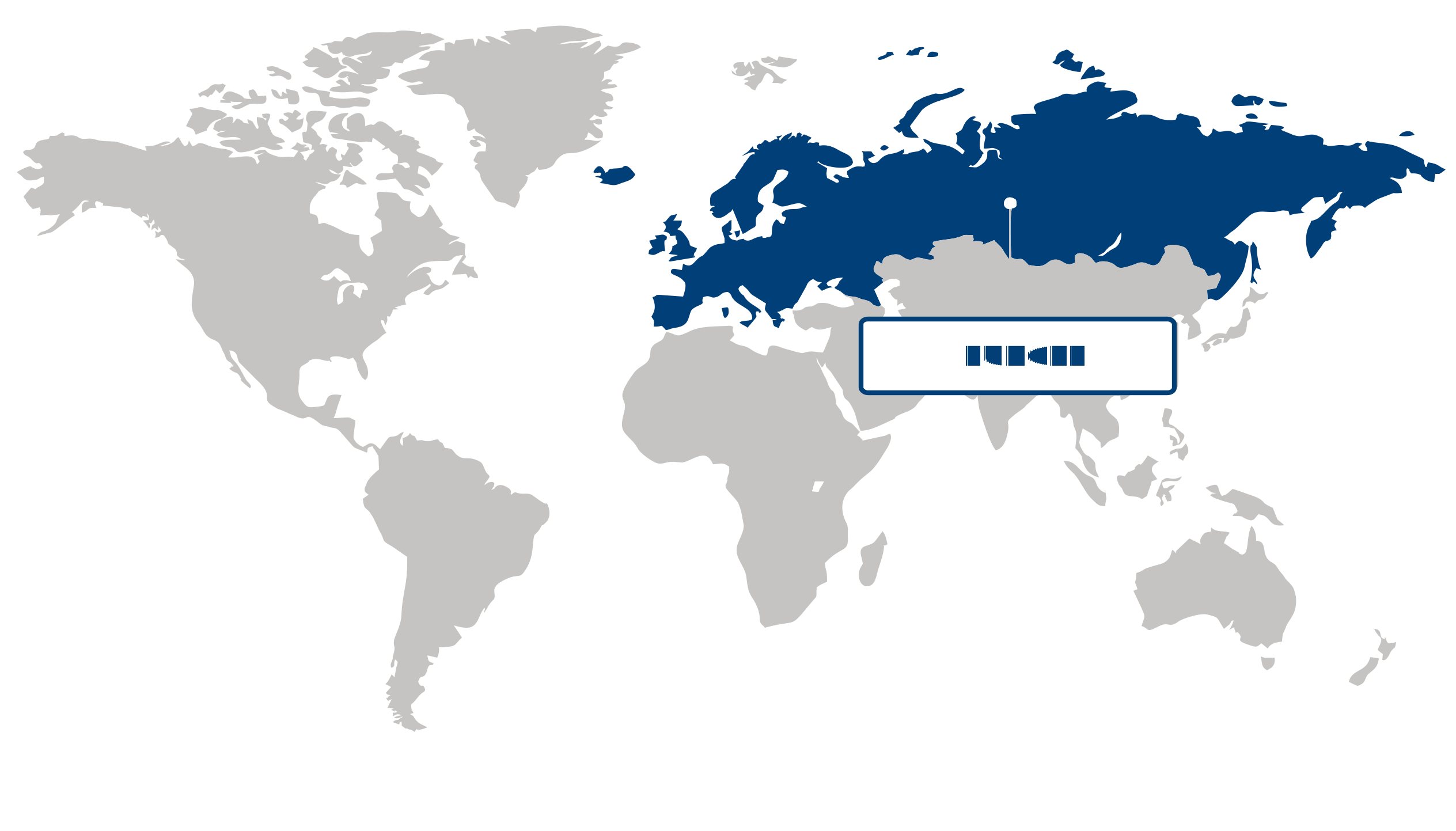
Europe dominated the magnetic refrigeration market with a commanding 40.8% share in 2025, driven primarily by stringent F-gas phase-down regulations compelling the shift away from hydrofluorocarbon (HFC) systems. This regulatory environment, spearheaded by the European Commission’s efforts, fosters widespread adoption of eco-friendly cooling technologies. Heightened sustainability commitments by governments and enterprises, coupled with increasing consumer awareness around climate impact, further bolster demand for magnetic refrigeration solutions. Leading industry players like Bosch and Siemens are investing heavily in innovation to comply with regulatory standards while enhancing operational efficiencies. Additionally, Europe's resilient supply chains and advanced R&D infrastructure support rapid technology deployment. These factors position Europe as both a dominant and promising market hub, poised to capitalize on regulatory momentum and growing environmental priorities.
Germany anchors Europe’s magnetic refrigeration market, driven by robust industrial policies promoting green innovation and energy efficiency. German firms benefit from strong governmental incentives and EU funding focused on sustainable technologies, exemplified by collaborations between Fraunhofer Institute and local manufacturers on magnetic cooling prototypes. Consumer demand for lower-carbon appliances, aligned with strict national regulations such as the German F-gas Ordinance, accelerates adoption. France similarly plays a pivotal role, propelled by aggressive regulatory frameworks and a national agenda to phase out fluorinated greenhouse gases. Companies like Air Liquide are piloting magnetic refrigeration systems aligned with these goals. These country-specific dynamics reinforce Europe’s leadership and highlight strategic opportunities for expansion and innovation within the regional magnetic refrigeration market.
North America Market Analysis:
North America emerged as the fastest-growing region in the magnetic refrigeration market, registering a remarkable CAGR of 133.2%. This rapid expansion is primarily driven by strong government incentives targeting sustainable cooling solutions within industrial sectors. Policies from entities such as the U.S. Environmental Protection Agency’s ENERGY STAR Program and the Department of Energy’s Advanced Manufacturing Office have significantly accelerated adoption by promoting energy-efficient refrigeration alternatives. Additionally, rising corporate commitments to decarbonization and operational cost reductions reinforce demand for magnetic refrigeration technologies across key industrial verticals, including food processing and chemical manufacturing. The region’s advanced infrastructure and innovation ecosystem further enable efficient deployment and scaling of these systems. With North America’s ongoing focus on sustainability and technological modernization, it offers substantial opportunities for investors and stakeholders aiming to capitalize on a swiftly evolving magnetic refrigeration market.
The U.S. leads North America’s magnetic refrigeration market, where government incentives have played a critical role in shaping buyer behavior and accelerating industrial adoption. Programs such as the U.S. Department of Energy’s Refrigeration Toolkit highlight the country’s commitment to expanding energy-efficient cooling solutions, aligning regulatory frameworks with corporate sustainability goals. Consumer preference for eco-friendly technologies, combined with industrial players seeking to mitigate environmental impact amidst tightening emission standards, has enhanced demand for magnetic refrigeration alternatives. Corporate announcements from major manufacturers like General Electric emphasize innovation in magnetic cooling, underscoring the U.S. as a strategic hub for research and pilot projects. This strong governmental and industrial alignment positions the U.S. to sustain its leadership in North America’s magnetic refrigeration market, driving further growth and innovation regionally.
Asia Pacific Market Trends:
The Asia Pacific region has maintained a notable presence in the magnetic refrigeration market, driven by its dynamic industrial landscape and rising environmental awareness. Increasing emphasis on energy-efficient cooling solutions among both manufacturers and end-users is fostering demand, supported by government incentives targeting sustainability goals, particularly in economies striving to reduce carbon footprints. For instance, the Japan Refrigeration and Air Conditioning Industry Association underlines ongoing collaborations to integrate advanced magnetic refrigeration technologies into commercial applications, emphasizing reduced greenhouse emissions. Moreover, Asia Pacific’s robust manufacturing hubs benefit from streamlined supply chains and a growing skilled workforce, enabling accelerated deployment of innovative refrigeration systems. This combination of regulatory support and technological advancement positions the region as a fertile ground for scaling magnetic refrigeration solutions, promising continued momentum as businesses pivot toward greener alternatives in line with evolving consumer and policy expectations.
Japan plays a critical role in the Asia Pacific magnetic refrigeration market, propelled by a strong culture of innovation and proactive environmental policies. Japanese firms such as Toshiba and Hitachi have publicly committed to developing magnetic refrigeration technologies that enhance energy efficiency while complying with stringent governmental standards on refrigerants, as noted in their respective corporate sustainability reports. Japan’s consumers also exhibit a growing preference for environmentally responsible products, fostering a favorable adoption climate. The country’s focus on reducing industrial emissions and optimizing energy usage within its advanced manufacturing sector amplifies opportunities for magnetic refrigeration as a cleaner alternative. Strategically, Japan’s leadership in research and its regulatory framework bolster the Asia Pacific market’s capacity to drive widespread adoption and continuous technological refinement.
China holds a pivotal position in the Asia Pacific magnetic refrigeration market, underpinned by massive industrial demand and increasing governmental regulations encouraging sustainable technologies. The China National Institute of Standardization recently highlighted initiatives aimed at phasing down hydrofluorocarbon refrigerants and incentivizing the use of eco-friendly cooling systems, directly benefiting magnetic refrigeration adoption. China’s extensive production infrastructure and investments in R&D facilitate rapid scaling, while a growing middle class fuels demand for energy-saving appliances that align with urban sustainability goals. Companies such as Midea have announced pilot projects integrating magnetic refrigeration to capitalize on this trend, demonstrating practical implementation progress. With China’s significant market size and policy-driven momentum, it remains a cornerstone for regional growth and innovation in magnetic refrigeration technologies, critical to meeting Asia Pacific’s broader energy and environmental objectives.
| Parameter | North America | Asia Pacific | Europe | Latin America | MEA |
|---|---|---|---|---|---|
| Innovation Hub i Scale Nascent Developing Advanced | |||||
| Cost-Sensitive Region i Scale Low Medium High | |||||
| Regulatory Environment i Scale Restrictive Neutral Supportive | |||||
| Demand Drivers i Scale Weak Moderate Strong | |||||
| Development Stage i Scale Emerging Developing Developed | |||||
| Adoption Rate i Scale Low Medium High | |||||
| New Entrants / Startups i Scale Sparse Moderate Dense | |||||
| Macro Indicators i Scale Weak Stable Strong |
Segment Leadership and Growth Trends
Magnetic Refrigeration Market Share (%), by Product, 2026
Go beyond the chart, access full insights & data tables
Request Free Sample ReportRefrigeration systems held the largest share in the magnetic refrigeration market in 2025, driven by the increasing demand for energy-efficient and eco-friendly cooling solutions. This segment's leadership is supported by growing regulatory focus on reducing greenhouse gas emissions from conventional refrigerants, prompting manufacturers to adopt magnetocaloric technology. Industry leaders such as Alfa Laval emphasize sustainability through advanced refrigeration systems, highlighting consumer preference for greener alternatives. Supply chain enhancements facilitating rare earth magnet availability also underpin segment growth. These dynamics create strategic openings for both established refrigeration firms and emerging technology developers to innovate and capture market share. Given the sustained regulatory momentum and corporate commitments toward carbon neutrality, refrigeration systems are poised to remain a cornerstone segment in magnetic refrigeration’s near to medium-term evolution.
Analysis by Application
The commercial segment represented the largest share of the magnetic refrigeration market in 2025, primarily fueled by widespread adoption in retail and food service cold-chain applications. The efficient temperature control and reduced environmental impact align well with commercial operators’ priorities for operational cost savings and sustainability credentials. Global retailers like Walmart and Carrefour have publicly underscored environmental targets that encourage deployment of eco-friendly refrigeration technologies, supporting commercial market leadership. Competitive pressures and digital integration in supply chains further accelerate uptake in this segment. This environment benefits incumbent providers and startups focusing on scalable, compliant solutions tailored to commercial settings. With ongoing expansion of cold-chain infrastructure and intensified regulations on refrigerants, the commercial application segment is expected to maintain its pivotal role in magnetic refrigeration market developments.
| Segment | Sub-Segment | Largest Segment | Fastest Growing |
|---|---|---|---|
| Product | Air Conditioning Systems, Heat Pumps, Refrigeration Systems | ||
| Application | Commercial, Domestic, Industrial, Transportation |
Competitive Landscape and Market Positioning
The competitive environment is shaped by dynamic collaborations and intensified innovation among the leading players. Many are aligning with research institutions to accelerate breakthroughs in magnetic materials and cooling cycle efficiency. Strategic integrations and cross-border partnerships have enhanced product capabilities and expanded technological frontiers. Market leaders continuously refine their offerings through iterative advancements, focusing on eco-friendliness and regulatory alignment, which strengthens their appeal in stringent policy environments. This iterative development reinforces their competitive positioning, enabling them to simultaneously address industrial, commercial, and domestic refrigeration needs with evolving magnetic refrigeration technologies.
Strategic / Actionable Recommendations for Regional Players
North American entities should seek synergistic partnerships with technology innovators and academia to harness cutting-edge magnetic materials and streamline regulatory compliance. Focusing on high-performance, sustainable systems tailored for industrial clients could unlock premium market segments.
In Asia Pacific, players would benefit from intensifying investments in scalable production techniques and leveraging expansive manufacturing networks. Collaborating with regional technology hubs to accelerate prototype testing and customization could enhance market responsiveness and innovation velocity.
European firms are well-positioned to capitalize on strong environmental policies by integrating next-generation, low-impact refrigerants and advanced smart controls. Deepening engagements with policy think tanks and green certification bodies may further solidify market leadership through credible sustainability credentials.
| Company | Market Share | Company Revenue | Revenue CAGR (%) | Product Portfolio | Geographic Presence | Innovation / R&D Focus | Strategic Developments |
|---|---|---|---|---|---|---|---|
| No companies available. | |||||||
Industry Development/News
| Company Name | Date | Key Development |
|---|
Customize Your Report
Explore examples of how this report can be tailored to different research needs, including custom segments, additional topics or chapters, and related reports. Click a section of the wheel or its numbered marker to explore the available options.
Magnetic Refrigeration Market — Custom Segments
| Segment | Sub-Segment |
|---|---|
| No segment data available. | |
Magnetic Refrigeration Market — Custom TOC
| Custom Chapter | Custom Details | ||
|---|---|---|---|
| No custom TOC data available. | |||
Need a different cut of the data?
Request Custom ResearchHow much is the magnetic refrigeration industry expected to grow by 2035?
In which region is the magnetic refrigeration market share the greatest?
Which region is experiencing the fastest growth in the magnetic refrigeration sector?
Why does refrigeration systems sub-segment dominate the product segment of magnetic refrigeration sector?
How much is the commercial segment expected to grow in the magnetic refrigeration industry beyond 2025?
Who are the leading players in the magnetic refrigeration landscape?
Our Clients
"The information presented in the report was genuinely insightful. The data was clear and easy to understand, which made it much easier to interpret the findings."
Amara Raja Group
"The responsiveness and professionalism exhibited by the team were exemplary. They were readily available to address queries, provide clarifications, and offer additional insights."
ONGC
"The reports offered a comprehensive analysis of various segments within the market. The detailed insights into market trends, and regulatory landscapes were excellent."
TotalEnergies
Our Research Team & Methodology
Every Fundamental Business Insights report is built by a dedicated vertical research team, validated through a structured primary-and-secondary methodology, and reviewed for accuracy before it reaches you.
Research Team Overview
Prepared by the Energy & Power Research Team
Delivery
Published
Demand
Available
Support
Trust & Compliance
Research Domains
10 coverage areasResearch Intelligence
| Source | Reference |
|---|---|
| International Energy Agency (IEA) | www.iea.org |
| U.S. Energy Information Administration (EIA) | www.eia.gov |
| International Renewable Energy Agency (IRENA) | www.irena.org |
| International Electrotechnical Commission (IEC) | www.iec.ch |
| International Organization for Standardization (ISO) | www.iso.org |
| IEEE | www.ieee.org |
| CIGRE (International Council on Large Electric Systems) | www.cigre.org |
| World Energy Council (WEC) | www.worldenergy.org |
| U.S. Department of Energy (DOE) | www.energy.gov |
| International Atomic Energy Agency (IAEA) | www.iaea.org |
| American Petroleum Institute (API) | www.api.org |
| Society of Petroleum Engineers (SPE) | www.spe.org |
| Hydrogen Council | hydrogencouncil.com |
| Battery Council International (BCI) | batterycouncil.org |
| Global Wind Energy Council (GWEC) | gwec.net |
| SolarPower Europe | www.solarpowereurope.org |
| World Bioenergy Association (WBA) | worldbioenergy.org |
| International Hydropower Association (IHA) | www.hydropower.org |
| Edison Electric Institute (EEI) | www.eei.org |
| National Renewable Energy Laboratory (NREL) | www.nrel.gov |
Research Workflow & Quality Assurance
Data Collection
Verified information gathered through primary and secondary research.
Data Triangulation
Cross-validation using multiple independent data sources.
Forecast Modelling
Market estimates developed using historical trends and analytical models.
Analyst Validation
Findings reviewed by domain experts for accuracy and consistency.
Editorial & Quality Review
Final editorial, quality, and compliance checks before publication.
Final Publication
Released after successful completion of the internal review process.
Report Coverage
📊 Market Assessment
- Market Size & Forecast
- Market Segmentation
- Regional Analysis
- Growth Drivers & Challenges
- Market Dynamics
🏢 Competitive Intelligence
- Competitive Landscape
- Company Profiles
- Competitive Benchmarking
- Mergers & Acquisitions
- Market Share Analysis or Key Company Strategies
🔍 Strategic Analysis
- Value Chain Analysis
- Porter's Five Forces
- PESTLE Analysis
- Pricing Trends
- Supply-Demand Analysis
🚀 Future Outlook
- Technology Landscape
- Regulatory Landscape
- Investment & Funding Landscape
- Emerging Opportunities
- Future Market Outlook
Have a question about this report or need a custom scope?
Request Customization