Luxury Car Market Size & Growth Forecast 2027–2036, By Segments (Vehicle Type, Propulsion Type), Regional Demand Trends (North America, Asia Pacific, Europe), Key Country Insights (U.S., Japan, South Korea, Germany, France, Italy), and Competitive Landscape
Market Size and Growth Outlook
Luxury Car Market size stood at USD 791.7 billion in 2026 and is predicted to grow at a 5.13% CAGR from 2027 to 2036, crossing USD 1.31 trillion by 2036. The industry revenue for 2027 is calculated at USD 825.9 billion.
Get more details on this report
Request Free Sample ReportLuxury Car Market Intelligence Snapshot
Regional Market Dynamics
- Asia Pacific leads due to its large affluent consumer base, strong premium vehicle demand, broad brand presence, and continued investment in dealership expansion and localized luxury offerings.
- North America is expected to grow at a 7.91% CAGR, supported by rising demand for premium SUVs, technology-rich models, personalized features, and expanded financing options.
Segment Momentum
- Sports Utility held a 60.9% market share in 2026 because buyers value premium comfort, spacious interiors, elevated driving position, and versatility that meets family, lifestyle, and executive needs in one vehicle.
- Electric is the fastest-growing propulsion type as luxury buyers increasingly seek advanced technology, digital integration, and lower-emission mobility, while premium manufacturers expand their electric model portfolios.
Market Expansion Drivers
- Rising disposable incomes in emerging economies increasing demand for premium and prestige vehicles.
- Integration of AI-powered infotainment and connected vehicle technologies enhancing luxury ownership experiences.
- Expansion of leasing and subscription ownership models broadening access to luxury mobility solutions.
Leading Market Participants
- Prominent players in the luxury car market include Mercedes-Benz Group AG (Germany), Bayerische Motoren Werke AG (Germany), Tesla, Inc. (United States), Aston Martin Lagonda Global Holdings plc (United Kingdom), Volvo Car AB (Sweden), Ferrari N.V. (Italy), Porsche AG (Germany), Tata Motors Limited [Jaguar Land Rover] (India).
Global Market Forecast Snapshot
Market Outlook
- 2026 Market Size: USD 791.7 billion
- 2027 Estimated Market Size: USD 825.9 billion.
- Projected Market Size: USD 1.31 trillion by 2036
- Growth Forecast: 5.13% CAGR (2027-2036)
Regional and Segment Outlook
- Leading Regional Market: Asia Pacific
- High-Growth Regional Hub: North America
- Core Revenue Segment: Sports Utility (Vehicle Type) | Internal Combustion Engine (ICE) (Propulsion Type)
- Emerging Opportunity Segment: Hatchback (Vehicle Type) | Electric (Propulsion Type)
Market Growth Drivers and Industry Trends
Rising disposable incomes in emerging economies increasing demand for premium and prestige vehicles
Higher disposable incomes across emerging economies are enabling more consumers to allocate spending toward premium mobility, which will drive the luxury car market growth by expanding the pool of buyers seeking prestige vehicles and enhanced ownership experiences. As purchasing capacity improves, demand is increasingly shifting toward higher-value automotive products that combine status, comfort, and premium positioning.
Integration of AI-powered infotainment and connected vehicle technologies enhancing luxury ownership experiences
The luxury car market growth is being propelled by greater integration of AI-powered infotainment and connected vehicle technologies, as buyers increasingly value intelligent, personalized, and digitally enhanced experiences alongside traditional vehicle attributes. These technologies strengthen the premium proposition by making vehicles more responsive to user preferences and adding greater sophistication to the overall ownership experience.
Expansion of leasing and subscription ownership models broadening access to luxury mobility solutions
Leasing and subscription models are broadening access to premium vehicles, thereby supporting luxury car market growth by reducing the need for consumers to commit to conventional ownership structures. Greater availability of flexible mobility arrangements can attract customers who prefer convenient access to luxury vehicles while making premium transportation solutions more attainable.
| Growth Driver | Impact on CAGR | Regulatory Influence | Geographic Relevance | Adoption Rate | Impact Timeline |
|---|---|---|---|---|---|
| Demand for Luxury Cars in Emerging & Developed Markets | 3.00% | Short term (≤ 2 yrs) | North America, Europe (spillover: Asia Pacific) | Medium | Fast |
| Technological Innovation & EV Integration in Luxury Vehicles | 2.00% | Medium term (2–5 yrs) | Europe, North America (spillover: Asia Pacific) | Low | Moderate |
| Regulatory & Emission Compliance | 2.00% | Long term (5+ yrs) | North America, Europe (spillover: MEA) | High | Moderate |
| Rising disposable incomes in emerging economies increasing demand for premium and prestige vehicles | 2.00% | Moderate | Asia Pacific, Europe | High | Near Term |
| Integration of AI-powered infotainment and connected vehicle technologies enhancing luxury ownership experiences | 1.90% | Moderate | North America, Europe | High | Mid Term |
| Expansion of leasing and subscription ownership models broadening access to luxury mobility solutions | 1.50% | Low | Asia Pacific, North America | Medium | Mid Term |
Unlock insights tailored to your business with our bespoke market research solutions.
Click to get your customized report now.
Regional Demand Dynamics
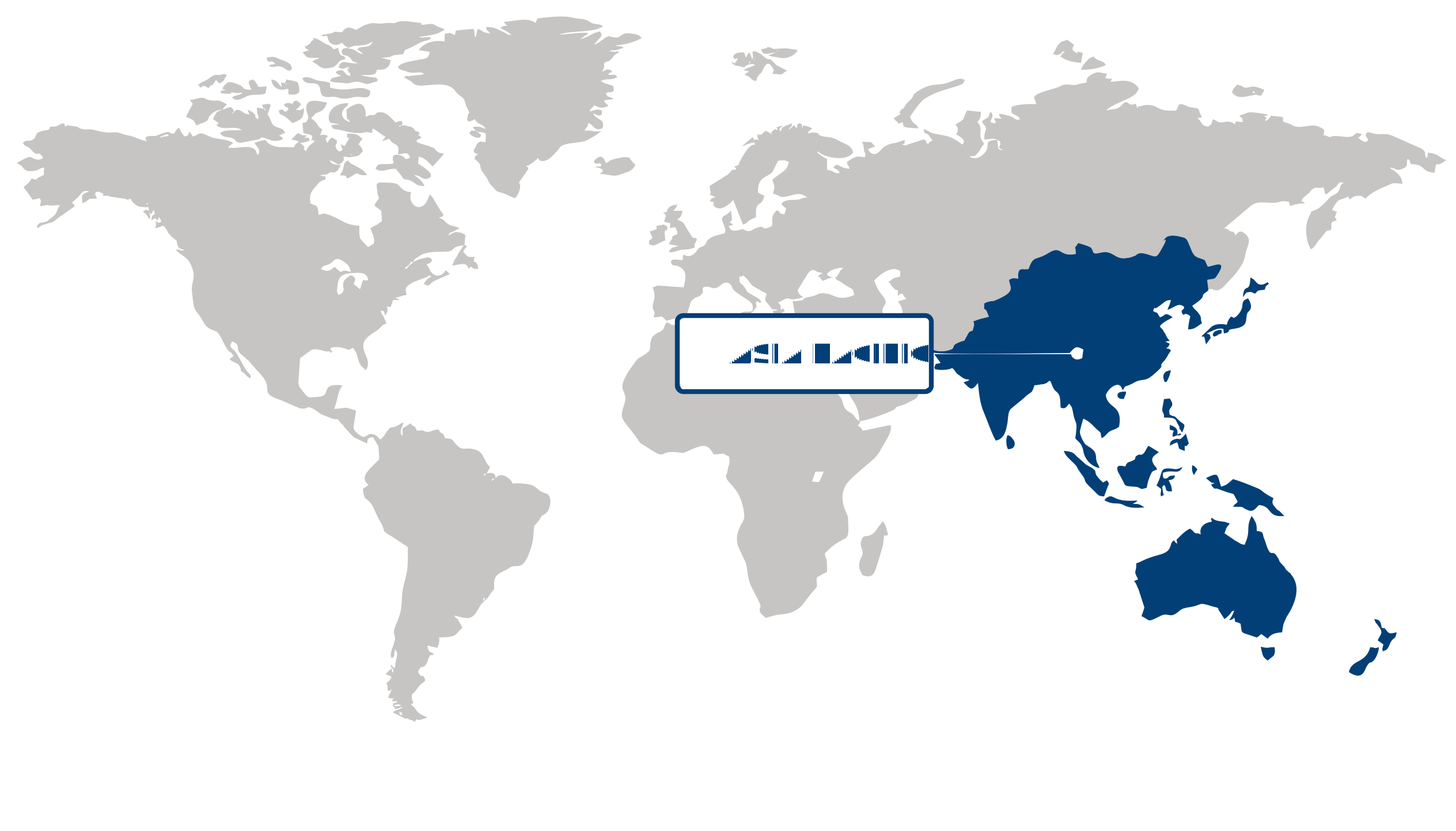
Asia Pacific (Largest Region)
Holding the largest share of the luxury car market in 2026, Asia Pacific benefits from expanding affluent consumer segments, rising premium vehicle ownership, and strong demand for technologically advanced automobiles. Rapid urban development and the concentration of wealth in major metropolitan areas are supporting demand for high-end vehicles, while consumers increasingly value advanced connectivity, sophisticated interiors, electrified powertrains, and personalized driving experiences. The region's growing premium automotive ecosystem and expanding availability of luxury vehicle financing are also facilitating purchases. In addition, increasing interest in premium electric vehicles is encouraging manufacturers to introduce technologically differentiated models suited to evolving consumer preferences.
North America (Fastest-Growing Region)
North America represents the fastest-growing regional market, supported by strong purchasing power, established premium automotive demand, and increasing consumer interest in advanced and electrified luxury vehicles. Buyers in the region are placing greater emphasis on vehicle technology, performance, comfort, connectivity, and distinctive design, encouraging continued innovation across the premium segment. The expansion of charging infrastructure and broader acceptance of electric mobility are also creating opportunities for luxury brands to strengthen their electrified portfolios. A mature automotive retail and service ecosystem further supports customer access, ownership convenience, and replacement demand.
| Parameter | North America | Asia Pacific | Europe | Latin America | MEA |
|---|---|---|---|---|---|
| Innovation Hub i Scale Nascent Developing Advanced | |||||
| Cost-Sensitive Region i Scale Low Medium High | |||||
| Regulatory Environment i Scale Restrictive Neutral Supportive | |||||
| Demand Drivers i Scale Weak Moderate Strong | |||||
| Development Stage i Scale Emerging Developing Developed | |||||
| Adoption Rate i Scale Low Medium High | |||||
| New Entrants / Startups i Scale Sparse Moderate Dense | |||||
| Macro Indicators i Scale Weak Stable Strong |
Key Country Insights
Germany 🇩🇪
Engineering Excellence FocusGermany prioritizes premium vehicle engineering, performance innovation, and advanced manufacturing capabilities. Luxury car manufacturers in Germany continue investing in electrification, software integration, and sustainable production technologies to strengthen premium product offerings.
France 🇫🇷
Design-Oriented Premium SegmentFrance emphasizes distinctive design, premium craftsmanship, and electrified mobility in the luxury car market. Manufacturers serving France continue developing sophisticated vehicle portfolios that combine luxury aesthetics with advanced technology and sustainability priorities.
Italy 🇮🇹
Performance Luxury HeritageItaly combines premium craftsmanship with performance-focused vehicle development across the luxury car market. Automotive brands in Italy continue refining exclusive vehicle designs, electrification strategies, and personalized customer experiences to reinforce premium market appeal.
Japan 🇯🇵
Precision Luxury MobilityJapan focuses on refined vehicle quality, hybrid technologies, and advanced safety systems within the luxury car segment. Automakers in Japan continue enhancing premium driving experiences through innovation in comfort, reliability, and intelligent mobility solutions.
South Korea 🇰🇷
Technology-Driven Premium VehiclesSouth Korea is expanding luxury vehicle offerings with advanced digital features and electrified models. Automotive manufacturers in South Korea continue integrating connected technologies, premium interiors, and intelligent driver assistance systems to strengthen customer value.
United States 🇺🇸
Premium Mobility DemandThe U.S. luxury car market emphasizes advanced connectivity, electrified powertrains, and personalized ownership experiences. Automakers in the U.S. continue expanding premium vehicle portfolios while strengthening digital retail capabilities and aftersales services for high-value customers.
Segment Leadership and Growth Trends
Luxury Car Market Share (%), by Vehicle Type, 2026
Go beyond the chart, access full insights & data tables
Request Free Sample ReportVehicle Type Segment Analysis: Sports Utility (Largest Segment) vs Hatchback (Fastest-Growing Segment)
The sports utility segment dominated the luxury car market in 2026, accounting for 60.9%, driven by strong consumer preference for vehicles that combine premium comfort, distinctive styling, elevated driving position, and practical interior space. Luxury SUVs appeal to consumers seeking versatility without compromising high-end design, advanced technology, or refined performance. Their suitability for both urban driving and longer-distance travel further broadens their appeal among premium vehicle buyers. Increasing integration of sophisticated infotainment, driver assistance, connectivity, and comfort features is reinforcing the attractiveness of luxury sports utility vehicles as manufacturers respond to evolving expectations for technology-rich premium mobility.
The hatchback segment is expected to register the fastest growth as premium vehicle consumers increasingly seek compact formats that provide luxury features while remaining practical for urban environments. Hatchbacks offer advantages in maneuverability, parking convenience, and efficient use of interior space, making them attractive in cities where congestion and limited parking influence vehicle selection. The integration of premium interiors, advanced connectivity, driver-assistance technologies, and refined powertrains is helping elevate the appeal of luxury hatchbacks. Growing demand for compact premium mobility solutions is therefore creating additional opportunities for this vehicle category.
Propulsion Type Segment Analysis: Internal Combustion Engine (ICE) (Largest Segment) vs Electric (Fastest-Growing Segment)
Internal combustion engine (ICE) vehicles represented the largest propulsion category in the luxury car market in 2026, reflecting their established presence across premium automotive portfolios and continued consumer familiarity with conventional powertrains. Luxury ICE vehicles benefit from mature performance technologies, established fueling infrastructure, and a broad range of engine configurations that can deliver the acceleration, refinement, and driving characteristics expected in the premium segment. Continued demand for high-performance and long-distance luxury vehicles is supporting the segment, while manufacturers continue to improve engine efficiency and emissions performance.
Electric vehicles are projected to experience the fastest growth as luxury consumers increasingly seek advanced mobility technologies combined with premium performance and sustainability attributes. Electric powertrains offer rapid acceleration, quiet operation, and opportunities for sophisticated digital vehicle architectures, aligning closely with the technology-oriented expectations of premium buyers. Increasing investment in charging infrastructure, battery technology, vehicle connectivity, and electric powertrain development is strengthening consumer confidence in premium electric vehicles. The growing emphasis on lower-emission transportation is further encouraging luxury automakers and consumers to transition toward electric propulsion.
| Segment | Sub-Segment | Largest Segment | Fastest Growing |
|---|---|---|---|
| Vehicle Type | Hatchback, Sedan, Sports Utility | Sports Utility | Hatchback |
| Propulsion Type | Internal Combustion Engine (ICE), Electric | Internal Combustion Engine (ICE) | Electric |
Competitive Landscape and Market Positioning
Leading companies in the luxury car market:
1. Mercedes-Benz Group AG (Germany)
2. Bayerische Motoren Werke AG (Germany)
3. Tesla Inc. (United States)
4. Aston Martin Lagonda Global Holdings plc (United Kingdom)
5. Volvo Car AB (Sweden)
6. Ferrari N.V. (Italy)
7. Porsche AG (Germany)
8. Tata Motors Limited [Jaguar Land Rover] (India)
The luxury car market is undergoing transformation driven by electrification and advanced mobility features. In the luxury car market, innovation is increasingly centered around performance efficiency and intelligent driving systems. New design philosophies are emphasizing sustainability alongside premium user experience. Continuous advancement in vehicle connectivity is reshaping customer expectations around personalization and comfort.
| Company | Market Share | Company Revenue | Revenue CAGR (%) | Product Portfolio | Geographic Presence | Innovation / R&D Focus | Strategic Developments |
|---|---|---|---|---|---|---|---|
| Mercedes-Benz Group AG (Germany) | |||||||
| Bayerische Motoren Werke AG (Germany) | |||||||
| Tesla Inc. (United States) | |||||||
| Aston Martin Lagonda Global Holdings plc (United Kingdom) | |||||||
| Volvo Car AB (Sweden) | |||||||
| Ferrari N.V. (Italy) | |||||||
| Porsche AG (Germany) | |||||||
| Tata Motors Limited [Jaguar Land Rover] (India). |
Industry Development/News
| Company Name | Date | Key Development |
|---|---|---|
| Huawei | May-26 | Huawei has entered the ultra-luxury automotive segment with the launch of the Maextro S800, developed in collaboration with JAC. Positioned to compete against established ultra-premium marques, the high-performance electric sedan integrates advanced proprietary technology. Significant early pre-order volume signals strong market reception and indicates a potential shift in the competitive landscape for high-end electric vehicle manufacturing. |
| Finish Line Auto Club | May-26 | Finish Line Auto Club is expanding its footprint in the high-end automotive hospitality sector through the acquisition of land in Scottsdale. The firm plans to develop a premium luxury vehicle storage and country club facility, targeting a 2028 operational date. This infrastructure investment enhances service capacity for affluent collectors and strengthens the company’s position in the luxury lifestyle market. |
| Beverly Hills Rent-A-Car | May-26 | Beverly Hills Rent-A-Car has executed an international expansion strategy through a strategic partnership with Switzerland-based Exotic Rent-a-Car. This alliance facilitates cross-market availability of premium and exotic vehicles between North America and Europe. The collaboration scales the company’s high-end rental network and enhances its service capability for international clients requiring luxury mobility solutions. |
| VinFast | Mar-26 | VinFast has launched the Lac Hong brand as a dedicated ultra-luxury automotive line. This strategic pivot moves the company from its mass-market electric vehicle focus into the high-end premium category. The initiative involves new model introductions specifically designed to elevate brand positioning through enhanced performance, design, and interior specifications tailored to the ultra-luxury consumer segment. |
| Porsche | Mar-26 | Porsche, in partnership with Audi, is undertaking a significant consolidation of its regional dealership infrastructure in the Sewickley area. The companies are relocating operations to a new, modern facility in Warrendale, scheduled for completion in 2027. This development is designed to optimize premium vehicle distribution and elevate the retail experience, reflecting a strategic investment in long-term regional market presence. |
| Audi | May-25 | Audi has announced the development of the RS5 Avant, a plug-in hybrid model featuring a high-performance V6 engine capable of producing approximately 600 horsepower. This strategic product development integrates electrification into the brand’s performance portfolio, specifically targeting the high-end consumer segment that demands both competitive powertrain output and increased efficiency within the luxury vehicle category. |
| Mercedes-Benz | Mar-25 | Mercedes-Benz has introduced its third-generation CLA, featuring a dedicated electric variant with a 792 km range. This launch represents a strategic technological advancement in the manufacturer's luxury electric vehicle portfolio. By providing extended range capabilities, the company aims to enhance its competitive positioning and capture market share among premium consumers transitioning to fully electrified luxury platforms. |
Customize Your Report
Explore examples of how this report can be tailored to different research needs, including custom segments, additional topics or chapters, and related reports. Click a section of the wheel or its numbered marker to explore the available options.
Luxury Car Market — Custom Segments
| Segment | Sub-Segment |
|---|---|
| Price Segment | Entry Luxury, Mid-Luxury, Premium Luxury, Ultra-Luxury |
| Sales Channel | Authorized Dealerships, Manufacturer Direct Sales, Online Sales, Luxury Automotive Retailers |
| Ownership Model | Private Ownership, Corporate Ownership, Fleet Ownership, Subscription & Long-Term Leasing |
Luxury Car Market — Custom TOC
| Custom Chapter | Custom Details |
|---|---|
| Electric Luxury Vehicle Transition Strategy |
|
| Emerging Wealth Market Opportunity Assessment |
|
| Premium Ownership Experience Benchmarking |
|
Need a different cut of the data?
Request Custom ResearchHow much revenue does the luxury car market generate?
How much is the luxury car industry expected to grow by 2036?
How are rising disposable incomes in emerging economies shaping demand for luxury vehicles?
How are connected technologies and subscription models changing luxury vehicle ownership behavior?
Why do Sports Utility vehicles lead the luxury car market?
Why is the Electric propulsion segment growing fastest in the luxury car market?
Why does Asia Pacific lead the luxury car market?
What is driving luxury car market growth in North America?
What are the prominent companies operating in the luxury car landscape?
Our Clients
"The team surpassed our expectations with the report depth. The actionable insights provided proved crucial in navigating market challenges."
Tata Motors
"We found the report to be very informative. The expertise and attention to market nuances significantly influenced our business direction."
DENSO Corporation
"The consumer survey findings were quite good. We now have a clearer picture of the customer churning and retention strategy."
HL Mando
Our Research Team & Methodology
Every Fundamental Business Insights report is built by a dedicated vertical research team, validated through a structured primary-and-secondary methodology, and reviewed for accuracy before it reaches you.
Research Team Overview
Prepared by the Automotive & Transportation Research Team
Delivery
Published
Demand
Available
Support
Trust & Compliance
Research Domains
10 coverage areasResearch Intelligence
| Source | Reference |
|---|---|
| International Organization of Motor Vehicle Manufacturers (OICA) | www.oica.net |
| SAE International | www.sae.org |
| International Energy Agency (IEA) | www.iea.org |
| International Transport Forum (ITF) | www.itf-oecd.org |
| International Road Federation (IRF) | www.irf.global |
| International Organization for Standardization (ISO) | www.iso.org |
| United Nations Economic Commission for Europe (UNECE) | unece.org |
| National Highway Traffic Safety Administration (NHTSA) | www.nhtsa.gov |
| U.S. Department of Transportation (USDOT) | www.transportation.gov |
| European Automobile Manufacturers' Association (ACEA) | www.acea.auto |
| Society of Indian Automobile Manufacturers (SIAM) | www.siam.in |
| International Air Transport Association (IATA) | www.iata.org |
| International Civil Aviation Organization (ICAO) | www.icao.int |
| International Maritime Organization (IMO) | www.imo.org |
| International Union of Railways (UIC) | uic.org |
| American Public Transportation Association (APTA) | www.apta.com |
| International Federation of Robotics (IFR) | ifr.org |
| CharIN | www.charin.global |
| World Shipping Council | www.worldshipping.org |
| International Federation of Freight Forwarders Associations (FIATA) | fiata.org |
Research Workflow & Quality Assurance
Data Collection
Verified information gathered through primary and secondary research.
Data Triangulation
Cross-validation using multiple independent data sources.
Forecast Modelling
Market estimates developed using historical trends and analytical models.
Analyst Validation
Findings reviewed by domain experts for accuracy and consistency.
Editorial & Quality Review
Final editorial, quality, and compliance checks before publication.
Final Publication
Released after successful completion of the internal review process.
Report Coverage
📊 Market Assessment
- Market Size & Forecast
- Market Segmentation
- Regional Analysis
- Growth Drivers & Challenges
- Market Dynamics
🏢 Competitive Intelligence
- Competitive Landscape
- Company Profiles
- Competitive Benchmarking
- Mergers & Acquisitions
- Market Share Analysis or Key Company Strategies
🔍 Strategic Analysis
- Value Chain Analysis
- Porter's Five Forces
- PESTLE Analysis
- Pricing Trends
- Supply-Demand Analysis
🚀 Future Outlook
- Technology Landscape
- Regulatory Landscape
- Investment & Funding Landscape
- Emerging Opportunities
- Future Market Outlook
Have a question about this report or need a custom scope?
Request Customization