LNG bunkering Market Size & Forecasts 2026-2035, By Segments (Vessel, Product Type), Growth Opportunities, Innovation Landscape, Regulatory Shifts, Strategic Regional Insights (U.S., Japan, China, South Korea, UK, Germany, France), and Competitive Dynamics (Shell, TotalEnergies, ExxonMobil, ENGIE, Mitsubishi)
Market Size and Growth Outlook
LNG bunkering Market size is predicted to expand from USD 1.33 billion in 2025 to USD 12.79 billion by 2035, with growth underpinned by a CAGR above 25.4% between 2026 and 2035. The industry revenue outlook for 2026 is USD 1.63 billion.
Get more details on this report
Request Free Sample ReportLNG bunkering Market Intelligence Snapshot
Regional Market Dynamics
Segment Momentum
Market Expansion Drivers
Leading Market Participants
Global Market Forecast Snapshot
Market Outlook
Regional and Segment Outlook
Market Growth Drivers and Industry Trends
The expansion of LNG bunkering infrastructure is a pivotal growth driver in the LNG bunkering market, as expanding port facilities and LNG supply chains enhance fuel accessibility and operational efficiency. For example, the Port of Rotterdam Authority has significantly invested in LNG bunkering terminals to support larger fleets adopting LNG propulsion, responding to rising demand from shipping lines driven by environmental compliance and cost considerations. This infrastructure growth lowers entry barriers for shipping companies transitioning to LNG fuel, while established bunkering firms can diversify service offerings and scale operations geographically. As global trade routes increasingly integrate ports with LNG capabilities, the LNG bunkering market will benefit from improved logistics and reliability, fostering wider adoption among maritime operators prioritizing cleaner fuel alternatives.
Government Incentives & Emission Regulations
Stringent emission regulations and targeted government incentives markedly influence the LNG bunkering market’s trajectory by accelerating the shift to low-emission marine fuels. The International Maritime Organization’s (IMO) sulfur cap and the European Union’s FuelEU Maritime initiative exemplify regulatory frameworks compelling shipowners to adopt LNG to reduce sulfur oxides and greenhouse gas emissions. Supportive policies, such as Denmark’s refund schemes for LNG-powered vessels, reduce upfront investment risks, encouraging early adoption. These measures elevate LNG’s attractiveness relative to conventional bunker fuels, compelling incumbents and new entrants to align business models with evolving carbon compliance requirements. The LNG bunkering market stands to capitalize on increasingly ambitious climate policies, which will drive demand for cleaner fuel infrastructure and foster innovation in sustainable marine fuel deployment.
Advanced LNG Fueling & Safety Technologies
Innovations in LNG fueling and safety technologies are transforming the LNG bunkering market by enhancing operational safety, efficiency, and scalability. Companies like Wärtsilä and Shell have introduced automated LNG transfer systems with advanced leak detection and remote monitoring capabilities, addressing longstanding concerns over bunkering hazards. These technological improvements increase customer confidence and reduce operational downtime, essential for maintaining tight shipping schedules. For new entrants, integrating cutting-edge safety solutions offers differentiation opportunities, while incumbents can leverage technology to streamline compliance and reduce insurance costs. The continuous evolution of LNG fueling technology underpins the LNG bunkering market’s robustness, supporting wider adoption in an industry that prioritizes safety and environmental stewardship amid escalating regulatory demands.
Industry Restraints:
Infrastructure and Capital Intensity Challenges
The LNG bunkering market faces significant limitations due to high capital costs and underdeveloped infrastructure that restrict widespread adoption. Building LNG bunkering facilities—including storage tanks, pipelines, and specialized vessels—requires substantial upfront investment and long lead times, which dampens expansion efforts. For instance, the International Energy Agency (IEA) has highlighted the uneven geographic distribution of LNG bunkering ports, with key regions like Asia lagging behind Europe in facility readiness. This uneven infrastructure development creates bottlenecks in supply chains, discouraging ship operators from switching to LNG due to refueling uncertainties. Market participants, especially smaller players and new entrants, must navigate these entry barriers, affecting competitive dynamics and slowing network effects. As investments accumulate and regulatory frameworks solidify, these constraints will ease gradually, but infrastructure development will remain a critical drag on market growth through the medium term.
Regulatory and Safety Compliance Complexities
Strict regulatory requirements and complex safety standards present core challenges that slow LNG bunkering adoption. Regulatory bodies such as the International Maritime Organization (IMO) and the European Maritime Safety Agency (EMSA) impose stringent compliance frameworks addressing safety, environmental, and operational risks of LNG bunkering. While essential, navigating these multifaceted regulations increases operational costs and complexity, discouraging some operators from transitioning to LNG. For example, EMSA’s guidelines require specialized training and certifications for personnel, raising workforce development challenges documented by DNV, a leading maritime classification society. Both incumbents and new entrants must invest heavily in compliance infrastructure and training, reducing agility and increasing time to market. Regulatory evolution is expected to continue shaping strategic priorities, with compliance capacity becoming a key competitive differentiator in the near future.
| Growth Driver | Impact on CAGR | Regulatory Influence | Geographic Relevance | Adoption Rate | Impact Timeline |
|---|---|---|---|---|---|
| Expansion of LNG Bunkering Infrastructure | 8.00% | Short term (≤ 2 yrs) | Europe, Asia Pacific; Spillover: North America | Medium | Fast |
| Government Incentives & Emission Regulations | 9.00% | Medium term (2–5 yrs) | Europe, North America; Spillover: Asia Pacific | High | Fast |
| Advanced LNG Fueling & Safety Technologies | 8.40% | Long term (5+ yrs) | Asia Pacific, Europe; Spillover: North America | Medium | Moderate |
Unlock insights tailored to your business with our bespoke market research solutions.
Click to get your customized report now.
Regional Demand Dynamics
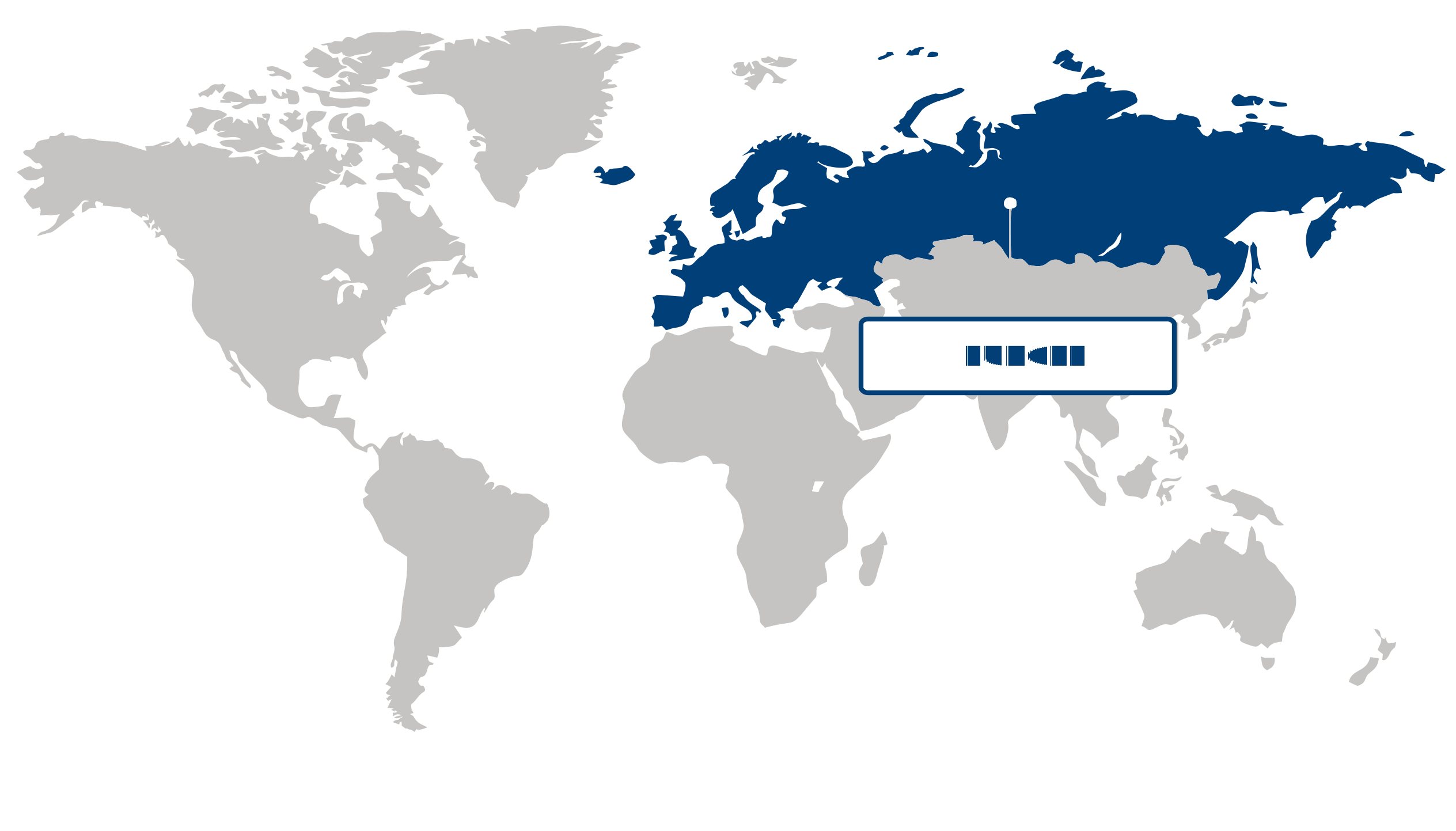
Europe dominated the LNG bunkering market in 2025, capturing more than 67% of the global share, driven primarily by early regulatory adoption and a well-established infrastructure across key ports. This region’s leadership is anchored in stringent environmental policies set forth by the European Union, which have compelled shipping companies to shift towards cleaner fuels, thus escalating demand for LNG bunkering. Notably, ports like Rotterdam and Antwerp have extensively upgraded their facilities, enhancing operational efficiency and supply reliability—initiatives supported by the European Maritime Safety Agency and other regional bodies. These dynamics, reinforced by strong governmental backing and investment incentives, position Europe as a strategic hub for LNG bunkering, fostering continued innovation and long-term growth potential.
Germany plays a pivotal role in Europe’s LNG bunkering market by leveraging its advanced port infrastructure and proactive regulatory framework. The Port of Hamburg, backed by the German Federal Ministry of Transport and Digital Infrastructure, has become a lighthouse project for safe, large-scale LNG bunkering operations, enabling seamless supply chains for North Sea shipping routes. This solid foundation supports Germany’s competitive positioning and bolsters wider regional integration. France also contributes significantly through ambitious sustainability mandates championed by the French Ministry for the Ecological Transition, driving LNG adoption across Mediterranean ports such as Marseille. Together, Germany and France enhance Europe’s resilience and capability in LNG bunkering, underpinning expansive growth opportunities across adjacent markets.
Asia Pacific Market Analysis:
Asia Pacific emerged as the fastest-growing region in the LNG bunkering market, registering rapid growth with a robust CAGR of 35.56%. This impressive expansion is driven primarily by increasing investments in LNG infrastructure coupled with growing demand for cleaner marine fuels. The region’s strategic focus on reducing emissions aligns with the International Maritime Organization’s (IMO) sulfur cap regulations, prompting significant public and private sector commitments to LNG bunkering facilities. For instance, initiatives by port authorities such as the Port of Singapore Authority to develop comprehensive LNG bunkering hubs reflect a shift towards sustainable maritime logistics. Additionally, advances in operational technologies and integration of digital platforms enhance supply chain efficiencies, solidifying Asia Pacific’s pivotal role. Looking forward, continuous infrastructure investments and stringent environmental policies position the region as a critical growth frontier in the LNG bunkering market.
Japan plays a central role within Asia Pacific’s LNG bunkering market, driven by its aggressive investment in LNG infrastructure and a national commitment to cleaner energy transitions. The Japanese government’s strategic plans, highlighted by the Ministry of Land, Infrastructure, Transport and Tourism, emphasize expanding LNG bunkering ports to facilitate the use of low-emission vessels in domestic and international shipping lanes. Corporations such as Kawasaki Kisen Kaisha (K Line) are pioneering LNG-fueled ship operations, aligning with evolving consumer preferences for sustainability. Japan’s advanced maritime capabilities and regulatory frameworks foster competitive advantages, making it a hub for LNG bunkering innovations. These dynamics not only enhance Japan’s market positioning but also contribute significantly to Asia Pacific’s overarching growth trajectory.
China’s LNG bunkering market development complements Asia Pacific’s regional momentum, underpinned by escalating investments in LNG infrastructure and stringent environmental policies from bodies like the Ministry of Transport of the People’s Republic of China. China’s vast coastline and increasing deployment of LNG-powered vessels in its busy port zones, including Shenzhen and Shanghai, underscore a robust demand for cleaner marine fuel alternatives. State-owned enterprises such as China COSCO Shipping Corporation are integrating LNG bunkering solutions into fleet operations, responding to a rising preference for decarbonization among shipping companies. These factors, combined with technological advancements in LNG supply chains and enhanced regulatory support, reinforce China’s vital contribution to the regional LNG bunkering market’s accelerated expansion, further entrenching Asia Pacific’s leadership in this sector.
North America Market Trends:
North America held a moderate but steadily growing share in the LNG bunkering market, underpinned by increasing emphasis on cleaner maritime fuel alternatives amid stringent environmental regulations. The region's strategic position as a major global shipping hub, combined with proactive policies aimed at reducing greenhouse gas emissions, has stimulated investments in LNG infrastructure and operational capabilities. Entities such as the U.S. Maritime Administration have highlighted initiatives supporting LNG as a compliant fuel with IMO 2020 standards, while port authorities in areas like the Gulf of Mexico are advancing LNG bunkering facilities to meet evolving demand. These developments reflect a shift in consumer preference towards sustainable fuel sources alongside gradual adoption influenced by regional economic resilience and supply chain modernization. The region is poised to capitalize further as technological advancements lower bunkering costs and regulatory support intensifies.
The U.S. plays a pivotal role in North America’s LNG bunkering market by leveraging its extensive port network and access to abundant natural gas resources. Regulatory measures from the Environmental Protection Agency and Coast Guard have accelerated the construction of LNG bunkering terminals, as seen in the expansion projects announced by companies like Southern LNG. Additionally, the growing concentration of LNG-powered vessels in U.S. coastal trade routes reflects commercial readiness to adopt economically viable and environmentally compliant fuel options. This momentum is reinforced by public-private partnerships facilitating infrastructure rollouts in key ports such as Jacksonville and Houston. Strategically, the U.S. market acts as a catalyst within North America by demonstrating scalable LNG bunkering models that can be replicated regionally, thereby enhancing the overall market’s growth trajectory.
| Parameter | North America | Asia Pacific | Europe | Latin America | MEA |
|---|---|---|---|---|---|
| Innovation Hub i Scale Nascent Developing Advanced | |||||
| Cost-Sensitive Region i Scale Low Medium High | |||||
| Regulatory Environment i Scale Restrictive Neutral Supportive | |||||
| Demand Drivers i Scale Weak Moderate Strong | |||||
| Development Stage i Scale Emerging Developing Developed | |||||
| Adoption Rate i Scale Low Medium High | |||||
| New Entrants / Startups i Scale Sparse Moderate Dense | |||||
| Macro Indicators i Scale Weak Stable Strong |
Segment Leadership and Growth Trends
LNG bunkering Market Share (%), by Vessel, 2026
Go beyond the chart, access full insights & data tables
Request Free Sample ReportTankers held largest share in the LNG bunkering market in 2025, driven primarily by the rising adoption of LNG-fueled tankers responding to stringent emission regulations and mandates for cleaner maritime fuels. This leadership reflects global shipping stakeholders’ increasing prioritization of sustainability and regulatory compliance, as evidenced by the International Maritime Organization’s (IMO) sulfur cap initiatives and the European Maritime Safety Agency’s enforcement guidelines. The shift towards LNG-powered tankers not only supports decarbonization goals but also enhances operational efficiency and meets growing environmental expectations from charterers and cargo owners. Major shipping companies such as NYK Line and Mitsui OSK Lines have publicly committed to expanding their LNG tanker fleets, underscoring the segment’s momentum. These factors create strategic opportunities for both established shipbuilders and emerging LNG bunkering service providers to innovate solutions aligned with global green shipping trends. Given ongoing regulatory advances and fuel infrastructure investments, tankers are poised to maintain market prominence in the near to medium term.
Analysis by Product Type
Ship-to-ship represented the largest share in the LNG bunkering market due to its superior operational efficiency and flexibility, facilitating direct LNG fuel transfer at sea and minimizing vessel downtime. This capability aligns closely with the dynamic operational demands of expanding LNG-powered fleets, offering a responsive alternative to fixed fueling points. Industry leaders such as Wärtsilä and GasLog have highlighted ship-to-ship bunkering as a critical enabler of LNG adoption on a broader scale, supported by regulatory frameworks promoting safer and more flexible bunkering operations like guidelines from the Society for Gas as a Marine Fuel (SGMF). The segment benefits from evolving digital solutions that optimize scheduling and bunkering logistics, catering to diverse vessel profiles and routes. These advantages position ship-to-ship bunkering as a scalable and adaptable model for emerging players and incumbent suppliers seeking competitive differentiation. Continued innovation and maritime infrastructure enhancements indicate this segment’s sustained relevance amid accelerating LNG utilization trends.
| Segment | Sub-Segment | Largest Segment | Fastest Growing |
|---|---|---|---|
| Vessel | Tankers, Container Ships, Bulk & General Cargo Vessels, Ferries & Offshore Support Vessels Ceramics | ||
| Product Type | Portable Tanks, Ship-to-Ship, Port-to-Ship, Truck-to-Ship |
Competitive Landscape and Market Positioning
The competitive environment within the LNG bunkering market is intensely shaped by strategic expansions and collaborative ventures among these top companies. Partnerships spanning shipping firms and infrastructure developers amplify market reach, exemplified by A.P. Moller - Maersk's integration of LNG-powered vessels supported by bunkering partnerships. Meanwhile, energy majors like ENGIE and Sempra Energy are advancing LNG bunkering solutions through targeted infrastructure investments, enhancing port capabilities. Innovation is propelled through focused technology development—Siemens Energy’s and Wärtsilä’s advances in LNG propulsion systems and storage technologies push the market towards more efficient, sustainable solutions. These intersecting initiatives reinforce the importance of agility and synergy, with leading entities continuously adapting to regulatory shifts and the evolving maritime fuel landscape to maintain competitive advantage.
Strategic / Actionable Recommendations for Regional Players
North American entities should consider forging robust alliances with established LNG producers and upstream operators to secure supply chains, while investing in next-generation bunkering technology to differentiate service offerings within strategic coastal hubs.
In Asia Pacific, expanding partnerships with shipping companies undergoing fleet transitions to LNG can unlock substantial demand. Emphasizing integration of smart LNG infrastructure and digital monitoring capabilities may also enhance operational efficiency and market attractiveness.
European firms would benefit from aligning with environmental policy frameworks by accelerating clean fuel solutions, while collaborating with port authorities to retrofit existing bunkering facilities. Leveraging R&D collaborations can position players at the forefront of sustainable LNG bunkering innovation in the region.
| Company | Market Share | Company Revenue | Revenue CAGR (%) | Product Portfolio | Geographic Presence | Innovation / R&D Focus | Strategic Developments |
|---|---|---|---|---|---|---|---|
| No companies available. | |||||||
Industry Development/News
| Company Name | Date | Key Development |
|---|
Customize Your Report
Explore examples of how this report can be tailored to different research needs, including custom segments, additional topics or chapters, and related reports. Click a section of the wheel or its numbered marker to explore the available options.
LNG bunkering Market — Custom Segments
| Segment | Sub-Segment |
|---|---|
| No segment data available. | |
LNG bunkering Market — Custom TOC
| Custom Chapter | Custom Details | ||
|---|---|---|---|
| No custom TOC data available. | |||
Need a different cut of the data?
Request Custom ResearchWhat are the growth projections for the LNG bunkering industry?
What is the leading region in terms of LNG bunkering market share?
Which geographical area is witnessing the highest growth rate in the LNG bunkering sector?
How much is the tankers segment expected to grow in the LNG bunkering industry beyond 2025?
What factors give ship-to-ship segment a competitive edge in the LNG bunkering sector?
Which companies are driving growth in the LNG bunkering landscape?
Our Clients
"The information presented in the report was genuinely insightful. The data was clear and easy to understand, which made it much easier to interpret the findings."
Amara Raja Group
"The responsiveness and professionalism exhibited by the team were exemplary. They were readily available to address queries, provide clarifications, and offer additional insights."
ONGC
"The reports offered a comprehensive analysis of various segments within the market. The detailed insights into market trends, and regulatory landscapes were excellent."
TotalEnergies
Our Research Team & Methodology
Every Fundamental Business Insights report is built by a dedicated vertical research team, validated through a structured primary-and-secondary methodology, and reviewed for accuracy before it reaches you.
Research Team Overview
Prepared by the Energy & Power Research Team
Delivery
Published
Demand
Available
Support
Trust & Compliance
Research Domains
10 coverage areasResearch Intelligence
| Source | Reference |
|---|---|
| International Energy Agency (IEA) | www.iea.org |
| U.S. Energy Information Administration (EIA) | www.eia.gov |
| International Renewable Energy Agency (IRENA) | www.irena.org |
| International Electrotechnical Commission (IEC) | www.iec.ch |
| International Organization for Standardization (ISO) | www.iso.org |
| IEEE | www.ieee.org |
| CIGRE (International Council on Large Electric Systems) | www.cigre.org |
| World Energy Council (WEC) | www.worldenergy.org |
| U.S. Department of Energy (DOE) | www.energy.gov |
| International Atomic Energy Agency (IAEA) | www.iaea.org |
| American Petroleum Institute (API) | www.api.org |
| Society of Petroleum Engineers (SPE) | www.spe.org |
| Hydrogen Council | hydrogencouncil.com |
| Battery Council International (BCI) | batterycouncil.org |
| Global Wind Energy Council (GWEC) | gwec.net |
| SolarPower Europe | www.solarpowereurope.org |
| World Bioenergy Association (WBA) | worldbioenergy.org |
| International Hydropower Association (IHA) | www.hydropower.org |
| Edison Electric Institute (EEI) | www.eei.org |
| National Renewable Energy Laboratory (NREL) | www.nrel.gov |
Research Workflow & Quality Assurance
Data Collection
Verified information gathered through primary and secondary research.
Data Triangulation
Cross-validation using multiple independent data sources.
Forecast Modelling
Market estimates developed using historical trends and analytical models.
Analyst Validation
Findings reviewed by domain experts for accuracy and consistency.
Editorial & Quality Review
Final editorial, quality, and compliance checks before publication.
Final Publication
Released after successful completion of the internal review process.
Report Coverage
📊 Market Assessment
- Market Size & Forecast
- Market Segmentation
- Regional Analysis
- Growth Drivers & Challenges
- Market Dynamics
🏢 Competitive Intelligence
- Competitive Landscape
- Company Profiles
- Competitive Benchmarking
- Mergers & Acquisitions
- Market Share Analysis or Key Company Strategies
🔍 Strategic Analysis
- Value Chain Analysis
- Porter's Five Forces
- PESTLE Analysis
- Pricing Trends
- Supply-Demand Analysis
🚀 Future Outlook
- Technology Landscape
- Regulatory Landscape
- Investment & Funding Landscape
- Emerging Opportunities
- Future Market Outlook
Have a question about this report or need a custom scope?
Request Customization