Liquid Crystal Display (LCD) Market Size & Forecasts 2026-2035, By Segments (Size, Panel Type, End-user, Type, Application), Growth Opportunities, Innovation Landscape, Regulatory Shifts, Strategic Regional Insights (U.S., Japan, China, South Korea, UK, Germany, France), and Competitive Dynamics (Samsung, LG Display, BOE Technology, Innolux, Japan Display)
Market Size and Growth Outlook
Liquid Crystal Display Market size is anticipated to rise from USD 50.3 billion in 2025 to USD 95.31 billion by 2035, reflecting a CAGR surpassing 6.6% over the forecast horizon of 2026-2035. The estimated revenue for 2026 is USD 53.2 billion.
Get more details on this report
Request Free Sample ReportLiquid Crystal Display (LCD) Market Intelligence Snapshot
Regional Market Dynamics
Segment Momentum
Market Expansion Drivers
Leading Market Participants
Global Market Forecast Snapshot
Market Outlook
Regional and Segment Outlook
Market Growth Drivers and Industry Trends
The increasing demand for consumer electronics and televisions is a key growth driver for the liquid crystal display (LCD) market. As highlighted by the Consumer Technology Association, rising disposable incomes and a shift toward smart home systems have significantly boosted the popularity of large-screen TVs and portable devices featuring LCD panels. This trend compels manufacturers to innovate with higher-quality displays that enhance user experience while maintaining cost efficiency. For incumbents, this expands opportunities for product differentiation through improved resolution and smart functionalities, while new entrants can capitalize on niche segments such as budget-friendly, mid-range electronics. The consistent integration of LCDs in evolving consumer devices suggests sustained growth, driven by an expanding user base embracing digital lifestyles.
Rise in Large-Format and High-Resolution LCD Panels
The surge in demand for large-format and high-resolution LCD panels is transforming the liquid crystal display (LCD) market landscape. According to industry updates from LG Display, advancements in 8K and ultra-high definition (UHD) panel production are fulfilling consumer expectations for immersive viewing experiences. This shift is also fueled by the entertainment and gaming sectors requiring enhanced visual performance. Established players benefit by leveraging economies of scale and technological expertise to suit commercial and residential applications, while startups focusing on specialized high-res LCDs can exploit gaps in emerging markets. The ongoing push toward bigger, sharper displays creates a durable platform for innovation, encouraging continuous enhancement of manufacturing capabilities and design.
Adoption of Energy-Efficient and Flexible LCD Technologies
Energy efficiency and flexibility in LCD technologies are becoming pivotal in reshaping the liquid crystal display (LCD) market, underpinned by increasing regulatory emphasis on sustainability and consumer preference for eco-conscious products. Samsung Electronics’ launch of low-power consumption panels and flexible display prototypes exemplifies how the market is responding to environmental and usability demands. These advancements allow manufacturers to reduce operational costs and introduce innovative device form factors, such as foldable smartphones and wearable tech. Both established firms and newcomers are thus positioned to harness these trends for competitive advantage in green technology and user-centric design. As sustainability standards tighten globally, integrating energy-efficient and adaptable LCD solutions is set to remain essential in product roadmaps.
Industry Restraints:
Intense Price Competition and Margin Pressure
The LCD market is constrained by persistent price erosion due to intense competition among manufacturers, especially between established players and emerging low-cost producers from China and Taiwan. According to a 2023 report by the Society for Information Display (SID), aggressive pricing strategies have squeezed profit margins, limiting manufacturers’ capacity to invest in advanced technologies or scale-up production efficiently. This compression forces incumbents to focus heavily on cost reduction rather than innovation, creating operational inefficiencies and deterring new entrants lacking scale economies. Strategically, firms must balance maintaining market share against profitability, often leading to consolidation or realignment toward niche high-performance LCD segments. This environment is expected to sustain downward pricing pressures, encouraging participants to pursue vertical integration or diversification to remain competitive in the evolving landscape.
Environmental Regulations and Sustainability Challenges
Stricter environmental regulations and sustainability expectations are increasingly shaping the LCD market’s development trajectory. The European Chemicals Agency’s (ECHA) ongoing updates to hazardous substance restrictions, such as those under the REACH regulation, have compels manufacturers to modify sourcing and manufacturing processes, raising compliance costs and operational complexity. Samsung Display’s 2023 sustainability report highlights their efforts to reduce hazardous materials and improve energy efficiency in LCD production, reflecting growing policy-driven investments. These regulatory burdens are particularly challenging for smaller manufacturers with limited R&D budgets, thereby slowing innovation cycles industry-wide. Looking ahead, sustainability mandates will persist as a material constraint, pushing market players to integrate circular economy principles and eco-design, which may elevate barriers to entry but also catalyze long-term value creation for compliant companies.
| Growth Driver | Impact on CAGR | Regulatory Influence | Geographic Relevance | Adoption Rate | Impact Timeline |
|---|---|---|---|---|---|
| Growth in consumer electronics and TVs | 2.50% | Short term (≤ 2 yrs) | Asia Pacific, North America | Medium | Fast |
| Rise in large-format and high-resolution LCD panels | 2.00% | Medium term (2–5 yrs) | Asia Pacific, Europe | Medium | Moderate |
| Adoption of energy-efficient and flexible LCD technologies | 2.10% | Long term (5+ yrs) | Europe, Asia Pacific | High | Moderate |
Unlock insights tailored to your business with our bespoke market research solutions.
Click to get your customized report now.
Regional Demand Dynamics
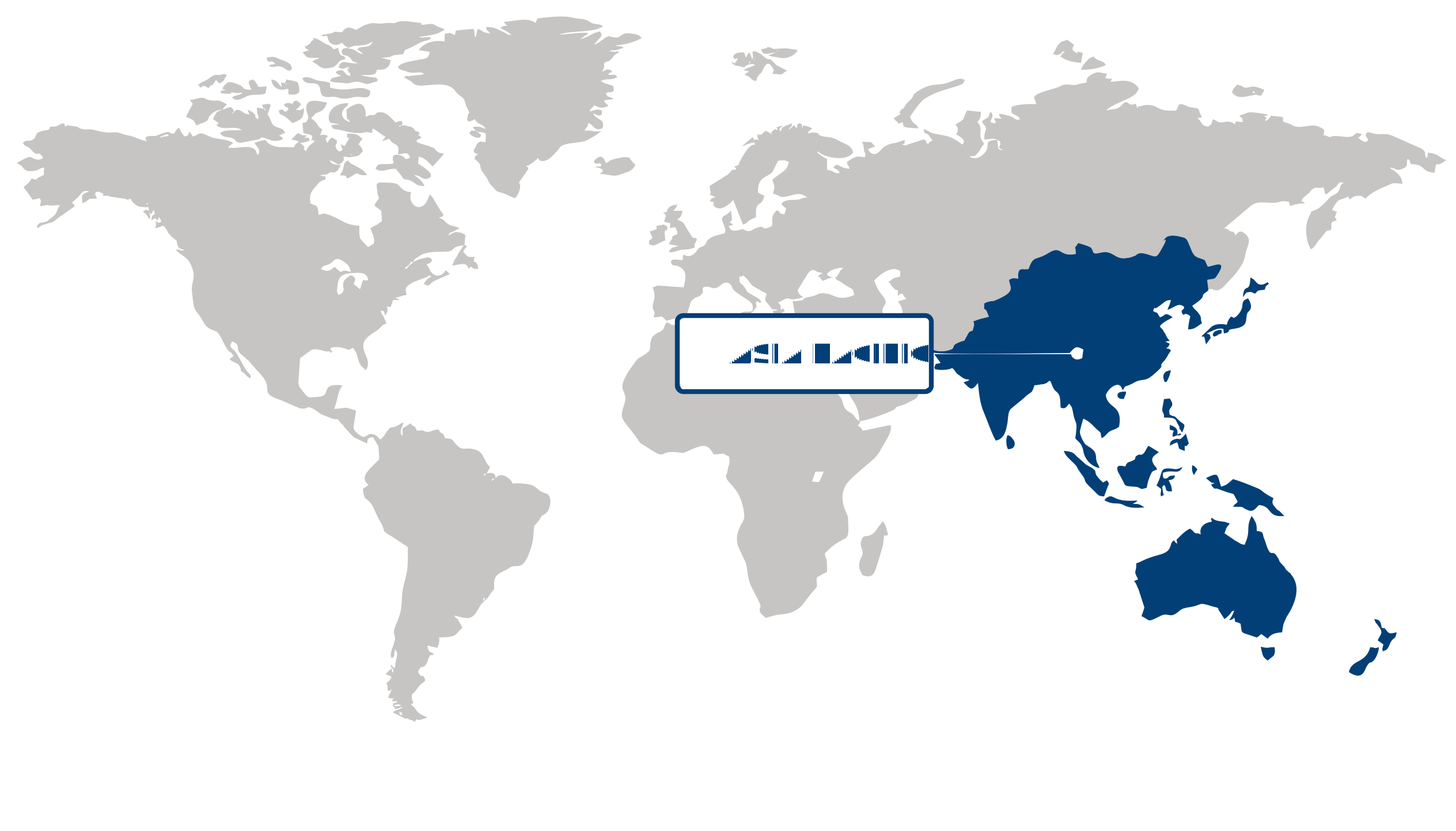
Asia Pacific dominates the global liquid crystal display (LCD) market, capturing approximately 47% of the share in 2025 and emerging as the largest and fastest-growing region with a 9% CAGR. This leadership stems from its expansive manufacturing base and robust panel production capacity, which underpin the region’s ability to efficiently meet soaring consumer electronics demand. For instance, industry reports from the Asia Display Alliance highlight how advancements in production technologies and scale economies in countries like South Korea and Taiwan have enhanced output quality and cost efficiency. Furthermore, the region benefits from a young, tech-savvy population driving sustained consumption of LCD-based devices, while governmental initiatives promoting digital infrastructure and sustainable manufacturing bolster growth. Asia Pacific’s integration into global supply chains and adaptability amid geopolitical shifts underscore its resilience, projecting continued expansion and strategic opportunities in the liquid crystal display (LCD) market.
Japan is positioned as a pivotal hub in the Asia Pacific liquid crystal display (LCD) market, leveraging its technological innovation and precision manufacturing expertise. Leading firms such as Sharp Corporation and Japan Display Inc. continue to pioneer high-resolution and energy-efficient LCD panels, responding to rising preferences for premium consumer electronics. Moreover, Japanese government incentives targeting next-generation display technologies foster competitive advantages in OLED-LCD hybrid solutions and eco-friendly production methods, as evidenced by Ministry of Economy, Trade and Industry (METI) policies. These dynamics solidify Japan’s strategic role in maintaining regional technology leadership and enhancing export competitiveness, directly supporting Asia Pacific’s dominance in the liquid crystal display (LCD) market.
China anchors the Asia Pacific liquid crystal display (LCD) market through its vast manufacturing ecosystem and rapidly expanding domestic demand. Companies like BOE Technology Group and TCL are driving scale-driven innovation and cost leadership while catering to a burgeoning middle-class market favoring diverse applications from smartphones to large-format displays. State-backed initiatives such as “Made in China 2025” emphasize self-sufficiency and advanced manufacturing technologies, accelerating capacity upgrades and supply chain localization. Regulatory focus on environmental standards also motivates sustainable practices, positioning China as a resilient and evolving powerhouse in the liquid crystal display (LCD) market. This national momentum complements Asia Pacific’s overall growth trajectory by deepening industrial capabilities and market reach.
North America Market Analysis:
North America held a commanding share in the liquid crystal display (LCD) market, driven by its advanced technology infrastructure and high consumer spending on electronics. The region's mature economy facilitates steady demand for premium display products in sectors such as consumer electronics, automotive, and healthcare. Additionally, favorable regulatory frameworks promoting sustainability and energy-efficient technologies have been influential. According to the Consumer Technology Association, rising adoption of smart home devices and next-generation displays has bolstered market growth. North America’s well-established supply chains and innovation-driven companies like Apple and Dell ensure rapid integration of cutting-edge LCD technologies. These factors position the region as a significant hub for high-value LCD applications, underpinning its sustained relevance and future growth in evolving digital ecosystems.
The U.S. plays a pivotal role in North America’s liquid crystal display (LCD) market, benefiting from robust consumer demand for advanced display panels in smartphones, tablets, and automotive infotainment systems. Leading manufacturers such as LG Display have announced capacity expansions and technology upgrades in the U.S. to cater to growing domestic and export markets. Moreover, government incentives focusing on technology innovation and clean manufacturing practices enhance the competitive landscape. Shifts towards flexible and higher-resolution LCD panels resonate with American consumers’ preference for premium, durable products, further enabling strategic partnerships within Silicon Valley’s tech ecosystem. This dynamic enhances the U.S.’s position as a critical driver of innovation and commercialization in the North American LCD market, feeding regional opportunities.
Europe Market Trends:
Europe maintained a notable presence in the liquid crystal display (LCD) market, demonstrating moderate growth driven by a combination of technological advancements and evolving consumer preferences. The region's emphasis on sustainability and energy-efficient products has spurred demand for low-power, high-resolution LCD panels, aligning with stringent EU environmental regulations. Additionally, Europe’s strong manufacturing infrastructure, supported by a skilled workforce and advanced R&D centers like those in Germany’s Fraunhofer Institute, has bolstered innovation in display technologies. Supply chain resilience, improved by strategic partnerships between local manufacturers and logistics providers such as DHL, further strengthens the market’s foundation. Reports from the European Display Association highlight increasing investments in next-generation LCDs tailored for automotive and healthcare sectors. Moving forward, Europe’s integrated approach to regulatory compliance and technological enhancement positions it to capture considerable opportunities within the evolving global LCD landscape.
Germany anchors Europe’s liquid crystal display (LCD) market, leveraging its robust industrial base and rapid adoption of innovative technologies. Driven by demand from automotive manufacturers and smart device producers, Germany benefits from early integration of ultra-high-definition LCD panels, supported by collaborative projects between BASF and Konica Minolta. The German government’s incentives for digital transformation and sustainable manufacturing have also reinforced domestic R&D efforts in efficient LCD solutions. Furthermore, the presence of competitive supply chain networks ensures reliable material procurement despite global disruptions, as highlighted by the Federal Ministry for Economic Affairs and Energy. These factors position Germany as a strategic hub for scaling advanced LCD technologies, enhancing Europe’s competitive edge in the broader market.
France plays a complementary role in Europe’s liquid crystal display (LCD) market with a focus on consumer electronics and medical applications. The country’s emphasis on eco-friendly product development aligns with the LCD market’s growing sustainability demands, supported by CNRS research initiatives on energy-efficient displays. French electronics manufacturers like STMicroelectronics are pushing boundaries in miniaturizing LCD components for wearable technologies, stimulated by increasing consumer adoption and government-backed innovation grants. The French regulatory framework promoting green technology also encourages manufacturers to prioritize eco-compliant LCD product lines. These dynamics strengthen France’s contribution to Europe’s moderate growth in the LCD market, underscoring the region’s diversified capacity to harness emerging sectoral applications.
| Parameter | North America | Asia Pacific | Europe | Latin America | MEA |
|---|---|---|---|---|---|
| Innovation Hub i Scale Nascent Developing Advanced | |||||
| Cost-Sensitive Region i Scale Low Medium High | |||||
| Regulatory Environment i Scale Restrictive Neutral Supportive | |||||
| Demand Drivers i Scale Weak Moderate Strong | |||||
| Development Stage i Scale Emerging Developing Developed | |||||
| Adoption Rate i Scale Low Medium High | |||||
| New Entrants / Startups i Scale Sparse Moderate Dense | |||||
| Macro Indicators i Scale Weak Stable Strong |
Segment Leadership and Growth Trends
Liquid Crystal Display (LCD) Market Share (%), by Size, 2026
Go beyond the chart, access full insights & data tables
Request Free Sample ReportThe liquid crystal display (LCD) market in 2025 is dominated by the large size segment, driven primarily by escalating consumer demand for large-screen TVs and public displays. This preference is reinforced by evolving lifestyles favoring immersive viewing experiences and social consumption of visual content. Manufacturers like Samsung and LG have advanced production scale and supply chain efficiencies for large panels, reflecting the benefits of economies of scale and mature technology. Furthermore, regulatory encouragement for energy-efficient large displays, highlighted by the U.S. Department of Energy, enhances the segment’s sustainability credentials. Established players can leverage this segment's demand to optimize premium product lines, while emerging firms may find niches in customizable large-format display solutions. Given persistent consumer interest and infrastructural investments in public display networks, the large-size segment is positioned to remain a critical growth area in the near to medium term.
Analysis by Panel Type
The flat panel segment held the largest share of the liquid crystal display (LCD) market in 2025, fueled by the widespread adoption of flat-panel displays across TVs, monitors, and mobile devices due to their slim profile and production maturity. This segment benefits from advanced manufacturing technologies that enhance panel uniformity and energy efficiency, as underscored by industry leaders like BOE Technology Group. Consumer preference for sleek, space-saving devices coupled with digitization in work and entertainment propels consistent demand. Regulatory frameworks promoting eco-friendly manufacturing and recycling, such as those by the European Union’s WEEE Directive, further support sector stability. For incumbents, the flat panel segment offers strong synergy with existing product ecosystems, while innovators can capitalize on emerging flexible flat designs. The segment’s entrenched presence across multiple application domains ensures its continued leadership within the LCD market landscape.
Analysis by End-user
In the liquid crystal display (LCD) market of 2025, the commercial end-user segment accounted for the largest share, driven by the extensive integration of LCD panels in retail, corporate, and transportation sectors. These sectors prioritize digital signage and real-time communication, enabling enhanced customer engagement and operational efficiency. The deployment of LCD displays by major players such as NEC Display Solutions across smart cities and corporate campuses exemplifies this trend. This segment aligns well with growing urbanization and digital infrastructure expansion, supported by government initiatives like Singapore’s Smart Nation Program. The commercial segment presents strategic opportunities for both established manufacturers to offer scalable, customizable solutions and for startups to innovate in interactive and networked display technologies. Given ongoing investments in commercial digital ecosystems, the segment is expected to sustain its market dominance and innovation pace in the foreseeable future.
| Segment | Sub-Segment | Largest Segment | Fastest Growing |
|---|---|---|---|
| Size | Small & Medium-sized, Large | ||
| Panel Type | Flat Panel, Flexible Panel | ||
| End-user | Residential, Commercial, Industrial | ||
| Type | Twisted Nematic (TN), In-Plane Switching (IPS), Vertical Alignment (VA), Others | ||
| Application | Consumer Electronics, Automotive, Industrial, Healthcare, Advertising, Others |
Competitive Landscape and Market Positioning
The competitive landscape is marked by dynamic initiatives enhancing product portfolios and technological capabilities. Samsung and LG continue refining OLED hybrid solutions, while BOE and Tianma emphasize expanding 8K and flexible display lines. Collaboration between Japanese and Taiwanese firms fosters incremental enhancements in panel quality and manufacturing efficiency. Strategic investments in research and development by Innolux and AUO drive advancements in low-power and wide-color-gamut displays. Mergers and alliances increasingly optimize the supply chain, helping players mitigate cost pressures and respond rapidly to shifting consumer demands. These moves collectively elevate market standards, focusing on innovation that balances performance and affordability to reinforce leadership and market reach.
Strategic / Actionable Recommendations for Regional Players
North American companies should strengthen ties with established Asian manufacturers to access cutting-edge LCD technologies, focusing on supplying premium, niche applications such as specialized commercial and medical displays. Emphasizing collaborative innovation in durable, energy-efficient panels will enhance differentiation amid global competition.
In Asia Pacific, firms can benefit by accelerating integration of AI-driven manufacturing processes and exploring partnerships targeting emerging sectors like automotive infotainment and wearable devices. Investing in scalable production for ultra-high-definition and flexible LCDs can capture rapidly evolving customer requirements.
European players are advised to concentrate on sustainability credentials and premium display segments by forming alliances with technology providers excelling in eco-friendly materials and smart display functionalities. Enhancing regional design capabilities aligned with local market preferences will reinforce competitive positioning and brand equity.
| Company | Market Share | Company Revenue | Revenue CAGR (%) | Product Portfolio | Geographic Presence | Innovation / R&D Focus | Strategic Developments |
|---|---|---|---|---|---|---|---|
| No companies available. | |||||||
Industry Development/News
| Company Name | Date | Key Development |
|---|
Customize Your Report
Explore examples of how this report can be tailored to different research needs, including custom segments, additional topics or chapters, and related reports. Click a section of the wheel or its numbered marker to explore the available options.
Liquid Crystal Display (LCD) Market — Custom Segments
| Segment | Sub-Segment |
|---|---|
| No segment data available. | |
Liquid Crystal Display (LCD) Market — Custom TOC
| Custom Chapter | Custom Details | ||
|---|---|---|---|
| No custom TOC data available. | |||
Need a different cut of the data?
Request Custom ResearchWhat is the anticipated CAGR of the liquid crystal display (LCD) industry?
Which part of the world represents the largest segment of the liquid crystal display (LCD) market?
In which region is the liquid crystal display sector expanding most rapidly?
What factors give large segment a competitive edge in the liquid crystal display (LCD) sector?
Which is the largest sub-segment within the panel type segment for liquid crystal display (LCD) industry?
Why does commercial sub-segment dominate the end-user segment of liquid crystal display (LCD) sector?
How does in-plane switching (IPS) segment fare in the liquid crystal display (LCD) industry?
What share does consumer electronics segment hold in the liquid crystal display (LCD) sector as of 2025?
Which organizations are considered leaders in the liquid crystal display (LCD) landscape?
Our Clients
"Working with FBI has been a good experience. The market report provided a holistic view, covering everything from emerging trends to potential risks."
Semtech Corporation
"The experience was highly positive. The team showcased remarkable flexibility in adapting to our specific needs and delivered report that perfectly aligned with all our requirements."
TSMC
"What really stood out to me was how clearly and promptly the Fundamental Business Insights team communicated throughout. It made the collaboration feel effortless."
NXP Semiconductors
Our Research Team & Methodology
Every Fundamental Business Insights report is built by a dedicated vertical research team, validated through a structured primary-and-secondary methodology, and reviewed for accuracy before it reaches you.
Research Team Overview
Prepared by the Electronics & Semiconductors Research Team
Delivery
Published
Demand
Available
Support
Trust & Compliance
Research Domains
10 coverage areasResearch Intelligence
| Source | Reference |
|---|---|
| Semiconductor Industry Association (SIA) | www.semiconductors.org |
| SEMI | www.semi.org |
| JEDEC Solid State Technology Association | www.jedec.org |
| IEEE | www.ieee.org |
| IPC – Association Connecting Electronics Industries | www.ipc.org |
| International Electrotechnical Commission (IEC) | www.iec.ch |
| International Organization for Standardization (ISO) | www.iso.org |
| U.S. Bureau of Industry and Security (BIS) | www.bis.gov |
| U.S. Patent and Trademark Office (USPTO) | www.uspto.gov |
| European Patent Office (EPO) | www.epo.org |
| Taiwan Semiconductor Industry Association (TSIA) | www.tsia.org.tw |
| World Semiconductor Trade Statistics (WSTS) | www.wsts.org |
| International Energy Agency (IEA) | www.iea.org |
| GSMA | www.gsma.com |
| 3GPP | www.3gpp.org |
| ITU (International Telecommunication Union) | www.itu.int |
| Omdia (public insights) | omdia.tech.informa.com |
| Display Supply Chain Consultants (DSCC) | www.displaysupplychain.com |
| U.S. Department of Energy (DOE) | www.energy.gov |
| NIST (National Institute of Standards and Technology) | www.nist.gov |
Research Workflow & Quality Assurance
Data Collection
Verified information gathered through primary and secondary research.
Data Triangulation
Cross-validation using multiple independent data sources.
Forecast Modelling
Market estimates developed using historical trends and analytical models.
Analyst Validation
Findings reviewed by domain experts for accuracy and consistency.
Editorial & Quality Review
Final editorial, quality, and compliance checks before publication.
Final Publication
Released after successful completion of the internal review process.
Report Coverage
📊 Market Assessment
- Market Size & Forecast
- Market Segmentation
- Regional Analysis
- Growth Drivers & Challenges
- Market Dynamics
🏢 Competitive Intelligence
- Competitive Landscape
- Company Profiles
- Competitive Benchmarking
- Mergers & Acquisitions
- Market Share Analysis or Key Company Strategies
🔍 Strategic Analysis
- Value Chain Analysis
- Porter's Five Forces
- PESTLE Analysis
- Pricing Trends
- Supply-Demand Analysis
🚀 Future Outlook
- Technology Landscape
- Regulatory Landscape
- Investment & Funding Landscape
- Emerging Opportunities
- Future Market Outlook
Have a question about this report or need a custom scope?
Request Customization