Lipstick Filling Machines Market Size & Forecasts 2026-2035, By Segments (Application, Technology, Type, Component), Growth Opportunities, Innovation Landscape, Regulatory Shifts, Strategic Regional Insights (U.S., Japan, China, South Korea, UK, Germany, France), and Competitive Dynamics (Romaco, IMA Group, Inline Filling Systems, Gea Group, Bosch Packaging Technology)
Market Size and Growth Outlook
Lipstick Filling Machines Market size is projected to grow steadily from USD 72.21 million in 2025 to USD 116.51 million by 2035, demonstrating a CAGR exceeding 4.9% through the forecast period (2026-2035). The 2026 revenue is estimated at USD 75.26 million.
Get more details on this report
Request Free Sample ReportLipstick Filling Machines Market Intelligence Snapshot
Regional Market Dynamics
Segment Momentum
Market Expansion Drivers
Leading Market Participants
Global Market Forecast Snapshot
Market Outlook
Regional and Segment Outlook
Market Growth Drivers and Industry Trends
The steady expansion of cosmetic manufacturing, driven by rising global demand for beauty products, is a significant growth driver in the lipstick filling machines market. Industry leaders such as L’Oréal and Estée Lauder have publicly emphasized investments in automated production lines to meet evolving consumer preferences efficiently. Automation not only enhances throughput but ensures consistent product quality, addressing market needs shaped by brand reputation and regulatory compliance from agencies like the U.S. FDA. This trend invites established manufacturers to scale operations rapidly while offering new entrants opportunities to introduce innovative filling technologies. As manufacturing hubs diversify geographically due to shifting supply chains, the lipstick filling machines market will likely continue benefiting from automation advances that optimize cost structures and improve speed-to-market.
Increasing Demand for Lipsticks and Other Makeup Products
The rising consumer demand for lipsticks, fueled by changing beauty standards and a growing focus on personal care, intensifies the call for advanced filling solutions in the lipstick filling machines market. Reports from the Cosmetics Europe association highlight amplified consumption among millennials and Gen Z across emerging economies, where makeup adoption is accelerating. This dynamic compels manufacturers to ramp up production capacity and respond agilely to product variety, including niche and organic segments that require precise filling technology. Consequently, market participants can capitalize on diversified product portfolios, while newcomers can leverage demand-driven customization trends. Continuous growth in makeup product consumption underscores the strategic importance of adaptable filling machinery to capture market share in a competitive landscape.
Technological Improvements in Filling Precision and Efficiency
Advancements in filling precision directly impact the lipstick filling machines market by reducing material waste and improving consistency, critical parameters for both cost containment and product quality. Companies like Bosch Packaging Technology have introduced cutting-edge servo-motor driven filling systems that enhance accuracy and allow seamless format changes. These technological breakthroughs support sustainability efforts by minimizing product loss and align with regulatory scrutiny on manufacturing standards. Established players can integrate these innovations to strengthen operational efficiency, whereas start-ups can differentiate through specialized, high-precision equipment. The ongoing digital transformation in manufacturing, including IoT-enabled monitoring, suggests this technological driver will remain central to competitive positioning in the lipstick filling machines market.
Industry Restraints:
Complex Regulatory Compliance and Certification Challenges
The lipstick filling machines market faces substantial slowdowns due to the need for compliance with stringent international safety and hygiene standards. Regulatory agencies such as the U.S. Food and Drug Administration (FDA) and the European Medicines Agency (EMA) impose rigorous certifications to ensure product safety, impacting machine design and material usage. For example, the FDA’s current Good Manufacturing Practices (cGMP) require machinery to minimize contamination risks, pushing manufacturers to invest in advanced sterilization-compatible components, which raises production costs and extends lead times. This complexity poses a significant barrier for startups attempting rapid market entry while forcing incumbents to allocate considerable resources toward regulatory alignment. Consequently, companies must prioritize innovation in compliance-ready technologies, yet remain constrained by evolving standards that are likely to tighten, particularly around automation and traceability, shaping strategic investments in R&D and operational flexibility.
Supply Chain Disruptions and Component Scarcity
Supply chain volatility remains a critical restraint on the lipstick filling machines market, as essential parts like precision nozzles and electronic controls frequently face shortages or delivery delays. The COVID-19 pandemic, coupled with geopolitical tensions, disrupted global supply networks, evidenced by statements from companies like Coesia Group highlighting intermittent shortages of high-grade stainless steel and sensor components. Such shortages exacerbate production bottlenecks and inflate costs, hindering manufacturers’ ability to meet demand fluctuations or scale operations efficiently. Established players with diversified supplier bases navigate these challenges better, but smaller companies often struggle with resource access and cost volatility. Going forward, supply chain resilience—through localized sourcing or inventory buffering—will become pivotal, with ongoing disruptions expected to influence procurement strategies and capital allocation decisions within the market.
| Growth Driver | Impact on CAGR | Regulatory Influence | Geographic Relevance | Adoption Rate | Impact Timeline |
|---|---|---|---|---|---|
| Expansion in cosmetic manufacturing and automation | 2.00% | Short term (≤ 2 yrs) | Asia Pacific (Primary), North America (Spillover) | Medium | Fast |
| Increasing demand for lipsticks and other makeup products | 1.50% | Medium term (2–5 yrs) | Europe, Asia Pacific | Low | Moderate |
| Technological improvements in filling precision and efficiency | 0.80% | Long term (5+ yrs) | North America, Europe | Low | Moderate |
Unlock insights tailored to your business with our bespoke market research solutions.
Click to get your customized report now.
Regional Demand Dynamics
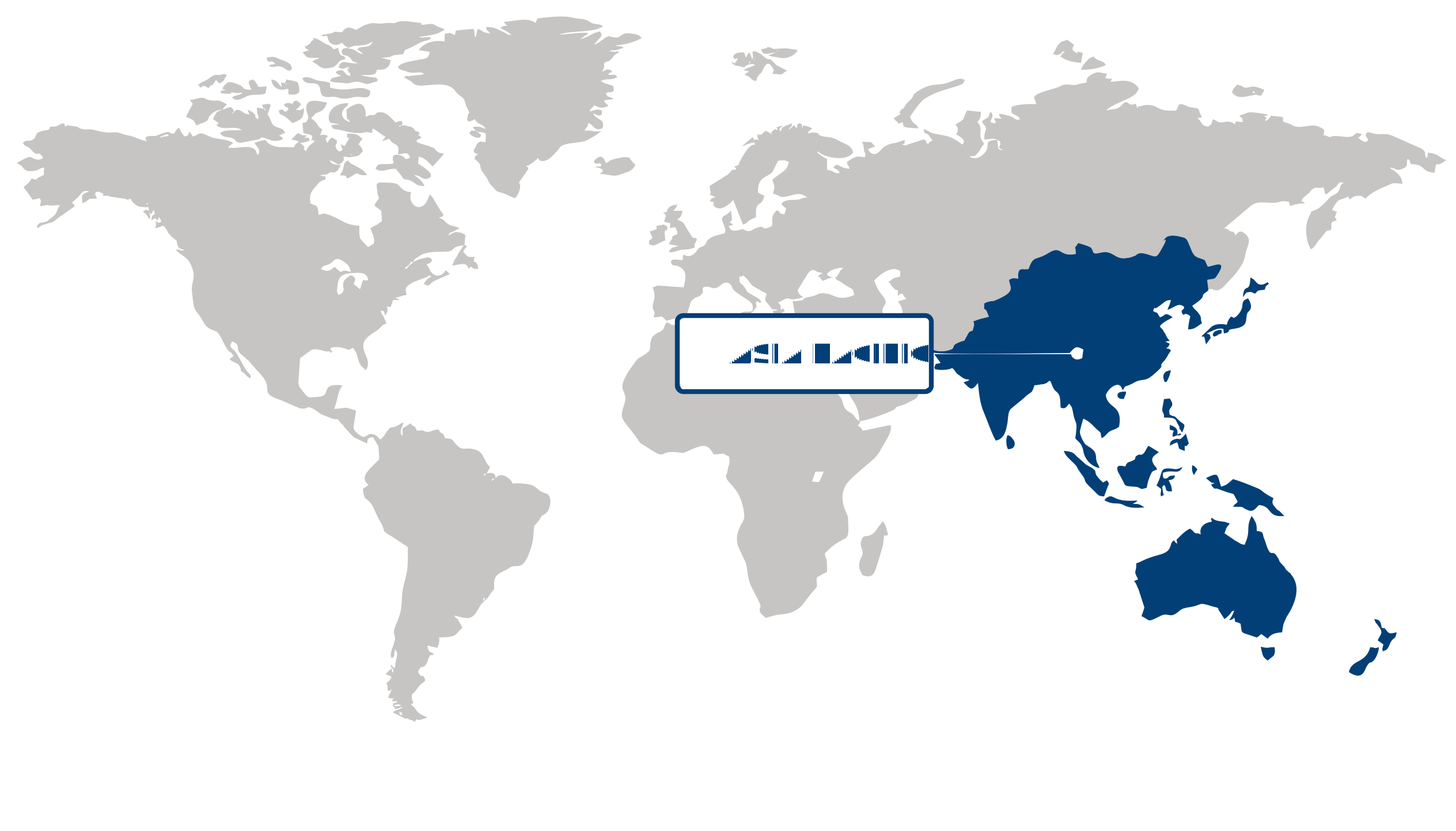
The Asia Pacific region dominated the lipstick filling machines market in 2025, capturing over 42.1% of the global share and exhibiting the fastest growth with a 5.4% CAGR. This leadership stems primarily from the presence of major cosmetic manufacturing hubs combined with a rapidly expanding middle-class population driving demand for beauty products. The region benefits from increasing digital adoption and evolving consumer preferences toward premium and innovative cosmetics, supported by advanced automation and operational efficiencies in filling technologies. According to the China National Light Industry Council, China’s cosmetic production growth has been pivotal, further bolstered by robust supply chain networks and favorable government policies promoting manufacturing innovation. Looking ahead, Asia Pacific’s blend of economic resilience, evolving consumer spending, and technological advancement presents significant opportunities for investment in lipstick filling machine innovations and production scale-ups.
Japan is positioned as a pivotal hub in Asia Pacific’s lipstick filling machines market, leveraging sophisticated automation technology and stringent quality control standards favored by domestic and export markets. The country’s focus on precision engineering, as exemplified by Yamanaka Machinery’s press release on its automated filling lines, aligns with rising demand for high-quality cosmetic packaging. Additionally, Japan’s aging yet beauty-conscious demographic stimulates niche product development, demanding diverse filling solutions. This strategic role solidifies Japan’s influence on regional supply chains and sets benchmarks for innovation, underpinning Asia Pacific’s broader market growth dynamics.
China anchors the Asia Pacific lipstick filling machines market through its expansive manufacturing ecosystem and burgeoning consumer base. The rapid urbanization and increasing disposable incomes fuel demand for both mass-market and luxury lipstick products, as highlighted in reports by the China Beauty Expo. Local manufacturers like Guangdong Newmax Automation have unveiled enhanced filling machines tailored to meet large-scale production needs, responding to competitive pressures and sustainability considerations. China’s evolving regulatory environment also encourages technological upgrades, facilitating efficiency and product safety. This scale and adaptability reinforce China’s position as a growth engine, amplifying Asia Pacific’s market prominence and investment appeal.
Europe Market Analysis:
Europe held a substantial share in the lipstick filling machines market, driven by its mature cosmetics industry and sophisticated manufacturing infrastructure. The region benefits from strong consumer demand for premium and innovative beauty products, supported by well-established brands and a preference for eco-friendly packaging. Regulatory frameworks, such as the European Chemicals Agency (ECHA) guidelines, have motivated manufacturers to adopt advanced filling technologies that ensure compliance and product safety. Furthermore, digitalization in production lines and the presence of key machinery suppliers, like Kitz Group and Marchesini Group, enhance operational efficiency. These factors collectively strengthen Europe's position, making it a hub for high-quality, sustainable lipstick filling machine solutions, and offering substantial opportunities as consumer emphasis on personalized and sustainable cosmetics intensifies.
Germany plays a pivotal role within Europe’s lipstick filling machines market, leveraging its precision engineering and strong export capabilities. High consumer purchasing power in Germany drives demand for innovative and efficient packaging solutions that align with growing preferences for cruelty-free and sustainable cosmetics, as highlighted by the German Cosmetic, Toiletry, Perfumery and Detergent Association (IKW) reports. Strategic investments in Industry 4.0 technologies by companies such as Harro Höfliger support streamlined, automated filling processes, enhancing product consistency and reducing operational costs. This enables German manufacturers to serve both domestic and international markets effectively, reinforcing Europe’s dominance in the market.
France is a crucial contributor to Europe’s lipstick filling machines market, anchored by its iconic luxury beauty sector and emphasis on heritage cosmetic brands. The French market’s emphasis on artisanal quality and innovation encourages adoption of advanced filling machines to meet stringent aesthetics and hygiene standards enforced by regulatory bodies like the French Agency for Food, Environmental and Occupational Health & Safety (ANSES). Leading companies such as COSMEC Group have introduced automation advancements tailored to bespoke lipstick production, matching demand for premium packaging aesthetics. France’s strong tradition of fashion and beauty trends further fuels market demand, underpinning Europe’s overall growth trajectory and signaling continued investment opportunities.
North America Market Trends:
North America maintained a notable presence in the lipstick filling machines market, driven by its established cosmetics industry and robust consumer spending on premium beauty products. The region’s emphasis on innovation and automation has accelerated demand for efficient, precision-driven filling equipment, as highlighted by automation advances reported by Illinois-based AptarGroup’s recent press release. Moreover, North America’s stringent regulatory environment, reinforced by the U.S. Food and Drug Administration’s (FDA) cosmetic product guidelines, encourages adoption of compliant and hygienic machinery, enhancing trust among manufacturers and consumers alike. Supply chain resilience, evidenced by domestic production capabilities noted by the North American Association of Machine Manufacturers (NAAMM), further supports market growth. As digital transformation integrates with manufacturing operations, North America offers significant opportunities to meet evolving market expectations with adaptive and high-speed lipstick filling solutions.
The U.S. plays a pivotal role in North America’s lipstick filling machines market, anchored by its large-scale cosmetic manufacturing sector and growing demand for sustainable packaging. The country's shifting consumer preferences toward eco-friendly beauty, highlighted in the U.S. Environmental Protection Agency’s (EPA) recent sustainability report, have spurred interest in machines that can handle biodegradable and recycled materials efficiently. Leading firms like Dover Corporation have announced upgrades to their filling machines to accommodate such priorities, reflecting innovation-driven growth. Furthermore, the U.S.’s advanced regulatory compliance, supported by the FDA’s stringent safety checks, positions it as a market leader in quality assurance. This strong blend of innovation and regulatory rigor makes the U.S. central to leveraging North America’s expanding prospects in lipstick filling machines.
| Parameter | North America | Asia Pacific | Europe | Latin America | MEA |
|---|---|---|---|---|---|
| Innovation Hub i Scale Nascent Developing Advanced | |||||
| Cost-Sensitive Region i Scale Low Medium High | |||||
| Regulatory Environment i Scale Restrictive Neutral Supportive | |||||
| Demand Drivers i Scale Weak Moderate Strong | |||||
| Development Stage i Scale Emerging Developing Developed | |||||
| Adoption Rate i Scale Low Medium High | |||||
| New Entrants / Startups i Scale Sparse Moderate Dense | |||||
| Macro Indicators i Scale Weak Stable Strong |
Segment Leadership and Growth Trends
Lipstick Filling Machines Market Share (%), by Application, 2026
Go beyond the chart, access full insights & data tables
Request Free Sample ReportThe lipstick filling machines market is led by the cosmetics industry segment, which represents the largest share in 2025. This dominance stems from the expanding lipstick production fueled by rising global beauty product demand, prompting manufacturers to adopt efficient filling machines to enhance output and maintain high quality. Customer preferences skew towards diverse and innovative lipstick formulations, driving demand for precise and scalable filling technologies. According to L’Oréal’s sustainability and innovation reports, leading cosmetic firms increasingly integrate automated filling solutions to meet both quality and environmental standards. This segment offers strategic advantages by enabling manufacturers to scale production while adhering to evolving regulatory milestones and digital transformation trends. The cosmetics industry segment is expected to retain its leadership due to continuous product innovation and growing consumer focus on personalized beauty solutions.
Analysis by Technology
In the lipstick filling machines market, the automatic segment holds the largest share in 2025, propelled by its superior production efficiency, precision, and capacity to reduce labor costs in cosmetic manufacturing. The increasing shift towards automation reflects broader workforce trends favoring digital and smart manufacturing technologies, enhancing operational consistency and reducing human error. Estee Lauder’s press releases highlight investments in fully automated filling lines to streamline operations and improve product quality. Supply chain resilience is also bolstered by these technologies, affording manufacturers better responsiveness to fluctuating consumer demand. This segment presents opportunities for both established firms and new entrants seeking to leverage Industry 4.0 capabilities. The automatic segment’s momentum is anticipated to continue as manufacturers pursue integration of robotics and AI-enabled systems.
Analysis by Type
Within the lipstick filling machines market, the normal pressure filling machine segment holds the largest share in 2025, driven by sustained demand in cosmetics production for reliable and consistent filling performance of standard lipstick formulations. Its leadership is underscored by the balance it strikes between operational simplicity and dependable output, meeting diverse regulatory and quality control criteria across markets. Companies such as Revlon and Shiseido utilize normal pressure filling machines to maintain uniformity in large-scale production, as highlighted in their corporate manufacturing standards documentation. This segment’s strong supply chain networks and adherence to international compliance protocols create competitive differentiation. With ongoing improvements in machine durability and maintenance efficiency, the normal pressure filling machine segment remains strategically relevant for manufacturers focusing on cost-effective and scalable lipstick production.
| Segment | Sub-Segment | Largest Segment | Fastest Growing |
|---|---|---|---|
| Application | Cosmetics Industry, Pharmaceutical Industry, Others | ||
| Technology | Automatic, Semi-Automatic, Manual | ||
| Type | Isobaric Filling Machine, Negative Pressure Filling Machine, Normal Pressure Filling Machine, Others | ||
| Component | Nozzles, Frame, Container, Others |
Competitive Landscape and Market Positioning
The competitive environment among these top players is characterized by a robust emphasis on innovation and enhanced automation capabilities. Several have refined their market positions through strategic product introductions that support faster changeover times and higher accuracy for complex lipstick formulations. Collaborative efforts and technology investments have bolstered integration of Industry 4.0 concepts, enabling real-time monitoring and improved operational efficiency. This trend fosters differentiation through precision and flexibility, driving advances in modular system designs and multi-functional filling lines. Collectively, these initiatives sustain a dynamic landscape with converging technological sophistication and strong customer-centric solutions.
Strategic / Actionable Recommendations for Regional Players
In North America, market participants could benefit from forming alliances with technology developers specializing in AI and robotics to elevate machine adaptability and predictive maintenance, enhancing overall reliability for premium cosmetics manufacturers.
Asia Pacific operators are well positioned to capitalize on growing demand for automation by leveraging local expertise to customize cost-efficient machinery that accommodates regional regulatory nuances and varying formulation types, thereby expanding their footprint.
European players may strengthen their competitive edge by deepening collaborations with research institutions, fostering innovation in sustainable materials and energy-efficient systems, which align with stringent environmental standards and appeal to eco-conscious brand owners.
| Company | Market Share | Company Revenue | Revenue CAGR (%) | Product Portfolio | Geographic Presence | Innovation / R&D Focus | Strategic Developments |
|---|---|---|---|---|---|---|---|
| No companies available. | |||||||
Industry Development/News
| Company Name | Date | Key Development |
|---|
Customize Your Report
Explore examples of how this report can be tailored to different research needs, including custom segments, additional topics or chapters, and related reports. Click a section of the wheel or its numbered marker to explore the available options.
Lipstick Filling Machines Market — Custom Segments
| Segment | Sub-Segment |
|---|---|
| No segment data available. | |
Lipstick Filling Machines Market — Custom TOC
| Custom Chapter | Custom Details | ||
|---|---|---|---|
| No custom TOC data available. | |||
Need a different cut of the data?
Request Custom ResearchHow is the lipstick filling machines industry expected to grow over the next 10 years?
In which region is the lipstick filling machines market share the greatest?
Which region shows the most rapid acceleration in the lipstick filling machines sector?
What factors give cosmetics industry segment a competitive edge in the lipstick filling machines sector?
Which is the largest sub-segment within the technology segment for lipstick filling machines industry?
Why does normal pressure filling machine sub-segment dominate the type segment of lipstick filling machines sector?
How does nozzles segment fare in the lipstick filling machines industry?
Which organizations are considered leaders in the lipstick filling machines landscape?
Our Clients
"The team at Fundamental Business Insights & Consulting demonstrated a commitment to excellence, not only in the quality of the report but also in their client-centric approach."
FANUC
"The level of detail in the market segmentation provided were particularly noteworthy. The detailed country-level insights were also very helpful."
B&R Industrial Automation GmbH
"The consultant took the time to understand our specific business objectives, ensuring that the reports were tailored to address our unique challenges and opportunities."
KUKA SE & Co. KGaA
Our Research Team & Methodology
Every Fundamental Business Insights report is built by a dedicated vertical research team, validated through a structured primary-and-secondary methodology, and reviewed for accuracy before it reaches you.
Research Team Overview
Prepared by the Industrial Automation & Equipment Research Team
Delivery
Published
Demand
Available
Support
Trust & Compliance
Research Domains
10 coverage areasResearch Intelligence
| Source | Reference |
|---|---|
| International Society of Automation (ISA) | www.isa.org |
| International Organization for Standardization (ISO) | www.iso.org |
| National Institute of Standards and Technology (NIST) | www.nist.gov |
| IEEE | www.ieee.org |
| VDMA (German Mechanical Engineering Industry Association) | www.vdma.org |
| Association for Advancing Automation (A3) | www.automate.org |
| International Federation of Robotics (IFR) | ifr.org |
| ASME (American Society of Mechanical Engineers) | www.asme.org |
| ASHRAE | www.ashrae.org |
| American Society of Heating, Refrigerating and Air-Conditioning Engineers (ASHRAE) | www.ashrae.org |
| Material Handling Industry (MHI) | www.mhi.org |
| OSHA (Occupational Safety and Health Administration) | www.osha.gov |
| National Fire Protection Association (NFPA) | www.nfpa.org |
| ASTM International | www.astm.org |
| International Electrotechnical Commission (IEC) | www.iec.ch |
| Open Process Automation Forum (The Open Group) | www.opengroup.org/open-process-automation-forum |
| AGMA (American Gear Manufacturers Association) | www.agma.org |
| Association of Equipment Manufacturers (AEM) | www.aem.org |
| Food and Agriculture Organization (FAO) | www.fao.org |
| International Labour Organization (ILO) | www.ilo.org |
Research Workflow & Quality Assurance
Data Collection
Verified information gathered through primary and secondary research.
Data Triangulation
Cross-validation using multiple independent data sources.
Forecast Modelling
Market estimates developed using historical trends and analytical models.
Analyst Validation
Findings reviewed by domain experts for accuracy and consistency.
Editorial & Quality Review
Final editorial, quality, and compliance checks before publication.
Final Publication
Released after successful completion of the internal review process.
Report Coverage
📊 Market Assessment
- Market Size & Forecast
- Market Segmentation
- Regional Analysis
- Growth Drivers & Challenges
- Market Dynamics
🏢 Competitive Intelligence
- Competitive Landscape
- Company Profiles
- Competitive Benchmarking
- Mergers & Acquisitions
- Market Share Analysis or Key Company Strategies
🔍 Strategic Analysis
- Value Chain Analysis
- Porter's Five Forces
- PESTLE Analysis
- Pricing Trends
- Supply-Demand Analysis
🚀 Future Outlook
- Technology Landscape
- Regulatory Landscape
- Investment & Funding Landscape
- Emerging Opportunities
- Future Market Outlook
Have a question about this report or need a custom scope?
Request Customization