Lignosulfonate-based Concrete Admixtures Market Size & Forecasts 2026-2035, By Segments (Functionality), Growth Opportunities, Innovation Landscape, Regulatory Shifts, Strategic Regional Insights (U.S., Japan, China, South Korea, UK, Germany, France), and Competitive Dynamics (Borregaard, Domsjö Fabriker, Tembec, West Fraser, UPM-Kymmene)
Market Size and Growth Outlook
Lignosulfonate-based Concrete Admixtures Market size is anticipated to rise from USD 218.55 million in 2025 to USD 332.96 million by 2035, reflecting a CAGR surpassing 4.3% over the forecast horizon of 2026-2035. The estimated revenue for 2026 is USD 226.62 million.
Get more details on this report
Request Free Sample ReportLignosulfonate-based Concrete Admixtures Market Intelligence Snapshot
Regional Market Dynamics
Segment Momentum
Market Expansion Drivers
Leading Market Participants
Global Market Forecast Snapshot
Market Outlook
Regional and Segment Outlook
Market Growth Drivers and Industry Trends
The lignosulfonate-based concrete admixtures market is increasingly propelled by global emphasis on eco-friendly construction materials. Entities like the U.S. Green Building Council highlight sustainable admixtures as vital to achieving LEED certifications, driving demand for biodegradable and low-toxicity inputs. This shift aligns with evolving buyer preferences favoring responsible sourcing and reduced environmental footprints, influenced by stricter emissions regulations and carbon neutrality commitments across multiple regions. For established manufacturers, this creates an opportunity to expand green product lines, while new entrants can capitalize on niche eco-focused innovations. As sustainability mandates become more ubiquitous, firms prioritizing environmental compliance and transparent supply chains will strengthen their competitive positioning.
Innovations in Lignosulfonate-Based Formulations
Technological advancements in lignosulfonate chemistry, such as enhanced dispersibility and compatibility with high-performance concretes, are redefining the lignosulfonate-based concrete admixtures market. Companies like Borregaard continuously develop proprietary modified lignosulfonates that improve workability and reduce water content without compromising strength. These innovations respond to increasing demands from infrastructure projects requiring durable yet cost-effective admixtures, demonstrating how R&D investment fosters competitive differentiation. Established players can leverage patent portfolios and scale efficiencies, whereas newcomers equipped with novel molecular techniques may disrupt traditional formulations. Ongoing innovation ensures sustained relevance as concrete quality expectations rise globally.
Growth in Construction and Infrastructure Projects in Emerging Markets
Expanding urbanization and infrastructure spending in emerging economies form a foundational growth driver for the lignosulfonate-based concrete admixtures market. The Asian Development Bank’s support for large-scale infrastructure initiatives across Southeast Asia exemplifies intensified construction activities requiring economically viable admixtures. These projects often prioritize admixtures that balance performance with cost, positioning lignosulfonates favorably given their affordability and availability. This dynamic opens strategic avenues for industry incumbents to deepen market penetration and for newcomers to tailor offerings responsive to local requirements. As emerging markets elevate their infrastructure standards, demand for adaptable admixture solutions is set to consolidate supply chain partnerships and expand market reach.
Industry Restraints:
Regulatory Compliance and Environmental Restrictions
Stringent environmental regulations surrounding chemical additives in construction significantly constrain the lignosulfonate-based concrete admixtures market. Lignosulfonates, derived from lignin, must meet rigorous standards on biodegradability, emissions, and toxicity, as stipulated by authorities like the U.S. Environmental Protection Agency (EPA) and the European Chemicals Agency (ECHA). These compliance demands increase operational complexity and costs, particularly for smaller manufacturers lacking advanced R&D capabilities to reformulate products swiftly. For example, Weyerhaeuser’s compliance-driven product modifications illustrate the resource-intensive process required to maintain market access. Consequently, incumbents face pressure to innovate without compromising cost structures, while new entrants confront high barriers to certification and approval. This regulatory environment will continue to shape competitive dynamics, compelling participants to prioritize sustainable chemistry and lifecycle assessments to secure long-term viability.
Availability and Quality Variability of Raw Materials
The lignosulfonate market is deeply influenced by the availability and consistency of its raw material—lignin sourced from sulfite pulping processes—which can vary due to fluctuating wood supply chains and regional production capacities. Major pulp producers like International Paper have publicly noted challenges with raw material cost volatility and quality inconsistency, affecting admixture performance and pricing stability. Such uncertainties undermine formulation reliability and customer trust, deterring widespread adoption among concrete producers who prioritize consistent set times and slump retention. Larger firms with integrated supply chains can mitigate these risks more effectively, whereas smaller producers face discontinuities and margin pressure. Moving forward, supply chain optimization and vertical integration will be crucial for market players to stabilize input quality and secure competitive advantages amid ongoing raw material fluctuations.
| Growth Driver | Impact on CAGR | Regulatory Influence | Geographic Relevance | Adoption Rate | Impact Timeline |
|---|---|---|---|---|---|
| Rising use of sustainable concrete admixtures | 1.50% | Short term (≤ 2 yrs) | Europe, North America | Medium | Fast |
| Innovations in lignosulfonate-based formulations | 1.30% | Medium term (2–5 yrs) | Asia Pacific, Europe | Medium | Moderate |
| Growth in construction and infrastructure projects in emerging markets | 1.50% | Long term (5+ yrs) | Asia Pacific, Latin America | Low | Moderate |
Unlock insights tailored to your business with our bespoke market research solutions.
Click to get your customized report now.
Regional Demand Dynamics
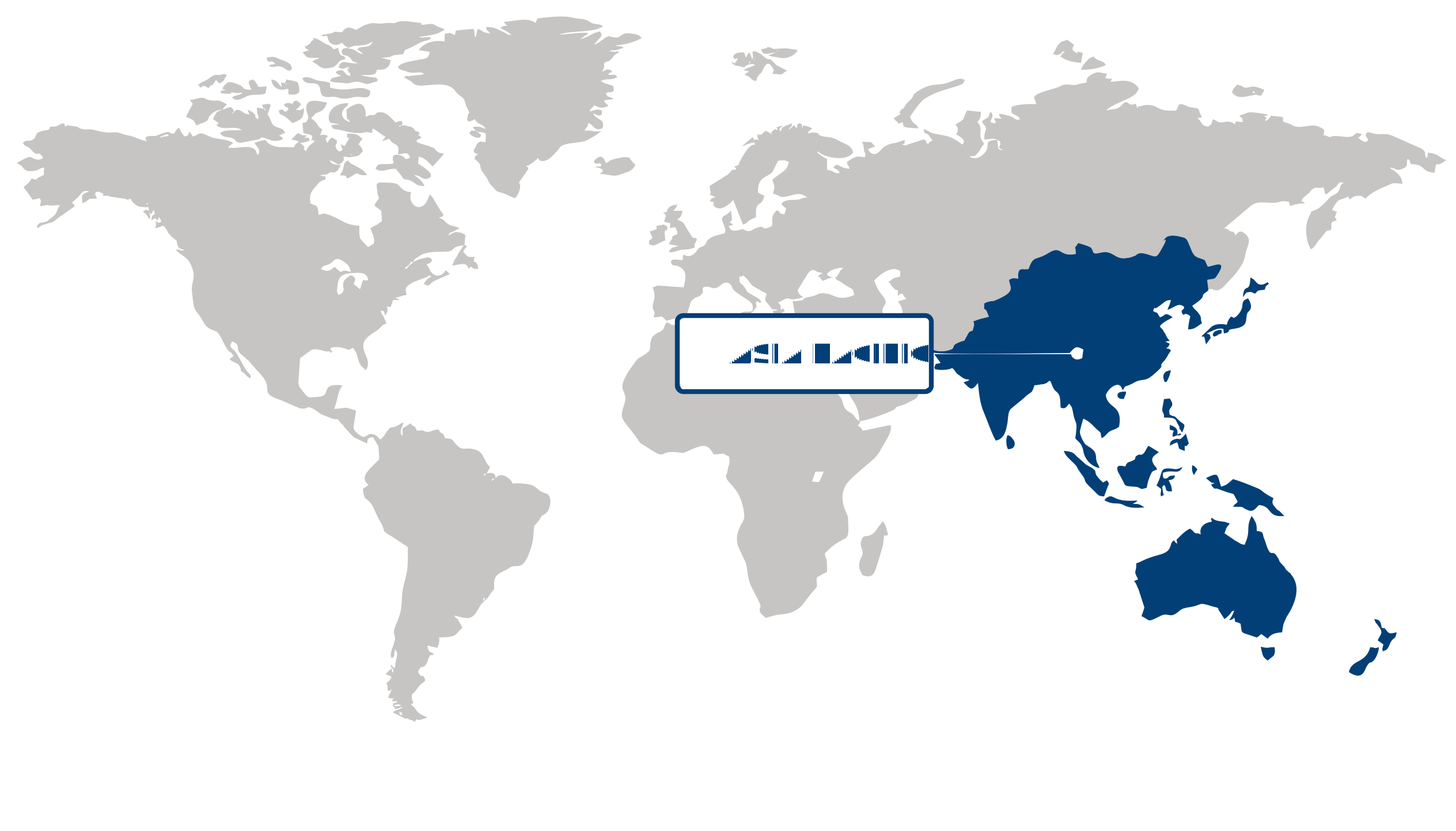
Asia Pacific dominated the lignosulfonate-based concrete admixtures market in 2025, representing more than 42% of the global share and growing at a robust CAGR of 6.2%, solidifying its position as the largest and fastest-growing region. This leadership is driven primarily by extensive residential and infrastructure projects, particularly in China and India, which have fueled substantial demand for sustainable and efficient construction materials. The region benefits from increasing urbanization, government initiatives focused on smart city developments, and a shift towards eco-friendly concrete solutions aligned with stringent environmental regulations enforced by agencies such as the Ministry of Ecology and Environment of China. Additionally, advancements in supply chain integration and rising investments by key players such as Sappi and Borregaard enhance operational efficiency. Asia Pacific's resilient economic growth and expanding construction sector underscore significant opportunities for investors and strategists seeking to capitalize on the lignosulfonate-based admixtures market.
China anchors the Asia Pacific lignosulfonate-based concrete admixtures market with its expansive infrastructure agenda and large-scale residential developments. The nation's focus on sustainable construction practices, highlighted by the Ministry of Housing and Urban-Rural Development’s green building standards, propels demand for lignosulfonate admixtures that improve concrete workability and reduce water usage. Corporate players such as Jinan Shenfeng New Materials have leveraged these trends by enhancing product formulations tailored to local construction requirements, boosting competitiveness. China's integration of digital construction technologies also accelerates adoption, aligning with its broader industrial modernization. These dynamics not only fortify China’s market dominance but also amplify regional growth potential, positioning Asia Pacific as a critical hub for innovation and market expansion in this segment.
Japan plays a pivotal role in the Asia Pacific lignosulfonate-based concrete admixtures market by emphasizing quality and environmental sustainability in its construction sector. The country’s stringent regulatory framework, governed by the Ministry of Land, Infrastructure, Transport and Tourism, mandates high standards for material performance and environmental impact, fostering increased usage of lignosulfonate admixtures to optimize concrete durability and reduce carbon emissions. Japan’s mature construction market drives demand for advanced admixture formulations showcased by firms like Denka Company, which invest heavily in R&D to meet these evolving requirements. This focus on innovation and compliance enhances Japan’s contribution to the regional market’s growth trajectory, reinforcing Asia Pacific’s leadership in delivering sophisticated and sustainable concrete admixture solutions.
North America Market Analysis:
North America held a substantial share in the lignosulfonate-based concrete admixtures market, driven by steady demand from the construction and infrastructure sectors. The region benefits from stringent environmental regulations promoting the use of sustainable construction materials, as highlighted by the U.S. Environmental Protection Agency's emphasis on reducing carbon footprints in building projects. Additionally, rising investments in infrastructure modernization and urban development are shaping purchasing behaviors toward eco-friendly admixtures, providing a competitive edge. Supply chain resilience, supported by advanced logistics and proximity to raw material suppliers, further consolidates North America’s market position. Companies like Sappi Limited have announced expansions in lignosulfonate production, underscoring the region’s operational advancements. As infrastructure spending accelerates under initiatives such as the U.S. Infrastructure Investment and Jobs Act, North America is poised to maintain significant opportunities in the lignosulfonate-based concrete admixtures market, especially through sustainable and technologically integrated offerings.
The U.S. plays a pivotal role in North America’s lignosulfonate-based concrete admixtures market, driven by policy frameworks favoring green building standards and increasing adoption of environmentally friendly admixtures in commercial and residential construction. Consumer preferences reflect growing demand for durability and sustainability, influencing procurement trends among major contractors. The U.S. Green Building Council’s LEED certification program incentivizes the use of lignosulfonate-based admixtures, further embedding these materials into the supply chain. Leading companies such as BASF Corporation continue to innovate with advanced admixture formulations tailored to U.S. climate and regulatory requirements. This strategic positioning enhances the U.S.’s influence on regional market dynamics, reinforcing North America as a critical hub for sustainable growth and innovation in lignosulfonate-based concrete admixtures.
Europe Market Trends:
Europe maintained notable presence in the lignosulfonate-based concrete admixtures market, driven by a moderate growth trajectory underpinned by increasing construction activities focusing on sustainable and eco-friendly materials. The region’s emphasis on stringent environmental regulations and circular economy principles, as highlighted by the European Environment Agency, has encouraged the adoption of bio-based admixtures such as lignosulfonates. Furthermore, advancements in supply chain logistics within the EU and investments in innovation hubs by entities like the European Cement Association (CEMBUREAU) have strengthened the market’s competitiveness. Consumer preferences shifting toward greener construction solutions and government incentives promoting reduced carbon footprint in infrastructure projects, exemplified by the European Green Deal, add momentum. With continued strides in technological integration and regulatory support, Europe offers significant opportunities for expansion and innovation in the lignosulfonate-based concrete admixtures market.
Germany plays a pivotal role in Europe’s lignosulfonate-based concrete admixtures market, exemplifying industrial adoption aligned with environmental commitments. The nation’s robust construction sector, supported by policies from the Federal Ministry for the Environment, Nature Conservation and Nuclear Safety, encourages sustainable building practices that favor lignosulfonate admixtures for improved workability and reduced chemical use. Leading companies such as BASF have intensified R&D efforts targeting bio-based admixtures, illustrating strong market engagement. Germany’s advanced logistical infrastructure and skilled workforce further facilitate efficient supply and deployment. Strategic focus on innovation and environmental compliance ensures Germany remains a key growth driver within the broader European market, enhancing regional market stability and expansion prospects.
France’s role in the lignosulfonate-based concrete admixtures market reflects its evolving construction landscape emphasizing efficiency and sustainability. The French government’s National Low Carbon Strategy spearheads the integration of eco-friendly materials, indirectly fueling demand for lignosulfonate admixtures. Collaborative initiatives between public bodies like ADEME and private sector stakeholders, including LafargeHolcim, illustrate commitment to lowering the environmental impact of concrete production. France’s moderate growth in this segment is also supported by increasing urban infrastructure developments and renovation projects adhering to EU environmental mandates. This solidifies the country’s position as a critical contributor to the region’s market dynamics, reinforcing Europe’s overall capacity to meet rising demands for greener concrete admixture solutions.
| Parameter | North America | Asia Pacific | Europe | Latin America | MEA |
|---|---|---|---|---|---|
| Innovation Hub i Scale Nascent Developing Advanced | |||||
| Cost-Sensitive Region i Scale Low Medium High | |||||
| Regulatory Environment i Scale Restrictive Neutral Supportive | |||||
| Demand Drivers i Scale Weak Moderate Strong | |||||
| Development Stage i Scale Emerging Developing Developed | |||||
| Adoption Rate i Scale Low Medium High | |||||
| New Entrants / Startups i Scale Sparse Moderate Dense | |||||
| Macro Indicators i Scale Weak Stable Strong |
Segment Leadership and Growth Trends
Lignosulfonate-based Concrete Admixtures Market Share (%), by Functionality, 2026
Go beyond the chart, access full insights & data tables
Request Free Sample ReportPlasticizers represented the largest share of the lignosulfonate-based concrete admixtures market in 2025, driven primarily by strong demand for cost-effective solutions that enhance concrete workability. This segment’s leadership is underpinned by construction industry preferences for admixtures that reduce water usage while maintaining flexibility, aligning with widespread efforts to optimize resource efficiency and cut project costs. Regulatory initiatives promoting sustainable building practices, such as those endorsed by the U.S. Green Building Council, further elevate plasticizers’ appeal. Major firms like Sappi Limited have highlighted product innovations expanding plasticizers’ applications, creating valuable entry points for both established players and emerging innovators focused on eco-friendly formulations. Given ongoing infrastructure investments and tightening environmental standards, the plasticizers segment is poised to sustain its dominance by continuously addressing evolving construction needs and sustainability objectives.
| Segment | Sub-Segment | Largest Segment | Fastest Growing |
|---|---|---|---|
| Functionality | Plasticizers, Superplasticizers |
Competitive Landscape and Market Positioning
The competitive environment within the lignosulfonate-based concrete admixtures market reflects a pattern of deliberate expansion and innovation among the top players. Several companies have enhanced technological capabilities through focused development of more efficient and eco-friendly admixture products, improving performance characteristics such as water reduction and set time control. Strategic collaborations and acquisitions have broadened product portfolios and geographic coverage, enabling firms like Borregaard and Domsjö Fabriker to consolidate their presence globally. Meanwhile, Asian and South American entities such as Changzhou Tianhe Chemical and Suzano are capitalizing on regional demand growth by advancing tailored solutions that meet localized construction standards. These concerted initiatives foster a landscape where innovation and market responsiveness play critical roles in reinforcing competitive differentiation.
Strategic / Actionable Recommendations for Regional Players
In North America, companies could benefit from forming selective alliances with construction material manufacturers to co-develop specialty admixtures addressing regional infrastructure needs. Emphasizing sustainable sourcing practices and integrating cutting-edge biotechnologies may enhance product appeal amidst growing regulatory emphasis on environmental compliance.
Within Asia Pacific, players should prioritize collaboration with construction conglomerates and research institutions to accelerate new product adoption tailored to large-scale urban development projects. Leveraging advancements in nanotechnology or polymer science might unlock performance improvements appealing to high-growth urban construction sectors.
For Europe, market participants might strengthen their competitive edge by enhancing circular economy initiatives and integrating lignosulfonate-based admixtures within green building certifications. Partnering with regional governments and standard-setting bodies could facilitate broader market acceptance while fostering innovation aligned with stringent sustainability targets.
| Company | Market Share | Company Revenue | Revenue CAGR (%) | Product Portfolio | Geographic Presence | Innovation / R&D Focus | Strategic Developments |
|---|---|---|---|---|---|---|---|
| No companies available. | |||||||
Industry Development/News
| Company Name | Date | Key Development |
|---|
Customize Your Report
Explore examples of how this report can be tailored to different research needs, including custom segments, additional topics or chapters, and related reports. Click a section of the wheel or its numbered marker to explore the available options.
Lignosulfonate-based Concrete Admixtures Market — Custom Segments
| Segment | Sub-Segment |
|---|---|
| No segment data available. | |
Lignosulfonate-based Concrete Admixtures Market — Custom TOC
| Custom Chapter | Custom Details | ||
|---|---|---|---|
| No custom TOC data available. | |||
Need a different cut of the data?
Request Custom ResearchHow big is the lignosulfonate-based concrete admixtures market?
What is the anticipated CAGR of the lignosulfonate-based concrete admixtures industry?
Which part of the world represents the largest segment of the lignosulfonate-based concrete admixtures market?
Which region has emerged as the fastest-growing for the lignosulfonate-based concrete admixtures sector?
Why is the plasticizers segment leading in the lignosulfonate-based concrete admixtures industry?
Who are the major participants shaping the lignosulfonate-based concrete admixtures landscape?
Our Clients
"Your insights on workforce structures were spot-on. The analysis on mid-to-senior level roles validated some of our hiring decisions and highlighted gaps."
Ateliers De France
"The report gave us insights on competitors in the market. It helped our team refine our bidding strategy for upcoming contracts."
Clark Construction
"The reports provided a deep dive into market trends, and competitive landscape. The strategic insights and recommendations have been very helpful."
Rudolph and Sletten
Our Research Team & Methodology
Every Fundamental Business Insights report is built by a dedicated vertical research team, validated through a structured primary-and-secondary methodology, and reviewed for accuracy before it reaches you.
Research Team Overview
Prepared by the Construction & Manufacturing Research Team
Delivery
Published
Demand
Available
Support
Trust & Compliance
Research Domains
10 coverage areasResearch Intelligence
| Source | Reference |
|---|---|
| International Organization for Standardization (ISO) | www.iso.org |
| ASTM International | www.astm.org |
| National Institute of Standards and Technology (NIST) | www.nist.gov |
| International Code Council (ICC) | www.iccsafe.org |
| American Concrete Institute (ACI) | www.concrete.org |
| American Institute of Steel Construction (AISC) | www.aisc.org |
| Construction Industry Institute (CII) | www.construction-institute.org |
| Associated General Contractors of America (AGC) | www.agc.org |
| Association of Equipment Manufacturers (AEM) | www.aem.org |
| Building Owners and Managers Association (BOMA) | www.boma.org |
| American Society of Civil Engineers (ASCE) | www.asce.org |
| National Ready Mixed Concrete Association (NRMCA) | www.nrmca.org |
| International Facility Management Association (IFMA) | www.ifma.org |
| World Green Building Council (WorldGBC) | worldgbc.org |
| International Federation of Consulting Engineers (FIDIC) | fidic.org |
| International Labour Organization (ILO) | www.ilo.org |
| American Society of Mechanical Engineers (ASME) | www.asme.org |
| Society of Manufacturing Engineers (SME) | www.sme.org |
| National Association of Home Builders (NAHB) | www.nahb.org |
| European Construction Industry Federation (FIEC) | www.fiec.eu |
Research Workflow & Quality Assurance
Data Collection
Verified information gathered through primary and secondary research.
Data Triangulation
Cross-validation using multiple independent data sources.
Forecast Modelling
Market estimates developed using historical trends and analytical models.
Analyst Validation
Findings reviewed by domain experts for accuracy and consistency.
Editorial & Quality Review
Final editorial, quality, and compliance checks before publication.
Final Publication
Released after successful completion of the internal review process.
Report Coverage
📊 Market Assessment
- Market Size & Forecast
- Market Segmentation
- Regional Analysis
- Growth Drivers & Challenges
- Market Dynamics
🏢 Competitive Intelligence
- Competitive Landscape
- Company Profiles
- Competitive Benchmarking
- Mergers & Acquisitions
- Market Share Analysis or Key Company Strategies
🔍 Strategic Analysis
- Value Chain Analysis
- Porter's Five Forces
- PESTLE Analysis
- Pricing Trends
- Supply-Demand Analysis
🚀 Future Outlook
- Technology Landscape
- Regulatory Landscape
- Investment & Funding Landscape
- Emerging Opportunities
- Future Market Outlook
Have a question about this report or need a custom scope?
Request Customization