Landfill Gas Capture and Utilization Market Size & Forecasts 2026-2035, By Segments (Product Type, Application), Growth Opportunities, Innovation Landscape, Regulatory Shifts, Strategic Regional Insights (U.S., Japan, China, South Korea, UK, Germany, France), and Competitive Dynamics (Chevron, Suez, Waste Management, Veolia, Republic Services)
Market Size and Growth Outlook
Landfill Gas Capture and Utilization Market size is forecasted to reach USD 7.3 billion by 2035, rising from USD 3.54 billion in 2025, at a CAGR of more than 7.5% between 2026 and 2035. In 2026, revenue is projected at USD 3.77 billion.
Get more details on this report
Request Free Sample ReportLandfill Gas Capture and Utilization Market Intelligence Snapshot
Regional Market Dynamics
Segment Momentum
Market Expansion Drivers
Leading Market Participants
Global Market Forecast Snapshot
Market Outlook
Regional and Segment Outlook
Market Growth Drivers and Industry Trends
The expansion of landfill gas recovery projects is a fundamental driver in the landfill gas capture and utilization market, reflecting intensified efforts by municipalities and waste management firms to optimize resource use and reduce emissions. For instance, the U.S. Environmental Protection Agency's Landfill Methane Outreach Program has catalyzed numerous landfill gas-to-energy initiatives, demonstrating successful public-private partnerships that enhance project viability. This expansion pushes established players to scale operations while offering new entrants innovative entry points through project development and engineering services. Strategically, these projects enable asset diversification and long-term revenue streams anchored in sustainable waste management. Given ongoing urbanization and waste generation trends, such projects will remain central to market evolution as regulatory bodies worldwide continue to emphasize methane mitigation.
Government Incentives for Waste-to-Energy
Government incentives aimed at promoting waste-to-energy solutions serve as a critical catalyst for growth in the landfill gas capture and utilization market. National policies like the U.S. Inflation Reduction Act and the European Union’s Renewable Energy Directive provide fiscal support—tax credits, grants, and feed-in tariffs—that lower financial barriers, accelerating project deployment. This policy environment fosters competitive differentiation where incumbents can leverage existing infrastructure for enhanced returns, while startups gain momentum by capitalizing on subsidized innovation in gas-to-power or biomethane conversion technologies. As global climate commitments tighten and carbon pricing schemes expand, these incentives create durable market entry opportunities and reinforce a business case grounded in decarbonization mandates.
Technological Advancements in Gas Capture & Utilization
Technological advancements, including improved gas collection systems and innovative utilization methods such as biomethane upgrading and direct grid injection, are revolutionizing the landfill gas capture and utilization market. Companies like Xebec Adsorption and Caterpillar are deploying cutting-edge equipment that increases gas recovery rates and optimizes energy conversion efficiencies, reflecting broader digitalization and automation trends within the energy sector. This evolution not only enhances operational profitability but also enables compliance with stricter environmental standards, presenting incumbents an avenue to retrofit older sites while allowing new entrants to introduce scalable, tech-driven solutions. Continued R&D investments and cross-sector collaborations underpin a robust innovation pipeline, positioning the market at the forefront of sustainable energy technologies.
Industry Restraints:
Regulatory Complexity and Variability
Navigating diverse and evolving regulatory frameworks significantly constrains landfill gas capture and utilization (LFGCU) market expansion. Fragmented policies across jurisdictions impose inconsistent permitting, emissions standards, and reporting demands, increasing operational costs and project lead times. For instance, the U.S. Environmental Protection Agency’s (EPA) New Source Performance Standards require costly compliance upgrades that smaller landfill operators struggle to meet, stalling project deployments. This regulatory maze disproportionately affects new entrants lacking the legal expertise and resources that incumbents possess, limiting innovation and market penetration. Going forward, unless harmonization efforts—such as those pursued by the Global Methane Initiative—gain traction, regulatory complexity will remain a critical barrier, compelling market players to invest heavily in compliance and risk mitigation rather than capacity expansion or technology advancements.
High Capital Expenditure and Financing Challenges
The substantial upfront investment required for landfill gas capture infrastructure acts as a formidable barrier, restricting market growth and technology diffusion. According to the International Energy Agency, initial capital outlays for gas collection wells, flaring systems, and upgrading biogas to pipeline-quality standards are sizeable, often deterring small and mid-sized landfill operators. Additionally, financing constraints stem from perceived project risks and uncertain carbon credit valuations, as highlighted in the World Bank’s Climate Investment Funds assessments. This environment favors large, established firms with robust balance sheets and access to green financing, while deterring startups and innovative technology developers. In the near term, unless financial instruments become more accessible and risk perceptions improve through policy certainty and proven returns, capital intensity will continue to limit broad market participation and slow sector-wide decarbonization impacts.
| Growth Driver | Impact on CAGR | Regulatory Influence | Geographic Relevance | Adoption Rate | Impact Timeline |
|---|---|---|---|---|---|
| Expansion of Landfill Gas Recovery Projects | 2.50% | Short term (≤ 2 yrs) | North America, Europe; Spillover: Asia Pacific | Medium | Moderate |
| Government Incentives for Waste-to-Energy | 2.50% | Medium term (2–5 yrs) | Europe, North America; Spillover: Asia Pacific | High | Fast |
| Technological Advancements in Gas Capture & Utilization | 2.50% | Long term (5+ yrs) | Asia Pacific, North America; Spillover: Europe | Medium | Moderate |
Unlock insights tailored to your business with our bespoke market research solutions.
Click to get your customized report now.
Regional Demand Dynamics
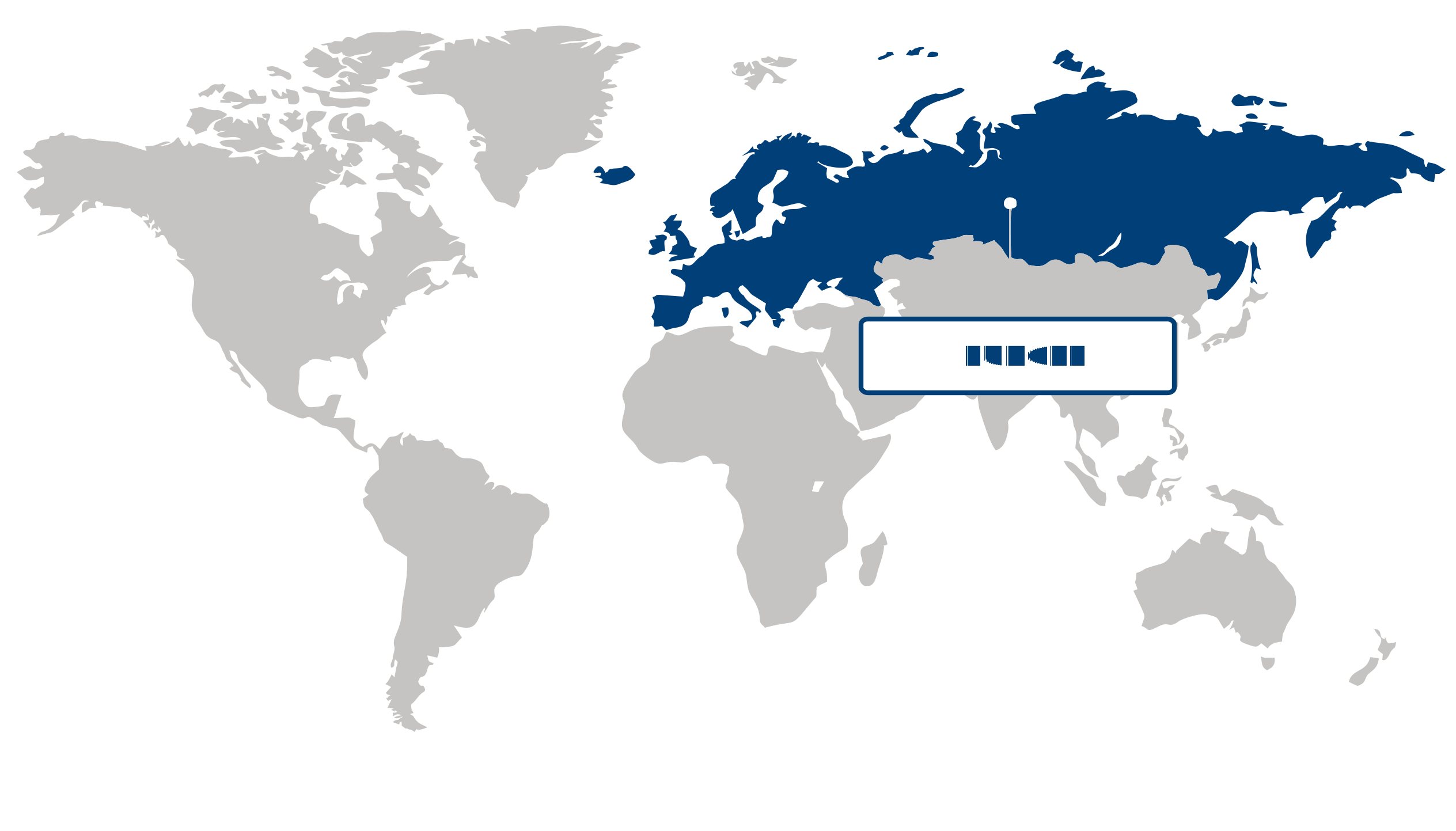
Europe captured over 44% of the global landfill gas capture and utilization market in 2025, establishing itself as the largest regional player. This dominance is primarily fueled by stringent waste management regulations and attractive renewable energy incentives that have accelerated project implementation across the continent. Countries within Europe have actively adopted circular economy principles, supported by the European Environment Agency’s guidelines, prompting industries and municipalities to invest heavily in landfill gas technologies. These efforts are further amplified by advancements in gas upgrading systems and integration with local power grids, as seen in initiatives led by companies like Engie and Veolia. The region’s mature renewable energy landscape and robust policy frameworks ensure significant future opportunities for scaling landfill gas capture, positioning Europe as an enduring innovation and investment hub in this market segment.
Germany anchors the European landfill gas capture and utilization market through its rigorous environmental standards and substantial green energy commitments. The Federal Ministry for the Environment’s policies, combined with attractive feed-in tariffs, have incentivized waste management companies such as Remondis and Berlin-based waste-to-energy projects to advance landfill gas technologies. These developments reflect a wider national push for energy transition and carbon neutrality, which drives substantial adoption rates. Germany’s leadership in technology and infrastructure sets a benchmark that reinforces Europe’s overall market growth and offers strategic opportunities for investors prioritizing sustainable waste-to-energy initiatives.
France plays a pivotal role in the European landfill gas capture and utilization market by leveraging its progressive environmental regulations and funding schemes for renewable energy projects. Initiatives spearheaded by ADEME (the French Environment and Energy Management Agency) have fostered innovation in biogas recovery and utilization, encouraging public-private partnerships. Companies like Suez and Veolia have implemented advanced landfill gas upgrading plants, capitalizing on government-backed incentives that enhance project viability. This dynamic supports France’s national climate goals and complements regional efforts, further solidifying Europe’s stature and presenting actionable avenues for expansion within the landfill gas capture and utilization market.
Asia Pacific Market Analysis:
Asia Pacific emerged as the fastest-growing region in the landfill gas capture and utilization market, registering a robust CAGR of 8.8%. This rapid growth is primarily driven by the region’s rapid urbanization coupled with an increasing focus on waste-to-energy projects. Expanding urban centers are intensifying waste generation, prompting governments and private enterprises to adopt landfill gas technologies to mitigate environmental impact and harness energy. Key players, including the Asian Development Bank, have underscored initiatives supporting sustainable urban infrastructure, reflecting a broad commitment to circular economy principles. Additionally, advancements in operational efficiencies and tightening environmental regulations across countries like China and Japan are fostering a conducive environment for market growth. Looking ahead, the region’s integration of smart waste management solutions and investment in renewable energy infrastructures positions Asia Pacific as a critical hub for innovation and expansion in landfill gas utilization.
Japan plays a pivotal role in Asia Pacific’s landfill gas capture and utilization market, leveraging advanced technologies and regulatory frameworks promoting clean energy adoption. The country’s stringent standards for landfill emissions and strong governmental backing for waste-to-energy projects are shaping progressive market dynamics. Notably, Japan’s Ministry of the Environment has endorsed pilot programs that retrofit aging landfill sites with methane capture systems, demonstrating commitment to reducing greenhouse gases while generating renewable energy. Consumer preference for environmentally responsible energy sources and the presence of sophisticated supply chains further accelerate uptake. Consequently, Japan’s leadership in technological innovation and policy enforcement reinforces Asia Pacific’s overall momentum in this market.
China exemplifies how rapid urbanization drives market expansion in Asia Pacific’s landfill gas capture and utilization sector. The nation’s aggressive urban growth has amplified the volume of municipal solid waste, spurring large-scale investments in landfill gas recovery and utilization infrastructure. State-owned enterprises such as China Energy Engineering Corporation actively engage in projects integrating landfill gas into broader energy grids, illustrating strategic market positioning. Moreover, supportive policies from the National Development and Reform Commission aim to enhance renewable energy capacity, stimulating demand for landfill gas technologies. China’s burgeoning industrial base and evolving consumer sustainability awareness underline its critical contribution to regional growth, amplifying Asia Pacific’s opportunities for technological diffusion and energy transition within the landfill gas market.
North America Market Trends:
North America held a commanding share in the landfill gas capture and utilization market, driven by its robust environmental policies and growing emphasis on sustainable waste management. The region benefits from advanced regulatory frameworks, including stringent emission reduction targets enforced by the U.S. Environmental Protection Agency (EPA), which increasingly incentivize landfill gas-to-energy projects. Corporate commitments to carbon neutrality, exemplified by initiatives from companies like Waste Management, Inc., have stimulated adoption of cutting-edge gas capture technologies. Additionally, rising energy prices and demand for renewable energy sources have supported market expansion, with logistics and infrastructure maturity ensuring efficient project execution. The widespread adoption of digital monitoring solutions and growing awareness among municipalities further underpin steady market growth. Looking ahead, North America’s blend of regulatory support and technology integration promises sustained opportunities for landfill gas capture and utilization ventures.
The U.S. remains a key driver in the landfill gas capture and utilization market within North America, underpinned by federal incentives such as the Renewable Energy Production Tax Credit and robust state-level mandates promoting renewable energy portfolio standards. Regulatory agencies like the EPA continually update guidelines promoting methane capture, encouraging investments in landfill gas energy projects. Leading waste management companies such as Republic Services have announced strategic expansions in landfill gas-to-energy initiatives, reinforcing infrastructure capabilities. Consumer preference for green energy and corporate sustainability goals, as reflected in public commitments by corporations like Microsoft, amplify market demand. Consequently, the U.S. sustains a competitive edge, making it central to regional strategies and capital allocation in landfill gas exploitation.
| Parameter | North America | Asia Pacific | Europe | Latin America | MEA |
|---|---|---|---|---|---|
| Innovation Hub i Scale Nascent Developing Advanced | |||||
| Cost-Sensitive Region i Scale Low Medium High | |||||
| Regulatory Environment i Scale Restrictive Neutral Supportive | |||||
| Demand Drivers i Scale Weak Moderate Strong | |||||
| Development Stage i Scale Emerging Developing Developed | |||||
| Adoption Rate i Scale Low Medium High | |||||
| New Entrants / Startups i Scale Sparse Moderate Dense | |||||
| Macro Indicators i Scale Weak Stable Strong |
Segment Leadership and Growth Trends
Landfill Gas Capture and Utilization Market Share (%), by Product Type, 2026
Go beyond the chart, access full insights & data tables
Request Free Sample ReportRenewable natural gas held the largest share of the landfill gas capture and utilization market in 2025, driven chiefly by escalating incentives and policies promoting clean biogas upgrading and integration into renewable energy frameworks. This segment benefits from growing regulatory mandates targeting greenhouse gas reductions, encouraging developers to focus on purifying landfill gas into pipeline-quality biomethane. Entities like the U.S. Environmental Protection Agency (EPA) and the European Biogas Association have underscored the environmental advantages of renewable natural gas, reinforcing industry adoption. The segment’s alignment with sustainability priorities and governmental carbon reduction targets fosters competitive differentiation and investment appeal for both established energy firms and emerging biogas technology providers. As infrastructure and policy frameworks advance, renewable natural gas is positioned to maintain its pivotal role in transforming landfill emissions into viable, low-carbon energy sources over the near to medium term.
Analysis by Application
Electricity generation represented the largest share within the landfill gas capture and utilization market in 2025, supported by a rise in distributed energy projects leveraging landfill gas for onsite power production. The segment’s leadership is tied to its capacity to deliver reliable, clean electricity that aligns with grid decentralization trends and energy security objectives embraced globally. Industry players such as Enel Green Power and Covanta have publicly highlighted their deployment of landfill gas-to-electricity technologies, showcasing scalability and operational efficiencies. Increasing regulatory support for renewable power generation and corporate commitments toward sustainability bolster demand. This segment offers strategic opportunities for energy providers to integrate circular economy principles while responding to evolving grid demands. Continued innovation and regulatory momentum suggest electricity generation will sustain its relevance as a key application for landfill gas utilization in energy portfolios.
| Segment | Sub-Segment | Largest Segment | Fastest Growing |
|---|---|---|---|
| Product Type | Landfill Gas (Direct), Medium-Btu, Renewable Natural Gas | ||
| Application | Thermal/Heat Generation, Electricity Generation, Fuels |
Competitive Landscape and Market Positioning
The competitive environment is marked by intensified investments in innovative gas capture technologies and diversification of energy recovery offerings. Several key players have forged partnerships and expanded service portfolios, enhancing end-to-end value delivery for clients. For instance, Chevron’s integration with clean energy ventures and Veolia’s focus on circular economy initiatives reflect forward-looking approaches that elevate their market positioning. Waste Management and Republic Services have broadened their technological assets, including on-site energy generation systems, creating competitive differentiation. European leaders Suez and Remondis continue advancing sustainable waste-to-energy processes, reinforcing their ability to meet stringent environmental mandates. These enhancements foster a dynamic market where innovation and strategic expansion drive resilience and growth.
Strategic / Actionable Recommendations for Regional Players
North American companies should deepen collaborations with technology firms specializing in advanced gas purification and power generation to enhance operational efficiency. Focusing on modular and scalable systems tailored for municipal solid waste streams could unlock new commercial avenues while responding to growing regulatory pressures.
In Asia Pacific, players can capitalize on rapid urbanization by aligning landfill gas utilization with smart city initiatives and renewable energy integration. Embracing digital monitoring and predictive maintenance tools will optimize asset performance and support sustainable infrastructure development.
European entities should leverage their regulatory expertise to pioneer circular economy models, combining landfill gas capture with waste reduction programs and bioenergy innovations. Forming alliances across the value chain will further consolidate competitive advantage amid tightening environmental standards.
| Company | Market Share | Company Revenue | Revenue CAGR (%) | Product Portfolio | Geographic Presence | Innovation / R&D Focus | Strategic Developments |
|---|---|---|---|---|---|---|---|
| No companies available. | |||||||
Industry Development/News
| Company Name | Date | Key Development |
|---|
Customize Your Report
Explore examples of how this report can be tailored to different research needs, including custom segments, additional topics or chapters, and related reports. Click a section of the wheel or its numbered marker to explore the available options.
Landfill Gas Capture and Utilization Market — Custom Segments
| Segment | Sub-Segment |
|---|---|
| No segment data available. | |
Landfill Gas Capture and Utilization Market — Custom TOC
| Custom Chapter | Custom Details | ||
|---|---|---|---|
| No custom TOC data available. | |||
Need a different cut of the data?
Request Custom ResearchHow is the landfill gas capture and utilization industry size expected to evolve during the forecast period?
Which geographic area exhibits the highest level of landfill gas capture and utilization market penetration?
Which region leads in terms of year-over-year growth for the landfill gas capture and utilization sector?
Which is the largest sub-segment within the product type segment for landfill gas capture and utilization industry?
Why does electricity generation sub-segment dominate the application segment of landfill gas capture and utilization sector?
What are the prominent companies operating in the landfill gas capture and utilization landscape?
Our Clients
"The information presented in the report was genuinely insightful. The data was clear and easy to understand, which made it much easier to interpret the findings."
Amara Raja Group
"The responsiveness and professionalism exhibited by the team were exemplary. They were readily available to address queries, provide clarifications, and offer additional insights."
ONGC
"The reports offered a comprehensive analysis of various segments within the market. The detailed insights into market trends, and regulatory landscapes were excellent."
TotalEnergies
Our Research Team & Methodology
Every Fundamental Business Insights report is built by a dedicated vertical research team, validated through a structured primary-and-secondary methodology, and reviewed for accuracy before it reaches you.
Research Team Overview
Prepared by the Energy & Power Research Team
Delivery
Published
Demand
Available
Support
Trust & Compliance
Research Domains
10 coverage areasResearch Intelligence
| Source | Reference |
|---|---|
| International Energy Agency (IEA) | www.iea.org |
| U.S. Energy Information Administration (EIA) | www.eia.gov |
| International Renewable Energy Agency (IRENA) | www.irena.org |
| International Electrotechnical Commission (IEC) | www.iec.ch |
| International Organization for Standardization (ISO) | www.iso.org |
| IEEE | www.ieee.org |
| CIGRE (International Council on Large Electric Systems) | www.cigre.org |
| World Energy Council (WEC) | www.worldenergy.org |
| U.S. Department of Energy (DOE) | www.energy.gov |
| International Atomic Energy Agency (IAEA) | www.iaea.org |
| American Petroleum Institute (API) | www.api.org |
| Society of Petroleum Engineers (SPE) | www.spe.org |
| Hydrogen Council | hydrogencouncil.com |
| Battery Council International (BCI) | batterycouncil.org |
| Global Wind Energy Council (GWEC) | gwec.net |
| SolarPower Europe | www.solarpowereurope.org |
| World Bioenergy Association (WBA) | worldbioenergy.org |
| International Hydropower Association (IHA) | www.hydropower.org |
| Edison Electric Institute (EEI) | www.eei.org |
| National Renewable Energy Laboratory (NREL) | www.nrel.gov |
Research Workflow & Quality Assurance
Data Collection
Verified information gathered through primary and secondary research.
Data Triangulation
Cross-validation using multiple independent data sources.
Forecast Modelling
Market estimates developed using historical trends and analytical models.
Analyst Validation
Findings reviewed by domain experts for accuracy and consistency.
Editorial & Quality Review
Final editorial, quality, and compliance checks before publication.
Final Publication
Released after successful completion of the internal review process.
Report Coverage
📊 Market Assessment
- Market Size & Forecast
- Market Segmentation
- Regional Analysis
- Growth Drivers & Challenges
- Market Dynamics
🏢 Competitive Intelligence
- Competitive Landscape
- Company Profiles
- Competitive Benchmarking
- Mergers & Acquisitions
- Market Share Analysis or Key Company Strategies
🔍 Strategic Analysis
- Value Chain Analysis
- Porter's Five Forces
- PESTLE Analysis
- Pricing Trends
- Supply-Demand Analysis
🚀 Future Outlook
- Technology Landscape
- Regulatory Landscape
- Investment & Funding Landscape
- Emerging Opportunities
- Future Market Outlook
Have a question about this report or need a custom scope?
Request Customization