Infant Formula Market Size & Forecasts 2026-2035, By Segments (Distribution Channel, Ingredient, Form, Product Type), Growth Opportunities, Innovation Landscape, Regulatory Shifts, Strategic Regional Insights (U.S., Japan, China, South Korea, UK, Germany, France), and Competitive Dynamics (Abbott, Nestlé, Danone, Reckitt Benckiser, Meiji)
Market Size and Growth Outlook
Infant Formula Market size is predicted to expand from USD 93.06 billion in 2025 to USD 248.04 billion by 2035, with growth underpinned by a CAGR above 10.3% between 2026 and 2035. The industry revenue outlook for 2026 is USD 101.61 billion.
Get more details on this report
Request Free Sample ReportInfant Formula Market Intelligence Snapshot
Regional Market Dynamics
Segment Momentum
Market Expansion Drivers
Leading Market Participants
Global Market Forecast Snapshot
Market Outlook
Regional and Segment Outlook
Market Growth Drivers and Industry Trends
The expanding global population, particularly in emerging economies, is significantly driving growth in the infant formula market. Rising urbanization and dual-income household structures boost demand as working parents seek convenient alternatives to breastfeeding. According to UNICEF, urban birth rates are increasing in countries such as India and China, fueling consumption of infant nutrition products. This trend encourages manufacturers like Nestlé and Abbott Laboratories to scale production and enhance distribution networks in high-growth regions. For established firms, this offers opportunities to optimize supply chains and localize products, while new entrants can target underserved markets with tailored offerings. As demographic shifts continue, companies focusing on accessibility and affordability will strengthen their competitive positioning in the infant formula market.
Increasing Awareness of Infant Health and Fortified Formulas
Growing parental awareness of infant nutrition’s impact on long-term health is elevating demand for fortified and functional infant formulas. The World Health Organization and American Academy of Pediatrics emphasize the importance of nutrients such as DHA, prebiotics, and vitamins, spurring industry innovation toward enhanced product formulations. Mead Johnson and Danone have responded by launching research-backed, nutrient-enriched formulas, catering to health-conscious consumers. This shift enables players in the infant formula market to differentiate through science-based marketing and invest in R&D for specialized ingredients. As health literacy improves and regulatory bodies tighten labeling standards, companies prioritizing transparency and efficacy will gain consumer trust and market share.
Expansion of Premium and Specialty Infant Formulas
Premium and specialty infant formulas targeting specific nutritional needs are reshaping the infant formula market. Brands like HiPP and Bubs Australia increasingly offer organic, hypoallergenic, and non-GMO variants to satisfy discerning consumers willing to pay a price premium. This trend is driven by greater consumer focus on sustainability, product safety, and allergy management, as highlighted in recent reports from the Organic Trade Association and Food Allergy Research & Education. Established players can leverage their scale to develop diverse portfolios, while new entrants benefit from agile innovation in niche segments. As buyers demonstrate growing willingness to invest in tailored nutrition, the market landscape will evolve toward greater product segmentation and value-added offerings.
Industry Restraints:
Stringent Regulatory Compliance and Labeling Requirements
Regulatory complexities significantly restrict the infant formula market’s expansion by imposing rigorous standards on product composition, safety, and marketing practices. Agencies such as the U.S. Food and Drug Administration (FDA) and the European Food Safety Authority (EFSA) enforce stringent guidelines that companies must navigate, often leading to prolonged approval timelines and costly reformulations. For example, the FDA’s Infant Formula Act mandates precise nutrient specifications and manufacturing practices, constraining innovation and slowing time-to-market. These compliance burdens disproportionately challenge smaller entrants lacking extensive regulatory expertise or resources, while incumbents face high operational costs to maintain multi-jurisdictional compliance. Given intensifying scrutiny over infant nutrition safety, these regulatory pressures will likely persist, compelling market players to enhance regulatory capabilities and invest in adaptive strategies to sustain competitiveness amid evolving standards.
Supply Chain Disruptions and Ingredient Sourcing Constraints
Volatility in supply chains, particularly related to critical raw materials such as dairy proteins and specialty nutrients, poses a major restriction on infant formula market growth. Events like the COVID-19 pandemic illustrated vulnerabilities, with firms like Nestlé and Danone publicly reporting ingredient shortages that led to production delays and product rationing. Dependence on geographically concentrated suppliers and limited alternatives for high-quality inputs intensifies operational risks. These challenges force manufacturers to prioritize inventory management and diversify supply sources while balancing cost implications. Both established companies and new entrants face these sourcing constraints, which may hinder market responsiveness and innovation speed. Moving forward, ongoing geopolitical tensions and climate-driven agricultural disruptions suggest persistent supply chain fragility, necessitating strategic investments in supply resilience and sustainable procurement practices.
| Growth Driver | Impact on CAGR | Regulatory Influence | Geographic Relevance | Adoption Rate | Impact Timeline |
|---|---|---|---|---|---|
| Rising global demand for infant nutrition products | 3.80% | Short term (≤ 2 yrs) | Asia Pacific, North America; Spillover: Europe | Medium | Fast |
| Increasing awareness of infant health and fortified formulas | 3.30% | Medium term (2–5 yrs) | Europe, Asia Pacific; Spillover: North America | Low | Moderate |
| Expansion of premium and specialty infant formulas | 3.20% | Long term (5+ yrs) | North America, Europe; Spillover: Asia Pacific | Low | Slow |
Unlock insights tailored to your business with our bespoke market research solutions.
Click to get your customized report now.
Regional Demand Dynamics
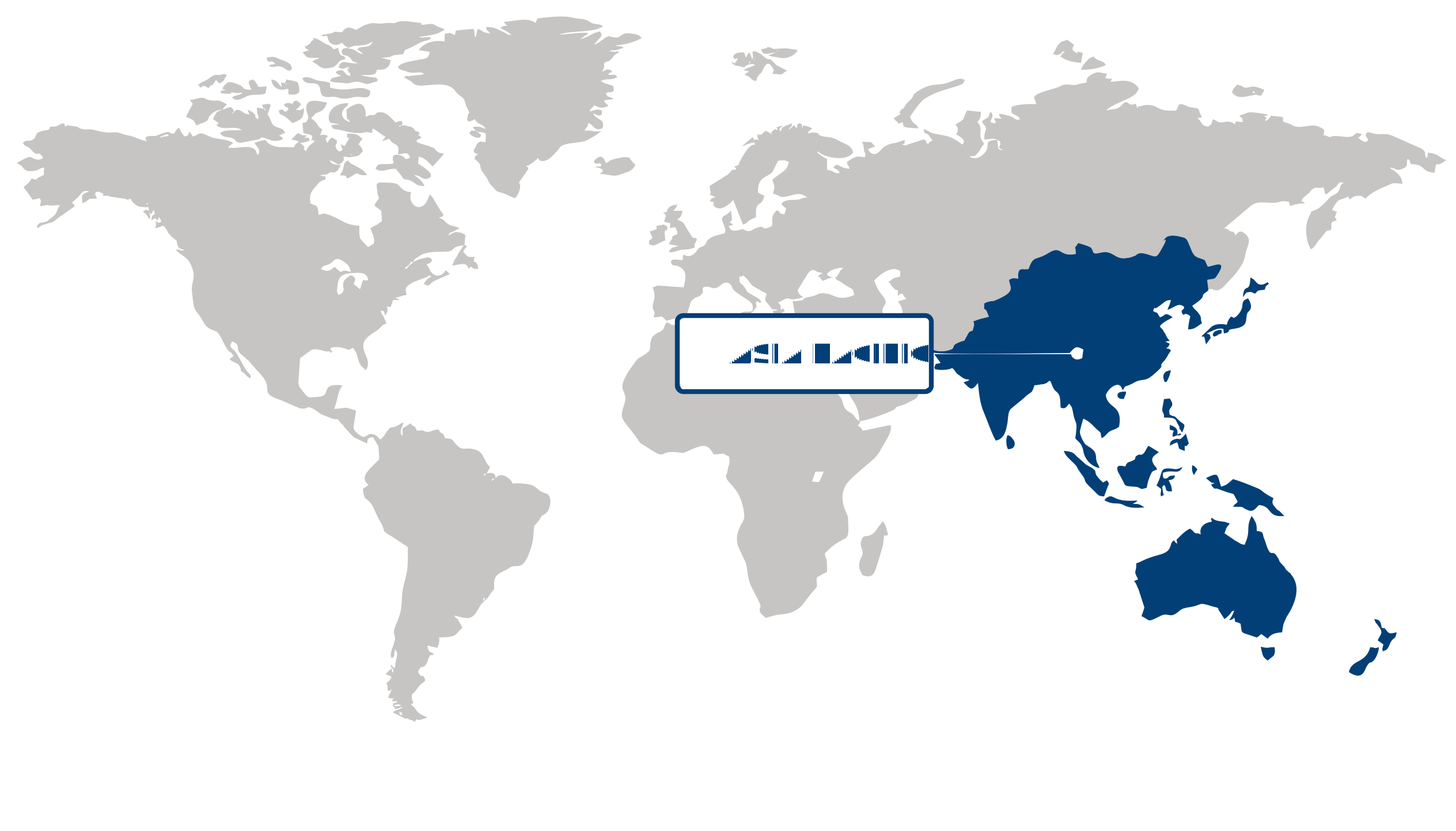
The Asia Pacific infant formula market dominated with a 68.7% share in 2025, also emerging as the fastest-growing region at a CAGR of 12.36%. This leadership is driven primarily by rising urbanization and a surging demand for convenient, high-nutrition products in populous markets like China and India. Increasing dual-income households and changing lifestyles fuel preference shifts toward premium infant nutrition, supported by enhanced distribution networks and digital retail platforms. Regulatory bodies such as China’s National Medical Products Administration (NMPA) have tightened quality standards, boosting consumer confidence and encouraging domestic and international brand competition. Additionally, sustainability initiatives among key players like Meiji Holdings emphasize eco-friendly packaging, aligning with growing environmental awareness in the region. These multidimensional dynamics position Asia Pacific as a strategic hub offering robust opportunities for innovation and market expansion in infant formula.
China anchors the Asia Pacific infant formula market with robust urban growth and evolving parental preferences for scientifically advanced nutrition products. Policies enhancing infant health awareness, driven by the China Food and Drug Administration (CFDA), have heightened demand for safe, fortified formulas. Companies such as Beingmate and Biostime have leveraged e-commerce channels extensively, tapping into tech-savvy consumers prioritizing product authenticity and convenience. Enhanced supply chain efficiencies, partly a response to past regulatory reforms, ensure wider regional product accessibility. China’s unique regulatory environment and consumer sophistication underscore its pivotal role in shaping regional market trajectories and investment plans.
Japan plays a pivotal role in the Asia Pacific infant formula market as a key innovation and quality benchmark source. The country’s aging population and declining birth rates boost demand for premium, scientifically formulated products aimed at infant health optimization. Regulatory agencies like the Ministry of Health, Labour and Welfare (MHLW) enforce stringent safety protocols, encouraging advanced research and development by companies such as Meiji and Morinaga Milk Industry. Technological advancements in formulation to meet specific nutritional needs reflect Japan's commitment to high-quality standards, influencing regional consumer expectations and competitive strategies. Japan’s focus on innovation and quality assurance reinforces Asia Pacific’s market dominance and presents valuable insights for regional stakeholders.
North America Market Analysis:
North America maintained a notable market presence in the infant formula market, holding a significant share driven primarily by the region’s robust healthcare infrastructure and high consumer spending power on premium nutrition products. Increasing awareness of infant health and safety, along with shifting parental preferences toward organic and specialty formulas, has spurred demand. Regulatory frameworks enforced by bodies such as the U.S. Food and Drug Administration (FDA) ensure product safety and quality, bolstering consumer confidence. Additionally, digital transformation in retail, including e-commerce platforms like Amazon and Walmart, has enhanced accessibility and convenience for consumers. The presence of prominent players like Abbott Laboratories and Mead Johnson Nutrition further intensifies competitive dynamics while driving innovation. Moving forward, North America’s emphasis on clean-label products and sustainable packaging presents compelling opportunities for investors seeking growth in the infant formula market.
The U.S. serves as a pivotal market within North America’s infant formula sector, fueled by a diverse population and rising dual-income households prioritizing child nutrition. Consumer demand in the U.S. notably leans toward organic and non-GMO formulas, responding to heightened health consciousness as demonstrated through retail expansion by brands like Gerber (a Nestlé company). Regulatory vigilance by the FDA, especially following recent formula supply disruptions, has led to more stringent safety protocols impacting product availability and pricing strategies. Furthermore, technological advancements in manufacturing and supply chain resilience underpin the U.S.’s leadership role. These factors collectively position the U.S. as a dynamic market whose evolution reinforces North America’s stronghold and unlocks sustained opportunities in the infant formula market regionally.
Europe Market Trends:
Europe maintained a notable presence in the infant formula market, exhibiting moderate growth driven by evolving consumer preferences and heightened regulatory scrutiny. The region’s commitment to safety and quality standards, combined with increasing parental awareness of nutritional benefits, has catalyzed demand shifts favoring premium and organic infant formula products. Furthermore, European nations show rising investment in sustainable production practices, reflecting broader environmental priorities. European regulatory bodies such as the European Food Safety Authority (EFSA) enforce stringent labeling and composition guidelines, encouraging innovation among manufacturers. Logistics efficiency and established supply chains also ensure consistent availability across diverse markets. These combined dynamics position Europe as a resilient and strategically important region for sustained infant formula market growth, offering compelling opportunities for investors and stakeholders focused on quality and compliance-driven product development.
Germany functions as a key market influencer within the European infant formula market, driven by its strong regulatory framework and increasing health-conscious consumer base. German consumers prioritize infant nutrition safety, stimulating demand for hypoallergenic and specialized formula types, as highlighted in recent product launches by companies like Hipp and Nestlé Deutschland. Additionally, Germany’s sophisticated retail infrastructure supports expansive distribution channels, facilitating market penetration. Emphasis on research and development collaborations between German industry leaders and academic institutions further fuels product innovation. This environment endorses Germany as a critical hub where regulatory rigor and consumer-driven quality converge, bolstering the broader European market’s growth trajectory.
France stands out as a significant contributor to Europe’s infant formula market, characterized by cultural preferences for organic and natural product alternatives. French consumers increasingly demand transparency and clean-label formulations, encouraging firms such as Danone and Laboratoire Gallia to expand their organic infant formula portfolios. Additionally, the French government’s supportive policies for domestic dairy production ensure stable raw material supply, strengthening local manufacturing capabilities. The presence of established domestic brands coupled with a growing e-commerce sector enhances accessibility and consumer engagement. As France leverages its unique cultural drivers and policy support, it reinforces Europe’s overall infant formula market momentum, creating distinctive opportunities for diversification and premiumization in the regional landscape.
| Parameter | North America | Asia Pacific | Europe | Latin America | MEA |
|---|---|---|---|---|---|
| Innovation Hub i Scale Nascent Developing Advanced | |||||
| Cost-Sensitive Region i Scale Low Medium High | |||||
| Regulatory Environment i Scale Restrictive Neutral Supportive | |||||
| Demand Drivers i Scale Weak Moderate Strong | |||||
| Development Stage i Scale Emerging Developing Developed | |||||
| Adoption Rate i Scale Low Medium High | |||||
| New Entrants / Startups i Scale Sparse Moderate Dense | |||||
| Macro Indicators i Scale Weak Stable Strong |
Segment Leadership and Growth Trends
Infant Formula Market Share (%), by Distribution Channel, 2026
Go beyond the chart, access full insights & data tables
Request Free Sample ReportStore-based retailing held the largest share of the infant formula market in 2025, driven primarily by sustained consumer preference for in-store purchases and established retail trust networks. This segment benefits from shoppers’ desire to physically inspect products, access knowledgeable staff, and leverage brand visibility in trusted environments. The reliability of traditional retail chains like Walmart and Tesco underpins consistent demand, while robust supply chain infrastructures ensure product availability. Regulatory measures supporting product authenticity and safety further enhance store-based confidence. The segment offers strategic advantages by enabling experiential marketing and fostering brand loyalty for both incumbents and new entrants. Given entrenched consumer habits and ongoing investments in retail modernization, store-based retailing is poised to remain a cornerstone distribution channel in the infant formula market over the near to medium term.
Analysis by Ingredient
Whey protein concentrate represented the largest share in the infant formula market in 2025, fueled by its superior nutrition profile and high digestibility. This ingredient’s prominence aligns with heightened parental focus on infant health, backed by endorsements from organizations such as the European Food Safety Authority emphasizing whey protein’s role in supporting growth. Advances in dairy processing technologies have enhanced whey purity and bioavailability, meeting evolving consumer demands for clean-label and functional nutrition products. The segment provides opportunities for differentiation through specialty formulas and premium pricing strategies. Continued innovation in ingredient sourcing and processing, combined with increasing global awareness of infant nutritional needs, ensures the sustained relevance of whey protein concentrate within infant formula portfolios.
Analysis by Form
Powder held the largest share of the infant formula market in 2025, propelled by its unmatched convenience, extended shelf life, and cost-effectiveness. This format aligns with busy parental lifestyles and emerging markets where refrigeration logistics pose challenges, as highlighted by UNICEF’s reports on infant nutrition accessibility. The powder segment benefits from efficient packaging, streamlined shipping, and longer product stability, supporting global distribution scale. Industry leaders such as Nestlé leverage powder formulations to capture broad consumer bases through tiered pricing and wide availability. Its adaptability to technological innovations like instant mixing and fortified blends creates avenues for competitive differentiation. These factors collectively position powdered infant formula as a resilient and favored option, sustaining its market leadership amid evolving consumer and supply chain dynamics.
| Segment | Sub-Segment | Largest Segment | Fastest Growing |
|---|---|---|---|
| Distribution Channel | Online Retail, Store-Based Retailing | ||
| Ingredient | Protein Hydrolysate, Whey Protein Concentrate, Soy Protein Concentrate | ||
| Form | Liquid, Powder, Ready to Feed | ||
| Product Type | Special Milk, Toddlers Milk, Follow-On-Milk, Starting Milk |
Competitive Landscape and Market Positioning
The competitive landscape is marked by continuous moves to strengthen market presence through innovation and expanded offerings. Leading companies enhance portfolios by integrating cutting-edge nutritional research into product launches, supporting differentiation in a crowded market. Mergers, acquisitions, and partnerships enable entry into untapped geographies and niche segments, while leveraging technology optimizes supply chains and consumer outreach. For instance, cooperation between Western and Asian firms facilitates product localization and regulatory navigation. Investment in R&D fosters functional formulations responding to evolving parental preferences and health awareness. This dynamic environment compels incumbents to align strategic initiatives with emerging consumer trends, ensuring sustained relevance and competitive advantage through proactive adaptation and collaborative growth.
Strategic / Actionable Recommendations for Regional Players
In North America, aligning with health technology innovators can deepen product differentiation, while strategic ties with specialty retailers support outreach to premium subsegments focused on organic and allergen-free formulas. This approach can counterbalance intensifying competition from global entrants and capitalize on health-conscious demographics.
In the Asia Pacific region, fostering alliances with local biotechnology firms and leveraging digital platforms for education and direct consumer engagement will enhance market penetration. Tailoring offerings to specific cultural preferences and nutritional needs could boost brand loyalty amid rapid urbanization and shifting maternal awareness.
European players should consider expanding collaborations within the sustainable nutrition ecosystem, integrating environmental credentials with product development to resonate with socially responsible consumers. Emphasizing traceability and clean-label formulations will help differentiate against mainstream offerings and consolidate trust in a discerning market.
| Company | Market Share | Company Revenue | Revenue CAGR (%) | Product Portfolio | Geographic Presence | Innovation / R&D Focus | Strategic Developments |
|---|---|---|---|---|---|---|---|
| No companies available. | |||||||
Industry Development/News
| Company Name | Date | Key Development |
|---|
Customize Your Report
Explore examples of how this report can be tailored to different research needs, including custom segments, additional topics or chapters, and related reports. Click a section of the wheel or its numbered marker to explore the available options.
Infant Formula Market — Custom Segments
| Segment | Sub-Segment |
|---|---|
| No segment data available. | |
Infant Formula Market — Custom TOC
| Custom Chapter | Custom Details | ||
|---|---|---|---|
| No custom TOC data available. | |||
Need a different cut of the data?
Request Custom ResearchWhat are the growth projections for the infant formula industry?
What is the leading region in terms of infant formula market share?
Which area is showing the greatest surge in infant formula sector?
What factors give store-based retailing segment a competitive edge in the infant formula sector?
Which is the largest sub-segment within the ingredient segment for infant formula industry?
Why does powder sub-segment dominate the form segment of infant formula sector?
How does follow-on-milk segment fare in the infant formula industry?
Which companies dominate the infant formula landscape?
Our Clients
"The report provided a thorough look at market trends, technological advancements, and the competitive landscape. The depth of insights was really valuable."
ITC Limited
"We would highly recommend Fundamental Business Insights & Consulting to anyone looking for reliable, detailed, and comprehensive market research in the Food industry."
Tyson Foods
"The clarity and presentation of the information were commendable. The report was delivered timely, which made the overall experience smooth and convenient."
Mondelēz International
Our Research Team & Methodology
Every Fundamental Business Insights report is built by a dedicated vertical research team, validated through a structured primary-and-secondary methodology, and reviewed for accuracy before it reaches you.
Research Team Overview
Prepared by the Food & Beverage Research Team
Delivery
Published
Demand
Available
Support
Trust & Compliance
Research Domains
10 coverage areasResearch Intelligence
| Source | Reference |
|---|---|
| Food and Agriculture Organization (FAO) | www.fao.org |
| World Health Organization (WHO) | www.who.int |
| U.S. Food & Drug Administration (FDA) | www.fda.gov |
| European Food Safety Authority (EFSA) | www.efsa.europa.eu |
| U.S. Department of Agriculture (USDA) | www.usda.gov |
| Codex Alimentarius Commission | www.fao.org/fao-who-codexalimentarius |
| International Organization for Standardization (ISO) | www.iso.org |
| AOAC INTERNATIONAL | www.aoac.org |
| Institute of Food Technologists (IFT) | www.ift.org |
| International Dairy Foods Association (IDFA) | www.idfa.org |
| International Sweeteners Association (ISA) | www.sweeteners.org |
| International Probiotics Association (IPA) | internationalprobiotics.org |
| Good Food Institute (GFI) | gfi.org |
| American Feed Industry Association (AFIA) | www.afia.org |
| International Feed Industry Federation (IFIF) | ifif.org |
| Specialty Food Association (SFA) | www.specialtyfood.com |
| Brewers Association | www.brewersassociation.org |
| International Bottled Water Association (IBWA) | bottledwater.org |
| International Alliance for Dietary/Food Supplement Associations (IADSA) | www.iadsa.org |
| OECD Agriculture & Food | www.oecd.org/agriculture |
Research Workflow & Quality Assurance
Data Collection
Verified information gathered through primary and secondary research.
Data Triangulation
Cross-validation using multiple independent data sources.
Forecast Modelling
Market estimates developed using historical trends and analytical models.
Analyst Validation
Findings reviewed by domain experts for accuracy and consistency.
Editorial & Quality Review
Final editorial, quality, and compliance checks before publication.
Final Publication
Released after successful completion of the internal review process.
Report Coverage
📊 Market Assessment
- Market Size & Forecast
- Market Segmentation
- Regional Analysis
- Growth Drivers & Challenges
- Market Dynamics
🏢 Competitive Intelligence
- Competitive Landscape
- Company Profiles
- Competitive Benchmarking
- Mergers & Acquisitions
- Market Share Analysis or Key Company Strategies
🔍 Strategic Analysis
- Value Chain Analysis
- Porter's Five Forces
- PESTLE Analysis
- Pricing Trends
- Supply-Demand Analysis
🚀 Future Outlook
- Technology Landscape
- Regulatory Landscape
- Investment & Funding Landscape
- Emerging Opportunities
- Future Market Outlook
Have a question about this report or need a custom scope?
Request Customization