Industrial Protective Footwear Market Size & Growth Forecast 2027–2036, By Segments (Product, End Use), Regional Demand Trends (North America, Asia Pacific, Europe), Key Country Insights (U.S., Japan, South Korea, Germany, France, Italy), and Competitive Landscape
Market Size and Growth Outlook
Industrial Protective Footwear Market size was assessed at USD 12.8 billion in 2026 and is poised to grow at a 5.99% CAGR between 2027 and 2036, surpassing USD 22.9 billion by 2036. The industry revenue for 2027 is estimated at USD 13.45 billion.
Get more details on this report
Request Free Sample ReportIndustrial Protective Footwear Market Intelligence Snapshot
Regional Market Dynamics
- Europe captured 34.13% of the market in 2026 due to its strong industrial base, consistent workplace safety compliance, and steady replacement demand across manufacturing, construction, logistics, and energy sectors.
- Asia Pacific is expected to grow at a 7.01% CAGR as industrial employment expands and more workplaces adopt formal safety practices, increasing protective footwear procurement across manufacturing and construction sites.
Segment Momentum
- Leather accounted for 37.42% of the market in 2026 due to its durability, abrasion resistance, and long service life, making it the preferred choice across a wide range of industrial workplaces.
- Construction is expanding fastest because demanding site conditions require durable footwear with strong impact protection, slip resistance, and weather tolerance, driving higher adoption and replacement rates.
Market Expansion Drivers
- Rapid industrialization and infrastructure development increasing workforce exposure to occupational hazards.
- Strengthening workplace safety regulations driving mandatory adoption of protective footwear.
- Rising demand for lightweight and ergonomic safety footwear improving worker productivity and compliance.
Leading Market Participants
- Leading companies in the industrial protective footwear market include Honeywell International Inc (United States), Bata Corporation (Switzerland), Uvex Group (Germany), Wolverine World Wide, Inc. (United States), VF Corporation (United States), Dunlop Protective Footwear B.V. (Netherlands), COFRA S.r.l. (Italy), ELTEN GmbH (Germany), U-Power Group S.p.A. (Italy), Rahman Group (India).
Global Market Forecast Snapshot
Market Outlook
- 2026 Market Size: USD 12.8 billion
- 2027 Estimated Market Size: USD 13.45 billion.
- Projected Market Size: USD 22.9 billion by 2036
- Growth Forecast: 5.99% CAGR (2027-2036)
Regional and Segment Outlook
- Leading Regional Market: Europe
- High-Growth Regional Hub: Asia Pacific
- Core Revenue Segment: Leather (Product) | Manufacturing (End Use)
- Emerging Opportunity Segment: Rubber (Product) | Construction (End Use)
Market Growth Drivers and Industry Trends
Rapid industrialization and infrastructure development increasing workforce exposure to occupational hazards
Accelerated industrial activity and infrastructure construction are expanding the workforce operating in environments where exposure to physical and mechanical hazards is common, supporting the industrial protective footwear market across manufacturing, construction, logistics, mining, and related sectors. Workers in these industries may encounter risks from falling objects, sharp materials, heavy machinery, electrical exposure, slippery surfaces, and uneven terrain, creating a need for footwear designed to provide specialized protection during demanding operations. Infrastructure projects also require personnel to work across diverse job sites and challenging conditions, increasing the importance of durable footwear that can withstand repeated use while protecting workers from workplace injuries. As industrial facilities and construction activities expand, employers are placing greater emphasis on equipping workers with protective gear appropriate to specific occupational risks.
Strengthening workplace safety regulations driving mandatory adoption of protective footwear
More stringent occupational safety requirements are encouraging employers to formalize personal protective equipment programs, directly supporting the industrial protective footwear market through greater emphasis on compliant safety equipment. Regulatory standards covering impact protection, slip resistance, electrical hazards, penetration resistance, and other workplace risks encourage organizations to identify appropriate footwear according to the conditions faced by employees. Compliance requirements also increase the importance of standardized safety practices, particularly in industries where workplace inspections and risk assessments influence procurement decisions. Employers seeking to reduce accident exposure and demonstrate adherence to workplace safety obligations are therefore incorporating certified protective footwear into employee safety programs, with procurement decisions increasingly linked to both regulatory requirements and job-specific hazard profiles.
Rising demand for lightweight and ergonomic safety footwear improving worker productivity and compliance
Modern industrial workers are increasingly expected to remain mobile for extended periods, creating demand for protective footwear that combines safety performance with comfort, flexibility, and reduced weight, which will support the industrial protective footwear market. Traditional heavy safety footwear can contribute to fatigue during prolonged shifts, particularly for employees involved in construction, warehousing, manufacturing, and field operations. Manufacturers are consequently developing footwear with ergonomic designs, improved cushioning, breathable materials, flexible soles, and lighter protective components while maintaining required safety characteristics. Greater comfort can also encourage workers to consistently wear required protective equipment throughout their shifts, helping employers improve safety compliance without placing unnecessary restrictions on movement or increasing physical strain.
| Growth Driver | Impact on CAGR | Regulatory Influence | Geographic Relevance | Adoption Rate | Impact Timeline |
|---|---|---|---|---|---|
| Rapid industrialization and infrastructure development increasing workforce exposure to occupational hazards | 2.00% | High | Asia Pacific, Latin America | High | Near Term |
| Strengthening workplace safety regulations driving mandatory adoption of protective footwear | 1.80% | High | North America, Europe | High | Mid Term |
| Rising demand for lightweight and ergonomic safety footwear improving worker productivity and compliance | 1.50% | Moderate | Asia Pacific, Europe | Emerging | Mid Term |
Unlock insights tailored to your business with our bespoke market research solutions.
Click to get your customized report now.
Regional Demand Dynamics
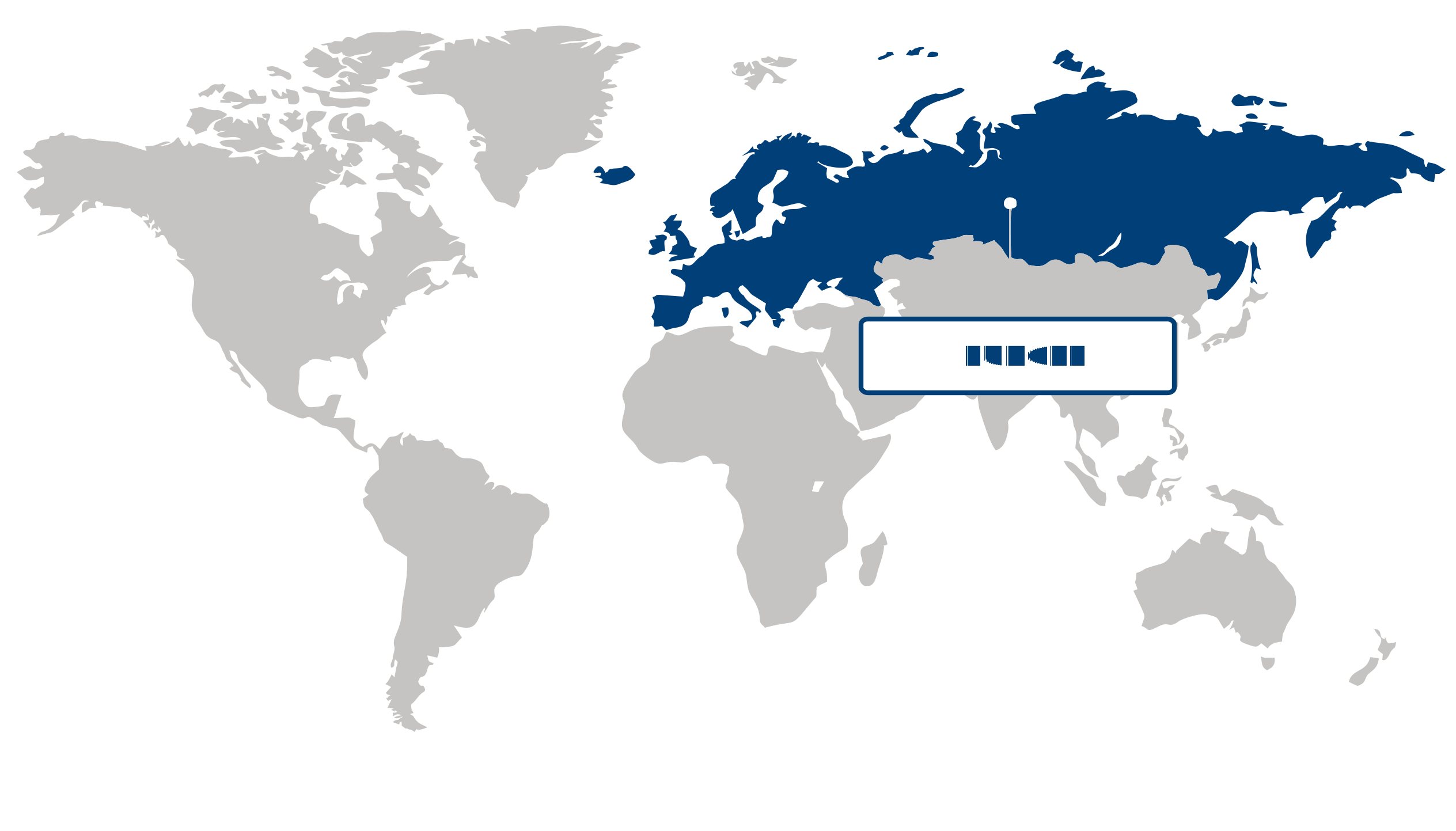
Europe (Largest Region)
Europe led the industrial protective footwear market in 2026, holding a 34.13% share, underpinned by stringent workplace safety requirements and well-established occupational health standards across industrial sectors. Strong demand from manufacturing, construction, logistics, energy, and other hazardous work environments supports consistent adoption of protective footwear designed for impact, puncture, chemical, electrical, and slip resistance. The region's focus on worker protection, product compliance, and safety-conscious procurement further encourages replacement and upgrading of protective footwear. Increasing attention to ergonomic design, wearer comfort, durability, and sustainable materials is also influencing purchasing decisions and supporting the development of higher-value products.
Asia Pacific (Fastest-Growing Region)
Asia Pacific is positioned as the fastest-growing region, supported by expanding manufacturing capacity, infrastructure development, and rising employment across construction and industrial activities. Rapid industrialization is increasing the number of workplaces where protection against mechanical, electrical, chemical, and environmental hazards is essential. At the same time, improving awareness of occupational safety and the gradual strengthening of workplace protection practices are encouraging greater use of certified protective footwear. Expanding supply chains, industrial expansion, and increasing investment in modern production facilities are expected to broaden demand across both established industrial economies and developing markets.
| Parameter | North America | Asia Pacific | Europe | Latin America | MEA |
|---|---|---|---|---|---|
| Innovation Hub i Scale Nascent Developing Advanced | |||||
| Cost-Sensitive Region i Scale Low Medium High | |||||
| Regulatory Environment i Scale Restrictive Neutral Supportive | |||||
| Demand Drivers i Scale Weak Moderate Strong | |||||
| Development Stage i Scale Emerging Developing Developed | |||||
| Adoption Rate i Scale Low Medium High | |||||
| New Entrants / Startups i Scale Sparse Moderate Dense | |||||
| Macro Indicators i Scale Weak Stable Strong |
Key Country Insights
Germany 🇩🇪
Precision Manufacturing DemandGermany focuses on high-performance industrial protective footwear designed for engineering, automotive, and industrial production environments. German manufacturers emphasize certified protection, product durability, and compatibility with demanding workplace safety standards.
France 🇫🇷
Regulatory Compliance SolutionsFrance emphasizes industrial protective footwear that aligns with occupational safety regulations across construction, manufacturing, and public infrastructure projects. Procurement increasingly favors products combining certified protection with sustainable manufacturing practices.
Italy 🇮🇹
Design-Driven Safety GearItaly integrates protective performance with product design, supporting demand from manufacturing, industrial, and specialty production sectors. Italian suppliers continue developing footwear that balances certified protection, durability, and wearer comfort.
Japan 🇯🇵
Ergonomic Protection FocusJapan prioritizes lightweight industrial protective footwear that enhances worker mobility while maintaining strict safety compliance. Japanese employers increasingly adopt ergonomically designed footwear to improve productivity and reduce worker fatigue in industrial facilities.
South Korea 🇰🇷
Industrial Workforce SupportSouth Korea is expanding adoption of industrial protective footwear across electronics, shipbuilding, and heavy manufacturing operations. Local buyers favor footwear offering advanced protective features alongside comfort for extended workplace use.
United States 🇺🇸
Workplace Safety InnovationThe U.S. industrial protective footwear market emphasizes advanced safety footwear with improved ergonomics, slip resistance, and compliance across manufacturing, construction, and logistics sectors. Buyers increasingly prioritize durable materials and employee comfort to support workplace safety initiatives.
Segment Leadership and Growth Trends
Industrial Protective Footwear Market Share (%), by Product, 2026
Go beyond the chart, access full insights & data tables
Request Free Sample ReportProduct Segment Analysis: Leather (Largest Segment) vs Rubber (Fastest-Growing Segment)
Leather accounted for the largest share of the industrial protective footwear market in 2026, at 37.42%. Its leading position is supported by the material's established reputation for durability, abrasion resistance, and suitability for demanding workplace environments. Leather protective footwear can provide a combination of structural support, comfort, and resistance to common industrial hazards, making it widely applicable across occupational settings. Its ability to withstand regular use while maintaining functional performance continues to make it a preferred material for workers requiring dependable protective footwear. Established manufacturing capabilities and familiarity among industrial users further reinforce its market position.
Rubber is the fastest-growing product segment, driven by its strong resistance to moisture, chemicals, abrasion, and other environmental conditions encountered in demanding workplaces. Rubber footwear is particularly suitable for applications where workers require protection against wet conditions or exposure to substances that may compromise conventional materials. Advances in footwear design are also improving comfort, flexibility, and ergonomic performance, expanding the material's suitability beyond traditional heavy-duty applications. Increasing workplace safety requirements and greater attention to specialized protective equipment are supporting the adoption of rubber-based industrial footwear.
End Use Segment Analysis: Manufacturing (Largest Segment) vs Construction (Fastest-Growing Segment)
Manufacturing represented the largest share of the industrial protective footwear market in 2026, accounting for 29.81%. The segment benefits from extensive requirements for foot protection in production environments where workers may face mechanical hazards, falling objects, slippery surfaces, heat, and other occupational risks. Protective footwear is an important component of workplace safety programs, particularly in facilities where employees operate machinery or handle materials throughout their workday. Increasing emphasis on occupational safety, compliance with workplace protection standards, and employee well-being continues to sustain demand across manufacturing operations.
Construction is the fastest-growing end-use segment, supported by the demanding and variable conditions encountered across construction sites. Workers may require footwear capable of providing protection against impact, puncture, slipping, moisture, and uneven terrain, creating strong demand for specialized protective designs. Expansion of construction activity and greater attention to worker safety are encouraging contractors to strengthen personal protective equipment requirements. Improvements in footwear ergonomics, durability, and hazard-specific protection are further increasing the suitability of advanced protective footwear for construction professionals.
| Segment | Sub-Segment | Largest Segment | Fastest Growing |
|---|---|---|---|
| Product | Leather, Rubber, PVC, Polyurethane, Others | Leather | Rubber |
| End Use | Construction, Manufacturing, Oil & Gas, Chemicals, Food, Pharmaceuticals, Healthcare, Transportation, Mining, Others | Manufacturing | Construction |
Competitive Landscape and Market Positioning
Major players in the industrial protective footwear market:
1. Honeywell International Inc (United States)
2. Bata Corporation (Switzerland)
3. Uvex Group (Germany)
4. Wolverine World Wide Inc. (United States)
5. VF Corporation (United States)
6. Dunlop Protective Footwear B.V. (Netherlands)
7. COFRA S.r.l. (Italy)
8. ELTEN GmbH (Germany)
9. U-Power Group S.p.A. (Italy)
10. Rahman Group (India)
Increasing workplace safety regulations are driving demand for advanced protective footwear solutions. The industrial protective footwear market is evolving with lightweight, high-durability materials designed for enhanced comfort and protection. Improved ergonomic design is reducing fatigue in long-duration usage environments. Growing emphasis on sustainable manufacturing practices is also influencing material innovation and product design.
| Company | Market Share | Company Revenue | Revenue CAGR (%) | Product Portfolio | Geographic Presence | Innovation / R&D Focus | Strategic Developments |
|---|---|---|---|---|---|---|---|
| Honeywell International Inc (United States) | |||||||
| Bata Corporation (Switzerland) | |||||||
| Uvex Group (Germany) | |||||||
| Wolverine World Wide Inc. (United States) | |||||||
| VF Corporation (United States) | |||||||
| Dunlop Protective Footwear B.V. (Netherlands) | |||||||
| COFRA S.r.l. (Italy) | |||||||
| ELTEN GmbH (Germany) | |||||||
| U-Power Group S.p.A. (Italy) | |||||||
| Rahman Group (India). |
Industry Development/News
| Company Name | Date | Key Development |
|---|---|---|
| Adidas / GLO Brands B.V. | Oct-25 | Adidas entered a long-term partnership with GLO Brands B.V. to develop safety footwear under the “Adidas Pro Work” label. The collaboration combines Adidas’ design capabilities with GLO’s PPE expertise to target industrial sectors such as construction, logistics, and maintenance, with initial product launches expected in selected distribution channels by Q2 2026. |
| ASICS | Aug-25 | ASICS launched CP6 S3 G-TX BOA® Mid-Cut work boots featuring fuzeGEL cushioning and GORE-TEX waterproof protection. The product expands ASICS’ presence beyond athletic footwear into industrial protective segments, targeting construction and industrial workers requiring enhanced comfort, durability, and weather resistance in demanding operational environments. |
| Coats Group | Jul-25 | Coats Group acquired OrthoLite for USD 770 million, strengthening its position in footwear insole and cushioning technologies relevant to protective footwear applications. The acquisition enhances material innovation capabilities and supports footwear manufacturers seeking advanced comfort, performance, and ergonomic solutions across industrial safety and performance-driven segments. |
| Honeywell International Inc. / Protective Industrial Products (PIP) | May-25 | Honeywell completed the divestiture of its Personal Protective Equipment business to Protective Industrial Products in an all-cash transaction valued at approximately USD 1.325 billion. The deal includes protective footwear operations and manufacturing assets, enabling Honeywell to streamline its portfolio while significantly strengthening PIP’s global scale, distribution reach, and integrated head-to-toe industrial safety product offering. |
| Uvex Group | 2024 | Uvex Group expanded its sustainable manufacturing initiatives by increasing the use of recycled industrial materials in protective footwear production. This development strengthens the company’s environmental positioning while supporting broader industry demand for sustainable safety footwear solutions without compromising protective performance or compliance standards. |
| Wolverine World Wide Inc | 2024 | Wolverine World Wide expanded its lightweight composite toe industrial footwear technologies, enhancing product safety and reducing weight burden for industrial users. The initiative reinforces the company’s competitive positioning in ergonomic protective footwear by improving comfort and durability for workers in manufacturing, logistics, and construction environments. |
Customize Your Report
Explore examples of how this report can be tailored to different research needs, including custom segments, additional topics or chapters, and related reports. Click a section of the wheel or its numbered marker to explore the available options.
Industrial Protective Footwear Market — Custom Segments
| Segment | Sub-Segment |
|---|---|
| Protection Type | Impact Protection, Puncture Protection, Electrical Protection, Chemical Protection, Slip & Heat Protection |
| Safety Standard | ASTM Standards, EN/ISO Standards, CSA Standards, Other Regional Standards |
| Distribution Channel | Direct Sales, Industrial & Safety Distributors, Specialty Retailers, Online Channels |
Industrial Protective Footwear Market — Custom TOC
| Custom Chapter | Custom Details |
|---|---|
| Industrial Footwear Demand by Hazard Category |
|
| Protective Footwear Innovation Adoption Trends |
|
| End-User Buying Criteria Analysis |
|
Need a different cut of the data?
Request Custom ResearchHow big is the industrial protective footwear market?
How is the industrial protective footwear industry projected to perform over the next decade?
How are workplace safety regulations influencing procurement strategies in the industrial protective footwear market?
Why is demand shifting toward ergonomic protective footwear in the industrial protective footwear market?
Why does Leather lead the industrial protective footwear market?
Why is Construction the fastest-growing end-use segment in the industrial protective footwear market?
Why does Europe hold the largest share of the industrial protective footwear market?
What factors are accelerating industrial protective footwear demand in Asia Pacific?
Who are the major participants shaping the industrial protective footwear landscape?
Our Clients
"The report provided us with a clear direction, and the level of detail was beyond what we expected. I would definitely recommend their services to others."
Haier Appliances
"The collaboration with Fundamental Business Insights has added significant value to our decision-making process, and we look forward to continuing this partnership for our future market research requirements."
Luxottica Group S.p.A.
"The team at FBI delivered an exceptional research report. The insights on industry innovations were particularly impressive and added a lot of value to the overall report."
Nike
Our Research Team & Methodology
Every Fundamental Business Insights report is built by a dedicated vertical research team, validated through a structured primary-and-secondary methodology, and reviewed for accuracy before it reaches you.
Research Team Overview
Prepared by the Consumer Goods & Services Research Team
Delivery
Published
Demand
Available
Support
Trust & Compliance
Research Domains
10 coverage areasResearch Intelligence
| Source | Reference |
|---|---|
| International Organization for Standardization (ISO) | www.iso.org |
| ASTM International | www.astm.org |
| U.S. Consumer Product Safety Commission (CPSC) | www.cpsc.gov |
| European Commission – Consumer Safety | ec.europa.eu/safety-gate |
| Consumer Technology Association (CTA) | www.cta.tech |
| National Retail Federation (NRF) | nrf.com |
| World Retail Congress | www.worldretailcongress.com |
| World Travel & Tourism Council (WTTC) | wttc.org |
| UN Tourism | www.unwto.org |
| Personal Care Products Council (PCPC) | www.personalcarecouncil.org |
| Cosmetics Europe | cosmeticseurope.eu |
| International Housewares Association (IHA) | www.housewares.org |
| American Apparel & Footwear Association (AAFA) | www.aafaglobal.org |
| World Federation of the Sporting Goods Industry (WFSGI) | wfsgi.org |
| Juvenile Products Manufacturers Association (JPMA) | www.jpma.org |
| Pet Industry Joint Advisory Council (PIJAC) | pijac.org |
| International Council of Toy Industries (ICTI) | www.toy-icti.org |
| International Association of Amusement Parks and Attractions (IAAPA) | iaapa.org |
| Organisation for Economic Co-operation and Development (OECD) | www.oecd.org |
| World Bank Data | data.worldbank.org |
Research Workflow & Quality Assurance
Data Collection
Verified information gathered through primary and secondary research.
Data Triangulation
Cross-validation using multiple independent data sources.
Forecast Modelling
Market estimates developed using historical trends and analytical models.
Analyst Validation
Findings reviewed by domain experts for accuracy and consistency.
Editorial & Quality Review
Final editorial, quality, and compliance checks before publication.
Final Publication
Released after successful completion of the internal review process.
Report Coverage
📊 Market Assessment
- Market Size & Forecast
- Market Segmentation
- Regional Analysis
- Growth Drivers & Challenges
- Market Dynamics
🏢 Competitive Intelligence
- Competitive Landscape
- Company Profiles
- Competitive Benchmarking
- Mergers & Acquisitions
- Market Share Analysis or Key Company Strategies
🔍 Strategic Analysis
- Value Chain Analysis
- Porter's Five Forces
- PESTLE Analysis
- Pricing Trends
- Supply-Demand Analysis
🚀 Future Outlook
- Technology Landscape
- Regulatory Landscape
- Investment & Funding Landscape
- Emerging Opportunities
- Future Market Outlook
Have a question about this report or need a custom scope?
Request Customization