Hydraulic Fluids Market Size & Growth Forecast 2027–2036, By Segments (Base Oil, End-use), Regional Demand Trends (North America, Asia Pacific, Europe), Key Country Insights (U.S., Japan, South Korea, Germany, France, Italy), and Competitive Landscape
Market Size and Growth Outlook
Hydraulic Fluids Market size was estimated at USD 9.8 billion in 2026 and is projected to grow at a 5.42% CAGR from 2027 to 2036, attaining USD 16.61 billion by 2036. The industry revenue for 2027 is assessed at USD 10.25 billion.
Get more details on this report
Request Free Sample ReportHydraulic Fluids Market Intelligence Snapshot
Regional Market Dynamics
- Asia Pacific accounted for 41.87% of the market in 2026, supported by extensive manufacturing, construction, mining, and heavy equipment operations requiring continuous hydraulic fluid replacement and maintenance.
- North America is projected to grow at a 5.99% CAGR, driven by ongoing maintenance of mature equipment fleets and strong demand from construction, agriculture, and industrial machinery applications.
Segment Momentum
- Mineral Oil led with 61.21% share due to broad equipment compatibility, cost efficiency, and established use in industrial and mobile hydraulic systems where reliability and maintenance familiarity are critical.
- Bio-based Oil is the fastest-growing segment as industries adopt environmentally aligned fluids that reduce ecological impact and better suit applications with leakage risk and stricter sustainability expectations.
Market Expansion Drivers
- Rising industrial automation and heavy machinery deployment driving hydraulic system demand.
- Expanding infrastructure and construction activities increasing equipment lubrication requirements.
- Growing shift toward bio-based hydraulic fluids due to environmental compliance requirements.
Leading Market Participants
- Major players in the hydraulic fluids market include Exxon Mobil Corporation (United States), Chevron Corporation (United States), Shell plc (United Kingdom), BP p.l.c. (United Kingdom), TotalEnergies SE (France), PetroChina Company Limited (China), China Petroleum & Chemical Corporation (China), FUCHS SE (Germany), Valvoline Global Operations (United States).
Global Market Forecast Snapshot
Market Outlook
- 2026 Market Size: USD 9.8 billion
- 2027 Estimated Market Size: USD 10.25 billion.
- Projected Market Size: USD 16.61 billion by 2036
- Growth Forecast: 5.42% CAGR (2027-2036)
Regional and Segment Outlook
- Leading Regional Market: Asia Pacific
- High-Growth Regional Hub: North America
- Core Revenue Segment: Mineral Oil (Base Oil) | Construction (End-use)
- Emerging Opportunity Segment: Bio-based Oil (Base Oil) | Agriculture (End-use)
Market Growth Drivers and Industry Trends
Rising industrial automation and heavy machinery deployment driving hydraulic system demand
Increasing automation across industrial operations and wider deployment of heavy machinery are supporting demand for hydraulic systems, which will drive the hydraulic fluids market growth. Hydraulic equipment is widely used where controlled force, movement, and power transmission are required, including manufacturing machinery, material-handling equipment, agricultural machines, and industrial systems. As automated production environments incorporate more hydraulically operated components, reliable fluid performance becomes important for maintaining equipment responsiveness, lubrication, heat transfer, and contamination control. The expansion of heavy machinery applications similarly increases the requirement for fluids capable of supporting demanding operating conditions and continuous equipment utilization.
Expanding infrastructure and construction activities increasing equipment lubrication requirements
Infrastructure development and construction projects rely extensively on excavators, loaders, cranes, drilling equipment, lifting systems, and other hydraulic machinery, creating sustained demand for hydraulic fluids across equipment operations. The hydraulic fluids market benefits from the increased utilization of these machines because hydraulic systems require appropriate fluids to facilitate power transmission while reducing friction and wear among moving components. Construction equipment frequently operates under variable loads, dusty environments, and demanding working conditions, making fluid quality and maintenance important for equipment reliability. As infrastructure projects expand and construction fleets become more active, operators require regular fluid servicing and replacement as part of broader equipment maintenance practices.
Growing shift toward bio-based hydraulic fluids due to environmental compliance requirements
Environmental compliance requirements are encouraging equipment operators and fluid manufacturers to consider alternatives to conventional petroleum-based hydraulic products, creating opportunities for bio-based formulations within the hydraulic fluids market. Bio-based hydraulic fluids can be developed from renewable feedstocks and are increasingly considered for applications where reduced environmental impact, biodegradability, or lower ecological risk is important. Their relevance is particularly strong in operations where fluid leakage could affect soil or water resources, including certain forestry, agricultural, marine, and environmentally sensitive applications. As organizations strengthen environmental management practices and evaluate fluid choices alongside operational requirements, interest in bio-based hydraulic solutions is increasing.
| Growth Driver | Impact on CAGR | Regulatory Influence | Geographic Relevance | Adoption Rate | Impact Timeline |
|---|---|---|---|---|---|
| Rising industrial automation and heavy machinery deployment driving hydraulic system demand | 3.10% | Moderate | Asia Pacific, North America | High | Near Term |
| Expanding infrastructure and construction activities increasing equipment lubrication requirements | 2.50% | Moderate | Asia Pacific, Middle East & Africa | High | Mid Term |
| Growing shift toward bio-based hydraulic fluids due to environmental compliance requirements | 2.10% | High | Europe, North America | Medium | Mid Term |
Unlock insights tailored to your business with our bespoke market research solutions.
Click to get your customized report now.
Regional Demand Dynamics
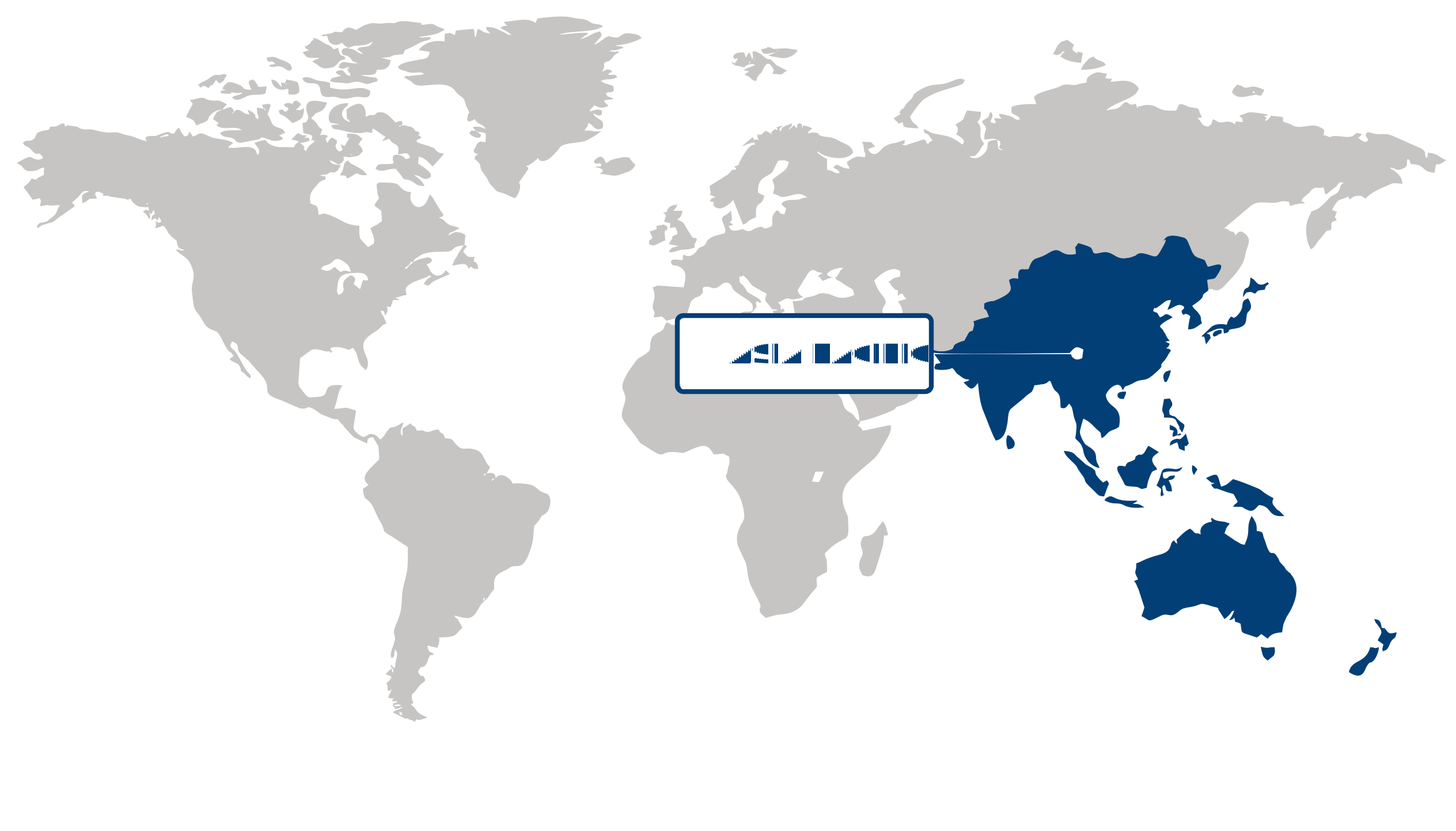
Asia Pacific (Largest Region)
The hydraulic fluids market was led by Asia Pacific, which held a 41.87% share in 2026, reflecting the region’s large manufacturing base, expanding industrial activity, and extensive use of hydraulic equipment across construction, agriculture, mining, and material-handling applications. Continued industrialization and infrastructure development are sustaining demand for hydraulic machinery that requires reliable fluid performance for power transmission, lubrication, and component protection. Growth in heavy equipment utilization is also encouraging end users to prioritize fluid formulations that support operational efficiency, equipment reliability, and maintenance management. Furthermore, the expansion of manufacturing and industrial processing activities is broadening the installed base of hydraulic systems, creating consistent demand for replacement and maintenance fluids across multiple sectors.
North America (Fastest-Growing Region)
North America represents the fastest-growing regional market, benefiting from industrial modernization, infrastructure investment, and increasing emphasis on equipment efficiency and preventive maintenance. Hydraulic systems remain integral to construction machinery, industrial equipment, agricultural machinery, and other heavy-duty applications, while operators are increasingly focused on extending equipment service life and minimizing downtime. This is strengthening interest in hydraulic fluids designed to maintain system performance under demanding operating conditions. Greater adoption of advanced machinery and ongoing upgrades to industrial and mobile equipment are further supporting fluid consumption. In parallel, attention to equipment productivity, maintenance optimization, and environmentally conscious fluid management is creating additional opportunities for market expansion.
| Parameter | North America | Asia Pacific | Europe | Latin America | MEA |
|---|---|---|---|---|---|
| Innovation Hub i Scale Nascent Developing Advanced | |||||
| Cost-Sensitive Region i Scale Low Medium High | |||||
| Regulatory Environment i Scale Restrictive Neutral Supportive | |||||
| Demand Drivers i Scale Weak Moderate Strong | |||||
| Development Stage i Scale Emerging Developing Developed | |||||
| Adoption Rate i Scale Low Medium High | |||||
| New Entrants / Startups i Scale Sparse Moderate Dense | |||||
| Macro Indicators i Scale Weak Stable Strong |
Key Country Insights
Germany 🇩🇪
Precision Equipment SupportGermany demands hydraulic fluids that meet the performance requirements of precision manufacturing equipment and industrial automation. Suppliers emphasize high thermal stability, wear protection, and compliance with stringent environmental and equipment specifications.
France 🇫🇷
Environmentally Balanced PerformanceFrance is increasing demand for hydraulic fluids that balance equipment performance with environmental considerations. Industrial users seek products offering reliable lubrication, improved biodegradability where appropriate, and compliance with evolving industrial sustainability standards.
Italy 🇮🇹
Machinery Lifecycle EnhancementItaly utilizes hydraulic fluids to support manufacturing equipment, agricultural machinery, and industrial systems requiring dependable performance. Buyers prioritize products that extend equipment life, improve operational efficiency, and reduce maintenance-related downtime.
Japan 🇯🇵
Reliability-Centered FormulationsJapan focuses on hydraulic fluids that enhance equipment reliability across manufacturing, robotics, and heavy machinery applications. Producers develop formulations that minimize maintenance intervals while ensuring stable performance under demanding operating conditions.
South Korea 🇰🇷
Industrial Productivity SolutionsSouth Korea prioritizes hydraulic fluids that improve operational efficiency across manufacturing plants, shipbuilding, and construction equipment. Market participants emphasize advanced formulations with oxidation resistance and long operating life to reduce maintenance requirements.
United States 🇺🇸
High-Performance Fluid DemandThe U.S. hydraulic fluids market is driven by industrial equipment, construction machinery, and advanced manufacturing applications requiring dependable lubrication. Buyers prioritize fluids with extended service life, equipment protection, and compatibility with increasingly automated hydraulic systems.
Segment Leadership and Growth Trends
Hydraulic Fluids Market Share (%), by Base Oil, 2026
Go beyond the chart, access full insights & data tables
Request Free Sample ReportBase Oil Segment Analysis: Mineral Oil (Largest Segment) vs Bio-based Oil (Fastest-Growing Segment)
Mineral oil accounted for the largest share of the hydraulic fluids market, representing 61.21% in 2026. Its established use across hydraulic systems is supported by reliable lubrication performance, broad availability, and compatibility with equipment operating under diverse industrial conditions. Mineral oil-based fluids provide effective wear protection, heat transfer, and corrosion control, making them suitable for machinery where consistent hydraulic performance is essential. Their established supply infrastructure and familiarity among equipment operators further reinforce their widespread use across industrial and mobile hydraulic applications.
Bio-based oil is emerging as the fastest-growing base oil segment as industries increasingly seek hydraulic fluids with improved environmental characteristics. These fluids can provide a renewable alternative to conventional petroleum-derived formulations while supporting lubrication and hydraulic performance in appropriate operating environments. Growing attention to sustainable industrial practices, environmental protection, and the reduction of dependence on conventional fossil-based inputs is encouraging greater consideration of bio-based formulations. This shift is particularly relevant in applications where fluid leakage or disposal can create environmental concerns.
End-use Segment Analysis: Construction (Largest Segment) vs Agriculture (Fastest-Growing Segment)
The construction segment led the hydraulic fluids market, holding 20.24% share in 2026. Construction equipment relies extensively on hydraulic systems for functions such as lifting, excavation, loading, material handling, and equipment movement, creating consistent demand for fluids that maintain reliable power transmission and component protection. Heavy machinery frequently operates under demanding loads and variable conditions, increasing the importance of hydraulic fluids with dependable lubrication, thermal stability, and wear-control properties. Continued mechanization of construction activities further supports fluid consumption across hydraulic equipment.
Agriculture is the fastest-growing end-use segment as modern farming increasingly depends on hydraulic machinery for material handling, lifting, steering, harvesting, and other mechanized operations. Agricultural equipment often operates across variable loads and environmental conditions, requiring hydraulic fluids that can support dependable equipment performance and reduce component wear. Greater mechanization and the increasing use of advanced hydraulic systems in farm machinery are strengthening demand for specialized hydraulic fluids, while growing attention to equipment efficiency and maintenance is further supporting segment expansion.
| Segment | Sub-Segment | Largest Segment | Fastest Growing |
|---|---|---|---|
| Base Oil | Mineral Oil, Synthetic Oil, Bio-based Oil | Mineral Oil | Bio-based Oil |
| End-use | Construction, Metal & Mining, Oil & Gas, Agriculture, Automotive, Aerospace & Defense, Others | Construction | Agriculture |
Competitive Landscape and Market Positioning
Prominent players in the hydraulic fluids market:
1. Exxon Mobil Corporation (United States)
2. Chevron Corporation (United States)
3. Shell plc (United Kingdom)
4. BP p.l.c. (United Kingdom)
5. TotalEnergies SE (France)
6. PetroChina Company Limited (China)
7. China Petroleum & Chemical Corporation (China)
8. FUCHS SE (Germany)
9. Valvoline Global Operations (United States)
The hydraulic fluids market is being reshaped by growing demand for high-performance and environmentally conscious formulations. Emphasis on improving operational efficiency across industrial systems is encouraging continuous product refinement. Development efforts are increasingly aligned with sustainability requirements, while innovation focuses on enhancing thermal stability and equipment longevity.
| Company | Market Share | Company Revenue | Revenue CAGR (%) | Product Portfolio | Geographic Presence | Innovation / R&D Focus | Strategic Developments |
|---|---|---|---|---|---|---|---|
| Exxon Mobil Corporation (United States) | |||||||
| Chevron Corporation (United States) | |||||||
| Shell plc (United Kingdom) | |||||||
| BP p.l.c. (United Kingdom) | |||||||
| TotalEnergies SE (France) | |||||||
| PetroChina Company Limited (China) | |||||||
| China Petroleum & Chemical Corporation (China) | |||||||
| FUCHS SE (Germany) | |||||||
| Valvoline Global Operations (United States). |
Industry Development/News
| Company Name | Date | Key Development |
|---|---|---|
| FUCHS Lubricants | Mar-26 | FUCHS Lubricants is advancing smart lubrication strategies for CNC machining, focusing on consolidating fluid usage and optimizing chemistry for demanding materials. The initiative aims to improve machining efficiency and reduce operational complexity, reflecting a market-wide trend toward more precise, application-specific lubrication management to lower total fluid consumption in precision manufacturing. |
| ISRO | Dec-25 | ISRO successfully deployed electromechanical actuators on the LVM-3 rocket’s S200 first stage. This transition from traditional hydraulic actuation to electrically driven systems for high-precision propulsion control represents a notable technological shift, signaling a potential long-term reduction in the reliance on hydraulic fluid-dependent mechanisms within critical aerospace and control systems. |
| Smitty’s Supply | Sep-25 | A major explosion and fire at a Smitty’s Supply petrochemical facility resulted in significant operational disruption and subsequent legal action. The incident highlights critical vulnerabilities in industrial safety and continuity of supply within the lubricant and fluid manufacturing sector, potentially impacting regional market stability and supply chain reliability. |
| Lubrication Engineers | Jul-25 | Lubrication Engineers completed the acquisition of Fort Worth-based SWEPCO, representing its third acquisition of 2025. This transaction expands the company's manufacturing footprint and industrial fluid product portfolio, strengthening its competitive positioning and technical expertise within the high-performance specialty lubricants and hydraulic fluids sector. |
| Daewoo | Apr-25 | Daewoo entered a partnership with Mangali Industries to scale lubricant exports from India, targeting a 20% export contribution. By leveraging local manufacturing facilities, the initiative strengthens the company’s global supply chain and enhances its competitive stance in international industrial fluid markets through increased production scale and export-led growth strategies. |
| TotalEnergies | Jan-25 | TotalEnergies acquired a line of fire-resistant, mineral oil-free hydraulic fluids from Fluid Competence. This strategic addition enhances the company's sustainability portfolio, addressing the growing industrial demand for safer, environmentally responsible hydraulic fluid solutions while broadening its technological capabilities in specialized fluid applications. |
Customize Your Report
Explore examples of how this report can be tailored to different research needs, including custom segments, additional topics or chapters, and related reports. Click a section of the wheel or its numbered marker to explore the available options.
Hydraulic Fluids Market — Custom Segments
| Segment | Sub-Segment |
|---|---|
| Hydraulic System Type | Open-Center Systems, Closed-Center Systems, Load-Sensing Systems, Electro-Hydraulic Systems |
| Operating Environment | Standard Industrial, High-Temperature, Low-Temperature, High-Pressure & Heavy-Duty, Environmentally Sensitive |
| Distribution Channel | Direct Sales, Industrial Distributors, Lubricant Distributors, Equipment OEM Channels, Online Channels |
Hydraulic Fluids Market — Custom TOC
| Custom Chapter | Custom Details |
|---|---|
| Bio-Based Hydraulic Fluid Opportunity Assessment |
|
| Equipment Electrification Impact Analysis |
|
| Industrial Fluid Lifecycle Management Study |
|
Need a different cut of the data?
Request Custom ResearchHow big is the hydraulic fluids market?
What is the anticipated CAGR of the hydraulic fluids industry?
How are industrial automation and infrastructure projects influencing hydraulic fluid purchasing priorities?
Why are bio-based hydraulic fluids gaining strategic importance in the hydraulic fluids market?
Why does mineral oil dominate the hydraulic fluids market?
Why is bio-based oil growing faster in hydraulic fluids?
What factors make Asia Pacific the largest hydraulic fluids market?
Why is North America the fastest-growing hydraulic fluids market?
Who are the major participants shaping the hydraulic fluids landscape?
Our Clients
"The report helped us understand emerging consumer trends in our product category. It clarified where to focus innovation for the next product launch."
LyondellBasell
"The regional forecast section was incredibly useful. We were able to identify two new potential partners in Europe thanks to the vendor mapping you included."
SABIC
"We appreciated how actionable the recommendations were. It guided us to improve supply chain resilience."
Olin Corporation
Our Research Team & Methodology
Every Fundamental Business Insights report is built by a dedicated vertical research team, validated through a structured primary-and-secondary methodology, and reviewed for accuracy before it reaches you.
Research Team Overview
Prepared by the Chemicals & Materials Research Team
Delivery
Published
Demand
Available
Support
Trust & Compliance
Research Domains
10 coverage areasResearch Intelligence
| Source | Reference |
|---|---|
| American Chemistry Council (ACC) | www.americanchemistry.com |
| European Chemical Industry Council (Cefic) | cefic.org |
| International Council of Chemical Associations (ICCA) | icca-chem.org |
| European Chemicals Agency (ECHA) | echa.europa.eu |
| U.S. Environmental Protection Agency (EPA) | www.epa.gov |
| ASTM International | www.astm.org |
| International Organization for Standardization (ISO) | www.iso.org |
| National Institute of Standards and Technology (NIST) | www.nist.gov |
| Plastics Industry Association (PLASTICS) | www.plasticsindustry.org |
| European Biplastics | www.european-bioplastics.org |
| The Adhesive and Sealant Council (ASC) | www.ascouncil.org |
| National Association of Corrosion Engineers (AMPP) | www.ampp.org |
| Society of Plastics Engineers (SPE) | www.4spe.org |
| International Fertilizer Association (IFA) | www.fertilizer.org |
| CropLife International | croplife.org |
| Packaging Europe | packagingeurope.com |
| Flexible Packaging Association (FPA) | www.flexpack.org |
| Battery Council International (BCI) | batterycouncil.org |
| International Copper Association (ICA) | internationalcopper.org |
| World Steel Association | worldsteel.org |
Research Workflow & Quality Assurance
Data Collection
Verified information gathered through primary and secondary research.
Data Triangulation
Cross-validation using multiple independent data sources.
Forecast Modelling
Market estimates developed using historical trends and analytical models.
Analyst Validation
Findings reviewed by domain experts for accuracy and consistency.
Editorial & Quality Review
Final editorial, quality, and compliance checks before publication.
Final Publication
Released after successful completion of the internal review process.
Report Coverage
📊 Market Assessment
- Market Size & Forecast
- Market Segmentation
- Regional Analysis
- Growth Drivers & Challenges
- Market Dynamics
🏢 Competitive Intelligence
- Competitive Landscape
- Company Profiles
- Competitive Benchmarking
- Mergers & Acquisitions
- Market Share Analysis or Key Company Strategies
🔍 Strategic Analysis
- Value Chain Analysis
- Porter's Five Forces
- PESTLE Analysis
- Pricing Trends
- Supply-Demand Analysis
🚀 Future Outlook
- Technology Landscape
- Regulatory Landscape
- Investment & Funding Landscape
- Emerging Opportunities
- Future Market Outlook
Have a question about this report or need a custom scope?
Request Customization