Home Heating Services Market Size & Forecasts 2026-2035, By Segments (Service, Heating System Installation, Heating Fuel Delivery), Growth Opportunities, Innovation Landscape, Regulatory Shifts, Strategic Regional Insights (U.S., Japan, China, South Korea, UK, Germany, France), and Competitive Dynamics (Carrier, Bosch, Lennox, Trane, Daikin)
Market Size and Growth Outlook
Home Heating Services Market size is projected to grow steadily from USD 5.16 billion in 2025 to USD 8.9 billion by 2035, demonstrating a CAGR exceeding 5.6% through the forecast period (2026-2035). The 2026 revenue is estimated at USD 5.41 billion.
Get more details on this report
Request Free Sample ReportHome Heating Services Market Intelligence Snapshot
Regional Market Dynamics
Segment Momentum
Market Expansion Drivers
Leading Market Participants
Global Market Forecast Snapshot
Market Outlook
Regional and Segment Outlook
Market Growth Drivers and Industry Trends
The rising demand for residential heating is a key driver reshaping the home heating services market, fueled by growing urbanization and the expansion of suburban housing developments. As populations in colder regions increase, households require reliable heating solutions, pushing service providers to scale operations and customize offerings. For instance, the U.S. Department of Energy’s data highlights a steady uptick in households relying on central heating systems, reflecting changing consumer behavior toward enhanced comfort standards. This trend emphasizes the need for scalable infrastructure and diversified service portfolios, creating market entry opportunities for both large incumbents and agile startups focused on regional adaptation. Moving forward, providers that integrate responsive customer service with localized delivery models will gain strategic advantage amidst continued residential growth.
Adoption of Smart Heating Solutions
Smart heating technology adoption significantly accelerates transformation within the home heating services market by enabling enhanced control, energy savings, and predictive maintenance. Companies such as Nest (Google) and Honeywell have demonstrated consumer readiness to invest in programmable and app-enabled thermostats, driving market penetration of connected devices. This digital integration responds to evolving consumer demand for convenience and sustainability while reshaping competitive dynamics around value-added services. Established firms can leverage partnerships with IoT players, whereas new entrants have opportunities to innovate on platform interoperability and advanced analytics. As connectivity infrastructure expands, providers prioritizing digital transformation will strengthen customer loyalty and operational efficiency in a rapidly digitizing marketplace.
Energy Efficiency Regulations & Incentives
Regulatory frameworks targeting energy efficiency profoundly influence the home heating services market by compelling upgrades and incentivizing sustainable practices. Governments across Europe, guided by the European Union’s Energy Performance of Buildings Directive, enforce stricter heating system standards, spurring demand for retrofits and environmentally friendly solutions. Similarly, U.S. states administer rebate programs encouraging transitions to high-efficiency heat pumps, reducing carbon footprints. These policy-driven shifts prompt companies to align product portfolios with compliance mandates and capitalize on subsidy programs, presenting a strategic lever for differentiation and customer acquisition. Market participants investing in certification expertise and government collaboration will be well-positioned to navigate evolving landscapes and capture growth aligned with sustainability imperatives.
Industry Restraints:
High Energy Efficiency Standards and Regulatory Compliance
Stringent energy efficiency regulations imposed by entities such as the U.S. Department of Energy (DOE) and the European Union's Ecodesign Directive significantly constrain the home heating services market. These standards necessitate costly technology upgrades and rigorous compliance documentation, elevating operational expenses and delaying product rollouts. For example, the DOE’s recent amendments on furnace efficiency metrics mandate manufacturers and service providers to rapidly adapt, creating complexities in supply and installation timelines. This regulatory landscape disproportionately challenges smaller service firms with limited capital and technical expertise, while also pressuring incumbents to invest heavily in R&D and certification processes. Strategically, firms must allocate resources toward compliance management and innovative solutions to maintain competitiveness. As global climate policies tighten, these regulations will persist as a fundamental shaping force, compelling ongoing innovation but simultaneously elevating barriers to entry and market responsiveness.
Skilled Workforce Shortages and Training Gaps
The home heating services market faces acute restrictions from a shrinking pool of qualified technicians capable of managing increasingly sophisticated heating systems, as documented by the Air Conditioning Contractors of America (ACCA). Aging workforce demographics combined with insufficient vocational training programs hinder timely service delivery and installation quality, undermining customer confidence and slowing market adoption of advanced heating technologies. New and incumbent firms alike grapple with recruitment and retention challenges amid an expanding need for expertise in digital controls and environmentally friendly systems. This labor constraint elevates operational costs and contributes to fluctuating service schedules, thus impacting revenue stability. Going forward, unless substantial investment is made in targeted workforce development and certification initiatives—such as those promoted by the Heating, Refrigeration and Air Conditioning Institute of Canada (HRAI)—the sector will continue facing capacity bottlenecks, limiting scalability and innovation diffusion across diverse regional markets.
| Growth Driver | Impact on CAGR | Regulatory Influence | Geographic Relevance | Adoption Rate | Impact Timeline |
|---|---|---|---|---|---|
| Increasing Residential Heating Demand | 2.00% | Short term (≤ 2 yrs) | North America, Europe | Medium | Fast |
| Adoption of Smart Heating Solutions | 1.50% | Medium term (2–5 yrs) | Europe, North America | Low | Moderate |
| Energy Efficiency Regulations & Incentives | 1.20% | Long term (5+ yrs) | Europe, North America | High | Moderate |
Unlock insights tailored to your business with our bespoke market research solutions.
Click to get your customized report now.
Regional Demand Dynamics
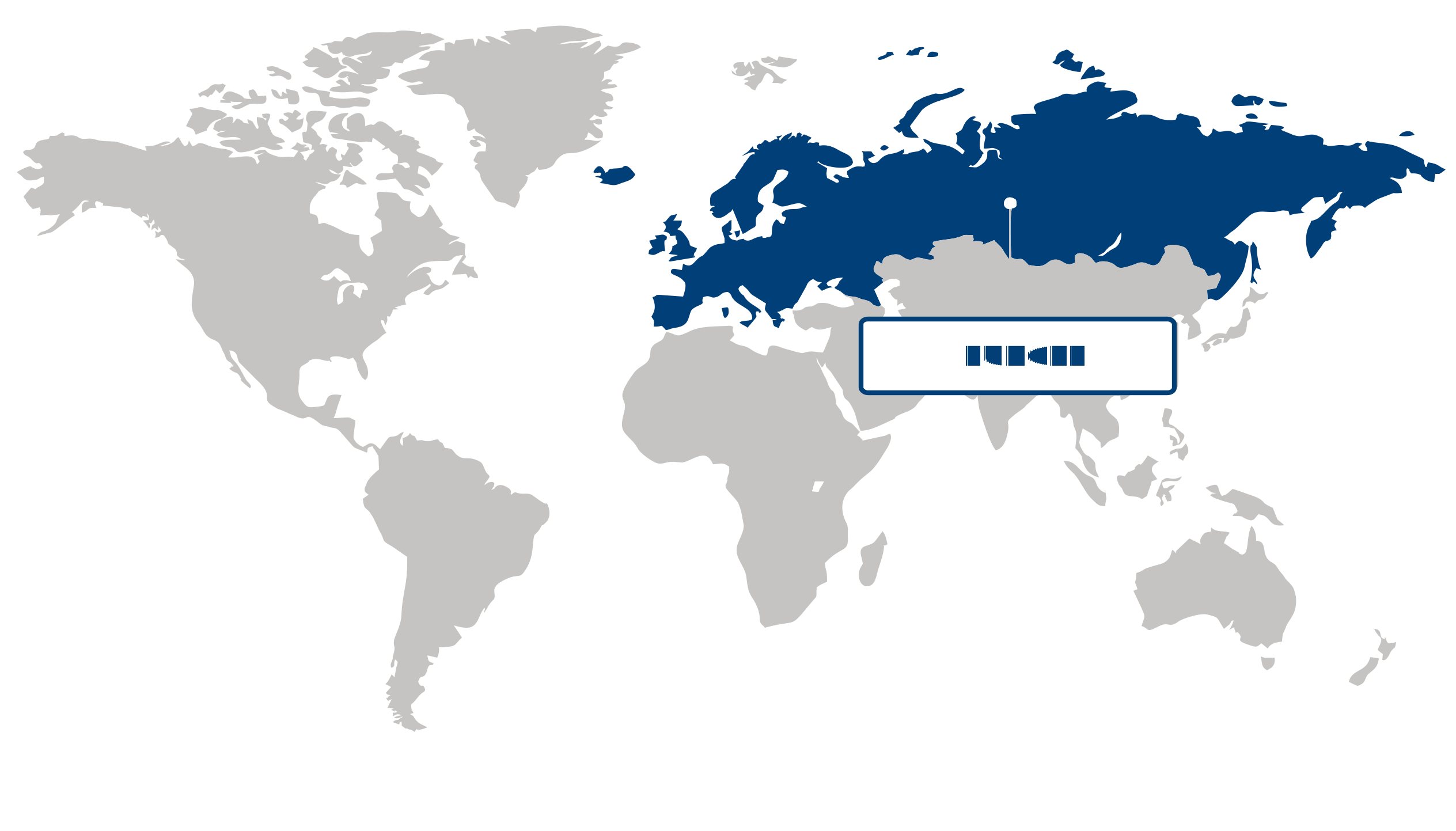
Europe dominated the home heating services market in 2025, capturing over 40% of the global share and emerging as the fastest-growing region with an 8.4% CAGR. This leadership is primarily fueled by stringent climate policies, rising energy prices, and a well-established heating services infrastructure. Key initiatives like the European Green Deal have intensified investments in efficient and sustainable heating solutions, as reported by the European Commission. Consumers are increasingly pivoting toward eco-friendly technologies, supported by government incentives and robust regulatory frameworks across member states. Additionally, energy cost volatility has accelerated demand for optimized heating systems to reduce expenses. Industry participants, such as Viessmann and Bosch Thermotechnology, are leveraging these dynamics by integrating smart and renewable heating technologies. Europe's resilience amid economic fluctuations further strengthens its market potential, making it an attractive region for future investments and innovations in home heating services.
Germany anchors the European home heating services market, driven by widespread adoption of energy-efficient systems and supportive climate legislation. The country’s focus on transitioning from fossil fuels to renewable energy heating solutions aligns with EU climate targets, spurring significant consumer and commercial demand. For instance, the German Federal Ministry for Economic Affairs and Climate Action promotes funding programs for heat pumps and district heating upgrades, facilitating modernization. Market leaders like Stiebel Eltron and Buderus aggressively capitalize on these policies through advanced product portfolios and digital integration. Germany’s mature heating infrastructure combined with strong regulatory backing positions it as a strategic innovation hub, reinforcing Europe’s overall market growth by fostering technological adoption and sustainability.
France plays a pivotal role in Europe’s home heating services market through a balanced mix of regulatory mandates and shifting consumer preferences toward low-carbon solutions. The French government’s support via the MaPrimeRénov’ program encourages homeowners to retrofit older heating systems, enhancing energy efficiency. Companies such as Atlantic Group actively respond to this demand by offering hybrid and renewable heating technologies. French consumers show increasing receptivity to smart heating controls, responding to both environmental concerns and rising energy costs, as highlighted by ADEME, the French Environment and Energy Management Agency. This creates a dynamic landscape that promotes competitive innovation, complementing Germany’s transformative activities and amplifying the region’s leadership in sustainable home heating advancements.
North America Market Analysis:
North America emerged as the fastest-growing region in the home heating services market, registering a robust CAGR of 7.5%. This rapid growth is primarily driven by rising energy efficiency demands and increased adoption of smart home heating solutions that cater to evolving consumer preferences for sustainability and cost savings. The region’s significant investment in upgrading aging heating infrastructures, supported by government incentives such as the U.S. Department of Energy’s Weatherization Assistance Program, reflects a shift toward cleaner and more efficient heating technologies. Industry leaders like Carrier Global Corporation have introduced advanced HVAC solutions with integrated IoT capabilities, enhancing operational efficiency and user control. North America’s well-established supply chains and skilled workforce further underpin dynamic market expansion, making it a strategic hub for innovation and sustainable home heating services. The region’s alignment with stringent environmental regulations and escalating urbanization suggests continued opportunities for market participants.
The United States plays a pivotal role in driving North America’s home heating services market, fueled by expansive consumer adoption of energy-efficient systems and regulatory frameworks promoting clean energy. The Biden administration’s push for infrastructure modernization and rebates for heat pump installations under the Inflation Reduction Act has accelerated market demand, especially among environmentally conscious homeowners. Players like Trane Technologies have capitalized on this trend by rolling out high-efficiency heat pumps tailored to varying climatic zones. The U.S. market also benefits from strong digital transformation, with smart thermostats and predictive maintenance gaining traction among consumers prioritizing convenience and energy management, as highlighted in recent findings from the American Council for an Energy-Efficient Economy. These factors position the U.S. as a key strategic driver within North America, offering vital growth avenues for participants focused on technological innovation and sustainability-focused heating solutions.
Asia Pacific Market Trends:
Asia Pacific held a substantial share in the home heating services market, driven by its diverse climatic zones and rapidly evolving urban centers. The region’s significance stems from rising consumer demand for efficient, technologically advanced heating solutions amid growing environmental awareness and stringent government initiatives promoting energy efficiency. For instance, Japan’s Ministry of Economy, Trade and Industry (METI) has actively supported subsidies for eco-friendly heating installations, reinforcing market momentum. Additionally, advancements in smart heating systems and the integration of IoT technologies by companies like Panasonic and Toshiba have enhanced operational efficiencies and customer experience across the region. This competitive intensity, combined with shifting spending patterns favoring sustainability, underpins the region’s resilience despite supply chain complexities from global disruptions. Moving forward, Asia Pacific’s blend of regulatory support and innovation readiness positions it as a pivotal growth hub for home heating services.
Japan plays a leading role within the home heating services market in Asia Pacific, reflecting its technological sophistication and stringent environmental regulations. The government’s commitment to reducing carbon emissions through programs like the Energy Conservation Act has accelerated adoption of high-efficiency heat pumps and hybrid heating systems. Market leader Daikin Industries has capitalized on these dynamics by launching advanced inverter technologies tailored for Japan’s residential sector, as detailed in the company’s official press releases. Such innovations address local consumer preferences for both comfort and sustainability, reinforcing competition and encouraging continuous product improvements. Japan’s focus on integrating renewable energy sources with home heating solutions highlights the country’s strategic influence on regional market trends and serves as a blueprint for emerging markets within Asia Pacific aiming to balance growth with environmental priorities.
China’s expanding role in the home heating services market is largely driven by urbanization and rising middle-class incomes, which elevate demand for modern, effective heating solutions. Regulatory measures by China’s National Energy Administration emphasize energy conservation in residential buildings, prompting widespread upgrades to domestic heating infrastructure. Leading manufacturers such as Midea Group have responded by developing smart heating systems with enhanced energy management features, showcased in their corporate sustainability reports. Additionally, consumer preferences in China lean increasingly toward integrated home automation, stimulating innovation in the sector. This momentum reflects China’s growing influence on regional supply chains and technology diffusion, reinforcing Asia Pacific’s collective position as a critical market for scalable, sustainable home heating services.
| Parameter | North America | Asia Pacific | Europe | Latin America | MEA |
|---|---|---|---|---|---|
| Innovation Hub i Scale Nascent Developing Advanced | |||||
| Cost-Sensitive Region i Scale Low Medium High | |||||
| Regulatory Environment i Scale Restrictive Neutral Supportive | |||||
| Demand Drivers i Scale Weak Moderate Strong | |||||
| Development Stage i Scale Emerging Developing Developed | |||||
| Adoption Rate i Scale Low Medium High | |||||
| New Entrants / Startups i Scale Sparse Moderate Dense | |||||
| Macro Indicators i Scale Weak Stable Strong |
Segment Leadership and Growth Trends
Home Heating Services Market Share (%), by Service, 2026
Go beyond the chart, access full insights & data tables
Request Free Sample ReportThe replacement segment held the largest share in the home heating services market in 2025, driven by increased homeowner investment in upgrading aging heating systems. As energy efficiency standards and environmental regulations tighten, many consumers prefer replacing outdated units to reduce utility costs and carbon footprints. According to the U.S. Department of Energy, upgrading to modern heating systems significantly improves energy savings, supporting this trend. This segment benefits from amplified demand fueled by growing awareness of sustainability and government incentives encouraging system modernization. Established companies can leverage this opportunity by expanding retrofit services, while new entrants may focus on innovative, eco-friendly solutions. Given ongoing regulatory milestones targeting energy consumption and rising consumer preference for reliable, efficient heating, replacement services will remain pivotal in the home heating services market in the medium term.
Analysis by Heating System Installation
Heat pumps represented the largest share of the home heating services market in the heating system installation segment in 2025, propelled by strong demand for energy-efficient and dual-function heating and cooling solutions. This leadership is underpinned by the appliances’ ability to reduce greenhouse gas emissions and deliver year-round climate control, aligning with sustainability priorities and evolving consumer expectations. The International Energy Agency (IEA) has highlighted heat pumps as a critical technology for decarbonizing residential heating. Digital advancements in smart thermostats and integration with renewable energy sources further reinforce this segment’s appeal. For industry players, heat pumps offer strategic advantages through expanding product innovation and service diversification. As environmental policies intensify and energy prices fluctuate, heat pump installations are poised to retain prominence as a versatile and future-proof segment within the market.
Analysis by Heating Fuel Delivery
Natural gas held the largest share in the home heating services market for the heating fuel delivery segment in 2025, driven by its widespread affordability and efficiency as a fuel source. The segment’s leadership stems from well-established infrastructure and favorable regulatory frameworks supporting natural gas distribution, especially in urban and suburban residential areas. The U.S. Energy Information Administration (EIA) reports natural gas as a dominant heating fuel due to low emissions compared to other fossil fuels and relatively stable pricing. Consumer demand benefits from the convenience and reliability offered by extensive supply chains and competitive market dynamics. Established providers capitalize on economies of scale, while new entrants explore opportunities in hybrid systems combining natural gas with renewable fuels. Considering ongoing investments in pipeline modernization and gradual shifts towards decarbonization, natural gas delivery will sustain critical relevance within the home heating services market through incremental adaptation.
| Segment | Sub-Segment | Largest Segment | Fastest Growing |
|---|---|---|---|
| Service | Repair, Replacement | ||
| Heating System Installation | Furnaces, Boilers, Heat Pumps, Radiant Heating Systems | ||
| Heating Fuel Delivery | Natural Gas, Heating Oil, Propane, Biomass Fuels |
Competitive Landscape and Market Positioning
The competitive landscape is marked by strategic collaborations and targeted expansions that enhance service capabilities and innovation. Many firms expand their product portfolios with advanced heat pump and smart thermostat systems, integrating IoT for optimized energy management. Several have deepened regional reach through strategic acquisitions or alliances, boosting local service infrastructure. Continuous investment in R&D propels innovation, particularly in eco-friendly technologies aligned with tightening environmental regulations. These moves reinforce their market positioning, helping maintain competitive advantage amid increasing demand for sustainable home heating services.
Strategic / Actionable Recommendations for Regional Players
In North America, partnering with technology providers to enhance smart-home integration could differentiate offerings, especially by targeting emerging demand for connected HVAC systems. Emphasizing retrofit services for energy modernization in existing homes may unlock new growth areas.
Within Asia Pacific, regional players should explore collaborations with clean energy firms to accelerate adoption of low-carbon technologies within the home heating segment. Capitalizing on fast urbanization and evolving consumer preferences by tailoring scalable solutions with modular heating technologies can expand market penetration.
European firms can strengthen their hold by focusing on high-efficiency, low-emission systems aligned with stringent regulatory frameworks. Forming alliances with local governments or green energy initiatives could enhance market access and credibility, while furthering investments in sustainable heating innovations to meet evolving client needs.
| Company | Market Share | Company Revenue | Revenue CAGR (%) | Product Portfolio | Geographic Presence | Innovation / R&D Focus | Strategic Developments |
|---|---|---|---|---|---|---|---|
| No companies available. | |||||||
Industry Development/News
| Company Name | Date | Key Development |
|---|
Customize Your Report
Explore examples of how this report can be tailored to different research needs, including custom segments, additional topics or chapters, and related reports. Click a section of the wheel or its numbered marker to explore the available options.
Home Heating Services Market — Custom Segments
| Segment | Sub-Segment |
|---|---|
| No segment data available. | |
Home Heating Services Market — Custom TOC
| Custom Chapter | Custom Details | ||
|---|---|---|---|
| No custom TOC data available. | |||
Need a different cut of the data?
Request Custom ResearchHow is the home heating services industry expected to grow over the next 10 years?
Which geographical region leads the home heating services market market?
In which region is the home heating services sector expanding at the quickest pace?
Where is the replacement segment seeing the strongest adoption within the home heating services industry?
When did heat pumps sub-segment emerge as the largest sub-segment in the heating system installation segment of home heating services sector?
Why is the natural gas segment leading in the home heating services industry?
Who are the major participants shaping the home heating services landscape?
Our Clients
"The report provided us with a clear direction, and the level of detail was beyond what we expected. I would definitely recommend their services to others."
Haier Appliances
"The collaboration with Fundamental Business Insights has added significant value to our decision-making process, and we look forward to continuing this partnership for our future market research requirements."
Luxottica Group S.p.A.
"The team at FBI delivered an exceptional research report. The insights on industry innovations were particularly impressive and added a lot of value to the overall report."
Nike
Our Research Team & Methodology
Every Fundamental Business Insights report is built by a dedicated vertical research team, validated through a structured primary-and-secondary methodology, and reviewed for accuracy before it reaches you.
Research Team Overview
Prepared by the Consumer Goods & Services Research Team
Delivery
Published
Demand
Available
Support
Trust & Compliance
Research Intelligence
Research Workflow & Quality Assurance
Data Collection
Verified information gathered through primary and secondary research.
Data Triangulation
Cross-validation using multiple independent data sources.
Forecast Modelling
Market estimates developed using historical trends and analytical models.
Analyst Validation
Findings reviewed by domain experts for accuracy and consistency.
Editorial & Quality Review
Final editorial, quality, and compliance checks before publication.
Final Publication
Released after successful completion of the internal review process.
Report Coverage
📊 Market Assessment
- Market Size & Forecast
- Market Segmentation
- Regional Analysis
- Growth Drivers & Challenges
- Market Dynamics
🏢 Competitive Intelligence
- Competitive Landscape
- Company Profiles
- Competitive Benchmarking
- Mergers & Acquisitions
- Market Share Analysis or Key Company Strategies
🔍 Strategic Analysis
- Value Chain Analysis
- Porter's Five Forces
- PESTLE Analysis
- Pricing Trends
- Supply-Demand Analysis
🚀 Future Outlook
- Technology Landscape
- Regulatory Landscape
- Investment & Funding Landscape
- Emerging Opportunities
- Future Market Outlook
Have a question about this report or need a custom scope?
Request Customization