Hereditary Testing Market Size & Growth Forecast 2027–2036, By Segments (Disease Type, Technology), Regional Demand Trends (North America, Asia Pacific, Europe), Key Country Insights (U.S., Japan, South Korea, Germany, France, Italy), and Competitive Landscape
Market Size and Growth Outlook
Hereditary Testing Market size was around USD 20.12 billion in 2026 and is slated to grow at a 13.7% CAGR from 2027 to 2036, surpassing USD 72.65 billion by 2036. The industry revenue for 2027 is estimated at USD 22.44 billion.
Get more details on this report
Request Free Sample ReportHereditary Testing Market Intelligence Snapshot
Regional Market Dynamics
- Europe accounted for 36.46% of the market in 2026, supported by established diagnostic infrastructure, advanced laboratory capabilities, and broad clinical integration that sustains consistent testing demand across healthcare settings.
- Asia Pacific is projected to grow at a 9.49% CAGR as expanding laboratory capacity, improving molecular diagnostics access, and increasing clinician adoption accelerate hereditary testing across established and developing healthcare markets.
Segment Momentum
- Hereditary Non-cancer Testing accounted for 68.26% of the market in 2026 because it supports routine diagnosis and family risk evaluation across inherited cardiovascular, neurological, metabolic, and rare disorders.
- Cytogenetic is the fastest-growing technology segment as demand increases for assessing chromosomal abnormalities and structural variations alongside molecular testing to improve diagnostic resolution in complex hereditary conditions.
Market Expansion Drivers
- Rising prevalence of genetic disorders driving demand for early hereditary screening.
- Increasing adoption of molecular genetic testing improving diagnostic accuracy and disease detection.
- Expansion of preventive personalized medicine and insurance-backed genetic screening programs.
Leading Market Participants
- Top players in the hereditary testing market include Illumina, Inc. (United States), Thermo Fisher Scientific Inc. (United States), Myriad Genetics, Inc. (United States), Natera, Inc. (United States), Laboratory Corporation of America Holdings (United States), F. Hoffmann-La Roche Ltd. (Switzerland), Agilent Technologies, Inc. (United States), Fulgent Genetics, Inc. (United States).
Global Market Forecast Snapshot
Market Outlook
- 2026 Market Size: USD 20.12 billion
- 2027 Estimated Market Size: USD 22.44 billion.
- Projected Market Size: USD 72.65 billion by 2036
- Growth Forecast: 13.7% CAGR (2027-2036)
Regional and Segment Outlook
- Leading Regional Market: Europe
- High-Growth Regional Hub: Asia Pacific
- Core Revenue Segment: Hereditary Non-cancer Testing (Disease Type) | Molecular Testing (Technology)
- Emerging Opportunity Segment: Hereditary Cancer Testing (Disease Type) | Cytogenetic (Technology)
Market Growth Drivers and Industry Trends
Rising prevalence of genetic disorders driving demand for early hereditary screening
The rising prevalence of genetic disorders is supporting the hereditary testing market as greater attention to inherited conditions increases demand for earlier screening and identification. Detecting hereditary risks at an earlier stage can help inform clinical assessment and health management decisions, while broader awareness of genetic conditions encourages individuals and healthcare providers to consider screening as part of disease evaluation.
Increasing adoption of molecular genetic testing improving diagnostic accuracy and disease detection
Increasing adoption of molecular genetic testing is strengthening the hereditary testing market through improved diagnostic accuracy and more effective identification of genetic abnormalities. Molecular approaches can provide detailed information about inherited conditions, enabling healthcare professionals to investigate hereditary risks more precisely and distinguish relevant genetic factors during diagnostic evaluations.
Expansion of preventive personalized medicine and insurance-backed genetic screening programs
The expansion of preventive personalized medicine is creating additional demand for the hereditary testing market as genetic information becomes increasingly relevant to individualized healthcare strategies. Insurance-backed screening programs can further improve access to hereditary testing, supporting broader participation in preventive genetic assessment and enabling healthcare systems to incorporate screening into structured approaches to risk identification.
| Growth Driver | Impact on CAGR | Regulatory Influence | Geographic Relevance | Adoption Rate | Impact Timeline |
|---|---|---|---|---|---|
| Rising awareness of genetic disorders | 2.50% | Short term (≤ 2 yrs) | North America, Europe | Medium | Fast |
| Advancements in next-generation sequencing (NGS) technologies | 3.00% | Medium term (2–5 yrs) | North America, Asia Pacific | Low | Moderate |
| Increasing accessibility of hereditary testing in emerging markets | 2.90% | Long term (5+ yrs) | Asia Pacific, Latin America | Low | Slow |
| Rising prevalence of genetic disorders driving demand for early hereditary screening | 2.30% | High | Europe, North America | High | Near Term |
| Increasing adoption of molecular genetic testing improving diagnostic accuracy and disease detection | 1.90% | High | Europe, North America, Asia Pacific | High | Mid Term |
| Expansion of preventive personalized medicine and insurance-backed genetic screening programs | 1.60% | High | North America, Europe | Medium | Long Term |
Unlock insights tailored to your business with our bespoke market research solutions.
Click to get your customized report now.
Regional Demand Dynamics
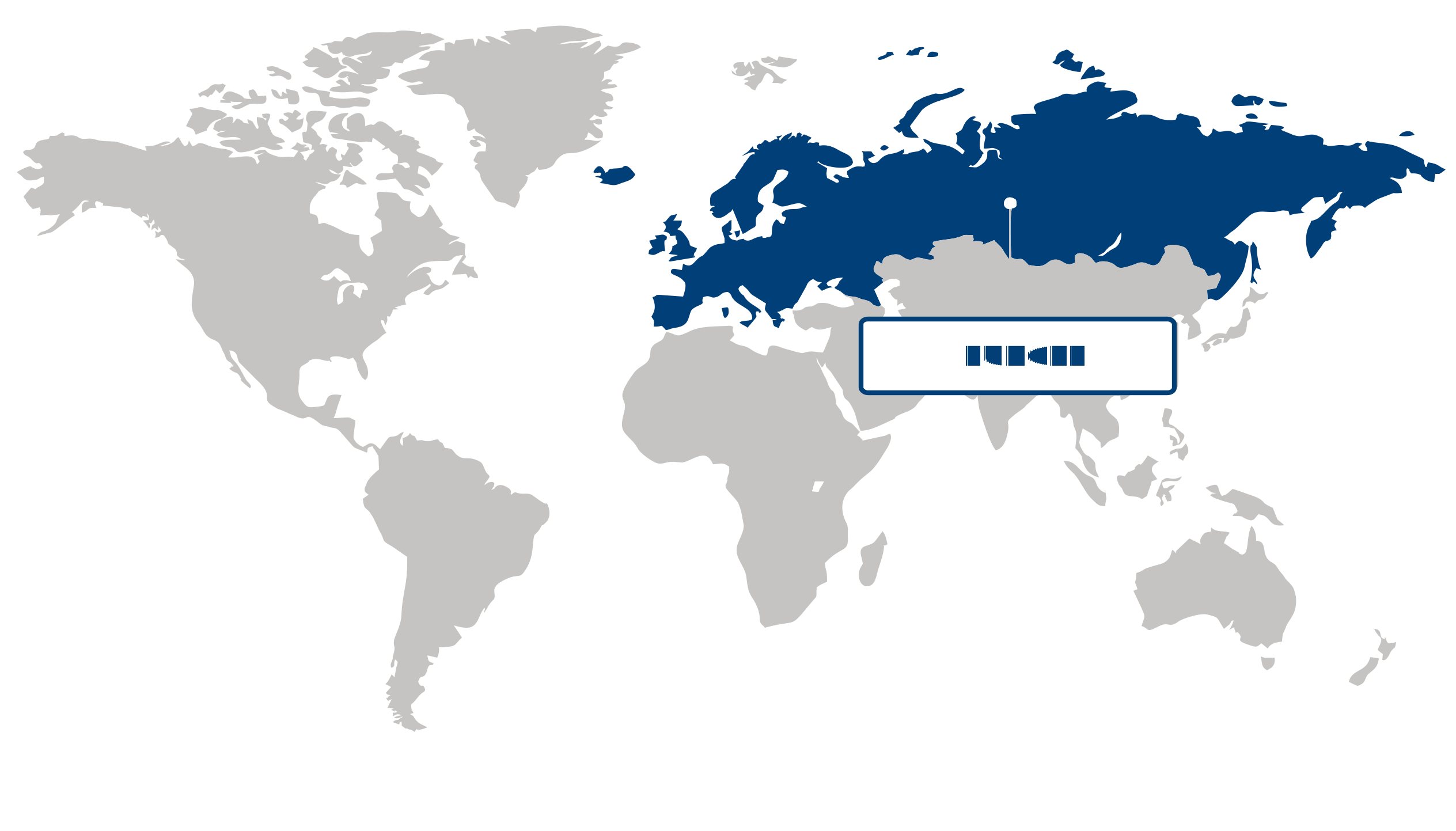
Europe (Largest Region)
In the hereditary testing market, Europe held the largest share in 2026, reflecting well-developed healthcare systems, established genetic testing infrastructure, and growing integration of genomic information into clinical decision-making. Increasing recognition of inherited disease risks is encouraging the use of hereditary testing for diagnosis, risk assessment, and family health management. The region's emphasis on preventive healthcare and personalized medicine further supports adoption, while established clinical pathways and regulatory frameworks provide a structured environment for genetic testing services. Greater availability of genetic counseling and expanding use of genomic information in specialized care are also helping hereditary testing become more closely integrated with broader healthcare delivery.
Asia Pacific (Fastest-Growing Region)
Asia Pacific represents the fastest-growing regional market, supported by improving healthcare infrastructure, expanding access to genetic diagnostics, and increasing awareness of inherited health conditions. Growing investment in precision medicine and genomic research is creating stronger clinical and commercial foundations for hereditary testing, while advances in laboratory capabilities are making sophisticated testing more accessible across developing healthcare systems. Rising demand for early disease identification and personalized treatment strategies is further encouraging adoption. As healthcare providers increasingly incorporate genomic information into diagnostic and preventive programs, the region is positioned for sustained expansion in hereditary testing applications.
| Parameter | North America | Asia Pacific | Europe | Latin America | MEA |
|---|---|---|---|---|---|
| Innovation Hub i Scale Nascent Developing Advanced | |||||
| Cost-Sensitive Region i Scale Low Medium High | |||||
| Regulatory Environment i Scale Restrictive Neutral Supportive | |||||
| Demand Drivers i Scale Weak Moderate Strong | |||||
| Development Stage i Scale Emerging Developing Developed | |||||
| Adoption Rate i Scale Low Medium High | |||||
| New Entrants / Startups i Scale Sparse Moderate Dense | |||||
| Macro Indicators i Scale Weak Stable Strong |
Key Country Insights
Germany 🇩🇪
Clinical Evidence IntegrationGermany prioritizes hereditary testing within regulated clinical settings, with healthcare providers emphasizing evidence-based genetic screening and counseling services. The country is expanding the use of hereditary diagnostics in cancer management and rare disease identification through hospital-led initiatives.
France 🇫🇷
Public Health Genomics FocusFrance is incorporating hereditary testing into national strategies for cancer prevention and rare disease management. The country is emphasizing standardized genetic testing pathways and strengthening access to counseling services to support the broader use of hereditary diagnostics in clinical practice.
Italy 🇮🇹
Specialized Diagnostics NetworksItaly relies on specialized genetic centers and hospital networks to expand hereditary testing services. Increased attention to inherited cancer syndromes and family-based screening programs is encouraging broader use of genetic diagnostics within multidisciplinary care settings.
Japan 🇯🇵
Preventive Screening ExpansionJapan is increasing the use of hereditary testing to support early disease detection and personalized treatment planning, particularly in oncology. Growing interest in genomic medicine programs is encouraging broader adoption of genetic counseling and targeted hereditary testing services across healthcare institutions.
South Korea 🇰🇷
Digital Genomics EcosystemSouth Korea is combining advanced diagnostics infrastructure with digital healthcare platforms to improve access to hereditary testing services. The market is benefiting from investments in precision medicine and increasing use of genomic data to guide disease risk assessment and treatment decisions.
United States 🇺🇸
Precision Genomics AdoptionThe U.S. hereditary testing market is centered on expanding preventive genomics programs and integrating genetic testing into oncology and reproductive care pathways. Demand is increasingly supported by direct-to-consumer testing providers and healthcare systems seeking earlier identification of inherited disease risks.
Segment Leadership and Growth Trends
Hereditary Testing Market Share (%), by Disease Type, 2026
Go beyond the chart, access full insights & data tables
Request Free Sample ReportDisease Type Segment Analysis: Hereditary Non-cancer Testing (Largest Segment) vs Hereditary Cancer Testing (Fastest-Growing Segment)
The hereditary non-cancer testing segment accounted for the largest share of the hereditary testing market at 68.26% in 2026, supported by the broad application of genetic testing for inherited disorders that affect individuals and families across generations. Testing can help identify genetic predispositions, support diagnosis of inherited conditions, and inform family planning and clinical management decisions. Greater awareness of hereditary disorders, increasing interest in personalized healthcare, and wider availability of genetic testing services are contributing to sustained demand for non-cancer hereditary assessments.
Hereditary cancer testing is experiencing faster growth as genetic risk assessment becomes increasingly important in identifying individuals with inherited susceptibility to cancer. Advances in genetic analysis enable healthcare professionals to evaluate hereditary risk more effectively and support earlier, more informed screening and surveillance strategies. Growing awareness of familial cancer patterns, increased emphasis on preventive healthcare, and the expanding role of genetic information in personalized treatment planning are strengthening demand for hereditary cancer testing.
Technology Segment Analysis: Molecular Testing (Largest Segment) vs Cytogenetic (Fastest-Growing Segment)
In the hereditary testing market, molecular testing held the largest share of 57.09% in 2026 because of its ability to identify specific genetic alterations with high analytical precision. Its broad applicability across inherited disorders supports use in diagnosis, carrier assessment, risk evaluation, and family-based genetic investigations. Continued advances in molecular analysis and the growing availability of genetic testing services are also improving access to detailed genomic information, reinforcing molecular testing's role in hereditary disease assessment.
The cytogenetic segment is advancing rapidly as healthcare systems increasingly require technologies capable of evaluating chromosomal abnormalities associated with inherited conditions. Cytogenetic approaches provide valuable information on structural and numerical chromosome changes that may not be fully characterized through other testing methods. Growing demand for comprehensive genetic evaluation, improved laboratory capabilities, and continued clinical interest in identifying chromosomal causes of hereditary disorders are supporting wider adoption of cytogenetic testing.
| Segment | Sub-Segment | Largest Segment | Fastest Growing |
|---|---|---|---|
| Disease Type | Hereditary Cancer Testing, Hereditary Non-cancer Testing | Hereditary Non-cancer Testing | Hereditary Cancer Testing |
| Technology | Cytogenetic, Biochemical, Molecular Testing | Molecular Testing | Cytogenetic |
Competitive Landscape and Market Positioning
Major players in the hereditary testing market:
1. Illumina Inc. (United States)
2. Thermo Fisher Scientific Inc. (United States)
3. Myriad Genetics Inc. (United States)
4. Natera Inc. (United States)
5. Laboratory Corporation of America Holdings (United States)
6. F. Hoffmann-La Roche Ltd. (Switzerland)
7. Agilent Technologies Inc. (United States)
8. Fulgent Genetics Inc. (United States)
Expanding precision medicine initiatives are advancing the hereditary testing market, with increasing investment in next-generation sequencing and advanced genetic analysis technologies. Continuous research is improving testing accuracy while expanding the role of hereditary screening in preventive healthcare and personalized treatment planning.
| Company | Market Share | Company Revenue | Revenue CAGR (%) | Product Portfolio | Geographic Presence | Innovation / R&D Focus | Strategic Developments |
|---|---|---|---|---|---|---|---|
| Illumina Inc. (United States) | |||||||
| Thermo Fisher Scientific Inc. (United States) | |||||||
| Myriad Genetics Inc. (United States) | |||||||
| Natera Inc. (United States) | |||||||
| Laboratory Corporation of America Holdings (United States) | |||||||
| F. Hoffmann-La Roche Ltd. (Switzerland) | |||||||
| Agilent Technologies Inc. (United States) | |||||||
| Fulgent Genetics Inc. (United States). |
Industry Development/News
| Company Name | Date | Key Development |
|---|---|---|
| Oxford Nanopore Technologies | Sep-25 | Oxford Nanopore Technologies launched a 258-gene hereditary cancer panel designed to expand inherited cancer risk detection. The development enhances genomic coverage for hereditary testing applications, supporting more comprehensive genetic screening for oncology risk assessment. |
| GeneDx, LLC | Jun-25 | GeneDx partnered with Galatea Bio and Fabric Genomics to develop integrated hereditary cancer testing panels incorporating polygenic risk scores for breast, colorectal, and prostate cancers. The collaboration enhances precision in hereditary risk assessment by combining genomic sequencing with advanced risk modeling approaches. |
| Guardant Health | May-25 | Guardant Health introduced the Guardant Hereditary Cancer test, expanding its portfolio into germline risk profiling for hereditary cancer assessment. The launch strengthens its position in genetic diagnostics by integrating hereditary risk evaluation into broader oncology-focused testing capabilities. |
| Fulgent Genetics, Inc. | Feb-25 | Fulgent Genetics partnered with Foundation Medicine to launch FoundationOne Germline and FoundationOne Germline More in the U.S. The collaboration expands access to hereditary germline testing using integrated genomic platforms, strengthening clinical adoption of hereditary cancer screening tools in precision oncology workflows. |
| Natera, Inc. | Dec-24 | Natera introduced the iPRS integrated polygenic risk score for breast cancer in partnership with MyOme, integrated with its Empower hereditary cancer test. The development enhances hereditary cancer risk stratification by combining germline testing with polygenic risk modeling to improve predictive accuracy in clinical screening workflows. |
Customize Your Report
Explore examples of how this report can be tailored to different research needs, including custom segments, additional topics or chapters, and related reports. Click a section of the wheel or its numbered marker to explore the available options.
Hereditary Testing Market — Custom Segments
| Segment | Sub-Segment |
|---|---|
| Testing Setting | Hospitals & Clinics, Diagnostic Laboratories, Specialty Genetic Centers, Academic & Research Institutions |
| Payer Type | Private Insurance, Public Insurance & Government Programs, Self-Pay, Employer-Sponsored Coverage |
| Test Purpose | Risk Assessment & Predictive Testing, Diagnostic Confirmation, Carrier Screening, Family Cascade Testing |
Hereditary Testing Market — Custom TOC
| Custom Chapter | Custom Details |
|---|---|
| Personalized Medicine Opportunity Assessment |
|
| Clinical Application Expansion |
|
| Genetic Data Privacy and Trust Framework |
|
Need a different cut of the data?
Request Custom ResearchHow big is the hereditary testing market?
How is the hereditary testing industry projected to perform over the next decade?
How is expanding use of preventive genetic screening influencing adoption of hereditary testing in clinical practice?
Why is molecular diagnostic advancement accelerating clinical reliance on hereditary testing results?
Why does Hereditary Non-cancer Testing dominate the hereditary testing market?
Which technology segment is growing fastest in the hereditary testing market?
Why does Europe lead the hereditary testing market?
What is driving rapid growth in the hereditary testing market across Asia Pacific?
Who are the major participants shaping the hereditary testing landscape?
Our Clients
"The team took the time to understand our specific business needs and delivered a report that was well aligned with our objectives. Their expertise and understanding of the industry were clearly reflected in the quality and relevance of the insights provided."
Siemens Healthcare
"Our experience in acquiring the research report has been excellent. The depth of analysis, and actionable insights provided have been extremely valuable in supporting our ongoing R&D efforts."
GC Biopharma
"The report offered a comprehensive view of the market trends. The in-depth segmentation and analysis of emerging opportunities gave us a better understanding of the market."
Medtronic
Our Research Team & Methodology
Every Fundamental Business Insights report is built by a dedicated vertical research team, validated through a structured primary-and-secondary methodology, and reviewed for accuracy before it reaches you.
Research Team Overview
Prepared by the Healthcare & Medical Devices Research Team
Delivery
Published
Demand
Available
Support
Trust & Compliance
Research Domains
10 coverage areasResearch Intelligence
| Source | Reference |
|---|---|
| World Health Organization (WHO) | www.who.int |
| U.S. Food & Drug Administration (FDA) | www.fda.gov |
| European Medicines Agency (EMA) | www.ema.europa.eu |
| Centers for Disease Control and Prevention (CDC) | www.cdc.gov |
| National Institutes of Health (NIH) | www.nih.gov |
| National Center for Biotechnology Information (NCBI) | www.ncbi.nlm.nih.gov |
| PubMed | pubmed.ncbi.nlm.nih.gov |
| ClinicalTrials.gov | clinicaltrials.gov |
| International Organization for Standardization (ISO) | www.iso.org |
| ASTM International | www.astm.org |
| Advanced Medical Technology Association (AdvaMed) | www.advamed.org |
| Medical Device Innovation Consortium (MDIC) | mdic.org |
| Biotechnology Innovation Organization (BIO) | www.bio.org |
| International Federation of Pharmaceutical Manufacturers & Associations (IFPMA) | www.ifpma.org |
| U.S. Pharmacopeia (USP) | www.usp.org |
| European Directorate for the Quality of Medicines & HealthCare (EDQM) | www.edqm.eu |
| World Organisation for Animal Health (WOAH) | www.woah.org |
| American Hospital Association (AHA) | www.aha.org |
| OECD Health | www.oecd.org/health |
| World Bank Data | data.worldbank.org |
Research Workflow & Quality Assurance
Data Collection
Verified information gathered through primary and secondary research.
Data Triangulation
Cross-validation using multiple independent data sources.
Forecast Modelling
Market estimates developed using historical trends and analytical models.
Analyst Validation
Findings reviewed by domain experts for accuracy and consistency.
Editorial & Quality Review
Final editorial, quality, and compliance checks before publication.
Final Publication
Released after successful completion of the internal review process.
Report Coverage
📊 Market Assessment
- Market Size & Forecast
- Market Segmentation
- Regional Analysis
- Growth Drivers & Challenges
- Market Dynamics
🏢 Competitive Intelligence
- Competitive Landscape
- Company Profiles
- Competitive Benchmarking
- Mergers & Acquisitions
- Market Share Analysis or Key Company Strategies
🔍 Strategic Analysis
- Value Chain Analysis
- Porter's Five Forces
- PESTLE Analysis
- Pricing Trends
- Supply-Demand Analysis
🚀 Future Outlook
- Technology Landscape
- Regulatory Landscape
- Investment & Funding Landscape
- Emerging Opportunities
- Future Market Outlook
Have a question about this report or need a custom scope?
Request Customization