Fungicide Active Ingredients Market Size & Growth Forecast 2027–2036, By Segments (Type, Product, End Use), Regional Demand Trends (North America, Asia Pacific, Europe), Key Country Insights (U.S., Japan, South Korea, Germany, France, Italy), and Competitive Landscape
Market Size and Growth Outlook
Fungicide Active Ingredients Market size was over USD 21.05 Billion in 2026 and is likely to grow at 3.13% CAGR between 2027 and 2036, reaching USD 28.65 Billion by 2036. The industry revenue for 2027 is assessed at USD 21.6 Billion.
Get more details on this report
Request Free Sample ReportFungicide Active Ingredients Market Intelligence Snapshot
Regional Market Dynamics
- Asia Pacific dominated in 2026, supported by its extensive agricultural base, diverse crop production, large farming population, and increasing crop protection needs.
- North America is expected to grow fastest through advanced crop protection, disease management, precision agriculture, and integrated crop management practices focused on productivity.
Segment Momentum
- Systematic fungicides held a 37.8% share in 2026 due to their ability to provide broad crop protection through absorption within plant tissues and support preventive and curative applications.
- Azoxystrobin accounted for 25.38% share in 2026 and is the fastest-growing product segment due to broad-spectrum disease control and improved crop productivity benefits.
Market Expansion Drivers
- Growing global food security needs increasing demand for crop protection solutions
- Development of advanced resistance management fungicides improving treatment efficacy
- Technological improvements in formulation chemistry enhancing performance and environmental safety
Leading Market Participants
- Prominent companies in the fungicide active ingredients market include BASF SE (Germany), Bayer AG (Germany), Syngenta AG (Switzerland), Corteva Agriscience (USA), FMC Corporation (USA), UPL Limited (India), Nufarm Limited (Australia), Sumitomo Chemical Co., Ltd. (Japan), ADAMA Ltd. (Israel), Nissan Chemical Corporation (Japan)
Global Market Forecast Snapshot
Market Outlook
- 2026 Market Size: USD 21.05 Billion
- 2027 Estimated Market Size: USD 21.6 Billion
- Projected Market Size: USD 28.65 Billion by 2036
- Growth Forecast: 3.13% CAGR (2027-2036)
Regional and Segment Outlook
- Leading Regional Market: Asia Pacific
- High-Growth Regional Hub: North America
- Core Revenue Segment: Systematic (Type) | Azoxystrobin (Product) | Agriculture (End Use)
- Emerging Opportunity Segment: Systematic (Type) | Azoxystrobin (Product) | Agriculture (End Use)
Market Growth Drivers and Industry Trends
Growing global food security needs increasing demand for crop protection solutions
The need to maintain agricultural productivity and protect food supplies from fungal diseases will drive the fungicide active ingredients market growth as growers seek effective solutions for preserving crop health and reducing yield losses. Fungal pathogens can affect cereals, fruits, vegetables, oilseeds, and other economically important crops throughout different stages of cultivation, creating recurring requirements for disease management. Intensification of agricultural production and the need to maximize output from available farmland further increase the importance of reliable crop protection programs. Fungicide active ingredients therefore remain central to integrated disease-management strategies, particularly where disease pressure can threaten crop quality, marketability, and farm profitability.
Development of advanced resistance management fungicides improving treatment efficacy
The development of fungicides with improved resistance-management characteristics will boost the fungicide active ingredients market demand as growers and crop protection specialists seek to preserve treatment effectiveness against evolving pathogen populations. Repeated exposure to the same modes of action can reduce sensitivity in fungal populations, making rotation, combination strategies, and differentiated active ingredients increasingly important components of disease-control programs. Newer active ingredients and complementary modes of action can provide growers with additional tools for designing treatment schedules that reduce resistance pressure while maintaining effective disease suppression. This emphasis on durability and treatment performance encourages continued investment in active ingredient development and supports demand for products that can be incorporated into more sophisticated resistance-management programs.
Technological improvements in formulation chemistry enhancing performance and environmental safety
Advances in formulation chemistry will propel the fungicide active ingredients market by improving how active compounds are delivered, distributed, and retained on crops while supporting more responsible application practices. Modern formulations can enhance stability, dispersion, adhesion, rainfastness, and compatibility with application equipment, helping active ingredients perform more consistently under variable field conditions. Formulation development is also increasingly focused on reducing unnecessary environmental exposure, improving handling characteristics, and optimizing the amount of active ingredient required for effective disease control. These improvements allow manufacturers to differentiate fungicide products through performance and application efficiency while addressing growing expectations for crop protection solutions with stronger environmental and safety profiles.
| Growth Driver | Impact on CAGR | Regulatory Influence | Geographic Relevance | Adoption Rate | Impact Timeline |
|---|---|---|---|---|---|
| Growing global food security needs increasing demand for crop protection solutions | 1.6% | High | Asia Pacific, Africa | High | Near Term |
| Development of advanced resistance management fungicides improving treatment efficacy | 1.4% | High | Europe, North America | High | Mid Term |
| Technological improvements in formulation chemistry enhancing performance and environmental safety | 1.2% | Moderate | Global | High | Mid Term |
Unlock insights tailored to your business with our bespoke market research solutions.
Click to get your customized report now.
Regional Demand Dynamics
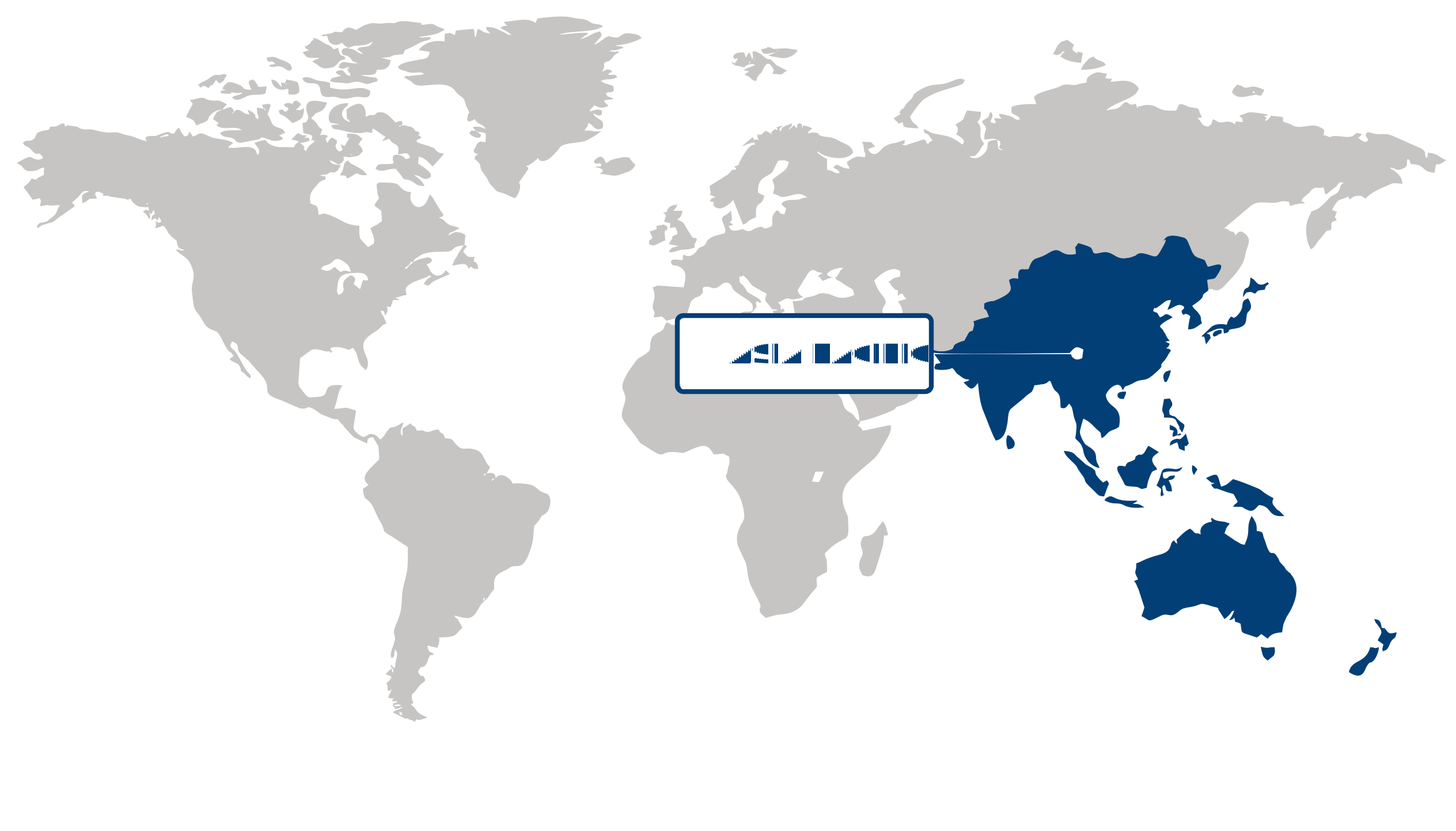
Asia Pacific (Largest Region)
Asia Pacific dominated the fungicide active ingredients market in 2026, supported by its extensive agricultural base, diverse crop production, and increasing need to protect crops from fungal diseases. The region's large farming population and expanding food requirements are encouraging greater adoption of crop protection products that help preserve yields and improve crop quality. Intensification of agricultural practices, changing climatic conditions, and increasing emphasis on maintaining farm productivity are also supporting demand for effective fungicide active ingredients.
North America (Fastest-Growing Region)
North America is expected to be the fastest-growing region over the forecast period, driven by increasing adoption of advanced crop protection practices and continued efforts to improve agricultural productivity. Farmers are placing greater emphasis on effective disease management to minimize crop losses and maintain consistent output, supporting demand for specialized fungicide formulations. Growing adoption of precision agriculture and integrated crop management practices is further creating opportunities for more targeted and efficient use of fungicide active ingredients.
| Parameter | North America | Asia Pacific | Europe | Latin America | MEA |
|---|---|---|---|---|---|
| Innovation Hub i Scale Nascent Developing Advanced | |||||
| Cost-Sensitive Region i Scale Low Medium High | |||||
| Regulatory Environment i Scale Restrictive Neutral Supportive | |||||
| Demand Drivers i Scale Weak Moderate Strong | |||||
| Development Stage i Scale Emerging Developing Developed | |||||
| Adoption Rate i Scale Low Medium High | |||||
| New Entrants / Startups i Scale Sparse Moderate Dense | |||||
| Macro Indicators i Scale Weak Stable Strong |
Key Country Insights
United States 🇺🇸
Crop protection scale-upThe U.S. fungicide active ingredients market is shaped by large-scale row crop agriculture and integrated crop protection programs. In the U.S., demand is driven by resistance management strategies and combination formulations, with strong emphasis on broad-spectrum efficacy and compatibility with aerial and ground spraying systems across extensive farmlands.
Germany 🇩🇪
Regulatory-led formulationsGermany fungicide active ingredients market is strongly influenced by stringent environmental and chemical safety regulations. In Germany, manufacturers focus on developing low-residue, targeted molecules and bio-based alternatives, with significant investment in precision agriculture compatibility and compliance with evolving EU agricultural chemical standards.
Japan 🇯🇵
Precision crop chemistryThe Japan fungicide active ingredients market reflects intensive cultivation practices and a strong focus on high-value horticulture. In Japan, growers prioritize highly targeted formulations that protect quality-sensitive crops such as fruits and vegetables, with emphasis on residue control and integration with advanced pest monitoring systems.
South Korea 🇰🇷
Greenhouse disease controlThe South Korea fungicide active ingredients market is supported by widespread greenhouse cultivation and controlled-environment farming. In South Korea, growers rely on efficient fungicide solutions tailored for high-density cropping systems, with emphasis on resistance management and compatibility with integrated pest management practices in protected agriculture environments.
France 🇫🇷
Vineyard protection focusThe France fungicide active ingredients market is heavily shaped by vineyard protection requirements and high-value wine production. In France, growers prioritize disease control solutions targeting mildew and fungal outbreaks, with strong emphasis on residue compliance, product rotation strategies, and preservation of grape quality across diverse terroirs.
Italy 🇮🇹
Orchard disease managementThe Italy fungicide active ingredients market is driven by extensive fruit orchards and vegetable cultivation. In Italy, growers focus on protecting apples, citrus, and grapes from fungal diseases, with strong demand for flexible application regimes and solutions compatible with both conventional and integrated farming systems.
Segment Leadership and Growth Trends
Fungicide Active Ingredients Market Share (%), by Type, 2026
Go beyond the chart, access full insights & data tables
Request Free Sample ReportType Segment Analysis: Systematic (Largest & Fastest-Growing Segment)
The systematic fungicide active ingredients segment led the fungicide active ingredients market and accounted for 37.8% of the market in 2026, while also representing the fastest-growing type segment. Systematic fungicides are highly valued for their ability to be absorbed and transported within plant tissues, providing comprehensive protection against a broad range of fungal diseases. Their effectiveness in both preventive and curative applications has made them an essential component of modern crop protection strategies. Growing emphasis on maximizing agricultural productivity and protecting crop yields from disease-related losses continues to support strong demand for systematic fungicide solutions.
Product Segment Analysis: Azoxystrobin (Largest & Fastest-Growing Segment)
The azoxystrobin segment accounted for 25.38% of the market in 2026 and also emerged as the fastest-growing product segment. Its strong market position is supported by its broad-spectrum disease control capabilities and effectiveness across a wide variety of crops. Farmers and agricultural producers increasingly rely on azoxystrobin to enhance crop health, improve productivity, and manage resistance challenges. The continued focus on sustainable crop management practices and efficient disease control is expected to reinforce the segment’s growth trajectory.
End Use Segment Analysis: Agriculture (Largest & Fastest-Growing Segment)
The agriculture end-use segment held the largest share of the fungicide active ingredients market in 2026 and is expected to remain the fastest-growing segment throughout the forecast period. The segment's dominance is driven by the critical role fungicides play in protecting crops from diseases that can significantly impact yield and quality. Rising food demand, increasing cultivation intensity, and the need to improve agricultural productivity are encouraging greater use of fungicide active ingredients across farming operations. As growers seek reliable crop protection solutions to ensure consistent production, the agriculture segment continues to drive overall market expansion.
| Segment | Sub-Segment | Largest Segment | Fastest Growing |
|---|---|---|---|
| Type | Systematic, Contact, Translaminar | Systematic | Systematic |
| Product | Azoxystrobin, Boscalid, Chlorothalonil, Cyazofamid, Etridiazole (Ethazole), Fenarimol, Others | Azoxystrobin | Azoxystrobin |
| End Use | Agriculture, Food Industry, Medicinal, Chemical Laboratory, Others | Agriculture | Agriculture |
Competitive Landscape and Market Positioning
Key companies in the fungicide active ingredients market:
- BASF SE (Germany)
- Bayer AG (Germany)
- Syngenta AG (Switzerland)
- Corteva Agriscience (USA)
- FMC Corporation (USA)
- UPL Limited (India)
- Nufarm Limited (Australia)
- Sumitomo Chemical Co., Ltd. (Japan)
- ADAMA Ltd. (Israel)
- Nissan Chemical Corporation (Japan)
The fungicide active ingredients market is evolving as participants compete to address changing agricultural challenges while balancing effectiveness, sustainability expectations, and regulatory requirements. Established producers are refining existing solutions and investing in improved formulations, whereas emerging participants are exploring differentiated active ingredient approaches that target resistance management and crop-specific needs. Competitive positioning is increasingly determined by the ability to provide effective disease control while adapting to stricter environmental standards and shifting farmer preferences. The market is gradually moving away from reliance on broad-spectrum solutions toward more specialized approaches that enhance application efficiency and long-term crop protection strategies.
| Company | Market Share | Company Revenue | Revenue CAGR (%) | Product Portfolio | Geographic Presence | Innovation / R&D Focus | Strategic Developments |
|---|---|---|---|---|---|---|---|
| BASF SE (Germany) | |||||||
| Bayer AG (Germany) | |||||||
| Syngenta AG (Switzerland) | |||||||
| Corteva Agriscience (USA) | |||||||
| FMC Corporation (USA) | |||||||
| UPL Limited (India) | |||||||
| Nufarm Limited (Australia) | |||||||
| Sumitomo Chemical Co. Ltd. (Japan) | |||||||
| ADAMA Ltd. (Israel) | |||||||
| Nissan Chemical Corporation (Japan) |
Industry Development/News
| Company Name | Date | Key Development |
|---|---|---|
| Crystal Crop Protection Ltd | May-26 | Crystal Crop Protection Ltd agreed to acquire the India commercial business of FMC, backed by the International Finance Corporation. The strategic acquisition enhances the company's competitive positioning in the domestic crop protection segment and marks a major expansion milestone ahead of its planned initial public offering. |
| BASF | Sep-25 | BASF announced the successful development of a new fungicide active ingredient featuring a novel mode of action. The innovation targets Septoria tritici blotch in wheat crops, representing a critical advancement in resistance management solutions for global cereal production systems. |
| FMC | Nov-24 | FMC completed the divestiture of its Global Specialty Solutions business to Envu. The strategic transaction allows the company to streamline its operations and focus exclusively on core innovation within the global crop protection market, specifically enhancing its development of fungicide and related agricultural products. |
| Syngenta AG | Jul-24 | Syngenta AG secured regulatory approvals across multiple countries for its next-generation strobilurin fungicide active ingredient. This commercial milestone expands advanced disease control solutions for specialty crop growers addressing challenges related to resistant pathogen populations. |
Customize Your Report
Explore examples of how this report can be tailored to different research needs, including custom segments, additional topics or chapters, and related reports. Click a section of the wheel or its numbered marker to explore the available options.
Fungicide Active Ingredients Market — Custom Segments
| Segment | Sub-Segment |
|---|---|
| Crop Type | Cereals & Grains, Fruits & Vegetables, Oilseeds & Pulses, Specialty Crops |
| Disease Target | Powdery Mildew, Rust Diseases, Blight Diseases, Leaf Spot Diseases, Fusarium Diseases, Other Fungal Diseases |
| Distribution Channel | Direct Sales, Agricultural Cooperatives, Agrochemical Distributors, Retail & Farm Supply Stores, Online Channels |
Fungicide Active Ingredients Market — Custom TOC
| Custom Chapter | Custom Details |
|---|---|
| Resistance Management Strategy Assessment |
|
| Crop Protection Demand by High-Value Crops |
|
| Sustainable Crop Protection Transition Outlook |
|
Need a different cut of the data?
Request Custom ResearchHow much revenue does the fungicide active ingredients market generate?
How is the fungicide active ingredients industry size expected to evolve during the forecast period?
How are agricultural productivity goals shaping demand for fungicide active ingredients?
Why are resistance management and formulation innovations becoming strategic priorities in the fungicide active ingredients market?
Why do systematic fungicide active ingredients lead market demand?
How is azoxystrobin strengthening its position in crop protection?
Why does Asia Pacific lead the fungicide active ingredients market?
What is driving faster fungicide active ingredient growth in North America?
What are the prominent companies operating in the fungicide active ingredients landscape?
Our Clients
"The report helped us understand emerging consumer trends in our product category. It clarified where to focus innovation for the next product launch."
LyondellBasell
"The regional forecast section was incredibly useful. We were able to identify two new potential partners in Europe thanks to the vendor mapping you included."
SABIC
"We appreciated how actionable the recommendations were. It guided us to improve supply chain resilience."
Olin Corporation
Our Research Team & Methodology
Every Fundamental Business Insights report is built by a dedicated vertical research team, validated through a structured primary-and-secondary methodology, and reviewed for accuracy before it reaches you.
Research Team Overview
Prepared by the Chemicals & Materials Research Team
Delivery
Published
Demand
Available
Support
Trust & Compliance
Research Domains
10 coverage areasResearch Intelligence
| Source | Reference |
|---|---|
| American Chemistry Council (ACC) | www.americanchemistry.com |
| European Chemical Industry Council (Cefic) | cefic.org |
| International Council of Chemical Associations (ICCA) | icca-chem.org |
| European Chemicals Agency (ECHA) | echa.europa.eu |
| U.S. Environmental Protection Agency (EPA) | www.epa.gov |
| ASTM International | www.astm.org |
| International Organization for Standardization (ISO) | www.iso.org |
| National Institute of Standards and Technology (NIST) | www.nist.gov |
| Plastics Industry Association (PLASTICS) | www.plasticsindustry.org |
| European Biplastics | www.european-bioplastics.org |
| The Adhesive and Sealant Council (ASC) | www.ascouncil.org |
| National Association of Corrosion Engineers (AMPP) | www.ampp.org |
| Society of Plastics Engineers (SPE) | www.4spe.org |
| International Fertilizer Association (IFA) | www.fertilizer.org |
| CropLife International | croplife.org |
| Packaging Europe | packagingeurope.com |
| Flexible Packaging Association (FPA) | www.flexpack.org |
| Battery Council International (BCI) | batterycouncil.org |
| International Copper Association (ICA) | internationalcopper.org |
| World Steel Association | worldsteel.org |
Research Workflow & Quality Assurance
Data Collection
Verified information gathered through primary and secondary research.
Data Triangulation
Cross-validation using multiple independent data sources.
Forecast Modelling
Market estimates developed using historical trends and analytical models.
Analyst Validation
Findings reviewed by domain experts for accuracy and consistency.
Editorial & Quality Review
Final editorial, quality, and compliance checks before publication.
Final Publication
Released after successful completion of the internal review process.
Report Coverage
📊 Market Assessment
- Market Size & Forecast
- Market Segmentation
- Regional Analysis
- Growth Drivers & Challenges
- Market Dynamics
🏢 Competitive Intelligence
- Competitive Landscape
- Company Profiles
- Competitive Benchmarking
- Mergers & Acquisitions
- Market Share Analysis or Key Company Strategies
🔍 Strategic Analysis
- Value Chain Analysis
- Porter's Five Forces
- PESTLE Analysis
- Pricing Trends
- Supply-Demand Analysis
🚀 Future Outlook
- Technology Landscape
- Regulatory Landscape
- Investment & Funding Landscape
- Emerging Opportunities
- Future Market Outlook
Have a question about this report or need a custom scope?
Request Customization