Fruit Puree Market Size & Forecasts 2026-2035, By Segments (Type, Application), Growth Opportunities, Innovation Landscape, Regulatory Shifts, Strategic Regional Insights (U.S., Japan, China, South Korea, UK, Germany, France), and Competitive Dynamics (Ingredion, Döhler, Archer Daniels Midland, Cargill, Kerry Group)
Market Size and Growth Outlook
Fruit Puree Market size is projected to expand significantly, moving from USD 6.15 billion in 2025 to USD 13.28 billion by 2035, with a CAGR of 8% during the 2026-2035 forecast period. The expected revenue for 2026 is USD 6.58 billion.
Get more details on this report
Request Free Sample ReportFruit Puree Market Intelligence Snapshot
Regional Market Dynamics
Segment Momentum
Market Expansion Drivers
Leading Market Participants
Global Market Forecast Snapshot
Market Outlook
Regional and Segment Outlook
Market Growth Drivers and Industry Trends
The increasing consumer preference for convenient, healthy snack options has propelled growth in the fruit puree market. According to the United Nations Food and Agriculture Organization (FAO), the global shift toward processed fruit products reflects a broader move to incorporate nutrient-rich, on-the-go foods into daily diets. This trend is reinforced by urbanization and busier lifestyles, driving demand for ready-to-use purees in retail and foodservice sectors. Industry leaders like Del Monte and Nestlé continue to invest in expanding product lines that leverage this shift, offering diverse flavors and organic variants. This evolution presents strategic opportunities for both incumbents and newcomers to innovate packaging and distribution strategies, catering to health-conscious consumers seeking convenience. As consumer habits solidify around processed fruit consumption, the fruit puree market is positioned to deepen its penetration across multiple consumption occasions, benefiting from sustained demand for wholesome processed fruit options.
Expansion in Baby Food and Dairy Applications
The growing integration of fruit purees in baby food and dairy products is a critical growth driver reshaping the fruit puree market. The U.S. Food and Drug Administration (FDA) has encouraged the use of natural ingredients in infant nutrition, prompting formulators like Gerber and Danone to increasingly incorporate fruit purees due to their nutritional and sensory benefits. Simultaneously, purees are enhancing product appeal in dairy categories such as yogurts and smoothies, enabling flavor diversification and functional fortification. This trend aligns with consumer demand for clean-label and nutritionally balanced products, creating opportunities for manufacturers to capitalize on health-driven innovation. Both established players and new entrants can leverage this growth by developing tailored formulations and forging partnerships with baby food and dairy brands. With regulatory support and evolving consumer expectations, the fruit puree market is set to expand its footprint in these adjacent sectors, amplifying its role in nutritious product offerings.
Innovation in Puree Processing and Shelf-Life Extension
Technological advancements in puree processing and preservation methods are significantly influencing the fruit puree market. Innovations such as high-pressure processing (HPP) and cold chain optimization, highlighted by FoodTech companies like Pasteurization Technologies Inc., have enhanced shelf-life without compromising flavor or nutritional content. This extends market reach by enabling broader geographic distribution and reducing food waste, aligning with environmental sustainability goals recognized by the World Resources Institute (WRI). Furthermore, improved processing technologies offer manufacturers an edge in product differentiation through better texture and purity, appealing to discerning consumers. These developments create strategic openings for manufacturers to invest in scalable, cost-efficient production lines and sustainable packaging solutions. As these technologies mature and adoption widens, the fruit puree market is poised to benefit from enhanced supply chain resilience and increased consumer trust, reinforcing long-term market stability.
Industry Restraints:
Stringent Food Safety and Labeling Regulations
Strict regulatory frameworks governing food safety and labeling significantly constrain fruit puree market expansion by elevating compliance complexity and costs. Agencies like the U.S. Food and Drug Administration (FDA) and the European Food Safety Authority (EFSA) enforce rigorous standards on pesticide residues, allergen disclosures, and adulteration prevention, prompting manufacturers to invest heavily in testing and certification. For instance, Danone recently cited increased regulatory scrutiny as a factor delaying product launches in North America. This environment challenges smaller producers lacking scale efficiencies and imposes entry barriers for new players. Consequently, companies must prioritize robust quality assurance systems and agile regulatory monitoring. As global harmonization of food safety standards remains gradual, these compliance demands will continue to necessitate significant operational adjustments, thereby moderating market growth and favoring those with established regulatory expertise.
Volatility in Raw Material Supply and Agricultural Constraints
Fluctuating availability and quality of fruits, driven by climatic unpredictability and seasonal variability, create supply-side uncertainties that impede the fruit puree market’s stability. The Food and Agriculture Organization (FAO) highlights that increasingly erratic weather patterns are disrupting harvest cycles worldwide, raising input costs for processors like Ingredion and Tate & Lyle, who depend on consistent fruit supplies. These challenges complicate production planning and inventory management, constraining capacity utilization and timely deliveries. For both incumbents and entrants, developing resilient sourcing strategies—including diversified supplier networks and contract farming—becomes imperative yet complex. Given ongoing climate change impacts and evolving agricultural practices, raw material supply volatility will remain a key restraint, compelling market participants to adopt adaptive procurement models and invest in sustainable agriculture partnerships to mitigate risk.
| Growth Driver | Impact on CAGR | Regulatory Influence | Geographic Relevance | Adoption Rate | Impact Timeline |
|---|---|---|---|---|---|
| Growing demand for processed fruit products | 2.80% | Short term (≤ 2 yrs) | Asia Pacific, North America; Spillover: Europe | Low | Moderate |
| Expansion in baby food and dairy applications | 2.50% | Medium term (2–5 yrs) | Europe, Asia Pacific; Spillover: North America | Low | Moderate |
| Innovation in puree processing and shelf-life extension | 2.70% | Long term (5+ yrs) | North America, Europe; Spillover: Asia Pacific | Low | Slow |
Unlock insights tailored to your business with our bespoke market research solutions.
Click to get your customized report now.
Regional Demand Dynamics
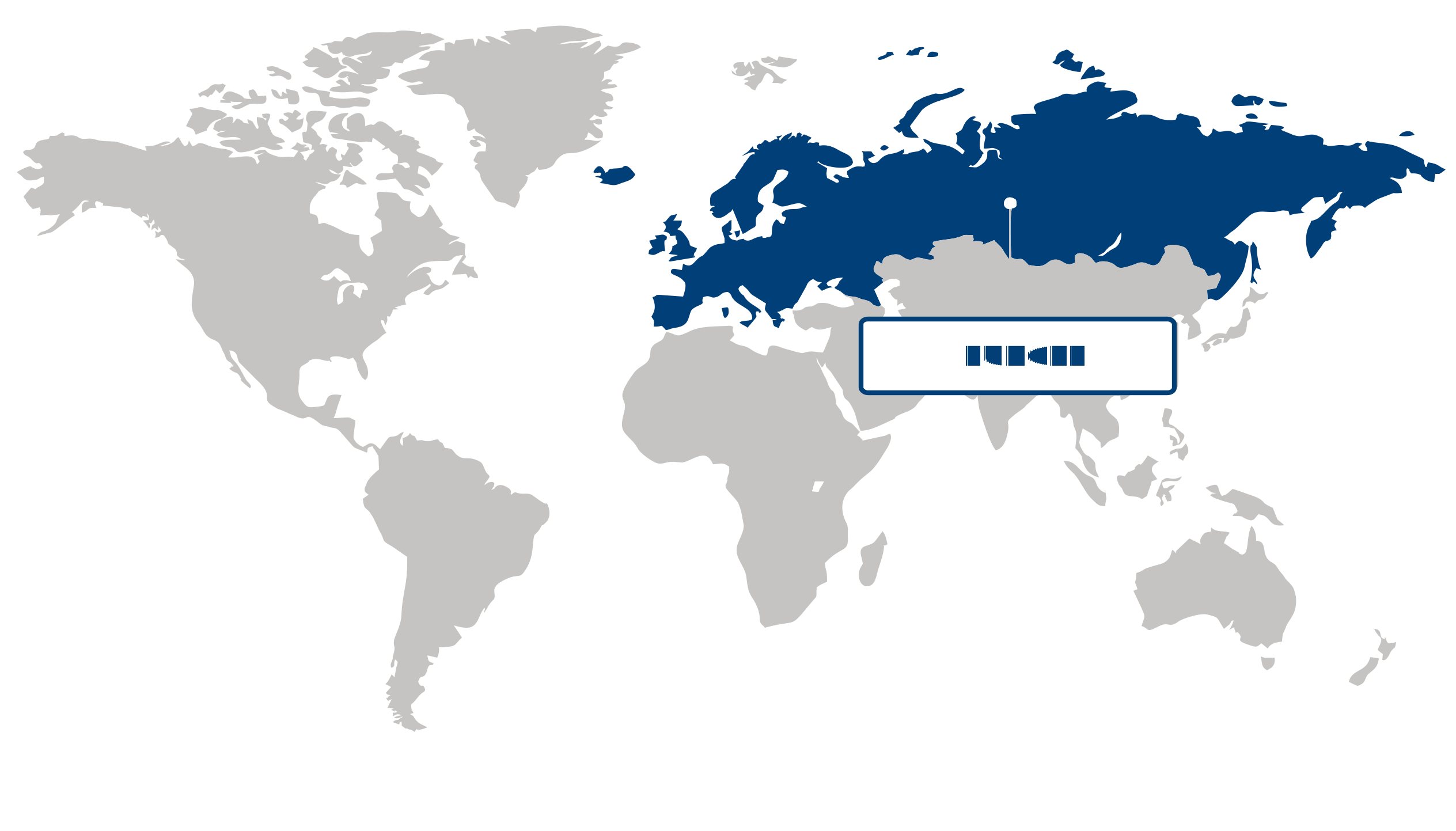
Europe captured over 40% of the global fruit puree market share in 2025, positioning it as the largest regional player. This dominance stems from robust demand originating primarily from the baby food and beverage sectors, where fruit purees continue to gain traction for their natural and nutritious appeal. Companies such as Nestlé and Danone have expanded organic fruit puree lines to meet shifting consumer preferences for clean-label, health-conscious products, as noted in announcements by the European Food Safety Authority (EFSA). Regulatory frameworks across the European Union also encourage transparent ingredient sourcing, reinforcing market confidence. Additionally, advancements in supply chain logistics and cold storage technology have enhanced product quality and availability. Looking ahead, Europe's blend of regulatory rigor, innovation, and evolving consumer priorities presents substantial growth opportunities in the fruit puree market.
Germany anchors the European fruit puree market through its sophisticated food manufacturing infrastructure and strong focus on infant nutrition. The German Federal Ministry of Food and Agriculture's initiatives promoting organic agriculture have intensified the adoption of premium fruit purees in baby food products. Leading brands like Hipp and Holle have capitalized on this environment, launching new purees catering to allergen-free and sustainable demands. This strategic positioning bolsters Germany's influence on regional trends, driving quality innovation that benefits the broader European market.
France plays a pivotal role in Europe's fruit puree market with its rich agricultural base and tradition of gourmet food production. The French Ministry of Agriculture's support for local fruit cultivation has ensured steady supply, while companies such as Materne leverage this to develop fruit purees for both baby food and beverages. French consumers increasingly favor products highlighting origin and sustainability, reflecting in premium pricing strategies and enhanced market penetration. France’s unique consumer dynamics and strong domestic sourcing reinforce Europe’s leadership and expand the market’s value proposition.
Asia Pacific Market Analysis:
Asia Pacific emerged as the fastest-growing region in the fruit puree market, registering a robust CAGR of 9.2%. This remarkable growth is predominantly driven by escalating demand from health-conscious consumers and the surging popularity of smoothie trends across the region. Consumers increasingly favor nutritious ingredients, seeking natural and functional products that support wellness, which aligns closely with the benefits offered by fruit purees. Additionally, companies are innovating with clean-label and organic variants, responding to shifting preferences toward transparency and sustainability. The region’s expanding middle class, coupled with increasing urbanization and disposable incomes, further fuels consumption. According to Krushna Foods' recent product launch tailored to smoothie bars in Southeast Asia, the trend towards convenient, health-oriented beverages is intensifying. Looking ahead, Asia Pacific’s dynamic consumer base and evolving retail ecosystems present significant opportunities for continued innovation and market expansion in the fruit puree market.
China plays a pivotal role in Asia Pacific’s fruit puree market, fueled by growing consumer awareness of health and wellness and evolving dietary habits. The rising demand for nutritious, ready-to-drink products is reinforced by government policies promoting healthier lifestyles and food safety standards, as highlighted by the China National Health Commission’s recent guidelines on boosting fruit intake. These initiatives have encouraged manufacturers to expand their product portfolios with diverse fruit puree blends that appeal to younger demographics and fitness enthusiasts. Additionally, e-commerce platforms like Alibaba enable wider distribution and consumer access, enhancing market penetration. China’s scale and increasing adoption of digital food retail strategies solidify its position as a cornerstone for regional growth in the fruit puree market.
Japan, known for its advanced food technology and quality-conscious market, exhibits substantial growth driven by the integration of health trends and innovation within the fruit puree sector. Japanese consumers exhibit a preference for premium, functional foods backed by scientific research, making fruit purees a preferred ingredient in both home-based cooking and ready-made health products. Regulatory support from the Ministry of Agriculture, Forestry and Fisheries promoting fruit consumption and innovation in food processing technologies fuels this momentum. Companies like Kagome Co., Ltd. have pioneered fruit-based beverages and baby foods, leveraging local fruit varieties and cutting-edge preservation techniques. Japan’s emphasis on product quality and consumer trust enhances its strategic relevance, reinforcing Asia Pacific’s leadership and innovation potential within the fruit puree market.
North America Market Trends:
North America held a commanding share in the fruit puree market, driven by evolving consumer preferences towards clean-label and minimally processed food products. The region’s well-established cold chain infrastructure and advanced food processing technologies, highlighted by innovations from companies like Welch’s and Del Monte Foods, enable efficient production and distribution of high-quality purees. Moreover, growing consumer focus on health and wellness, coupled with increasing demand for convenient and nutritious options, has intensified product development efforts. Regulatory agencies such as the U.S. Food and Drug Administration (FDA) have also streamlined approval processes, encouraging innovation while ensuring safety standards. The region’s blend of mature retail channels and expanding e-commerce platforms further supports market penetration. As North America continues to integrate sustainability and traceability into supply chains, strategic investments in technological enhancements position it as a significant hub for fruit puree market growth.
The U.S. plays a pivotal role in the North American fruit puree market, fueled by strong domestic demand for organic and natural ingredients. Consumer appetite for fruit-based snacks and beverages is reflected in product launches by companies such as Mott’s and The Kraft Heinz Company, which emphasize ingredient transparency and reduced sugar content. Regulatory frameworks led by the FDA not only ensure product quality but also facilitate market entry for innovative puree variants, underpinning competitive dynamics. Additionally, the U.S. benefits from a robust agricultural sector producing diverse fruit varieties, supported by USDA initiatives promoting sustainable farming practices. This synergy between consumer trends, regulatory support, and agricultural excellence consolidates the U.S. as a strategic nexus, enabling broader regional opportunities through export potential and innovation leadership in the fruit puree market.
| Parameter | North America | Asia Pacific | Europe | Latin America | MEA |
|---|---|---|---|---|---|
| Innovation Hub i Scale Nascent Developing Advanced | |||||
| Cost-Sensitive Region i Scale Low Medium High | |||||
| Regulatory Environment i Scale Restrictive Neutral Supportive | |||||
| Demand Drivers i Scale Weak Moderate Strong | |||||
| Development Stage i Scale Emerging Developing Developed | |||||
| Adoption Rate i Scale Low Medium High | |||||
| New Entrants / Startups i Scale Sparse Moderate Dense | |||||
| Macro Indicators i Scale Weak Stable Strong |
Segment Leadership and Growth Trends
Fruit Puree Market Share (%), by Type, 2026
Go beyond the chart, access full insights & data tables
Request Free Sample ReportBanana puree dominated the fruit puree market by type segment in 2025, driven primarily by increasing consumer demand for natural, nutritious ingredients in baby foods, smoothies, and functional beverages. This segment's leadership reflects shifting preferences toward clean-label and health-promoting products, which align with global wellness trends. For instance, companies like Dole Food Company have emphasized banana puree’s integration into organic baby food lines, capitalizing on its natural sweetness and nutrient profile. Growing investments in sustainable sourcing and improved cold chain logistics further enhance banana puree's accessibility and quality consistency. This segment offers strategic advantages for both established manufacturers and startups targeting health-conscious consumers. Its sustained relevance is underpinned by ongoing innovation in functional beverage formulations and expanding global demand for wholesome, minimally processed fruit ingredients.
Analysis by Application
The beverages segment represented the largest share of the fruit puree market by application in 2025, propelled by rising consumer preference for natural and healthy fruit-based beverages. This segment benefits from increasing health awareness and the demand for clean-label, nutrient-rich drink options across diverse demographics. Leading beverage corporations like Nestlé and Danone have integrated fruit purees to enhance taste and nutritional profiles while meeting strict regulatory standards on additives and labeling. The growth also ties to advancements in fruit puree processing technologies enabling extended shelf life without preservatives, supporting broad distribution. The beverages segment presents significant opportunities for both legacy firms and innovators to capture market share through product differentiation and sustainable ingredient sourcing. The segment’s prominence is poised to endure due to persistent consumer shifts towards health-centric beverage consumption worldwide.
| Segment | Sub-Segment | Largest Segment | Fastest Growing |
|---|---|---|---|
| Type | Apple Puree, Plum Puree, Banana Puree, Strawberry Puree | ||
| Application | Baby Food, Bakery Items, Convenience Food, Dairy & Frozen Desserts, Dressings, Confectionary, Pet Foods, Beverages, Sauces |
Competitive Landscape and Market Positioning
The competitive landscape reveals a dynamic environment where top players continuously enhance their market suitability through strategic collaboration and product innovation. Recent developments highlight integrations of advanced processing technologies to improve product quality and shelf-life. Several companies have expanded their ingredient portfolios through synergistic acquisitions, boosting their capability to serve the growing demand for natural, clean-label fruit purees. Alliances refining sustainable sourcing and organic certifications further differentiate leading firms, reinforcing their market credibility. These efforts collectively intensify competition, prompting sustained investment in R&D to deliver tailored solutions to food and beverage manufacturers, thereby driving industry-wide advancements in customization and functional benefits.
Strategic / Actionable Recommendations for Regional Players
In North America, aligning with established ingredient suppliers and investing in emerging clean-label processing technologies can provide a competitive edge. Focusing on premium fruit puree variants for health-oriented sectors and expanding organic certifications would help capitalize on evolving consumer preferences. Strategic alliances with innovation-driven firms could accelerate product development cycles.
In the Asia Pacific, players should prioritize capturing diverse local fruit varieties to unlock unique product offerings that resonate with regional tastes. Strengthening collaborations with multinational entities can enhance distribution networks, while adopting scalable automation solutions will improve production efficiency amid rising demand.
European companies could benefit from intensifying commitments to sustainability credentials and circular economy principles. Partnering with research institutions to pioneer bioactive-enriched purees and leveraging digitized supply chain transparency tools will support differentiation. Emphasizing tailored formulations for functional foods aligns with the continent’s regulatory and consumer landscape.
| Company | Market Share | Company Revenue | Revenue CAGR (%) | Product Portfolio | Geographic Presence | Innovation / R&D Focus | Strategic Developments |
|---|---|---|---|---|---|---|---|
| No companies available. | |||||||
Industry Development/News
| Company Name | Date | Key Development |
|---|
Customize Your Report
Explore examples of how this report can be tailored to different research needs, including custom segments, additional topics or chapters, and related reports. Click a section of the wheel or its numbered marker to explore the available options.
Fruit Puree Market — Custom Segments
| Segment | Sub-Segment |
|---|---|
| No segment data available. | |
Fruit Puree Market — Custom TOC
| Custom Chapter | Custom Details | ||
|---|---|---|---|
| No custom TOC data available. | |||
Need a different cut of the data?
Request Custom ResearchHow much is the fruit puree industry expected to grow by 2035?
Which geographical region leads the fruit puree market market?
Which geography represents the strongest growth trajectory for the fruit puree sector?
Why is the banana puree segment leading in the fruit puree industry?
Why does beverages sub-segment dominate the application segment of fruit puree sector?
Which companies are driving growth in the fruit puree landscape?
Our Clients
"The report provided a thorough look at market trends, technological advancements, and the competitive landscape. The depth of insights was really valuable."
ITC Limited
"We would highly recommend Fundamental Business Insights & Consulting to anyone looking for reliable, detailed, and comprehensive market research in the Food industry."
Tyson Foods
"The clarity and presentation of the information were commendable. The report was delivered timely, which made the overall experience smooth and convenient."
Mondelēz International
Our Research Team & Methodology
Every Fundamental Business Insights report is built by a dedicated vertical research team, validated through a structured primary-and-secondary methodology, and reviewed for accuracy before it reaches you.
Research Team Overview
Prepared by the Food & Beverage Research Team
Delivery
Published
Demand
Available
Support
Trust & Compliance
Research Domains
10 coverage areasResearch Intelligence
| Source | Reference |
|---|---|
| Food and Agriculture Organization (FAO) | www.fao.org |
| World Health Organization (WHO) | www.who.int |
| U.S. Food & Drug Administration (FDA) | www.fda.gov |
| European Food Safety Authority (EFSA) | www.efsa.europa.eu |
| U.S. Department of Agriculture (USDA) | www.usda.gov |
| Codex Alimentarius Commission | www.fao.org/fao-who-codexalimentarius |
| International Organization for Standardization (ISO) | www.iso.org |
| AOAC INTERNATIONAL | www.aoac.org |
| Institute of Food Technologists (IFT) | www.ift.org |
| International Dairy Foods Association (IDFA) | www.idfa.org |
| International Sweeteners Association (ISA) | www.sweeteners.org |
| International Probiotics Association (IPA) | internationalprobiotics.org |
| Good Food Institute (GFI) | gfi.org |
| American Feed Industry Association (AFIA) | www.afia.org |
| International Feed Industry Federation (IFIF) | ifif.org |
| Specialty Food Association (SFA) | www.specialtyfood.com |
| Brewers Association | www.brewersassociation.org |
| International Bottled Water Association (IBWA) | bottledwater.org |
| International Alliance for Dietary/Food Supplement Associations (IADSA) | www.iadsa.org |
| OECD Agriculture & Food | www.oecd.org/agriculture |
Research Workflow & Quality Assurance
Data Collection
Verified information gathered through primary and secondary research.
Data Triangulation
Cross-validation using multiple independent data sources.
Forecast Modelling
Market estimates developed using historical trends and analytical models.
Analyst Validation
Findings reviewed by domain experts for accuracy and consistency.
Editorial & Quality Review
Final editorial, quality, and compliance checks before publication.
Final Publication
Released after successful completion of the internal review process.
Report Coverage
📊 Market Assessment
- Market Size & Forecast
- Market Segmentation
- Regional Analysis
- Growth Drivers & Challenges
- Market Dynamics
🏢 Competitive Intelligence
- Competitive Landscape
- Company Profiles
- Competitive Benchmarking
- Mergers & Acquisitions
- Market Share Analysis or Key Company Strategies
🔍 Strategic Analysis
- Value Chain Analysis
- Porter's Five Forces
- PESTLE Analysis
- Pricing Trends
- Supply-Demand Analysis
🚀 Future Outlook
- Technology Landscape
- Regulatory Landscape
- Investment & Funding Landscape
- Emerging Opportunities
- Future Market Outlook
Have a question about this report or need a custom scope?
Request Customization