Fertility Services Market Size & Growth Forecast 2027–2036, By Segments (Provider, Type), Regional Demand Trends (North America, Asia Pacific, Europe), Key Country Insights (U.S., Japan, South Korea, Germany, France, Italy), and Competitive Landscape
Market Size and Growth Outlook
Fertility Services Market size was more than USD 52.7 billion in 2026 and is set to grow at a 7.13% CAGR between 2027 and 2036, attaining USD 104.94 billion by 2036. The industry revenue for 2027 is estimated at USD 55.86 billion.
Get more details on this report
Request Free Sample ReportFertility Services Market Intelligence Snapshot
Regional Market Dynamics
- Europe held a 37.88% market share in 2026, supported by mature fertility clinic networks, broad ART availability, and strong clinical expertise that sustain high treatment volumes and consistent patient access.
- Asia Pacific is projected to grow at an 8.59% CAGR, fueled by expanding fertility clinic capacity, broader treatment access, rising patient acceptance of assisted conception, and continued investment in modern reproductive care.
Segment Momentum
- Fertility clinics accounted for 76.02% of the market in 2026 by offering specialized reproductive care, integrated diagnostics, treatment planning, and coordinated fertility procedures under one care pathway.
- Preservation is the fastest-growing type segment as more individuals proactively seek fertility services before age-related decline, medical treatments, or delayed family planning.
Market Expansion Drivers
- Rising global infertility rates driven by delayed pregnancies and lifestyle-related factors.
- Increasing adoption of assisted reproductive technologies expanding access to fertility treatment.
- Growth of specialized fertility clinics improving access and success rates of ART procedures.
Leading Market Participants
- Prominent companies in the fertility services market include Mayo Clinic (United States), Cleveland Clinic (United States), Monash IVF Group Limited (Australia), Virtus Health Limited (Australia), CARE Fertility Group (United Kingdom), Aspire Fertility (United States), Dallas IVF (United States), Apricity Fertility UK Limited (United Kingdom), King's Fertility Limited (United Kingdom), Prelude Fertility, Inc. (United States).
Global Market Forecast Snapshot
Market Outlook
- 2026 Market Size: USD 52.7 billion
- 2027 Estimated Market Size: USD 55.86 billion.
- Projected Market Size: USD 104.94 billion by 2036
- Growth Forecast: 7.13% CAGR (2027-2036)
Regional and Segment Outlook
- Leading Regional Market: Europe
- High-Growth Regional Hub: Asia Pacific
- Core Revenue Segment: Fertility Clinics (Provider) | Treatment (Type)
- Emerging Opportunity Segment: Fertility Clinics (Provider) | Preservation (Type)
Market Growth Drivers and Industry Trends
Rising global infertility rates driven by delayed pregnancies and lifestyle-related factors
Changing family-planning patterns and the increasing tendency to pursue parenthood at later reproductive ages are contributing to greater demand for fertility evaluation and treatment. The fertility services market is expanding as delayed pregnancies can increase the likelihood of reproductive challenges, while lifestyle-related factors and other environmental or health influences may further affect fertility outcomes. Individuals and couples are increasingly seeking consultations, diagnostic assessments, fertility preservation, and specialized treatment to better understand reproductive health, creating demand across both initial evaluation and more advanced fertility care pathways.
Increasing adoption of assisted reproductive technologies expanding access to fertility treatment
Greater awareness and acceptance of assisted reproductive technologies are enabling more individuals and couples to pursue medically supported conception options. The fertility services market is benefiting from wider use of procedures such as in vitro fertilization, intracytoplasmic sperm injection, embryo transfer, and related reproductive interventions that provide treatment options for different causes of infertility. Improvements in laboratory techniques, embryo assessment, cryopreservation, and treatment protocols are also supporting more individualized care, while growing familiarity with ART procedures is reducing barriers to seeking specialized fertility assistance.
Growth of specialized fertility clinics improving access and success rates of ART procedures
The development of specialized fertility centers is strengthening the availability of comprehensive reproductive care by bringing diagnostic, laboratory, procedural, and counseling services together within dedicated facilities. Expansion of these clinics is supporting the fertility services market by improving geographic access to assisted reproductive technologies and enabling patients to receive care from teams with focused expertise in reproductive medicine. Specialized infrastructure can also facilitate the adoption of advanced laboratory practices and standardized treatment protocols, while integrated patient management allows fertility specialists to tailor treatment pathways according to individual reproductive needs.
| Growth Driver | Impact on CAGR | Regulatory Influence | Geographic Relevance | Adoption Rate | Impact Timeline |
|---|---|---|---|---|---|
| Rising global infertility rates driven by delayed pregnancies and lifestyle-related factors | 2.00% | High | Europe, North America | High | Near Term |
| Increasing adoption of assisted reproductive technologies expanding access to fertility treatment | 1.80% | High | Europe | High | Mid Term |
| Growth of specialized fertility clinics improving access and success rates of ART procedures | 1.60% | Moderate | Europe, Asia Pacific | High | Mid Term |
Unlock insights tailored to your business with our bespoke market research solutions.
Click to get your customized report now.
Regional Demand Dynamics
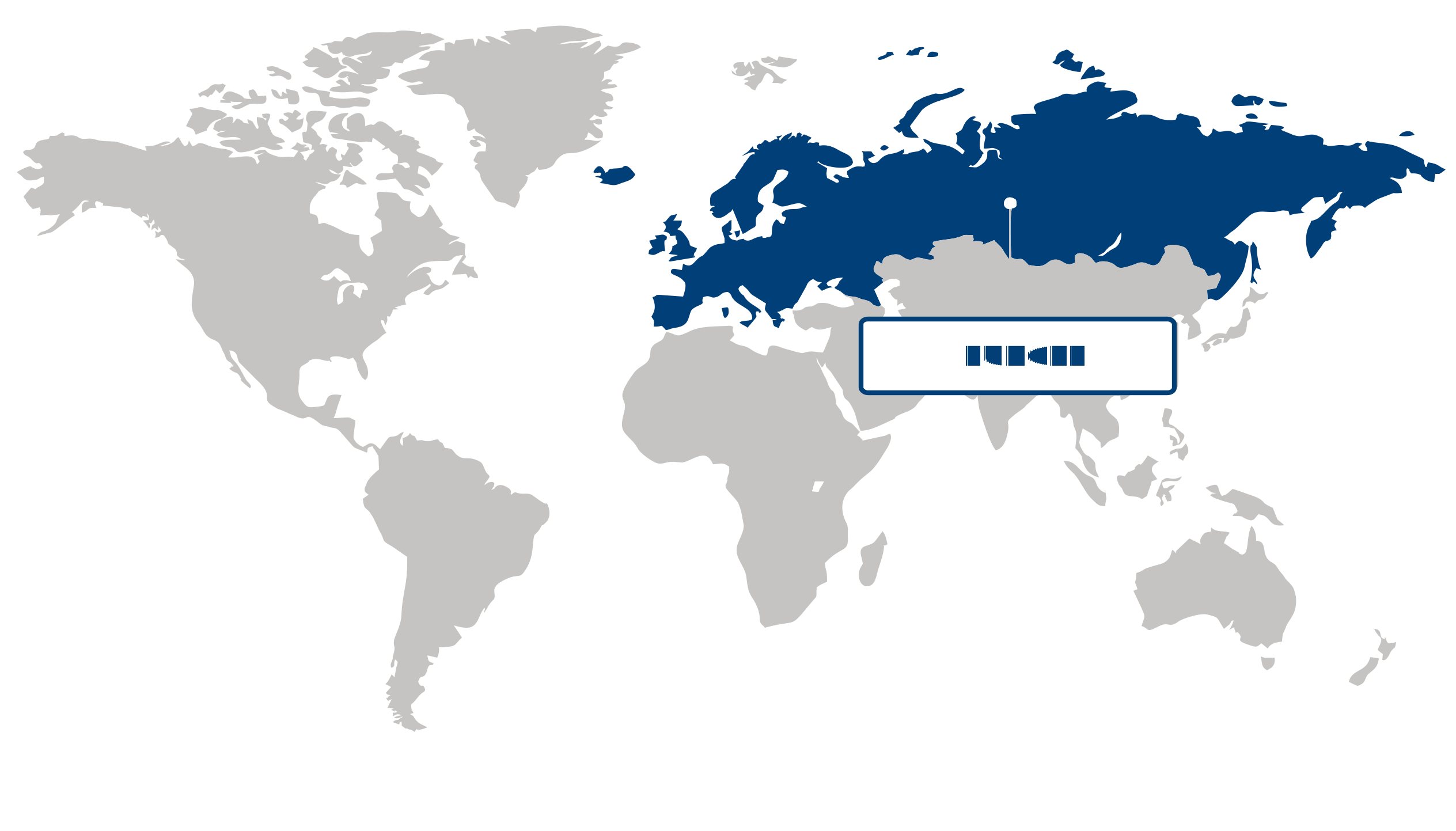
Europe (Largest Region)
In the fertility services market, Europe held the largest share of 37.88% in 2026, underpinned by established reproductive healthcare systems, broad availability of assisted reproductive technologies, and growing acceptance of fertility treatment. The region benefits from specialized fertility clinics, experienced medical professionals, and regulatory frameworks that support the delivery and oversight of reproductive services. Delayed parenthood, changing family structures, and increasing awareness of fertility preservation are also contributing to demand. Continued advances in reproductive diagnostics, embryo-related procedures, and personalized treatment approaches are strengthening the region's position by expanding available options for individuals and couples seeking fertility care.
Asia Pacific (Fastest-Growing Region)
Asia Pacific represents the fastest-growing regional market as improving healthcare access, rising awareness of reproductive health, and increasing acceptance of assisted fertility procedures broaden the addressable patient base. Expanding private healthcare infrastructure and investment in specialized fertility centers are making advanced reproductive services more accessible across major urban areas. Demographic changes, delayed family formation, and growing recognition of age-related fertility challenges are further supporting demand. At the same time, increasing medical tourism and improvements in clinical expertise are encouraging patients to consider specialized fertility services, supporting stronger regional momentum.
| Parameter | North America | Asia Pacific | Europe | Latin America | MEA |
|---|---|---|---|---|---|
| Innovation Hub i Scale Nascent Developing Advanced | |||||
| Cost-Sensitive Region i Scale Low Medium High | |||||
| Regulatory Environment i Scale Restrictive Neutral Supportive | |||||
| Demand Drivers i Scale Weak Moderate Strong | |||||
| Development Stage i Scale Emerging Developing Developed | |||||
| Adoption Rate i Scale Low Medium High | |||||
| New Entrants / Startups i Scale Sparse Moderate Dense | |||||
| Macro Indicators i Scale Weak Stable Strong |
Key Country Insights
Germany 🇩🇪
Regulated Clinical PracticeGermany's fertility services market operates within a structured regulatory environment that emphasizes quality clinical care and patient safety. Fertility centers in Germany prioritize evidence-based treatments, laboratory excellence, and multidisciplinary reproductive health services.
France 🇫🇷
Integrated Reproductive ServicesFrance emphasizes coordinated fertility care through specialized reproductive health centers and established clinical protocols. Providers in France continue enhancing access to assisted reproductive procedures while maintaining strong standards for treatment quality and patient care.
Italy 🇮🇹
Specialist Clinic ExpansionItaly continues expanding fertility services through specialized clinics offering comprehensive reproductive treatment options. Fertility providers in Italy focus on individualized patient management, laboratory capabilities, and improved access to advanced assisted reproduction techniques.
Japan 🇯🇵
Family Planning SupportJapan continues strengthening fertility services in response to changing demographic trends and delayed parenthood. Clinics across Japan increasingly focus on advanced reproductive technologies, fertility preservation, and patient-centered treatment pathways.
South Korea 🇰🇷
Technology-Enabled Fertility CareSouth Korea combines advanced reproductive medicine with modern clinical infrastructure to support fertility treatment demand. Healthcare providers in South Korea invest in laboratory innovation, embryo management technologies, and comprehensive reproductive counseling services.
United States 🇺🇸
Advanced Reproductive CareThe U.S. fertility services market benefits from broad availability of assisted reproductive technologies and specialized fertility clinics. Providers in the U.S. continue expanding personalized treatment plans, genetic screening services, and digital patient engagement to improve clinical outcomes and patient experience.
Segment Leadership and Growth Trends
Fertility Services Market Share (%), by Provider, 2026
Go beyond the chart, access full insights & data tables
Request Free Sample ReportProvider Segment Analysis: Fertility Clinics (Largest & Fastest-Growing Segment)
Fertility clinics dominated the fertility services market with a 76.02% share in 2026 and also represented the fastest-growing provider segment. These specialized facilities offer comprehensive fertility evaluation, assisted reproductive procedures, monitoring, and related clinical services within an integrated care environment. Their specialized expertise and access to dedicated reproductive technologies make fertility clinics a preferred setting for individuals seeking structured fertility treatment. Rising awareness of reproductive health, greater acceptance of assisted reproductive care, and improvements in fertility treatment capabilities are supporting continued demand for specialized clinic-based services.
Type Segment Analysis: Treatment (Largest Segment) vs Preservation (Fastest-Growing Segment)
Treatment services represented the largest segment of the fertility services market, accounting for a 63.37% share in 2026. Fertility treatment encompasses a broad range of clinical interventions designed to address infertility and support conception, making it central to reproductive healthcare. Growing awareness of available fertility options and increasing demand for specialized medical support are contributing to continued utilization of treatment services. Improvements in assisted reproductive technologies, personalized treatment approaches, and clinical monitoring are further strengthening the role of treatment services within fertility care.
Preservation is the fastest-growing type segment, driven by increasing awareness of fertility planning and the importance of preserving reproductive potential for future use. Fertility preservation services provide options for individuals who may wish to delay childbearing or protect reproductive potential before undergoing treatments or circumstances that could affect fertility. Greater awareness of reproductive planning and improvements in preservation techniques are broadening access to these services. The growing emphasis on personalized reproductive healthcare is further supporting demand for fertility preservation alongside conventional treatment services.
| Segment | Sub-Segment | Largest Segment | Fastest Growing |
|---|---|---|---|
| Provider | Fertility Clinics, Hospitals and Others | Fertility Clinics | Fertility Clinics |
| Type | Diagnosis, Treatment, Preservation | Treatment | Preservation |
Competitive Landscape and Market Positioning
Prominent players in the fertility services market:
1. Mayo Clinic (United States)
2. Cleveland Clinic (United States)
3. Monash IVF Group Limited (Australia)
4. Virtus Health Limited (Australia)
5. CARE Fertility Group (United Kingdom)
6. Aspire Fertility (United States)
7. Dallas IVF (United States)
8. Apricity Fertility UK Limited (United Kingdom)
9. King's Fertility Limited (United Kingdom)
10. Prelude Fertility Inc. (United States)
The fertility services market is expanding due to increasing adoption of personalized reproductive treatment approaches. Innovation is centered on improving success rates through advanced genetic and embryology techniques. The fertility services market is also influenced by growing demand for integrated reproductive health solutions. Continuous advancement in laboratory technologies is improving treatment precision.
| Company | Market Share | Company Revenue | Revenue CAGR (%) | Product Portfolio | Geographic Presence | Innovation / R&D Focus | Strategic Developments |
|---|---|---|---|---|---|---|---|
| Mayo Clinic (United States) | |||||||
| Cleveland Clinic (United States) | |||||||
| Monash IVF Group Limited (Australia) | |||||||
| Virtus Health Limited (Australia) | |||||||
| CARE Fertility Group (United Kingdom) | |||||||
| Aspire Fertility (United States) | |||||||
| Dallas IVF (United States) | |||||||
| Apricity Fertility UK Limited (United Kingdom) | |||||||
| King's Fertility Limited (United Kingdom) | |||||||
| Prelude Fertility Inc. (United States). |
Industry Development/News
| Company Name | Date | Key Development |
|---|---|---|
| Ontario Government | Oct-25 | The Ontario government launched a $250 million investment initiative to expand the Ontario Fertility Program. This funding aims to scale capacity across both hospital and community-based IVF providers, directly reducing wait times and improving equitable access to publicly funded reproductive healthcare services throughout the province. |
| HCA Healthcare UK | Oct-25 | HCA Healthcare UK expanded its fertility services network by opening a dedicated satellite clinic at its Canary Wharf Outpatients Centre in London. The facility increases the provider's outpatient capacity, addressing high regional demand for assisted reproductive care through an integrated diagnostic and primary care service model. |
| Future Family | Sep-25 | Future Family secured a $400 million financing program from Clear Haven Capital Management to scale its fertility lending platform. This capital enables broader patient access to IVF and egg-freezing financing, supporting the growth of its nationwide fertility insurance and patient financing ecosystem to meet increasing consumer demand for assisted reproductive services. |
| Indira IVF | Sep-25 | Indira IVF acquired a stake in Banker IVF, strengthening its clinical presence in Gujarat. By combining its national operational scale with Banker IVF's regional network, the company aims to enhance IVF accessibility in key urban centers and optimize service delivery infrastructure across underserved Indian fertility markets. |
| Blue Cross Blue Shield | Sep-25 | Blue Cross Blue Shield Global Solutions partnered with Carrot to launch a global fertility and family-building benefits program for expatriate employees. This integration incorporates IVF and reproductive health services into international insurance offerings, marking a strategic expansion of employer-sponsored fertility benefits to support mobile workforces on a global scale. |
| NewGenIvf Group Limited | Aug-25 | NewGenIvf Group Limited completed its SPAC merger with A SPAC I Acquisition and listed on the Nasdaq. The transaction provides the company with significant growth capital to accelerate the expansion of its fertility services platform across Asia and international markets, strengthening its competitive positioning in the global reproductive healthcare sector. |
| CHA Healthcare | Aug-25 | CHA Healthcare acquired a controlling stake in Singapore Medical Group, integrating its multi-specialty network into a regional healthcare platform. This strategic consolidation expands CHA’s fertility and specialized medical service footprint across Southeast Asia, facilitating cross-border growth and enhancing service delivery capabilities in the region’s private healthcare market. |
| FertGroup | Aug-25 | FertGroup partnered with Future Fertility to implement AI-driven oocyte assessment software across its Brazilian clinic network. This integration of digital analytical tools enhances embryo and egg evaluation capabilities, supporting improved clinical decision-making and standardizing high-tech diagnostic outcomes across the provider’s regional facilities. |
| Zora Health | Jul-25 | Zora Health secured $1 million in seed funding to launch a digital fertility care platform. The investment is earmarked for building an integrated reproductive health coordination tool, which streamlines access to IVF, egg freezing, and fertility testing services through a tech-enabled interface designed to improve patient navigation and care efficiency. |
| Cryoport, Inc. | Apr-23 | Cryoport, Inc. entered a three-year supply chain agreement with Boston IVF to standardize the logistics and transportation of sensitive reproductive materials across the U.S. This partnership addresses critical infrastructure needs in the fertility market, focusing on the secure, temperature-controlled transit of biological assets to maintain clinical viability during storage and transport. |
Customize Your Report
Explore examples of how this report can be tailored to different research needs, including custom segments, additional topics or chapters, and related reports. Click a section of the wheel or its numbered marker to explore the available options.
Fertility Services Market — Custom Segments
| Segment | Sub-Segment |
|---|---|
| Infertility Cause | Male Factor Infertility, Female Factor Infertility, Combined Infertility, Unexplained Infertility |
| Payment Model | Self-Pay, Private Insurance, Public Insurance or Government-Funded |
| Patient Age Group | Under 30 Years, 30–34 Years, 35–39 Years, 40 Years and Above |
Fertility Services Market — Custom TOC
| Custom Chapter | Custom Details |
|---|---|
| Fertility Treatment Journey Mapping |
|
| Emerging Fertility Preservation Opportunities |
|
| Fertility Clinic Expansion Strategy |
|
Need a different cut of the data?
Request Custom ResearchWhat is the market valuation of fertility services?
What is the forecasted size of the fertility services industry?
How are delayed pregnancies and lifestyle-related factors influencing demand patterns in the fertility services market?
How is the expansion of assisted reproductive technologies and fertility clinics changing access and adoption in the fertility services market?
Why are fertility clinics the leading providers in the fertility services market?
Which type segment is growing the fastest in the fertility services market?
Why does Europe lead the fertility services market?
What is driving fertility services market growth in Asia Pacific?
Which companies dominate the fertility services landscape?
Our Clients
"The team took the time to understand our specific business needs and delivered a report that was well aligned with our objectives. Their expertise and understanding of the industry were clearly reflected in the quality and relevance of the insights provided."
Siemens Healthcare
"Our experience in acquiring the research report has been excellent. The depth of analysis, and actionable insights provided have been extremely valuable in supporting our ongoing R&D efforts."
GC Biopharma
"The report offered a comprehensive view of the market trends. The in-depth segmentation and analysis of emerging opportunities gave us a better understanding of the market."
Medtronic
Our Research Team & Methodology
Every Fundamental Business Insights report is built by a dedicated vertical research team, validated through a structured primary-and-secondary methodology, and reviewed for accuracy before it reaches you.
Research Team Overview
Prepared by the Healthcare & Medical Devices Research Team
Delivery
Published
Demand
Available
Support
Trust & Compliance
Research Intelligence
Research Workflow & Quality Assurance
Data Collection
Verified information gathered through primary and secondary research.
Data Triangulation
Cross-validation using multiple independent data sources.
Forecast Modelling
Market estimates developed using historical trends and analytical models.
Analyst Validation
Findings reviewed by domain experts for accuracy and consistency.
Editorial & Quality Review
Final editorial, quality, and compliance checks before publication.
Final Publication
Released after successful completion of the internal review process.
Report Coverage
📊 Market Assessment
- Market Size & Forecast
- Market Segmentation
- Regional Analysis
- Growth Drivers & Challenges
- Market Dynamics
🏢 Competitive Intelligence
- Competitive Landscape
- Company Profiles
- Competitive Benchmarking
- Mergers & Acquisitions
- Market Share Analysis or Key Company Strategies
🔍 Strategic Analysis
- Value Chain Analysis
- Porter's Five Forces
- PESTLE Analysis
- Pricing Trends
- Supply-Demand Analysis
🚀 Future Outlook
- Technology Landscape
- Regulatory Landscape
- Investment & Funding Landscape
- Emerging Opportunities
- Future Market Outlook
Have a question about this report or need a custom scope?
Request Customization