Ferrous Scrap Recycling Market Size & Growth Forecast 2027–2036, By Segments (Sector), Regional Demand Trends (North America, Asia Pacific, Europe), Key Country Insights (U.S., Japan, South Korea, Germany, France, Italy), and Competitive Landscape
Market Size and Growth Outlook
Ferrous Scrap Recycling Market size was assessed at USD 274.5 billion in 2026 and is poised to grow at a 5.51% CAGR between 2027 and 2036, exceeding USD 469.33 billion by 2036. The industry revenue for 2027 is estimated at USD 287.24 billion.
Get more details on this report
Request Free Sample ReportFerrous Scrap Recycling Market Intelligence Snapshot
Regional Market Dynamics
- Europe leads through mature scrap collection systems, established metal processing infrastructure, and efficient integration of recycled ferrous materials into steel production.
- Asia Pacific is forecast to grow at a 4.45% CAGR, driven by rising steel demand, expanding recycling capacity, stronger industrial activity, and increased use of scrap in manufacturing.
Segment Momentum
- Construction leads with a 47.7% share due to heavy steel usage in infrastructure and buildings, supported by continuous demolition activity and strong integration of recycled scrap in steel production.
- Consumer goods is growing fastest as manufacturers increasingly use recycled steel in appliances and mass products to reduce reliance on virgin materials and improve cost efficiency.
Market Expansion Drivers
- Expanding adoption of electric arc furnace steelmaking increasing recycled ferrous scrap utilization.
- Government recycling regulations and circular economy initiatives strengthening formal scrap collection infrastructure.
- AI-enabled metal sorting technologies improving recycling efficiency and recycled material quality standards.
Leading Market Participants
- Key companies in the ferrous scrap recycling market include Sims Limited (Australia), European Metal Recycling Ltd. (United Kingdom), OmniSource, LLC (United States), SA Recycling LLC (United States), American Iron & Metal Company Inc. (Canada), TSR Recycling GmbH & Co. KG (Germany), Radius Recycling, Inc. (United States), Ward Recycling Ltd. (United Kingdom).
Global Market Forecast Snapshot
Market Outlook
- 2026 Market Size: USD 274.5 billion
- 2027 Estimated Market Size: USD 287.24 billion.
- Projected Market Size: USD 469.33 billion by 2036
- Growth Forecast: 5.51% CAGR (2027-2036)
Regional and Segment Outlook
- Leading Regional Market: Europe
- High-Growth Regional Hub: Asia Pacific
- Core Revenue Segment: Construction (Sector)
- Emerging Opportunity Segment: Consumer Goods (Sector)
Market Growth Drivers and Industry Trends
Expanding adoption of electric arc furnace steelmaking increasing recycled ferrous scrap utilization
The increasing deployment of electric arc furnace production is creating stronger demand for recycled metallic inputs, supporting ferrous scrap recycling market growth. Unlike steelmaking routes that rely heavily on virgin raw materials, electric arc furnaces can use substantial quantities of ferrous scrap as feedstock, making scrap availability an important component of efficient steel production. As steel manufacturers expand or modernize electric furnace capacity, recyclers and processors are positioned to supply greater volumes of appropriately prepared scrap. This relationship is also strengthening the integration of collection, processing, and distribution networks around steelmaking centers, while demand for consistent scrap feedstock is encouraging improvements in sorting, grading, and preparation practices.
Government recycling regulations and circular economy initiatives strengthening formal scrap collection infrastructure
Stronger government policies focused on resource efficiency, waste reduction, and circular material use are supporting the development of more organized scrap recovery systems, thereby boosting the ferrous scrap recycling market. Regulatory frameworks that encourage recycling and responsible handling of metal waste can reduce informal disposal practices while promoting structured collection and processing channels. Circular economy initiatives are further encouraging industries to retain valuable metals within productive supply chains rather than relying solely on newly extracted resources. As compliance requirements and sustainability objectives become more integrated into industrial operations, investment in collection centers, processing facilities, transportation networks, and traceability systems is helping establish a more reliable flow of ferrous scrap for downstream users.
AI-enabled metal sorting technologies improving recycling efficiency and recycled material quality standards
The integration of artificial intelligence into material identification and sorting is improving the ability of recyclers to separate ferrous materials accurately, strengthening ferrous scrap recycling market growth. AI-enabled systems can combine imaging, sensor inputs, and automated classification to distinguish different material characteristics and identify contaminants that may reduce the suitability of recovered scrap for steelmaking. More precise sorting allows processors to produce cleaner and more consistent material streams while reducing manual intervention and improving operational efficiency. As steel producers place greater emphasis on the composition and quality of recycled inputs, automated sorting technologies are becoming increasingly valuable for processors seeking to meet tighter material specifications and optimize the recovery of usable metal from mixed waste streams.
| Growth Driver | Impact on CAGR | Regulatory Influence | Geographic Relevance | Adoption Rate | Impact Timeline |
|---|---|---|---|---|---|
| Expanding adoption of electric arc furnace steelmaking increasing recycled ferrous scrap utilization | 2.10% | High | Europe, Asia Pacific | High | Mid Term |
| Government recycling regulations and circular economy initiatives strengthening formal scrap collection infrastructure | 1.90% | High | Europe, North America | High | Near Term |
| AI-enabled metal sorting technologies improving recycling efficiency and recycled material quality standards | 1.50% | Moderate | Asia Pacific, Europe | Emerging | Long Term |
Unlock insights tailored to your business with our bespoke market research solutions.
Click to get your customized report now.
Regional Demand Dynamics
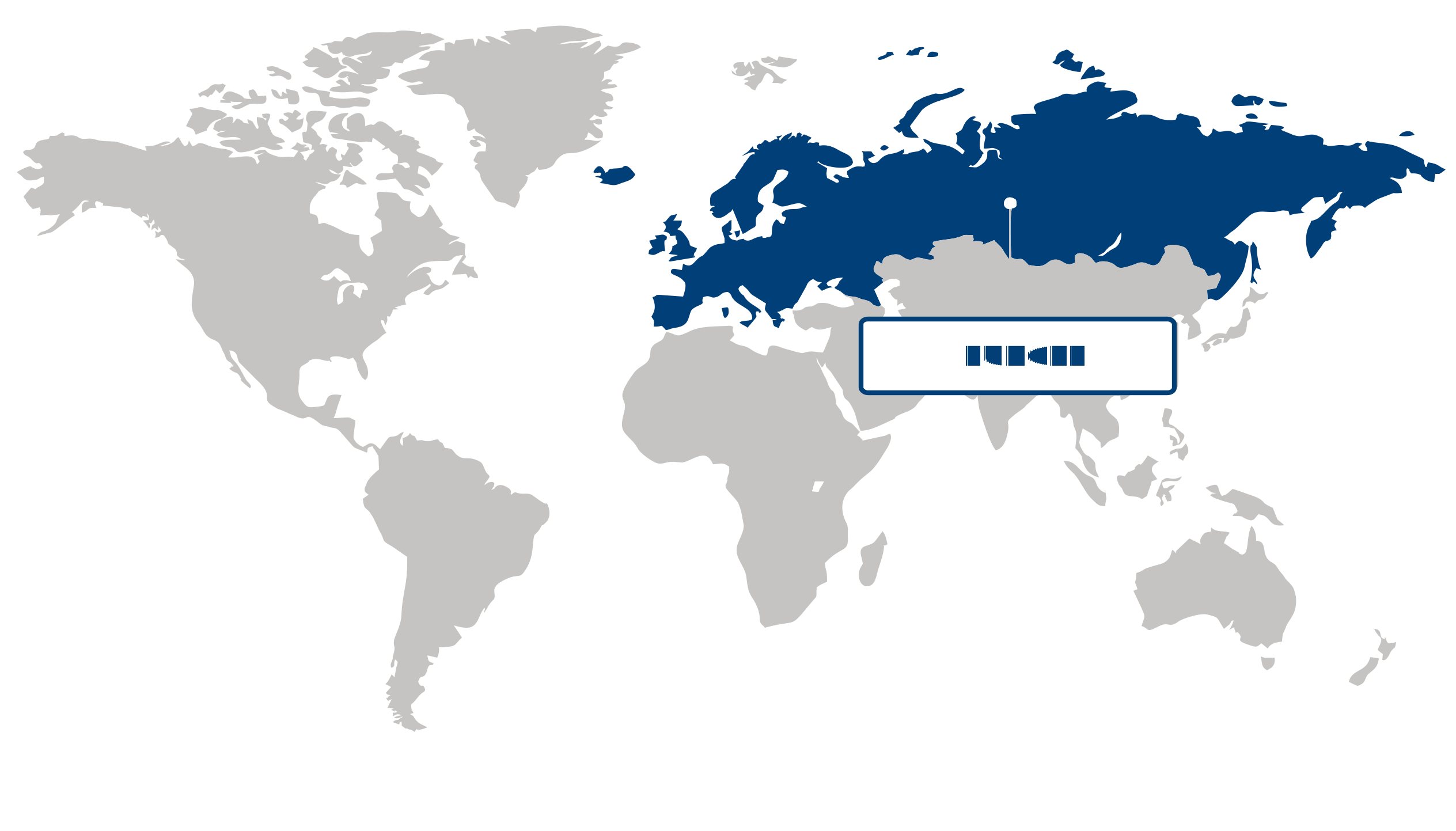
Europe (Largest Region)
The ferrous scrap recycling market was led by Europe in 2026, where established recycling infrastructure and strong emphasis on resource efficiency support widespread recovery and reuse of ferrous materials. Circular-economy practices, environmental priorities, and the need to reduce reliance on virgin raw materials are encouraging industries to integrate recycled metals into production processes. Well-developed collection, processing, and recycling systems further reinforce Europe's established market position.
Asia Pacific (Fastest-Growing Region)
Asia Pacific represents the fastest-growing regional market as industrial expansion and increasing metal consumption generate greater opportunities for scrap recovery and processing. Growing manufacturing activity is strengthening demand for recycled ferrous materials, while resource-efficiency initiatives are encouraging more systematic recycling practices. Investments in waste management and recycling infrastructure are also supporting the development of more efficient scrap collection and processing networks across the region.
| Parameter | North America | Asia Pacific | Europe | Latin America | MEA |
|---|---|---|---|---|---|
| Innovation Hub i Scale Nascent Developing Advanced | |||||
| Cost-Sensitive Region i Scale Low Medium High | |||||
| Regulatory Environment i Scale Restrictive Neutral Supportive | |||||
| Demand Drivers i Scale Weak Moderate Strong | |||||
| Development Stage i Scale Emerging Developing Developed | |||||
| Adoption Rate i Scale Low Medium High | |||||
| New Entrants / Startups i Scale Sparse Moderate Dense | |||||
| Macro Indicators i Scale Weak Stable Strong |
Key Country Insights
Germany 🇩🇪
Circular Steel IntegrationGermany is advancing ferrous scrap recycling through close integration with its steel manufacturing sector and circular economy objectives. Processors are improving material recovery and traceability to support efficient secondary steel production and compliance with environmental standards.
France 🇫🇷
Sustainable Metal RecoveryFrance is reinforcing ferrous scrap recycling through initiatives that encourage efficient material recovery and responsible steel production. Recycling operators are expanding processing capabilities while improving collection networks across industrial and construction sectors.
Italy 🇮🇹
Manufacturing Feedstock SupportItaly relies on ferrous scrap recycling to provide consistent raw material for its steel manufacturing base. Processors are focusing on higher-grade scrap recovery, operational efficiency, and supply chain coordination to support diverse industrial applications.
Japan 🇯🇵
Resource Efficiency FocusJapan emphasizes efficient ferrous scrap utilization to reduce dependence on primary raw materials and support sustainable steel production. Companies are modernizing recycling operations with advanced sorting technologies and improved material quality management.
South Korea 🇰🇷
Industrial Scrap OptimizationSouth Korea is enhancing ferrous scrap recycling through stronger links between recyclers and domestic steel producers. Investments in processing infrastructure and quality control are helping ensure consistent scrap availability for high-value manufacturing applications.
United States 🇺🇸
Electric Arc SupplyThe U.S. ferrous scrap recycling market is strengthening supply chains for electric arc furnace steelmaking through improved collection, sorting, and processing capabilities. Recycling companies are investing in automation and higher-quality scrap preparation to meet evolving steel production requirements.
Segment Leadership and Growth Trends
Ferrous Scrap Recycling Market Share (%), by Sector, 2026
Go beyond the chart, access full insights & data tables
Request Free Sample ReportSector Segment Analysis: Construction (Largest Segment) vs Consumer Goods (Fastest-Growing Segment)
The construction sector led the ferrous scrap recycling market with a 47.7% share in 2026, driven by the extensive use of steel and other ferrous materials throughout building, infrastructure, and fabrication activities. Construction generates substantial quantities of recoverable metal from demolition, renovation, fabrication, and material offcuts, creating a consistent feedstock for recycling operations. The ability to reuse recovered ferrous materials also supports resource efficiency and reduces dependence on primary raw materials. Increasing emphasis on sustainable construction practices and circular material flows is further strengthening demand for ferrous scrap recovery within the sector.
Consumer goods represent the fastest-growing sector as manufacturers increasingly incorporate recycled metals into products while responding to sustainability objectives and resource-efficiency requirements. Ferrous materials used in appliances, household products, furniture, and other durable goods can be recovered at the end of their useful life and returned to manufacturing streams. Growing consumer awareness of sustainable products, stronger focus on recycled material content, and expanding collection and recovery systems are encouraging greater participation from consumer goods manufacturers in the ferrous recycling ecosystem.
| Segment | Sub-Segment | Largest Segment | Fastest Growing |
|---|---|---|---|
| Sector | Construction, Automotive, Consumer Goods, Industrial Goods | Construction | Consumer Goods |
Competitive Landscape and Market Positioning
Key companies in the ferrous scrap recycling market:
1. Sims Limited (Australia)
2. European Metal Recycling Ltd. (United Kingdom)
3. OmniSource LLC (United States)
4. SA Recycling LLC (United States)
5. American Iron & Metal Company Inc. (Canada)
6. TSR Recycling GmbH & Co. KG (Germany)
7. Radius Recycling Inc. (United States)
8. Ward Recycling Ltd. (United Kingdom)
Expanding circular economy initiatives are supporting growth in the ferrous scrap recycling market, with investments in automated sorting technologies, efficient processing systems, and resource recovery improvements. Sustainable recycling practices continue to strengthen raw material availability for steel production.
| Company | Market Share | Company Revenue | Revenue CAGR (%) | Product Portfolio | Geographic Presence | Innovation / R&D Focus | Strategic Developments |
|---|---|---|---|---|---|---|---|
| Sims Limited (Australia) | |||||||
| European Metal Recycling Ltd. (United Kingdom) | |||||||
| OmniSource LLC (United States) | |||||||
| SA Recycling LLC (United States) | |||||||
| American Iron & Metal Company Inc. (Canada) | |||||||
| TSR Recycling GmbH & Co. KG (Germany) | |||||||
| Radius Recycling Inc. (United States) | |||||||
| Ward Recycling Ltd. (United Kingdom). |
Industry Development/News
| Company Name | Date | Key Development |
|---|---|---|
| Davis Index | Jan-25 | Davis Index reported an increase in U.S. ferrous scrap steel prices, with mills paying approximately $20 more per ton for benchmark grades compared with the previous month. The development reflects short-term upward pricing movement in recycled steel input costs, indicating tighter supply-demand conditions in the U.S. ferrous scrap recycling market. |
| OmniSource | Nov-23 | OmniSource, a Steel Dynamics subsidiary, acquired a 55-acre rail-served site in Gulf Inland Logistics Park, Dayton, Texas, to develop a new metals recycling facility. The investment is expected to expand ferrous scrap processing capacity along the U.S. Gulf Coast and strengthen logistics connectivity to key steel production and industrial hubs, enhancing regional recycling infrastructure. |
| Sims Metal | Aug-23 | Sims Metal acquired Baltimore Scrap Corp., a major Northeast U.S. recycler operating 17 facilities across five states and processing approximately 600,000 tonnes of scrap annually. The $177 million acquisition significantly expands Sims Metal’s regional footprint and strengthens its domestic ferrous scrap collection and processing capabilities across key U.S. recycling markets. |
| TSR Recycling | May-23 | TSR Recycling inaugurated its TSR40 processing plant in Duisburg, Germany, with a capacity of up to 450,000 tons of materials including end-of-life vehicles and mixed scrap. The facility incorporates advanced measurement and separation technologies, enhancing processing efficiency and expanding high-capacity recycling infrastructure within the European ferrous scrap market. |
| ArcelorMittal | Jan-23 | ArcelorMittal completed the acquisition of Riwald Recycling in the Netherlands as part of its decarbonization strategy, strengthening its ferrous scrap recycling capabilities. The company also expanded downstream operations through the acquisition of Italpannelli Germany, reinforcing its construction materials footprint and enhancing integrated supply chain positioning in recycled steel and industrial materials markets. |
Customize Your Report
Explore examples of how this report can be tailored to different research needs, including custom segments, additional topics or chapters, and related reports. Click a section of the wheel or its numbered marker to explore the available options.
Ferrous Scrap Recycling Market — Custom Segments
| Segment | Sub-Segment |
|---|---|
| Scrap Source | End-of-Life Vehicles, Construction and Demolition, Industrial Manufacturing, Household and Commercial Scrap |
| Scrap Grade | Heavy Melting Scrap, Shredded Scrap, No. 1 Busheling, No. 2 Scrap |
| Recycling Process | Sorting and Preparation, Shredding, Shearing and Baling, Melting and Refining |
Ferrous Scrap Recycling Market — Custom TOC
| Custom Chapter | Custom Details |
|---|---|
| Steelmaker Procurement and Sourcing Strategy |
|
| Scrap Trade and Cross-Border Market Intelligence |
|
| Decarbonization and Scrap Demand Transformation |
|
Need a different cut of the data?
Request Custom ResearchHow much revenue does the ferrous scrap recycling market generate?
What is the forecasted size of the ferrous scrap recycling industry?
How is expanding electric arc furnace steelmaking reshaping demand in the ferrous scrap recycling market?
How are regulations and advanced sorting technologies improving the ferrous scrap recycling market?
Why does construction remain the largest sector in the ferrous scrap recycling market?
How is the consumer goods sector driving growth in ferrous scrap recycling?
Why is Europe the largest regional market for ferrous scrap recycling?
What is supporting rapid growth in the ferrous scrap recycling market in Asia Pacific?
What are the prominent companies operating in the ferrous scrap recycling landscape?
Our Clients
"The report helped us understand emerging consumer trends in our product category. It clarified where to focus innovation for the next product launch."
LyondellBasell
"The regional forecast section was incredibly useful. We were able to identify two new potential partners in Europe thanks to the vendor mapping you included."
SABIC
"We appreciated how actionable the recommendations were. It guided us to improve supply chain resilience."
Olin Corporation
Our Research Team & Methodology
Every Fundamental Business Insights report is built by a dedicated vertical research team, validated through a structured primary-and-secondary methodology, and reviewed for accuracy before it reaches you.
Research Team Overview
Prepared by the Chemicals & Materials Research Team
Delivery
Published
Demand
Available
Support
Trust & Compliance
Research Domains
10 coverage areasResearch Intelligence
| Source | Reference |
|---|---|
| American Chemistry Council (ACC) | www.americanchemistry.com |
| European Chemical Industry Council (Cefic) | cefic.org |
| International Council of Chemical Associations (ICCA) | icca-chem.org |
| European Chemicals Agency (ECHA) | echa.europa.eu |
| U.S. Environmental Protection Agency (EPA) | www.epa.gov |
| ASTM International | www.astm.org |
| International Organization for Standardization (ISO) | www.iso.org |
| National Institute of Standards and Technology (NIST) | www.nist.gov |
| Plastics Industry Association (PLASTICS) | www.plasticsindustry.org |
| European Biplastics | www.european-bioplastics.org |
| The Adhesive and Sealant Council (ASC) | www.ascouncil.org |
| National Association of Corrosion Engineers (AMPP) | www.ampp.org |
| Society of Plastics Engineers (SPE) | www.4spe.org |
| International Fertilizer Association (IFA) | www.fertilizer.org |
| CropLife International | croplife.org |
| Packaging Europe | packagingeurope.com |
| Flexible Packaging Association (FPA) | www.flexpack.org |
| Battery Council International (BCI) | batterycouncil.org |
| International Copper Association (ICA) | internationalcopper.org |
| World Steel Association | worldsteel.org |
Research Workflow & Quality Assurance
Data Collection
Verified information gathered through primary and secondary research.
Data Triangulation
Cross-validation using multiple independent data sources.
Forecast Modelling
Market estimates developed using historical trends and analytical models.
Analyst Validation
Findings reviewed by domain experts for accuracy and consistency.
Editorial & Quality Review
Final editorial, quality, and compliance checks before publication.
Final Publication
Released after successful completion of the internal review process.
Report Coverage
📊 Market Assessment
- Market Size & Forecast
- Market Segmentation
- Regional Analysis
- Growth Drivers & Challenges
- Market Dynamics
🏢 Competitive Intelligence
- Competitive Landscape
- Company Profiles
- Competitive Benchmarking
- Mergers & Acquisitions
- Market Share Analysis or Key Company Strategies
🔍 Strategic Analysis
- Value Chain Analysis
- Porter's Five Forces
- PESTLE Analysis
- Pricing Trends
- Supply-Demand Analysis
🚀 Future Outlook
- Technology Landscape
- Regulatory Landscape
- Investment & Funding Landscape
- Emerging Opportunities
- Future Market Outlook
Have a question about this report or need a custom scope?
Request Customization