Ethylene Propylene Rubber Market Size & Forecasts 2026-2035, By Segments (Application), Growth Opportunities, Innovation Landscape, Regulatory Shifts, Strategic Regional Insights (U.S., Japan, China, South Korea, UK, Germany, France), and Competitive Dynamics (ExxonMobil, Lanxess, DuPont, Kumho Petrochemical, JSR Corporation)
Market Size and Growth Outlook
Ethylene Propylene Rubber Market size is likely to expand from USD 4.37 billion in 2025 to USD 8.13 billion by 2035, posting a CAGR above 6.4% across 2026-2035. The industry’s revenue potential for 2026 is USD 4.61 billion.
Get more details on this report
Request Free Sample ReportEthylene Propylene Rubber Market Intelligence Snapshot
Regional Market Dynamics
Segment Momentum
Market Expansion Drivers
Leading Market Participants
Global Market Forecast Snapshot
Market Outlook
Regional and Segment Outlook
Market Growth Drivers and Industry Trends
The ethylene propylene rubber market is notably influenced by the expanding application of EPDM in sectors such as automotive, construction, and electrical industries. Automotive manufacturers like Continental AG emphasize EPDM’s resilience against heat, weather, and ozone, making it ideal for seals, hoses, and window profiles that meet stringent safety and durability standards. Similarly, construction companies, guided by regulations on energy efficiency and building lifespan, adopt EPDM for roofing membranes and weatherproofing solutions due to its robustness and waterproofing properties. The electrical sector leverages EPDM for insulation and cable sheathing, driven by increasing electrification and safety codes. This broadening adoption creates scope for incumbents to deepen sector-specific formulations, while newcomers can capitalize on niche applications and emerging standards. As these end-use industries intensify demand for durable and eco-friendly materials, the ethylene propylene rubber market will continue to evolve around enhanced product integration and certification requirements.
Innovations in EPDM Formulations for High-Performance Applications
Technological advancements in EPDM formulations are reshaping the ethylene propylene rubber market by enabling tailored properties like improved thermal resistance, elasticity, and environmental compatibility. Leading chemical firms such as Lanxess have introduced specialized grades catering to electric vehicle seals and renewable energy components, enhancing performance under demanding conditions. These innovations respond to consumer and regulatory pressure for sustainable yet high-performing materials, driving a shift from traditional rubber compounds to advanced blends incorporating bio-based fillers or antioxidants. Strategic players can leverage such innovation pipelines to differentiate and secure premium segments, while startups benefit from collaboration opportunities with OEMs seeking bespoke solutions. Continuous improvement in EPDM chemistries highlights a trajectory where the ethylene propylene rubber market aligns with the growing need for multifunctional, durable elastomers essential to next-generation mobility, construction, and energy infrastructures.
Expansion in Emerging Markets and Infrastructure Projects
Rapid urbanization and infrastructure development in emerging economies significantly propel the ethylene propylene rubber market, supported by government-led investment programs and international development funding. Countries like India and Brazil, through initiatives such as India’s National Infrastructure Pipeline and Brazil’s PAC program, foster demand for EPDM in roofing, sealing, and automotive components essential to modern, resilient infrastructure. The rising middle class and urban workforce further stimulate automotive production and construction activities, magnifying raw material consumption. Major EPDM producers, including ExxonMobil, are actively expanding manufacturing capacity and distribution networks to capture these growth pockets. This expansion offers both incumbents and entrants a chance to establish localized supply chains aligned with regional regulatory frameworks and environmental standards. The ethylene propylene rubber market’s alignment with large-scale infrastructure highlights a sustained, demand-driven evolution underscored by widening industrialization and urban transformation.
Industry Restraints:
Environmental Regulatory Constraints
Stringent environmental regulations significantly hinder the ethylene propylene rubber (EPR) market by imposing costly compliance requirements on manufacturers. Agencies like the U.S. Environmental Protection Agency (EPA) and the European Chemicals Agency (ECHA) enforce limits on volatile organic compound (VOC) emissions and mandate lifecycle impact assessments for chemical products. Such frameworks raise operational costs and extend approval timelines, particularly burdening smaller players who lack scale economies. For instance, Trinseo’s 2023 sustainability report underscores increased capital expenditure to meet evolving EU REACH regulations, delaying new product launches. Consequently, incumbent firms must allocate resources to ensure compliance, diverting focus from innovation, while potential entrants face elevated entry barriers. Over the next several years, regulatory pressures are poised to intensify as governments target carbon-neutral manufacturing, sustaining a challenging environment that demands strategic investments in greener processes and product formulations.
Feedstock Price Volatility
The ethylene propylene rubber market is considerably constrained by fluctuations in feedstock prices, primarily driven by crude oil and natural gas market dynamics. Sharp price swings undermine margin stability, complicating production planning and contract negotiations for key players such as ExxonMobil and LyondellBasell. For example, the 2022 surge in oil prices, documented by the International Energy Agency (IEA), caused significant cost inflation across polymer value chains, prompting some EPR producers to limit output or delay capacity expansions. This volatility disproportionately affects smaller manufacturers and new entrants lacking long-term supply contracts or hedging mechanisms, reducing their competitive viability. Strategically, companies must balance risk by diversifying raw material sources and enhancing operational flexibility. Given ongoing geopolitical tensions and energy market shifts, feedstock price volatility will remain a critical restraint, shaping investment decisions and supply strategies well into the medium term.
| Growth Driver | Impact on CAGR | Regulatory Influence | Geographic Relevance | Adoption Rate | Impact Timeline |
|---|---|---|---|---|---|
| Increasing use of EPDM in automotive, construction, and electrical sectors | 2.50% | Short term (≤ 2 yrs) | North America, Europe | Medium | Fast |
| Innovations in EPDM formulations for high-performance applications | 2.00% | Medium term (2–5 yrs) | Asia Pacific, Europe | Medium | Moderate |
| Expansion in emerging markets and infrastructure projects | 2.00% | Long term (5+ yrs) | Asia Pacific, Latin America | Low | Moderate |
Explore Growth Opportunities
Request Free Sample ReportRegional Demand Dynamics
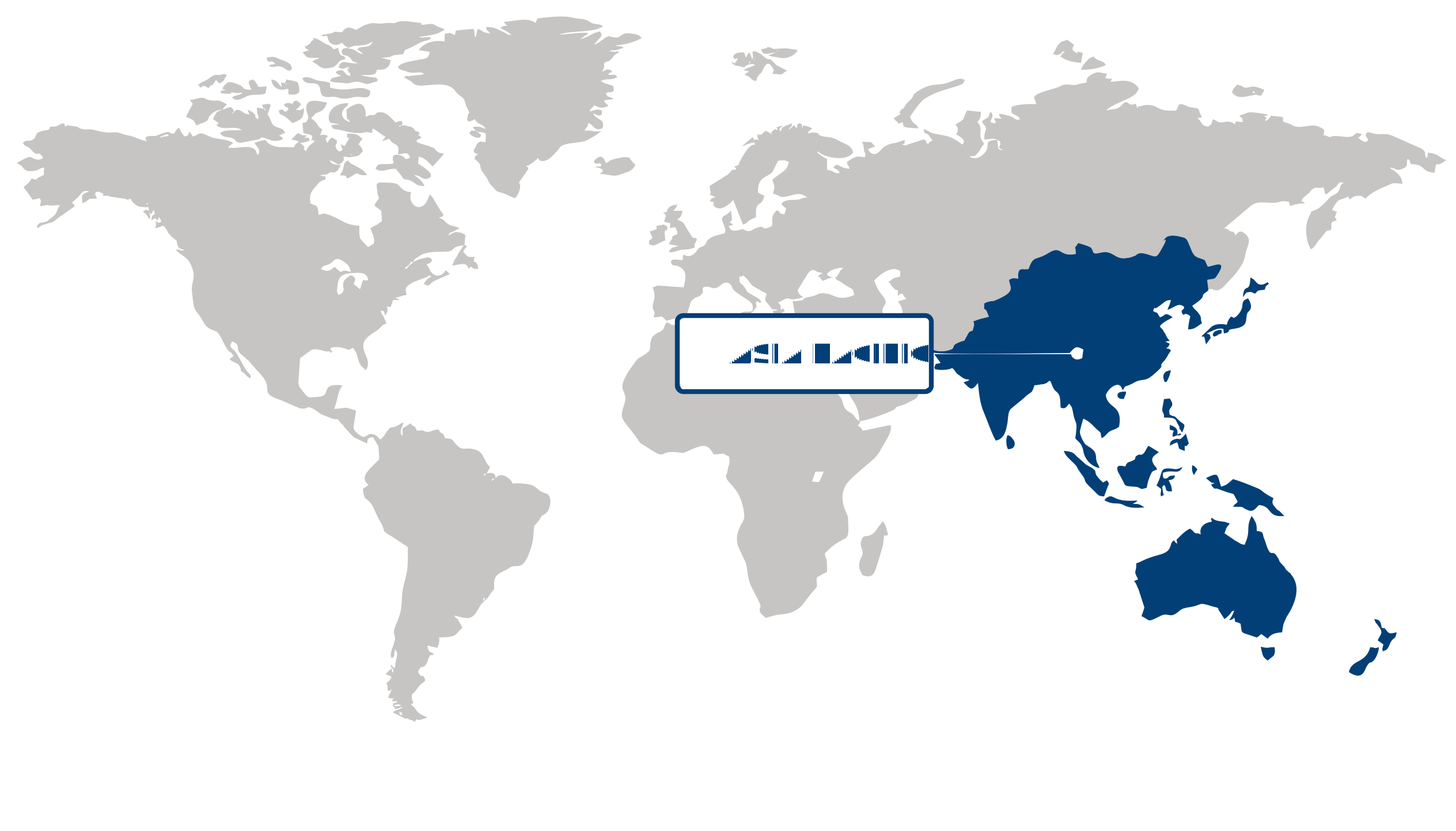
The Asia Pacific region dominated the ethylene propylene rubber market in 2025, capturing more than 56.44% of the global share due to the concentration of electric vehicle battery production and robust automotive assembly hubs. This region leads the global market fueled by rising investments in electric mobility and the expanding automotive sector, underscored by innovations in battery technologies that demand superior rubber materials for insulation and durability. According to the International Energy Agency (IEA), Asia Pacific’s electric vehicle stock accounts for the majority globally, driving substantial consumption of ethylene propylene rubber. Governments across the region are reinforcing clean energy policies and industrial investments, which enhance supply chain resilience and manufacturing excellence. These trends are bolstered by digital integration within the automotive supply chain, meeting evolving consumer demands and sustainability mandates. Looking ahead, Asia Pacific’s dynamic ecosystem offers investors and strategists unparalleled growth prospects in the ethylene propylene rubber market.
Japan is positioned as a pivotal hub in Asia Pacific’s ethylene propylene rubber market, reflecting its leadership in automotive innovation and stringent environmental standards. The country’s strategic focus on electric and hybrid vehicles supports growing use of ethylene propylene rubber in battery components and vehicle parts. Toyota’s announcement to increase electric vehicle production by 2030, as reported by the Japan Automobile Manufacturers Association (JAMA), exemplifies industry alignment with this market expansion. Additionally, Japan’s advanced manufacturing infrastructure and skilled workforce accelerate product development and market responsiveness, creating competitive advantages. This commitment to clean mobility and quality manufacturing solidifies Japan’s role in propelling regional demand and aligns with Asia Pacific’s broader growth dynamics in ethylene propylene rubber.
China anchors the Asia Pacific ethylene propylene rubber market as the largest consumer and production base, driven by sprawling automotive assembly clusters and its dominance in electric vehicle battery manufacturing. China's policies fostering new energy vehicles, as highlighted by the Ministry of Industry and Information Technology (MIIT), stimulate substantial demand shifts favoring high-performance rubber materials in EV batteries and seals. Leading local companies like CATL are ramping up battery production capacities, integrating advanced materials to enhance durability and safety, thereby expanding ethylene propylene rubber consumption. Furthermore, China’s expansive supplier networks and investment in green technology underscore its competitive intensity and operational efficiencies. Consequently, China’s sustained modernization and scale intensify Asia Pacific’s market leadership and underscore critical opportunities for expansion in ethylene propylene rubber applications.
North America Market Analysis:
North America emerged as the fastest-growing region in the ethylene propylene rubber market, registering a robust CAGR of 9.3%. This rapid expansion is primarily driven by the surging demand for EPDM-based roofing membranes in modern sustainable building projects. Increasing emphasis on energy efficiency and durability in construction, supported by regulatory incentives such as the U.S. Environmental Protection Agency’s Energy Star program, has significantly heightened the adoption of EPDM roofing solutions. Moreover, heightened investment in green infrastructure and growing awareness of climate-resilient building materials foster the demand for ethylene propylene rubber, reflecting evolving consumer preferences toward sustainable and long-lasting products. Operational advancements within North American manufacturing and supply chain capabilities further amplify regional competitiveness. Given these trends, North America stands poised to offer considerable opportunities for ethylene propylene rubber market stakeholders, driven by ongoing innovation and a regulatory environment conducive to sustainability-focused growth.
The U.S. plays a pivotal role in North America’s ethylene propylene rubber market, fueled by escalating consumer and industrial demand for EPDM roofing membranes aligned with sustainability goals. The construction sector’s shift toward eco-friendly materials is evident in initiatives like the U.S. Green Building Council’s LEED certification, which encourages the use of durable, low-impact roofing membranes. Additionally, manufacturers such as Carlisle Companies Incorporated have expanded EPDM production capacity to meet this rising demand, leveraging advanced polymer technologies to improve product performance. Regulatory frameworks promoting energy-efficient buildings and incentives for reducing carbon footprints underpin these developments. As the U.S. continues to drive green construction and infrastructure modernization, its leadership reinforces North America’s strategic prominence in the ethylene propylene rubber market, creating scalable growth avenues for both domestic and international investors.
Europe Market Trends:
Europe maintained a notable presence in the ethylene propylene rubber market, driven by its strong industrial base and progressive sustainability initiatives. The region’s emphasis on reducing carbon footprints and adopting eco-friendly manufacturing aligns with rising demand for durable and recyclable elastomers, as highlighted by the European Chemicals Agency’s recent sustainable materials directive. Moreover, Europe’s sophisticated automotive and construction sectors, led by technological innovation hubs, underpin steady consumption of ethylene propylene rubber due to its weather and chemical resistance properties. Supply chain resilience strengthened by intra-regional logistics networks further supports this market’s stable expansion. Companies such as Evonik Industries emphasize product innovation focused on greener solutions, signaling ongoing strategic investments. As regulatory frameworks become increasingly stringent, Europe offers substantial growth potential through the convergence of sustainability priorities and a robust industrial ecosystem, positioning the region as a critical hub in the ethylene propylene rubber market’s evolution.
Germany plays a pivotal role in Europe’s ethylene propylene rubber market, largely owing to its status as the continent’s largest automotive and manufacturing hub. The country’s stringent emission norms and focus on electric vehicle production have elevated demand for high-performance elastomers, suitable for advanced sealing and insulation applications, as detailed in the Federal Motor Transport Authority’s (KBA) 2023 automotive report. This regulatory environment encourages innovation and adoption of sustainable raw materials, fueling sector growth. Key players like Lanxess AG actively expand their product portfolios tailored to automotive demands, reinforcing Germany’s leadership. Strategically, Germany’s investment in research and development and strong supply chain infrastructure make it an indispensable driver of the regional market’s technological advancement and capacity building.
France maintains a significant share in the ethylene propylene rubber market, propelled by its diversified end-use sectors including aerospace, electrical, and construction industries. The French government’s push towards green energy transition influences material selection in these sectors, encouraging elastomer usage due to enhanced durability and environmental adaptability, supported by data from the French Environment and Energy Management Agency (ADEME). Competitive dynamics are marked by local and multinational firms advancing specialty grades focused on sustainability, exemplified by Solvay’s recent launch of bio-based rubber compounds in France. With growing integration of Industry 4.0 practices in manufacturing, France’s supply chain efficiency and innovation capacity offer promising avenues for value creation, reinforcing its strategic significance within Europe’s ethylene propylene rubber market landscape.
| Parameter | North America | Asia Pacific | Europe | Latin America | MEA |
|---|---|---|---|---|---|
| Innovation Hub i Scale Nascent Developing Advanced | |||||
| Cost-Sensitive Region i Scale Low Medium High | |||||
| Regulatory Environment i Scale Restrictive Neutral Supportive | |||||
| Demand Drivers i Scale Weak Moderate Strong | |||||
| Development Stage i Scale Emerging Developing Developed | |||||
| Adoption Rate i Scale Low Medium High | |||||
| New Entrants / Startups i Scale Sparse Moderate Dense | |||||
| Macro Indicators i Scale Weak Stable Strong |
Segment Leadership and Growth Trends
Ethylene Propylene Rubber Market Share (%), by Application, 2026
Go beyond the chart, access full insights & data tables
Request Free Sample ReportThe automotive segment held the largest share in the ethylene propylene rubber market in 2025, driven primarily by the expanding use of EPDM in weather seals, hoses, and various automotive components. Its leadership is underpinned by stringent automotive industry standards emphasizing durability and resistance to extreme temperatures, aligning well with the material’s superior weathering properties. Demand patterns reveal a growing preference for lightweight and resilient materials that enhance vehicle efficiency and longevity, a trend supported by announcements from major automakers such as Ford and Toyota integrating EPDM-based components to meet emission and safety regulations. This segment offers strategic opportunities for established firms to innovate advanced formulations and for emerging players to specialize in niche automotive sealing solutions. Given ongoing technological advancements and regulatory emphasis on vehicle performance, the automotive segment is expected to retain its relevance through continuous demand for high-performance elastomeric materials.
| Segment | Sub-Segment | Largest Segment | Fastest Growing |
|---|---|---|---|
| Application | Automotive, Building & Construction, Wires & Cables, Tires & Tube, Lubricant Additives, Others |
Unlock insights tailored to your business with our bespoke market research solutions.
Click to get your customized report now.
Competitive Landscape and Market Positioning
The competitive landscape of the ethylene propylene rubber sector is marked by concerted efforts among top players to consolidate their market positions through strategic integrations and advancements. These companies engage in selective alliances and broaden product innovation pipelines that enhance performance attributes and sustainability credentials, fostering differentiation in an increasingly competitive context. Investments in research and development have accelerated tailored formulations meeting diverse industrial demands, while selective consolidation and cross-sector collaborations facilitate entry into adjacent markets and improve supply chain efficiency. Expansion of production footprints and enhancement of technological capabilities allow these firms to respond agilely to shifting raw material cost structures and evolving end-use sector requirements. Collectively, such moves reinforce their competitiveness by balancing portfolio diversification and operational excellence.
Strategic / Actionable Recommendations for Regional Players
In North America, ethylene propylene rubber suppliers should aim to deepen collaboration with end-use industries such as automotive and construction, fostering innovation that addresses stringent environmental and performance standards. Embracing emerging production technologies and strengthening value-chain integration can further enhance resilience amidst raw material volatility.
Within the Asia Pacific region, leveraging partnerships with regional chemical manufacturers and research institutions will enable players to capitalize on expanding industrial demand. Focusing on specialty grades tailored for emerging applications, such as renewable energy and high-performance adhesives, presents opportunities to differentiate amid intense local competition.
In Europe, companies would benefit from enhancing sustainability initiatives aligned with regulatory frameworks and customer expectations, integrating bio-based or recycled feedstocks. Strategic cooperation across cross-border markets and investment in advanced R&D capabilities can secure competitive advantage by accelerating launch of innovative, high-performance elastomers.
| Company | Market Share | Company Revenue | Revenue CAGR (%) | Product Portfolio | Geographic Presence | Innovation / R&D Focus | Strategic Developments |
|---|---|---|---|---|---|---|---|
| No companies available. | |||||||
Industry Development/News
| Company Name | Date | Key Development |
|---|
Customize Your Report
Explore examples of how this report can be tailored to different research needs, including custom segments, additional topics or chapters, and related reports. Click a section of the wheel or its numbered marker to explore the available options.
Ethylene Propylene Rubber Market — Custom Segments
| Segment | Sub-Segment |
|---|---|
| No segment data available. | |
Ethylene Propylene Rubber Market — Custom TOC
| Custom Chapter | Custom Details | ||
|---|---|---|---|
| No custom TOC data available. | |||
Need a different cut of the data?
Request Custom ResearchHow big is the ethylene propylene rubber market?
How will the ethylene propylene rubber industry grow in terms of size and CAGR by 2035?
What is the leading region in terms of ethylene propylene rubber market share?
Which geography represents the strongest growth trajectory for the ethylene propylene rubber sector?
Why does automotive sub-segment dominate the application segment of ethylene propylene rubber sector?
Who are the major participants shaping the ethylene propylene rubber landscape?
Our Clients
"The report helped us understand emerging consumer trends in our product category. It clarified where to focus innovation for the next product launch."
LyondellBasell
"The regional forecast section was incredibly useful. We were able to identify two new potential partners in Europe thanks to the vendor mapping you included."
SABIC
"We appreciated how actionable the recommendations were. It guided us to improve supply chain resilience."
Olin Corporation
Our Research Team & Methodology
Every Fundamental Business Insights report is built by a dedicated vertical research team, validated through a structured primary-and-secondary methodology, and reviewed for accuracy before it reaches you.
Research Team Overview
Prepared by the Chemicals & Materials Research Team
Delivery
Published
Demand
Available
Support
Trust & Compliance
Research Intelligence
Research Workflow & Quality Assurance
Data Collection
Verified information gathered through primary and secondary research.
Data Triangulation
Cross-validation using multiple independent data sources.
Forecast Modelling
Market estimates developed using historical trends and analytical models.
Analyst Validation
Findings reviewed by domain experts for accuracy and consistency.
Editorial & Quality Review
Final editorial, quality, and compliance checks before publication.
Final Publication
Released after successful completion of the internal review process.
Report Coverage
📊 Market Assessment
- Market Size & Forecast
- Market Segmentation
- Regional Analysis
- Growth Drivers & Challenges
- Market Dynamics
🏢 Competitive Intelligence
- Competitive Landscape
- Company Profiles
- Competitive Benchmarking
- Mergers & Acquisitions
- Market Share Analysis or Key Company Strategies
🔍 Strategic Analysis
- Value Chain Analysis
- Porter's Five Forces
- PESTLE Analysis
- Pricing Trends
- Supply-Demand Analysis
🚀 Future Outlook
- Technology Landscape
- Regulatory Landscape
- Investment & Funding Landscape
- Emerging Opportunities
- Future Market Outlook
Have a question about this report or need a custom scope?
Request Customization