Electric Arc Furnace (EAF) Dust Recycling Market Size & Forecasts 2026-2035, By Segments (Process, Application, End User Industry), Growth Opportunities, Innovation Landscape, Regulatory Shifts, Strategic Regional Insights (U.S., Japan, China, South Korea, UK, Germany, France), and Competitive Dynamics (Stantec, SMS Group, Umicore, Tenova, Aurubis)
Market Size and Growth Outlook
Electric Arc Furnace Dust Recycling Market size is projected to grow steadily from USD 1.63 billion in 2025 to USD 2.6 billion by 2035, demonstrating a CAGR exceeding 4.8% through the forecast period (2026-2035). The 2026 revenue is estimated at USD 1.7 billion.
Get more details on this report
Request Free Sample ReportElectric Arc Furnace (EAF) Dust Recycling Market Intelligence Snapshot
Regional Market Dynamics
Segment Momentum
Market Expansion Drivers
Leading Market Participants
Global Market Forecast Snapshot
Market Outlook
Regional and Segment Outlook
Market Growth Drivers and Industry Trends
Stricter environmental regulations worldwide are accelerating the adoption of electric arc furnace (EAF) dust recycling market solutions. Governments such as the U.S. Environmental Protection Agency and the European Chemicals Agency have implemented policies limiting landfill disposal of hazardous steelmaking byproducts, compelling steel producers to prioritize recycling. This regulatory environment drives demand for efficient EAF dust recovery systems, turning waste into valuable secondary raw materials. Established players can leverage their compliance expertise to deepen partnerships with steel mills, while new entrants have opportunities to innovate cleaner, cost-effective recycling technologies. As regulatory oversight intensifies globally, companies in the electric arc furnace (EAF) dust recycling market that align with evolving waste management mandates will sustain competitive advantage and market relevance.
Technological Advancements in Dust Processing
Innovations in chemical and physical processing techniques are reshaping the electric arc furnace (EAF) dust recycling market by increasing recovery rates and reducing operational costs. For example, advancements pioneered by companies like Metso Outotec employ plasma technology and hydrometallurgical methods to efficiently extract zinc and other valuable metals from steel dust. These breakthroughs enable more sustainable recycling cycles and higher purity of recovered materials, appealing to steel manufacturers aiming to boost resource efficiency. Both established firms and startups can capitalize on these technologies to improve process scalability and reduce environmental footprints. Ongoing R&D investments signal that technological refinement will remain a primary avenue for differentiation and growth in the electric arc furnace (EAF) dust recycling market.
Rising Corporate Commitment to Sustainability
Steel producers’ increasing focus on circular economy principles is a significant growth driver for the electric arc furnace (EAF) dust recycling market. Industry leaders such as ArcelorMittal and Nippon Steel are enhancing dust recycling integration as part of their sustainability strategies to minimize environmental liabilities and reduce dependence on virgin raw materials. Consumer and investor pressure for transparent environmental stewardship reinforces this commitment, translating to greater demand for sophisticated recycling solutions. This trend opens avenues for service providers offering turnkey EAF dust recycling systems aligned with ESG metrics. As sustainability becomes integral to steel manufacturing, the electric arc furnace (EAF) dust recycling market will likely experience stronger collaboration between recyclers and steel producers fostering innovation and operational efficiency.
Industry Restraints:
Stringent Environmental and Health Regulations
The electric arc furnace dust recycling market faces significant constraints from increasingly rigorous environmental and health regulations governing dust handling and processing. Agencies such as the U.S. Environmental Protection Agency (EPA) and the European Chemicals Agency (ECHA) impose strict limits on the emission of hazardous substances, including lead and cadmium found in EAF dust. Compliance requires companies to invest heavily in pollution control technologies and secure multiple permits, driving operational costs higher and complicating facility expansions. ArcelorMittal, for example, has documented the challenges of meeting evolving standards while maintaining cost-efficiency. This regulatory landscape disproportionately burdens smaller operators and new entrants lacking capital for compliance, restricting innovation and market entry. Moving forward, heightened scrutiny and tightening standards will likely sustain pressure on EAF dust recyclers to prioritize advanced, compliant processes, impacting strategic investments and consolidation trends through 2026 and beyond.
Complex Material Heterogeneity and Processing Challenges
The intrinsic variability and complexity of EAF dust composition present a technical barrier that dampens market growth. Recycling plants must manage fluctuating concentrations of metals and contaminants, complicating extraction and recovery operations. Tata Steel’s pilot projects highlight operational inefficiencies and increased downtime caused by inconsistent feedstock quality, resulting in increased processing costs and lower yields. This irregularity limits large-scale automation and deters investment in new, high-throughput facilities, particularly by newcomers lacking established process expertise. Consequently, market incumbents with integrated steelmaking and recycling capabilities maintain a competitive edge. In the near term, advancements in real-time compositional analysis and adaptive processing technologies will be critical but remain capital-intensive, restricting rapid scaling and maintaining the status quo of cautious expansion within the sector.
| Growth Driver | Impact on CAGR | Regulatory Influence | Geographic Relevance | Adoption Rate | Impact Timeline |
|---|---|---|---|---|---|
| EAF Dust Recycling in Steel Manufacturing | 1.50% | Short term (≤ 2 yrs) | Europe, North America; Spillover: Asia Pacific | Medium | Moderate |
| Regulatory Support for Industrial Waste Recycling | 1.70% | Medium term (2–5 yrs) | Europe, North America; Spillover: Asia Pacific | High | Moderate |
| Technological Advancements in Dust Processing | 1.60% | Long term (5+ yrs) | Asia Pacific, Europe; Spillover: North America | Medium | Moderate |
Unlock insights tailored to your business with our bespoke market research solutions.
Click to get your customized report now.
Regional Demand Dynamics
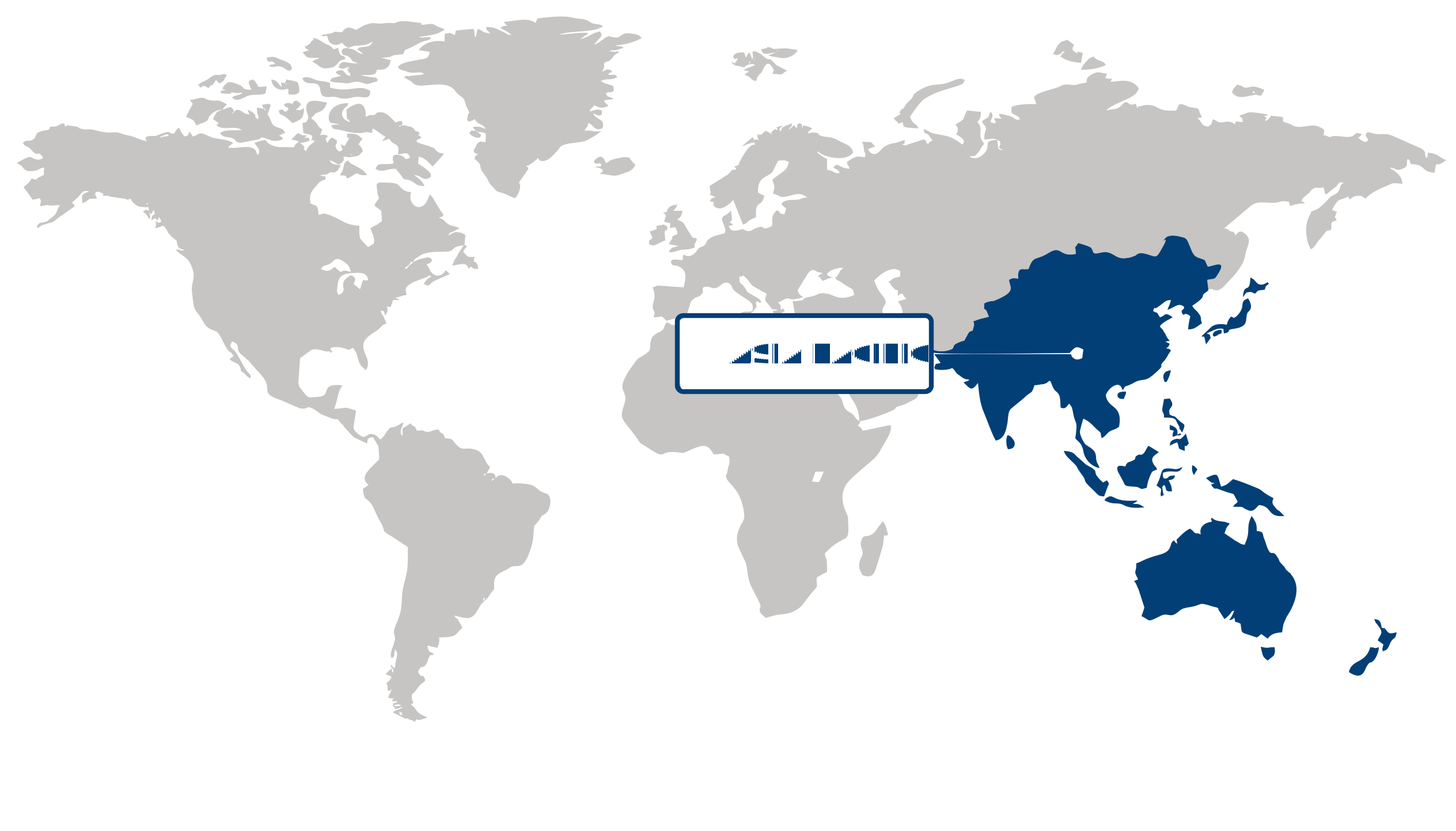
Asia Pacific dominated the electric arc furnace (EAF) dust recycling market with a 44% share in 2025, emerging as the largest and fastest-growing region with a 6.5% CAGR. This leadership is primarily driven by rapid infrastructure development and escalating steel production levels across emerging economies. The region’s robust urbanization trends and industrial expansion, supported by government initiatives such as China’s 14th Five-Year Plan and Japan’s green metallurgy programs, have intensified the demand for sustainable waste management in steel manufacturing. Companies like Nippon Steel Corporation and Baosteel are adopting advanced recycling technologies, reflecting a shift towards circular economy models. Furthermore, regulatory frameworks encouraging environmental compliance and resource efficiency underpin the momentum, positioning Asia Pacific as a prime market for investment in EAF dust recycling technologies and services.
China anchors the Asia Pacific electric arc furnace (EAF) dust recycling market, driven by its vast steel production capacity and stringent environmental policies. The Ministry of Ecology and Environment’s recent mandates on emission reductions have propelled steelmakers like China Baowu Steel Group to integrate advanced dust recycling solutions, reducing hazardous waste while recovering valuable metals. This aligns with rising consumer and industrial demand for greener steel products, reinforcing China’s pivotal role in the regional market dynamics. The strategic emphasis on sustainable industrial practices ensures China will remain indispensable in shaping the region’s growth trajectory in EAF dust recycling.
Japan is positioned as a pivotal hub in Asia Pacific’s electric arc furnace (EAF) dust recycling market through its technological innovation and regulatory rigor. The country's pursuit of advanced metallurgical processes, as seen in the R&D efforts by JFE Steel Corporation, highlights a commitment to optimizing dust recycling efficiency and minimizing environmental impact. Japan’s aging infrastructure and high production standards drive demand for recycled materials, integrating resource conservation into steelmaking. Collaborative initiatives between government agencies and industry players further enhance Japan’s leadership, offering significant opportunities for regional market expansion based on cutting-edge recycling methodologies and stringent compliance frameworks.
Europe Market Analysis:
Europe held a substantial share in the electric arc furnace (EAF) dust recycling market, driven by stringent environmental regulations and a strong commitment to circular economy principles within the region. The European Union’s Industrial Emissions Directive mandates recycling and recovery of hazardous waste, compelling steel manufacturers to adopt EAF dust recycling technologies. Countries across Europe are witnessing increased investments in advanced recycling plants, supported by incentives from organizations like the European Environment Agency. Demand for sustainable steel production is rising, fueled by consumer preference for environmentally responsible products and corporate sustainability goals. Additionally, the region benefits from a well-established industrial base and skilled workforce, fostering innovation and operational efficiency in dust recycling processes. As Europe intensifies efforts toward carbon neutrality and resource conservation, it offers significant opportunities for expanding the electric arc furnace dust recycling market, reinforcing its strategic importance in the global green steel ecosystem.
Germany plays a pivotal role in Europe's electric arc furnace dust recycling market due to its advanced industrial infrastructure and proactive environmental policies. The country’s robust steel sector increasingly integrates circular practices, encouraged by regulatory frameworks from the German Federal Ministry for the Environment that promote waste reduction and material recovery. Leading steel producers like Thyssenkrupp have publicly emphasized scaling up dust recycling to enhance sustainability and cost-efficiency. German manufacturers also benefit from strong supply chain networks enabling efficient collection and processing of EAF dust. Consumer demand in Germany favors environmentally friendly steel products, influencing production and recycling strategies. This proactive stance enhances Germany’s position as a regional leader, driving innovation and setting benchmarks that align with broader European sustainability targets.
France also significantly contributes to the European electric arc furnace dust recycling market, propelled by government-led initiatives supporting industrial waste valorization. French policies, such as those outlined by the Ministry of Ecological Transition, incentivize recycling investments, facilitating technological advances in dust treatment and metal recovery. The country’s steel industry, highlighted by companies like ArcelorMittal France, actively integrates recycling to reduce environmental impact and optimize resource use. Market dynamics in France reflect growing consumer and regulatory pressures to adopt eco-efficient manufacturing, encouraging integration of recycled materials. Efficient logistics infrastructure supports seamless dust collection and recycling operations nationwide. France’s strategic focus on sustainability and innovation strengthens its market position and underscores Europe's competitive advantage in EAF dust recycling on the global stage.
North America Market Trends:
North America held a commanding share in the electric arc furnace (EAF) dust recycling market, driven by the region's substantial steel production and escalating environmental regulations. The U.S. Environmental Protection Agency’s stringent emission standards have incentivized steel manufacturers to adopt recycling practices to mitigate waste and reduce hazardous disposal costs. Additionally, North American manufacturers benefit from advancements in metallurgical technologies that enhance dust recovery efficiency, as demonstrated by Nucor Corporation’s recent facility upgrades announced in 2023. Consumer and regulatory pressures for sustainable steelmaking, coupled with robust industrial infrastructure and skilled workforce availability, underpin a competitive and innovation-rich market environment. The region’s integrated supply chains and strategic port facilities also facilitate material flow, enhancing operational resilience. These factors combine to position North America as a pivotal hub for growth and technological leadership in EAF dust recycling, with considerable potential to capitalize on evolving sustainability mandates and circular economy initiatives.
The U.S. plays an influential role within North America’s electric arc furnace (EAF) dust recycling market, propelled by aggressive regulatory frameworks and corporate sustainability commitments. U.S. steel producers, including Steel Dynamics and Commercial Metals Company, have invested in cutting-edge dust collection and metal recovery technologies to align with Environmental Protection Agency directives and state-level environmental policies. Moreover, the Department of Energy’s funding support for advanced recycling methods highlights governmental backing for innovation in this sector. Such developments not only reduce operational costs but also improve environmental compliance, enhancing competitiveness. This regulatory and technological momentum reinforces the U.S.’s strategic position to lead in circular steel production, making it a critical driver of regional market expansion and technological advancement in EAF dust recycling.
| Parameter | North America | Asia Pacific | Europe | Latin America | MEA |
|---|---|---|---|---|---|
| Innovation Hub i Scale Nascent Developing Advanced | |||||
| Cost-Sensitive Region i Scale Low Medium High | |||||
| Regulatory Environment i Scale Restrictive Neutral Supportive | |||||
| Demand Drivers i Scale Weak Moderate Strong | |||||
| Development Stage i Scale Emerging Developing Developed | |||||
| Adoption Rate i Scale Low Medium High | |||||
| New Entrants / Startups i Scale Sparse Moderate Dense | |||||
| Macro Indicators i Scale Weak Stable Strong |
Segment Leadership and Growth Trends
Electric Arc Furnace (EAF) Dust Recycling Market Share (%), by Process, 2026
Go beyond the chart, access full insights & data tables
Request Free Sample ReportPyrometallurgy held the largest share in the electric arc furnace (EAF) dust recycling market in 2025, driven by its capability to efficiently recover valuable metals such as zinc and iron at high throughput rates. This process aligns with industry preferences for technologies that balance efficiency with environmental compliance, reflecting robust demand for sustainable metal recovery. Regulatory bodies like the U.S. Environmental Protection Agency endorse pyrometallurgical methods due to their effective emission controls, enhancing their adoption. Leading recyclers, including Glencore and Aurubis, leverage these processes to meet stringent output quality standards while optimizing resource use. The segment offers established players and newcomers strategic opportunities to innovate around process optimization and cost reduction. Given ongoing advances in high-temperature processing and increasing industrial metal demand, pyrometallurgy is poised to maintain its prominence in EAF dust recycling.
Analysis by Application
Zinc represented the largest share of the electric arc furnace (EAF) dust recycling market in 2025, propelled by strong demand for recovered zinc in galvanizing and battery manufacturing. Industrial stakeholders increasingly prioritize zinc recycling to secure a stable supply amid fluctuating raw material markets and stricter sustainability mandates. This demand is supported by organizations like the International Zinc Association, which underscores zinc’s critical role in corrosion protection and energy storage. Corporations such as Nyrstar actively emphasize zinc recovery to enhance circular economy initiatives, reflecting broader industrial shifts toward resource-efficient practices. The zinc recycling segment enables firms to capitalize on growing end-use sectors, offering resilience against raw material volatility. Forward momentum in electrification and infrastructure underscores zinc recycling’s enduring market relevance.
Analysis by End User Industry
The steel industry represented the largest share in the electric arc furnace (EAF) dust recycling market in 2025, driven by its extensive need for recycled materials to comply with environmental regulations and minimize waste streams. Steel producers face mounting regulatory pressures globally, including those from the European Steel Association (EUROFER), to enhance sustainability through circular material use. This fosters integration of recycled EAF dust to recover zinc and iron, reducing dependence on virgin raw materials and lowering carbon footprints. Industry leaders like ArcelorMittal and Tata Steel have publicly committed to aggressive recycling targets, reinforcing the segment’s critical role within the steel value chain. For both established firms and emerging recyclers, this segment offers strategic advantages in regulatory compliance and cost management. With sustainability frameworks tightening globally, the steel industry’s demand for EAF dust recycling remains robust.
| Segment | Sub-Segment | Largest Segment | Fastest Growing |
|---|---|---|---|
| Process | Pyrometallurgy, Hydrometallurgy | ||
| Application | Zinc, Iron, Lead, Others | ||
| End User Industry | Chemical Industry, Cement Industry, Steel Industry, Others |
Competitive Landscape and Market Positioning
The competitive environment reflects concerted efforts by these key players to deepen technological capabilities and expand service portfolios. Collaborations and technology-sharing are evident themes, fostering breakthroughs in capturing valuable metals from EAF dust. Investments targeting process optimization and cleaner production enhance their operational edge amid tightening environmental regulations. Such initiatives enhance market positioning by delivering cost-effective and scalable recycling solutions. The focus on R&D coupled with strategic alliances enables faster adoption of emerging recovery techniques, reinforcing leadership and creating high entry barriers for smaller competitors.
Strategic / Actionable Recommendations for Regional Players
North American entities should consider aligning with technology innovators and industrial firms focused on steel and metal production to co-develop integrated recycling systems, thus capitalizing on mature infrastructure and stringent regulatory norms. Enhanced deployment of automation and data analytics could unlock operational efficiencies and cost savings.
In the Asia Pacific, players can benefit from forging partnerships with emerging steel producers while tailoring solutions to local process peculiarities and waste compositions. Prioritizing investments in modular and scalable technologies could address diverse regional demands and accelerate adoption in rapidly industrializing economies.
European stakeholders should leverage established metal refining expertise and sustainability frameworks by expanding circular economy collaborations across value chains. Innovating to achieve ultra-low emissions and maximize resource recovery aligns with increasingly stringent environmental policies, thus strengthening competitive differentiation and market resilience.
| Company | Market Share | Company Revenue | Revenue CAGR (%) | Product Portfolio | Geographic Presence | Innovation / R&D Focus | Strategic Developments |
|---|---|---|---|---|---|---|---|
| No companies available. | |||||||
Industry Development/News
| Company Name | Date | Key Development |
|---|
Customize Your Report
Explore examples of how this report can be tailored to different research needs, including custom segments, additional topics or chapters, and related reports. Click a section of the wheel or its numbered marker to explore the available options.
Electric Arc Furnace (EAF) Dust Recycling Market — Custom Segments
| Segment | Sub-Segment |
|---|---|
| No segment data available. | |
Electric Arc Furnace (EAF) Dust Recycling Market — Custom TOC
| Custom Chapter | Custom Details | ||
|---|---|---|---|
| No custom TOC data available. | |||
Need a different cut of the data?
Request Custom ResearchHow is the electric arc furnace (EAF) dust recycling industry expected to grow over the next 10 years?
In which region is the electric arc furnace (EAF) dust recycling market share the greatest?
What is the fastest growing region in the electric arc furnace dust recycling sector?
Which is the largest sub-segment within the process segment for electric arc furnace (EAF) dust recycling industry?
Why does zinc sub-segment dominate the application segment of electric arc furnace (EAF) dust recycling sector?
How does steel industry segment fare in the electric arc furnace (EAF) dust recycling industry?
Who holds a significant market share in the electric arc furnace (EAF) dust recycling landscape?
Our Clients
"The information presented in the report was genuinely insightful. The data was clear and easy to understand, which made it much easier to interpret the findings."
Amara Raja Group
"The responsiveness and professionalism exhibited by the team were exemplary. They were readily available to address queries, provide clarifications, and offer additional insights."
ONGC
"The reports offered a comprehensive analysis of various segments within the market. The detailed insights into market trends, and regulatory landscapes were excellent."
TotalEnergies
Our Research Team & Methodology
Every Fundamental Business Insights report is built by a dedicated vertical research team, validated through a structured primary-and-secondary methodology, and reviewed for accuracy before it reaches you.
Research Team Overview
Prepared by the Energy & Power Research Team
Delivery
Published
Demand
Available
Support
Trust & Compliance
Research Domains
10 coverage areasResearch Intelligence
| Source | Reference |
|---|---|
| International Energy Agency (IEA) | www.iea.org |
| U.S. Energy Information Administration (EIA) | www.eia.gov |
| International Renewable Energy Agency (IRENA) | www.irena.org |
| International Electrotechnical Commission (IEC) | www.iec.ch |
| International Organization for Standardization (ISO) | www.iso.org |
| IEEE | www.ieee.org |
| CIGRE (International Council on Large Electric Systems) | www.cigre.org |
| World Energy Council (WEC) | www.worldenergy.org |
| U.S. Department of Energy (DOE) | www.energy.gov |
| International Atomic Energy Agency (IAEA) | www.iaea.org |
| American Petroleum Institute (API) | www.api.org |
| Society of Petroleum Engineers (SPE) | www.spe.org |
| Hydrogen Council | hydrogencouncil.com |
| Battery Council International (BCI) | batterycouncil.org |
| Global Wind Energy Council (GWEC) | gwec.net |
| SolarPower Europe | www.solarpowereurope.org |
| World Bioenergy Association (WBA) | worldbioenergy.org |
| International Hydropower Association (IHA) | www.hydropower.org |
| Edison Electric Institute (EEI) | www.eei.org |
| National Renewable Energy Laboratory (NREL) | www.nrel.gov |
Research Workflow & Quality Assurance
Data Collection
Verified information gathered through primary and secondary research.
Data Triangulation
Cross-validation using multiple independent data sources.
Forecast Modelling
Market estimates developed using historical trends and analytical models.
Analyst Validation
Findings reviewed by domain experts for accuracy and consistency.
Editorial & Quality Review
Final editorial, quality, and compliance checks before publication.
Final Publication
Released after successful completion of the internal review process.
Report Coverage
📊 Market Assessment
- Market Size & Forecast
- Market Segmentation
- Regional Analysis
- Growth Drivers & Challenges
- Market Dynamics
🏢 Competitive Intelligence
- Competitive Landscape
- Company Profiles
- Competitive Benchmarking
- Mergers & Acquisitions
- Market Share Analysis or Key Company Strategies
🔍 Strategic Analysis
- Value Chain Analysis
- Porter's Five Forces
- PESTLE Analysis
- Pricing Trends
- Supply-Demand Analysis
🚀 Future Outlook
- Technology Landscape
- Regulatory Landscape
- Investment & Funding Landscape
- Emerging Opportunities
- Future Market Outlook
Have a question about this report or need a custom scope?
Request Customization