Earthworm Farming Market Size & Forecasts 2026-2035, By Segments (End-Use, Species), Growth Opportunities, Innovation Landscape, Regulatory Shifts, Strategic Regional Insights (U.S., Japan, China, South Korea, UK, Germany, France), and Competitive Dynamics (Radha Earthworm Farm, Lumbini Worm Farm, Worm Power, Isagro, VermiCo)
Market Size and Growth Outlook
Earthworm Farming Market size is likely to expand from USD 225.08 million in 2025 to USD 959.21 million by 2035, posting a CAGR above 15.6% across 2026-2035. The industry’s revenue potential for 2026 is USD 256.29 million.
Get more details on this report
Request Free Sample ReportEarthworm Farming Market Intelligence Snapshot
Regional Market Dynamics
Segment Momentum
Market Expansion Drivers
Leading Market Participants
Global Market Forecast Snapshot
Market Outlook
Regional and Segment Outlook
Market Growth Drivers and Industry Trends
Increasing consumer preference for organic food and plant-based proteins is markedly driving the earthworm farming market. As demand rises for natural fertilizers to reduce chemical usage, earthworm castings have gained recognition for enhancing soil fertility without synthetic inputs, according to data from the Organic Trade Association. Simultaneously, the push toward sustainable protein alternatives positions earthworms as a high-protein feed source in aquaculture and animal husbandry, as highlighted by the Food and Agriculture Organization (FAO). This trend offers established players the opportunity to diversify product lines into organic fertilizers and eco-friendly protein solutions, while newcomers can innovate in processing and value-added products. Given ongoing shifts in consumer behavior and regulatory encouragement towards sustainable agriculture, the earthworm farming market stands poised to integrate more deeply into organic and alternative protein supply chains.
Increasing Adoption of Vermiculture for Soil Health
Emphasizing soil regeneration, governments and environmental bodies have elevated vermiculture’s role as a critical tool for combating land degradation and promoting sustainable land management. For instance, the United Nations’ FAO has endorsed vermicomposting in multiple agricultural extension programs as a low-cost, scalable solution to improve soil structure and nutrient cycling. This endorsement drives wider adoption, influencing the earthworm farming market by expanding potential customers from individual farmers to large agribusinesses focused on regenerative agriculture. The shift fosters strategic opportunities to develop specialized earthworm breeds and composting technologies, enhancing efficiency and scalability. Continued integration of vermiculture into environmental policies will encourage market growth through institutional support, linking sustainability agendas with commercial farming initiatives.
Expansion of Commercial Earthworm Farming Operations
The trend toward industrial-scale earthworm farming reflects broader agricultural modernization and supply chain industrialization. Companies such as Worm Power and Rainbow Worm Farm are scaling production by investing in automation and advanced breeding techniques to meet increasing demand for biofertilizers and protein inputs. This expansion underscores the earthworm farming market’s maturation from informal, small-scale ventures to organized commercial enterprises, attracting institutional investors and enabling mass-market penetration. The development creates openings for both established entities to consolidate market share through innovation and for new entrants to challenge incumbents with novel value propositions such as digital platforms for vermiculture management. The continuation of this commercial scaling is set to enhance operational efficiencies, reduce production costs, and solidify earthworm farming as a mainstream agro-industry segment.
Industry Restraints:
Regulatory and Environmental Compliance Complexities
Earthworm farming faces significant regulatory and environmental compliance challenges that impede market growth. Diverse regulatory frameworks governing organic waste processing and vermiculture vary widely by region, causing operational uncertainties for producers. For instance, the U.S. Environmental Protection Agency’s stringent guidelines on composting and waste handling require costly investments in facility upgrades and monitoring systems. These compliance burdens limit scalability, especially for smaller farms lacking capital. The need for certification—such as organic or sustainable farming labels issued by bodies like the Soil Association—also introduces lengthy approval cycles. Consequently, companies must balance adherence to evolving environmental standards against profitability. As governments worldwide advance sustainability agendas, regulatory demands will likely intensify, compelling market participants to adopt sophisticated compliance strategies or risk exclusion, thereby restraining rapid industry expansion.
Consumer Perception and Market Adoption Barriers
Consumer hesitation around earthworm-derived products, particularly for agricultural and pharmaceutical applications, significantly constrains market penetration. Despite evident benefits such as enhanced soil fertility and eco-friendly waste recycling, widespread acceptance is tempered by cultural biases and a lack of public awareness. Research from the Food and Agriculture Organization (FAO) highlights how ingrained perceptions limit organic matter sourcing outside traditional methods, complicating demand generation. This social reluctance forces producers to invest heavily in educational marketing and certification efforts, elevating customer acquisition costs. Established agribusinesses and new entrants alike must navigate these perception hurdles to build credibility and trust. Until environmental benefits become more universally recognized and embraced, consumer skepticism will remain a primary obstacle, slowing adoption rates and challenging sustainable market growth trajectories.
| Growth Driver | Impact on CAGR | Regulatory Influence | Geographic Relevance | Adoption Rate | Impact Timeline |
|---|---|---|---|---|---|
| Growing organic farming and sustainable protein demand | 5.50% | Short term (≤ 2 yrs) | Europe, North America; Spillover: Asia Pacific | Medium | Fast |
| Rising interest in vermiculture for soil health | 5.00% | Medium term (2–5 yrs) | Asia Pacific, Europe; Spillover: North America | Low | Moderate |
| Expansion of commercial earthworm farming operations | 5.10% | Long term (5+ yrs) | North America, Asia Pacific; Spillover: Europe | Low | Slow |
Unlock insights tailored to your business with our bespoke market research solutions.
Click to get your customized report now.
Regional Demand Dynamics
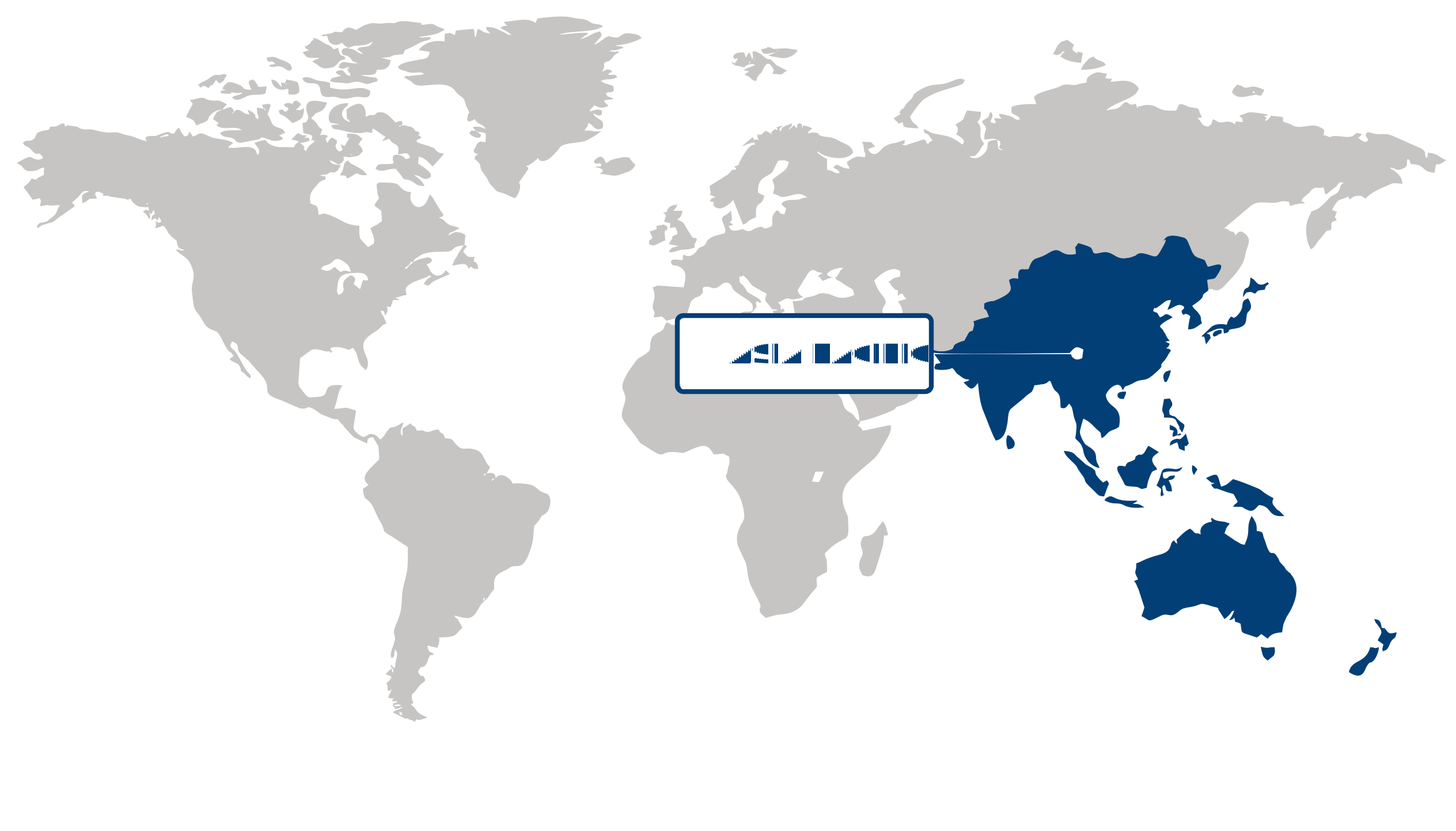
Asia Pacific dominated the earthworm farming market in 2025, representing more than 52% of the global share and growing at a remarkable 18.72% CAGR, making it the largest and fastest-growing region. This leadership is driven by the widespread adoption of organic farming and vermicomposting practices, which are gaining traction as sustainable alternatives to chemical fertilizers. Nations such as India and Southeast Asian countries are integrating earthworm farming into agricultural frameworks to boost soil health and crop yields, supported by government initiatives promoting eco-friendly farming. The Food and Agriculture Organization (FAO) highlights these practices as pivotal for sustainable agriculture in Asia, underpinning demand growth. Increasing consumer awareness and regional advancements in cultivation techniques further enhance market dynamics. As environmental priorities intensify, Asia Pacific offers significant opportunities for investors and strategists aiming to capitalize on this eco-conscious transition within the earthworm farming market.
Japan anchors the Asia Pacific earthworm farming market as a hub of technological innovation and regulatory support, fostering advancements in vermiculture that improve efficiency and scalability. Japanese regulatory frameworks encourage sustainable agricultural practices aligned with the Ministry of Agriculture, Forestry and Fisheries’ initiatives to reduce chemical input, propelling earthworm farming adoption. Companies such as Kumiai Vermiculture Co., Ltd. exemplify the integration of cutting-edge bio-processing technologies that optimize earthworm production for both domestic organic farming and export markets. This culture of innovation and compliance fosters competitive differentiation and supply chain reliability. Japan’s leadership in developing sophisticated vermicomposting solutions reinforces the broader regional growth trajectory and offers strategic insights for market participants targeting advanced agricultural ecosystems within Asia Pacific.
China plays a pivotal role in the Asia Pacific earthworm farming market, driven by a large agricultural base and increasing demand for organic inputs amid rising environmental concerns. The Chinese government’s 14th Five-Year Plan emphasizes green agriculture and waste recycling, boosting vermicomposting as a core component. Local enterprises like Yunnan Earthworm Agriculture Co., Ltd. leverage farm-to-fork approaches integrating earthworm farming with circular economy principles to enhance soil fertility and reduce waste. Consumer preference is shifting toward organic produce, supported by regulatory crackdowns on harmful pesticide use. This evolving landscape fosters a dynamic competitive environment and expands earthworm product applications beyond agriculture to biomedicine and animal feed. China’s massive scale and policy momentum complement Asia Pacific’s overall market dominance and present lucrative avenues for market entrants prioritizing sustainability and scale.
Europe Market Analysis:
Europe emerged as the fastest-growing region in the earthworm farming market, registering rapid growth with a robust CAGR of 12.5%. This expansion is primarily driven by the increasing adoption of sustainable agricultural practices and organic farming across the continent. European consumers are progressively favoring eco-friendly and chemical-free food products, enhancing demand for organic fertilizers such as vermicompost derived from earthworms. Additionally, stringent environmental regulations enforced by the European Union, including the EU’s Farm to Fork Strategy, have incentivized the reduction of synthetic fertilizer usage. Industry leaders like ECOMAX Vermi Tech and Smart Worm Farming GmbH have expanded operations to meet this rising demand, underscoring the region’s innovation in vermiculture technologies. With growing investments in circular economy initiatives and green supply chains, Europe offers substantial opportunities for scaling earthworm farming, positioning it as a critical hub for sustainable agri-business innovation.
Germany is a pivotal market within Europe’s earthworm farming sector, reflecting the region’s growth driver through its strong commitment to environmental sustainability and advanced agricultural infrastructure. German farmers increasingly integrate vermicompost into organic farming systems to boost soil health and crop yields, supported by grants from the Federal Ministry of Food and Agriculture aimed at sustainable farming research. Moreover, companies like Wurmwelten GmbH have been pioneering automated earthworm breeding systems, enhancing operational efficiency and product consistency. German consumers’ growing preference for organic produce, coupled with favorable government policies restricting chemical fertilizer use, elevates demand for earthworm farming outputs. Given Germany’s leadership in agricultural innovation and regulatory support, it substantially reinforces Europe’s position as a leading market for earthworm farming, attracting both domestic and international investments.
France also plays a significant role in Europe’s earthworm farming market, demonstrating the growth driver through widespread adoption of organic fertilizers driven by cultural and regulatory shifts toward sustainable agriculture. The French Ministry of Agriculture’s Organic Action Plan promotes vermiculture as an eco-friendly alternative to synthetic inputs, encouraged by subsidies under the France Relance program. French agricultural cooperatives, such as Terre de Liens, actively support small-scale earthworm farming ventures, expanding production capacity and diversifying supply chains. Consumer awareness around environmental impacts and healthy eating continues to rise, reflected in increased purchases of organically cultivated foodstuffs. France’s dynamic integration of earthworm farming within rural development programs and circular economy models synergizes well with broader European sustainability goals, enhancing the continent’s strategic prospects in this expanding market.
North America Market Trends:
North America maintained notable presence in the earthworm farming market, driven by increasing interest in sustainable agriculture and organic farming practices. The region’s emphasis on environmental stewardship, coupled with rising demand for eco-friendly fertilizers and waste management solutions, underpins moderate growth. Initiatives led by the U.S. Department of Agriculture promoting vermicomposting and soil health innovations exemplify government support. Furthermore, advancements in automation and data-driven farm management by companies like VermiCo are enhancing operational efficiency. The growing preference for natural soil enhancers among small-scale farmers and urban gardeners is also shaping demand. As awareness around regenerative agriculture expands and supply chains adapt to support scalable vermiculture, North America is poised to unlock considerable opportunities in the earthworm farming market.
The U.S. plays a pivotal role in the earthworm farming market, where consumer interest in organic produce and sustainable waste recycling has surged. Legislative support, exemplified by programs from the U.S. Environmental Protection Agency encouraging composting initiatives, strengthens the market foundation. Leading players such as Worm Power Inc. have capitalized on these trends by broadening their product lines and integrating digital tools to optimize worm farm monitoring. Moreover, collaborations with agricultural extension services are facilitating knowledge transfer to farmers, accelerating adoption. The country’s robust agri-tech ecosystem and regulatory environment make it a strategic hub, reinforcing North America’s broader growth trajectory in the earthworm farming market.
| Parameter | North America | Asia Pacific | Europe | Latin America | MEA |
|---|---|---|---|---|---|
| Innovation Hub i Scale Nascent Developing Advanced | |||||
| Cost-Sensitive Region i Scale Low Medium High | |||||
| Regulatory Environment i Scale Restrictive Neutral Supportive | |||||
| Demand Drivers i Scale Weak Moderate Strong | |||||
| Development Stage i Scale Emerging Developing Developed | |||||
| Adoption Rate i Scale Low Medium High | |||||
| New Entrants / Startups i Scale Sparse Moderate Dense | |||||
| Macro Indicators i Scale Weak Stable Strong |
Segment Leadership and Growth Trends
Earthworm Farming Market Share (%), by End-Use, 2026
Go beyond the chart, access full insights & data tables
Request Free Sample ReportThe farming segment held largest share in the earthworm farming market in 2025, driven primarily by the rising adoption of sustainable organic farming practices and the widespread use of vermicompost. As global agriculture shifts toward eco-friendly inputs to enhance soil health and crop yield, farmers increasingly favor earthworm-derived products, responding to regulatory encouragement from organizations like the Food and Agriculture Organization (FAO). The growing demand for organic produce and stricter pesticide regulations further bolster this trend. Companies like the Rodale Institute have actively promoted vermicompost benefits, reinforcing consumer and producer trust. This segment offers strategic opportunities for both established agri-input firms and emerging sustainable startups to innovate in biofertilizer development and distribution. Given continuous environmental concerns and policy shifts toward greener agriculture, farming remains a pivotal segment, sustaining demand momentum in near to medium term earthworm farming market dynamics.
Analysis by Species
The Perionyx excavatus segment represented largest share in the earthworm farming market in 2025, fueled by its high commercial viability linked to rapid casting production. This species’ efficiency meets increasing needs from vermiculture enterprises for scalable, cost-effective worm biomass to fulfill agriculture and waste management sectors’ demands. Its adaptability to diverse climatic conditions supports expanded geographic cultivation, aligning with shifting supply chain optimization efforts endorsed by industry leaders like the International Worm Farming Association. Enhanced breeding techniques promoted by research institutions have also improved yield consistency. These factors attract both large agribusinesses and niche players seeking reliable worm species for sustainable biomass production. As eco-conscious farming and organic waste recycling grow more prominent globally, Perionyx excavatus will likely maintain market dominance and continue providing lucrative avenues within the earthworm farming market landscape.
| Segment | Sub-Segment | Largest Segment | Fastest Growing |
|---|---|---|---|
| End-Use | Fowl Feed, Fishing Bait, Farming, Vermicompost, Others | ||
| Species | Perionyx Excavatus, Eudrilus Eugeniae, Eisenia Andrei, Eisenia Fetida, Others |
Competitive Landscape and Market Positioning
The competitive landscape is defined by dynamic interactions among these major players, with many advancing their market stature through integrative efforts and technology adaptation. Collaborations across borders and sectors appear instrumental in enhancing production efficiency and expanding distribution networks. Investments in research around soil health and organic farming have driven product differentiation, with select companies refining vermiculture techniques to boost yield and sustainability. Such initiatives recalibrate the competitive balance, helping firms to better address evolving consumer demands and regulatory frameworks, ultimately fostering innovation-led market expansion.
Strategic / Actionable Recommendations for Regional Players
In North America, intensifying ties with organic agriculture and waste management firms can amplify earthworm farming’s utility, while harnessing smart farming technologies could improve operational scalability and precision. Collaborating with local research institutions may uncover novel uses for vermiculture products, thus opening niche high-value markets.
Asia Pacific players should explore alliances that strengthen supply chain resilience and access to advanced vermiculture technologies. Targeting urban agriculture and waste recycling sectors may drive growth, supported by tailored outreach to smallholder farmers adapting to sustainable practices and enhanced soil fertility solutions.
European companies may benefit from deepening engagements with environmental regulators and agritech innovators to pioneer eco-friendly earthworm farming innovations. Focusing on premium organic inputs and customized vermiculture products for precision farming could set them apart amid intensifying competition and sustainability mandates.
| Company | Market Share | Company Revenue | Revenue CAGR (%) | Product Portfolio | Geographic Presence | Innovation / R&D Focus | Strategic Developments |
|---|---|---|---|---|---|---|---|
| No companies available. | |||||||
Industry Development/News
| Company Name | Date | Key Development |
|---|
Customize Your Report
Explore examples of how this report can be tailored to different research needs, including custom segments, additional topics or chapters, and related reports. Click a section of the wheel or its numbered marker to explore the available options.
Earthworm Farming Market — Custom Segments
| Segment | Sub-Segment |
|---|---|
| No segment data available. | |
Earthworm Farming Market — Custom TOC
| Custom Chapter | Custom Details | ||
|---|---|---|---|
| No custom TOC data available. | |||
Need a different cut of the data?
Request Custom ResearchHow will the earthworm farming industry grow in terms of size and CAGR by 2035?
Which region shows the largest market footprint in the earthworm farming market?
Which region is experiencing the fastest growth in the earthworm farming sector?
Where is the farming segment seeing the strongest adoption within the earthworm farming industry?
When did perionyx excavatus sub-segment emerge as the largest sub-segment in the species segment of earthworm farming sector?
Who are the major participants shaping the earthworm farming landscape?
Our Clients
"The report provided a thorough look at market trends, technological advancements, and the competitive landscape. The depth of insights was really valuable."
ITC Limited
"We would highly recommend Fundamental Business Insights & Consulting to anyone looking for reliable, detailed, and comprehensive market research in the Food industry."
Tyson Foods
"The clarity and presentation of the information were commendable. The report was delivered timely, which made the overall experience smooth and convenient."
Mondelēz International
Our Research Team & Methodology
Every Fundamental Business Insights report is built by a dedicated vertical research team, validated through a structured primary-and-secondary methodology, and reviewed for accuracy before it reaches you.
Research Team Overview
Prepared by the Food & Beverage Research Team
Delivery
Published
Demand
Available
Support
Trust & Compliance
Research Domains
10 coverage areasResearch Intelligence
| Source | Reference |
|---|---|
| Food and Agriculture Organization (FAO) | www.fao.org |
| World Health Organization (WHO) | www.who.int |
| U.S. Food & Drug Administration (FDA) | www.fda.gov |
| European Food Safety Authority (EFSA) | www.efsa.europa.eu |
| U.S. Department of Agriculture (USDA) | www.usda.gov |
| Codex Alimentarius Commission | www.fao.org/fao-who-codexalimentarius |
| International Organization for Standardization (ISO) | www.iso.org |
| AOAC INTERNATIONAL | www.aoac.org |
| Institute of Food Technologists (IFT) | www.ift.org |
| International Dairy Foods Association (IDFA) | www.idfa.org |
| International Sweeteners Association (ISA) | www.sweeteners.org |
| International Probiotics Association (IPA) | internationalprobiotics.org |
| Good Food Institute (GFI) | gfi.org |
| American Feed Industry Association (AFIA) | www.afia.org |
| International Feed Industry Federation (IFIF) | ifif.org |
| Specialty Food Association (SFA) | www.specialtyfood.com |
| Brewers Association | www.brewersassociation.org |
| International Bottled Water Association (IBWA) | bottledwater.org |
| International Alliance for Dietary/Food Supplement Associations (IADSA) | www.iadsa.org |
| OECD Agriculture & Food | www.oecd.org/agriculture |
Research Workflow & Quality Assurance
Data Collection
Verified information gathered through primary and secondary research.
Data Triangulation
Cross-validation using multiple independent data sources.
Forecast Modelling
Market estimates developed using historical trends and analytical models.
Analyst Validation
Findings reviewed by domain experts for accuracy and consistency.
Editorial & Quality Review
Final editorial, quality, and compliance checks before publication.
Final Publication
Released after successful completion of the internal review process.
Report Coverage
📊 Market Assessment
- Market Size & Forecast
- Market Segmentation
- Regional Analysis
- Growth Drivers & Challenges
- Market Dynamics
🏢 Competitive Intelligence
- Competitive Landscape
- Company Profiles
- Competitive Benchmarking
- Mergers & Acquisitions
- Market Share Analysis or Key Company Strategies
🔍 Strategic Analysis
- Value Chain Analysis
- Porter's Five Forces
- PESTLE Analysis
- Pricing Trends
- Supply-Demand Analysis
🚀 Future Outlook
- Technology Landscape
- Regulatory Landscape
- Investment & Funding Landscape
- Emerging Opportunities
- Future Market Outlook
Have a question about this report or need a custom scope?
Request Customization