Dry Bulk Shipping Market Size & Growth Forecast 2027–2036, By Segments (Vessel Type, Design, Commodity Type), Regional Demand Trends (North America, Asia Pacific, Europe), Key Country Insights (U.S., Japan, South Korea, Germany, France, Italy), and Competitive Landscape
Market Size and Growth Outlook
Dry Bulk Shipping Market size was valued at USD 168.78 Billion in 2026 and is anticipated to grow at 4.43% CAGR from 2027 to 2036, surpassing USD 260.36 Billion by 2036. The industry revenue for 2027 is assessed at USD 175.01 Billion.
Get more details on this report
Request Free Sample ReportDry Bulk Shipping Market Intelligence Snapshot
Regional Market Dynamics
- Asia Pacific led in 2026 because manufacturing, mining, construction, and energy industries generate substantial maritime demand for iron ore, coal, grain, and other bulk commodities.
- Port infrastructure investment, fleet modernization, stronger commodity flows, and the region’s integration into global manufacturing and raw material supply chains are sustaining growth.
Segment Momentum
- Capesize vessels held the largest share at 43.2% in 2026 due to their high cargo capacity and cost efficiency for transporting large volumes of commodities across major international trade routes.
- The grain segment is the fastest-growing commodity type, supported by expanding agricultural trade, rising food demand, and increasing requirements for efficient transportation of bulk agricultural cargoes.
Market Expansion Drivers
- Growth in global seaborne trade volumes driving dry bulk transportation demand
- Expansion of steel and industrial production boosting bulk commodity shipping requirements
- Fleet modernization and fuel-efficient vessel adoption improving operational cost structures
Leading Market Participants
- Leading players in the dry bulk shipping market include COSCO Shipping Bulk Co., Ltd. (China), Oldendorff Carriers GmbH & Co. KG (Germany), Pacific Basin Shipping Limited (Hong Kong), Star Bulk Carriers Corp. (Greece), Golden Ocean Group Limited (Bermuda), Diana Shipping Inc. (Greece), Genco Shipping & Trading Limited (United States), Navios Maritime Partners L.P. (Greece), Eagle Bulk Shipping Inc. (United States), Fednav Limited (Canada)
Global Market Forecast Snapshot
Market Outlook
- 2026 Market Size: USD 168.78 Billion
- 2027 Estimated Market Size: USD 175.01 Billion
- Projected Market Size: USD 260.36 Billion by 2036
- Growth Forecast: 4.43% CAGR (2027-2036)
Regional and Segment Outlook
- Leading Regional Market: Asia Pacific
- High-Growth Regional Hub: Asia Pacific
- Core Revenue Segment: Capesize (Vessel Type) | Gearless Bulk Carriers (Design) | Iron Ore (Commodity Type)
- Emerging Opportunity Segment: Capesize (Vessel Type) | Self-Dischargers (Design) | Grain (Commodity Type)
Market Growth Drivers and Industry Trends
Growth in global seaborne trade volumes driving dry bulk transportation demand
The dry bulk shipping market growth is inherently linked to the widening scope of international trade, as the movement of essential raw materials continues to scale across global maritime routes. An increasing reliance on cross-border logistics for essential goods creates a sustained requirement for high-capacity shipping, ensuring that supply chains remain fluid even amidst shifting geopolitical landscapes. As trade corridors expand, the consistent flow of commodities necessitates a robust shipping infrastructure capable of managing the logistical complexities of large-scale, long-haul maritime transport.
Expansion of steel and industrial production boosting bulk commodity shipping requirements
Market participants will see the dry bulk shipping market growth accelerate as large-scale infrastructure projects and manufacturing hubs ramp up their consumption of raw commodities like iron ore and coal. This heightened industrial activity directly translates into a greater need for reliable vessel capacity to transport the materials necessary for steel production and heavy industry. By supporting the foundational logistics of these sectors, the shipping industry remains a critical facilitator of global industrial growth, ensuring that essential resources are delivered efficiently to meet the demands of developing economic zones.
Fleet modernization and fuel-efficient vessel adoption improving operational cost structures
The dry bulk shipping market growth is increasingly influenced by the industry-wide push for higher sustainability and better cost efficiency through the implementation of next-generation naval architecture. By incorporating eco-friendly propulsion systems and advanced design elements, owners are able to improve their vessels' fuel consumption profiles while ensuring compliance with evolving international maritime emission standards. This strategic pivot toward a more modern and resource-efficient fleet not only enhances long-term operational profitability but also positions operators to better navigate the cost pressures associated with volatile bunker fuel markets.
| Growth Driver | Impact on CAGR | Regulatory Influence | Geographic Relevance | Adoption Rate | Impact Timeline |
|---|---|---|---|---|---|
| Growth in global seaborne trade volumes driving dry bulk transportation demand | 2% | Low | Asia Pacific, Europe | High | Near Term |
| Expansion of steel and industrial production boosting bulk commodity shipping requirements | 1.6% | Low | Asia Pacific, Latin America | High | Mid Term |
| Fleet modernization and fuel-efficient vessel adoption improving operational cost structures | 1.3% | Moderate | Europe, North America | Medium | Long Term |
Unlock insights tailored to your business with our bespoke market research solutions.
Click to get your customized report now.
Regional Demand Dynamics
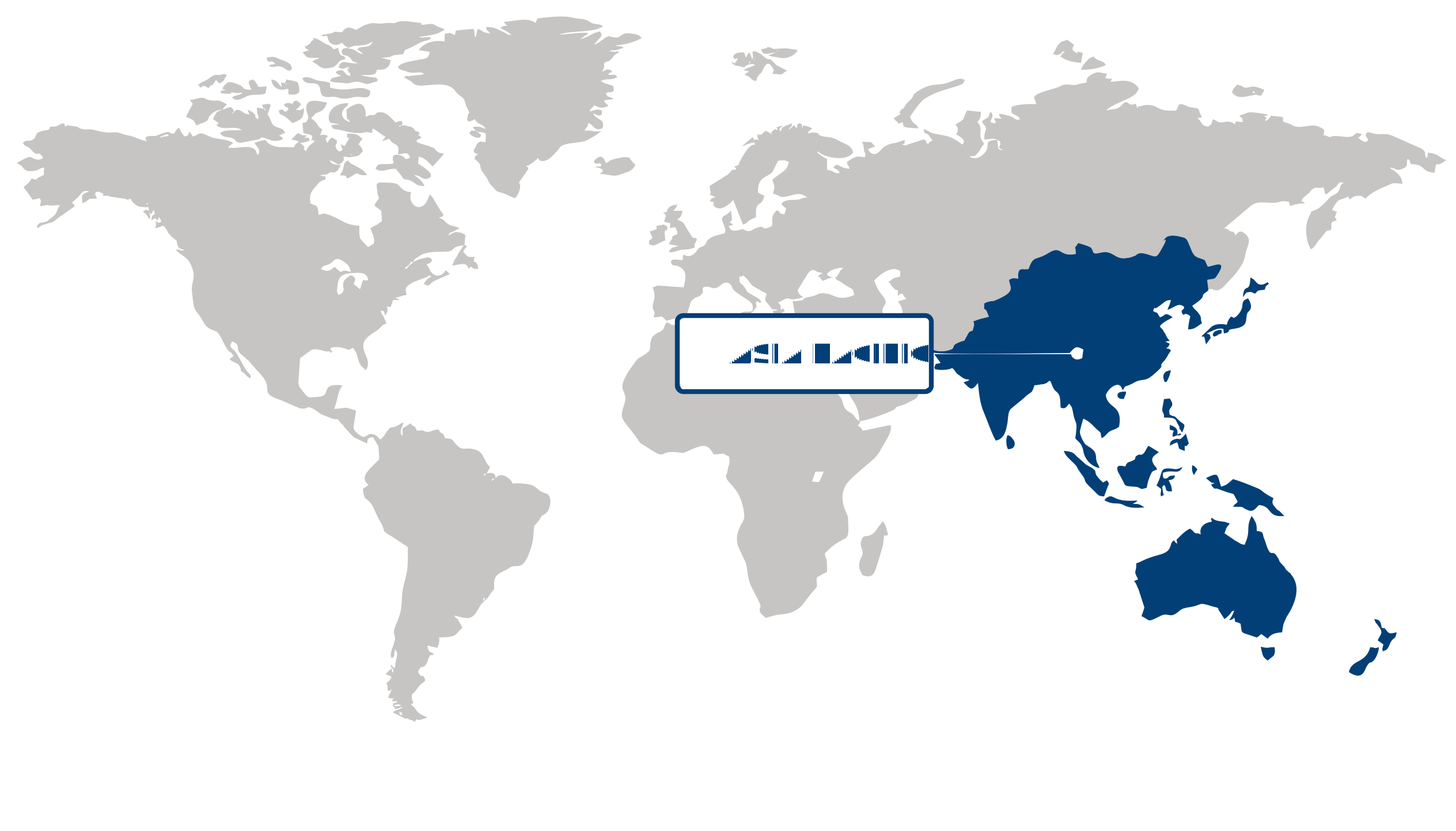
Asia Pacific (Largest & Fastest-Growing Region)
The dry bulk shipping market was led by Asia Pacific in 2026, with the region also positioned for the fastest growth as its extensive manufacturing, mining, construction, and energy industries generate substantial demand for maritime transportation of bulk commodities. Strong industrial activity and expanding international trade are supporting the movement of iron ore, coal, grain, and other dry bulk materials through major regional ports. Continued investment in port infrastructure, fleet modernization, and maritime logistics is further improving cargo-handling capabilities, while the growth of emerging economies is strengthening intra-regional and international commodity flows. The region's deep integration into global manufacturing and raw material supply chains is expected to sustain demand for efficient dry bulk transportation.
| Parameter | North America | Asia Pacific | Europe | Latin America | MEA |
|---|---|---|---|---|---|
| Innovation Hub i Scale Nascent Developing Advanced | |||||
| Cost-Sensitive Region i Scale Low Medium High | |||||
| Regulatory Environment i Scale Restrictive Neutral Supportive | |||||
| Demand Drivers i Scale Weak Moderate Strong | |||||
| Development Stage i Scale Emerging Developing Developed | |||||
| Adoption Rate i Scale Low Medium High | |||||
| New Entrants / Startups i Scale Sparse Moderate Dense | |||||
| Macro Indicators i Scale Weak Stable Strong |
Key Country Insights
United States 🇺🇸
Agricultural Export LogisticsThe U.S. dry bulk shipping market benefits from steady movements of grains, coal, and industrial minerals through major export terminals. Shipping operators in the U.S. are strengthening fleet utilization and port coordination to improve cargo handling efficiency and supply chain reliability.
Germany 🇩🇪
Industrial Cargo GatewayGermany relies on dry bulk shipping to support steelmaking, manufacturing, and energy-related raw material imports through major ports. German logistics providers continue enhancing terminal efficiency and multimodal connections to streamline bulk commodity distribution.
Japan 🇯🇵
Resource Import StrategyJapan depends on dry bulk shipping for the steady supply of iron ore, coal, and other industrial raw materials supporting domestic manufacturing. Japanese shipping companies prioritize vessel efficiency, scheduling reliability, and stable procurement logistics across international trade routes.
South Korea 🇰🇷
Steel Supply ConnectivitySouth Korea's dry bulk shipping activity is closely linked with steel production, shipbuilding, and industrial manufacturing requirements. Bulk carriers serving South Korea increasingly focus on efficient cargo turnaround and dependable raw material transportation for industrial customers.
France 🇫🇷
Port Network OptimizationFrance supports dry bulk shipping through diversified ports handling agricultural commodities, construction materials, and industrial minerals. French logistics stakeholders continue improving terminal productivity and inland transport integration to strengthen cargo movement efficiency.
Italy 🇮🇹
Mediterranean Trade SupportItaly utilizes dry bulk shipping to facilitate imports of industrial raw materials and exports of mineral and agricultural products. Italian ports are enhancing handling capabilities and operational flexibility to accommodate changing cargo requirements across Mediterranean trade corridors.
Segment Leadership and Growth Trends
Dry Bulk Shipping Market Share (%), by Vessel Type, 2026
Go beyond the chart, access full insights & data tables
Request Free Sample ReportVessel Type Segment Analysis: Capesize (Largest & Fastest-Growing Segment)
The dry bulk shipping market was led by the capesize vessel segment, which accounted for a 43.2% share in 2026 while also emerging as the fastest-growing vessel type. Capesize vessels are extensively utilized for transporting large volumes of iron ore, coal, and other bulk commodities across major international trade routes. Their substantial cargo capacity enables lower transportation costs per unit, making them highly efficient for long-distance shipping between major exporting and importing regions. Continued expansion of global commodity trade and investments in large-scale port infrastructure are reinforcing demand for capesize vessels.
Design Segment Analysis: Gearless Bulk Carriers (Largest Segment) vs Self-Dischargers (Fastest-Growing Segment)
The gearless bulk carriers segment held the largest share of 54.06% in 2026, supported by its widespread deployment on established shipping routes serving ports equipped with dedicated cargo handling infrastructure. These vessels maximize cargo capacity by eliminating onboard loading and unloading equipment, improving operational efficiency and reducing maintenance requirements. Their suitability for transporting high-volume dry bulk commodities continues to support their dominant market position.
The self-dischargers segment is the fastest-growing design category in the dry bulk shipping market because it enables faster unloading operations without relying heavily on port equipment. This capability improves vessel turnaround time, enhances operational flexibility, and increases efficiency when serving ports with limited cargo handling infrastructure. Rising demand for efficient logistics solutions and reduced port congestion is accelerating the adoption of self-discharging vessels.
Commodity Type Segment Analysis: Iron Ore (Largest Segment) vs Grain (Fastest-Growing Segment)
The iron ore segment accounted for the largest share of 32.4% in 2026, reflecting its central role in global steel production and international commodity trade. Large-scale exports from major mining regions, combined with sustained demand from steel manufacturing industries, continue to generate substantial shipping volumes for iron ore cargoes. Long-haul transportation requirements further strengthen demand for dry bulk shipping services in this segment.
The grain segment is emerging as the fastest-growing commodity type in the dry bulk shipping market due to increasing international agricultural trade and rising global food demand. Expanding exports from major grain-producing countries, together with evolving food security strategies and diversified import requirements, are driving higher demand for efficient dry bulk transportation of agricultural commodities.
| Segment | Sub-Segment | Largest Segment | Fastest Growing |
|---|---|---|---|
| Vessel Type | Capesize, Handysize, Panamax, Handymax, Others | Capesize | Capesize |
| Design | Gearless Bulk Carriers, Conventional Bulkers, Combined Bulk Carriers, Self-Dischargers, Bulker Lakers, Others | Gearless Bulk Carriers | Self-Dischargers |
| Commodity Type | Iron Ore, Coal, Steam Coal, Coking Coal, Grain, Bauxite, Nickel, Steel, Others | Iron Ore | Grain |
Competitive Landscape and Market Positioning
Major players in the dry bulk shipping market:
- COSCO Shipping Bulk Co., Ltd. (China)
- Oldendorff Carriers GmbH & Co. KG (Germany)
- Pacific Basin Shipping Limited (Hong Kong)
- Star Bulk Carriers Corp. (Greece)
- Golden Ocean Group Limited (Bermuda)
- Diana Shipping, Inc. (Greece)
- Genco Shipping & Trading Limited (United States)
- Navios Maritime Partners L.P. (Greece)
- Eagle Bulk Shipping, Inc. (United States)
- Fednav Limited (Canada)
The dry bulk shipping market is undergoing competitive realignment as operators focus on improving fleet efficiency, operational flexibility, and resilience against changing trade patterns. Market participants are investing in capabilities that enhance vessel utilization, fuel efficiency, and compliance readiness, shifting competition beyond fleet size alone. Smaller operators continue to compete through regional expertise and specialized service approaches, while larger players emphasize scale, network reach, and operational optimization. The evolving landscape favors shipping providers that can balance cost control with technological adaptation and changing environmental requirements.
| Company | Market Share | Company Revenue | Revenue CAGR (%) | Product Portfolio | Geographic Presence | Innovation / R&D Focus | Strategic Developments |
|---|---|---|---|---|---|---|---|
| COSCO Shipping Bulk Co. Ltd. (China) | |||||||
| Oldendorff Carriers GmbH & Co. KG (Germany) | |||||||
| Pacific Basin Shipping Limited (Hong Kong) | |||||||
| Star Bulk Carriers Corp. (Greece) | |||||||
| Golden Ocean Group Limited (Bermuda) | |||||||
| Diana Shipping Inc. (Greece) | |||||||
| Genco Shipping & Trading Limited (United States) | |||||||
| Navios Maritime Partners L.P. (Greece) | |||||||
| Eagle Bulk Shipping Inc. (United States) | |||||||
| Fednav Limited (Canada) |
Industry Development/News
| Company Name | Date | Key Development |
|---|---|---|
| Pacific Basin Shipping | Dec-25 | Pacific Basin Shipping contracted four 40,000 dwt Handysize bulk carriers in China, marking its first vessel order in the category in over a decade. The newbuilds incorporate advanced fuel efficiency and emission-reduction technologies to optimize operational performance across regional trade routes. |
| COSCO Shipping | Nov-25 | COSCO Shipping launched a USD 1.75 billion newbuilding program covering 29 vessels, including 23 kamsarmax bulk carriers. This capital investment modernizes the operational fleet, improves energy efficiency, and strengthens the company's competitive position within global dry bulk shipping markets through 2028. |
| Oldendorff Carriers | Oct-25 | Oldendorff Carriers established a strategic partnership with Salzgitter to utilize fuel-efficient bulk carriers for iron ore transport. The operational collaboration targets a minimum 20 percent reduction in carbon dioxide equivalent emissions and lower fuel consumption, aligning with industry-wide environmental regulations. |
| Diana Shipping | Aug-25 | Diana Shipping secured a time charter contract with Oldendorff Carriers for the post-Panamax dry bulk vessel Polymnia. The agreement yields approximately USD 3.28 million in gross revenue, highlighting continued commercial demand for medium-to-large bulk carrier deployment. |
| COSCO Shipping Bulk | Jun-25 | COSCO Shipping Bulk contracted a newbuilding program for up to 30 multipurpose vessels at Fujian Mawei Shipbuilding, backed by Citic FL financing. The initiative expands operating capacity, integrates eco-efficient technologies, and enhances logistical flexibility for global dry bulk cargo transportation. |
Customize Your Report
Explore examples of how this report can be tailored to different research needs, including custom segments, additional topics or chapters, and related reports. Click a section of the wheel or its numbered marker to explore the available options.
Dry Bulk Shipping Market — Custom Segments
| Segment | Sub-Segment |
|---|---|
| Charter Type | Voyage Charter, Time Charter, Bareboat Charter, Contract of Affreightment |
| Fleet Age | Less Than 10 Years, 10–20 Years, 21–30 Years, Above 30 Years |
| Trade Route | Intra-Regional Trade, Regional-to-Regional Trade, Long-Haul Intercontinental Trade |
Dry Bulk Shipping Market — Custom TOC
| Custom Chapter | Custom Details |
|---|---|
| Global Commodity Trade Flow Outlook |
|
| Fleet Renewal & Vessel Investment Assessment |
|
| Maritime Decarbonization Compliance Roadmap |
|
Need a different cut of the data?
Request Custom ResearchWhat is the current size of the dry bulk shipping market?
What are the growth projections for the dry bulk shipping industry?
Why is expanding global trade strengthening demand in the dry bulk shipping market?
How is fleet modernization reshaping operational priorities for dry bulk shipping companies?
Why do Capesize vessels lead the dry bulk shipping market?
How is the grain segment gaining momentum in dry bulk shipping?
Why does Asia Pacific lead the dry bulk shipping market?
What is driving continued dry bulk shipping growth in Asia Pacific?
Who are the leading players in the dry bulk shipping landscape?
Our Clients
"The team surpassed our expectations with the report depth. The actionable insights provided proved crucial in navigating market challenges."
Tata Motors
"We found the report to be very informative. The expertise and attention to market nuances significantly influenced our business direction."
DENSO Corporation
"The consumer survey findings were quite good. We now have a clearer picture of the customer churning and retention strategy."
HL Mando
Our Research Team & Methodology
Every Fundamental Business Insights report is built by a dedicated vertical research team, validated through a structured primary-and-secondary methodology, and reviewed for accuracy before it reaches you.
Research Team Overview
Prepared by the Automotive & Transportation Research Team
Delivery
Published
Demand
Available
Support
Trust & Compliance
Research Domains
10 coverage areasResearch Intelligence
| Source | Reference |
|---|---|
| International Organization of Motor Vehicle Manufacturers (OICA) | www.oica.net |
| SAE International | www.sae.org |
| International Energy Agency (IEA) | www.iea.org |
| International Transport Forum (ITF) | www.itf-oecd.org |
| International Road Federation (IRF) | www.irf.global |
| International Organization for Standardization (ISO) | www.iso.org |
| United Nations Economic Commission for Europe (UNECE) | unece.org |
| National Highway Traffic Safety Administration (NHTSA) | www.nhtsa.gov |
| U.S. Department of Transportation (USDOT) | www.transportation.gov |
| European Automobile Manufacturers' Association (ACEA) | www.acea.auto |
| Society of Indian Automobile Manufacturers (SIAM) | www.siam.in |
| International Air Transport Association (IATA) | www.iata.org |
| International Civil Aviation Organization (ICAO) | www.icao.int |
| International Maritime Organization (IMO) | www.imo.org |
| International Union of Railways (UIC) | uic.org |
| American Public Transportation Association (APTA) | www.apta.com |
| International Federation of Robotics (IFR) | ifr.org |
| CharIN | www.charin.global |
| World Shipping Council | www.worldshipping.org |
| International Federation of Freight Forwarders Associations (FIATA) | fiata.org |
Research Workflow & Quality Assurance
Data Collection
Verified information gathered through primary and secondary research.
Data Triangulation
Cross-validation using multiple independent data sources.
Forecast Modelling
Market estimates developed using historical trends and analytical models.
Analyst Validation
Findings reviewed by domain experts for accuracy and consistency.
Editorial & Quality Review
Final editorial, quality, and compliance checks before publication.
Final Publication
Released after successful completion of the internal review process.
Report Coverage
📊 Market Assessment
- Market Size & Forecast
- Market Segmentation
- Regional Analysis
- Growth Drivers & Challenges
- Market Dynamics
🏢 Competitive Intelligence
- Competitive Landscape
- Company Profiles
- Competitive Benchmarking
- Mergers & Acquisitions
- Market Share Analysis or Key Company Strategies
🔍 Strategic Analysis
- Value Chain Analysis
- Porter's Five Forces
- PESTLE Analysis
- Pricing Trends
- Supply-Demand Analysis
🚀 Future Outlook
- Technology Landscape
- Regulatory Landscape
- Investment & Funding Landscape
- Emerging Opportunities
- Future Market Outlook
Have a question about this report or need a custom scope?
Request Customization