Demerara Sugar Market Size & Forecasts 2026-2035, By Segments (Type, Application), Growth Opportunities, Innovation Landscape, Regulatory Shifts, Strategic Regional Insights (U.S., Japan, China, South Korea, UK, Germany, France), and Competitive Dynamics (ED&F Man, DOMCO, Demerara Distillers, Guyana Sugar Corporation, Balrampur Chini Mills)
Market Size and Growth Outlook
Demerara Sugar Market size is predicted to expand from USD 7.14 billion in 2025 to USD 12.79 billion by 2035, with growth underpinned by a CAGR above 6% between 2026 and 2035. The industry revenue outlook for 2026 is USD 7.51 billion.
Get more details on this report
Request Free Sample ReportDemerara Sugar Market Intelligence Snapshot
Regional Market Dynamics
Segment Momentum
Market Expansion Drivers
Leading Market Participants
Global Market Forecast Snapshot
Market Outlook
Regional and Segment Outlook
Market Growth Drivers and Industry Trends
The growing consumer preference for premium and specialty sugars is a pivotal driver shaping the demerara sugar market. As reported by the International Sugar Organization, consumers are increasingly seeking natural, less-processed sweeteners with distinctive textures and flavors, elevating demand for demerara sugar as a gourmet alternative. This trend aligns with heightened health consciousness and culinary experimentation, encouraging manufacturers like Domino Sugar to innovate product lines highlighting authentic origins and artisanal qualities. For established players, this shift presents an opportunity to differentiate through branding and value-added products, while new entrants can capitalize on niche markets focused on authenticity and traceability. The sustained rise in premiumization, evident in retail trends captured by Nielsen data, underscores a durable change in buying behavior that will continue to spur diversification and premium positioning within the demerara sugar market.
Expansion of Bakery and Confectionery Industries
The robust growth of bakery and confectionery sectors worldwide is directly bolstering the demerara sugar market, as these industries increasingly incorporate specialty sugars to enhance flavor profiles and aesthetics. According to the Baking Industry Research Institute, the use of demerara sugar in artisanal breads, pastries, and confectionery products has surged, driven by consumer demand for richer taste experiences and appealing textures. Market players like Tate & Lyle have highlighted this shift in press releases, noting partnerships with bakery brands seeking natural alternatives to refined sugars. This dynamic offers strategic avenues for demerara sugar producers to secure long-term supply contracts and innovate with ingredient blends tailored to manufacturing needs. The continued proliferation of boutique bakeries and premium confectionery globally, especially in emerging markets, signals sustained demand growth within the demerara sugar market linked to evolving consumption patterns.
Growth in Sustainable and Organic Sugar Production
Sustainability and organic certification increasingly influence purchasing decisions in the demerara sugar market, as consumers and regulators prioritize environmentally responsible sourcing. The Soil Association and Rainforest Alliance certifications have gained prominence, with companies like Wholesome Sweeteners emphasizing their commitment to organic demerara sugar production through public disclosures. This movement is supported by government incentives and stricter environmental regulations in key producing countries like Guyana, promoting sustainable agricultural practices and fair labor standards. For incumbent firms, aligning with sustainability frameworks enables brand enhancement and access to premium market segments. Simultaneously, new entrants have the opportunity to differentiate through transparent supply chains and certification leadership. Given the global momentum toward greener supply chains documented by the United Nations Conference on Trade and Development, sustainability will remain integral to the evolution of the demerara sugar market.
Industry Restraints:
Sustainability and Environmental Regulations
Increasing scrutiny on environmental impacts presents a significant constraint on the demerara sugar market. Demerara sugar production, reliant on extensive sugarcane agriculture, faces pressures from stricter regulations aimed at reducing water consumption, pesticide use, and greenhouse gas emissions. For instance, the European Commission’s Farm to Fork Strategy outlines ambitious sustainability targets affecting sugar imports from key producing countries, such as Brazil and Mauritius. These regulatory measures lengthen approval timelines and raise compliance costs, disproportionately challenging smaller producers who lack capital for sustainable infrastructure upgrades. Established players must navigate evolving standards while maintaining supply stability, while new entrants encounter elevated entry barriers due to capital-intensive certification processes. Going forward, sustainability regulation will remain a pivotal restraint, compelling market participants to innovate environmentally conscious practices or risk exclusion from major export markets.
Supply Chain and Logistics Disruptions
Persistent disruptions in global supply chains impose notable challenges on the demerara sugar market’s growth and operational efficiency. The commodity’s reliance on long-distance shipping from concentrated production hubs—such as Guyana and the Caribbean—to key consumption areas creates vulnerability. The World Trade Organization (WTO) has documented recurrent port congestion, container shortages, and rising freight costs, all exacerbated by pandemic-related labor shortages and geopolitical tensions. These inefficiencies delay deliveries and inflate costs, undermining price competitiveness and market responsiveness. For incumbent firms, managing these disruptions demands enhanced supply chain visibility and diversified sourcing, whereas new entrants risk marginalization amid uncertain logistics. This constraint is expected to persist, with ongoing freight volatility necessitating strategic resilience investments across the demerara sugar value chain.
| Growth Driver | Impact on CAGR | Regulatory Influence | Geographic Relevance | Adoption Rate | Impact Timeline |
|---|---|---|---|---|---|
| Increasing demand for premium and specialty sugars | 2.00% | Short term (≤ 2 yrs) | Europe, North America; Spillover: Asia Pacific | Low | Moderate |
| Expansion of bakery and confectionery industries | 1.80% | Medium term (2–5 yrs) | Asia Pacific, Europe; Spillover: North America | Low | Moderate |
| Growth in sustainable and organic sugar production | 1.20% | Long term (5+ yrs) | Europe; Spillover: Asia Pacific | Medium | Slow |
Unlock insights tailored to your business with our bespoke market research solutions.
Click to get your customized report now.
Regional Demand Dynamics
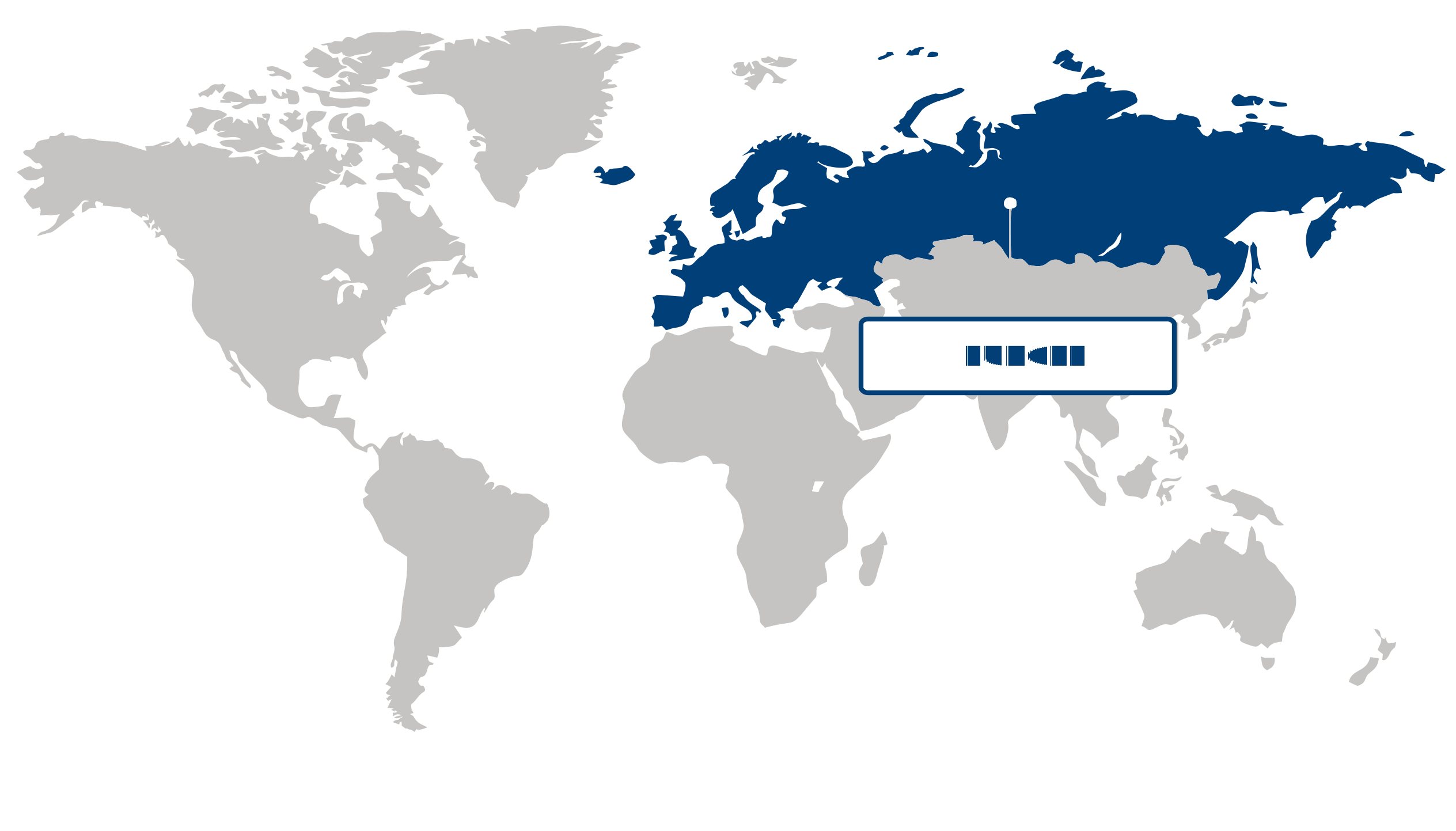
Europe captured over 38.5% of the global demerara sugar market in 2025, establishing itself as the largest regional player. The region's leadership primarily stems from the rising consumption of demerara sugar as a natural substitute additive in baked goods, reflecting a shift toward cleaner-label ingredients among consumers. This trend aligns with evolving spending patterns favoring artisanal and organic bakery products, supported by sustainability-focused policies across the European Union. For instance, data from the European Food Information Council highlights increasing consumer preference for less-processed sweeteners, fueling demand. Additionally, Europe's well-developed supply chains and strong presence of specialty food retailers, such as Edeka in Germany, enhance distribution efficiency. These dynamics position Europe as a strategic hub for innovation in natural sweeteners, making it ripe for investment and expansion in the demerara sugar market.
Germany anchors the European demerara sugar market with its robust bakery sector and consumer inclination toward natural ingredients. Growth is propelled by German companies like DR. OETKER, which emphasize clean-label formulations, integrating demerara sugar into premium baked products. Regulatory support from the German Federal Ministry of Food and Agriculture encourages organic and sustainable food production, further stimulating market expansion. This regulatory environment, combined with a culturally entrenched appreciation for high-quality baked goods, sustains strong domestic demand and export potential, reinforcing Germany’s pivotal role in the European market.
France is a key player in the European demerara sugar market, driven by its rich culinary heritage and evolving consumer trends toward organic and natural sweeteners in pastry arts. Major French companies such as La Boulangère are integrating demerara sugar into traditional and innovative bakery offerings, reflecting growing artisanal bakery demand. The French Agency for Food, Environmental and Occupational Health & Safety (ANSES) has also advanced regulations supporting natural ingredient use, promoting safer food additive alternatives. France’s blend of gastronomic tradition and regulatory encouragement enhances market growth prospects and complements regional opportunities, solidifying Europe’s lead in the demerara sugar market.
Asia Pacific Market Analysis:
Asia Pacific emerged as the fastest-growing region in the demerara sugar market, registering a robust CAGR of 7.2%. This rapid expansion is primarily driven by the increasing incorporation of organic and crystallized sugar varieties across the food, beverage, and skincare sectors. Rising consumer preference for natural and minimally processed ingredients is fueling demand, as manufacturers in the region align product portfolios with health-conscious and sustainability-focused trends. Additionally, policy initiatives promoting organic farming and cleaner supply chains in countries such as Japan and China amplify the region’s market potential. Industrial players like Morinaga & Co. and Amorepacific have actively launched new product lines leveraging demerara sugar for its texture and antioxidant properties, underscoring strategic adoption across sectors. With evolving consumer lifestyles and expanding premium product categories, Asia Pacific offers compelling opportunities for innovation and growth in the demerara sugar market over the near term.
Japan plays a pivotal role in Asia Pacific’s demerara sugar market growth by capitalizing on its advanced food and cosmetics industries, which emphasize natural and organic ingredients. Japanese consumers demonstrate strong purchasing power and an inclination for premium and ethically sourced products, driving demand for demerara sugar in artisanal confectioneries and skincare formulations. Regulatory frameworks supporting organic certification further bolster market acceptance, evidenced by companies like Shiseido incorporating organic sugars into their beauty product ranges. This culturally nuanced demand for clean-label and health-focused goods enhances Japan’s strategic position as a trendsetter within the regional landscape.
China’s surging urban middle class and expanding convenience food sector underpin its significant contribution to the Asia Pacific demerara sugar market trajectory. Consumer shifts toward healthier alternatives and the rapid expansion of domestic organic sugar production supported by government agrarian reforms create favorable market conditions. Leading FMCG companies such as Yili Group have introduced sugar-based products emphasizing natural ingredients, reflecting growing consumer aspirations. China's extensive manufacturing infrastructure and digital retail evolution further facilitate widespread distribution and visibility of demerara sugar products. These factors collectively sharpen China’s role as a critical market driver, reinforcing the region’s trajectory in delivering scalable and diversified growth opportunities.
North America Market Trends:
North America maintained a notable presence in the demerara sugar market, driven by rising consumer preference for premium and natural sweeteners amidst growing health consciousness. The U.S. recorded increasing demand for minimally processed sugars, reflecting a shift from refined alternatives due to perceived nutritional benefits and clean-label trends. According to the U.S. Department of Agriculture, rising investments in sustainable farming and supply chain transparency initiatives have further strengthened the region’s position. Additionally, advances in agricultural technology and logistics optimization by key players, such as American Sugar Refining, have enhanced product quality and availability. Regulatory support encouraging organic and sustainable food products also underpins market expansion. These factors collectively create a fertile environment for continued innovation and capture of higher-value segments, positioning North America as a significant opportunity hub for demerara sugar producers and suppliers.
The United States holds a pivotal role in the North American demerara sugar market, where consumer demand for natural and artisanal food products predominantly fuels growth. Market participants, including companies like Domino Foods, have capitalized on the premiumization trend by expanding their demerara sugar portfolios to appeal to gourmet and health-conscious buyers. Furthermore, regulatory frameworks from the Food and Drug Administration promoting ingredient transparency and organic certification reinforce product differentiation. Supply chain enhancements, such as improved port logistics and domestic distribution networks highlighted by the Port Authority of New York and New Jersey, have bolstered product reach and freshness. This convergence of consumer trends, regulatory clarity, and logistics efficiency makes the U.S. an essential market driver, underscoring the region’s attractiveness for stakeholders seeking to leverage evolving preferences in demerara sugar consumption.
| Parameter | North America | Asia Pacific | Europe | Latin America | MEA |
|---|---|---|---|---|---|
| Innovation Hub i Scale Nascent Developing Advanced | |||||
| Cost-Sensitive Region i Scale Low Medium High | |||||
| Regulatory Environment i Scale Restrictive Neutral Supportive | |||||
| Demand Drivers i Scale Weak Moderate Strong | |||||
| Development Stage i Scale Emerging Developing Developed | |||||
| Adoption Rate i Scale Low Medium High | |||||
| New Entrants / Startups i Scale Sparse Moderate Dense | |||||
| Macro Indicators i Scale Weak Stable Strong |
Segment Leadership and Growth Trends
Demerara Sugar Market Share (%), by Type, 2026
Go beyond the chart, access full insights & data tables
Request Free Sample ReportThe crystal segment held largest share in the demerara sugar market in 2025, reflecting strong consumer preference for natural crystal sugar in food and specialty applications. This leadership is anchored in growing demand for minimally processed, visually appealing sugar types favored by artisanal bakers and specialty food manufacturers, as highlighted in product insights from Tate & Lyle. The natural and less refined attributes of crystal sugar resonate with current sustainability values and clean-label trends, further driven by supply chain innovations that ensure high-quality sourcing and traceability. Strategic opportunities arise for both established producers and niche entrants to capitalize on premium positioning and expanding gourmet food categories. Given ongoing consumer emphasis on authentic texture and flavor, crystal sugar is poised to maintain its prominence throughout the near to medium term, supported by evolving culinary trends and enhanced production technologies.
Analysis by Application
The food segment represented largest share in the demerara sugar market owing to its rising incorporation in food products and artisanal culinary applications. This dominance is supported by the growing consumer appetite for natural sweeteners that elevate flavor profiles and texture in baked goods, desserts, and organic offerings, as observed in global consumption patterns reported by the International Sugar Organization. Additionally, the segment benefits from increased awareness of ingredient quality in foodservice and retail sectors, driving manufacturers to integrate demerara sugar in premium lines. Supply chain enhancements and regulatory milestones promoting food safety further reinforce adoption. Both industry incumbents and innovative startups find opportunities to differentiate through product innovation and culinary authenticity. The food segment’s relevance remains strong as consumer focus on natural ingredients and craftsmanship continues to shape market demand.
| Segment | Sub-Segment | Largest Segment | Fastest Growing |
|---|---|---|---|
| Type | Crystal, Syrup | ||
| Application | Food, Drug, Drinks |
Competitive Landscape and Market Positioning
The competitive environment of the demerara sugar market is marked by proactive initiatives that enhance innovation and expansion. Leading companies are intensifying efforts to optimize production efficiencies and diversify product lines, reflecting an adaptive stance to evolving consumer preferences and sustainability trends. Strategic collaborations and vertical integrations allow these players to strengthen supply resilience and streamline operations. Furthermore, investments in refining technologies and product development improve quality and enable market differentiation. These endeavors collectively sharpen competitive edges, enabling companies like Südzucker and Cosan to enhance their regional penetration while fostering robust partnerships that reinforce their innovation pipelines.
Strategic / Actionable Recommendations for Regional Players
North American players should consider deeper alliances with technology firms focused on processing optimization and traceability, enhancing transparency to meet growing consumer demand for ethically sourced ingredients. Leveraging data-driven supply chain solutions can boost efficiency and responsiveness amidst fluctuating market conditions.
In the Asia Pacific region, tapping into emerging sub-segments like organic and specialty sugars could unlock premium value. Collaborations with agricultural innovators to improve crop yields and product consistency may position regional firms advantageously against established global competitors.
European market participants may benefit from emphasizing sustainability credentials through partnerships in renewable energy use and waste reduction within production cycles. Accelerating innovation in product diversification, including blends and functional formulations, can secure footholds in health-conscious consumer niches while counterbalancing competitive pressures.
| Company | Market Share | Company Revenue | Revenue CAGR (%) | Product Portfolio | Geographic Presence | Innovation / R&D Focus | Strategic Developments |
|---|---|---|---|---|---|---|---|
| No companies available. | |||||||
Industry Development/News
| Company Name | Date | Key Development |
|---|
Customize Your Report
Explore examples of how this report can be tailored to different research needs, including custom segments, additional topics or chapters, and related reports. Click a section of the wheel or its numbered marker to explore the available options.
Demerara Sugar Market — Custom Segments
| Segment | Sub-Segment |
|---|---|
| No segment data available. | |
Demerara Sugar Market — Custom TOC
| Custom Chapter | Custom Details | ||
|---|---|---|---|
| No custom TOC data available. | |||
Need a different cut of the data?
Request Custom ResearchWhat are the growth projections for the demerara sugar industry?
Which region shows the largest market footprint in the demerara sugar market?
In which region is the demerara sugar sector expanding at the quickest pace?
How does crystal segment fare in the demerara sugar industry?
What share does food segment hold in the demerara sugar sector as of 2025?
Which companies are driving growth in the demerara sugar landscape?
Our Clients
"The report provided a thorough look at market trends, technological advancements, and the competitive landscape. The depth of insights was really valuable."
ITC Limited
"We would highly recommend Fundamental Business Insights & Consulting to anyone looking for reliable, detailed, and comprehensive market research in the Food industry."
Tyson Foods
"The clarity and presentation of the information were commendable. The report was delivered timely, which made the overall experience smooth and convenient."
Mondelēz International
Our Research Team & Methodology
Every Fundamental Business Insights report is built by a dedicated vertical research team, validated through a structured primary-and-secondary methodology, and reviewed for accuracy before it reaches you.
Research Team Overview
Prepared by the Food & Beverage Research Team
Delivery
Published
Demand
Available
Support
Trust & Compliance
Research Domains
10 coverage areasResearch Intelligence
| Source | Reference |
|---|---|
| Food and Agriculture Organization (FAO) | www.fao.org |
| World Health Organization (WHO) | www.who.int |
| U.S. Food & Drug Administration (FDA) | www.fda.gov |
| European Food Safety Authority (EFSA) | www.efsa.europa.eu |
| U.S. Department of Agriculture (USDA) | www.usda.gov |
| Codex Alimentarius Commission | www.fao.org/fao-who-codexalimentarius |
| International Organization for Standardization (ISO) | www.iso.org |
| AOAC INTERNATIONAL | www.aoac.org |
| Institute of Food Technologists (IFT) | www.ift.org |
| International Dairy Foods Association (IDFA) | www.idfa.org |
| International Sweeteners Association (ISA) | www.sweeteners.org |
| International Probiotics Association (IPA) | internationalprobiotics.org |
| Good Food Institute (GFI) | gfi.org |
| American Feed Industry Association (AFIA) | www.afia.org |
| International Feed Industry Federation (IFIF) | ifif.org |
| Specialty Food Association (SFA) | www.specialtyfood.com |
| Brewers Association | www.brewersassociation.org |
| International Bottled Water Association (IBWA) | bottledwater.org |
| International Alliance for Dietary/Food Supplement Associations (IADSA) | www.iadsa.org |
| OECD Agriculture & Food | www.oecd.org/agriculture |
Research Workflow & Quality Assurance
Data Collection
Verified information gathered through primary and secondary research.
Data Triangulation
Cross-validation using multiple independent data sources.
Forecast Modelling
Market estimates developed using historical trends and analytical models.
Analyst Validation
Findings reviewed by domain experts for accuracy and consistency.
Editorial & Quality Review
Final editorial, quality, and compliance checks before publication.
Final Publication
Released after successful completion of the internal review process.
Report Coverage
📊 Market Assessment
- Market Size & Forecast
- Market Segmentation
- Regional Analysis
- Growth Drivers & Challenges
- Market Dynamics
🏢 Competitive Intelligence
- Competitive Landscape
- Company Profiles
- Competitive Benchmarking
- Mergers & Acquisitions
- Market Share Analysis or Key Company Strategies
🔍 Strategic Analysis
- Value Chain Analysis
- Porter's Five Forces
- PESTLE Analysis
- Pricing Trends
- Supply-Demand Analysis
🚀 Future Outlook
- Technology Landscape
- Regulatory Landscape
- Investment & Funding Landscape
- Emerging Opportunities
- Future Market Outlook
Have a question about this report or need a custom scope?
Request Customization