Cosmetics Active Ingredients Market Size & Growth Forecast 2027–2036, By Segments (Source, Type, Application), Regional Demand Trends (North America, Asia Pacific, Europe), Key Country Insights (U.S., Japan, South Korea, Germany, France, Italy), and Competitive Landscape
Market Size and Growth Outlook
Cosmetics Active Ingredients Market size was worth USD 4.56 Billion in 2026 and is expected to grow at 7.63% CAGR between 2027 and 2036, attaining USD 9.51 Billion by 2036. The industry revenue for 2027 is calculated at USD 4.86 Billion.
Get more details on this report
Request Free Sample ReportCosmetics Active Ingredients Market Intelligence Snapshot
Regional Market Dynamics
- Europe benefits from an established cosmetics industry, demand for premium formulations, and strong emphasis on safety, transparency, sustainability, and regulatory compliance.
- Rising beauty consumption, disposable incomes, e-commerce access, and demand for specialized skincare benefits are encouraging domestic product innovation and ingredient adoption.
Segment Momentum
- Natural ingredients accounted for 58.72% of the market in 2026 and were also the fastest-growing source, driven by demand for clean-label, sustainable, and naturally derived formulations featuring botanical extracts and bioactive ingredients.
- Skin care is both the largest and fastest-growing application, supported by increasing demand for hydration, skin renewal, multifunctional formulations, personalized routines, and ingredient-focused purchasing decisions.
Market Expansion Drivers
- Rising demand for natural and bio-derived cosmetic actives driving clean beauty formulation innovation
- Growing anti-aging product demand boosting advanced peptide and antioxidant ingredient utilization
- Expansion of global beauty and personal care industry increasing active ingredient supply chain scale
Leading Market Participants
- Leading players in the cosmetics active ingredients market include BASF SE (Germany), DSM-Firmenich (Switzerland), Croda International Plc (United Kingdom), Evonik Industries AG (Germany), Givaudan SA (Switzerland), Symrise AG (Germany), Ashland Global Holdings Inc. (United States), Clariant AG (Switzerland), Eastman Chemical Company (United States), Lubrizol Corporation (United States)
Global Market Forecast Snapshot
Market Outlook
- 2026 Market Size: USD 4.56 Billion
- 2027 Estimated Market Size: USD 4.86 Billion
- Projected Market Size: USD 9.51 Billion by 2036
- Growth Forecast: 7.63% CAGR (2027-2036)
Regional and Segment Outlook
- Leading Regional Market: Europe
- High-Growth Regional Hub: Asia Pacific
- Core Revenue Segment: Natural (Source) | Anti-ageing (Type) | Skin Care (Application)
- Emerging Opportunity Segment: Natural (Source) | Anti-ageing (Type) | Skin Care (Application)
Market Growth Drivers and Industry Trends
Rising demand for natural and bio-derived cosmetic actives driving clean beauty formulation innovation
Consumers are increasingly seeking skincare and personal care products formulated with naturally sourced ingredients that align with transparency, sustainability, and ingredient-conscious purchasing decisions. This shift will drive the cosmetics active ingredients market growth as manufacturers expand the use of botanical extracts, fermentation-derived compounds, and biotechnology-based actives to create formulations that satisfy clean beauty expectations without compromising efficacy. Product developers are also investing in ingredient traceability, environmentally responsible sourcing, and formulation compatibility to differentiate premium offerings while meeting evolving regulatory and consumer preferences across multiple beauty categories.
Growing anti-aging product demand boosting advanced peptide and antioxidant ingredient utilization
Demand for products addressing visible signs of skin aging continues to encourage formulators to incorporate scientifically validated functional ingredients with targeted performance characteristics. The cosmetics active ingredients market is driven by the wider adoption of peptides, antioxidants, and other bioactive compounds that support skin renewal, hydration, and protection against environmental stressors in premium skincare formulations. Increasing emphasis on multifunctional products has further encouraged ingredient suppliers to develop highly stable and compatible actives that can be integrated into serums, creams, masks, and other specialized cosmetic applications serving diverse consumer needs.
Expansion of global beauty and personal care industry increasing active ingredient supply chain scale
As beauty and personal care manufacturers broaden their product portfolios across skincare, haircare, and color cosmetics, sourcing networks for specialized ingredients continue to expand in both developed and emerging markets. This broader industry expansion will boost the cosmetics active ingredients market demand by encouraging ingredient producers to increase manufacturing capacity, strengthen distribution partnerships, and diversify raw material procurement strategies to ensure consistent product availability. Growing collaboration between formulation laboratories, ingredient innovators, and contract manufacturers has also increased the availability of customized active ingredients designed for region-specific consumer preferences and application requirements.
| Growth Driver | Impact on CAGR | Regulatory Influence | Geographic Relevance | Adoption Rate | Impact Timeline |
|---|---|---|---|---|---|
| Rising demand for natural and bio-derived cosmetic actives driving clean beauty formulation innovation | 2.1% | Moderate | Europe, North America, Asia Pacific | High | Near Term |
| Growing anti-aging product demand boosting advanced peptide and antioxidant ingredient utilization | 1.9% | Low | North America, Europe | High | Mid Term |
| Expansion of global beauty and personal care industry increasing active ingredient supply chain scale | 1.6% | Low | Asia Pacific | High | Mid Term |
Unlock insights tailored to your business with our bespoke market research solutions.
Click to get your customized report now.
Regional Demand Dynamics
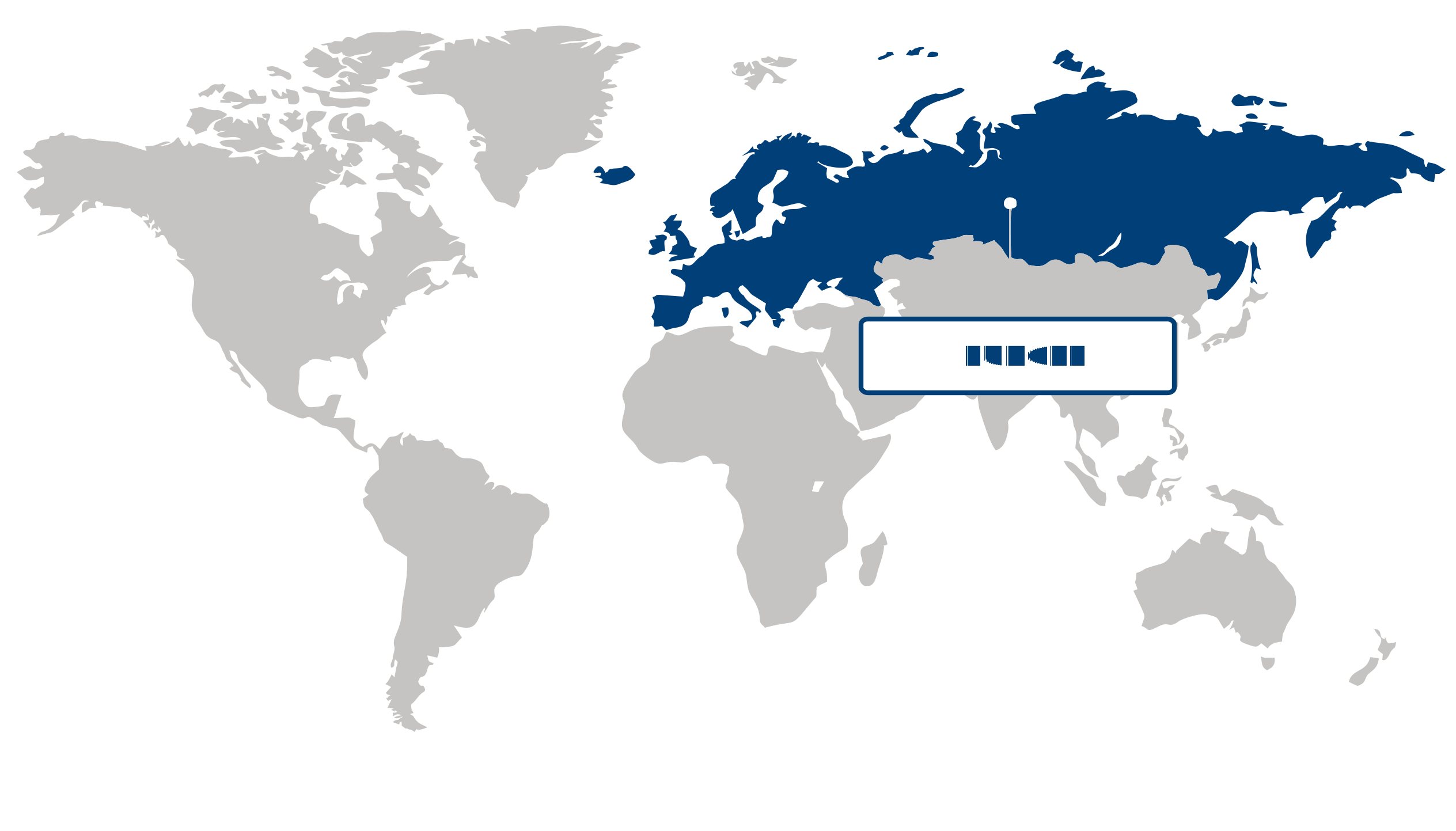
Europe (Largest Region)
Europe held the largest share of the cosmetics active ingredients market in 2026, benefiting from a sophisticated cosmetics industry, strong consumer interest in high-performance formulations, and established demand for innovative and premium personal care products. The region's emphasis on product safety, ingredient transparency, sustainability, and regulatory compliance is encouraging manufacturers to develop more specialized active ingredients with targeted skincare and haircare benefits. Rising consumer preference for scientifically supported formulations and clean-label beauty products is further supporting innovation, while established research and formulation capabilities provide a strong foundation for the continued use of advanced cosmetic actives.
Asia Pacific (Fastest-Growing Region)
Asia Pacific is projected to be the fastest-growing regional market, driven by expanding beauty and personal care consumption, rising disposable incomes, and increasing interest in skincare products with functional and specialized benefits. Changing consumer preferences are encouraging manufacturers to introduce formulations addressing concerns such as skin aging, hydration, pigmentation, and environmental stress. The region's expanding e-commerce ecosystem is also improving access to a broader range of cosmetic products and ingredients, while growing domestic beauty industries and increasing investment in product innovation are creating additional opportunities for active ingredient suppliers.
| Parameter | North America | Asia Pacific | Europe | Latin America | MEA |
|---|---|---|---|---|---|
| Innovation Hub i Scale Nascent Developing Advanced | |||||
| Cost-Sensitive Region i Scale Low Medium High | |||||
| Regulatory Environment i Scale Restrictive Neutral Supportive | |||||
| Demand Drivers i Scale Weak Moderate Strong | |||||
| Development Stage i Scale Emerging Developing Developed | |||||
| Adoption Rate i Scale Low Medium High | |||||
| New Entrants / Startups i Scale Sparse Moderate Dense | |||||
| Macro Indicators i Scale Weak Stable Strong |
Key Country Insights
United States 🇺🇸
Innovation-Driven FormulationsThe U.S. cosmetics active ingredients market emphasizes scientifically validated ingredients that support anti-aging, skin barrier repair, and multifunctional skincare. Brands increasingly collaborate with biotechnology companies to introduce differentiated actives backed by efficacy testing and transparent product claims.
Germany 🇩🇪
Science-Based Ingredient DevelopmentGermany prioritizes high-purity cosmetics active ingredients supported by strong formulation expertise and regulatory compliance. German manufacturers continue investing in sustainable ingredient sourcing and advanced dermatological research to meet evolving consumer and premium brand requirements.
Japan 🇯🇵
Functional Beauty SolutionsJapan focuses on cosmetics active ingredients that deliver visible performance while maintaining gentle formulations for daily skincare. Japanese companies continue developing fermentation-derived, moisturizing, and brightening ingredients that align with sophisticated consumer preferences.
South Korea 🇰🇷
Trend-Led Active InnovationSouth Korea advances cosmetics active ingredient development through rapid beauty innovation and ingredient commercialization. Local formulators prioritize peptides, probiotics, botanical extracts, and advanced delivery technologies to support highly competitive skincare product launches.
France 🇫🇷
Premium Cosmetic ActivesFrance strengthens its cosmetics active ingredients market through premium skincare formulations and natural ingredient expertise. French manufacturers increasingly combine botanical innovation with clinically supported actives to satisfy luxury beauty brands and international product development needs.
Italy 🇮🇹
Botanical Ingredient ExpertiseItaly leverages botanical resources and cosmetic formulation capabilities to expand the use of naturally derived active ingredients. Italian suppliers increasingly focus on sustainable extraction methods and specialty actives that support premium personal care applications.
Segment Leadership and Growth Trends
Cosmetics Active Ingredients Market Share (%), by Source, 2026
Go beyond the chart, access full insights & data tables
Request Free Sample ReportSource Segment Analysis: Natural (Largest & Fastest-Growing Segment)
Holding the largest share of the cosmetics active ingredients market, the natural source segment accounted for 58.72% in 2026 and also represented the fastest-growing category. Rising consumer preference for naturally derived ingredients, increasing awareness of clean-label beauty products, and growing demand for environmentally responsible formulations are driving the segment’s expansion. Manufacturers are increasingly incorporating botanical extracts, plant-based compounds, and naturally sourced bioactive ingredients into cosmetic formulations to address evolving consumer expectations. The continued emphasis on product safety, sustainability, and premium skincare solutions is expected to further strengthen the position of natural ingredients across multiple cosmetic applications.
Type Segment Analysis: Anti-ageing (Largest & Fastest-Growing Segment)
The anti-ageing segment dominated the cosmetics active ingredients market, accounting for 33.48% in 2026, while also emerging as the fastest-growing product type. Strong consumer demand for products that improve skin appearance, reduce visible signs of ageing, and support long-term skin health continues to drive the adoption of advanced active ingredients in this category. Manufacturers are focusing on innovative formulations incorporating peptides, antioxidants, botanical extracts, and other performance-oriented ingredients to enhance product effectiveness. Increasing interest in preventive skincare and premium personal care products is further accelerating the growth of the anti-ageing segment.
Application Segment Analysis: Skin Care (Largest & Fastest-Growing Segment)
The skin care application segment led the cosmetics active ingredients market in 2026 while also representing the fastest-growing application area. Demand for high-performance skincare formulations continues to rise as consumers increasingly prioritize products that deliver hydration, protection, skin renewal, and overall skin wellness. The growing popularity of personalized skincare routines, multifunctional cosmetic products, and ingredient-focused purchasing decisions has encouraged manufacturers to expand the use of advanced active ingredients in skin care formulations. Continued innovation in cosmetic science and rising consumer awareness of effective skincare solutions are expected to sustain the segment’s leading position.
| Segment | Sub-Segment | Largest Segment | Fastest Growing |
|---|---|---|---|
| Source | Natural, Synthetic | Natural | Natural |
| Type | Anti-ageing, Moisturizers, UV Filters, Skin-lightening Agent, Exfoliators, Antimicrobial, Others | Anti-ageing | Anti-ageing |
| Application | Skin Care, Hair Care, Makeup, Oral Care, Others | Skin Care | Skin Care |
Competitive Landscape and Market Positioning
Top players in the cosmetics active ingredients market:
- BASF SE (Germany)
- DSM-Firmenich (Switzerland)
- Croda International Plc (United Kingdom)
- Evonik Industries AG (Germany)
- Givaudan SA (Switzerland)
- Symrise AG (Germany)
- Ashland Global Holdings, Inc. (United States)
- Clariant AG (Switzerland)
- Eastman Chemical Company (United States)
- Lubrizol Corporation (United States)
Innovation in scientifically validated formulations is redefining competition across the cosmetics active ingredients market, where suppliers are striving to provide multifunctional ingredients that address evolving consumer expectations without compromising product performance. Competitive momentum increasingly centers on research capabilities, ingredient traceability, and the development of naturally derived and biotechnology-based alternatives that align with changing formulation trends. Rather than supplying standardized raw materials, manufacturers are expanding technical support for formulators and creating specialized ingredient portfolios tailored to distinct skincare, haircare, and personal care applications. This shift is fostering stronger differentiation through efficacy, formulation compatibility, and the ability to respond quickly to emerging beauty preferences.
| Company | Market Share | Company Revenue | Revenue CAGR (%) | Product Portfolio | Geographic Presence | Innovation / R&D Focus | Strategic Developments |
|---|---|---|---|---|---|---|---|
| BASF SE (Germany) | |||||||
| DSM-Firmenich (Switzerland) | |||||||
| Croda International Plc (United Kingdom) | |||||||
| Evonik Industries AG (Germany) | |||||||
| Givaudan SA (Switzerland) | |||||||
| Symrise AG (Germany) | |||||||
| Ashland Global Holdings Inc. (United States) | |||||||
| Clariant AG (Switzerland) | |||||||
| Eastman Chemical Company (United States) | |||||||
| Lubrizol Corporation (United States) |
Industry Development/News
| Company Name | Date | Key Development |
|---|
Customize Your Report
Explore examples of how this report can be tailored to different research needs, including custom segments, additional topics or chapters, and related reports. Click a section of the wheel or its numbered marker to explore the available options.
Cosmetics Active Ingredients Market — Custom Segments
| Segment | Sub-Segment |
|---|---|
| Pricing Tier | Mass-Market, Mid-Market, Premium, Luxury |
| Product Positioning | Clean Beauty, Natural & Botanical, Clinical/Derma-Cosmetic, Multifunctional |
| Customer Type | Cosmetic Manufacturers, Contract Manufacturers, Specialty Formulators, Research & Development Organizations |
Cosmetics Active Ingredients Market — Custom TOC
| Custom Chapter | Custom Details |
|---|---|
| Ingredient Innovation & White-Space Mapping |
|
| Application Opportunity Prioritization |
|
| Natural Ingredient Sourcing Resilience |
|
Need a different cut of the data?
Request Custom ResearchWhat is the current size of the cosmetics active ingredients market?
What is the projected value of the cosmetics active ingredients industry by 2036?
How are clean beauty trends influencing innovation in cosmetic active ingredients?
Why is demand for anti-aging skincare driving the cosmetics active ingredients market?
Why do natural source ingredients dominate the cosmetics active ingredients market?
Which application segment is expanding the fastest in the cosmetics active ingredients market?
Why does Europe hold the largest cosmetics active ingredients market share?
What is driving cosmetics active ingredients growth in Asia Pacific?
Who are the leading players in the cosmetics active ingredients landscape?
Our Clients
"The report helped us understand emerging consumer trends in our product category. It clarified where to focus innovation for the next product launch."
LyondellBasell
"The regional forecast section was incredibly useful. We were able to identify two new potential partners in Europe thanks to the vendor mapping you included."
SABIC
"We appreciated how actionable the recommendations were. It guided us to improve supply chain resilience."
Olin Corporation
Our Research Team & Methodology
Every Fundamental Business Insights report is built by a dedicated vertical research team, validated through a structured primary-and-secondary methodology, and reviewed for accuracy before it reaches you.
Research Team Overview
Prepared by the Chemicals & Materials Research Team
Delivery
Published
Demand
Available
Support
Trust & Compliance
Research Domains
10 coverage areasResearch Intelligence
| Source | Reference |
|---|---|
| American Chemistry Council (ACC) | www.americanchemistry.com |
| European Chemical Industry Council (Cefic) | cefic.org |
| International Council of Chemical Associations (ICCA) | icca-chem.org |
| European Chemicals Agency (ECHA) | echa.europa.eu |
| U.S. Environmental Protection Agency (EPA) | www.epa.gov |
| ASTM International | www.astm.org |
| International Organization for Standardization (ISO) | www.iso.org |
| National Institute of Standards and Technology (NIST) | www.nist.gov |
| Plastics Industry Association (PLASTICS) | www.plasticsindustry.org |
| European Biplastics | www.european-bioplastics.org |
| The Adhesive and Sealant Council (ASC) | www.ascouncil.org |
| National Association of Corrosion Engineers (AMPP) | www.ampp.org |
| Society of Plastics Engineers (SPE) | www.4spe.org |
| International Fertilizer Association (IFA) | www.fertilizer.org |
| CropLife International | croplife.org |
| Packaging Europe | packagingeurope.com |
| Flexible Packaging Association (FPA) | www.flexpack.org |
| Battery Council International (BCI) | batterycouncil.org |
| International Copper Association (ICA) | internationalcopper.org |
| World Steel Association | worldsteel.org |
Research Workflow & Quality Assurance
Data Collection
Verified information gathered through primary and secondary research.
Data Triangulation
Cross-validation using multiple independent data sources.
Forecast Modelling
Market estimates developed using historical trends and analytical models.
Analyst Validation
Findings reviewed by domain experts for accuracy and consistency.
Editorial & Quality Review
Final editorial, quality, and compliance checks before publication.
Final Publication
Released after successful completion of the internal review process.
Report Coverage
📊 Market Assessment
- Market Size & Forecast
- Market Segmentation
- Regional Analysis
- Growth Drivers & Challenges
- Market Dynamics
🏢 Competitive Intelligence
- Competitive Landscape
- Company Profiles
- Competitive Benchmarking
- Mergers & Acquisitions
- Market Share Analysis or Key Company Strategies
🔍 Strategic Analysis
- Value Chain Analysis
- Porter's Five Forces
- PESTLE Analysis
- Pricing Trends
- Supply-Demand Analysis
🚀 Future Outlook
- Technology Landscape
- Regulatory Landscape
- Investment & Funding Landscape
- Emerging Opportunities
- Future Market Outlook
Have a question about this report or need a custom scope?
Request Customization