Corrosion Inhibitors Market Size & Growth Forecast 2027–2036, By Segments (Product, Type, End Use), Regional Demand Trends (North America, Asia Pacific, Europe), Key Country Insights (U.S., Japan, South Korea, Germany, France, Italy), and Competitive Landscape
Market Size and Growth Outlook
Corrosion Inhibitors Market size was valued at USD 9.6 billion in 2026 and is anticipated to grow at a 3.42% CAGR from 2027 to 2036, reaching USD 13.44 billion by 2036. The industry revenue for 2027 is assessed at USD 9.88 billion.
Get more details on this report
Request Free Sample ReportCorrosion Inhibitors Market Intelligence Snapshot
Regional Market Dynamics
- Asia Pacific held a 39.43% market share in 2026, supported by extensive industrial activity across manufacturing, power generation, oil and gas, water treatment, and construction.
- Asia Pacific is expected to grow at a 4.22% CAGR as industrial expansion and infrastructure development increase demand for corrosion protection that improves asset reliability and reduces maintenance.
Segment Momentum
- Organic corrosion inhibitors accounted for a 72.58% share in 2026 due to their broad compatibility across industrial systems, varied metal surfaces, and operating environments, supporting routine maintenance and process reliability.
- Water based corrosion inhibitors are the fastest-growing type because they are easier to handle, clean, and integrate into aqueous industrial processes, aligning with evolving operational and water treatment requirements.
Market Expansion Drivers
- Expanding oil and gas infrastructure increasing demand for industrial corrosion protection solutions.
- Rising industrialization and water treatment requirements accelerating adoption of corrosion inhibitors.
- Increasing environmental regulations promoting development of eco-friendly and nano-based inhibitor technologies.
Leading Market Participants
- Key players in the corrosion inhibitors market include BASF SE (Germany), Dow Inc. (United States), Ecolab Inc. (United States), Nouryon Chemicals Holding B.V. (Netherlands), The Lubrizol Corporation (United States), Baker Hughes Company (United States), Ashland Inc. (United States), DuPont de Nemours, Inc. (United States), Cortec Corporation (United States), Henkel AG & Co. KGaA (Germany).
Global Market Forecast Snapshot
Market Outlook
- 2026 Market Size: USD 9.6 billion
- 2027 Estimated Market Size: USD 9.88 billion.
- Projected Market Size: USD 13.44 billion by 2036
- Growth Forecast: 3.42% CAGR (2027-2036)
Regional and Segment Outlook
- Leading Regional Market: Asia Pacific
- High-Growth Regional Hub: Asia Pacific
- Core Revenue Segment: Organic (Product) | Oil Based (Type) | Oil and Gas (End Use)
- Emerging Opportunity Segment: Inorganic (Product) | Water Based (Type) | Water Treatment (End Use)
Market Growth Drivers and Industry Trends
Expanding oil and gas infrastructure increasing demand for industrial corrosion protection solutions
Expansion and modernization of oil and gas infrastructure are supporting corrosion inhibitors market growth because pipelines, storage systems, processing equipment, and production assets are continuously exposed to moisture, chemicals, salts, and other corrosive conditions. Corrosion control is essential for maintaining equipment integrity, reducing unplanned maintenance, and protecting the operational reliability of assets throughout production, transportation, and processing activities. As infrastructure networks become more extensive and operators seek to preserve the service life of high-value equipment, corrosion inhibitors are increasingly incorporated into fluid treatment and asset protection programs to limit material degradation in demanding operating environments.
Rising industrialization and water treatment requirements accelerating adoption of corrosion inhibitors
Rapid industrial activity is increasing the use of process equipment, cooling systems, boilers, pipelines, and water-handling infrastructure, creating broader requirements for corrosion control and supporting corrosion inhibitors market expansion. Industrial water systems can expose metal surfaces to dissolved oxygen, salts, contaminants, and varying chemical conditions that accelerate degradation when not adequately controlled. The expansion of municipal and industrial water treatment activities is therefore encouraging the use of inhibitors alongside other water-management and treatment processes to protect equipment and maintain system efficiency. Greater focus on asset reliability and maintenance optimization is also prompting operators to integrate corrosion protection into routine industrial water and process management practices.
Increasing environmental regulations promoting development of eco-friendly and nano-based inhibitor technologies
Stricter environmental requirements are encouraging the corrosion inhibitors market to move toward formulations that deliver effective protection while reducing ecological and toxicity concerns associated with conventional chemical treatments. Manufacturers are increasingly exploring biodegradable components, lower-impact formulations, and advanced materials that can provide corrosion resistance with improved environmental characteristics. Nano-based inhibitor technologies are attracting attention because engineered particles can offer enhanced surface interaction and targeted protective effects, potentially enabling efficient corrosion control with optimized material use. This shift is also encouraging greater investment in formulation development and product redesign as industrial users seek corrosion-management solutions that align with evolving environmental compliance requirements.
| Growth Driver | Impact on CAGR | Regulatory Influence | Geographic Relevance | Adoption Rate | Impact Timeline |
|---|---|---|---|---|---|
| Expanding oil and gas infrastructure increasing demand for industrial corrosion protection solutions | 2.00% | Moderate | Asia Pacific, Middle East, North America | High | Near Term |
| Rising industrialization and water treatment requirements accelerating adoption of corrosion inhibitors | 1.80% | Moderate | Asia Pacific, Latin America | High | Mid Term |
| Increasing environmental regulations promoting development of eco-friendly and nano-based inhibitor technologies | 1.50% | High | Europe, North America | Emerging | Long Term |
Unlock insights tailored to your business with our bespoke market research solutions.
Click to get your customized report now.
Regional Demand Dynamics
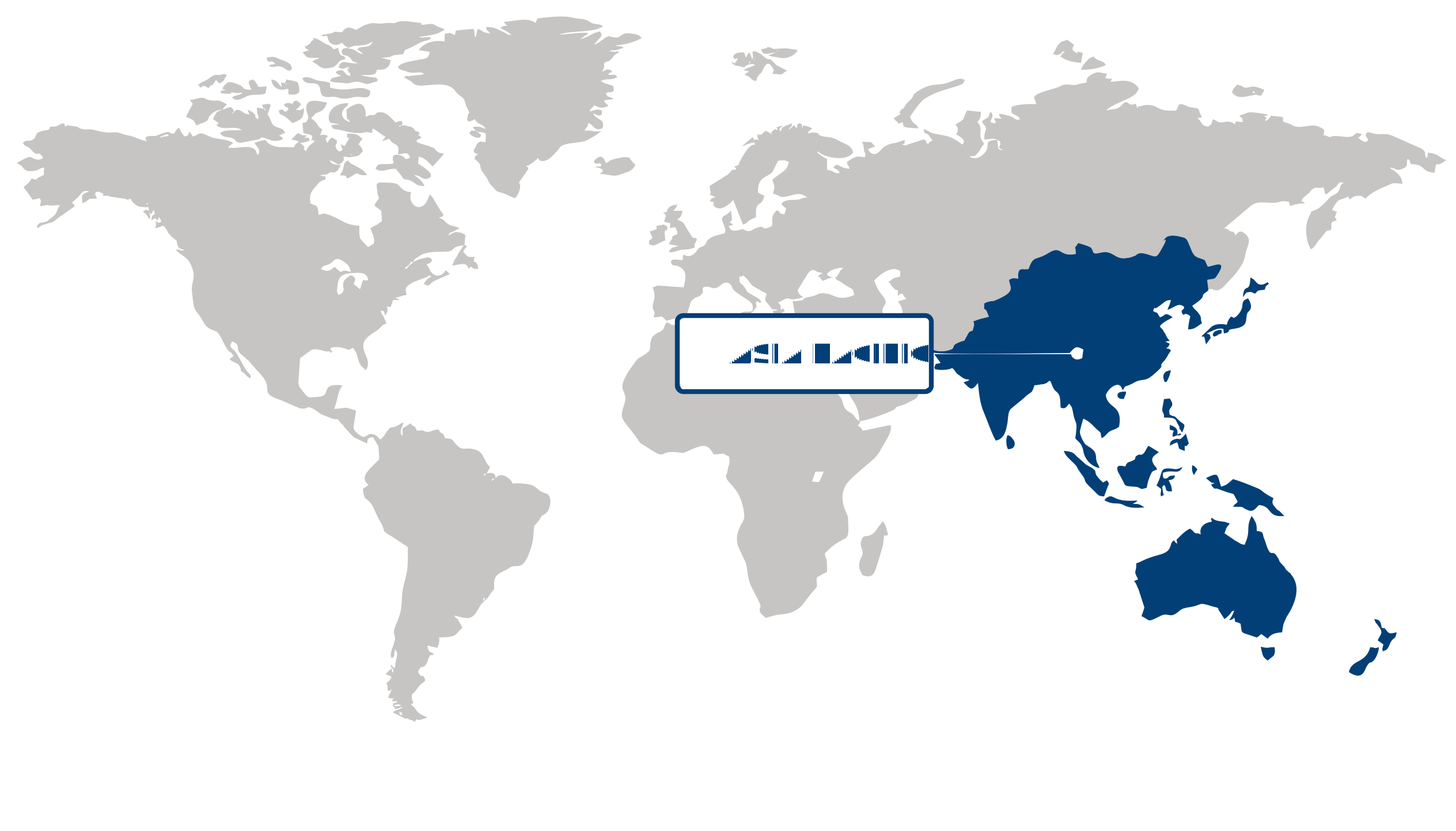
Asia Pacific (Largest & Fastest-Growing Region)
Asia Pacific dominated the corrosion inhibitors market in 2026, holding a 39.43% share while also representing the fastest-growing regional market. Strong industrialization, infrastructure development, and expansion of manufacturing and energy-related activities are generating substantial requirements for corrosion protection across metal-intensive operations. Corrosion inhibitors play an important role in extending equipment service life, protecting pipelines and processing systems, and reducing maintenance requirements, supporting demand across diverse industrial applications. Increasing investment in industrial infrastructure and growing attention to asset reliability are further encouraging adoption of advanced corrosion-control solutions. The region’s expanding manufacturing base and continued development of industrial facilities provide a strong foundation for sustained market growth.
| Parameter | North America | Asia Pacific | Europe | Latin America | MEA |
|---|---|---|---|---|---|
| Innovation Hub i Scale Nascent Developing Advanced | |||||
| Cost-Sensitive Region i Scale Low Medium High | |||||
| Regulatory Environment i Scale Restrictive Neutral Supportive | |||||
| Demand Drivers i Scale Weak Moderate Strong | |||||
| Development Stage i Scale Emerging Developing Developed | |||||
| Adoption Rate i Scale Low Medium High | |||||
| New Entrants / Startups i Scale Sparse Moderate Dense | |||||
| Macro Indicators i Scale Weak Stable Strong |
Key Country Insights
Germany 🇩🇪
High-Performance FormulationsGermany emphasizes corrosion inhibitor solutions that meet demanding industrial performance and environmental compliance requirements. Chemical manufacturers in Germany continue developing specialized formulations for automotive, industrial processing, and engineered metal applications.
France 🇫🇷
Infrastructure Maintenance SolutionsFrance supports corrosion inhibitor demand through ongoing maintenance of industrial facilities, transportation assets, and water infrastructure. End users in France increasingly seek formulations that combine long-term material protection with compliance with evolving environmental standards.
Italy 🇮🇹
Manufacturing Equipment ProtectionItaly maintains steady demand for corrosion inhibitors across machinery, metal processing, and industrial manufacturing applications. Industrial operators in Italy prioritize protective chemical solutions that improve equipment reliability, reduce maintenance frequency, and preserve production efficiency.
Japan 🇯🇵
Precision Materials PreservationJapan focuses on corrosion inhibitors that protect high-value industrial equipment and precision manufacturing systems. Companies in Japan prioritize consistent product performance and compatibility with advanced materials used across automotive and electronics production.
South Korea 🇰🇷
Process Industry ReliabilitySouth Korea applies corrosion inhibitors across petrochemical, marine, and industrial manufacturing operations to improve equipment durability. Producers and industrial users in South Korea increasingly adopt efficient treatment solutions that reduce maintenance requirements and operational interruptions.
United States 🇺🇸
Industrial Asset ProtectionThe U.S. corrosion inhibitors market is driven by maintenance requirements across oil and gas, water treatment, manufacturing, and infrastructure sectors. End users in the U.S. increasingly adopt advanced inhibitor formulations that extend equipment life while supporting efficient operational performance.
Segment Leadership and Growth Trends
Corrosion Inhibitors Market Share (%), by Product, 2026
Go beyond the chart, access full insights & data tables
Request Free Sample ReportProduct Segment Analysis: Organic (Largest Segment) vs Inorganic (Fastest-Growing Segment)
The organic segment held the largest share of 72.58% in 2026, reflecting its broad compatibility with industrial corrosion-control requirements and its effectiveness across diverse operating environments. Organic inhibitors are widely valued for their ability to form protective films on metal surfaces, helping limit corrosive reactions in applications such as oil and gas, water treatment, manufacturing, and infrastructure. Their formulation flexibility and established use across complex industrial systems continue to support strong demand.
Inorganic inhibitors are the fastest-growing product segment, supported by their effectiveness in demanding corrosion-control applications where rapid and reliable surface protection is important. Their use across industrial water systems, metal processing, and other applications requiring targeted corrosion management is gaining traction. Ongoing efforts to improve inhibitor performance and address increasingly specialized material-protection requirements are contributing to broader adoption.
Type Segment Analysis: Oil Based (Largest Segment) vs Water Based (Fastest-Growing Segment)
Oil based inhibitors accounted for the largest share of 58.38% in 2026, supported by their strong performance in applications where persistent surface protection and resistance to moisture are essential. Their ability to create protective barriers on metal components makes them particularly useful in industrial equipment, machinery, pipelines, and systems exposed to harsh operating conditions. Established industrial practices and the need for durable corrosion protection continue to sustain the segment's leading position.
Water based inhibitors are expanding at the fastest pace as industries increasingly seek corrosion-control formulations that can integrate with water-based processing systems and support more environmentally conscious operations. Their ease of application and suitability for aqueous environments broaden their relevance across manufacturing, water treatment, and industrial maintenance. Growing attention to safer formulations and reduced reliance on solvent-intensive products is further encouraging their adoption.
| Segment | Sub-Segment | Largest Segment | Fastest Growing |
|---|---|---|---|
| Product | Organic, Inorganic | Organic | Inorganic |
| Type | Water Based, Oil Based | Oil Based | Water Based |
| End Use | Oil and Gas, Power Generation, Metal Processing, Water Treatment, Chemical Processing, Paper and Pulp, Other | Oil and Gas | Water Treatment |
Competitive Landscape and Market Positioning
Top players in the corrosion inhibitors market:
1. BASF SE (Germany)
2. Dow Inc. (United States)
3. Ecolab Inc. (United States)
4. Nouryon Chemicals Holding B.V. (Netherlands)
5. The Lubrizol Corporation (United States)
6. Baker Hughes Company (United States)
7. Ashland Inc. (United States)
8. DuPont de Nemours Inc. (United States)
9. Cortec Corporation (United States)
10. Henkel AG & Co. KGaA (Germany)
The corrosion inhibitors market is increasingly focused on advanced chemical formulations and smart protection technologies designed to extend equipment lifespan and reduce maintenance costs across industrial applications. Investment in environmentally friendly inhibitor solutions and digital monitoring systems is helping improve operational reliability and regulatory compliance. Demand for efficient asset protection in harsh operating environments continues to support product innovation within the market.
| Company | Market Share | Company Revenue | Revenue CAGR (%) | Product Portfolio | Geographic Presence | Innovation / R&D Focus | Strategic Developments |
|---|---|---|---|---|---|---|---|
| BASF SE (Germany) | |||||||
| Dow Inc. (United States) | |||||||
| Ecolab Inc. (United States) | |||||||
| Nouryon Chemicals Holding B.V. (Netherlands) | |||||||
| The Lubrizol Corporation (United States) | |||||||
| Baker Hughes Company (United States) | |||||||
| Ashland Inc. (United States) | |||||||
| DuPont de Nemours Inc. (United States) | |||||||
| Cortec Corporation (United States) | |||||||
| Henkel AG & Co. KGaA (Germany). |
Industry Development/News
| Company Name | Date | Key Development |
|---|---|---|
| Orqa | May-26 | Orqa entered a strategic partnership with EcoCortec to integrate advanced corrosion protection technologies into its drone systems. By securing mission-critical hardware against environmental degradation, this collaboration demonstrates an expanding application of industrial-grade corrosion prevention solutions within the specialized defense and advanced aerospace technology sectors. |
| Marathon Petroleum | Mar-26 | Marathon Petroleum designated Baker Hughes as its primary supplier for downstream chemical technologies, including advanced corrosion management solutions. This strategic partnership streamlines chemical procurement across Marathon’s refinery operations, signaling a focused effort to integrate specialized chemical protection to ensure asset integrity and operational efficiency in critical downstream infrastructure. |
| Verdant Specialty Solutions | Jan-26 | Verdant Specialty Solutions acquired assets from Lubrizol’s Elmendorf facility to bolster its energy-focused specialty chemicals division. This acquisition significantly enhances the company's internal manufacturing capacity for industrial treatment chemicals and performance-oriented corrosion management solutions, strengthening its competitive positioning within the broader industrial chemicals value chain. |
| Arteco | May-25 | Arteco diversified its product portfolio by launching a liquid cooling fluid line specifically for data centers. This strategic expansion into thermal management targets the high-growth data center market, utilizing specialized fluid chemistry to provide essential corrosion protection and enhanced performance for increasingly dense, liquid-cooled computing hardware. |
| First Bight Ventures | Oct-24 | Portfolio companies under First Bight Ventures secured $5.25 million in U.S. Department of Defense funding to accelerate bioindustrial manufacturing. This investment is strategically significant for the development of sustainable, high-performance specialty chemicals, positioning these firms to potentially disrupt traditional corrosion inhibitor production with more sustainable, bio-based industrial material innovations. |
| Cortec | Mar-23 | Cortec introduced VpCI-649 HP, a corrosion inhibitor certified under ANSI/NSF Standard 61 for use in drinking water systems. This commercialization marks a significant technological advancement in hydro-testing safety, enabling the protection of critical municipal water infrastructure while meeting stringent environmental and health standards for chemical additives in potable water systems. |
Customize Your Report
Explore examples of how this report can be tailored to different research needs, including custom segments, additional topics or chapters, and related reports. Click a section of the wheel or its numbered marker to explore the available options.
Corrosion Inhibitors Market — Custom Segments
| Segment | Sub-Segment |
|---|---|
| Corrosion Mechanism | Uniform Corrosion, Galvanic Corrosion, Pitting and Crevice Corrosion, Stress Corrosion Cracking |
| Asset Type | Pipelines and Storage Tanks, Boilers and Heat Exchangers, Process Equipment, Marine and Offshore Structures, Other Industrial Assets |
| Procurement Model | Direct Manufacturer Procurement, Distributor and Dealer Procurement, Formulator and System Integrator Procurement |
Corrosion Inhibitors Market — Custom TOC
| Custom Chapter | Custom Details |
|---|---|
| Industrial Asset Protection Opportunity Assessment |
|
| End-Use Industry Corrosion Risk Mapping |
|
| Sustainable Inhibitor Adoption Roadmap |
|
Need a different cut of the data?
Request Custom ResearchHow large is the corrosion inhibitors market?
How is the corrosion inhibitors industry expected to grow over the next 10 years?
Why are industrial infrastructure investments strengthening demand in the corrosion inhibitors market?
How are environmental regulations influencing product development in the corrosion inhibitors market?
Why are organic corrosion inhibitors the largest product segment?
Why are water based corrosion inhibitors gaining market momentum?
Why is Asia Pacific the leading region in the corrosion inhibitors market?
What is supporting Asia Pacific's rapid growth in the corrosion inhibitors market?
Who holds a significant market share in the corrosion inhibitors landscape?
Our Clients
"The report helped us understand emerging consumer trends in our product category. It clarified where to focus innovation for the next product launch."
LyondellBasell
"The regional forecast section was incredibly useful. We were able to identify two new potential partners in Europe thanks to the vendor mapping you included."
SABIC
"We appreciated how actionable the recommendations were. It guided us to improve supply chain resilience."
Olin Corporation
Our Research Team & Methodology
Every Fundamental Business Insights report is built by a dedicated vertical research team, validated through a structured primary-and-secondary methodology, and reviewed for accuracy before it reaches you.
Research Team Overview
Prepared by the Chemicals & Materials Research Team
Delivery
Published
Demand
Available
Support
Trust & Compliance
Research Domains
10 coverage areasResearch Intelligence
| Source | Reference |
|---|---|
| American Chemistry Council (ACC) | www.americanchemistry.com |
| European Chemical Industry Council (Cefic) | cefic.org |
| International Council of Chemical Associations (ICCA) | icca-chem.org |
| European Chemicals Agency (ECHA) | echa.europa.eu |
| U.S. Environmental Protection Agency (EPA) | www.epa.gov |
| ASTM International | www.astm.org |
| International Organization for Standardization (ISO) | www.iso.org |
| National Institute of Standards and Technology (NIST) | www.nist.gov |
| Plastics Industry Association (PLASTICS) | www.plasticsindustry.org |
| European Biplastics | www.european-bioplastics.org |
| The Adhesive and Sealant Council (ASC) | www.ascouncil.org |
| National Association of Corrosion Engineers (AMPP) | www.ampp.org |
| Society of Plastics Engineers (SPE) | www.4spe.org |
| International Fertilizer Association (IFA) | www.fertilizer.org |
| CropLife International | croplife.org |
| Packaging Europe | packagingeurope.com |
| Flexible Packaging Association (FPA) | www.flexpack.org |
| Battery Council International (BCI) | batterycouncil.org |
| International Copper Association (ICA) | internationalcopper.org |
| World Steel Association | worldsteel.org |
Research Workflow & Quality Assurance
Data Collection
Verified information gathered through primary and secondary research.
Data Triangulation
Cross-validation using multiple independent data sources.
Forecast Modelling
Market estimates developed using historical trends and analytical models.
Analyst Validation
Findings reviewed by domain experts for accuracy and consistency.
Editorial & Quality Review
Final editorial, quality, and compliance checks before publication.
Final Publication
Released after successful completion of the internal review process.
Report Coverage
📊 Market Assessment
- Market Size & Forecast
- Market Segmentation
- Regional Analysis
- Growth Drivers & Challenges
- Market Dynamics
🏢 Competitive Intelligence
- Competitive Landscape
- Company Profiles
- Competitive Benchmarking
- Mergers & Acquisitions
- Market Share Analysis or Key Company Strategies
🔍 Strategic Analysis
- Value Chain Analysis
- Porter's Five Forces
- PESTLE Analysis
- Pricing Trends
- Supply-Demand Analysis
🚀 Future Outlook
- Technology Landscape
- Regulatory Landscape
- Investment & Funding Landscape
- Emerging Opportunities
- Future Market Outlook
Have a question about this report or need a custom scope?
Request Customization