Cleaning Products Market Size & Growth Forecast 2027–2036, By Segments (Ingredient, End Use, Product Type, Price Range), Regional Demand Trends (North America, Asia Pacific, Europe), Key Country Insights (U.S., Japan, South Korea, Germany, France, Italy), and Competitive Landscape
Market Size and Growth Outlook
Cleaning Products Market size was around USD 301.09 Billion in 2026 and is slated to grow at 5.18% CAGR from 2027 to 2036, crossing USD 498.92 Billion by 2036. The industry revenue for 2027 is calculated at USD 314.1 Billion.
Get more details on this report
Request Free Sample ReportCleaning Products Market Intelligence Snapshot
Regional Market Dynamics
- Asia Pacific accounted for 38.23% in 2026, supported by its large consumer base, urbanization, rising living standards, hygiene awareness, and expanding retail and e-commerce access.
- Strong demand for specialized and convenient cleaning solutions, environmentally conscious formulations, mature retail infrastructure, and rapid digital commerce penetration are supporting growth.
Segment Momentum
- Synthetic ingredients held a 60.31% market share in 2026 due to their strong cleaning performance, formulation versatility, and cost efficiency across household, commercial, and industrial cleaning applications.
- The commercial segment is expected to grow the fastest as demand increases from offices, healthcare facilities, hospitality, education, and retail sectors requiring high hygiene and sanitation standards.
Market Expansion Drivers
- Rising hygiene awareness and health consciousness driving cleaning product consumption growth
- Growing demand for natural and organic cleaning formulations reshaping product portfolios
- Urbanization and population density increasing household and commercial cleaning frequency
Leading Market Participants
- Major companies in the cleaning products market include Procter & Gamble Co. (United States), Unilever PLC (United Kingdom), Reckitt Benckiser Group plc (United Kingdom), Henkel AG & Co. KGaA (Germany), Ecolab Inc. (United States), Solenis LLC (United States), Nouryon (Netherlands), NCH Corporation (United States), Azelis Group NV (Belgium), Bona AB (Sweden)
Global Market Forecast Snapshot
Market Outlook
- 2026 Market Size: USD 301.09 Billion
- 2027 Estimated Market Size: USD 314.1 Billion
- Projected Market Size: USD 498.92 Billion by 2036
- Growth Forecast: 5.18% CAGR (2027-2036)
Regional and Segment Outlook
- Leading Regional Market: Asia Pacific
- High-Growth Regional Hub: North America
- Core Revenue Segment: Synthetic (Ingredient) | Household (End Use) | Surface Cleaners (Product Type) | Medium (Price Range)
- Emerging Opportunity Segment: Organic (Ingredient) | Commercial (End Use) | Fabric Cleaners (Product Type) | High (Price Range)
Market Growth Drivers and Industry Trends
Rising hygiene awareness and health consciousness driving cleaning product consumption growth
Growing public awareness of cleanliness and disease prevention has significantly influenced purchasing behavior across both household and institutional settings. The cleaning products market is driven by consumers who increasingly prioritize products that help maintain hygienic living and working environments while reducing exposure to germs, allergens, and contaminants. This heightened focus on sanitation has expanded the use of cleaning products beyond routine maintenance, encouraging more frequent cleaning practices in homes, offices, educational institutions, healthcare facilities, and hospitality establishments where hygiene standards remain a key operational priority.
Growing demand for natural and organic cleaning formulations reshaping product portfolios
Consumer preference for products formulated with naturally derived ingredients is encouraging manufacturers to diversify their cleaning portfolios with environmentally conscious alternatives. The cleaning products market will benefit from increasing demand for formulations that reduce reliance on harsh chemicals while maintaining effective cleaning performance across multiple applications. Greater interest in ingredient transparency, biodegradable formulations, and plant-based active components is also motivating companies to invest in product innovation, sustainable packaging, and cleaner formulations that align with evolving consumer expectations regarding safety and environmental responsibility.
Urbanization and population density increasing household and commercial cleaning frequency
Rapid urban expansion and increasing population density are creating environments where regular cleaning and sanitation have become essential for maintaining healthy residential and commercial spaces. As cities continue to expand, the cleaning products market is experiencing stronger demand from apartment complexes, office buildings, retail establishments, public transportation facilities, and shared community spaces that require frequent maintenance. Higher occupancy levels, greater public interaction, and intensified use of shared infrastructure contribute to more frequent consumption of cleaning solutions designed to support consistent hygiene across diverse environments.
| Growth Driver | Impact on CAGR | Regulatory Influence | Geographic Relevance | Adoption Rate | Impact Timeline |
|---|---|---|---|---|---|
| Rising hygiene awareness and health consciousness driving cleaning product consumption growth | 2.2% | Moderate | North America, Europe, Asia Pacific | High | Near Term |
| Growing demand for natural and organic cleaning formulations reshaping product portfolios | 1.9% | Moderate | Europe, North America | Medium | Mid Term |
| Urbanization and population density increasing household and commercial cleaning frequency | 1.6% | Low | Asia Pacific, Latin America | High | Near Term |
Unlock insights tailored to your business with our bespoke market research solutions.
Click to get your customized report now.
Regional Demand Dynamics
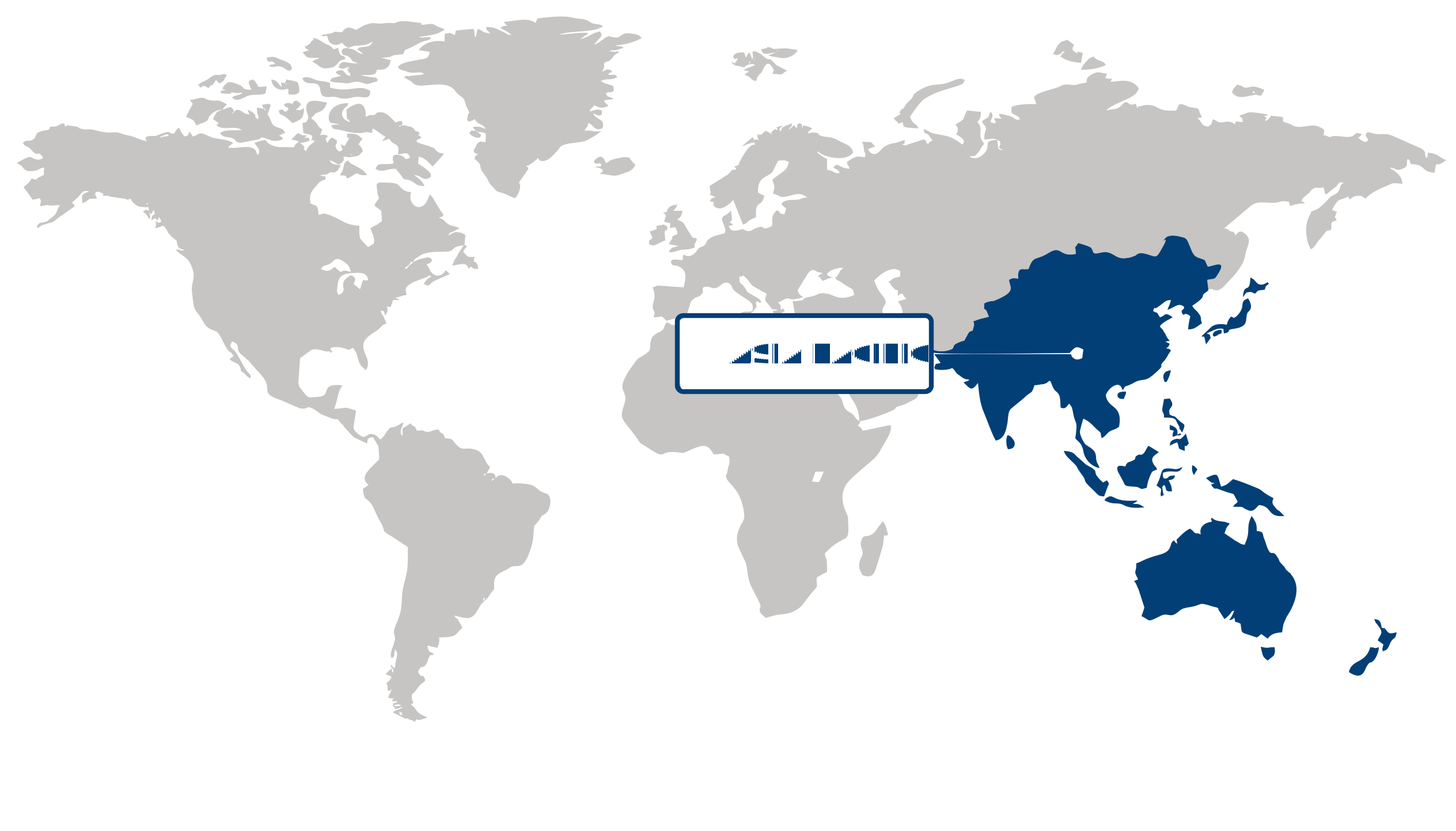
Asia Pacific (Largest Region)
Asia Pacific accounted for 38.23% of the cleaning products market in 2026, reflecting its large consumer base, expanding urban population, and increasing focus on household and personal hygiene. Rising living standards and changing consumption patterns are encouraging greater use of specialized cleaning solutions across residential, commercial, and institutional settings. Growing awareness of sanitation and cleanliness, together with the expansion of modern retail and e-commerce distribution, is making a wider range of cleaning products accessible to consumers. Increasing demand for convenient, effective, and application-specific formulations is further supporting the region's market position.
North America (Fastest-Growing Region)
North America is projected to be the fastest-growing region, driven by strong consumer interest in hygiene, convenience, and specialized cleaning solutions. Demand is being supported by households and businesses seeking products designed for specific surfaces, applications, and sanitation requirements, while heightened attention to indoor cleanliness continues to influence purchasing decisions. Product development around ease of use, environmentally conscious formulations, and improved cleaning performance is also creating new opportunities. The region's mature retail infrastructure and rapid penetration of digital commerce are helping manufacturers reach consumers across a broad range of cleaning applications.
| Parameter | North America | Asia Pacific | Europe | Latin America | MEA |
|---|---|---|---|---|---|
| Innovation Hub i Scale Nascent Developing Advanced | |||||
| Cost-Sensitive Region i Scale Low Medium High | |||||
| Regulatory Environment i Scale Restrictive Neutral Supportive | |||||
| Demand Drivers i Scale Weak Moderate Strong | |||||
| Development Stage i Scale Emerging Developing Developed | |||||
| Adoption Rate i Scale Low Medium High | |||||
| New Entrants / Startups i Scale Sparse Moderate Dense | |||||
| Macro Indicators i Scale Weak Stable Strong |
Key Country Insights
United States 🇺🇸
Innovation-Driven DemandThe U.S. cleaning products market emphasizes high-performance formulations, sustainable packaging, and multifunctional household and institutional solutions. Demand in the U.S. increasingly supports products that combine convenience with compliance to evolving environmental and ingredient transparency expectations.
Germany 🇩🇪
Sustainable Formulation FocusGermany prioritizes environmentally responsible cleaning products supported by strict regulatory standards and consumer preference for eco-certified solutions. Manufacturers in Germany continue refining concentrated formulas and recyclable packaging to align with sustainability objectives.
Japan 🇯🇵
Premium Hygiene StandardsJapan values cleaning products that deliver superior hygiene, compact packaging, and user-friendly formats suited to urban lifestyles. Product development in Japan frequently emphasizes antibacterial performance, convenience, and reduced environmental impact throughout the product lifecycle.
South Korea 🇰🇷
Lifestyle Cleaning InnovationSouth Korea encourages demand for cleaning products featuring advanced formulations, fragrance customization, and smart home compatibility. Domestic manufacturers in South Korea regularly introduce differentiated products responding to changing household cleaning routines and premium consumer preferences.
France 🇫🇷
Eco-Conscious Household CareFrance supports cleaning products that balance cleaning efficiency with environmentally responsible ingredients and packaging. Consumer purchasing in France increasingly favors brands demonstrating sustainability commitments alongside effective home and professional cleaning performance.
Italy 🇮🇹
Professional Cleaning SolutionsItaly maintains steady demand across hospitality, commercial, and residential cleaning segments, encouraging versatile product portfolios. Suppliers in Italy focus on improving formulation efficiency while meeting environmental compliance and evolving customer expectations across professional cleaning applications.
Segment Leadership and Growth Trends
Cleaning Products Market Share (%), by Ingredient, 2026
Go beyond the chart, access full insights & data tables
Request Free Sample ReportIngredient Segment Analysis: Synthetic (Largest Segment) vs Organic (Fastest-Growing Segment)
The synthetic ingredient segment dominated the cleaning products market with a 60.31% share in 2026. Its leadership is driven by the strong cleaning performance, broad formulation versatility, and cost efficiency offered by synthetic ingredients across household, commercial, and industrial cleaning applications. Manufacturers continue to rely on synthetic formulations because they provide consistent effectiveness against a wide range of stains, grease, and microorganisms while supporting large-scale production and diverse product development.
The organic ingredient segment is projected to experience the fastest growth during the forecast period. Increasing consumer preference for environmentally responsible cleaning solutions and heightened awareness of ingredient safety are encouraging the adoption of plant-based and naturally derived formulations. Growing demand for sustainable household products and eco-conscious purchasing behavior is expected to accelerate expansion within this segment.
End Use Segment Analysis: Household (Largest Segment) vs Commercial (Fastest-Growing Segment)
The household segment accounted for 50.24% of the market share in 2026, making it the dominant end-use category. Its leading position is supported by the consistent demand for products used in routine home cleaning, sanitation, and hygiene maintenance. Rising consumer focus on cleanliness, health awareness, and convenient cleaning solutions has encouraged regular use of specialized products across kitchens, bathrooms, floors, and other residential spaces, reinforcing the segment's market leadership.
In the cleaning products market, the commercial segment is expected to witness the fastest growth during the forecast period. Expanding demand from offices, hospitality facilities, healthcare institutions, educational establishments, and retail environments is driving increased adoption of professional cleaning solutions. Greater emphasis on workplace hygiene, regulatory compliance, and high sanitation standards is expected to continue supporting rapid growth in commercial cleaning applications.
Product Type Segment Analysis: Surface Cleaners (Largest Segment) vs Fabric Cleaners (Fastest-Growing Segment)
The surface cleaners segment held 29.7% of the market share in 2026, making it the largest product type. Its strong market position is driven by widespread use across residential and commercial environments for cleaning countertops, furniture, appliances, and other frequently touched surfaces. Increasing emphasis on maintaining hygienic indoor environments, combined with continuous product innovation offering specialized formulations for different surfaces, has sustained demand for this category.
The fabric cleaners segment is anticipated to record the fastest growth in the cleaning products market. Growing consumer attention to garment care, upholstery maintenance, and textile hygiene is encouraging wider adoption of advanced fabric cleaning products. Innovations in stain-removal technology, fabric protection, and specialized formulations for delicate materials are expected to further strengthen the growth of this segment.
| Segment | Sub-Segment | Largest Segment | Fastest Growing |
|---|---|---|---|
| Ingredient | Organic, Synthetic | Synthetic | Organic |
| End Use | Household, Commercial, Industrial | Household | Commercial |
| Product Type | Surface Cleaners, Toilet Cleaners, Glass & Metal Cleaners, Floor Cleaners, Fabric Cleaners, Dishwashing Products, Others | Surface Cleaners | Fabric Cleaners |
| Price Range | Economy, Medium, High | Medium | High |
Competitive Landscape and Market Positioning
Prominent players in the cleaning products market:
- Procter & Gamble Co. (United States)
- Unilever PLC (United Kingdom)
- Reckitt Benckiser Group plc (United Kingdom)
- Henkel AG & Co. KGaA (Germany)
- Ecolab, Inc. (United States)
- Solenis LLC (United States)
- Nouryon (Netherlands)
- NCH Corporation (United States)
- Azelis Group NV (Belgium)
- Bona AB (Sweden)
The cleaning products market is experiencing a competitive transformation as manufacturers respond to rising demand for effective, safer, and more sustainable household and commercial solutions. Companies are increasingly differentiating through formulation innovation, transparency, and products designed around changing consumer priorities rather than competing only on traditional cleaning performance. The expansion of specialized applications and environmentally conscious alternatives is creating new opportunities for emerging participants while encouraging established suppliers to diversify their product strategies.
| Company | Market Share | Company Revenue | Revenue CAGR (%) | Product Portfolio | Geographic Presence | Innovation / R&D Focus | Strategic Developments |
|---|---|---|---|---|---|---|---|
| Procter & Gamble Co. (United States) | |||||||
| Unilever PLC (United Kingdom) | |||||||
| Reckitt Benckiser Group plc (United Kingdom) | |||||||
| Henkel AG & Co. KGaA (Germany) | |||||||
| Ecolab Inc. (United States) | |||||||
| Solenis LLC (United States) | |||||||
| Nouryon (Netherlands) | |||||||
| NCH Corporation (United States) | |||||||
| Azelis Group NV (Belgium) | |||||||
| Bona AB (Sweden) |
Industry Development/News
| Company Name | Date | Key Development |
|---|---|---|
| Xcel Brands | Jun-26 | Xcel Brands signed a comprehensive licensing agreement with EcoStrong for the 'Trust. Respect. Love by Cesar Millan' brand. The transaction marks a targeted category expansion, integrating branded lifestyle equity into the specialized eco-conscious pet and household cleaning products space. |
| Sellars | May-26 | Sellars expanded its manufacturing footprint by adding a sixth production facility, leveraging repurposed industrial infrastructure. The capital deployment increases manufacturing capacity and vertical supply resilience to meet accelerating volume demand for the company's industrial and retail cleaning products. |
| Clorox | Jan-26 | Clorox finalized a definitive agreement to acquire Gojo Industries' Purell-brand hand sanitizer business. The strategic transaction broadens Clorox's core portfolio in the consumer hygiene, household sanitation, and commercial cleaning products categories while consolidating its competitive positioning in health-focused surface care markets. |
| International Flavors & Fragrances (IFF) | Oct-25 | IFF and BASF established a joint collaboration utilizing IFF's Designed Enzymatic Biomaterials platform to accelerate advanced polymer and enzyme innovations. The technology integration targets high-performance, resource-efficient cleaning products, combining mutual formulation expertise to alter value chain sustainability. |
| Truelink Capital | Jul-25 | Truelink Capital completed the strategic acquisition of Zep, a cleaning and sanitation solutions manufacturer, from New Mountain Capital. This institutional investment is positioned to scale Zep's operational capabilities and strengthen its competitive footprint across the industrial and retail cleaning products sectors. |
| Ecolab Inc. | Feb-25 | Ecolab Inc. expanded its institutional cleaning business by commercializing a new line of EPA Safer Choice-certified concentrated disinfectants. The roll-out targets high-volume foodservice and hospitality accounts in North America, enhancing the firm's business-to-business portfolio structure. |
| Formula Corp | Feb-25 | San Francisco Equity Partners acquired a majority stake in cleaning products contract manufacturer Formula Corp. The transaction injects growth capital into the firm to scale manufacturing operations and expand formulation capacity, while the existing founders maintain an equity stake to ensure continuity. |
| Unilever | Nov-24 | Unilever entered an operational partnership with Nufarm to develop plant-based biomass oils from a novel sugarcane variety. The initiative substitutes legacy petrochemical ingredients with renewable alternatives, advancing sustainable sourcing infrastructure across its cleaning products and laundry portfolio. |
| Dirty Labs | Sep-24 | Dirty Labs secured a strategic growth financing facility through a dedicated lending partnership with Assembled Brands Capital. The injected capital provides the commercial liquidity necessary to scale distribution channels and accelerate production for its sustainable cleaning products portfolio. |
| Procter & Gamble | Jul-24 | Procter & Gamble committed a multi-year capital investment to scale concentrated laundry pod production capacity at its manufacturing plant in Crailsheim, Germany. The expansion targets rising regional demand for Ariel All-in-1 Pods across Central and Eastern European consumer markets. |
Customize Your Report
Explore examples of how this report can be tailored to different research needs, including custom segments, additional topics or chapters, and related reports. Click a section of the wheel or its numbered marker to explore the available options.
Cleaning Products Market — Custom Segments
| Segment | Sub-Segment |
|---|---|
| Formulation Format | Liquid, Powder, Gel, Foam & Aerosol, Wipes |
| Packaging Format | Bottles & Jugs, Spray Containers, Pouches & Refill Packs, Tubs & Buckets, Boxes & Cartons, Unit-Dose Packs |
| Primary Cleaning Need | General-Purpose Cleaning, Disinfection & Sanitization, Degreasing & Heavy-Duty Cleaning, Stain & Odor Removal, Specialty Surface Care |
Cleaning Products Market — Custom TOC
| Custom Chapter | Custom Details |
|---|---|
| Formulation Portfolio Optimization |
|
| Sustainable Packaging Transition |
|
| Retailer Category Management Priorities |
|
Need a different cut of the data?
Request Custom ResearchWhat is the current revenue of the cleaning products market?
What is the forecasted size of the cleaning products industry?
How is rising hygiene awareness influencing purchasing behavior in the cleaning products market?
Why are natural cleaning formulations becoming a strategic focus for manufacturers?
Why do synthetic ingredients dominate the cleaning products market?
Which end-use segment is growing the fastest in the cleaning products market?
What makes Asia Pacific the largest cleaning products market?
How is North America driving faster growth in cleaning products?
Which companies are driving growth in the cleaning products landscape?
Our Clients
"The report provided us with a clear direction, and the level of detail was beyond what we expected. I would definitely recommend their services to others."
Haier Appliances
"The collaboration with Fundamental Business Insights has added significant value to our decision-making process, and we look forward to continuing this partnership for our future market research requirements."
Luxottica Group S.p.A.
"The team at FBI delivered an exceptional research report. The insights on industry innovations were particularly impressive and added a lot of value to the overall report."
Nike
Our Research Team & Methodology
Every Fundamental Business Insights report is built by a dedicated vertical research team, validated through a structured primary-and-secondary methodology, and reviewed for accuracy before it reaches you.
Research Team Overview
Prepared by the Consumer Goods & Services Research Team
Delivery
Published
Demand
Available
Support
Trust & Compliance
Research Domains
10 coverage areasResearch Intelligence
| Source | Reference |
|---|---|
| International Organization for Standardization (ISO) | www.iso.org |
| ASTM International | www.astm.org |
| U.S. Consumer Product Safety Commission (CPSC) | www.cpsc.gov |
| European Commission – Consumer Safety | ec.europa.eu/safety-gate |
| Consumer Technology Association (CTA) | www.cta.tech |
| National Retail Federation (NRF) | nrf.com |
| World Retail Congress | www.worldretailcongress.com |
| World Travel & Tourism Council (WTTC) | wttc.org |
| UN Tourism | www.unwto.org |
| Personal Care Products Council (PCPC) | www.personalcarecouncil.org |
| Cosmetics Europe | cosmeticseurope.eu |
| International Housewares Association (IHA) | www.housewares.org |
| American Apparel & Footwear Association (AAFA) | www.aafaglobal.org |
| World Federation of the Sporting Goods Industry (WFSGI) | wfsgi.org |
| Juvenile Products Manufacturers Association (JPMA) | www.jpma.org |
| Pet Industry Joint Advisory Council (PIJAC) | pijac.org |
| International Council of Toy Industries (ICTI) | www.toy-icti.org |
| International Association of Amusement Parks and Attractions (IAAPA) | iaapa.org |
| Organisation for Economic Co-operation and Development (OECD) | www.oecd.org |
| World Bank Data | data.worldbank.org |
Research Workflow & Quality Assurance
Data Collection
Verified information gathered through primary and secondary research.
Data Triangulation
Cross-validation using multiple independent data sources.
Forecast Modelling
Market estimates developed using historical trends and analytical models.
Analyst Validation
Findings reviewed by domain experts for accuracy and consistency.
Editorial & Quality Review
Final editorial, quality, and compliance checks before publication.
Final Publication
Released after successful completion of the internal review process.
Report Coverage
📊 Market Assessment
- Market Size & Forecast
- Market Segmentation
- Regional Analysis
- Growth Drivers & Challenges
- Market Dynamics
🏢 Competitive Intelligence
- Competitive Landscape
- Company Profiles
- Competitive Benchmarking
- Mergers & Acquisitions
- Market Share Analysis or Key Company Strategies
🔍 Strategic Analysis
- Value Chain Analysis
- Porter's Five Forces
- PESTLE Analysis
- Pricing Trends
- Supply-Demand Analysis
🚀 Future Outlook
- Technology Landscape
- Regulatory Landscape
- Investment & Funding Landscape
- Emerging Opportunities
- Future Market Outlook
Have a question about this report or need a custom scope?
Request Customization