Canned Food Market Size & Growth Forecast 2027–2036, By Segments (Type, Distribution Channel, Product), Regional Demand Trends (North America, Asia Pacific, Europe), Key Country Insights (U.S., Japan, South Korea, Germany, France, Italy), and Competitive Landscape
Market Size and Growth Outlook
Canned Food Market size was over USD 131.8 billion in 2026 and is likely to grow at a 3.71% CAGR between 2027 and 2036, exceeding USD 189.72 billion by 2036. The industry revenue for 2027 is calculated at USD 135.91 billion.
Get more details on this report
Request Free Sample ReportCanned Food Market Intelligence Snapshot
Regional Market Dynamics
- Europe accounted for a 39.96% market share in 2026, supported by mature retail networks, established packaged food consumption habits, and strong food processing and distribution capabilities.
- Asia Pacific is forecast to grow at a 4.56% CAGR as urbanization, expanding retail access, and rising demand for convenient, shelf-stable foods increase consumer adoption across the region.
Segment Momentum
- Conventional canned food leads with an 83.7% share due to strong consumer familiarity, established supply chains, and price accessibility, making it the preferred choice for routine household consumption and high-volume retail demand.
- Food service is the fastest-growing channel as restaurants and institutional kitchens increasingly rely on canned products for storage efficiency, reduced preparation time, and consistent ingredient supply in commercial operations.
Market Expansion Drivers
- Rising demand for convenient ready-to-eat meals and long shelf-life food products driving consumption.
- Increasing outdoor recreational activities boosting demand for portable and non-perishable food options.
- Expansion of healthier canned food variants including organic and low-sodium options improving consumer appeal.
Leading Market Participants
- Key companies in the canned food market include The Kraft Heinz Company (United States), Conagra Brands, Inc. (United States), Campbell Soup Company (United States), Del Monte Foods, Inc. (United States), Hormel Foods Corporation (United States), Thai Union Group Public Company Limited (Thailand), Dole plc (Ireland), Bonduelle S.A. (France), Bumble Bee Foods, LLC (United States), Nestlé S.A. (Switzerland).
Global Market Forecast Snapshot
Market Outlook
- 2026 Market Size: USD 131.8 billion
- 2027 Estimated Market Size: USD 135.91 billion.
- Projected Market Size: USD 189.72 billion by 2036
- Growth Forecast: 3.71% CAGR (2027-2036)
Regional and Segment Outlook
- Leading Regional Market: Europe
- High-Growth Regional Hub: Asia Pacific
- Core Revenue Segment: Conventional (Type) | Retail (Distribution Channel) | Canned Fruits & Vegetables (Product)
- Emerging Opportunity Segment: Organic (Type) | Food Service (Distribution Channel) | Canned Fish/Seafoods (Product)
Market Growth Drivers and Industry Trends
Rising demand for convenient ready-to-eat meals and long shelf-life food products driving consumption
Changing lifestyles, longer working hours, and growing preference for time-saving meal solutions are increasing the need for foods that require minimal preparation. The canned food market will benefit from the convenience offered by ready-to-eat products, which can be stored for extended periods without the same level of refrigeration requirements as many fresh alternatives. Canned vegetables, fruits, meats, soups, and prepared meals provide households with practical options for quick meal preparation while reducing concerns related to food spoilage and frequent grocery shopping. Their availability across retail channels and suitability for household food storage further support consumption among consumers seeking convenient pantry staples.
Increasing outdoor recreational activities boosting demand for portable and non-perishable food options
The growing participation in camping, hiking, fishing, road trips, and other outdoor recreational activities is creating additional demand for foods that are easy to transport and consume in settings where refrigeration may be limited. For the canned food market, portability and extended shelf stability make canned meals and ingredients suitable for outdoor use, as they can withstand longer storage and transportation compared with many perishable foods. Campers and travelers can carry canned beans, vegetables, meats, soups, and other products as dependable meal components without requiring specialized cold-storage arrangements, while their durable packaging also supports handling during travel and outdoor activities.
Expansion of healthier canned food variants including organic and low-sodium options improving consumer appeal
Consumer focus on nutrition and cleaner food choices is encouraging manufacturers to broaden product offerings beyond conventional canned formulations. Health-conscious positioning will strengthen demand in the canned food market as organic ingredients, reduced-sodium recipes, vegetable-focused products, and formulations with simpler ingredient profiles appeal to consumers seeking more balanced meal options. Improvements in processing and formulation can help retain product quality while addressing concerns traditionally associated with canned foods, allowing manufacturers to target consumers who prioritize dietary considerations without giving up convenience. The availability of healthier alternatives across different food categories also enables canned products to reach a wider range of household preferences.
| Growth Driver | Impact on CAGR | Regulatory Influence | Geographic Relevance | Adoption Rate | Impact Timeline |
|---|---|---|---|---|---|
| Rising demand for convenient ready-to-eat meals and long shelf-life food products driving consumption | 1.90% | Low | Europe, Asia Pacific | High | Near Term |
| Increasing outdoor recreational activities boosting demand for portable and non-perishable food options | 1.60% | Low | North America, Europe | High | Near Term |
| Expansion of healthier canned food variants including organic and low-sodium options improving consumer appeal | 1.40% | Moderate | Europe, North America | High | Mid Term |
Unlock insights tailored to your business with our bespoke market research solutions.
Click to get your customized report now.
Regional Demand Dynamics
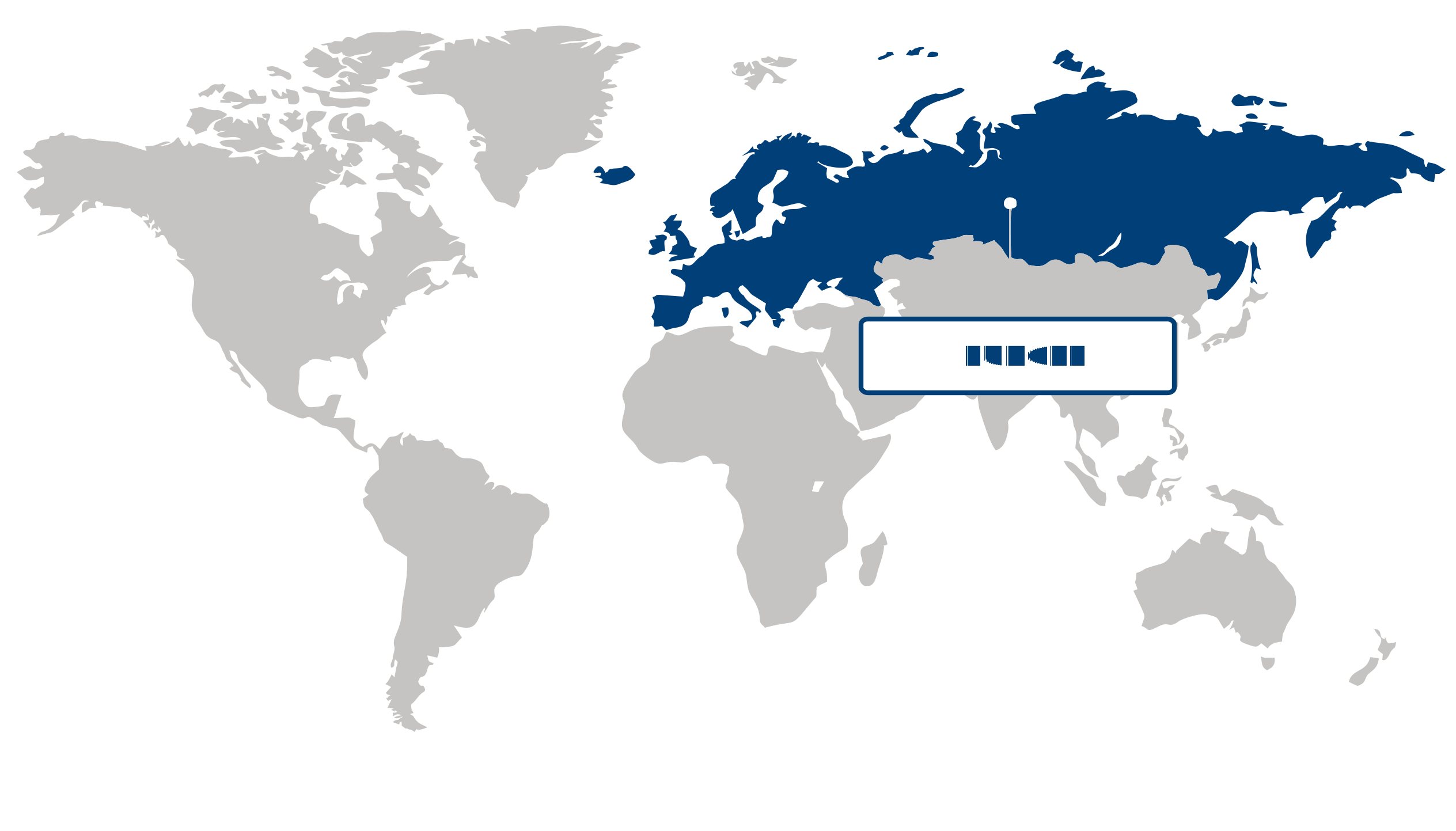
Europe (Largest Region)
The canned food market was led by Europe, which held a 39.96% share in 2026, supported by established food-processing infrastructure, strong consumer familiarity with shelf-stable products, and sustained demand for convenient meal solutions. The region's mature retail networks and widespread availability of canned vegetables, fruits, seafood, meat, and ready-to-eat products provide a stable foundation for market expansion. Changing lifestyles and growing demand for products with longer shelf lives are encouraging consumers to incorporate convenient packaged foods into everyday diets. In addition, well-developed food safety standards and established preservation practices strengthen consumer confidence in canned products. Demand for convenient and easily stored foods across households, foodservice operations, and emergency food supplies further reinforces Europe's leading position in the market.
Asia Pacific (Fastest-Growing Region)
Asia Pacific is emerging as the fastest-growing regional market, driven by urbanization, expanding modern retail infrastructure, rising disposable incomes, and changing dietary preferences. Growing urban populations are increasing demand for convenient food products that can be stored and prepared with limited time and effort. The expansion of supermarkets, hypermarkets, convenience stores, and online grocery channels is also improving access to canned food across both developed and developing markets. In addition, increasing investments in food processing and packaging infrastructure are supporting greater product availability and distribution efficiency. Rising consumer interest in convenient meal options, combined with the need for longer-lasting food products, is expected to sustain strong regional momentum.
| Parameter | North America | Asia Pacific | Europe | Latin America | MEA |
|---|---|---|---|---|---|
| Innovation Hub i Scale Nascent Developing Advanced | |||||
| Cost-Sensitive Region i Scale Low Medium High | |||||
| Regulatory Environment i Scale Restrictive Neutral Supportive | |||||
| Demand Drivers i Scale Weak Moderate Strong | |||||
| Development Stage i Scale Emerging Developing Developed | |||||
| Adoption Rate i Scale Low Medium High | |||||
| New Entrants / Startups i Scale Sparse Moderate Dense | |||||
| Macro Indicators i Scale Weak Stable Strong |
Key Country Insights
Germany 🇩🇪
Quality Preservation StandardsGermany emphasizes canned food products that deliver consistent quality, food safety, and extended shelf life. German consumers increasingly favor products with clean-label ingredients, reduced additives, and environmentally responsible packaging formats.
France 🇫🇷
Gourmet Shelf-Stable ProductsFrance maintains demand for canned foods that preserve culinary quality while offering convenience. French manufacturers emphasize premium ingredients, regional recipes, and packaging improvements that reinforce consumer confidence in shelf-stable products.
Italy 🇮🇹
Traditional Recipe PreservationItaly's canned food market combines convenience with strong demand for authentic regional flavors and preserved ingredients. Italian producers increasingly enhance premium product ranges while maintaining quality standards associated with traditional food preparation.
Japan 🇯🇵
Ready-to-Eat InnovationJapan's canned food market benefits from demand for convenient meals, seafood products, and premium ready-to-eat offerings. Japanese manufacturers focus on product quality, portion convenience, and flavor innovation suited to changing consumption habits.
South Korea 🇰🇷
Premium Convenience FoodsSouth Korea is expanding canned food offerings that support busy lifestyles and single-person households. South Korean brands increasingly develop premium canned meals, seafood, and specialty products with enhanced taste and nutritional appeal.
United States 🇺🇸
Convenience Meal PortfolioThe U.S. canned food market is driven by demand for convenient, shelf-stable meal solutions across households and foodservice channels. U.S. manufacturers continue expanding premium recipes, healthier formulations, and sustainable packaging options to meet changing consumer expectations.
Segment Leadership and Growth Trends
Canned Food Market Share (%), by Type, 2026
Go beyond the chart, access full insights & data tables
Request Free Sample ReportType Segment Analysis: Conventional (Largest Segment) vs Organic (Fastest-Growing Segment)
Conventional products dominated the canned food market in 2026, accounting for 83.7% share. Their substantial position is supported by broad consumer accessibility, established production and distribution networks, and the convenience offered by shelf-stable food products. Conventional canned foods serve diverse household and food preparation needs, while their long shelf life and ease of storage make them particularly attractive to consumers seeking convenient meal and ingredient options. Established purchasing habits and widespread availability across retail channels further reinforce the segment's leading position.
Organic canned food is the fastest-growing type as consumers increasingly prioritize natural, responsibly sourced, and health-oriented food choices. Growing awareness of ingredient quality and interest in organic consumption are encouraging food manufacturers and retailers to expand the availability of organic canned alternatives. The combination of convenience and perceived health and sustainability benefits is making organic canned products increasingly relevant to consumers who want convenient foods without moving away from their preference for organic ingredients. This convergence of convenience and health-conscious consumption is supporting strong momentum for the segment.
Distribution Channel Segment Analysis: Retail (Largest Segment) vs Food Service (Fastest-Growing Segment)
Retail channels accounted for the largest share of the canned food market in 2026, at 66.29% share. Their strong position reflects the widespread household consumption of canned foods and the convenience of purchasing shelf-stable products through supermarkets, grocery stores, and other retail outlets. Retail distribution provides consumers with consistent access to a broad selection of canned products while supporting routine household food purchasing. The established nature of retail supply networks and continued demand for convenient, easily stored foods further strengthens this channel's market position.
Food service is emerging as the fastest-growing distribution channel as restaurants, institutional kitchens, catering operations, and other commercial food providers increasingly use canned ingredients to support efficient food preparation. Canned products can simplify inventory management, extend ingredient availability, and reduce preparation requirements, making them useful for food service operators seeking operational convenience. Growing demand for efficient kitchen processes and consistent ingredient availability is therefore creating additional opportunities for canned food products within commercial food service environments.
| Segment | Sub-Segment | Largest Segment | Fastest Growing |
|---|---|---|---|
| Type | Organic, Conventional | Conventional | Organic |
| Distribution Channel | Food Service, Retail | Retail | Food Service |
| Product | Canned Fruits & Vegetables, Canned Meat Products, Canned Fish/Seafoods, Canned Ready Meals, Canned Condiments, Others | Canned Fruits & Vegetables | Canned Fish/Seafoods |
Competitive Landscape and Market Positioning
Key companies in the canned food market:
1. The Kraft Heinz Company (United States)
2. Conagra Brands Inc. (United States)
3. Campbell Soup Company (United States)
4. Del Monte Foods Inc. (United States)
5. Hormel Foods Corporation (United States)
6. Thai Union Group Public Company Limited (Thailand)
7. Dole plc (Ireland)
8. Bonduelle S.A. (France)
9. Bumble Bee Foods LLC (United States)
10. Nestlé S.A. (Switzerland)
Convenience-oriented consumption patterns are sustaining momentum in the canned food market. In the canned food market, improved preservation techniques and diversified flavor offerings are supporting broader consumer adoption.
| Company | Market Share | Company Revenue | Revenue CAGR (%) | Product Portfolio | Geographic Presence | Innovation / R&D Focus | Strategic Developments |
|---|---|---|---|---|---|---|---|
| The Kraft Heinz Company (United States) | |||||||
| Conagra Brands Inc. (United States) | |||||||
| Campbell Soup Company (United States) | |||||||
| Del Monte Foods Inc. (United States) | |||||||
| Hormel Foods Corporation (United States) | |||||||
| Thai Union Group Public Company Limited (Thailand) | |||||||
| Dole plc (Ireland) | |||||||
| Bonduelle S.A. (France) | |||||||
| Bumble Bee Foods LLC (United States) | |||||||
| Nestlé S.A. (Switzerland). |
Industry Development/News
| Company Name | Date | Key Development |
|---|---|---|
| Tetra Pak | Mar-26 | Tetra Pak is trialing aseptic carton-based alternatives to metal cans for beans and pet food at a new facility in Georgia. This initiative evaluates the technical and commercial viability of flexible carton packaging as a sustainable, lightweight alternative to traditional canned food formats in the shelf-stable segment. |
| Fresh Del Monte Produce | Jul-22 | Fresh Del Monte Produce integrated Stord’s cloud-based supply chain platform with its own cold storage network. By leveraging digitized logistics and humidity-controlled infrastructure, the company aimed to optimize the storage and distribution of temperature-sensitive produce, enhancing overall supply chain visibility and operational resilience within its fresh and processed food segments. |
| MIFCO | Jun-22 | Maldives Industrial Fisheries Company (MIFCO) launched a Drained Tuna Chunks product line, offering a lower-oil, cost-effective alternative to traditional tuna-in-oil cans. The development reflects a strategic effort to adapt product formulations to meet consumer demand for healthier, price-competitive canned seafood options in the regional market. |
Customize Your Report
Explore examples of how this report can be tailored to different research needs, including custom segments, additional topics or chapters, and related reports. Click a section of the wheel or its numbered marker to explore the available options.
Canned Food Market — Custom Segments
| Segment | Sub-Segment |
|---|---|
| Packaging Format | Metal Cans, Glass Jars, Retort Pouches, Other Flexible Packaging |
| Consumption Occasion | Everyday Meals, Convenience Meals, Snacking, Food Preparation |
| Price Segment | Economy, Mid-Range, Premium |
Canned Food Market — Custom TOC
| Custom Chapter | Custom Details |
|---|---|
| Private Label Growth and Retailer Strategy Assessment |
|
| Consumer Pantry Trends and Convenience Demand Analysis |
|
| Clean Label and Premium Canned Foods Opportunity Mapping |
|
Need a different cut of the data?
Request Custom ResearchHow large is the canned food market?
What is the anticipated CAGR of the canned food industry?
How is rising demand for convenience-driven consumption reshaping purchasing behavior in the canned food market?
Why is foodservice adoption emerging as a key growth channel for canned food suppliers?
Why does conventional canned food dominate the canned food market?
How is the food service channel driving growth in the canned food market?
Why is Europe the leading region in the canned food market?
What is driving canned food market growth in Asia Pacific?
Who holds a significant market share in the canned food landscape?
Our Clients
"The report provided a thorough look at market trends, technological advancements, and the competitive landscape. The depth of insights was really valuable."
ITC Limited
"We would highly recommend Fundamental Business Insights & Consulting to anyone looking for reliable, detailed, and comprehensive market research in the Food industry."
Tyson Foods
"The clarity and presentation of the information were commendable. The report was delivered timely, which made the overall experience smooth and convenient."
Mondelēz International
Our Research Team & Methodology
Every Fundamental Business Insights report is built by a dedicated vertical research team, validated through a structured primary-and-secondary methodology, and reviewed for accuracy before it reaches you.
Research Team Overview
Prepared by the Food & Beverage Research Team
Delivery
Published
Demand
Available
Support
Trust & Compliance
Research Domains
10 coverage areasResearch Intelligence
| Source | Reference |
|---|---|
| Food and Agriculture Organization (FAO) | www.fao.org |
| World Health Organization (WHO) | www.who.int |
| U.S. Food & Drug Administration (FDA) | www.fda.gov |
| European Food Safety Authority (EFSA) | www.efsa.europa.eu |
| U.S. Department of Agriculture (USDA) | www.usda.gov |
| Codex Alimentarius Commission | www.fao.org/fao-who-codexalimentarius |
| International Organization for Standardization (ISO) | www.iso.org |
| AOAC INTERNATIONAL | www.aoac.org |
| Institute of Food Technologists (IFT) | www.ift.org |
| International Dairy Foods Association (IDFA) | www.idfa.org |
| International Sweeteners Association (ISA) | www.sweeteners.org |
| International Probiotics Association (IPA) | internationalprobiotics.org |
| Good Food Institute (GFI) | gfi.org |
| American Feed Industry Association (AFIA) | www.afia.org |
| International Feed Industry Federation (IFIF) | ifif.org |
| Specialty Food Association (SFA) | www.specialtyfood.com |
| Brewers Association | www.brewersassociation.org |
| International Bottled Water Association (IBWA) | bottledwater.org |
| International Alliance for Dietary/Food Supplement Associations (IADSA) | www.iadsa.org |
| OECD Agriculture & Food | www.oecd.org/agriculture |
Research Workflow & Quality Assurance
Data Collection
Verified information gathered through primary and secondary research.
Data Triangulation
Cross-validation using multiple independent data sources.
Forecast Modelling
Market estimates developed using historical trends and analytical models.
Analyst Validation
Findings reviewed by domain experts for accuracy and consistency.
Editorial & Quality Review
Final editorial, quality, and compliance checks before publication.
Final Publication
Released after successful completion of the internal review process.
Report Coverage
📊 Market Assessment
- Market Size & Forecast
- Market Segmentation
- Regional Analysis
- Growth Drivers & Challenges
- Market Dynamics
🏢 Competitive Intelligence
- Competitive Landscape
- Company Profiles
- Competitive Benchmarking
- Mergers & Acquisitions
- Market Share Analysis or Key Company Strategies
🔍 Strategic Analysis
- Value Chain Analysis
- Porter's Five Forces
- PESTLE Analysis
- Pricing Trends
- Supply-Demand Analysis
🚀 Future Outlook
- Technology Landscape
- Regulatory Landscape
- Investment & Funding Landscape
- Emerging Opportunities
- Future Market Outlook
Have a question about this report or need a custom scope?
Request Customization