Building Applied Photovoltaic (BAPV) Market Size & Forecasts 2026-2035, By Segments (Type, Application), Growth Opportunities, Innovation Landscape, Regulatory Shifts, Strategic Regional Insights (U.S., Japan, China, South Korea, UK, Germany, France), and Competitive Dynamics (First Solar, Hanwha Q CELLS, Canadian Solar, JA Solar, LONGi Solar)
Market Size and Growth Outlook
Building Applied Photovoltaic Market size is estimated to increase from USD 652.82 million in 2025 to USD 1.31 billion by 2035, supported by a CAGR exceeding 7.2% during 2026-2035. In 2026, revenues are forecast to reach USD 693.95 million.
Get more details on this report
Request Free Sample ReportBuilding Applied Photovoltaic (BAPV) Market Intelligence Snapshot
Regional Market Dynamics
Segment Momentum
Market Expansion Drivers
Leading Market Participants
Global Market Forecast Snapshot
Market Outlook
Regional and Segment Outlook
Market Growth Drivers and Industry Trends
The growing preference for aesthetically appealing and space-efficient energy solutions is accelerating the adoption of building integrated solar solutions within the building applied photovoltaic (bapv) market. As urban populations expand, developers and architects increasingly favor integrated solar elements—such as solar facades and windows—that seamlessly merge with building designs, enhancing both functionality and appearance. For instance, Tesla’s Solar Roof initiative showcases how integration addresses consumer demand for clean energy without compromising architectural appeal. This trend opens strategic avenues for incumbents to diversify product offerings and for innovative startups to collaborate with construction and design firms. Given the rising emphasis on sustainable urban development promoted by agencies like the International Energy Agency (IEA), integrated solar adoption is set to underpin long-term BAPV evolution, reinforcing its mainstream market role.
Government Incentives for Solar in Buildings
Robust government incentives continue to play a pivotal role in stimulating demand within the building applied photovoltaic (bapv) market by lowering initial investment barriers and encouraging adoption across both residential and commercial segments. Regulatory frameworks such as the U.S. Department of Energy’s Solar Investment Tax Credit (ITC) and the European Union’s Renovation Wave strategy provide financial relief and regulatory clarity, thereby reinforcing market confidence. These incentives catalyze competitive dynamics by enabling new entrants to scale rapidly and supporting established firms’ expansion into emerging regions. With global commitments to net-zero emissions intensifying, government policy signals will sustain a fertile environment for innovation and market penetration, ensuring that BAPV solutions remain central to clean energy agendas worldwide.
Advanced BAPV Materials & Technologies
Innovations in materials science and photovoltaic technology are redefining performance metrics and application flexibility in the building applied photovoltaic (bapv) market. The advent of perovskite solar cells and bifacial panels, championed by firms like Oxford PV and First Solar, offers substantial gains in efficiency and reduced production costs. These advancements enable integration into diverse building elements beyond traditional rooftops, broadening use cases and customer bases. Moreover, improvements in lightweight, semi-transparent, and flexible modules facilitate adoption in retrofit projects where structural constraints exist. This technological momentum fosters differentiation opportunities for leading manufacturers while lowering entry barriers for agile startups. As innovation ecosystems around BAPV mature, continuous enhancements in material properties and system integration will consolidate its role as a cornerstone of sustainable construction.
Industry Restraints:
Regulatory Complexity and Compliance Costs
Navigating stringent and fragmented building codes significantly slows BAPV adoption, as compliance varies widely across regions and often demands costly customization. The U.S. National Renewable Energy Laboratory (NREL) highlights that disparate local regulations complicate project approvals, leading to prolonged timelines and increased expenses that deter developers and building owners. These regulatory hurdles disproportionately burden new entrants lacking established expertise, while existing players face elevated operational costs to maintain multi-jurisdictional compliance. Consequently, capital allocation often prioritizes markets with clearer frameworks, limiting broader geographic penetration. As governments globally accelerate clean energy mandates, the BAPV market’s evolution will remain tethered to how swiftly regulatory harmonization and standardized compliance processes are enacted, directly influencing competitive dynamics and investment flows in the medium term.
High Initial Installation and Integration Costs
The upfront capital expenditure for integrating photovoltaic materials into building envelopes continues to restrain market momentum, as demonstrated by research from the International Energy Agency (IEA), which reports that installation and integration can exceed conventional PV system costs by up to 30%. These expenses, linked to specialized materials, design adjustments, and skilled labor, lead to extended payback periods, dampening buyer enthusiasm, particularly among cost-sensitive commercial and residential developers. For incumbents, this demands innovation in cost-efficient product development, while new entrants struggle to scale without compelling financial incentives or partnerships. Given ongoing advancements in BAPV technology and tightening sustainability targets, addressing cost barriers through subsidies or novel financing solutions will be critical in shaping market accessibility and growth trajectories moving forward.
| Growth Driver | Impact on CAGR | Regulatory Influence | Geographic Relevance | Adoption Rate | Impact Timeline |
|---|---|---|---|---|---|
| Adoption of Building Integrated Solar Solutions | 2.50% | Short term (≤ 2 yrs) | Europe, Asia Pacific; Spillover: North America | Medium | Moderate |
| Government Incentives for Solar in Buildings | 2.30% | Medium term (2–5 yrs) | Europe, North America; Spillover: Asia Pacific | High | Fast |
| Advanced BAPV Materials & Technologies | 2.40% | Long term (5+ yrs) | Asia Pacific, Europe; Spillover: North America | Medium | Moderate |
Unlock insights tailored to your business with our bespoke market research solutions.
Click to get your customized report now.
Regional Demand Dynamics
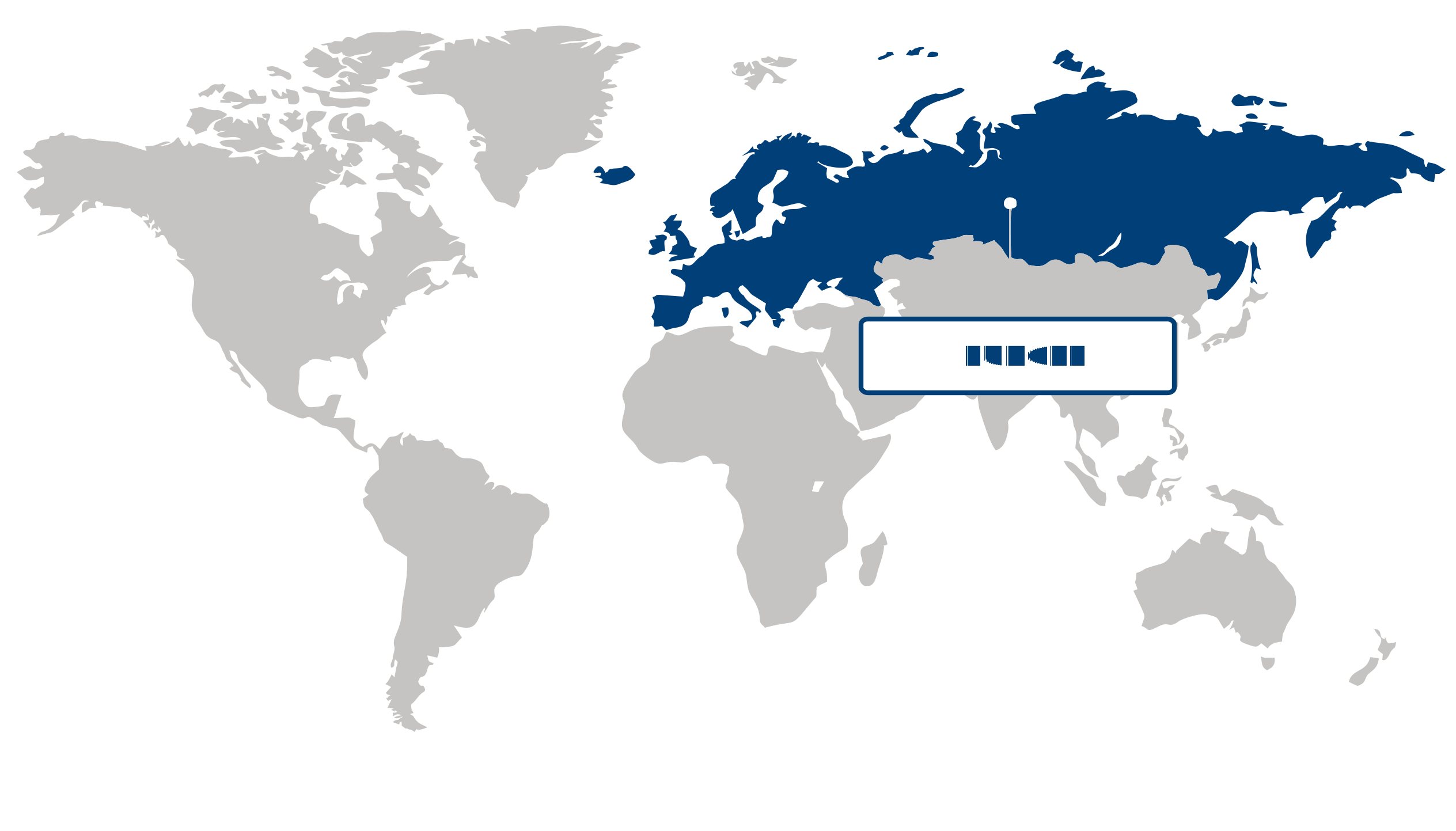
Europe captured over 38.4% of the global building applied photovoltaic (bapv) market in 2025, establishing itself as the largest regional player. This leadership is driven primarily by stringent environmental regulations and the imperative to manage rising energy costs, which have intensified the adoption of BAPV solutions across commercial and residential buildings. The European Commission’s Fit for 55 climate package, aiming to reduce net greenhouse gas emissions by at least 55% by 2030, propels investments in sustainable energy infrastructure, including BAPV. Robust government incentives and corporate commitments toward carbon neutrality further stimulate market growth. Industry stakeholders such as Siemens and SunPower have actively expanded their BAPV portfolios in Europe, reflecting operational advancements and evolving consumer preferences for integrated renewable technologies. With regulatory frameworks consistently tightening and energy prices expected to remain elevated, Europe offers sustained, lucrative opportunities in the building applied photovoltaic (bapv) market for investors and strategists.
Germany anchors the Europe building applied photovoltaic (bapv) market as a pioneering force propelled by a well-established regulatory environment and heightened consumer environmental awareness. The German government’s Renewable Energy Sources Act (EEG) guarantees feed-in tariffs and incentives that spur BAPV deployment. Leading firms like SMA Solar Technology have leveraged Germany’s strong engineering base and green policies to innovate and scale integrated solar solutions tailored for buildings. Additionally, Germany’s focus on energy efficiency in urban planning supports widespread BAPV integration, enhancing the region’s overall market growth prospects. These dynamics reinforce Germany’s strategic role in fortifying Europe’s dominance by driving high-quality adoption and setting benchmarks for sustainability in the building applied photovoltaic (bapv) market.
France plays a pivotal role in Europe’s building applied photovoltaic (bapv) market through progressive energy transition policies and evolving consumer interest in renewable technologies. The French government’s Multiannual Energy Plan (PPE) targets increased solar PV capacity and incentivizes on-site renewable generation in both public and private sectors. Notably, companies like TotalEnergies have expanded BAPV projects that capitalize on France’s abundant solar potential and growing architectural integration projects. French regulatory strides promoting building decarbonization bolster the uptake of customized BAPV applications, supporting a robust and competitive market landscape. France’s strategic emphasis on innovation and sustainable urban development complements the broader European agenda, amplifying regional growth opportunities in the building applied photovoltaic (bapv) market.
Asia Pacific Market Analysis:
Asia Pacific emerged as the fastest-growing region in the building applied photovoltaic (bapv) market, registering a robust CAGR of 10.8%. This rapid expansion is primarily fueled by rapid urbanization and substantial government subsidies for solar projects across the region. Accelerating infrastructure development and expanding metropolitan areas have intensified the incorporation of sustainable energy solutions like BAPV to meet rising electricity demands while aligning with stringent environmental goals. For instance, the Asian Development Bank's recent initiatives promoting clean energy financing further validate the region’s commitment toward solar integration. Technological advancements alongside supportive policies from agencies such as the International Renewable Energy Agency (IRENA) enhance supply chain efficiency and market accessibility. Asia Pacific’s growing middle-class population with escalating energy awareness also fosters a shift toward green building designs featuring integrated photovoltaics, positioning the region as a focal point for sustainable investments in the coming years.
Japan plays a pivotal role in Asia Pacific’s building applied photovoltaic (bapv) market, leveraging its advanced technological ecosystem and robust regulatory framework. Japan’s government stimulus programs, including subsidies under the Ministry of Economy, Trade and Industry (METI), have accelerated commercial and residential BAPV adoption, responding to consumer preferences for energy efficiency amid limited land availability. Leading Japanese firms such as Sharp Corporation are advancing innovative BAPV modules tailored to the country's architectural aesthetics and stringent building codes. This focus on high-performance and design-integrated applications highlights Japan’s influence on elevating product standards and innovation within the region, reinforcing Asia Pacific’s competitive edge.
China stands as a dominant force in Asia Pacific’s building applied photovoltaic (bapv) market due to the scale of its urbanization and aggressive solar policy initiatives. The country’s National Energy Administration (NEA) has enacted substantial subsidies and mandates driving widespread BAPV installation in both new and retrofit construction projects. Chinese manufacturers benefit from vertically integrated supply chains, enabling cost-effective production and rapid deployment in developing urban centers. Moreover, consumer awareness campaigns by the China Photovoltaic Industry Association have catalyzed demand growth by emphasizing environmental benefits and long-term cost savings. China’s expansive market capacity coupled with policy support underscores its critical contribution to Asia Pacific’s leadership in sustainable building energy solutions.
North America Market Trends:
North America held a commanding share in the building applied photovoltaic (bapv) market, driven by the region’s robust emphasis on sustainable infrastructure and escalating investments in green technologies. The United States and Canada have witnessed a dynamic shift toward integrating solar solutions into building designs as part of broader environmental commitments. This trend is reinforced by progressive government mandates such as the U.S. Department of Energy’s Solar Energy Technologies Office initiatives promoting high-efficiency, building-integrated photovoltaics. Moreover, advancements in digital building management systems enhance the operational benefits of bapv installations, while strong supply chain ecosystems and increasing consumer affinity for energy-efficient properties further underscore the market’s growth. With corporations like Tesla and ABB expanding their photovoltaic portfolios in the region, North America continues to leverage technological innovation and regulatory incentives. These factors collectively position the region as a pivotal arena for sustainable urban development and substantial bapv market expansion in the coming years.
The United States stands as the linchpin of the building applied photovoltaic (bapv) market in North America, propelled by ambitious regulatory frameworks and rising consumer demand for energy self-sufficient buildings. Key policies, including California’s Title 24 building energy efficiency standards and the federal Investment Tax Credit (ITC), stimulate widespread adoption of integrated solar technologies. This is evidenced by SunPower Corporation’s recent commercial projects combining solar façades and rooftops to optimize energy generation. Furthermore, competitive dynamics are intensifying as startups and established players innovate with flexible, aesthetically adaptable photovoltaic modules, enhancing market penetration. The U.S. emphasis on decarbonizing commercial real estate and expanding urban solar infrastructure reinforces its strategic importance, serving as a catalyst for region-wide bapv growth and setting benchmarks that influence neighboring markets. This momentum illustrates why the U.S. remains essential for capitalizing on North America’s expanding opportunities in building applied photovoltaic technologies.
| Parameter | North America | Asia Pacific | Europe | Latin America | MEA |
|---|---|---|---|---|---|
| Innovation Hub i Scale Nascent Developing Advanced | |||||
| Cost-Sensitive Region i Scale Low Medium High | |||||
| Regulatory Environment i Scale Restrictive Neutral Supportive | |||||
| Demand Drivers i Scale Weak Moderate Strong | |||||
| Development Stage i Scale Emerging Developing Developed | |||||
| Adoption Rate i Scale Low Medium High | |||||
| New Entrants / Startups i Scale Sparse Moderate Dense | |||||
| Macro Indicators i Scale Weak Stable Strong |
Segment Leadership and Growth Trends
Building Applied Photovoltaic (BAPV) Market Share (%), by Type, 2026
Go beyond the chart, access full insights & data tables
Request Free Sample ReportThe rooftop segment held the largest share in the building applied photovoltaic (bapv) market in 2025, primarily due to the widespread adoption of rooftop BAPV installations driven by their ease of installation and maximum solar exposure. This segment's leadership is reinforced by evolving customer preferences favoring quick, non-disruptive renewable installations and rising regulatory incentives promoting rooftop solar systems, as highlighted in recent initiatives by the U.S. Department of Energy. Additionally, streamlined supply chains and competitive pricing from major suppliers like First Solar enhance its accessibility. For established firms, rooftops offer scalable, high-volume deployment opportunities, while new entrants benefit from standardized installation protocols. Considering ongoing urbanization and advancements in mounting technologies, the rooftop segment is poised to maintain its dominance in the near to medium term.
Analysis by Application
The residential segment represented the largest share in the building applied photovoltaic (bapv) market in 2025, fueled by increasing homeowner demand for energy-efficient, cost-saving solar solutions. This leadership stems from rising environmental awareness and government-backed subsidy programs such as Germany’s KfW Renewable Energy incentives, which have significantly lowered residential solar adoption barriers. A cultural shift toward sustainable living among middle-income households and improved digital monitoring systems have further accelerated uptake. The segment creates strategic advantages by enabling firms to innovate in smart home integration and financing models tailored to homeowners. Given the sustained push for residential decarbonization and expanding net-zero construction codes worldwide, the residential segment will remain a crucial growth pillar for the bapv market.
| Segment | Sub-Segment | Largest Segment | Fastest Growing |
|---|---|---|---|
| Type | Facades, Rooftop, Others | ||
| Application | Commercial, Residential, Industrial |
Competitive Landscape and Market Positioning
The competitive environment among these top players is marked by strategic moves that deepen technological capabilities and expand market influence. Collaborations have accelerated innovation, with several firms engaging in partnerships to integrate BAPV with smart home and energy storage technologies. Investments in R&D have led to the launch of more efficient, aesthetically versatile modules tailored to diverse building types. Additionally, strategic acquisitions and geographic expansion efforts have enabled companies like JA Solar and Canadian Solar to solidify presence in emerging markets. This evolving dynamic fosters differentiation through product customization and integrated solutions, setting a pace that challenges incumbents to continuously enhance performance and scalability while navigating regional regulatory landscapes.
Strategic / Actionable Recommendations for Regional Players
In North America, aligning with technology providers to incorporate intelligent energy management systems and expand offerings in energy storage will enhance market relevance amid rising demand for smart BAPV solutions. Emphasizing collaborations with construction and real estate sectors can also unlock new project pipelines targeting commercial and residential buildings.
Within the Asia Pacific region, leveraging cost-competitive manufacturing capabilities and forging strategic alliances across rapidly urbanizing markets could drive scale and innovation tailored to local building codes and climate considerations. Focus on modular designs that integrate seamlessly into the region’s diverse architectural styles will further capture high-growth sub-segments.
European players should prioritize sustainability credentials and advance value-added services, such as integrated energy management with grid compatibility, to differentiate from global competitors. Collaborations with policy stakeholders and architects can accelerate the adoption of more stringent green building standards, reinforcing leadership in high-quality BAPV integration.
| Company | Market Share | Company Revenue | Revenue CAGR (%) | Product Portfolio | Geographic Presence | Innovation / R&D Focus | Strategic Developments |
|---|---|---|---|---|---|---|---|
| No companies available. | |||||||
Industry Development/News
| Company Name | Date | Key Development |
|---|
Customize Your Report
Explore examples of how this report can be tailored to different research needs, including custom segments, additional topics or chapters, and related reports. Click a section of the wheel or its numbered marker to explore the available options.
Building Applied Photovoltaic (BAPV) Market — Custom Segments
| Segment | Sub-Segment |
|---|---|
| No segment data available. | |
Building Applied Photovoltaic (BAPV) Market — Custom TOC
| Custom Chapter | Custom Details | ||
|---|---|---|---|
| No custom TOC data available. | |||
Need a different cut of the data?
Request Custom ResearchWhat is the expected industry size of building applied photovoltaic (BAPV) by 2035?
Which geographical area accounts for the highest portion of the building applied photovoltaic (BAPV) market?
Who is driving the fastest regional growth in the building applied photovoltaic sector?
When did rooftop sub-segment emerge as the largest sub-segment in the type segment of building applied photovoltaic (BAPV) sector?
Why is the residential segment leading in the building applied photovoltaic (BAPV) industry?
Which organizations are considered leaders in the building applied photovoltaic (BAPV) landscape?
Our Clients
"The information presented in the report was genuinely insightful. The data was clear and easy to understand, which made it much easier to interpret the findings."
Amara Raja Group
"The responsiveness and professionalism exhibited by the team were exemplary. They were readily available to address queries, provide clarifications, and offer additional insights."
ONGC
"The reports offered a comprehensive analysis of various segments within the market. The detailed insights into market trends, and regulatory landscapes were excellent."
TotalEnergies
Our Research Team & Methodology
Every Fundamental Business Insights report is built by a dedicated vertical research team, validated through a structured primary-and-secondary methodology, and reviewed for accuracy before it reaches you.
Research Team Overview
Prepared by the Energy & Power Research Team
Delivery
Published
Demand
Available
Support
Trust & Compliance
Research Domains
10 coverage areasResearch Intelligence
| Source | Reference |
|---|---|
| International Energy Agency (IEA) | www.iea.org |
| U.S. Energy Information Administration (EIA) | www.eia.gov |
| International Renewable Energy Agency (IRENA) | www.irena.org |
| International Electrotechnical Commission (IEC) | www.iec.ch |
| International Organization for Standardization (ISO) | www.iso.org |
| IEEE | www.ieee.org |
| CIGRE (International Council on Large Electric Systems) | www.cigre.org |
| World Energy Council (WEC) | www.worldenergy.org |
| U.S. Department of Energy (DOE) | www.energy.gov |
| International Atomic Energy Agency (IAEA) | www.iaea.org |
| American Petroleum Institute (API) | www.api.org |
| Society of Petroleum Engineers (SPE) | www.spe.org |
| Hydrogen Council | hydrogencouncil.com |
| Battery Council International (BCI) | batterycouncil.org |
| Global Wind Energy Council (GWEC) | gwec.net |
| SolarPower Europe | www.solarpowereurope.org |
| World Bioenergy Association (WBA) | worldbioenergy.org |
| International Hydropower Association (IHA) | www.hydropower.org |
| Edison Electric Institute (EEI) | www.eei.org |
| National Renewable Energy Laboratory (NREL) | www.nrel.gov |
Research Workflow & Quality Assurance
Data Collection
Verified information gathered through primary and secondary research.
Data Triangulation
Cross-validation using multiple independent data sources.
Forecast Modelling
Market estimates developed using historical trends and analytical models.
Analyst Validation
Findings reviewed by domain experts for accuracy and consistency.
Editorial & Quality Review
Final editorial, quality, and compliance checks before publication.
Final Publication
Released after successful completion of the internal review process.
Report Coverage
📊 Market Assessment
- Market Size & Forecast
- Market Segmentation
- Regional Analysis
- Growth Drivers & Challenges
- Market Dynamics
🏢 Competitive Intelligence
- Competitive Landscape
- Company Profiles
- Competitive Benchmarking
- Mergers & Acquisitions
- Market Share Analysis or Key Company Strategies
🔍 Strategic Analysis
- Value Chain Analysis
- Porter's Five Forces
- PESTLE Analysis
- Pricing Trends
- Supply-Demand Analysis
🚀 Future Outlook
- Technology Landscape
- Regulatory Landscape
- Investment & Funding Landscape
- Emerging Opportunities
- Future Market Outlook
Have a question about this report or need a custom scope?
Request Customization