Botanical Sugar Market Size & Growth Forecast 2027–2036, By Segments (Application, Type), Regional Demand Trends (North America, Asia Pacific, Europe), Key Country Insights (U.S., Japan, South Korea, Germany, France, Italy), and Competitive Landscape
Market Size and Growth Outlook
Botanical Sugar Market size was worth USD 2.01 Billion in 2026 and is expected to grow at 3.78% CAGR between 2027 and 2036, attaining USD 2.91 Billion by 2036. The industry revenue for 2027 is estimated at USD 2.07 Billion.
Get more details on this report
Request Free Sample ReportBotanical Sugar Market Intelligence Snapshot
Regional Market Dynamics
- Europe led in 2026, supported by strong consumer interest in natural ingredients, clean-label products, healthier sweeteners, and sustainably sourced specialty food ingredients.
- Asia Pacific is expected to grow fastest as disposable incomes, urbanization, packaged food manufacturing, and demand for natural and plant-derived ingredients increase.
Segment Momentum
- Food and beverage applications captured 65.51% share in 2026 as manufacturers adopt botanical sugars for clean-label formulations, natural sweetening, and use across beverages, bakery, and processed foods.
- Dietary supplements are the fastest-growing application as demand rises for functional nutrition, botanical-based formulations, and naturally sourced sweetening ingredients in wellness products.
Market Expansion Drivers
- Health and wellness trends driving adoption of natural sugar alternatives
- Sustainable sourcing preferences accelerating plant-based sweetener adoption
- Expanding functional food and beverage industry increasing botanical sugar utilization
Leading Market Participants
- Top companies in the botanical sugar market include Ingredion Incorporated (USA), Tate & Lyle PLC (United Kingdom), NOW Foods (USA), Swerve Sweetener LLC (USA), Lakanto (USA), Wholesome Sweeteners Inc. (USA), Madhava Natural Sweeteners (USA), Cargill Inc. (USA), Archer Daniels Midland Company (USA), Truvia (USA)
Global Market Forecast Snapshot
Market Outlook
- 2026 Market Size: USD 2.01 Billion
- 2027 Estimated Market Size: USD 2.07 Billion
- Projected Market Size: USD 2.91 Billion by 2036
- Growth Forecast: 3.78% CAGR (2027-2036)
Regional and Segment Outlook
- Leading Regional Market: Europe
- High-Growth Regional Hub: Asia Pacific
- Core Revenue Segment: Food and Beverage (Application) | Coconut Sugar (Type)
- Emerging Opportunity Segment: Dietary Supplements (Application) | Stevia (Type)
Market Growth Drivers and Industry Trends
Health and wellness trends driving adoption of natural sugar alternatives
Consumers are becoming more attentive to ingredient transparency and healthier dietary choices, encouraging food manufacturers to reformulate products using naturally derived sweetening ingredients. This shift will propel the botanical sugar market growth as natural sugar alternatives gain wider acceptance among individuals seeking products with plant-based origins and cleaner ingredient profiles. Food and beverage companies are responding by incorporating botanical sweeteners into a broader range of applications while balancing taste, functionality, and consumer expectations for minimally processed ingredients that align with evolving wellness-focused lifestyles.
Sustainable sourcing preferences accelerating plant-based sweetener adoption
Environmental considerations are playing an increasingly important role in purchasing decisions across the food industry, influencing both manufacturers and consumers to prioritize responsibly sourced ingredients. The botanical sugar market demand is expanding as plant-based sweeteners sourced through sustainable agricultural practices become attractive alternatives for companies seeking to strengthen environmental commitments and improve supply chain transparency. Greater emphasis on renewable raw materials, ethical sourcing practices, and reduced environmental impact is encouraging product innovation while supporting broader sustainability objectives throughout food manufacturing operations.
Expanding functional food and beverage industry increasing botanical sugar utilization
The continued diversification of functional foods and beverages is creating new formulation opportunities for naturally derived sweeteners that complement health-oriented product positioning. The botanical sugar market benefits from this trend because botanical sugars can contribute sweetness while aligning with consumer demand for ingredients perceived as more natural and compatible with wellness-focused formulations. Manufacturers are integrating these sweeteners into nutritional beverages, fortified foods, and other value-added products where ingredient quality, sensory characteristics, and formulation compatibility play an important role in product development.
| Growth Driver | Impact on CAGR | Regulatory Influence | Geographic Relevance | Adoption Rate | Impact Timeline |
|---|---|---|---|---|---|
| Health and wellness trends driving adoption of natural sugar alternatives | 1.7% | Low | North America, Europe | High | Near Term |
| Sustainable sourcing preferences accelerating plant-based sweetener adoption | 1.5% | Low | Europe, Asia Pacific | High | Mid Term |
| Expanding functional food and beverage industry increasing botanical sugar utilization | 1.3% | Low | Asia Pacific, North America | Medium | Mid Term |
Unlock insights tailored to your business with our bespoke market research solutions.
Click to get your customized report now.
Regional Demand Dynamics
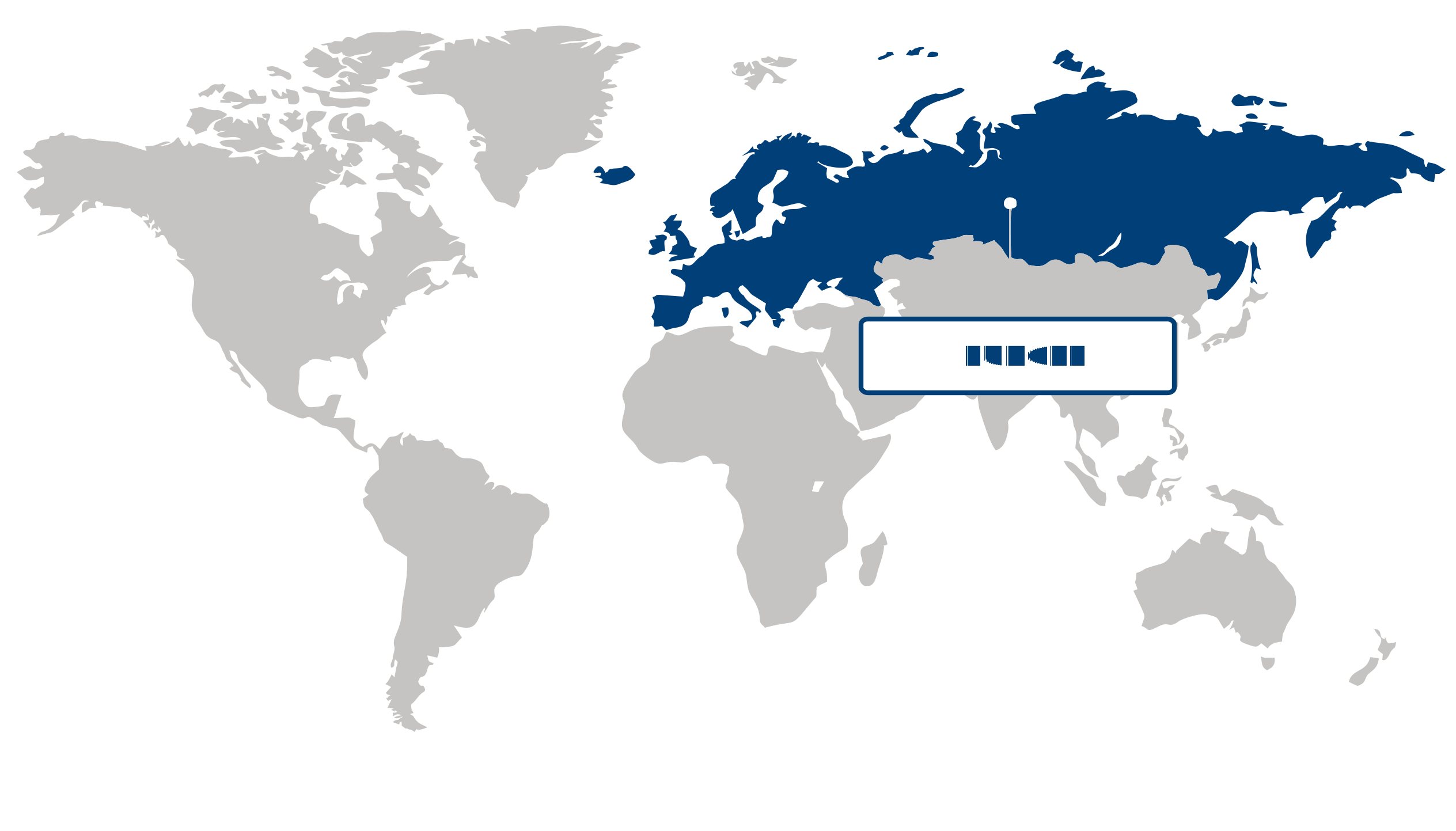
Europe (Largest Region)
Europe held the largest position in the botanical sugar market in 2026, supported by strong consumer interest in natural food ingredients, clean-label products, and healthier alternatives to conventional sweeteners. Growing awareness of ingredient transparency and dietary quality is encouraging food and beverage manufacturers to explore plant-derived sweetening solutions for a range of applications. The region's established specialty food industry and emphasis on sustainable sourcing further support demand, while evolving consumer preferences toward minimally processed and naturally positioned products are creating opportunities for botanical-based ingredients.
Asia Pacific (Fastest-Growing Region)
Asia Pacific is anticipated to register the fastest growth as rising disposable incomes, urbanization, and changing dietary preferences stimulate demand for innovative food and beverage ingredients. Consumers are increasingly seeking products positioned around naturalness, wellness, and reduced reliance on conventional refined ingredients, creating favorable conditions for botanical sugar applications. The expansion of packaged food and beverage manufacturing, combined with growing awareness of functional and plant-derived ingredients, is also encouraging manufacturers to diversify formulations and respond to evolving consumer expectations across the region.
| Parameter | North America | Asia Pacific | Europe | Latin America | MEA |
|---|---|---|---|---|---|
| Innovation Hub i Scale Nascent Developing Advanced | |||||
| Cost-Sensitive Region i Scale Low Medium High | |||||
| Regulatory Environment i Scale Restrictive Neutral Supportive | |||||
| Demand Drivers i Scale Weak Moderate Strong | |||||
| Development Stage i Scale Emerging Developing Developed | |||||
| Adoption Rate i Scale Low Medium High | |||||
| New Entrants / Startups i Scale Sparse Moderate Dense | |||||
| Macro Indicators i Scale Weak Stable Strong |
Key Country Insights
United States 🇺🇸
Clean Label InnovationThe U.S. botanical sugar market is shaped by strong demand for naturally derived sweetening ingredients in beverages, bakery, and wellness products. Manufacturers are prioritizing ingredient transparency, formulation flexibility, and scalable sourcing to support premium product development.
Germany 🇩🇪
Functional Ingredient FocusGermany emphasizes botanical sugar ingredients that align with clean-label and functional food applications. Producers are expanding collaborations with food manufacturers seeking natural sweetening solutions compatible with quality and formulation standards.
Japan 🇯🇵
Premium Formulation DemandJapan integrates botanical sugars into premium confectionery, beverages, and health-oriented foods where flavor balance and product quality are essential. Local manufacturers focus on refined formulations that complement evolving consumer preferences for natural ingredients.
South Korea 🇰🇷
Wellness Product IntegrationSouth Korea is incorporating botanical sugars into functional beverages and better-for-you packaged foods. Companies are investing in innovative formulations that combine natural sweetness with health-focused product positioning across retail channels.
France 🇫🇷
Gourmet Ingredient ApplicationsFrance applies botanical sugars across artisanal foods, specialty beverages, and premium confectionery where ingredient authenticity supports product differentiation. Suppliers are emphasizing natural sourcing and consistent quality for food manufacturers.
Italy 🇮🇹
Specialty Food FormulationsItaly utilizes botanical sugars in premium bakery, confectionery, and specialty food products that highlight natural ingredients. Ingredient suppliers are working closely with manufacturers to balance traditional taste profiles with evolving clean-label expectations.
Segment Leadership and Growth Trends
Botanical Sugar Market Share (%), by Application, 2026
Go beyond the chart, access full insights & data tables
Request Free Sample ReportApplication Segment Analysis: Food and Beverage (Largest Segment) vs Dietary Supplements (Fastest-Growing Segment)
The food and beverage segment dominated the botanical sugar market with a 65.51% share in 2026. Botanical sugars are widely incorporated into beverages, bakery products, confectionery, dairy items, and processed foods as manufacturers increasingly respond to consumer demand for naturally derived sweetening ingredients. Their ability to provide sweetness while supporting clean-label product positioning and more natural formulations has encouraged widespread adoption across food processing applications. Growing consumer preference for minimally processed ingredients and plant-based alternatives continues to reinforce the segment's leading position.
The dietary supplements segment is expected to witness the fastest growth as consumers place greater emphasis on preventive health and wellness. Botanical sugars are increasingly utilized in supplement formulations to improve palatability while aligning with demand for naturally sourced ingredients. Expanding interest in functional nutrition, botanical-based products, and clean-label supplement formulations is encouraging manufacturers to incorporate natural sweetening solutions, supporting the rapid expansion of this application segment.
Type Segment Analysis: Coconut Sugar (Largest Segment) vs Stevia (Fastest-Growing Segment)
Holding the largest share of the botanical sugar market, the coconut sugar segment accounted for 34.99% in 2026. Coconut sugar has gained broad acceptance due to its natural origin, distinctive flavor profile, and compatibility with a wide variety of food and beverage applications. Its versatility as a replacement for conventional sweeteners, combined with increasing consumer preference for minimally refined ingredients, has contributed to sustained market demand. Expanding availability through retail and food manufacturing channels further supports the segment's dominant position.
The stevia segment is projected to register the fastest growth as manufacturers increasingly develop products with reduced sugar content while maintaining sweetness. Stevia's plant-derived origin and suitability for low-sugar and calorie-conscious formulations have strengthened its adoption across beverages, packaged foods, and nutritional products. Growing consumer awareness of healthier dietary choices and continued innovation in stevia formulations are expected to accelerate demand for this botanical sweetener.
| Segment | Sub-Segment | Largest Segment | Fastest Growing |
|---|---|---|---|
| Application | Food and Beverage, Pharmaceutical, Cosmetics and Personal Care, Dietary Supplements, Other | Food and Beverage | Dietary Supplements |
| Type | Coconut Sugar, Date Sugar, Palm Sugar, Maple Sugar, Cane Sugar, Birch Sugar, Monk Fruit Sugar, Yacon Syrup, Stevia, Allulose, Erythritol, Other | Coconut Sugar | Stevia |
Competitive Landscape and Market Positioning
Prominent players in the botanical sugar market:
- Ingredion Incorporated (USA)
- Tate & Lyle PLC (United Kingdom)
- NOW Foods (USA)
- Swerve Sweetener LLC (USA)
- Lakanto (USA)
- Wholesome Sweeteners, Inc. (USA)
- Madhava Natural Sweeteners (USA)
- Cargill, Inc. (USA)
- Archer Daniels Midland Company (USA)
- Truvia (USA)
The botanical sugar market is developing around a growing divide between conventional sweetener suppliers and innovators focused on natural positioning, clean-label attributes, and alternative sourcing approaches. Producers are competing through ingredient transparency, sensory performance, and the ability to meet changing consumer expectations for healthier and more sustainable food options. As demand expands for differentiated sweetening solutions, companies with stronger formulation capabilities and clearer value propositions are gaining opportunities to challenge traditional sweetener categories.
| Company | Market Share | Company Revenue | Revenue CAGR (%) | Product Portfolio | Geographic Presence | Innovation / R&D Focus | Strategic Developments |
|---|---|---|---|---|---|---|---|
| Ingredion Incorporated (USA) | |||||||
| Tate & Lyle PLC (United Kingdom) | |||||||
| NOW Foods (USA) | |||||||
| Swerve Sweetener LLC (USA) | |||||||
| Lakanto (USA) | |||||||
| Wholesome Sweeteners Inc. (USA) | |||||||
| Madhava Natural Sweeteners (USA) | |||||||
| Cargill Inc. (USA) | |||||||
| Archer Daniels Midland Company (USA) | |||||||
| Truvia (USA) |
Industry Development/News
| Company Name | Date | Key Development |
|---|
Customize Your Report
Explore examples of how this report can be tailored to different research needs, including custom segments, additional topics or chapters, and related reports. Click a section of the wheel or its numbered marker to explore the available options.
Botanical Sugar Market — Custom Segments
| Segment | Sub-Segment |
|---|---|
| Product Format | Granulated & Crystalline, Syrups & Liquid Sweeteners, Powdered, Blended & Formulated |
| Certification & Sourcing | Certified Organic, Fair Trade Certified, Non-Certified Conventional, Sustainably Sourced |
| Price Tier | Economy, Mid-Range, Premium |
Botanical Sugar Market — Custom TOC
| Custom Chapter | Custom Details |
|---|---|
| Consumer Acceptance and Premiumization Analysis |
|
| Natural Sweetener Substitution Outlook |
|
| Food and Beverage Reformulation Opportunities |
|
Need a different cut of the data?
Request Custom ResearchHow large is the botanical sugar market?
How is the botanical sugar industry expected to grow over the next 10 years?
Why are natural ingredient preferences driving botanical sugar adoption?
How are sustainability priorities shaping the botanical sugar market?
Why does the food and beverage segment lead the botanical sugar market?
How is the dietary supplements segment creating new growth opportunities for botanical sugar?
What makes Europe the leading region for botanical sugar?
Why is Asia Pacific expected to be the fastest-growing botanical sugar market?
Who holds a significant market share in the botanical sugar landscape?
Our Clients
"The report provided a thorough look at market trends, technological advancements, and the competitive landscape. The depth of insights was really valuable."
ITC Limited
"We would highly recommend Fundamental Business Insights & Consulting to anyone looking for reliable, detailed, and comprehensive market research in the Food industry."
Tyson Foods
"The clarity and presentation of the information were commendable. The report was delivered timely, which made the overall experience smooth and convenient."
Mondelēz International
Our Research Team & Methodology
Every Fundamental Business Insights report is built by a dedicated vertical research team, validated through a structured primary-and-secondary methodology, and reviewed for accuracy before it reaches you.
Research Team Overview
Prepared by the Food & Beverage Research Team
Delivery
Published
Demand
Available
Support
Trust & Compliance
Research Domains
10 coverage areasResearch Intelligence
| Source | Reference |
|---|---|
| Food and Agriculture Organization (FAO) | www.fao.org |
| World Health Organization (WHO) | www.who.int |
| U.S. Food & Drug Administration (FDA) | www.fda.gov |
| European Food Safety Authority (EFSA) | www.efsa.europa.eu |
| U.S. Department of Agriculture (USDA) | www.usda.gov |
| Codex Alimentarius Commission | www.fao.org/fao-who-codexalimentarius |
| International Organization for Standardization (ISO) | www.iso.org |
| AOAC INTERNATIONAL | www.aoac.org |
| Institute of Food Technologists (IFT) | www.ift.org |
| International Dairy Foods Association (IDFA) | www.idfa.org |
| International Sweeteners Association (ISA) | www.sweeteners.org |
| International Probiotics Association (IPA) | internationalprobiotics.org |
| Good Food Institute (GFI) | gfi.org |
| American Feed Industry Association (AFIA) | www.afia.org |
| International Feed Industry Federation (IFIF) | ifif.org |
| Specialty Food Association (SFA) | www.specialtyfood.com |
| Brewers Association | www.brewersassociation.org |
| International Bottled Water Association (IBWA) | bottledwater.org |
| International Alliance for Dietary/Food Supplement Associations (IADSA) | www.iadsa.org |
| OECD Agriculture & Food | www.oecd.org/agriculture |
Research Workflow & Quality Assurance
Data Collection
Verified information gathered through primary and secondary research.
Data Triangulation
Cross-validation using multiple independent data sources.
Forecast Modelling
Market estimates developed using historical trends and analytical models.
Analyst Validation
Findings reviewed by domain experts for accuracy and consistency.
Editorial & Quality Review
Final editorial, quality, and compliance checks before publication.
Final Publication
Released after successful completion of the internal review process.
Report Coverage
📊 Market Assessment
- Market Size & Forecast
- Market Segmentation
- Regional Analysis
- Growth Drivers & Challenges
- Market Dynamics
🏢 Competitive Intelligence
- Competitive Landscape
- Company Profiles
- Competitive Benchmarking
- Mergers & Acquisitions
- Market Share Analysis or Key Company Strategies
🔍 Strategic Analysis
- Value Chain Analysis
- Porter's Five Forces
- PESTLE Analysis
- Pricing Trends
- Supply-Demand Analysis
🚀 Future Outlook
- Technology Landscape
- Regulatory Landscape
- Investment & Funding Landscape
- Emerging Opportunities
- Future Market Outlook
Have a question about this report or need a custom scope?
Request Customization