Bionic Ear Market Size & Growth Forecast 2027–2036, By Segments (Type, End-use), Regional Demand Trends (North America, Asia Pacific, Europe), Key Country Insights (U.S., Japan, South Korea, Germany, France, Italy), and Competitive Landscape
Market Size and Growth Outlook
Bionic Ear Market size was worth USD 2.75 billion in 2026 and is expected to grow at a 7.89% CAGR between 2027 and 2036, crossing USD 5.88 billion by 2036. The industry revenue for 2027 is estimated at USD 2.93 billion.
Get more details on this report
Request Free Sample ReportBionic Ear Market Intelligence Snapshot
Regional Market Dynamics
- Europe accounted for 41.45% of the market in 2026, benefiting from established cochlear implant pathways, specialized ENT centers, structured patient access, and consistent clinical adoption across healthcare systems.
- Asia Pacific is projected to grow at a 9.49% CAGR as access to implant procedures improves, hearing care infrastructure expands, and more patients enter formal diagnosis and treatment pathways.
Segment Momentum
- Cochlear implants held a 71.42% share in 2026 due to established clinical adoption, standardized surgical pathways, and comprehensive rehabilitation frameworks that support routine hearing restoration across eligible patients.
- Clinics are growing fastest because routine programming, follow-up visits, and long-term audiology care are increasingly shifting to specialized outpatient settings that offer greater convenience after implantation.
Market Expansion Drivers
- Increasing geriatric population and rising global hearing loss prevalence accelerating device demand.
- Advancements in cochlear implants with AI, connectivity, and improved reimbursement support adoption.
- Growing youth noise exposure and WHO projected hearing impairment expanding long-term device need.
Leading Market Participants
- Top companies in the bionic ear market include Cochlear Limited (Australia), Sonova Holding AG (Switzerland), MED-EL Medical Electronics (Austria), Demant A/S (Denmark), Zhejiang Nurotron Biotechnology Co., Ltd. (China), GN Store Nord A/S (Denmark), Oticon Medical AB (Sweden).
Global Market Forecast Snapshot
Market Outlook
- 2026 Market Size: USD 2.75 billion
- 2027 Estimated Market Size: USD 2.93 billion.
- Projected Market Size: USD 5.88 billion by 2036
- Growth Forecast: 7.89% CAGR (2027-2036)
Regional and Segment Outlook
- Leading Regional Market: Europe
- High-Growth Regional Hub: Asia Pacific
- Core Revenue Segment: Cochlear Implant (Type) | Hospitals (End-use)
- Emerging Opportunity Segment: Auditory Brainstem Implants (Type) | Clinics (End-use)
Market Growth Drivers and Industry Trends
Increasing geriatric population and rising global hearing loss prevalence accelerating device demand
A growing geriatric population and increasing prevalence of hearing loss are strengthening the bionic ear market by expanding the pool of individuals requiring advanced hearing solutions. As hearing impairment becomes more prevalent among older populations, demand for implantable technologies can increase where conventional hearing support does not adequately address users' needs.
Advancements in cochlear implants with AI, connectivity, and improved reimbursement support adoption
Technological progress is supporting the bionic ear market through cochlear implants incorporating AI capabilities, connectivity features, and other improvements that enhance device functionality. At the same time, improved reimbursement support can reduce financial barriers to adoption, making advanced implant solutions more accessible to eligible patients and healthcare providers.
Growing youth noise exposure and WHO projected hearing impairment expanding long-term device need
Increasing exposure to noise among younger populations is contributing to the bionic ear market by highlighting the potential for hearing impairment across a broader age range. Combined with projected hearing impairment identified by the WHO, this trend strengthens the long-term need for advanced hearing restoration technologies as affected populations seek appropriate treatment options.
| Growth Driver | Impact on CAGR | Regulatory Influence | Geographic Relevance | Adoption Rate | Impact Timeline |
|---|---|---|---|---|---|
| Rising prevalence of hearing loss and disabilities | 2.50% | Short term (≤ 2 yrs) | North America, Europe (spillover: Asia Pacific) | High | Fast |
| Technological advancements in bionic ear implants | 2.00% | Medium term (2–5 yrs) | Europe, North America (spillover: Asia Pacific) | Medium | Moderate |
| Expansion of audiology clinics and services | 1.50% | Long term (5+ yrs) | North America, Europe (spillover: Asia Pacific) | Medium | Slow |
| Increasing geriatric population and rising global hearing loss prevalence accelerating device demand | 2.60% | High | North America, Europe, Asia Pacific | High | Near Term |
| Advancements in cochlear implants with AI, connectivity, and improved reimbursement support adoption | 2.80% | High | North America, Europe | High | Near Term |
| Growing youth noise exposure and WHO projected hearing impairment expanding long-term device need | 2.10% | Moderate | Global | Medium | Long Term |
Explore Growth Opportunities
Request Free Sample ReportRegional Demand Dynamics
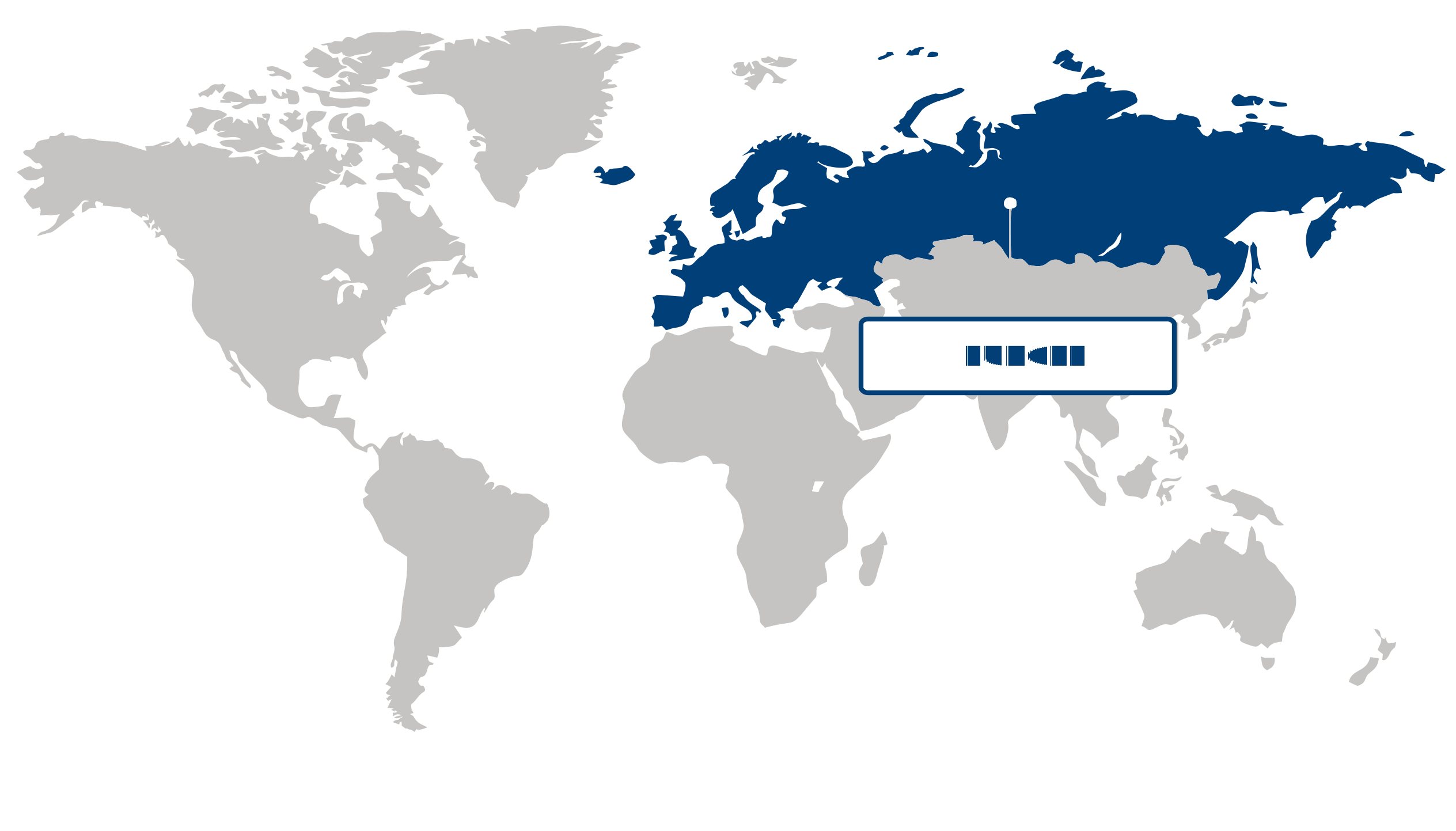
Europe (Largest Region)
The bionic ear market was led by Europe, which accounted for 41.45% share in 2026, reflecting the region's advanced healthcare infrastructure, established audiology services, and strong focus on innovative hearing restoration technologies. Broad access to specialized clinical care and well-developed rehabilitation systems supports the adoption of sophisticated hearing solutions for individuals with severe hearing impairment. Continued investment in medical technology, increasing awareness of hearing disorders, and emphasis on improving quality of life are reinforcing demand for advanced auditory implants. Supportive healthcare systems and the integration of innovative treatment approaches into specialized care pathways further strengthen Europe's position in this market.
Asia Pacific (Fastest-Growing Region)
Asia Pacific represents the fastest-growing region for the bionic ear market, supported by expanding healthcare infrastructure, rising awareness of hearing impairment, and improving access to specialized medical technologies. Increasing investments in advanced healthcare facilities are enabling more patients to receive sophisticated hearing interventions, while growing public awareness is encouraging earlier diagnosis and treatment of hearing loss. Expanding medical expertise and greater availability of specialized surgical and rehabilitation services are also facilitating adoption. The region's large patient population and continued development of healthcare systems provide a broad base for further uptake of bionic hearing technologies.
| Parameter | North America | Asia Pacific | Europe | Latin America | MEA |
|---|---|---|---|---|---|
| Innovation Hub i Scale Nascent Developing Advanced | |||||
| Cost-Sensitive Region i Scale Low Medium High | |||||
| Regulatory Environment i Scale Restrictive Neutral Supportive | |||||
| Demand Drivers i Scale Weak Moderate Strong | |||||
| Development Stage i Scale Emerging Developing Developed | |||||
| Adoption Rate i Scale Low Medium High | |||||
| New Entrants / Startups i Scale Sparse Moderate Dense | |||||
| Macro Indicators i Scale Weak Stable Strong |
Key Country Insights
Germany 🇩🇪
Precision Clinical IntegrationGermany emphasizes clinically validated implant systems supported by structured audiology services and rehabilitation programs. Healthcare providers in Germany increasingly focus on optimizing long-term hearing outcomes through integrated patient management and technology upgrades.
France 🇫🇷
Specialized Care ExpansionFrance continues strengthening specialized hearing care networks that support timely diagnosis and cochlear implantation. The country emphasizes multidisciplinary rehabilitation programs and clinical collaboration to improve long-term outcomes for hearing-impaired patients.
Italy 🇮🇹
Rehabilitation-Focused AdoptionItaly emphasizes comprehensive rehabilitation alongside cochlear implantation to improve speech recognition and hearing recovery. Italian healthcare providers continue expanding access to specialized treatment centers while adopting technologically advanced implant systems.
Japan 🇯🇵
Aging Hearing SolutionsJapan focuses on addressing hearing loss associated with its aging population through advanced bionic ear technologies. Japanese healthcare providers continue improving surgical techniques, rehabilitation protocols, and device performance to enhance patient quality of life.
South Korea 🇰🇷
Digital Hearing AdvancementSouth Korea integrates digital healthcare capabilities with cochlear implant development to improve patient monitoring and rehabilitation. Local hospitals and technology companies support innovation that enhances device connectivity and post-implant care efficiency.
United States 🇺🇸
Advanced Implant InnovationThe U.S. prioritizes next-generation cochlear implant technologies, expanding candidacy criteria, and digital care pathways. Strong collaboration between device developers, hearing specialists, and research institutions supports continuous product refinement and broader clinical adoption.
Segment Leadership and Growth Trends
Bionic Ear Market Share (%), by Type, 2026
Go beyond the chart, access full insights & data tables
Request Free Sample ReportType Segment Analysis: Cochlear Implant (Largest Segment) vs Auditory Brainstem Implants (Fastest-Growing Segment)
Cochlear implants dominated the bionic ear market, accounting for a 71.42% share in 2026. Their leading position is supported by their established role in providing hearing assistance to individuals with significant sensorineural hearing loss by directly stimulating the auditory nerve. Continued improvements in implant technology, sound processing, and clinical techniques are supporting their adoption across suitable patient populations. Greater awareness of hearing rehabilitation options and increasing recognition of the benefits of advanced auditory devices are further reinforcing the position of cochlear implants within the market.
Auditory brainstem implants are expected to be the fastest-growing type segment as clinical interest expands in advanced hearing restoration options for individuals who may not benefit adequately from conventional hearing implants. These devices provide auditory stimulation through the brainstem, offering an alternative approach when the auditory nerve is absent or compromised. Increasing awareness of specialized hearing rehabilitation and continuing advances in implant technology are creating opportunities for broader application of auditory brainstem implants in appropriately selected patients.
End-use Segment Analysis: Hospitals (Largest Segment) vs Clinics (Fastest-Growing Segment)
Hospitals held the largest position in the bionic ear market in 2026, reflecting their central role in complex hearing-related diagnosis, implantation procedures, postoperative management, and multidisciplinary patient care. Hospitals generally have access to specialized surgical infrastructure and teams required for advanced auditory implant procedures, making them important centers for comprehensive treatment. The availability of diagnostic capabilities, surgical expertise, and rehabilitation support within hospital environments continues to sustain demand for bionic ear technologies.
Clinics are projected to be the fastest-growing end-use segment as hearing care becomes increasingly accessible through specialized outpatient and dedicated clinical environments. Clinics can provide focused assessment, patient counseling, device management, and follow-up services, improving convenience for individuals requiring ongoing auditory care. The expansion of specialized hearing services and growing preference for accessible outpatient care are creating greater opportunities for bionic ear technologies within clinic-based settings.
| Segment | Sub-Segment | Largest Segment | Fastest Growing |
|---|---|---|---|
| Type | Cochlear Implant, Auditory Brainstem Implants, BAHA/BAHS | Cochlear Implant | Auditory Brainstem Implants |
| End-use | Hospitals, Clinics, Others | Hospitals | Clinics |
Unlock insights tailored to your business with our bespoke market research solutions.
Click to get your customized report now.
Competitive Landscape and Market Positioning
Leading companies in the bionic ear market:
1. Cochlear Limited (Australia)
2. Sonova Holding AG (Switzerland)
3. MED-EL Medical Electronics (Austria)
4. Demant A/S (Denmark)
5. Zhejiang Nurotron Biotechnology Co. Ltd. (China)
6. GN Store Nord A/S (Denmark)
7. Oticon Medical AB (Sweden)
The bionic ear market is progressing through advancements in auditory signal processing and miniaturized implantable systems. Continuous innovation is improving sound clarity and adaptive hearing response in complex environments. The bionic ear market is also witnessing integration of intelligent calibration features that enhance user personalization. Development efforts are focused on long-term device reliability and patient comfort.
| Company | Market Share | Company Revenue | Revenue CAGR (%) | Product Portfolio | Geographic Presence | Innovation / R&D Focus | Strategic Developments |
|---|---|---|---|---|---|---|---|
| Cochlear Limited (Australia) | |||||||
| Sonova Holding AG (Switzerland) | |||||||
| MED-EL Medical Electronics (Austria) | |||||||
| Demant A/S (Denmark) | |||||||
| Zhejiang Nurotron Biotechnology Co. Ltd. (China) | |||||||
| GN Store Nord A/S (Denmark) | |||||||
| Oticon Medical AB (Sweden). |
Industry Development/News
| Company Name | Date | Key Development |
|---|---|---|
| Cochlear Ltd. | Jan-26 | Cochlear Ltd. announced the availability of its Nucleus Nexa System for eligible U.S. military veterans across VA clinics nationwide. This expansion enhances access to advanced cochlear implant technology within public healthcare infrastructure, reinforcing Cochlear’s presence in government-supported hearing care programs in the United States. |
| MED-EL Medical Electronics | Dec-25 | MED-EL received FDA approval for expanded cochlear implant indications covering children aged seven months and older with bilateral sensorineural hearing loss. This regulatory milestone broadens the addressable pediatric patient base and strengthens MED-EL’s clinical positioning in early-intervention hearing loss treatment. |
| Starkey | Jun-25 | Starkey partnered with MED-EL to enable advanced Bluetooth connectivity for cochlear implant users. This collaboration enhances interoperability between hearing devices and consumer electronics ecosystems, improving user experience and supporting broader adoption of connected hearing implant solutions. |
| MED-EL Medical Electronics | Jun-24 | MED-EL collaborated with Microsoft to develop accessible communication technologies for individuals with hearing loss. The initiative focuses on integrating assistive communication capabilities into cochlear implant ecosystems, expanding MED-EL’s digital accessibility and ecosystem integration strategy. |
| Sonova | Dec-23 | Sonova received FDA approval for expansion of its Marvel CI product line, enhancing feature offerings to improve hearing care delivery and patient outcomes. The approval strengthens its competitive positioning in cochlear implant systems and supports broader clinical adoption. |
| Cochlear Ltd. | Nov-22 | Cochlear Ltd. received FDA approval for its Nucleus 8 Sound Processor, enhancing its cochlear implant ecosystem with upgraded processing capabilities. This approval strengthens the company’s product portfolio and supports continued market leadership in advanced auditory implant systems. |
Customize Your Report
Explore examples of how this report can be tailored to different research needs, including custom segments, additional topics or chapters, and related reports. Click a section of the wheel or its numbered marker to explore the available options.
Bionic Ear Market — Custom Segments
| Segment | Sub-Segment |
|---|---|
| Patient Age Group | Pediatric, Adult, Geriatric |
| Hearing Loss Etiology | Congenital Hearing Loss, Acquired Hearing Loss, Genetic Hearing Loss, Age-Related Hearing Loss, Noise-Induced Hearing Loss |
| Technology Platform | Conventional Analog/Digital Processing, Advanced Digital Signal Processing, AI-Enabled Hearing Processing, Wireless & Connectivity-Enabled Systems |
Bionic Ear Market — Custom TOC
| Custom Chapter | Custom Details |
|---|---|
| Hearing Implant Adoption and Access Barriers |
|
| Patient Journey and Treatment Pathway Analysis |
|
| Emerging Application Opportunity Mapping |
|
Need a different cut of the data?
Request Custom ResearchHow much revenue does the bionic ear market generate?
How much is the bionic ear industry expected to grow by 2036?
How are advancements in cochlear implant technology influencing adoption decisions in the bionic ear market?
Why is the expansion of audiology clinics accelerating growth in the bionic ear market?
Why do cochlear implants lead the bionic ear market?
Why are clinics the fastest-growing end-use segment in the bionic ear market?
What supports Europe's leadership in the bionic ear market?
Why is Asia Pacific experiencing the fastest growth in the bionic ear market?
What are the prominent companies operating in the bionic ear landscape?
Our Clients
"The team took the time to understand our specific business needs and delivered a report that was well aligned with our objectives. Their expertise and understanding of the industry were clearly reflected in the quality and relevance of the insights provided."
Siemens Healthcare
"Our experience in acquiring the research report has been excellent. The depth of analysis, and actionable insights provided have been extremely valuable in supporting our ongoing R&D efforts."
GC Biopharma
"The report offered a comprehensive view of the market trends. The in-depth segmentation and analysis of emerging opportunities gave us a better understanding of the market."
Medtronic
Our Research Team & Methodology
Every Fundamental Business Insights report is built by a dedicated vertical research team, validated through a structured primary-and-secondary methodology, and reviewed for accuracy before it reaches you.
Research Team Overview
Prepared by the Healthcare & Medical Devices Research Team
Delivery
Published
Demand
Available
Support
Trust & Compliance
Research Intelligence
Research Workflow & Quality Assurance
Data Collection
Verified information gathered through primary and secondary research.
Data Triangulation
Cross-validation using multiple independent data sources.
Forecast Modelling
Market estimates developed using historical trends and analytical models.
Analyst Validation
Findings reviewed by domain experts for accuracy and consistency.
Editorial & Quality Review
Final editorial, quality, and compliance checks before publication.
Final Publication
Released after successful completion of the internal review process.
Report Coverage
📊 Market Assessment
- Market Size & Forecast
- Market Segmentation
- Regional Analysis
- Growth Drivers & Challenges
- Market Dynamics
🏢 Competitive Intelligence
- Competitive Landscape
- Company Profiles
- Competitive Benchmarking
- Mergers & Acquisitions
- Market Share Analysis or Key Company Strategies
🔍 Strategic Analysis
- Value Chain Analysis
- Porter's Five Forces
- PESTLE Analysis
- Pricing Trends
- Supply-Demand Analysis
🚀 Future Outlook
- Technology Landscape
- Regulatory Landscape
- Investment & Funding Landscape
- Emerging Opportunities
- Future Market Outlook
Have a question about this report or need a custom scope?
Request Customization