Biomass Briquette Fuel Market Size & Forecasts 2026-2035, By Segments (Type, Application), Growth Opportunities, Innovation Landscape, Regulatory Shifts, Strategic Regional Insights (U.S., Japan, China, South Korea, UK, Germany, France), and Competitive Dynamics (Enviva, Drax Group, RUF GmbH & Co., Biomass Briquette Co., Pacific BioEnergy)
Market Size and Growth Outlook
Biomass Briquette Fuel Market size is forecasted to reach USD 2.24 billion by 2035, rising from USD 1.03 billion in 2025, at a CAGR of more than 8.1% between 2026 and 2035. In 2026, revenue is projected at USD 1.1 billion.
Get more details on this report
Request Free Sample ReportBiomass Briquette Fuel Market Intelligence Snapshot
Regional Market Dynamics
Segment Momentum
Market Expansion Drivers
Leading Market Participants
Global Market Forecast Snapshot
Market Outlook
Regional and Segment Outlook
Market Growth Drivers and Industry Trends
The increasing shift by manufacturing and energy-intensive industries toward sustainable fuel sources is a key driver in the biomass briquette fuel market. Corporations like India’s Tata Steel have publicly reported integrating biomass briquettes into their fuel mix to reduce carbon footprints and comply with environmental standards. This industrial uptake reflects changing demand patterns where cost-effectiveness and lower emissions are prioritized, encouraging widespread acceptance of biomass briquettes as a viable alternative to coal or fossil fuels. For established energy suppliers and new entrants alike, this trend offers avenues to scale operations, forge industrial partnerships, and innovate supply chain logistics tailored to bulk consumers. As major global players continue to adopt bio-based fuels, the market will increasingly benefit from economies of scale and enhanced credibility, facilitating wider penetration across various industrial sectors.
Policy & Incentives for Renewable Fuels
Governmental policies and financial incentives aimed at promoting renewable energy adoption serve as a critical accelerator for the biomass briquette fuel market. Agencies such as the U.S. Department of Energy and Germany’s Federal Ministry for Economic Affairs and Climate Action have introduced subsidies, tax rebates, and carbon credit mechanisms to encourage biofuel use. These regulatory frameworks reduce investment risks and shorten payback periods, motivating businesses to transition from conventional fuels. For market players, compliance with evolving standards and leveraging subsidy programs represent strategic imperatives to optimize market positioning and expand distribution networks. As regulators increasingly emphasize decarbonization targets, especially under international climate accords, policy-driven market support will sustain demand and foster innovation across the biomass briquette supply chain.
Technological Advancements in Briquette Production
Innovations in biomass briquette manufacturing technology are transforming the cost structure and product quality in the biomass briquette fuel market. Companies like China’s Jingjiang Energy Technology have pioneered automated compression systems and efficient drying methods, improving pellet density and combustion efficiency. Such advances enhance fuel performance and operational reliability, directly addressing end-user concerns over energy output and burner compatibility. For incumbents, adopting cutting-edge production techniques can lower unit costs and differentiate product offerings, while for new entrants, technology accessibility facilitates rapid market entry. As research continues into bio-composite materials and process automation, technological progress will underpin sustainable growth by enabling consistent, high-quality supply tailored to diverse industrial and domestic fuel applications.
Industry Restraints:
Feedstock Supply Inconsistency
The biomass briquette fuel market faces significant constraints due to inconsistent availability and quality of raw materials. Feedstock sources, such as agricultural residues and forestry waste, are inherently seasonal and geographically dispersed, leading to supply fluctuations that disrupt production schedules and escalate operational costs. For instance, the Food and Agriculture Organization (FAO) highlights how climatic variability and competing land uses limit sustainable biomass harvesting in key emerging markets. This unpredictability challenges companies like Enviva and Pinnacle Renewable Energy, which rely on steady feedstock input, impeding capacity utilization and deterring new entrants unable to secure reliable sourcing contracts. Consequently, firms must invest in sophisticated inventory management and diversified supply chains. Going forward, unless integrated supply networks or technological advancements in biomass preservation improve, feedstock inconsistency will remain a pivotal friction point, slowing large-scale biomass briquette commercialization.
Regulatory and Policy Fragmentation
Divergent regulatory frameworks across regions inhibit cohesive market expansion for biomass briquette fuel by increasing compliance complexity and reducing investor confidence. Governments often impose differing emissions standards, subsidy schemes, and sustainability certifications, as evident in the contrasting policies between the European Union's Renewable Energy Directive and India’s National Bio-Energy Mission. This fragmentation compels market participants such as Greenko Group and Ecodek Global to navigate a patchwork of certifications and reporting obligations, inflating administrative overhead and delaying product launches. Smaller players especially suffer from disproportionate regulatory burden, limiting innovation and market entry. Without harmonization efforts by influential bodies like the International Renewable Energy Agency (IRENA), this barrier will persist, reinforcing market fragmentation and favoring incumbents with resources to manage regulatory complexity in the foreseeable future.
| Growth Driver | Impact on CAGR | Regulatory Influence | Geographic Relevance | Adoption Rate | Impact Timeline |
|---|---|---|---|---|---|
| Adoption of Biomass Briquettes in Industries | 2.50% | Short term (≤ 2 yrs) | Asia Pacific, Europe; Spillover: North America | Medium | Moderate |
| Policy & Incentives for Renewable Fuels | 2.80% | Medium term (2–5 yrs) | Europe, North America; Spillover: Asia Pacific | High | Moderate |
| Technological Advancements in Briquette Production | 2.80% | Long term (5+ yrs) | Asia Pacific, Europe; Spillover: North America | Medium | Moderate |
Unlock insights tailored to your business with our bespoke market research solutions.
Click to get your customized report now.
Regional Demand Dynamics
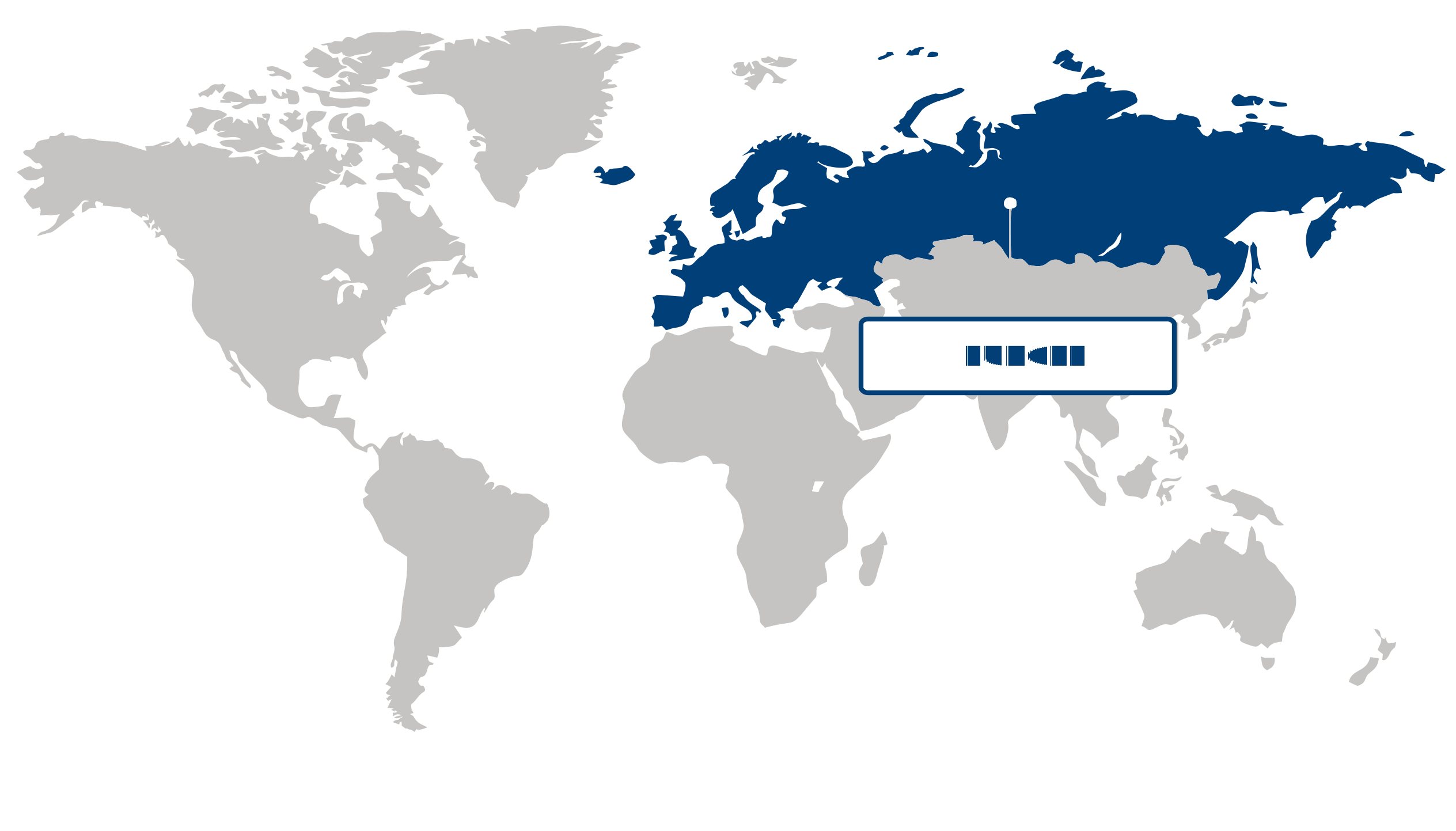
Europe captured more than 38.4% of the global biomass briquette fuel market in 2025, establishing itself as the largest regional shareholder. This leadership stems from a robust rise in demand for clean energy solutions coupled with stringent environmental regulations championing sustainable fuel adoption. The European Union’s ambitious Green Deal and Climate Law, emphasized by the European Commission, have incentivized biomass fuel adoption across sectors. Additionally, the region's focus on reducing carbon emissions aligns with growing consumer preference for greener energy alternatives, as reported by the European Biomass Association (AEBIOM). Advanced supply chain frameworks and technological innovations by regional players, such as Drax Group plc, further consolidate Europe’s competitive edge. Moving forward, Europe’s integrated policy environment and persistent push towards decarbonization suggest enduring growth opportunities within the biomass briquette fuel market, positioning the region as a critical hub for sustainable energy investment.
Germany anchors Europe’s biomass briquette fuel market with its strong manufacturing base and progressive environmental policies. The German Federal Ministry for Economic Affairs and Climate Action has promoted biomass utilization programs, boosting both supply and demand. Leading firms like RWE AG actively incorporate biomass briquettes into their renewable energy portfolios, reflecting consumer and regulatory support alike. France complements this momentum, propelled by government subsidies for sustainable fuels through the Ademe agency. French agricultural cooperatives and energy producers collaborate to optimize biomass resource supply chains, enhancing market efficiency. Together, Germany and France’s strategic initiatives and regulatory frameworks not only buoy their national markets but amplify Europe’s overall position, reinforcing the region’s appeal for biomass briquette fuel ventures.
Asia Pacific Market Analysis:
Asia Pacific emerged as the fastest-growing region in the biomass briquette fuel market, registering a robust CAGR of 9.2%. This rapid expansion is primarily fueled by the region’s abundant biomass feedstock availability and progressive rural electrification policies, which are reshaping energy consumption patterns. Countries across Asia Pacific are witnessing a shift toward sustainable and decentralized energy solutions, supported by governmental initiatives such as India’s National Bio-Energy Mission and China’s renewable energy quotas. These policies not only incentivize biofuel adoption but also address rural energy deficits, boosting demand for biomass briquettes as a clean and cost-effective alternative. Additionally, the growth reflects increasing industrial and residential preference for eco-friendly fuels amid rising environmental awareness, complemented by advancements in briquette production technologies. With ongoing investments in infrastructure and innovation, Asia Pacific is poised to remain a pivotal arena for biomass briquette fuel market development, offering attractive opportunities for investors and producers alike.
Japan plays a critical role in Asia Pacific’s biomass briquette fuel market, driven by its stringent environmental regulations and commitment to carbon neutrality by 2050. The country’s emphasis on sustainable energy is reflected in public-private partnerships fostering the use of biomass resources, including agricultural residues and sawmill waste. Japan’s efficient logistics and advanced manufacturing capabilities enhance the quality and consistency of biomass briquettes, meeting both industrial and residential demands. Initiatives by the Ministry of Economy, Trade and Industry (METI) to support bioenergy innovation further strengthen its market. This strategy positions Japan as a leader in integrating biomass briquettes into its broader renewable energy mix, reinforcing the region’s trajectory toward sustainable energy solutions.
China serves as a powerhouse in Asia Pacific’s biomass briquette fuel market, supported by extensive biomass feedstock reserves and ambitious rural electrification schemes under the Renewable Energy Development Plan by the National Energy Administration. The widespread adoption of biomass briquettes is fueled by growing energy needs in rural areas and government subsidies promoting clean heating solutions to mitigate air pollution. Chinese companies are investing heavily in mechanization and supply chain improvements, enhancing market competitiveness and lowering costs. This enhances biomass briquettes' accessibility and acceptance across diverse consumer segments. China’s scale and policy-driven momentum amplify Asia Pacific’s overall market prospects, making the region a significant hotspot for biomass briquette fuel growth.
North America Market Trends:
North America held a commanding share of the biomass briquette fuel market, driven by its robust emphasis on sustainable energy solutions and increasingly stringent environmental regulations. The region benefits from an advanced agricultural waste processing infrastructure, supporting large-scale biomass briquette production. Regulatory bodies such as the U.S. Environmental Protection Agency (EPA) have reinforced policies promoting renewable fuels, thereby elevating demand from both industrial and residential segments. Companies like Pacific BioEnergy exemplify operational advancements by integrating cutting-edge compaction technologies to enhance briquette quality and supply chain efficiency. Consumer preference in North America increasingly favors eco-friendly alternatives amid rising energy costs, prompting consistent investment in biomass-based fuels. This dynamic, coupled with skilled workforce availability and a growing digital transformation in energy management, positions North America as a critical hub for biomass briquette innovations and market expansion in the coming years.
The U.S. serves as a dominant force within North America’s biomass briquette fuel market, propelled by its strong policy framework and technological leadership. Federal incentives such as the Renewable Fuel Standard have incentivized widespread adoption across industrial sectors, while corporations like Enviva actively expand pellet and briquette production capacity to meet escalating demand. The U.S. energy landscape’s shift towards decarbonization fosters consumer and commercial interest in biomass briquettes as a cost-effective and low-emission alternative to fossil fuels. Additionally, supply chain sophistication and the presence of numerous sustainable forestry management programs facilitate consistent raw material supply. These factors collectively underscore the U.S. role in advancing the regional biomass briquette market, presenting significant strategic opportunities for investors and developers focused on green energy transitions in North America.
| Parameter | North America | Asia Pacific | Europe | Latin America | MEA |
|---|---|---|---|---|---|
| Innovation Hub i Scale Nascent Developing Advanced | |||||
| Cost-Sensitive Region i Scale Low Medium High | |||||
| Regulatory Environment i Scale Restrictive Neutral Supportive | |||||
| Demand Drivers i Scale Weak Moderate Strong | |||||
| Development Stage i Scale Emerging Developing Developed | |||||
| Adoption Rate i Scale Low Medium High | |||||
| New Entrants / Startups i Scale Sparse Moderate Dense | |||||
| Macro Indicators i Scale Weak Stable Strong |
Segment Leadership and Growth Trends
Biomass Briquette Fuel Market Share (%), by Type, 2026
Go beyond the chart, access full insights & data tables
Request Free Sample ReportSawdust briquettes held the largest share in the biomass briquette fuel market in 2025, primarily driven by the abundant availability and cost-effectiveness of sawdust feedstock. This segment benefits from well-established supply chains linked to the wood processing and furniture industries, ensuring consistent raw material availability. Additionally, sustainability mandates promoting waste valorization have increased sawdust’s appeal as a renewable energy source. Reports from the Food and Agriculture Organization (FAO) emphasize sawdust utilization as a key contributor to circular economy practices in forestry sectors, underscoring its environmental advantages. For industry incumbents and new entrants, sawdust briquettes offer a reliable entry point with lower production costs and established demand in both domestic and industrial segments. Given ongoing forestry by-product utilization policies and technological refinement in briquetting machinery, sawdust briquettes will maintain their dominance as a sustainable, cost-efficient biomass fuel option.
Analysis by Application
Power generation represented the largest share of the biomass briquette fuel market in 2025, fueled by increasing adoption of clean energy solutions supplanting fossil fuels. This segment’s lead is bolstered by global policies favoring renewable energy integration, such as the International Renewable Energy Agency’s (IRENA) encouragement of biomass in power mixes. The growing prioritization of reducing carbon emissions has driven utilities and independent power producers to invest in biomass briquette combustion technologies. These trends reflect a shift in customer and regulatory preferences toward low-emission, reliable energy sources. The sector offers strategic advantages including scalability and compatibility with existing thermal power infrastructure, enabling both established energy firms and startups to capitalize on emerging green mandates. Continued policy reinforcement and innovations in efficient biomass power conversion are expected to sustain the segment’s critical role in the evolving energy landscape.
| Segment | Sub-Segment | Largest Segment | Fastest Growing |
|---|---|---|---|
| Type | Sawdust Briquettes, Agro waste Briquettes, Wood Briquettes | ||
| Application | Power Generation, Heating, Cooking, Others |
Competitive Landscape and Market Positioning
The competitive landscape is marked by strategic moves that reinforce technology integration and operational scalability among these top players. Collaborations extending beyond regional confines enable shared innovation in biomass conversion techniques, enhancing feedstock efficiency and product consistency. Several players have enhanced their portfolios through innovative briquette designs and refining moisture reduction processes, which improve thermal efficiency. This ecosystem fosters differentiation while responding to environmental policies, with ongoing investments shaping market evolution and driving competitive advantage through technological sophistication and expanded capacity.
Strategic / Actionable Recommendations for Regional Players
In North America, regional players should focus on aligning with technology developers and forestry management groups to optimize feedstock sourcing and processing methods, bolstering product quality and stabilizing supply chains in response to competitive pressures from established entities.
In the Asia Pacific, companies would benefit from partnerships with agricultural cooperatives to tap into abundant biomass residues, while integrating emerging densification technologies to serve expanding industrial and residential heating markets with cost-effective and eco-friendly briquettes.
Within Europe, leveraging alliances with government bodies and research institutions can facilitate advanced R&D initiatives targeting emission reductions and product standardization, cementing market positioning in regions with stringent sustainability mandates and sophisticated demand profiles.
| Company | Market Share | Company Revenue | Revenue CAGR (%) | Product Portfolio | Geographic Presence | Innovation / R&D Focus | Strategic Developments |
|---|---|---|---|---|---|---|---|
| No companies available. | |||||||
Industry Development/News
| Company Name | Date | Key Development |
|---|
Customize Your Report
Explore examples of how this report can be tailored to different research needs, including custom segments, additional topics or chapters, and related reports. Click a section of the wheel or its numbered marker to explore the available options.
Biomass Briquette Fuel Market — Custom Segments
| Segment | Sub-Segment |
|---|---|
| No segment data available. | |
Biomass Briquette Fuel Market — Custom TOC
| Custom Chapter | Custom Details | ||
|---|---|---|---|
| No custom TOC data available. | |||
Need a different cut of the data?
Request Custom ResearchHow is the biomass briquette fuel industry size expected to evolve during the forecast period?
Which part of the world shows the greatest dominance in the biomass briquette fuel market?
Which area is showing the greatest surge in biomass briquette fuel sector?
What factors give sawdust briquettes segment a competitive edge in the biomass briquette fuel sector?
Which is the largest sub-segment within the application segment for biomass briquette fuel industry?
Who are the leading players in the biomass briquette fuel landscape?
Our Clients
"The information presented in the report was genuinely insightful. The data was clear and easy to understand, which made it much easier to interpret the findings."
Amara Raja Group
"The responsiveness and professionalism exhibited by the team were exemplary. They were readily available to address queries, provide clarifications, and offer additional insights."
ONGC
"The reports offered a comprehensive analysis of various segments within the market. The detailed insights into market trends, and regulatory landscapes were excellent."
TotalEnergies
Our Research Team & Methodology
Every Fundamental Business Insights report is built by a dedicated vertical research team, validated through a structured primary-and-secondary methodology, and reviewed for accuracy before it reaches you.
Research Team Overview
Prepared by the Energy & Power Research Team
Delivery
Published
Demand
Available
Support
Trust & Compliance
Research Domains
10 coverage areasResearch Intelligence
| Source | Reference |
|---|---|
| International Energy Agency (IEA) | www.iea.org |
| U.S. Energy Information Administration (EIA) | www.eia.gov |
| International Renewable Energy Agency (IRENA) | www.irena.org |
| International Electrotechnical Commission (IEC) | www.iec.ch |
| International Organization for Standardization (ISO) | www.iso.org |
| IEEE | www.ieee.org |
| CIGRE (International Council on Large Electric Systems) | www.cigre.org |
| World Energy Council (WEC) | www.worldenergy.org |
| U.S. Department of Energy (DOE) | www.energy.gov |
| International Atomic Energy Agency (IAEA) | www.iaea.org |
| American Petroleum Institute (API) | www.api.org |
| Society of Petroleum Engineers (SPE) | www.spe.org |
| Hydrogen Council | hydrogencouncil.com |
| Battery Council International (BCI) | batterycouncil.org |
| Global Wind Energy Council (GWEC) | gwec.net |
| SolarPower Europe | www.solarpowereurope.org |
| World Bioenergy Association (WBA) | worldbioenergy.org |
| International Hydropower Association (IHA) | www.hydropower.org |
| Edison Electric Institute (EEI) | www.eei.org |
| National Renewable Energy Laboratory (NREL) | www.nrel.gov |
Research Workflow & Quality Assurance
Data Collection
Verified information gathered through primary and secondary research.
Data Triangulation
Cross-validation using multiple independent data sources.
Forecast Modelling
Market estimates developed using historical trends and analytical models.
Analyst Validation
Findings reviewed by domain experts for accuracy and consistency.
Editorial & Quality Review
Final editorial, quality, and compliance checks before publication.
Final Publication
Released after successful completion of the internal review process.
Report Coverage
📊 Market Assessment
- Market Size & Forecast
- Market Segmentation
- Regional Analysis
- Growth Drivers & Challenges
- Market Dynamics
🏢 Competitive Intelligence
- Competitive Landscape
- Company Profiles
- Competitive Benchmarking
- Mergers & Acquisitions
- Market Share Analysis or Key Company Strategies
🔍 Strategic Analysis
- Value Chain Analysis
- Porter's Five Forces
- PESTLE Analysis
- Pricing Trends
- Supply-Demand Analysis
🚀 Future Outlook
- Technology Landscape
- Regulatory Landscape
- Investment & Funding Landscape
- Emerging Opportunities
- Future Market Outlook
Have a question about this report or need a custom scope?
Request Customization