Biogas Plant Market Size & Forecasts 2026-2035, By Segments (Biogas Plant Type, Application, Feedstock), Growth Opportunities, Innovation Landscape, Regulatory Shifts, Strategic Regional Insights (U.S., Japan, China, South Korea, UK, Germany, France), and Competitive Dynamics (Xergi, EnviTec Biogas, PlanET Biogas, Viessmann, Clarke Energy)
Market Size and Growth Outlook
Biogas Plant Market size is projected to expand significantly, moving from USD 5.09 billion in 2025 to USD 12.39 billion by 2035, with a CAGR of 9.3% during the 2026-2035 forecast period. The expected revenue for 2026 is USD 5.5 billion.
Get more details on this report
Request Free Sample ReportBiogas Plant Market Intelligence Snapshot
Regional Market Dynamics
Segment Momentum
Market Expansion Drivers
Leading Market Participants
Global Market Forecast Snapshot
Market Outlook
Regional and Segment Outlook
Market Growth Drivers and Industry Trends
The expanding integration of biogas systems within agricultural operations and municipal waste management is a pivotal growth driver in the biogas plant market. This trend is fueled by increasing demand for sustainable waste processing methods, as seen in initiatives led by the United States Department of Agriculture (USDA), which promotes anaerobic digesters to convert animal manure and organic waste into energy. By reducing methane emissions and managing waste effectively, this adoption responds directly to environmental priorities and resource optimization efforts. For established market players, this opens avenues to tailor biogas solutions for varied waste streams, while new entrants can capitalize on emerging demand in rural and urban settings. Going forward, the rising focus on circular economies and the strategic alignment of agricultural and municipal energy needs will sustain and deepen this integration, driving continued market evolution.
Technological Advancements in Biogas Plant Efficiency
Innovations enhancing the operational efficiency and output quality of biogas plants have markedly influenced the market's trajectory. Cutting-edge improvements in anaerobic digestion processes and feedstock pre-treatment techniques, as highlighted by the Fraunhofer Institute for Environmental, Safety, and Energy Technology UMSICHT, have increased methane yields and lowered downtime. These technological strides address prior limitations in energy consistency and cost-efficiency, thus broadening biogas’s competitiveness against conventional energy forms. Players with R&D capabilities can leverage these advancements to differentiate and upscale their offerings, whereas entrants might focus on niche technologies or process optimizations. The ongoing digital transformation incorporating IoT-based monitoring and automation suggests that efficiency gains will continue to be a critical strategic lever in the biogas plant market.
Policy Support for Renewable & Circular Energy Solutions
Robust governmental policies advocating renewable and circular energy frameworks are significantly catalyzing growth in the biogas plant market. The European Union’s Renewable Energy Directive (RED II), for instance, mandates increased renewable energy usage including targets specifically for biogas contributions, embedding biogas within broader sustainability objectives. Subsidies, tax incentives, and feed-in tariffs provide concrete economic incentives that reduce investment risks and enhance project viability. Both incumbent firms and startups benefit from these frameworks, enabling accelerated project deployment and technology adoption. This policy-backed momentum ensures that biogas plants become integral components of national renewable energy portfolios, setting a regulatory environment conducive to sustained expansion and enabling market resilience amid fluctuating commodity prices.
Industry Restraints:
High Capital Expenditure and Financing Challenges
The substantial upfront capital required for biogas plant construction significantly restrains market growth, as costly infrastructure investments deter many potential operators. The International Renewable Energy Agency (IRENA) highlights that project financing remains a barrier due to perceived investment risks and lengthy payback periods, impacting cash flow-sensitive small and medium enterprises. This financial burden limits scalability and deters new entrants, while established companies must navigate capital allocation amidst competing priorities. Banks and traditional lenders often view biogas projects as high-risk, reducing access to affordable loans. Consequently, companies may prioritize shorter-term returns or alternative renewable technologies over biogas. As financial instruments and government incentives evolve unevenly across regions, this capital hurdle will likely persist, compelling market participants to innovate financing strategies or seek public-private partnerships to mitigate upfront cost pressures.
Regulatory Complexity and Inconsistent Policy Frameworks
Fragmented regulatory landscapes and inconsistent policy support create significant operational uncertainties for biogas plant developers, slowing market advancement. The European Biogas Association reports that varied permitting processes, emission standards, and subsidy schemes across countries complicate project planning and increase compliance costs. This fragmentation challenges companies attempting cross-border expansion, forcing resource-diversion toward navigating legal frameworks rather than scaling production. It also contributes to investor hesitancy, as shifting policies affect project viability. Established players invest heavily in legal expertise, while smaller firms face barriers to entry. Unless harmonized regulations and clearer incentives emerge, biogas market development will remain uneven, with risk-averse stakeholders preferring jurisdictions offering stable and streamlined regulatory environments.
| Growth Driver | Impact on CAGR | Regulatory Influence | Geographic Relevance | Adoption Rate | Impact Timeline |
|---|---|---|---|---|---|
| Adoption of Biogas Systems in Agriculture & Municipalities | 3.00% | Short term (≤ 2 yrs) | Europe, North America | Medium | Fast |
| Technological Advancements in Biogas Plant Efficiency | 3.00% | Medium term (2–5 yrs) | Asia Pacific, Europe | Low | Moderate |
| Policy Support for Renewable & Circular Energy Solutions | 3.30% | Long term (5+ yrs) | Europe, North America | High | Moderate |
Explore Growth Opportunities
Request Free Sample ReportRegional Demand Dynamics
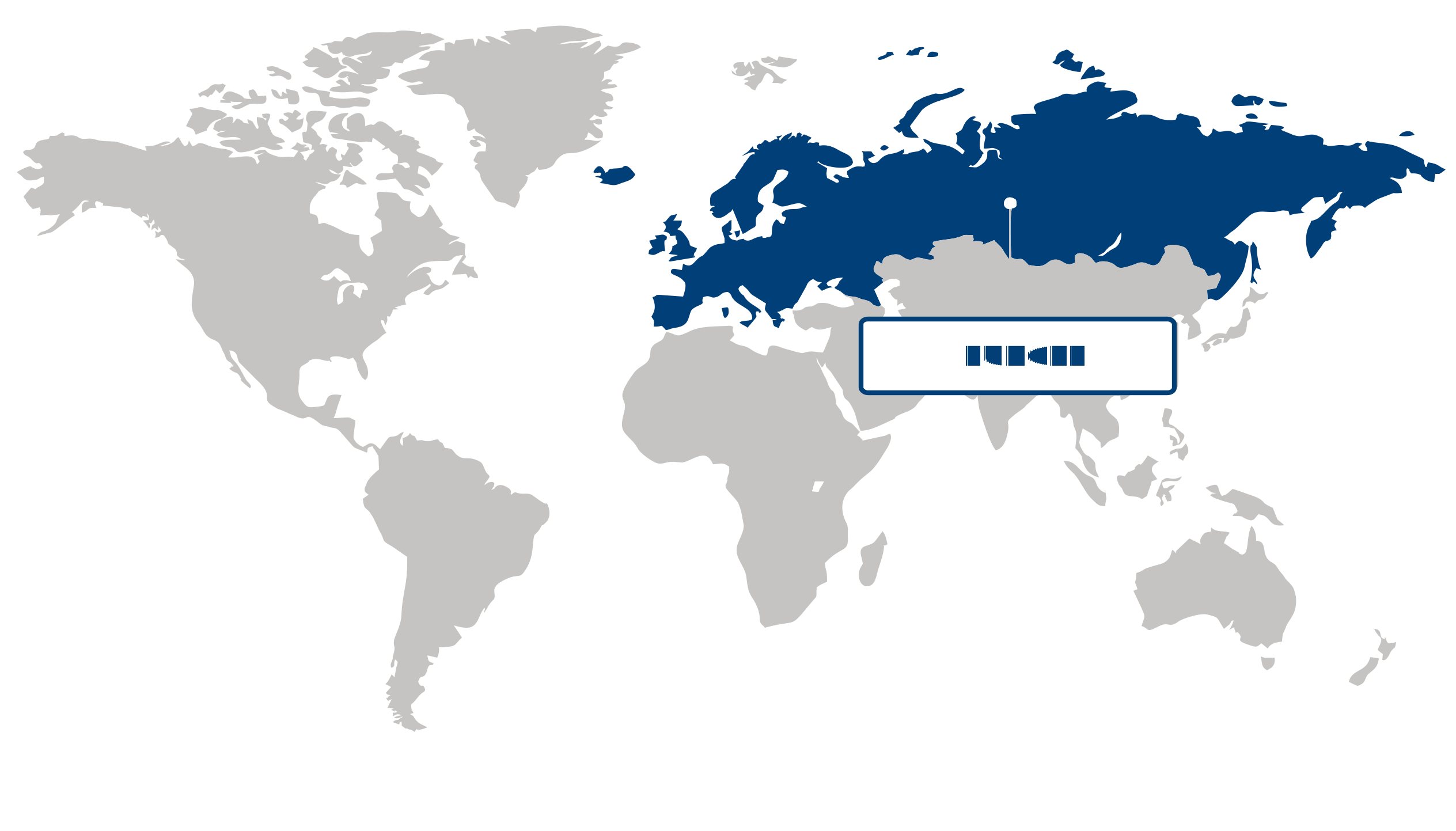
Europe dominated the biogas plant market with a substantial 53.6% share in 2025, led by favorable EU directives and robust investments in bio-energy projects. The region’s leadership stems from stringent sustainability mandates like the European Green Deal, promoting renewable energy adoption and decarbonization. This regulatory landscape encourages both public and private sector spending on biogas infrastructure, as seen in the European Biogas Association’s recent endorsement of enhanced funding mechanisms. Additionally, operational advancements in anaerobic digestion technologies and efficient supply chain management across member states accelerate capacity expansions. Market demand is further driven by increasing consumer and industrial preferences for circular economy solutions. Europe’s multi-country collaborative frameworks and technological prowess ensure resilient development, positioning it for continued strategic growth amid evolving energy policies and climate targets.
Germany anchors the European biogas plant market as both an innovation hub and the largest producer of biogas energy. The country’s Renewable Energy Sources Act (EEG) provides financial incentives that have spurred extensive adoption, including large-scale projects by companies like EnviTec Biogas AG. Furthermore, Germany’s agricultural sector leverages waste-to-energy conversion effectively, enhancing feedstock supply chains and operational efficiency. This integrated ecosystem supports Germany’s role in setting industry standards that influence neighboring countries. Its leadership in technology development and supportive government policies reinforce Europe’s dominance, enabling the continent to capitalize on expanding renewable energy commitments.
France plays a pivotal role in Europe’s biogas plant market through its National Low Carbon Strategy, which has galvanized investment in biogas from organic waste. The country’s focus on rural energy transition aligns with growing environmental consciousness and regional development goals, exemplified by Veolia’s partnerships in biogas facility expansions. France’s emphasis on innovation in upgrading biogas to biomethane for grid injection supports cleaner fuel adoption, catering to industrial and transportation sectors. With strong regional incentives and evolving infrastructure, France solidifies Europe’s market growth by diversifying application areas and enhancing supply reliability, ensuring the continent’s sustained leadership in renewable energy transition.
Asia Pacific Market Analysis:
Asia Pacific emerged as the fastest-growing region in the biogas plant market, registering a robust CAGR of 11.2%. This impressive expansion is primarily driven by the scaling of waste-to-energy projects across its rapidly urbanizing economies, which is reshaping energy demand and sustainability imperatives. Increasing urban populations have intensified the need for cleaner energy sources, prompting governments and private sectors to invest heavily in biogas technologies that convert organic waste into renewable energy. Regulatory frameworks, such as China’s National Energy Administration policies, and Japan’s strategic plans for sustainable urban development have accelerated deployment, fostering technological innovations and operational efficiencies. Additionally, the Asia Pacific region benefits from an expanding skilled workforce and improving logistics infrastructure, enabling the growth of biogas plant installations in emerging and developed markets alike. Moving forward, the region’s emphasis on circular economy principles and carbon-neutral targets presents substantial opportunities to consolidate its leadership in the biogas plant market.
China serves as a critical engine powering the Asia Pacific biogas plant market’s rapid growth, leveraging its vast agricultural and municipal waste streams to address escalating energy needs sustainably. The Chinese government’s commitment to environmental protection and renewable energy is reflected in its strategic subsidies and standards promulgated by the Ministry of Ecology and Environment. This has led to widespread adoption of biogas plants in both rural and urban areas, supported by innovations in anaerobic digestion technologies and improved supply chain integration. For instance, China National Chemical Corporation’s recent investment in next-generation biogas facilities underscores the country’s push toward greener industrial models. These developments not only cater to shifting consumer preferences for clean energy but also reduce dependence on imported fuels, solidifying China’s market leadership within the region.
Japan plays a pivotal role in Asia Pacific's biogas plant market by integrating advanced technologies and stringent environmental policies to optimize waste-to-energy conversion, particularly in densely populated urban centers. The Ministry of the Environment’s supportive framework encourages private-public partnerships and R&D funding to enhance biogas plant efficiency and scalability. Companies like JGC Corporation are pioneering modular biogas systems designed for urban settings, aligning with Japan’s demographic trends and energy security goals. Moreover, Japan’s focus on digital transformation in facility management enables real-time monitoring and process optimization, minimizing operational costs while maximizing output. This strategic approach amplifies the impact of the regional waste-to-energy scaling trend, positioning Japan as a model for sustainable urban energy solutions within Asia Pacific’s dynamic biogas plant market.
North America Market Trends:
North America held a commanding share in the biogas plant market, driven by increasing investments in renewable energy and stringent environmental regulations. The region’s shift toward sustainable energy sources and waste management solutions has elevated demand for biogas technologies, supported by policy measures such as the U.S. Inflation Reduction Act and Canada’s Clean Fuel Standard. A growing emphasis on reducing greenhouse gas emissions alongside technological advancements in anaerobic digestion and feedstock flexibility have bolstered operational efficiencies, as seen in recent projects led by companies like Xebec Adsorption Inc. and EnviTec Biogas. Supply chain improvements and the integration of digital monitoring tools further enhance biogas plant scalability and cost-effectiveness. These dynamics collectively position North America as an attractive market with expanding opportunities for innovation and capacity enhancement throughout the coming years.
The U.S. plays a pivotal role in North America’s biogas plant market, where supportive federal incentives and state-level renewable portfolio standards fuel adoption. The U.S. Environmental Protection Agency’s AgSTAR program exemplifies efforts to promote on-farm anaerobic digesters, enabling agricultural sectors to convert waste into energy efficiently. Additionally, technological collaborations among industry leaders like DMT Clear Gas Solutions have advanced biogas upgrading systems, reflecting increasing market competition and innovation. These developments underscore the U.S.’s strategic importance in scaling biogas infrastructure, facilitating energy transition goals, and driving investor confidence across the North American region.
| Parameter | North America | Asia Pacific | Europe | Latin America | MEA |
|---|---|---|---|---|---|
| Innovation Hub i Scale Nascent Developing Advanced | |||||
| Cost-Sensitive Region i Scale Low Medium High | |||||
| Regulatory Environment i Scale Restrictive Neutral Supportive | |||||
| Demand Drivers i Scale Weak Moderate Strong | |||||
| Development Stage i Scale Emerging Developing Developed | |||||
| Adoption Rate i Scale Low Medium High | |||||
| New Entrants / Startups i Scale Sparse Moderate Dense | |||||
| Macro Indicators i Scale Weak Stable Strong |
Segment Leadership and Growth Trends
Biogas Plant Market Share (%), by Biogas Plant Type, 2026
Go beyond the chart, access full insights & data tables
Request Free Sample ReportDry fermentation plants dominated the biogas plant market type segment in 2025, driven by their superior efficiency in processing solid organic waste without requiring pre-treatment. This operational advantage aligns well with end-users prioritizing waste-to-energy solutions that reduce handling complexities and enhance throughput. The preference for dry systems is further reinforced by policy frameworks promoting sustainable waste management and the resulting ease of integration into existing supply chains. For example, the German Biogas Association has highlighted dry fermentation technology as pivotal in their national renewable energy strategy. Leading players gain strategic benefits by leveraging this segment’s efficiency and scalability, positioning them to meet evolving environmental regulations and community sustainability goals. The segment’s continuous technological refinements and expanding applications ensure its sustained dominance amid increasing global efforts to decarbonize waste disposal.
Analysis by Application
Electricity generation represented the largest share within the biogas plant market application segment due to escalating demand for renewable electricity and a global drive toward clean energy transitions. This segment resonates strongly with customers seeking stable, sustainable power sources that contribute to energy security and reduce carbon footprints. Regulatory milestones such as incentives under the U.S. Department of Energy’s Bioenergy Technologies Office have intensified investments in biogas-powered electricity projects. Competitive dynamics favor firms developing integrated power solutions that can capitalize on grid modernization and digital monitoring trends. The segment offers considerable opportunities for incumbents and new entrants to innovate in power-to-grid integration and enhance economic viability. Given ongoing global commitments to decarbonize electricity grids, this application will likely maintain a critical role in energy portfolios worldwide.
Analysis by Feedstock
Agricultural waste held the largest share in the biogas plant market feedstock segment, propelled by the high organic content and widespread availability of agricultural residues suitable for biogas production. This aligns with growing demand patterns favoring low-cost, renewable inputs, especially in rural and farming communities aiming to optimize waste utilization and energy self-sufficiency. International organizations like the Food and Agriculture Organization (FAO) underscore the potential of agricultural residues for sustainable bioenergy within circular economy frameworks. Supply chain developments supporting decentralized feedstock collection and processing enhance segment accessibility. This segment presents strategic opportunities for firms to develop localized, cost-effective solutions supporting rural electrification and waste management policies. Continued advancements in feedstock preprocessing and digestion technologies are expected to underpin the segment’s relevance as biogas plants increasingly complement agricultural sustainability initiatives.
| Segment | Sub-Segment | Largest Segment | Fastest Growing |
|---|---|---|---|
| Biogas Plant Type | Dry Fermentation Plants, Industrial Digesters, Small-Scale Digesters | ||
| Application | Electricity Generation, Biofuel Generation, Heat Generation | ||
| Feedstock | Sewage Sludge, Industrial Waste, Food and Beverages Waste, Food and Beverages Processing Residue, Energy Crops, Agricultural Waste |
Unlock insights tailored to your business with our bespoke market research solutions.
Click to get your customized report now.
Competitive Landscape and Market Positioning
The competitive landscape reveals a dynamic interplay of alliances, technological advancements, and expansion efforts shaping market trajectories. Players are enhancing their value propositions via integrated technologies enhancing biogas yield and purification. Cross-border collaborations and selective acquisitions have accelerated knowledge exchange, while investments in digital monitoring and process automation bolster operational resilience. Product innovations targeting niche feedstock segments further differentiate company offerings. These strategic evolutions reinforce market leadership by optimizing cost structures, sustainability credentials, and customer engagement, intensifying competition and driving continuous innovation.
Strategic / Actionable Recommendations for Regional Players
In North America, forging synergies with technology providers specializing in automation and biogas upgrading systems can amplify competitive positioning. Emphasizing modular design solutions tailored for agricultural and organic waste streams will unlock growth potential amid stringent environmental regulations.
Asia Pacific players should harness advanced feedstock characterization techniques and digital process controls to enhance plant efficiency. Collaborating with government bodies to align with renewable energy initiatives and industrial waste management programs can facilitate scalable deployments.
European entities may capitalize on established biogas expertise by integrating circular economy principles and symbiotic partnerships with the agriculture and waste sectors. Expanding service portfolios to include plant lifecycle management and carbon credit facilitation will differentiate offerings amidst increasing regulatory pressures.
| Company | Market Share | Company Revenue | Revenue CAGR (%) | Product Portfolio | Geographic Presence | Innovation / R&D Focus | Strategic Developments |
|---|---|---|---|---|---|---|---|
| No companies available. | |||||||
Customize Your Report
Explore examples of how this report can be tailored to different research needs, including custom segments, additional topics or chapters, and related reports. Click a section of the wheel or its numbered marker to explore the available options.
Biogas Plant Market — Custom Segments
| Segment | Sub-Segment |
|---|---|
| No segment data available. | |
Biogas Plant Market — Custom TOC
| Custom Chapter | Chapter Details | ||
|---|---|---|---|
| No custom TOC data available. | |||
Need a different cut of the data?
Request Custom ResearchHow much is the biogas plant industry expected to grow by 2035?
Which geographical region leads the biogas plant market market?
Which region has emerged as the fastest-growing for the biogas plant sector?
Which is the largest sub-segment within the biogas plant type segment for biogas plant industry?
Why does electricity generation sub-segment dominate the application segment of biogas plant sector?
How does agricultural waste segment fare in the biogas plant industry?
Which companies are driving growth in the biogas plant landscape?
Our Clients
"The information presented in the report was genuinely insightful. The data was clear and easy to understand, which made it much easier to interpret the findings."
Amara Raja Group
"The responsiveness and professionalism exhibited by the team were exemplary. They were readily available to address queries, provide clarifications, and offer additional insights."
ONGC
"The reports offered a comprehensive analysis of various segments within the market. The detailed insights into market trends, and regulatory landscapes were excellent."
TotalEnergies
Our Research Team & Methodology
Every Fundamental Business Insights report is built by a dedicated vertical research team, validated through a structured primary-and-secondary methodology, and reviewed for accuracy before it reaches you.
Research Team Overview
Prepared by the Energy & Power Research Team
Delivery
Published
Demand
Available
Support
Trust & Compliance
Research Intelligence
| Source | Reference |
|---|---|
| International Energy Agency (IEA) | www.iea.org |
| U.S. Energy Information Administration (EIA) | www.eia.gov |
| International Renewable Energy Agency (IRENA) | www.irena.org |
| International Electrotechnical Commission (IEC) | www.iec.ch |
| International Organization for Standardization (ISO) | www.iso.org |
| IEEE | www.ieee.org |
| CIGRE (International Council on Large Electric Systems) | www.cigre.org |
| World Energy Council (WEC) | www.worldenergy.org |
| U.S. Department of Energy (DOE) | www.energy.gov |
| International Atomic Energy Agency (IAEA) | www.iaea.org |
| American Petroleum Institute (API) | www.api.org |
| Society of Petroleum Engineers (SPE) | www.spe.org |
| Hydrogen Council | hydrogencouncil.com |
| Battery Council International (BCI) | batterycouncil.org |
| Global Wind Energy Council (GWEC) | gwec.net |
| SolarPower Europe | www.solarpowereurope.org |
| World Bioenergy Association (WBA) | worldbioenergy.org |
| International Hydropower Association (IHA) | www.hydropower.org |
| Edison Electric Institute (EEI) | www.eei.org |
| National Renewable Energy Laboratory (NREL) | www.nrel.gov |
Research Workflow & Quality Assurance
Data Collection
Verified information gathered through primary and secondary research.
Data Triangulation
Cross-validation using multiple independent data sources.
Forecast Modelling
Market estimates developed using historical trends and analytical models.
Analyst Validation
Findings reviewed by domain experts for accuracy and consistency.
Editorial & Quality Review
Final editorial, quality, and compliance checks before publication.
Final Publication
Released after successful completion of the internal review process.
Report Coverage
📊 Market Assessment
- Market Size & Forecast
- Market Segmentation
- Regional Analysis
- Growth Drivers & Challenges
- Market Dynamics
🏢 Competitive Intelligence
- Competitive Landscape
- Company Profiles
- Competitive Benchmarking
- Mergers & Acquisitions
- Market Share Analysis or Key Company Strategies
🔍 Strategic Analysis
- Value Chain Analysis
- Porter's Five Forces
- PESTLE Analysis
- Pricing Trends
- Supply-Demand Analysis
🚀 Future Outlook
- Technology Landscape
- Regulatory Landscape
- Investment & Funding Landscape
- Emerging Opportunities
- Future Market Outlook
Have a question about this report or need a custom scope?
Request Customization