Biodegradable Microbead Market Size & Forecasts 2026-2035, By Segments (Size, Application, Material, End-User), Growth Opportunities, Innovation Landscape, Regulatory Shifts, Strategic Regional Insights (U.S., Japan, China, South Korea, UK, Germany, France), and Competitive Dynamics (Biomer, Rush Sustainable, Biotech Polymers, Green Microbeads, EcoSphere Technologies)
Market Size and Growth Outlook
Biodegradable Microbead Market size is projected to grow steadily from USD 1.7 billion in 2025 to USD 6.41 billion by 2035, demonstrating a CAGR exceeding 14.2% through the forecast period (2026-2035). The 2026 revenue is estimated at USD 1.92 billion.
Get more details on this report
Request Free Sample ReportBiodegradable Microbead Market Intelligence Snapshot
Regional Market Dynamics
Segment Momentum
Market Expansion Drivers
Leading Market Participants
Global Market Forecast Snapshot
Market Outlook
Regional and Segment Outlook
Market Growth Drivers and Industry Trends
The enactment of regulatory bans on plastic microbeads by governments and agencies such as the U.S. Food and Drug Administration (FDA) and the European Chemicals Agency (ECHA) has significantly accelerated the shift towards biodegradable alternatives in the biodegradable microbead market. These mandates are forcing personal care manufacturers to eliminate non-biodegradable microbeads, driving demand for eco-friendly substitutes that comply with legal frameworks. This legal landscape compels both established players and startups to innovate rapidly, ensuring regulatory compliance while maintaining product performance. The tightening regulatory environment creates strategic opportunities for firms investing in sustainable product formulations, fostering partnerships with material innovators. As more regions adopt similar restrictions, the biodegradable microbead market will witness a sustained, compliance-driven expansion anchored in evolving regulatory standards.
Rising Consumer Preference for Eco-Friendly and Sustainable Cosmetics
Changing consumer priorities, particularly among millennials and Gen Z, are fueling demand for sustainable personal care solutions, significantly influencing the biodegradable microbead market. Research by the International Trade Centre highlights that 66% of global consumers are willing to pay more for environmentally friendly products, underscoring a seismic shift in buying behaviors. This trend challenges manufacturers to incorporate biodegradable microbeads sourced from natural or renewable materials to align with consumer values on sustainability and transparency. Brands like L’Oreal and Unilever have capitalized on this by launching eco-conscious product lines, signaling a lucrative avenue for incumbents and new entrants alike. Sustained consumer demand for green beauty products is expected to steer the market towards innovation and differentiation based on environmental stewardship.
Innovation in Bio-Based Polymer and Natural Exfoliant Materials
Advancements in bio-based polymers and the development of natural exfoliants, such as cellulose and apricot shell powder, are redefining product formulations within the biodegradable microbead market. Companies like Evonik and Croda International are pioneering these material innovations, enhancing product efficacy while reducing environmental footprints. These innovations address performance gaps historically associated with biodegradable materials, enabling wider adoption across premium and mass-market personal care segments. For market participants, this technological evolution presents strategic openings to differentiate through patented bio-based solutions and tailored applications. The trajectory of material innovation signals a durable competitive advantage for businesses that prioritize R&D investment, facilitating scalable, sustainable alternatives aligned with evolving consumer and regulatory expectations.
Industry Restraints:
High Production Costs and Material Sourcing Challenges
The biodegradable microbead market faces significant constraints from elevated production costs and limited availability of raw materials such as polylactic acid (PLA) and polyhydroxyalkanoates (PHA). These materials typically require complex fermentation or polymerization processes that increase operational expenses and hinder large-scale manufacturing efficiency. For instance, Corbion and NatureWorks have publicly addressed challenges in scaling biopolymer production economically. This cost premium limits adoption among price-sensitive consumers and formulators accustomed to lower-cost conventional plastics. Established firms must balance investment in process innovation against profitability pressures, while new entrants confront high barriers to entry due to capital-intensive infrastructure. As biopolymer supply chains mature and technological advances improve yield, cost pressures will moderate but remain a critical gatekeeper influencing product positioning and competitive dynamics in the biodegradable microbead sector.
Fragmented Regulatory Landscape and Compliance Complexity
Navigating diverse and evolving regulations poses a formidable restraint for biodegradable microbead manufacturers. Differing definitions of “biodegradability” and disparate standards across key markets such as the EU, U.S., and Asia complicate certification and market entry. The European Chemicals Agency’s (ECHA) recent microplastic restrictions and the U.S. Environmental Protection Agency’s reporting requirements exemplify this fragmentation. Compliance demands extensive testing and documentation, increasing time-to-market and elevating legal risks. This fragmentation disproportionately burdens smaller firms lacking compliance resources while slowing innovation cycles for established players. Consequently, companies often prioritize markets with clearer regulatory roadmaps or delay launches pending regulatory clarity. Going forward, harmonization efforts by international bodies may ease complexity, but in the near term, regulatory uncertainty will remain a pivotal strategic consideration shaping investment and commercialization decisions.
| Growth Driver | Impact on CAGR | Regulatory Influence | Geographic Relevance | Adoption Rate | Impact Timeline |
|---|---|---|---|---|---|
| Regulatory bans on plastic microbeads in personal care products | 3.20% | Short term (≤ 2 yrs) | Europe, North America; Spillover: Asia Pacific | High | Fast |
| Rising consumer preference for eco-friendly and sustainable cosmetics | 2.80% | Medium term (2–5 yrs) | North America, Europe; Spillover: Asia Pacific | Medium | Moderate |
| Innovation in bio-based polymer and natural exfoliant materials | 2.50% | Long term (5+ yrs) | Asia Pacific, Europe; Spillover: North America | Low | Moderate |
Unlock insights tailored to your business with our bespoke market research solutions.
Click to get your customized report now.
Regional Demand Dynamics
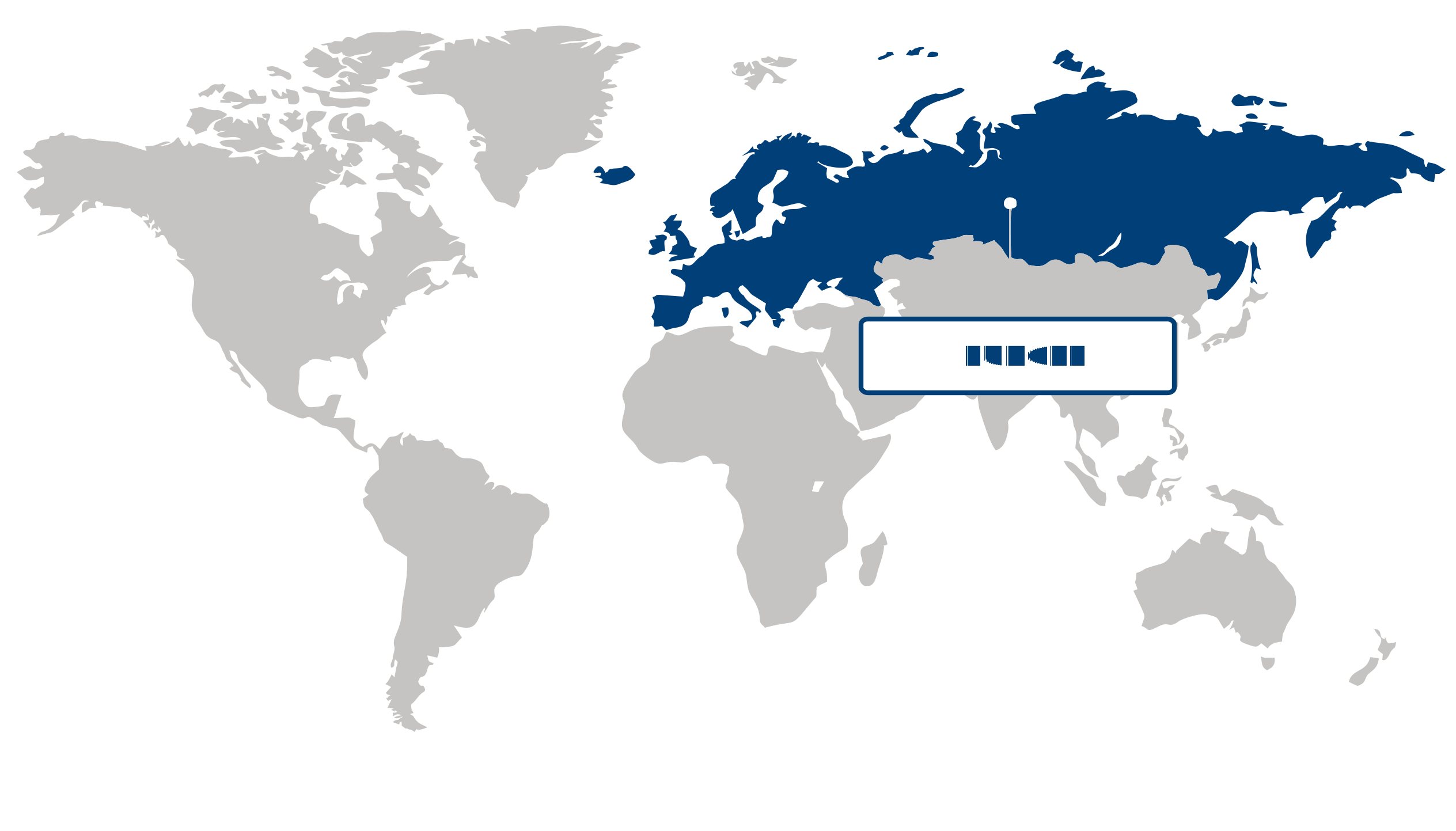
Europe dominated the biodegradable microbead market in 2025, representing more than 36.5% of the global share. This leading position is driven primarily by stringent environmental regulations and comprehensive bans on synthetic plastic microbeads across the region. For instance, the European Chemicals Agency's (ECHA) regulatory framework has significantly restricted non-biodegradable microbeads usage in personal care products, pushing manufacturers toward sustainable alternatives. This shift aligns with increasing consumer demand for eco-friendly ingredients and sustainability commitments by major European cosmetics firms like L’Oréal, which emphasize biodegradable components. Moreover, robust recycling infrastructures and heightened awareness about marine pollution reinforce this transition. Looking forward, Europe’s integrated policy approach and strong consumer activism position it as a fertile ground for innovation and growth in biodegradable microbeads, promising sustained market expansion and investment opportunities.
Germany anchors Europe’s biodegradable microbead market, propelled by aggressive regulatory enforcement and high consumer environmental consciousness. The Federal Environment Agency’s strict oversight on microplastic pollutants compels companies to reformulate products rapidly, fostering competitive innovation among local and multinational firms. For example, BASF’s recent launch of biodegradable polymer microbeads underscores Germany’s pivotal role in advancing eco-friendly formulations. Additionally, German consumers exhibit a marked preference for green personal care products, amplifying demand. This environment fuels Germany’s leadership in driving regional market dynamics, reinforcing Europe’s dominance.
France also plays a crucial role in shaping Europe’s biodegradable microbead market through progressive policy measures and strong sustainability advocacy. The French Ministry for Ecological Transition has spearheaded the prohibition of synthetic microbeads in cosmetics, catalyzing widespread industry adoption of biodegradable alternatives. Key French players, including Capgemini’s sustainability consulting division, assist brands in navigating regulatory compliance while emphasizing green innovation. France’s cultural emphasis on environmental stewardship and growing consumer preference for natural products amplify this trend. Together with Germany, France’s regulatory and market activities consolidate Europe’s stature as the global leader in biodegradable microbead adoption and development.
Asia Pacific Market Analysis:
Asia Pacific emerged as the fastest-growing region in the biodegradable microbead market, registering a robust CAGR of 15.8%. This rapid growth is driven by a pronounced shift towards eco-friendly personal care ingredients and strong governmental initiatives advocating sustainable alternatives. Heightened consumer consciousness about environmental impact has altered purchasing behaviors, prompting major personal care companies to reformulate products with biodegradable microbeads. Regulatory agencies such as the Ministry of the Environment in Japan and the Ministry of Ecology and Environment in China have introduced stringent guidelines limiting the use of conventional plastic microbeads, reinforcing market momentum. Additionally, Asia Pacific’s manufacturing ecosystem supports rapid innovation and scaling of biodegradable materials, as evident from collaborations between domestic chemical firms and global ingredient suppliers like Mitsubishi Chemical and Sinopec. With continued policy support and evolving consumer preferences, Asia Pacific offers a significant growth landscape for biodegradable microbead solutions across personal care and other consumer sectors in the near term.
Japan plays a pivotal role in Asia Pacific’s biodegradable microbead market, leveraging its advanced regulatory framework and high consumer environmental awareness. The Ministry of the Environment Japan’s Plastic Waste Management Law has accelerated replacement of non-biodegradable microbeads in skincare and cosmetics, pushing companies like Shiseido and Kao Corporation to lead in sustainable ingredient adoption. Japanese consumers’ premium preference for eco-conscious products and increasing demand for cruelty-free, biodegradable formulations are reinforcing this trend. The country’s extensive R&D infrastructure further facilitates innovation in biopolymer-based microbead alternatives, improving biodegradability without compromising product performance. Japan thus exemplifies how regulatory vigor combined with consumer eco-sensitivity creates fertile ground for biodegradable microbeads, reinforcing Asia Pacific’s leadership in this market.
China’s role in the biodegradable microbead market is defined by government-driven sustainability mandates and its vast personal care industry scale. Strong policies led by the Ministry of Ecology and Environment, such as the Plastic Pollution Control Action Plan, are steering manufacturers toward sustainable materials to curb pollution. Leading Chinese companies like Proya Cosmetics have begun integrating biodegradable microbeads to align with these evolving regulations and consumer demand for greener products. The expanding middle-class consumer base’s rising disposable income complements sustainability priorities, fostering rapid market adoption. Additionally, supply chain advancements and investments in biopolymer production capabilities position China as a key hub for both innovation and large-scale supply of biodegradable microbeads. China’s dynamic market depth and regulatory alignment strengthen Asia Pacific’s collective growth outlook in the biodegradable microbead sector.
North America Market Trends:
North America held a commanding share in the biodegradable microbead market, driven by progressive environmental policies and shifting consumer values favoring sustainable personal care and cleaning products. The region’s emphasis on reducing plastic pollution, complemented by stringent regulations such as the U.S. Microbead-Free Waters Act and similar initiatives by agencies like Environment and Climate Change Canada, has accelerated the transition towards biodegradable alternatives. Corporate initiatives spotlighting eco-friendly formulations by key players including Johnson & Johnson and Procter & Gamble have also stimulated innovation and supply chain realignment. Moreover, increasing investments in biopolymer technologies and enhanced waste management infrastructure have fostered market resilience amid fluctuating commodity prices. As awareness grows and regulatory frameworks tighten, North America offers significant opportunities for stakeholders to capitalize on consumer demand for greener products and to lead in technological advancements that align with global sustainability commitments.
The U.S. plays a pivotal role in the biodegradable microbead market, propelled by a combination of robust regulatory enforcement and heightened consumer environmental consciousness. The enforcement of the Microbead-Free Waters Act by the U.S. Environmental Protection Agency effectively curbed the use of conventional plastic microbeads, prompting rapid adoption of biodegradable alternatives among manufacturers. Companies like The Clorox Company have leveraged this landscape by launching biodegradable formulations that meet consumer expectations for efficacy and environmental safety. The U.S. market also benefits from strong R&D capabilities and established supply chains specializing in biopolymers, supported by government grants and private sector investments in sustainable materials. This dynamic fosters innovation and competitive differentiation, positioning the U.S. as a bellwether within the broader North American market and underscoring its strategic importance for investors targeting growth in biodegradable microbead applications.
| Parameter | North America | Asia Pacific | Europe | Latin America | MEA |
|---|---|---|---|---|---|
| Innovation Hub i Scale Nascent Developing Advanced | |||||
| Cost-Sensitive Region i Scale Low Medium High | |||||
| Regulatory Environment i Scale Restrictive Neutral Supportive | |||||
| Demand Drivers i Scale Weak Moderate Strong | |||||
| Development Stage i Scale Emerging Developing Developed | |||||
| Adoption Rate i Scale Low Medium High | |||||
| New Entrants / Startups i Scale Sparse Moderate Dense | |||||
| Macro Indicators i Scale Weak Stable Strong |
Segment Leadership and Growth Trends
Biodegradable Microbead Market Share (%), by Size, 2026
Go beyond the chart, access full insights & data tables
Request Free Sample ReportThe biodegradable microbead market is led by the micro (100 µm) segment, which held the largest share in 2025. This dominance is largely anchored in stringent regulatory bans on plastic microbeads in personal care products, driving manufacturers to adopt biodegradable alternatives. Agencies like the U.S. Environmental Protection Agency (EPA) have enforced microbead prohibitions, prompting a shift towards micro-sized biodegradable beads that align with environmental compliance. Consumer preference for sustainable, small-particle formulations further elevates demand, while supply chain adaptations ensure the availability of these microbeads at scale. For both established chemical producers and innovative startups, this segment offers a strategic edge in meeting regulatory and ecological mandates. Given ongoing regulatory scrutiny and heightened environmental advocacy, the micro segment is poised to remain pivotal in sustainable product portfolios.
Analysis by Application
The biodegradable microbead market is led by personal care cosmetics, which represented the largest share in 2025. Growth is fueled by the rising adoption of eco-friendly exfoliants in cosmetics formulations as consumers increasingly seek products that combine efficacy with environmental responsibility. Industry leaders like L'Oréal and Unilever have publicly committed to phasing out plastic microbeads, embracing biodegradable alternatives that satisfy evolving regulatory frameworks and green consumer trends. This shift highlights the segment’s responsiveness to both cultural demands for ethical beauty and digital innovation in product transparency. For incumbents and entrants alike, capitalizing on this preference creates differentiation and brand loyalty. The momentum toward sustainable personal care ensures the segment’s enduring relevance amid tightening environmental regulations and evolving consumption patterns.
Analysis by Material
The biodegradable microbead market is dominated by the cellulose segment, which represented the largest share in 2025. This leadership stems from cellulose’s high biodegradability and natural sourcing, appealing to manufacturers prioritizing sustainable supply chains and product stewardship. Organizations such as the Forest Stewardship Council (FSC) endorse sustainably sourced cellulose, reinforcing its market credibility. Additionally, the material’s compatibility with existing cosmetic formulations supports seamless integration for product developers. Competitive dynamics favor cellulose providers who innovate on purity and functionality, while brands leverage sustainability certifications to meet consumer demands. As global emphasis on renewable biomaterials intensifies, cellulose-based microbeads present strategic growth avenues. The segment’s alignment with circular economy principles positions it well for continued prominence amid escalating ecological standards and resource-conscious innovation.
| Segment | Sub-Segment | Largest Segment | Fastest Growing |
|---|---|---|---|
| Size | Micro (100 m), Macro (>100 m) | ||
| Application | Personal Care Cosmetics, Household Industrial Cleaning Products, Pharmaceuticals | ||
| Material | Polylactic Acid (PLA), Cellulose, Starch-Based | ||
| End-User | Manufacturers, Distributors, Retailers |
Competitive Landscape and Market Positioning
The competitive landscape is marked by a dynamic interplay of collaborative efforts and technological advancements. Leading companies have expanded their capabilities through selective alliances and integrations, bolstering production efficiency and ecological performance. Several players have intensified their focus on next-generation biodegradable formulations, enhancing functional properties like biodegradation rate and compatibility with diverse applications. These moves have prompted an acceleration of market pace and deeper penetration in cosmetics, personal care, and industrial sectors. This vigorous activity positions the top companies not only as product innovators but also as proactive responders to evolving environmental policies and consumer sustainability expectations worldwide.
Strategic / Actionable Recommendations for Regional Players
In North America, stakeholders can capitalize on the robust regulatory emphasis on environmentally friendly materials by aligning with research institutions to develop advanced biodegradable polymers, enhancing product differentiation in personal care sub-segments where demand is surging. Collaborations aimed at circular economy initiatives would further solidify market trust and broaden application scopes.
Within the Asia Pacific region, leveraging rapid industrial growth and a vast manufacturing base by integrating cutting-edge biopolymer technologies can foster competitive advantages. Targeting high-growth sectors like cosmetics and water treatment with tailored biodegradable microbeads can accelerate market adoption. Forming cross-border partnerships to optimize supply chains and innovation diffusion will also be critical.
European players should focus on deepening ties with sustainability-driven ventures and regulatory bodies to maintain leadership in eco-compliant solutions. Emphasizing product customization and engaging in knowledge exchange through alliances can enhance responsiveness to stringent environmental regulations and niche market needs, especially in luxury and pharmaceutical segments where brand reputation is paramount.
| Company | Market Share | Company Revenue | Revenue CAGR (%) | Product Portfolio | Geographic Presence | Innovation / R&D Focus | Strategic Developments |
|---|---|---|---|---|---|---|---|
| No companies available. | |||||||
Industry Development/News
| Company Name | Date | Key Development |
|---|
Customize Your Report
Explore examples of how this report can be tailored to different research needs, including custom segments, additional topics or chapters, and related reports. Click a section of the wheel or its numbered marker to explore the available options.
Biodegradable Microbead Market — Custom Segments
| Segment | Sub-Segment |
|---|---|
| No segment data available. | |
Biodegradable Microbead Market — Custom TOC
| Custom Chapter | Custom Details | ||
|---|---|---|---|
| No custom TOC data available. | |||
Need a different cut of the data?
Request Custom ResearchHow is the biodegradable microbead industry expected to grow over the next 10 years?
Which region captures the largest portion of the biodegradable microbead market value?
Where has the biodegradable microbead sector recorded the sharpest year-over-year increase?
What factors give micro (100 m) segment a competitive edge in the biodegradable microbead sector?
Which is the largest sub-segment within the application segment for biodegradable microbead industry?
Why does cellulose sub-segment dominate the material segment of biodegradable microbead sector?
How does manufacturers segment fare in the biodegradable microbead industry?
Who holds a significant market share in the biodegradable microbead landscape?
Our Clients
"The report helped us understand emerging consumer trends in our product category. It clarified where to focus innovation for the next product launch."
LyondellBasell
"The regional forecast section was incredibly useful. We were able to identify two new potential partners in Europe thanks to the vendor mapping you included."
SABIC
"We appreciated how actionable the recommendations were. It guided us to improve supply chain resilience."
Olin Corporation
Our Research Team & Methodology
Every Fundamental Business Insights report is built by a dedicated vertical research team, validated through a structured primary-and-secondary methodology, and reviewed for accuracy before it reaches you.
Research Team Overview
Prepared by the Chemicals & Materials Research Team
Delivery
Published
Demand
Available
Support
Trust & Compliance
Research Domains
10 coverage areasResearch Intelligence
| Source | Reference |
|---|---|
| American Chemistry Council (ACC) | www.americanchemistry.com |
| European Chemical Industry Council (Cefic) | cefic.org |
| International Council of Chemical Associations (ICCA) | icca-chem.org |
| European Chemicals Agency (ECHA) | echa.europa.eu |
| U.S. Environmental Protection Agency (EPA) | www.epa.gov |
| ASTM International | www.astm.org |
| International Organization for Standardization (ISO) | www.iso.org |
| National Institute of Standards and Technology (NIST) | www.nist.gov |
| Plastics Industry Association (PLASTICS) | www.plasticsindustry.org |
| European Biplastics | www.european-bioplastics.org |
| The Adhesive and Sealant Council (ASC) | www.ascouncil.org |
| National Association of Corrosion Engineers (AMPP) | www.ampp.org |
| Society of Plastics Engineers (SPE) | www.4spe.org |
| International Fertilizer Association (IFA) | www.fertilizer.org |
| CropLife International | croplife.org |
| Packaging Europe | packagingeurope.com |
| Flexible Packaging Association (FPA) | www.flexpack.org |
| Battery Council International (BCI) | batterycouncil.org |
| International Copper Association (ICA) | internationalcopper.org |
| World Steel Association | worldsteel.org |
Research Workflow & Quality Assurance
Data Collection
Verified information gathered through primary and secondary research.
Data Triangulation
Cross-validation using multiple independent data sources.
Forecast Modelling
Market estimates developed using historical trends and analytical models.
Analyst Validation
Findings reviewed by domain experts for accuracy and consistency.
Editorial & Quality Review
Final editorial, quality, and compliance checks before publication.
Final Publication
Released after successful completion of the internal review process.
Report Coverage
📊 Market Assessment
- Market Size & Forecast
- Market Segmentation
- Regional Analysis
- Growth Drivers & Challenges
- Market Dynamics
🏢 Competitive Intelligence
- Competitive Landscape
- Company Profiles
- Competitive Benchmarking
- Mergers & Acquisitions
- Market Share Analysis or Key Company Strategies
🔍 Strategic Analysis
- Value Chain Analysis
- Porter's Five Forces
- PESTLE Analysis
- Pricing Trends
- Supply-Demand Analysis
🚀 Future Outlook
- Technology Landscape
- Regulatory Landscape
- Investment & Funding Landscape
- Emerging Opportunities
- Future Market Outlook
Have a question about this report or need a custom scope?
Request Customization